Tag: Star Sports

  • Fox Sports and Star Sports sign 7 year extension of F1 agreement

    Fox Sports and Star Sports sign 7 year extension of F1 agreement

    MUMBAI: Fox Sports and Star Sports will continue their exclusive broadcast of the FIA Formula One World Championship for another 7 years in Asia*, from 2016 till the 2022 season. The multi-territory deal with Formula One Management (FOM) provides Fox Sports with exclusive broadcast rights (cable and satellite and terrestrial) and multi-media rights to more countries in Asia than before, including Japan.


    With the new agreement, Fox Sports and Star Sports will continue with live coverage of every Formula 1 practice, qualifying and race, which includes studio presentation and on-site presence for key races, all in standard-definition and high-definition, broadcasting from the new state-of-the-art studios in India, Japan, Singapore and Taiwan.


    In addition, fans can choose to enjoy races with the various ‘second screen’ options, like through the RaceMateLiveapp, which provides live drivers’ and pit-lane views, as well as multiple camera feeds and race statistics, or Fox Sports Play at www.foxplayasia.com or via the iOS and android apps, for live or on-demand action.


    Subscribers to Fox Sports mobile may also follow the action streamed live to their mobile phones.  Extensive highlights are also available on the 24/7 sports news channel, Fox Sports News. 


    Viewers in Indonesia, Malaysia, Hong Kong, Taiwan and Thailand will also be able to access commentary in Bahasa Indonesia, Bahasa Malaysia, Cantonese, Mandarin and Thai respectively, in addition to English.


    “This seven-year agreement for Formula 1 racing in Asia is in line with Fox Sports’ long-term strategy of continually investing in the property, to provide our viewers and clients with the best-in-class F1 experience. Equally important, it assures us as well our affiliate partners a long term horizon”, said Fox International channels Asia-Pacific and Middle East president Zubin Gandevia.


    “We are thrilled to continue with the exclusive broadcast of the FIA Formula One World Championship and bring the highest class of auto racing to our viewers. This long-term association is in line with our aim of showcasing the best of global sporting events to create a multi-sport culture in India, and we’re confident that this exciting championship will fuel the growth of motor sports viewing in the country”, said Star India president sports Nitin Kukreja.


    Formula One group CEO Bernie Ecclestone commented: “I am delighted we have managed to continue our successful relationship. With its on-going commitment to top quality coverage and production, I feel that Fox Sports, together with Star Sports in India, will more than do justice to Formula 1 racing and continue to grow its fan base throughout Asia”.


    The broadcast deal will help excite F1 fans, as they will witness the enthralling battles among drivers like Lewis Hamilton, Nico Rosberg, Fernando Alonso and Sebastian Vettel, as well as among future stars, for seven more years, with the Fox Sports network. This latest contract renewal also follows the recent announcement of another long-term broadcast deal for The Championships, Wimbledon, which adds to the list of sports content available on the all-new Fox Sports network.


    *territories include Bangladesh, Bhutan, Brunei, Cambodia, East Timor, Hong Kong, India, Indonesia, Japan, Laos, Macau, Malaysia, Maldives, Mongolia, Nepal, New Caledonia, Pakistan, Papua New Guinea, Philippines, North Korea, Singapore, South Korea, Sri Lanka, Taiwan, Thailand and Vietnam.

  • “Hero ISL will be equivalent to the Barclays Premier League”: Nitin Kukreja

    “Hero ISL will be equivalent to the Barclays Premier League”: Nitin Kukreja


    Try naming some of the sports played in India and one will be able to count them on one’s fingers. Cricket will top the list leading to clichés such as ‘India is a cricket obsessed nation’ or ‘cricket is a religion in India’.


    Ironically, India’s National Sports Developmental Bill 2013 recognises 66 sports in the country.  


    Off late, we are witnessing a rousing appetite for emerging sports from the birth of leagues like the Pro Kabaddi League (PKL), World Kabaddi League and the upcoming Hero Indian Super League (ISL).


    Star India is one of the broadcasters aiding the growth of a multi-sport ecosystem in India. After the success of the PKL, it is gearing to make the ISL a roaring success too. Leading the sports division is Star India president sports Nitin Kukreja who joined the group in August 2007. With earlier stints at Pricewaterhouse Coopers and Morgan Stanley, the young executive talks about how the broadcaster plans to reach out to multiple sports fans in India and the strategy ahead of India’s footballing movement exclusively to indiantelevision.com’s Herman Gomes.


    Excerpts:


    Which are the sports Star is looking at experimenting with in the next five years?

    Over the past year, we have invested in sports like kabaddi, hockey, badminton and football, apart from cricket. Whichever sport we invest in, our objective is to make the game relevant and exciting even for the un-introduced population, thereby attracting viewers and eventually helping the entire sports ecosystem of the country.


    For the first time we have a TV network which is the promoter of the upcoming Hero Indian Super League. Is the league based on the Japanese J league model where the teams were named after their home city and emphasis was laid on the grassroots development programme?

    Football is a universal language that cuts across culture, race, religion and economic might. Being a prime provider of sports content to the sports fans in India, it was natural for us to become one of the promoters of the Hero ISL. We have gone a step ahead, as for the first time in the history of football, we’ll telecast the matches live with commentary in five different languages – English, Hindi, Malayalam, Kannada and Bengali.


    The Hero ISL is conceptualised jointly by IMG-Reliance and Star India. We’re also fortunate to have the support of the All India Football Federation (AIFF) that reaffirms the commitment of the governing body to develop and promote the game in the country. With the league, India has joined the world of football and Star Sports is attempting to reach each and every sport lover in the country in his own language.


    Grassroots development is one of the most important aspects in the agenda for the Hero ISL. The mandate for winning a city team in this league was not just based on the highest financial bid, but also on the bidders’ proposal of a sound plan for developing football in the catchment area they wished to bid for.

    What are the factors that offer huge consumption potential for the businesses of sports in India?


    Our country is one of the youngest in the world and statistics show that over 50 per cent of India’s population is aged less than 25 years. In fact, India is set to be the youngest country in the world by 2020. It is this segment that provides a huge potential for the business of sports in India. For far too long, we have been a single-sport country. At Star, our efforts are aimed at inspiring people to make sports an integral part of their daily lives. We believe sports is more than getting people to watch TV, it is about shaping a culture where sports can thrive and talent can be honed.


    We realised that there is a growing appetite from Indian sports fans for cricket and other kinds of sports. We want to address this need and offer the best of cricket, international sports as well as domestic and global leagues that will give birth to a new sporting nation.

    The success of Star Sports Pro Kabaddi League indicates that the appetite of sports fans in India has grown beyond the boundaries of just cricket. However, all of sports constitute just four per cent of the total TV viewership in our country, which is substantially below general entertainment and news. Of this, almost 3.5 per cent is contributed by cricket. While cricket remains central to our business, Star is making significant investments to increase the fan following for non-cricket sports in India. The passion with which the Indian youth connects with different sports is the key to this business.


    How many viewers are you planning to reach out to, during the League?

    The Hero ISL will be the first sporting event in the country to be backed by a never seen before ubiquitous broadcast plan, with a potential to reach around 85 per cent of India’s television audience. This ambitious plan is expected to herald an unparalleled reach for any content, in the history of Indian television. Spanning over eight channels in the sports and general entertainment categories, the Hero ISL will be televised in five languages: Star Sports 2 (English), Star Sports 3 (Hindi), Star Sports HD 2 (English), Star Gold (Hindi), Star Utsav (Hindi), Asianet Movies (Malayalam), Jalsha Movies (Bengali) and Suvarna Plus (Kannada). Through this, we would engage more viewers in non-English speaking regions of our nation and present the game in the language that the fans speak.


    Which are the international agencies that you have got on board to provide better production values for the ISL?


    While there are millions of football lovers in our country, the popularity for international tournaments and European leagues has been predominant. We plan to change this with the Hero ISL, which will be a world-class product equivalent to European leagues like the Barclays Premier League.


    In our commitment to showcase a truly global league, we have partnered premier international agencies such as IMG for the live programming of the matches, Argentina-based 4HUMANS to put forth superlative graphics design and the UK-based AE Graphics for its execution.
     

    While Star invested in the infrastructure for the Pro Kabaddi League, how much will you be investing in infrastructure in different cities for the Hero ISL?


    We are investing heavily in the sport, not just monetarily but by putting in sincere and significant efforts as well. Our investments go beyond infrastructure building, whereby we’re working towards grassroots development for the sport that will help putting India on the global map for football.


    The league has invested in stadium refurbishment in the eight identified venues to create a platform to groom young footballing talent in the country. These include Salt Lake Stadium (Kolkata), Jawaharlal Nehru Stadium (Chennai), Jawaharlal Nehru Stadium (Delhi), Fatorda Stadium (Goa), Jawaharlal Nehru Stadium (Kochi), DY Patil Stadium (Mumbai), Indira Gandhi Athletic Stadium (Delhi) and Shree Shiv Chhatrapati Sports Complex (Pune).
     

     In how many years do you see the franchise teams breaking even?


    It is too early to talk about that. All our efforts at this point in time are pointed towards building it as a premium property. But given that the game has such an enormous potential we’re confident that the league will enthrall sports fans and be commercially successful as well.

    Many football experts and club owners in India are of the opinion that the Hero ISL will affect the I-League and lead to it becoming an inconsequential format. What are your thoughts?


    We’re glad that I-League exists today, as having multiple properties that support the game only help the overall sports ecosystem in a country. However, the Hero ISL is an entirely different property with a well-differentiated offering.

    Some I-League clubs have joined our property; team owners from Salgaocar, Dempo and Shillong Lajong FC co-own teams in the Hero Indian Super League. This really benefits Indian football as a whole in the long run.


    How has starsports.com been performing and how will you utilise the platform during the Hero ISL?

    All matches of the Hero ISL will be telecast live on starsports.com. Over a short span of time, the traction on starsports.com has grown significantly and we are expecting a steep growth in online traffic for all our upcoming football properties. The website is currently approaching a 100 per cent growth already over last year’s football subscription numbers, with almost 70 per cent of the traffic coming from the age group 18 – 24.

    Besides live telecast of all Hero ISL matches, starsports.com will also present video on demand content, match highlights and full match replays. Our reach on football this season is touching 25 per cent of the entire core football watching audience on TV.


    What is more exciting for a football fan is that Starsports.com offers all matches of the Barclays Premier League, Spanish La Liga , Italian Serie A and the Hero ISL offering a wide variety of content to the viewers.


    While advertisers missed the bus for the Pro Kabaddi League how many advertisers have you got on board for the ISL besides Hero Motocorp? Are you looking at providing a combined on ground and on air package for advertisers?


    There are no preset benchmarks for the game of football in India and we intend to set them right at an unprecedented scale and vision to serve our product. Our focus has been on building the Hero ISL as a premium property and we’ll continue with that approach. For the first season of the league, we are offering package deals for brand visibility, both, on-ground as well as on air. With Hero Motocorp being signed as the title sponsor, there is a lot of buzz and anticipation around the associate sponsorships. We’ll announce the names of the associate sponsors as well soon.


    What was the ad revenue from the Pro Kabaddi league?

    Firstly, we did not sell Pro Kabaddi to advertisers, simply because we treated it as a start-up in its investment phase, like any other new business. Star Sports was the title sponsor for the league. However, the advertiser interest kept mounting as the league progressed and got an unprecedented, rather historic response from people across the country.

    Don’t you think two Kabaddi leagues will cause a viewer fatigue?


    Cricket has demonstrated that the fans just cannot have enough of the sport that they love. We are used to seeing cricket, tournament after tournament, all year long. The recently concluded Pro Kabaddi League indicates the mass acceptance of Kabaddi as an engaging sport and there is no way that having two Kabaddi leagues will create a viewer fatigue of sorts. In fact, the two leagues are different from each other in terms of their formats and the game-play, which overall makes Kabaddi even more interesting. It only increases the exposure and penetration that the game deserves.

    Are you looking at building new leagues in India for volleyball and basket ball?

    Following the overwhelming success of Pro Kabaddi League, we are currently focused on repeating the act with the Hero ISL. As of now, we don’t want to divulge the details of properties in the pipeline. Being the leading sports network in India, we have continually worked for the betterment of sports, and we’ll take up any opportunity that is aligned with this objective. Rest assured, we will keep you abreast with any further developments.

    Do you now see India becoming a multi sports nation soon?
    The appetite of the Indian sports fans has been steadily increasing and there is an increasing acceptance of non-cricket sports. However, the nation is still far away from being known as a multi-sports nation today.

    At Star, we believe that India with its 1.2 billion population should not be a single-sport nation. Hence, we’re putting forth and reintroducing other sports like kabaddi, football, hockey, badminton, etc. to revolutionise the sporting landscape in the country. We are sowing the seeds to spawn a multi-sport culture, and our vision will definitely translate into reality.

     

  • Star India on watch as Hathway implements RIO TDSAT order

    Star India on watch as Hathway implements RIO TDSAT order

    MUMBAI: The seven month long battle between multisystem operator (MSO) Hathway Cable and Datacom on one hand and Star India and Taj Television on the other, finally ended last week, with the Telecom Disputes Settlement and Appellate Tribunal (TDSAT) directing Hathway to execute an interconnect agreement based on Star’s Reference Interconnect Offer (RIO). 


    The TDSAT had directed the two to sign the interconnect agreement in its current form and approach the Telecom Regulatory Authority of India (TRAI) in case of any objections with parts of the RIO. “We have signed the RIO in its current form and have sent it to Star,” informs Hathway Cable and Datacom MD and CEO Jagdish Kumar.


    But, having said this, Star still seems to have some concerns. “As of today, the Star channels have been dropped on Hathway in Mumbai, Delhi, Kolkata and Ahmedabad. So while channels like Star Movies, Star World have been switched off from the Mumbai headend, in Ahmedabad, except Star Plus and Star Movies, all the other channels from the network have been dropped,” says a industry source close to the development.


    According to the same source, Hathway, fundamentally has been offering less channels at a higher price to consumers, as compared to the other MSOs or DTH operators in the same market.


    “Currently, the MSO has shown a consistent behaviour and pattern of taking on the broadcasters. It has been dropping channels and moving them to a la carte and has been depriving a significant number of consumers of good content,” he further adds.


    The network is looking forward to the way the changes will be communicated by the MSO to the customers. “The consumers will have to call the MSO and find out how they can subscribe to the channels as it is no longer available in the packs. And so communication is crucial,” the source informs. 


    According to Hathway’s Kumar, with the court ordering the MSO to follow procedures from 1 October, it is doing everything they can to inform their subscribers.  “We are using various means of communication. So while the first thing we are doing is communicating to our local cable operators, we have also put tickers on our channels, informing consumers that Star channels will be available on a la carte, henceforth. This apart, all the MSOs together are coming up with a press release in order to inform the consumers about the change,” says Kumar.


    Kumar says, that Hathway will continue to inform its LCOs and subscribers, even after the initial phase.


    Hathway will be providing non-sports channels of Star at Rs 10 each, and sports channels for Rs 20 to its consumers.


     The MSO believes it can still make a good profit margin at these rates, even though this looks challenging, considering the range of RIO pricing for the Star package is from 52 paisa for Channel V to Rs 17.39 for Star Sports2 and Rs 2.36 for Star World.


    “But we didn’t want to confuse our customers with so many price points, and so came up with this plan. So while we expect to make a good margin for Channel V, the margin for Star Plus which is for Rs 9 will be small. But overall, we hope to make a good margin,” ends Kumar. 

  • Indian Badminton League’s new plans for the second season

    Indian Badminton League’s new plans for the second season

    Bigger is always better and that’s what the Indian Badminton League is sorting to be.


    The second edition, which is slated to kick off in the second week of January 2015, is preparing itself to be bigger this year. According to official sources, IBL will see addition of two new franchises – Kolkata and Chennai – taking the total number of teams to eight. 


    Last season, the six teams included Lucknow (Awadhe Warriors), Bengaluru (Banga Beats), Delhi (Delhi Smashers), Hyderabad (Hyderabad Hot Shots),Mumbai ( Mumbai Masters) and Pune (Pune Pistons). 


    However, speculations are also rife that teams from cities like Guwahati and Jaipur might also be added.


    This apart, teams will also be allowed to have a total of six international players as compared to last year’s cap of four in a team. The total number of players per team will now be 13 with six international players and seven Indian players.


    Sources further add that this year could also see the teams breaking even or making a profit from the league.


    Star Sports will continue telecasting the league this year too. Production values will be improved with 16 cameras and features like improved match replays being added.


    The leagues intra-school talent scouting programme, Shuttle Express, will start in the coming weeks and will be held across the eight cities. Last year, 120 schools in six cities were visited and an incentive of Rs 10 lakh in prize money was handed over to the winners in both boys and girls single events. This year the prize money will remain the same.


    The first edition was held from 14 August to 31 August 2013 and was broadcasted live on Star Sports2 and ESPN channels. Hyderabad Hotshots had won the maiden edition of the league defeating Awadhe Warriors. With prize money of $1 million, the IBL is the richest badminton tournament in the world.


    This second edition was shifted to January 2015 over concerns of a busy international schedule. The Badminton Association of India (BAI) and organisers are meanwhile clearing a few bottlenecks and official announcements are expected in few weeks.

  • TDSAT directs Hathway to enter into RIO pacts with Zee, Star India

    TDSAT directs Hathway to enter into RIO pacts with Zee, Star India

    NEW DELHI:  After a fiery battle that lasted over seven months, Hathway Datacom and Star India have been are directed to execute an interconnect agreement based on Star’s Reference Interconnect Offer for Star general entertainment channels and Star Sports channels by 30 September.


    The Telecom Disputes Settlement and Appellate Tribunal (TDSAT), which had reserved orders in the ‘deep-rooted’ dispute between Hathway and others and Taj TV after a hearing that commenced on 25 August and continued on a day-to-day basis, also said Zee would also execute the RIO by 30 September in case it had not so far countersigned the RIO sent to it duly signed on behalf of Hathway.


    TDSAT Chairman Aftab Alam and member Kuldip Singh in a 51-page judgment said in case Hathway has any objections to any of the clauses in the RIOs of Star and/or Zee, it would be open to it to make representations in that connection to TRAI. But the clauses under representations would continue to be binding upon it unless and until those are set aside or modified by TRAI.


    Hathway has also been asked make payment of licence fees to the broadcasters at the RIO rates from the date of execution of the RIO based agreement.


    For the interregnum between the expiry of the previous agreement and coming into existence of the new RIO based agreement, the Tribunal said Hathway will pay for the Star GEC channels and Zee at the rate of Rs 23 cost and Rs 21.50 respectively per subscriber. The licence fee on CPS basis as directed will be computed by taking into account every set top box by means of which any Star channel is viewable.


    Hathway will pay the licence fee to Star Sports at the rate of Rs four cost per subscriber for the interregnum between the expiry of the previous agreement and coming into existence of the new RIO based agreement. The licence fee on CPS basis as directed will be computed by taking into account every set top box by means of which any Star Sports channel is viewable.


    Taking into consideration the payments made earlier by Hathway, the payments will be made following reconciliation of the accounts.


    Before parting with the case, the Tribunal said it was “constrained to observe that the TRAI has failed to examine the rates quoted in the RIO submitted before it from the point of view indicated above. In an earlier judgment [Petitions nos.836(C)/2012 & 382(C)/2011 – Dish TV India vs. ESPN Software India, we had asked the TRAI to pay attention to this aspect of the matter but unfortunately our observations failed to receive due attention. We reiterate the urgent need for TRAI to examine the RIOs submitted to it, especially the rates quoted by broadcasters and MSOs, to make these serve the purpose as intended in the regulations.”


    The Tribunal “categorically rejected” the submission made on behalf of the broadcasters that publication of their RIO on their websites satisfies the condition to act non-discriminatingly. However it added that though this may be the ideal, it can never be accepted as valid having regard to the way RIOs are being framed by the broadcasters and the MSOs at present. “In the state in which we find the RIOs at present, this argument becomes a ploy to turn the RIO into a coercive tool and a threat to the seeker of the TV channels, and it undermines the essence of the regulations, which is to promote healthy competition by providing a level playing ground”, the Tribunal added. 


    The Tribunal also clarified that its observation was not directed to the broadcasters in this case alone, but found true not only of most of the broadcasters but also of multi-system operators in their dealings with the seeker of the signals below them in the distribution line. “We find, in case after case, an MSO or an LCO complaining that it was being required (by the broadcaster or the MSO, as the case may be) to take the signals at the price quoted by the provider or to sign on the dotted lines in the RIO.”


    It noted that the “Reference Interconnect Offer”, as defined under the Regulations, is a positive concept and if framed properly it should go a long way in ensuring a level playing ground. In Europe, and in an increasing number of jurisdictions worldwide, incumbent operators and/or those with significant market power are required to produce a RIO. This Specimen offer provides a common and transparent basis for all agreements for the provision of interconnection services subject to regulation. It also helps to ensure that new entrant operators can be confident of gaining terms which will not be less favourable to those applied to others (including the interconnection provider’s own retail operation).


    The RIO may therefore be said to define the parameters of negotiations for arriving at an agreement on mutually acceptable terms. It may be argued that the RIO must contain the details and rates relating to all the bases on which the maker of the RIO intends to enter into a negotiated agreement, the Tribunal said.


    It noted that ‘unfortunately’, RIOs are framed in India seemingly in negation of these attributes. “RIOs mostly give only a-la-carte rates and even those rates are fixed with reference to the maximum permissible under the tariff orders. But in reality the maker of the reference would be giving signals to most parties, or at least its favoured ones, at rates far lower than those stated in the RIO. In other words, the RIO rates are completely divorced from the market rates. The vast difference between the realistic market prices and the rate in the RIO gives the provider a free hand to quote a price much higher than the market price to a new seeker or one in disfavour, a price that would be commercially unviable and force the seeker either to accept that price or to accept the RIO.”


    Furthermore, Clause 4(1) of the DAS Regulations requires the RIOs to be submitted to the TRAI and clause 6 requires that any amendments in the RIO must also be similarly submitted to the Telecom Regulatory Authority of India. The Regulations thus imply the endorsement of the RIOs by TRAI and that gives the RIOs a certain degree of sanctity. “


    Before the Tribunal reserved its order on 10 September, Star India had filed an affidavit in which it said it would ‘henceforth’ enter into agreements under the RIO on a year-to-year basis with all multi-system operators. It said the RIO would commence three months after the expiry of the erstwhile agreement and would only be on the basis of a published RIO. It also said it was sign any new agreement on cost per subscriber basis with MSOs operating at national level.


    However, it listed eight MSOs working at regional or state level with which it already has CPS agreements and said these will continue for the term for which they are valid and thus last the full term.


    The eight MSOs are Inspire Infotech Pvt Ltd of Delhi, Novabase Digital Entertainment Pvt Ltd of Delhi, E-Infrastructure and Entertainment Pvt (India) Ltd of Bangalore, Satellite Channels Pvt Ltd, of Delhi, Poona Cables Systems and Services of Pune, Sky Channel of Delhi, Home Cable Networks of Chittore District in Andhra Pradesh, and City TV of Coimbatore.


    During the hearing, the Tribunal heard various counsel on behalf of Taj TV and Zee TV, Star India, Hathway, Bhaskar (MSO) from Jabalpur and Scod, an MSO from Mumbai and Navi Mumbai.


    When listing the case for 25 August, the Tribunal had said: ‘unfortunately, the dispute between the two sides is playing out in highly aggressive way and one may add in a rather unpleasant manner. It seems to be affecting a large number of people in viewing their favourite TV channels. The disputants themselves are approaching the Tribunal on a weekly basis complaining against the actions of each other and seeking some interim directions of the Tribunal consuming a lot of time on arguments on miscellaneous applications.”


    The Tribunal noted that both sides had assured the Tribunal that they would avoid issuing the offensive advertisements against each other.


    In the order last month, the Tribunal directed Taj TV to file their respective replies in petitions nos.319(C) of 2014 and 47(C) of 2014 and asked Hathway to file its rejoinder.


    The Tribunal noted that the dispute has arisen at a stage when the earlier fixed fee agreement between the parties has come to end and they are unable to come to agreed terms for a fresh agreement and under the circumstances the MSO has no option but to take the broadcasters’ channels on their RIO terms.


    Earlier last month, TDSAT had directed Taj Television to restore with immediate effect the signals of Zee TV channels to Hathway Cable and Datacom pending the final hearing a petition by the latter.


    It had also directed Hathway as an interim measure to make payment of the monthly subscription fees from 1 April 2014 (in case of in case of Kolkata and Digital Addressable System – II areas) and from 1 May 2014 (in case of Delhi and Mumbai) up to 31 July at the of Rs.21.60 cost per subscriber basis.


    Zee Channels were earlier being distributed to Hathway by Media Pro but the latter was not in a position to renew the agreements In view of the Aggregator Regulations issued by the Telecom Regulatory Authority of India in February this year, around the same time the earlier agreements came to end.


    Thus, the Zee group of channels came to be handled by Taj Television. But when discussions between Hathway and Taj Television for Zee TV channels failed to yield any results, Taj TV on 26 June sent the RIO based agreement executed from its side. There was delay on the part of Hathway in executing the RIO based agreement and in the meanwhile Taj Television issued the disconnection notice under regulation 6.1 on 8 July 2014 and the public notice under regulation 6.5 on 11 July 2014. However, Hathway later counter-signed the RIO based agreement and sent it back to Taj Television which refused to accept a cheque sent by Hathway. This led to the petition by Hathway.

  • Hero ISL launches ambitious broadcast plan

    Hero ISL launches ambitious broadcast plan

    MUMBAI: The upcoming Hero Indian Super League (ISL) is all set for a mega start as Star India will broadcast it live across eight television channels in five languages. It will also have a multi screen experience on starsports.com.


    With this move, Star India will have a potential to reach around 85 per cent of India’s television audience says the channel.


    The league will be televised on Star Sports 2 (English), Star Sports 3 (Hindi), Star Sports HD 2 (English), Star Gold (Hindi), Star Utsav (Hindi), Asianet Movies (Malayalam), Jalsha Movies (Bengali) and Suvarna Plus (Kannada) while there will be live streaming on www.starsports.com. Asianet Network runs channels in Kerala and Karnataka and is fully under Star India.


    Star India COO Sanjay Gupta said, “We plan to take the viewer experience to the next level. In order to take the game of football closer to its fans, we are providing a never-seen before plan, leveraging the strength of sports, entertainment, regional and multi-screen. The magnitude of what we are setting out to do has never been attempted. The network believes in the potential of football as a sport that cuts across culture, race, religion and economic might.”


    The Hero ISL is scheduled to kick off from 12 October 2014, featuring eight clubs, 56 league matches followed by two-stage home and away knock-out leg and final on 20 December 2014.

  • Star Sports to telecast Super Formula live

    Star Sports to telecast Super Formula live

    MUMBAI: Star Sports has come to an agreement with Japan Race Promotion (JRP), promoters of the Super Formula Championship, for live telecast of Super Formula series in India.


    The premier Japanese single-seater championship will thus become the only automobile racing championship, other than Formula 1 to enjoy live telecast in the Indian territory.


    This season’s grid is extremely impressive with India’s first Formula 1 driver Narain Karthikeyan driving for Team Impul Hoshino Racing, among several highly-rated drivers including former F1 pilots Vitantonio Liuzzi and Kazuki Nakajima. 2010 title winner Joao Paulo de Oliveira is Karthikeyan’s teammate at Team Impul.


    Star India president-sports Nitin Kukreja said, “This association is in line with our aim of creating a multi-sport culture in India, and we’re confident that the telecast of this exciting championship will fuel the growth of motor sports viewing in the country.”


    “Narain’s participation in the championship along with the other celebrated names has already sparked immense interest amongst the Indian audience,” Kukreja added.


    “It is great to see Super Formula being telecast live in India as there is already a lot of interest among the fans and being able to watch the races live will certainly boost its popularity,” commented Narain.


    “The races are close, exciting and unpredictable – with pitstops and the tricky weather in Japan like we saw last time around so it’ll definitely make for great racing,” he went on to add.


    The next round of the Super Formula series is scheduled to be held at the Autopolis Circuit on 14 September. The race will be live on Star Sports 4 and Star Sports HD 2, from 10 am onwards. 


    Held across eight rounds in 2014, Super Formula, erstwhile known as Formula Nippon has been running since 1973, with its driver roster including Michael Schumacher, Eddie Irvine, Pedro De La Rosa and Ralf Schumacher.

  • Star Sports receives permission to broadcast in regional languages, 4 new channels to be launched

    Star Sports receives permission to broadcast in regional languages, 4 new channels to be launched

    MUMBAI: Regional languages have received a great thrust with the Ministry of Information and Broadcasting (MIB) granting sports broadcaster Star Sports the permission to telecast in all regional languages.


    The languages are Assamese, Bengali, Bodi, Dogri, Gujarati, Kannada, Kashmiri, Konkani, Maithili, Malayalam, Manipuri, Marathi, Nepali, Sanskrit, Santhali, Sindhi Tamil, Telugu, Urdu and any other language as permitted under the Constitution of India. The permission to uplink has been given for Star Sports 1, Star Sports 2, Star Sports 3, Star Sports 4, Star Sports HD 1 and Star Sports HD 2.


    The sports broadcaster has also got the licence to come up with four new sports channels: ESPN, ESPN HD, Star Sports Highlights and Star Cricket Asia. These four new channels too have been granted permission to uplink in the regional languages permitted under the Constitution.


    The sports broadcaster, which broke away from the joint venture with ESPN Software India in 2012, was until now downlinking from Hong Kong and Singapore. Now with the permissions, the uplinking will be done from Noida, with a backup from Mumbai.


    With regard to the brand name ESPN, according to Star India sources, Star Sports still has the permission to use the name since the licence was applied before the JV between Star Sports and ESPN ended.


    It is also learnt that after initiatives like the Pro Kabaddi League and the Hero Indian Super League, Star Sports will be promoting other national sports and therefore create its own IP’s.


    The broadcaster had applied for licences in several regional languages for ‘operational feasibility’ and will decide over a period of time when to provide content in regional languages.


    With the new licences, Star Sports now has a total of 10 channels under its bouquet: Star Sports 1, Star Sports 2, Star Sports 3, Star Sports 4, Star Sports HD 1, Star Sports HD 2, ESPN, ESPN HD, Star Sports Highlights and Star Cricket Asia.

  • When Kabaddi turned Pink!

    When Kabaddi turned Pink!

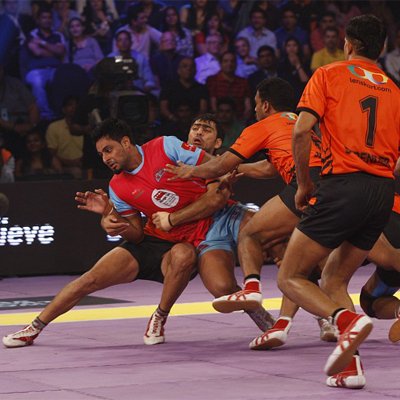
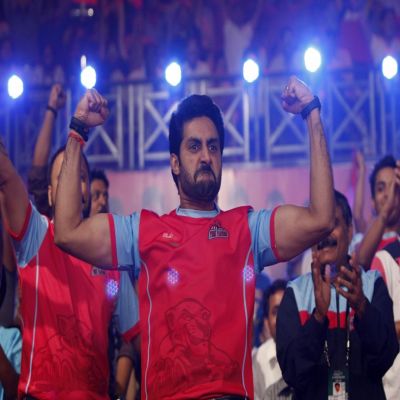
    Pink is the new colour of Kabaddi. The colour, associated with sensitivity, tenderness and femininity is definitely in stark contrast to the indigenous game which has its origins dating to the pre historic times. On 31 August,  when Jaipur Pink Panthers clawed U-Mumba during a nail biting finale of the Star Sports Pro Kabaddi League, the highly agile and contact sport was covered in Pink and announced its presence on the world stage.


    The Star Sports Pro Kabaddi League (PKL) which spanned 37 days and 60 matches, finally culminated at the National Sports Complex of India, Mumbai, the very same venue where the seeds of the game were first sown. While the Abhishek Bachchan-owned Jaipur Pink Panthers lifted the coveted trophy, the Ronnie Screwvala-owned U-Mumba team had to be content with the second spot.


    While many, including advertisers were skeptical whether the league would be able to generate audience’s interest both at the stadiums and on TV, the results are all out for the world to see. Not just male audiences, but women and children lapped up the game as they came in full gear supporting their respective teams with flags and merchandise. Families from Patna to Vizag, filled the stadiums with not just their presence but also their loud chants, enthusiasm, glee and even disappointment when their teams had to bid farewell. People connected to every raid taken by the 24 year old Jaipur Pink Panthers’ captain Maninder Singh. Players like him and U-Mumba captain Anup Kumar have a new-found fan base now. The last time when such enthusiasm was showcased was probably at the Wankhede stadium for India’s first love-Cricket.


    During the opening night 66 million Indians tuned in to watch the games on Star Sports and Star Gold claims the channel. On the micro blogging site Twitter, Star said it had generated conversations that were trending for nearly two days.


    No one but Star India, businessman Anand Mahindra and promoter Charu Sharma could have augured the path that Kabaddi has taken today. When Star India COO Sanjay Gupta earlier said that the sport would fit their objective of transforming the sports landscape in India, he was right. India seems to have found its second sport.


    The league proves that with a balanced mix of corporate backing, government support, telecast backing combined with international quality production values and celebrity endorsement, a lost game can draw renewed crowds to the stadium or tune in their TV sets. Therefore, it’s hardly a surprise that restaurants, bars and lounges had their customers asking for Kabaddi to witness the performance of 96 of the world’s best Kabaddi players. A few parents who complained that their kids were turning into couch potatoes are smiling, since their kids are now in the open playing the game.


    This has been driven by celebrities/owners of teams including Aamir Khan, Amitabh Bachchan, Shahrukh Khan, Sachin Tendulkar and Aishwarya Rai Bachchan who pledged their support to the games by being present at the venue.


    All in all, we eagerly wait to wear our favourite T-shirts at the next edition of the league beginning in March 2015 (hope the advertisers are listening!).

  • Jaipur Pink Panthers lifts Pro Kabaddi League trophy; season 2 in March 2015

    Jaipur Pink Panthers lifts Pro Kabaddi League trophy; season 2 in March 2015

    MUMBAI: The Indian audiences have been humming ‘Kabaddi Kabaddi’ for the past one month. And as Abhishek Bachchan’s Jaipur Pink Panther beat Ronnie Screwvala’s U Mumba to lift the Pro Kabaddi League season one trophy, the big announcement was made.


    Looking at the great response for Kabaddi in the country, the promoters have decided to bring back season two of Pro Kabaddi League in March 2015.  


    Conceptualised by Indian businessman Anand Mahindra and co promoter Charu Sharma through their venture, Mashal Sports, the Pro Kabaddi League has entertained audiences right from Mumbai to Patna. “We are very happy with the response for the league and Kabaddi and so will be back as early as March 2015,” said Mahindra.


    The day also saw Patna Pirates beat Bengaluru Bulls to grab the third position in the first season. Neither the heavy rain, nor the ongoing Ganapati celebrations deterred Mumbaikars to be at the National Sports Complex of India to cheer for not just their team, but the game.


    While Patna beat Bengaluru by 29-22, the finale between Jaipur and Mumbai, saw AB’s team winning 35-24 against Scewvala’s team.  


    Excited with the response from women audiences, the organisers are thinking of launching a women’s Kabaddi League too.


    Present at the mega clash were IMG-Reliance chairperson Nita Ambani, Bollywood actor Aishwarya Rai Bachchan, Abhishek Bachchan, Ronnie Screwvala, Zarina Mehta and singer Shankar Mahadevan among others.


    One thing which the Pro Kabaddi League has proved is that India is no longer just a cricket crazy nation.  Kabaddi truly has become the second sport for India.


    Kudos to team Pro Kabaddi League!