Tag: Star Pravah

  • Star Pravah chalks out marketing strategy to promote new look

    Star Pravah chalks out marketing strategy to promote new look

    MUMBAI: The blue has given away to silver with a red streak and that is how Star Pravah aims to align itself with its parent network Star India. Starting 3 February, the channel came up with a fresh look with a new logo, tagline and a completely different philosophy.


    The new tagline ‘Swapnanna Pankh Nave’ (dreams have new wings) is to indicate that the focus is shifting towards a younger female audience. Three new shows launched are also promoting its new philosophy that of encouraging modern young Maharashtrian women to channelise their dreams. “The fiction shows we are coming up with talk about individualism of women. They aren’t regular saas bahu shows. Our story characters will support the tagline,” says Star Pravah creative head Jayesh Patil. The current shows are also going to have tweaks introduced soon to suit the younger CS 15+ SEC A B C audiences as opposed to the earlier universal audience.


    The three new shows are Be Dune Daha (produced by Dashmi creations), Lagori Maitri (Endemol India) and The Supriya Sachin show- Jodi Tujhi Majhi (produced by Sachin Pilgaonkar). More shows are slated for a mid April launch. Lagori Maitri has replaced Swapnanchya Palikadle at 8:00 pm while the latter has been shifted to 6:30 pm due to stagnant ratings. Be Dune Daha at 9:00pm has replaced Ambat God which has been taken off air. “We are looking to target a slightly more upscale audience. We have also altered the broadcast design by bringing in different visual grammar and stay away from the traditional way of storytelling,” says Star Pravah channel head Prem Kamath.


    Promotions of the new look have already begun in its marketing campaign and will run till mid next week. The focus of the campaign, created majorly by an in-house team, is outdoor and TV and not the usual print medium. Both BTL and ATL activities have been used across Mumbai, Pune, Nashik and Nagpur for which sources say Rs 5 crore has been spent. “Given the exposure on TV, print wasn’t bringing additional reach,” says Kamath.


    ATL activities involve promoting it predominantly on Star Pravah and network channels as well as some other Marathi news channels like IBN Lokmat, ABP Majha and TV9 Maharashtra. Outdoor promotion is focussed in metros and 1 million plus towns in Marathi localities tipping more towards using stations than hoardings. An OBD service has been created inviting people to sample their new shows by making telephonic calls to them which will have recorded voices of the protagonists.


    The BTL campaign specifically involves a Mentorship Programme that will begin by 1 March for women who have dreams to achieve something in various fields. Five women from various cities will be selected after a round of entries. They will be brought to Mumbai for a day and given training by mentors from the profession they want to enter. The TG for this outdoor activity is women in the age group 18 to 34 years, both single as well as married. The first edition of this month long activity will be telecast somewhere in April. The radio medium will be used to call out entries for this event.


    Although the channel was aiming to refresh itself some time ago, it only took complete shape now. Soon, old shows will be giving way to new, modern and younger shows. Seems like even the regional channels are looking to tap the youth quotient of the country.

  • The first Indian Music Academy Marathi Music Awards to be telecast on Star Pravah 7 pm on 24th Nov

    The first Indian Music Academy Marathi Music Awards to be telecast on Star Pravah 7 pm on 24th Nov

    MUMBAI: The Marathi music industry is fast evolving with significant leaps in talent and technical expertise. Especially over the last 5 years, we have witnessed a marked difference in the Marathi Music space, with the emergence of outstanding work.

    GSEAMS and Art And Artistes presented the first Indian Music Academy Marathi Music Awards, which was held on the 26th of October 2013 in a star-studded event at Mumbai. The Indian Music Academy (IMA), a CSR initiative of Art And Artistes (I) Pvt. Ltd., is the 1st body of musicians in India. Founder Patron Sangeet Martand Padma Vibhushan Pandit Jasraj along with 12 other patrons laid down the guiding principles and key objectives of the IMA, and it was launched by the then President of India, Dr. APJ Abdul Kalam in 2006. It has since then worked towards promoting all genres of Indian Music and musicians and also, relentlessly towards the welfare of the musicians. 

    Art And Artistes, since the last 14 years has emerged to be the only Multi Media Music Company of India, producing world class IPs including Jalsa, Tiranga, Panchtatva, Indian Music Academy Awards, Golden Voice Golden Years, Jai Hind, and many others. GSEAMS, with its expertise of conceptualizing and executing larger than life entertainment properties has come together to create this prestigious platform.

    The 1st IMA Marathi Music Awards, at the prestigious Ravindra Natya Mandir, saw a glittering set of performances of Musical Maestros such as Hariharan and Vaishali Samant, scintillating Dance Performances by Amruta Khanvilkar, Anusha Dandekar and many others.

    The Red Carpet & the show was grace by the who’s who of the Bollywood & Marathi Entertainment Industry to name a few: Sonu Nigam, Ajay of Ajay Atul, Usha Mangeshkar, Sachin Pilgaonkar, Anuradha Paudwal, Bela Shende, Kiran Shantaram, Mahesh Kothare, Sanjay Manjarekar & many more.
    The show will be telecast on Star Pravah this Sunday 24th Nov, 7pm onwards.

    Commenting on the same Jayesh Patil Content Head, Star Pravah said “we at star pravaah are proud to be associated with IMA and GSEAMS has done a fantastic job at this event. We are confident that the audience is going to enjoy each and every moment of this entertaining event”.

    Commenting on their association Arjun Singgh Baran & Kartik Nishandar Co-Founders GSEAMS said, “We have been extremely excited, happy & fortunate on the response the awards night has received from the Music Industry. Even though this being our first own awards co produced by GSEAMS the industry has made us feel extremely comfortable and homely by the overwhelming attendance we have got for the Awards. We look forward to the telecast of the show on Star Pravah on the 24th November,7 pm onwards and promise our viewers an enriching content which they would have never seen before.”

    Further commenting Durga Jasraj co-founder Indian Music Academy and Founder & Director Art And Artistes and Neeraj Jaitly, Director Art And Artistes expressed, “Maharashtra has a rich legacy of music genres. The response to the 1st edition of the IMA Marathi Music Awards was overwhelming. IMA Awards have been accepted as the only Awards given by Musicians themselves, and therefore have a great emotional value and prestige associated in the hearts of the entire musical world. This success has been possible also due to the experience brought in by Arjun and Kartik. It’s a dream come true, to have the numero uno Marathi Channel Star Pravah, as our channel partner and supporting us. We thank all our partners and hope that we can continue to bridge the gap of producing Rich Indian Music along with main-stream mass media.”
    Do tune in to Star Pravah on 24th November 7 pm onwards.

    The IMA Marathi Music Awards is also fortunate to be supported by partners such as – BRIGHT Outdoor, Sakal & UFO Moviez.

  • ‘We are building India’s first Youth GEC, slot by slot’ : Channel [V] and Star Pravah EVP & GM PREM KAMATH

    ‘We are building India’s first Youth GEC, slot by slot’ : Channel [V] and Star Pravah EVP & GM PREM KAMATH

    From an international music channel in its early days to a Bollywood music driven one to a youth oriented entertainment offering. That’s the path that the Star Network owned Channel [V] has taken. Its last overhaul in July 2012 has reaped rich dividends with shows such as Gumrah and The Buddy Project generating loyal viewership apart from pocketing awards. The prestigious Indian Telly Awards, 2013 recognised the shows by bestowing the Best youth non-fiction and the best youth fiction show awards respectively.

    The man who has been piloting the Channel [V] ship through this latest journey is Captain (pun intended) Prem Kamath. A former advertising executive with stints in Enterprise Nexus and Chaitra Leo Burnett, Kamath spent a short period as marketing head of Star India before being assigned the task of heading Channel [V] and giving it direction in 2009. His successful reengineering of the channel last year led to him being given additional charge of Marathi channel Star Pravah.

    Last week he announced that he was rejigging Channel [V] once again with a new logo, new packaging and a slate of new shows.

    Indiantelevision.com’s Disha Shah caught up with Kamath for a tete a tete to understand from the man himself what is it that is working with Channel [V], where does he see it going and, finally, sundry industry issues.

    Excerpts:

    Please define the Channel [V] viewer in terms of demographics and pyschographics?

    In terms of demographics, I think the way TAM is structured, we define it as 15-24 ABC, but I don’t think that is necessarily a homogenous group. So, internally, we operate through a psychographic definition of youth. And for us, we define youth as a period between childhood and the time you gain economic independence. It means you are no longer a child and you have not started earning on your own and that life stage is what we define as ‘Youth Life stage’. Because we believe that life stage brings in a whole set of unique issues, attitudes and experiences that are common for those between 15 and 24 years of age. And this is that mindset we really try to talk to.

     What is the differentiator for the channel?

    The biggest differentiator for us is that we are far more rooted and far better connected to the youth than most other channels. We have a far deeper understanding of the youth and a finger on the pulse of the audience and that’s fairly evident from the fact that whatever the kind of programming we do, other channels start picking up two to three years down the line. We did Gumrah 3 three years back, and now you find Bindaas doing a show which is very similar, you find MTV Webbed doing something very similar, which are all slices of what we did. We do believe that our understanding of what the audience wants and how the audience behaves is far sharper and deeper than most of the people out there. I don’t mean just television brands, but brands in general and I think it’s that strength we try to leverage while creating programming and content. That’s really what is behind our success more than anything else.

    What have been the channel’s achievements over the past years?

    I came on-board in February 2009 and we did our first re-launch in August 2009, where we introduced a host of new shows and started reducing the amount of music. In those days, we used to get 8 or 9 GRPs and we were ninth or tenth on the list of youth music channels. And today, we are a 45 to 50 GRPs channel so it’s a five to six fold growth in terms of market share and revenue also. So, in terms of our run, the last four years have been extremely good. We have charted a new direction for the channel. For the channel, it was an experiment that we undertook at that point of time, but it is something that has paid off extremely well for us. We are at a stage today, where we are clear we have a foundation to build India’s first truly large mass youth general entertainment channel. And that is what we are building slot by slot.

    What circumstance forced Channel [V] rethink its raison de’etre?

    We were playing music videos at that point of time and there was a time, when people used to tune into television to find out what’s new in music. And I think that time changed several years back with the advent of the Internet, where people had multiple means of consuming music.

    The relevance of television for accessing music has gone down dramatically. I don’t think anyone tunes into television to find out what’s new in music.

    So, that was the first point where we said that if we want to be a youth channel, we have to widen our scope beyond just music, and that is where we started our journey. The second aspect is music is a commodity. It is the same content that all the 18 other music channels of the market have access to and there is no such differentiation. And thirdly, music cannot create appointment viewing, which is very critical if the channel has to monetize its audience through an advertiser.  

    All of these pointed us in that direction that if we have to become a relevant youth’s channel, we have to go beyond music into creating our own proprietary shows.

    What was the feedback that you got from viewers after the change from music to reality shows?

    The first feedback we got was a lot of hate mails from old channel viewers saying: Why are you stopping music? Why are you abandoning music and why is Channel [V] selling out music etc. But I think the kind of response we have got from our new viewers has been phenomenal. So the five-fold growth in the market share does not happen unless there is an old host of people embracing you for the new direction. And it’s a change that had to be made and we have moved forward. Now the real job for us is to build on this, consolidate on the good and solid start that we have had and go towards building something substantially larger.

    What have you learnt about your audience? Considering you have been at the helm for about four years now?

    One of the big things that we have learnt is how quickly the audience changes. How quickly the tastes change. And that is in sharp contrast to how shows run on GECs. That is something we have learnt along the way as well. We always had programs that did well for us. With the current run of shows, we have extended it to more than we should have. So the replacements that we are doing right now, in retrospect, we should have done four to six months ago. So that is something we have learnt and it has reflected in our demonstrating that we are now going with finite series. So we have series that will end in six months. We are forcing ourselves to end them after six months and we will put something new even if these shows are successful. So, all our programs are designed that way. That’s been one of the biggest learning. The other learning is connected to what I believe makes us strong, which is that we need to have a very sharp understanding of our TG. Unless we dig really deep to get a sense of the audience, we will never be able to create something which is relevant to them.

    The youth is a fickle audience with a short attention span. How do you keep them engaged?

    One of the things that reflect in our content is that these are all finite shows. They are two days a week, not even daily, and they last only six months. This allows us a story pace which is faster, lets us do things a lot more unpredictable where we don’t have to drag storylines and don’t have to just fill in six days a week. That lets us keep shows tighter, crisper, more unpredictable and therefore, more dramatic. The other aspect we engage youth through is social media. We keep them engaged through a lot of contests, questions and a whole set of engagement activities. This has been one of the areas that have worked well for us. This is revenue where we keep things fresh by doing different things on a daily basis.


    We also believe that a large part of the country is youth that is either not watching television or is watching whatever is there on television for want of a better option. And that’s the gap that we are trying to service…

    What shows are working on the channel?

    Gumrah – End of Innocence has been the big show for us. Dil Dosti Dance (D3) has always been the highest rated show since we have launched. Apart from that, Buddy Project has also been decent for us. Therefore, these are the shows that will continue, along with the four new shows that we are launching. At present, the channel is getting around 10 to 12,000 TVTs on a weekly basis.

    How many hours of fresh programming do you air currently?

    We currently run about 10-hours of programming a week, apart from the movie content that we do.

    What role does research play to help you stay connected with the audiences?

    Like I said, our entire body of work is based on fairly extensive and on-going research. All the shows come forth from specific consumer insights. And they start with the brief that is based on the consumer insights and shows are developed in and around them. So we engage with our consumers on a continuous and on-going basis.

    What future do you foresee for the channel in a digitized India? Do you expect a second and third youth channel being launched under the Channel [V] brand?

    I think as we go more and more into digitization, it will be critical for the channels to differentiate themselves sharply. The only channels that will survive are the ones that have a very sharp differentiation and those that can very well service whichever segment that they define their audience is. And that is what we are clearly doing.

    We are very clear that we are a youth channel; we believe that there is a great potential and great market for youth-centric content. We also believe that a large part of the country is youth that is either not watching television or is watching whatever is there on television for want of a better option. And that’s the gap that we are trying to service. Sometimes, digitization is great for channels like us, which are highly differentiated and it will only drive more and more demand for us.

    As far as the second part of your question, I think it’s too early for that. We are still laying the foundation of something that can be significantly larger than what it is. Overall in the market, there are youth who contribute about 3,000 GRPs if I use the old metrics. And even a ten per cent share out of that is a 300 GRP channel, so I think from 50, we still have a long way to go before we have maximized the potential of the channel that we have right now.

    Who do you feel is your competitor?

    I don’t think there is anyone who is doing what we are doing today. Both Bindaas and MTV or any of the others have 75 per cent of their content as music. We are cast in the mould of a general entertainment channel because we are running our own shows and our FPCs are in that fashion. There is no other entertainment channel which airs 24 hours youth entertainment shows. In that sense, we are fairly unique. But I do believe that sooner or later, there will be more players who will start doing exactly what we are doing.

     Is creative talent which understands youth programming as an issue today?

    No. It is a challenge. Most of the talents that are in the market today are geared towards creating content for GECs because that has been the lion’s share of entertainment so far. We are trying to source new people, we are getting people who write teen fiction to start writing for television; a couple of our writers are first-time writers on a couple of shows, who are writing for television for the first time but who have been bestselling authors. Some of the shows that are pitched to us have not come from production houses but have come from creative directors. So, we are improvising on the content eco-system as well, because there isn’t much talent available to cater to youth entertainment specifically.

    Are there enough production houses which understand youth content?  Are there any name you’d like to mention?

    Yes, it’s just the same. For example, we were doing Buddy Project with Sunshine Productions – Seema and Sudhir Sharma and two of our bi-weeklies have been done by them. So, Sunshine Productions is the one who we work with closely. Balaji Productions didGumraah for us, so our new show Teen Confessions is done by them.  So, there are some people like these we have worked in the past who we were very happy with and are doing more shows with. There are some producers who are established in the industry. So, we work with different people and we develop a certain sense of comfort. Moreover, we are constantly on the lookout and the quest for newer people and producers who will come into this world.

    Have you managed to get higher rates with the reduction in the air-time?

    Yes, we have absolutely. So this is not being just with the reduction in the air time, this is been the on-going process ever since we have re-launched, and our performance has been in an up spring. Like I said, our market share has gone up five times in the last four years; this rate increase has been on-going process since then. On a periodic basis with all our clients we revise our rates.


    Most of the talents that are in the market today are geared towards creating content for GECs, so we are improvising on the content eco-system as well, because there isn’t much talent available to cater to youth entertainment specifically…

    Are you encouraging branded entertainment and advertisement programming integration? How?

    On both we have a simple premise. We are very happy to do branded entertainment, as long as the entertainment quotient of it is not lost out. As much the brand part of it, the entertainment part of it also matters a lot to us. As long as it is entertaining for the viewers, is the concept both of us the client and us believe will be really entertaining we are very happy to explore it. The issue with the branded entertainment in the country today is that most people want to make it an advertorial. And that is something which is not okay with us because primarily our responsibility is to entertain our viewers. And we believe that if the viewers are not entertained even the brands purpose is not solved.

    Moreover, we do immense amount of integration for almost all of our shows. We have integrations; we give almost all our shows sponsors mileage within the show. We believe that this is very valid and very relevant way of building our brand for the clients and this is something we do on our on-going business.

    How strong is the distribution of the channel? How many homes do you reach?

    In a week we reach out to 1.2 crore people in our age group (youth), so that will be around five crores in a month.

    What has the impact of digitisation phase I and phase II been on Channel [V]?

    For us it has been good. Overall there is a rationalising of general television numbers, but I believe that digitisation gives us the opportunity to reach far more homes than before. The inherent advantage that in the cable system provider legacy brands goes away a bit and it gives an equal opportunity for people to sample and stand out like us. So I think it was a very positive outcome.

    How do you see the aggregators scenario evolving? Will they disappear or stay? 

    On the cable side, it is very difficult to put a prediction on that right now. Obviously there is a role for everybody to be playing and I believe that in a longer term people who innovate and add significant value to consumer’s life will have a clear module. And about broadcasters, as long as their shows are relevant and as long as shows are entertaining. Eventually people are consuming content whether it’s on television or across mediums, and as producers of content as long as that content is relevant and entertaining, they will have a very robust module.
  • Star Pravah presents Anubhuti

    Star Pravah presents Anubhuti

    MUMBAI: STAR PRAVAH, the leading GEC in Maharashtra, has always has been at the forefront of providing innovative, original and entertaining content to its viewers. ANUBHUTI is a series of music events which will aim at presenting the today’s youth with a unique confluence of World Music with popular Marathi Music. The show will be telecast on October 27th at 7 pm exclusively on Star Pravah.

    Mr. Jayesh Patil, Programming Head – Star Pravah, speaking about ANUBHUTI said, “Indian Classical music is at an important juncture today. The young exponents are experimenting with the music to create something new. ANUBHUTI is our attempt to take this experimental music to the aficionados and weare sure that they too will enjoy it.”

    ANUBHUTI’s first offering is a tribute to Padmashree Pt. Jitendra Abhisheki, one of the greatest legends, performer, prolific composer & scholar of Indian classical, semi-classical, and devotional music. Pt. Jitendra Abhisheki was possibly a pioneer in introducing Western music forms like the Jazz to Marathi Music and his progressive new age work balanced both the taste of the younger generations as well as the music purists of his time. This tribute to Panditji will bring alive his philosophy to bring newness to music and will showcase a fusion of music appealing to the younger generation as well as the purists of his time.

    Theartists performing in the show, a combination of young and old stalwartsled by Panditji’s son Shaunak Abhisheki, Rahul Deshpande, Abhijit Pohankar, Sumedha Desai, Raghunandan Panshikar, Gauri Pathare and Mrudula Tambe. The artists, in an attempt to recreate the ABHISHEKIYUG, will present the tunes of the maestro in a new avatar.

    The show, a mix of songs, AV clips of Panditji’s contemporary’s talking about his life and times will be hosted by noted film actor Subodh Bhave. Subodh himself has been an avid follower of Panditji’s music and considers him as his Guru. The forthcoming shows in ANUBHUTI shall treat the viewers to many more similar experiments of fusing popular Marathi music with world music by leading music exponents.

  • Star Pravah vishesh prastuti “Mission Loveria 143”

    Star Pravah vishesh prastuti “Mission Loveria 143”

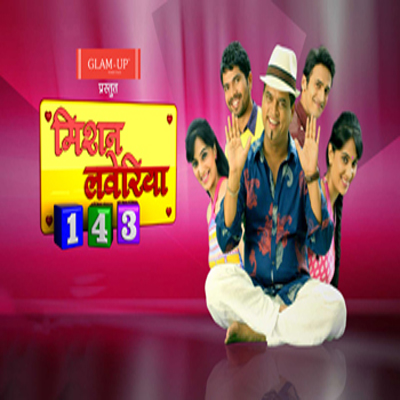
    Maharashtra’s leading Marathi GEC shall telecast its special presentation, MISSION LOVERIA 143’ at 7 pm on Sunday, October 20th. Every special presentation of Star Pravah explores a fresh and new aspect of relationships and Mission Loveria is a rib-tickling story of two friends, Raghav (played by Bhushan Pradhan) and Sampat (played by Hemant Dhome) desperately trying to woo girls and Love Guru (played by Sharad Ponkshe) who advises them.


    Bushan and Sampat are roommates and work in the same mobile store. Apart from their house and place of work, they also share a common problem; both are consistently failing in their attempts to get a girlfriend; Raghav due to his shy nature and Sampat due to his over-confident nature. It is under these circumstances that they meet Prem Kumar a.k.a. Love Guru who starts advising them in matters of love. The efforts bear fruit and Raghav and Sampat fall in love with two sisters, Aditi and Anagha and leads to a series of mis-understandings between the two friends. While attempting to clear the mis-understanding, more trouble erupts when Prem Kumar comes face-to-face with Aditi and Anagha’s mother.


    What was the reason of the mis-understanding between the two friends, what is Love Guru’s relationship with Aditi and Anagha’s mother, what is the thread of relationship that connects all of them together and will Raghav and Sampat get back their love? Star Pravah’s special presentation, “Mission Loveria 143’ has all these answers.


    Mission Loveria 143, produced by Reel Life Productions, is directed by Hemant Deodhar and features noted artists like Sharad Ponkshe, Vrunda Ahire, Bhushan Pradhan, Hemant Dhome and Sai Lokur in key roles.


    Watch ‘MISSION LOVERIA 143’ Exclusively On Star Pravah
    On October 20th, 2013at 7 Pm

  • Now ‘Mahabharat’ on Star Pravah

    Now ‘Mahabharat’ on Star Pravah

    MUMBAI: Marathi GEC viewers are set to be taken back into time. Marathi viewers will soon be introduced to two popular mythological shows for the first time. Come 21 October, between 6:00 pm and 7:00 pm, a new slot has been created on Star Pravah called Mahaparv that will start airing two of Star India’s biggest properties in this genre – Star Plus’s magnum opus Mahabharat and Life OK’s Devon Ke Dev… Mahadev. The difference being both the shows will be telecast, dubbed in Marathi.


    “The Marathi space has been missing this genre and these two shows are the network’s prime properties. The whole idea behind spending so much is that the whole network gets to share it,” explains Star Pravah programming head Jayesh Patil, pointing out that the astronomical costs involved in producing such shows was the very reason they hadn’t been tapped so far by the Marathi GEC space.
     

    Mahaparv will also serve as an experiment in how well (or otherwise) mythology is received by the Marathi audience. The question however remains whether Marathi GECs will be willing to spend several times more on original mythological shows.


    “We are spending a lot on dubbing to establish them. Once the market is open for mythology, we can shell out more,” replies Patil, adding that there’s a lot of scope for showcasing mythological tales from Marathi literature. As it is, each episode of either of the two shows takes nearly a day for dubbing in Marathi, with costs ranging between Rs 1.5 to Rs 2 lakh per episode, according to industry sources.


    According to Patil, 6:00 -7:00 pm is a good time to air these shows however Madison Media COO Karthik Lakshminarayan feels prime time would have been more suitable.


    So will these shows work for the Marathi audience? Life OK GM Ajit Thakur believes that mythological shows are universal so they will work everywhere. Mahadev has already been aired on the Star network’s Kannada, Oriya, Malayalam and Tamil channels, he points out.


    Lakshminarayan however feels Mahadev might fare better in the Marathi space. “Mahabharat has been treated like a movie and Marathi audiences are unused to such grandeur on TV shows. In terms of set and costumes, it may just be a bit too much for them,” he opines.


    Star Pravah is in the midst of negotiations to get advertisers on board and Lakshminarayan feels that shouldn’t be a problem considering both the shows are established.


    Will this time travel work for the Marathi audiences?

  • Now ‘Mahabharat’ on Star Pravah

    Now ‘Mahabharat’ on Star Pravah

    MUMBAI: Marathi GEC viewers are set to be taken back into time. Marathi viewers will soon be introduced to two popular mythological shows for the first time. Come 21 October, between 6:00 pm and 7:00 pm, a new slot has been created on Star Pravah called Mahaparv that will start airing two of Star India’s biggest properties in this genre – Star Plus’s magnum opus Mahabharat and Life OK’s Devon Ke Dev… Mahadev. The difference being both the shows will be telecast, dubbed in Marathi.
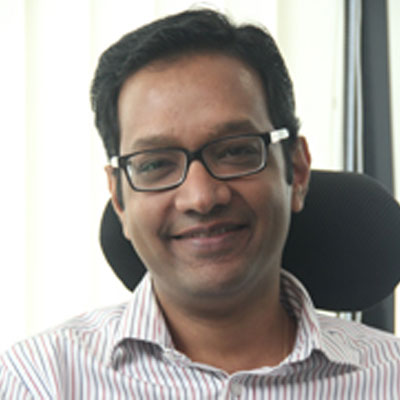
    Jayesh Patil is confident that the two shows will work wonders for the Marathi GEC genre

    “The Marathi space has been missing this genre and these two shows are the network’s prime properties. The whole idea behind spending so much is that the whole network gets to share it,” explains Star Pravah programming head Jayesh Patil, pointing out that the astronomical costs involved in producing such shows was the very reason they hadn’t been tapped so far by the Marathi GEC space.

    Mahaparv will also serve as an experiment in how well (or otherwise) mythology is received by the Marathi audience. The question however remains whether Marathi GECs will be willing to spend several times more on original mythological shows.

    “We are spending a lot on dubbing to establish them. Once the market is open for mythology, we can shell out more,” replies Patil, adding that there’s a lot of scope for showcasing mythological tales from Marathi literature. As it is, each episode of either of the two shows takes nearly a day for dubbing in Marathi, with costs ranging between Rs 1.5 to Rs 2 lakh per episode, according to industry sources.

    According to Patil, 6:00 -7:00 pm is a good time to air these shows however Madison Media COO Karthik Lakshminarayan feels prime time would have been more suitable.
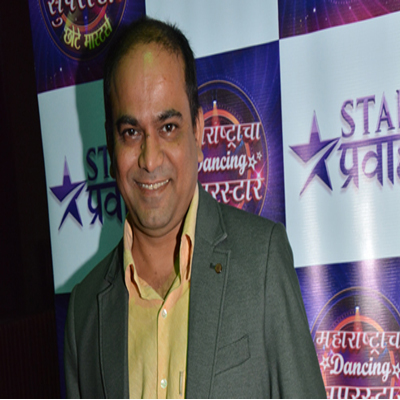
    Karthik Lakshminarayan believes that a good slew of advertisers would soon come on board

    So will these shows work for the Marathi audience? Life OK GM Ajit Thakur believes that mythological shows are universal so they will work everywhere. Mahadev has already been aired on the Star network’s Kannada, Oriya, Malayalam and Tamil channels, he points out.

    Lakshminarayan however feels Mahadev might fare better in the Marathi space. “Mahabharat has been treated like a movie and Marathi audiences are unused to such grandeur on TV shows. In terms of set and costumes, it may just be a bit too much for them,” he opines.

    Star Pravah is in the midst of negotiations to get advertisers on board and Lakshminarayan feels that shouldn’t be a problem considering both the shows are established.

    Will this time travel work for the Marathi audiences?

  • ETV Marathi: Changing the rules of the game : Anuj Poddar EVP Viacom18 and Business Head, Marathi

    ETV Marathi: Changing the rules of the game : Anuj Poddar EVP Viacom18 and Business Head, Marathi

    ETV Marathi has been one of the pioneers in regional entertainment and to our credit, we’ve been visionaries.

    The way I see it there have been three phases of content. The first was the evolution of content. ETV Marathi, when it started out, was not on par with national TV channels but it was locally unique and culturally closer. The next phase was when Star Pravah came into being, and the quality and nature of programming took a leap. The third phase is what ETV Marathi has done since Viacom 18 came into the picture. We’ve taken the current entertainment to its next phase.

    KHMC gets a lot more visibility and helps signify that change at multiple levels such as scale of programming, quality, production values or benchmark impacts the kind of audiences we draw.

    Kon Hoyil Marathi Crorepati (KHMC) was one of the first steps to signify that. The kind of shows we were doing before and after KHMC signify the extent of change in the genre.

    KHMC gets a lot more visibility and helps signify that change at multiple levels such as scale of programming, quality, production values or benchmark impacts the kind of audiences we draw.

    The kind of programming that we have lined up is going to bring in more audiences from outside the genre. These are audiences that were not watching much of our Marathi programming but because of the quality and diversity, they would be looking at it. These are the younger audiences or more contemporary and educated in English or Hindi medium schools and therefore, are not watching regional Marathi entertainment. So it has to be the language and content that has to appeal to them. The content more than the emotional attachment to their language should pull them in.

    ETV Marathi’s legacy is very strong but we were stuck in the past where it pulled in a certain kind of audience. We are now bringing in content that is far more vibrant, younger, contemporary and fresh in order to pull in a whole new segment of audiences to Marathi GEC.

    We had to change our FPC (Fixed Point Chart) but we didn’t have the luxury to create content and wait because it was a running channel. We started replacing shows in a certain priority. We started by replacing some fiction shows. We brought contemporary drama on the channel. We created a completely original show called Vivah Bandhan while another was a remake of the popular show Uttaran called Asawa Sundar Swapnache Bandhan. We thought of taking something that worked nationally and serving it in a regional language with a setting that’s closer home.

    Post that, we worked on the fiction vs. nonfiction mix. Previously, E TV Marathi had nonfiction during a late night time band post 9:30 pm or 10:00 pm, which we pulled to the 9:00 pm to 10:00 pm band. We launched three shows; one was Natya Rang, another was Comedy Expressthat we reworked on and third was another popular ETV Marathi show called Crime Diary that we brought back in a new avatar.

    E TV’s legacy is very strong but we were stuck in the past where it pulled in a certain kind of audience. 

    Traditionally, ETV Marathi was not known for marketing. Now we have changed that and there is cross-channel marketing; outdoor, print, ground activities-pretty much 360 degree. We used KHMC to amplify our marketing because in a GEC space, a channel is never marketed, the show is. We did many on-ground activities for KHMC. We had vans going from city to town and organising a game play on the ‘hot seat’. So people in a small town would gather and get an opportunity to answer five questions and get the feel of it. So we did a lot of these things that may not ultimately give an ROI on a specific show but will help to create a lot of buzz for the channel. KHMC did manage to shake people up as it came as a disrupter.

    Incidentally, KHMC is just about 20 per cent of our ratings while the rest comes from our other shows.

    We’ve not only started doing a lot of marketing but we started just letting people know that ETV Marathi was undergoing a change.

    The consumer would take time to realise a change was happening. After carrying out some changes till March, we launched KHMC in May as our flagship program. That brought us a lot more visibility. What we have noticed is that every new show’s launch has beaten the record of the previous show’s launch. We brought on board better quality and differentiated nonfiction programs this year. The channel now has something for everybody.

    As a channel, for us, it is important to know what is happening in every age group. We track that by age or by SEC. Every single age group is showing growth in reach and time spent on ETV Marathi . We want to make sure that a lot of our old and loyal audiences have reason to stay on the channel as well as the younger audiences come back to the channel because our audiences don’t sit in Mumbai and Pune. So we target the rest of Maharashtra in both ground activities and print.

  • Jayesh Patil takes charge of Star Pravah’s programming

    Jayesh Patil takes charge of Star Pravah’s programming

    MUMBAI: A change of face will mark a change of programming strategy on Marathi GEC channel Star Pravah. Jayesh Patil has been roped in as the new programming head for the channel, filling in the shoes of Shrabani Deodhar who has been elevated to a higher position which is yet unknown.

    Patil was previously with Reliance Big Productions for nearly two and a half years where he led the programming as fiction head. Prior to that, he has been a writer for several popular shows starting off with Ek Mahal Ho Sapno Ka and continuing with trend setters such as Kumkum, Jassi Jaisi Koi Nahi, Laagi Tujhse Lagan and more recently with Bade Achche Lagte hain.

    Taking charge on 26 August, he has already got to work to study the market and to strategise new plans. “Marathi space is very attractive. There is lots of scope for experimentation and there will be a lot of focus on events,” says Patil. He says he has had enough of writing and now it is time for him to reinvent himself as well as the programming strategy of Pravah.

    As far as competition is concerned Patil says that it is always good to have competition. Marathi as a genre has been lagging as compared to other regional genres but Patil says that this was the case a few years ago, but not anymore.

    Pravah faces competition from Zee Marathi and E TV Marathi but as of now it is leading in the genre.

  • Star Pravah announces ‘MaharashtrachaDancing Superstar – Chhote Masters’

    Star Pravah announces ‘MaharashtrachaDancing Superstar – Chhote Masters’

    Mumbai, August 13, 2013: Star Pravah today announced the launch of their new dance reality show ‘Maharashtra cha Dancing Superstar – Chhote Masters’ . Theshow aims to tap and add glamour to the dancing potential amongst children in the 6 to 14 years age group across Maharashtra and crown the best as ‘Maharashtra cha Dancing Superstar’. ‘Maharashtra cha Dancing Superstar – Chhote Masters’, to be hosted by Chinmay Udgirkar, is a unique platform where young dancers will be given to opportunity to perform any dance form of their choice across Indian and Western dance style. The contest is open for solo, couple and group performances and will be judged a team of leading performers and choreographers from the industry. Auditions for ‘MaharashtrachaDancing Superstar – Chhote Masters’ will be held in Pune and Kolhapur on Sunday, August 18th, 2013 with other cities in following weeks. Watch this space for more information on the audition cities and dates, show format and the names of the judges who will feature in Star Pravah’MaharashtrachaDancing Superstar – Chhote Masters’.