Tag: Star One

  • Star Bharat viewership skews to rural India: BARC and Chrome data analyses

    Star Bharat viewership skews to rural India: BARC and Chrome data analyses

    BENGALURU: Star India’s free-to-air (FTA) Hindi GEC Star Bharat was launched on 28 August 2017. Star Bharat is the new avatar of Star India’s Life OK that went off air. The channel has been rocking ratings tables since the very first week of launch under its new moniker.

    The second rebranding and identity change of the youth oriented Star One, which was the earlier name for Life OK /Star Bharat seems to have worked. Star Bharat programs are mainly focused on the day to day entertainment. In the very first week (week 35 of 2017 – Saturday 26 August 2017 to Friday, 1 September 2017) of its launch, the channel moved up to fifth place in Broadcast Audience Research Council of India (BARC) weekly list of top 10 Hindi GEC channels in the Hindi Speaking Market (Urban+ Rural) NCCS All 2+ Individuals with 519.743 million weekly impressions from  tenth and ninth places obtained by Life OK in weeks 34 and 33 of 2017 with 328.527 million weekly impressions and 336.765 million weekly impressions respectively.

    In week 36 of 2017, Star Bharat was ranked second in the Hindi GEC HSM (U+R) market with 669.588 million weekly impressions and in week 37 of 2017 (Saturday, 9 September 2017 to Friday, 15 September 2017) it was ranked third with 607.820 million weekly impressions.

    As per BARC data, Life OK’s had viewership that was skewed towards urban audiences. Star Bharat has higher rural viewership as compared to urban. Please refer to the figure below:

    public://5555555555555.jpg

    A Chrome Data and Analytics (Chrome) survey study reveals interesting data about Star Bharat viewership’s swinging from urban to rural India.  

    The sample size used by Chrome for its study was 12,097 HSM urban and 7,414 HSM rural respondents. The ratio between males and females was 69:31 approximately for both markets. Demographics for both urban and rural HSM markets were 21 percent 15 to 21 years; 44 percent 22 to 30 years; 23 percent 31 to 40 years; 10 percent 41 to 50 years and 2 percent 51 to 60 years.

    96.8 percent of rural respondents and 97.2 percent urban respondents were aware of the launch of Star Bharat while the rest were not aware of the launch. 62 percent of rural and 74 percent of the respondents were aware that Life OK had gone off-air. 72 percent of rural and 79 percent of urban respondents were aware that Life OK had been replaced by Star Bharat.

    More rural respondents had watched Star Bharat than urban respondents according to the Chrome survey study. 56 percent rural and 41 percent of the urban respondents had watched Star Bharat. 22 percent rural and 20 percent of the urban respondents watched the channel daily; 10 percent rural and 7 percent urban respondents watched it two to three times a week; 3 percent rural and 10 percent urban respondents watched Star Bharat once a week, 21 percent rural and 4 percent urban respondents had no fixed routines in watching the channel; while 44 percent rural and 59 percent urban respondents had not watched the channel at all.

    Among the popular programmes on Star Bharat, 41 percent rural and 26 percent urban respondents said that they have watched Savdhaan India. The reasons for watching the Savdhaan India were: 27 percent rural and 24 percent urban respondents liked Crime shows; 18 percent rural and 9 percent urban respondents watched it for knowledge; 24 percent rural and 29 percent urban respondents felt Savdhaan India had an interesting story; 15 rural and 18 percent urban respondents felt that the programme showed reality and 15 percent rural and 21 percent urban respondents liked the format of the show.

    Nimki Mukhiya is a serial that started airing on the channel on 28 August 2017. In rural India, 38 percent respondents said that they have watched Nimki Mukhiya as compared to 21 percent in urban India. 95 percent rural and 38 percent urban respondents watched the show because of the story, while 5 percent of rural and 62 percent of urban respondents watched the show because of the character.

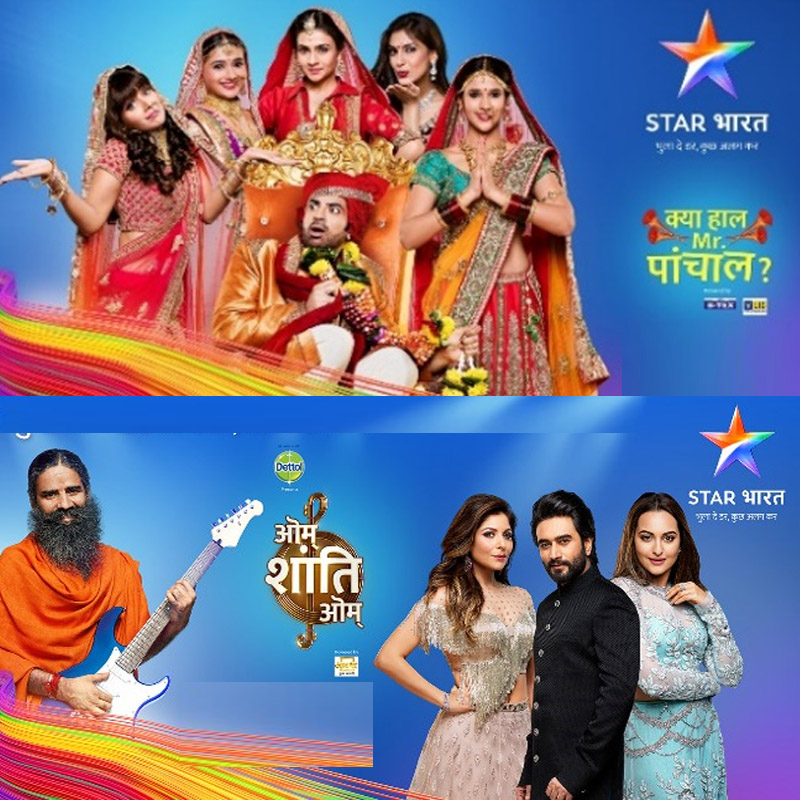
    Saam Daam Dand Bhed is a political drama show on the channel. According to the Chrome survey study, 36 percent rural and 22 percent urban and respondents watched the program. Both rural and urban India watched the show because of the story. 57 percent rural and 52 percent urban respondents said that they watched the show because of the story while 43 percent rural and 48 percent urban respondents said that they watched it because of the character.Kya Haal Mr. Panchaal is a family comedy show on Star Bharat. 33 percent of rural India watched the show as compared to 14 percent in urban India. Both rural and urban India have watched this show because of its comedy content with support from 62 percent of rural and 51 percent or the urban respondents.

    Indian Hindi musical television series Om Shanti Om with Baba Ramdev of the Patanjali fame as the overhead judge started airing on Star Bharat on its launch day. 29 percent of rural and 20 percent of urban respondents have watched this show. 26 percent rural and 29 percent urban respondents said that they watched the show for entertainment; 23 percent rural and 34 percent urban respondents said that they watched the show for music; while 51 percent rural and 37 percent urban respondents said that they watched Om Shanti Om because it was a reality show.

    The drama revenge thriller featuring an eight year old boy Ayushman Bhav airs on the channel. Only 28 percent respondents in rural India and 20 percent respondents in urban India have watched the show. 52 percent rural and 43 percent urban respondents said that they watched the show because of its story, while the remaining in each market said that they watched it because of the character.

    It is early weeks as yet. Only time will tell how Star Bharat will fare.


  • Life OK rebranded as Star Bharat may start from 15 Aug

    MUMBAI: Star India is planning to relaunch its existing general entertainment channel — Life OK, renamed as Star Bharat. The channel plans to have modern outlook but Indian feel.

    According to reports, it will be relaunched with the new look on 15 August.

    Since 2011, the channel will be branded for the second time. At the earlier launch, Star One was rebranded as Life OK. In 2016, the network changed the programming line-up of the channel. But, it seems the revamp of the programming strategy did not work.

    According to sources, shows such as “May I come in Madam,” “Sher-E-Punjab Ranjeet Singh” and “Chandrakanta” will go off air, and shows including Savdhaan India and Ghulam will continue. Shows like Kya Haal Paanchaal, Ayushamaan Bhava and Shatranj will be launched on Star Bharat shortly.

    ‘Shatranj’ is basically an Indian adaptation of the English show ‘House of Cards’ that features Sonal Vengurkar, Akshay Anand and Bhanu Uday. Another show called ‘Kya Haal Paanchal’, produced by Optimystic, is based on polygamy, starring Maninder Singh in the lead and five girls.

    At the time of filing this report, an official confirmation did not come through. It is hoped that the second rebranding works for Star.

  • Star India’s hotstar.com to premier Star Guild Awards 2015

    Star India’s hotstar.com to premier Star Guild Awards 2015

    MUMBAI: In the US, Netflix, Hulu and Amazon have taken the lead by streaming original series like House of Cards, Transparent, Orange is the New Black, Arrested Development, The Hot Wives of Orlando to their subscribers.


    Indian over the top services (OTTs) like BigFlix, Spuul, BoxTV, Sony Liv, ErosNow, DittoTV have been serving as aggregation models to stream linear channels or programmes to subscribers simultaneously or after they have been aired on TV.

    Now stealing a march on them is the Star India promoted online streaming services hotstar.com. In a first for India, Indya Interactive Services (which runs hotstar.com) announced that it will be premiering the Star Guild Awards 2015 on the video on demand service on 17 January from 7 pm onwards. The awards will be aired on Star Plus a day later on 18 January.


    A source close to the development says that this is the next big step towards change in the way content will be delivered to viewers and consumed by them.

    The Star India network, however, is going easy on the promotion of the VoD premiere:  ads were released today in leading dailies, even as 92.7 Big FM and YouTube had promos and commercials airing.  “The platform is still in the testing stage,” revealed the source. “Hence, it is just seeding the service to potential subscribers.”


    But at first glance, the hotstar.com service seems interesting as it offers a vast programming catalogue on mobile and the web. With everything found under one roof, the platform has all the genres that the network dabbles in – from popular dailies to live sporting events.


    In all it has around 20,000 hours content spread across seven languages, which include 120+ full length TV shows, 500+ movies and live screening of popular sports like cricket, football, tennis and kabbadi.


    A media planner labelled the Star Guild Awards VoD premier an experiment. Said he: “I believe it is just an initiative to kick start hotstar.com.  It is just for their internal learning process as the platform is still in its beta version. The Star Guild Awards will allow them to try and test whether the platform can manage the traffic and whether it can deliver a good experience to viewers. It also allows them to correct any errors if they do crop up.”


    Media observers believe that premiering the awards show is not going to really ruin the telecast on Star Plus on 18 January in terms of viewership ratings. He said: “People like you and me know about it because we are in the space. But do the millions of people who watch television also know about the VoD premier?  However, as a test, an experiment I think it is good as it could attract some subscribers to try the hotstar.com service.”


    That would be music for the Star India management ears. Under the leadership of CEO Uday Shankar it has been making some pioneering moves and initiatives; hotstar.com is another one of them.  

  • “At Life OK, we want to break the rules”-  Ajit Thakur

    “At Life OK, we want to break the rules”- Ajit Thakur

    MUMBAI: Around three years ago when Star India decided to reinvent one of its older channels Star One as Life OK, little did it know that it would be one of the most successful turnaround stories scripted in recent television history. Yes CEO Uday Shankar had set ambitious targets because Sony Entertainment Television’s flanking channel SAB was beginning to get traction. He wanted another GEC which could absorb ad revenues which could not be accomodated on the clear market leader Star Plus.


    And yes Life OK has more than lived up those expectations. Not only did it climb up to the number three position in week 22 of TAM’s TV ratings in 2014, it also made naysayers sit up and take notice and even give their nod of appreciation.


    The channel’s general manager Ajit Thakur shares with Indiantelevision.com how Life Ok made it to the top three while revealing what’s in store for viewers in the coming months.


    “I don’t feel any different than any other day. I strongly feel we are a work in progress. This has happened today, tomorrow, we might go back to being number four. Who knows some day; we might even be number two. The important thing is that it keeps us growing,” Thakur begins.


    Life OK believes in walking the road not taken, he says. “We always think differently. Conventional television wisdom dictates that no one should plan high points during IPL or big cricket. Everyone has their high points and launches planned for the second week of June. But we just went ahead with Tumhari Pakhi, Savdhaan India, Naadan Parinde and the Life OK Now Awards… we put all of these high points in the same week as the IPL finale. We fundamentally believe that people continue to watch entertainment whatever happens outside of it. Second, we know everyone else will not plan for it so we did,” he elaborates.


    Thakur says he is keeping a gimlet eye on growth, ranking third or fourth or whatever is not the gameplan.  “We won’t do anything to retain the number three position; we will do everything to keep growing. We believe that we cannot  underestimate any competition and our biggest competition is Star Plus, they are way ahead. In general, we have a long way to go,” he says.


    Three things have been planned for the next six months, he informs. Firstly, Life OK will undergo a brand refresh in the next two to three months in terms of looks, visuals and packaging.


    “It will be more reflecting of our thought content. We haven’t done any refresh since our launch because we wanted to create a channel base before we went ahead and did the next level on the brand. For people who watch the channel, it will just be an extension of what the channel is,” he elaborates.


    Part of the refresh plan is launching six new shows. “We are working with agencies in India and outside. We should till December have 50 per cent new shows on the channel,” says Thakur, adding it could be dailies or even once or twice a week shows. “Whatever the story demands, we will look at all those formats. But yes, sometimes, we do have to shut the story if not done well.”


    Secondly, Life OK will look for more new stories. As Thakur puts it, “We have set a benchmark for new genres. We want to find now more new stories and that as time goes by, we will become the next level of Life OK.”


    Thirdly, the channel will look for new producers and agencies as collaborators. “We have always taken pride in working with new people, both inside Life OK and the people we work with outside, our producers and agencies. We are throwing the house open for new people to come and work with us. We want to become, in the next one year, THE  talent-power house. Get more exciting, young and old people who have done TV and who have never done it to come and work for Life OK from inside or from outside,” explains Thakur.


    He takes great pride in the success that Life Ok is acheiving.  “In the past 10 years, with the exception of Colors, there hasn’t been a turnaround story like Life OK. And this was possible because we wanted to break the rules,” he says quite confidently.  We wanted to do it with a bunch of completely new people and we wanted to do it with the patience and perseverance that is required to build in the long run.”


    Thakur is very happy that many a professional who started his or her career at Star One is still working for Life OK. “Lot of top teams at Life OK comprise people who have never done TV before. And we have combined them with people who have done it before,” he adds.


    Life OK has also gone on to create many new producers. On Savdhaan alone, the channel has worked with five to seven first-time producers. Bawre is the TV debut of Neelesh Mishra – lyricist and former journalist – who has never ever written a TV show before.


    Thakur reveals that the channel plans to tap into a big dancing property. “We will do a big non-fiction property in dancing, but that won’t be a regular one. I have no aversion in doing saas-bahu, singing or dancing shows. It is just that there is so much of it, that unless we find a really new idea, why do it at all?” he argues.


    While both of Life OK’s prime properties Savdhaan India and Mahadev will be replaced during the refresh, the channel does not plan to launch more than one new show per month. “In the next six months however, we will have six new shows,” stresses Thakur.


    Comparisons with Star One are inevitable. Compared to Star One’s 3 per cent share, Life OK has achieved a 15 per cent share which is an eyepopping 500 per cent growth. “We consider Life OK to be genuinely a new launch. From 0 to 15 per cent share is what we have come to. The market has got increasingly fragmented,” he says.


    While Thakur refused to disclose any financial details, industry sources reveal that the channel’s turnover could be anywhere in the Rs 350 crore-375 crore range. And its advertising rates are also climbing though they are at about 50 per cent of that Star Plus sales managers are able to command.


    Life OK’s rise has seen advertisers making a beeline to buy inventory on it. “Our advertiser base has been growing. In fact, we have seen a surge of advertisers beyond the usual in the last one year. Some have come for our weekends, some for our weekdays, some come for events and some only want to buy mythological shows. We have all kind of advertisers coming in and each has their own requirement. The reason we have been able to attract all of them is our target audience comprises women, men and kids, metros and small towns in India,” Thakur highlights.


    He expresses the view that it is heartening to see the channel continue to grow at a time when the growth of most GECs is on the decline. That too without a single saas-bahu show. “We don’t want to become number one by doing the same thing. It has been harder for us, but the people who have started coming to the channel have realized that this is the channel for everyone in the family,” he signs off.

  • Draftfcb+Ulka’s Star One building future leaders

    Draftfcb+Ulka’s Star One building future leaders

    MUMBAI: On the back of some new client wins and growth in existing businesses, Draftfcb+Ulka has brought on board trainees from some of the management, communication, art and design schools in the country through their Star One programme.

    Elaborating on the programme, Draftfcb+Ulka Mumbai COO Nitin Karkare said” Star One is not just about talent. It is about nurturing a culture and a value system which is unique to this agency. We are delighted that the program is now in its 23rd year and growing from strength to strength.”

    The agency Star One is the advertising industry’s most comprehensive entry level training programme. The trainees are put through an intensive two-month training of which the first month is classroom sessions conducted by senior managers from the company.

    Draftfcb+Ulka vice president Anita Gokral was a part of the Star One 1995 batch sharing her own experience of Star One programme she said, “Star One guided me into the organisation’s culture, its approach to the business and exigencies of the real world. One could have picked this up on the job but the program gives you space to absorb, appreciate and develop a perspective without getting overbearing. It puts forward the Agency’s confidence and commitment which are critical to managing enthusiasm and morale in the initial years.”

    Similarly, Draftfcb+Ulka vice president HR Savita Mathai said, “The fact that this programme has been running consistently for 23 years now is testimony to the Agency’s commitment to growing and nurturing talent. For us it is not just about talent acquisition; it is about creating a culture that grows leaders.”

  • Draftfcb+Ulka’s Star One building future leaders

    Draftfcb+Ulka’s Star One building future leaders

    MUMBAI: On the back of some new client wins and growth in existing businesses, Draftfcb+Ulka has brought on board trainees from some of the management, communication, art and design schools in the country through their Star One programme.


    Elaborating on the programme, Draftfcb+Ulka Mumbai COO Nitin Karkare said” Star One is not just about talent. It is about nurturing a culture and a value system which is unique to this agency. We are delighted that the program is now in its 23rd year and growing from strength to strength.”


    The agency Star One is the advertising industry’s most comprehensive entry level training programme. The trainees are put through an intensive two-month training of which the first month is classroom sessions conducted by senior managers from the company.


    Draftfcb+Ulka vice president Anita Gokral was a part of the Star One 1995 batch sharing her own experience of Star One programme she said, “Star One guided me into the organisation’s culture, its approach to the business and exigencies of the real world. One could have picked this up on the job but the program gives you space to absorb, appreciate and develop a perspective without getting overbearing. It puts forward the Agency’s confidence and commitment which are critical to managing enthusiasm and morale in the initial years.”


    Similarly, Draftfcb+Ulka vice president HR Savita Mathai said, “The fact that this programme has been running consistently for 23 years now is testimony to the Agency’s commitment to growing and nurturing talent. For us it is not just about talent acquisition; it is about creating a culture that grows leaders.”


    More than 30 people graduate from Star One every year, and get deployed to Draftfcb+Ulka’s offices across the country.

  • Sony is No. 2 second time in a row

    Sony is No. 2 second time in a row

    MUMBAI: Even as viewers were watching a bigger drama unfold on news channels with Anna Hazare holding ground at Ramlila Maidaan and the Government in the Parliament, the Hindi general entertainment channels (GECs) didn‘t lose there share of viewership.

    Sony Entertainment Television (Set) continued to be the second most-watched GEC, according to TAM data for the week ended 27 August (Hindi speaking markets ,4+, C&S) Though the channel lost 3 GRPs (gross rating points), it still ended the week with 242 GRPs, well above Colors (228 GRPs in the week).

    For Set, good news is that KBC is maintaining an average TVR of 4+, while its fiction shows – Bade Acche Lagte Hain (4.11), Crime Petrol, C.I.D. and Saas bina Sasural – are also getting good viewership numbers.

    Star Plus, the numero uno channel, closed the week with 299 GRPs (last week 297). Star Plus‘ Saathiya Saath Nibhaana (7 pm show) is leading the shows chart with 5.6 TVR.

    Zee TV, which has now slipped to fourth position, remained the only channel which saw a fall in GRPs. The channel lost 14 GRPs from its last week‘s tally and has registered 180 GRPs in the week.

    Sab, meanwhile, remained unscathed at 128 GRPs, while Imagine TV closed with 75 GRPs (76 in previous week).

    Star One and Sahara One closed the week with 32 and 31 GRPs respectively.

  • Sahara One’s ad rate hike comes amid signs of slowdown

    Sahara One’s ad rate hike comes amid signs of slowdown

    MUMBAI: Sahara One, the Hindi general entertainment channel from the Sahara One Media and Entertainment stable, has announced a 30 per cent ad rate hike effective 1 September.

    “The channel‘s consistent rise in GRPs and relative channel shares for the past couple of months powered by fresh programming initiatives and an aggressive distribution drive has placed it neck to neck with its closest competitor Star One,” Aidem Ventures said today.

    Sahara One‘s share is just 2.9 per cent in the Hindi general entertainment channel space with 36 GRPs (gross rating points), TAM data for the week ended 13 August shows.

    Aidem Ventures, which handles the ad sales of the channel, believes that a rate hike for the channel is due.

    “The channel has been consistently experimenting with its programming. The idea is to offer a healthy dose of drama, comedy, mythology, and fiction based shows to our viewers. The channel management has been proactively working towards presenting a wholesome family entertainment mix. New shows like Jai Jai Jai Bajrangbali and Kahani Chandrakanta Ki have been received very well by audiences attracting existing and lapsed advertisers,” said Aidem Ventures business head – Broadcast Media (Entertainment) Gunjan Rege Karkera.

    Sahara One recently launched a daily soap, Neem Neem Shahad Shahad, and is soon going to unveil their new slate of programmes.

    The rate hike announcement comes at a time when the industry is heading for a slowdown.

    “Sahara One will find it difficult to implement a 30 per cent rate hike. The fiscal first-quarter results of several media companies have indicated a slowdown,” said a senior media buying executive on condition of anonymity.

  • ‘Sab is the only channel in India that is doing daily comedies’ : Sab EVP and business head Anooj Kapoor

    ‘Sab is the only channel in India that is doing daily comedies’ : Sab EVP and business head Anooj Kapoor

    The top three Hindi general entertainment channels punched hard at the second-tier channels with differentiated content, high-cost reality shows and big ticket movies. Barring Sab, the others such as Star One and Sahara One cracked under pressure.


    So what did Sab do right? It correctly positioned itself as a family comedy entertainment channel and brought in light-hearted content that worked.


    Sab had a basket of shows that crossed 1 TVR, catapaulting the channel to 101 GRPs for the week ended 12 June.


    The channel will stick to its low-cost programming but also introduce family-based reality shows.


    In an interview with Indiantelevision.com, Sab EVP and business head Anooj Kapoor talks about how the channel progressed in a difficult environment and what content is planned for its growth.


    Excerpts:

    The top three Hindi general entertainment channels are seeing high drama. How has Sab managed to march ahead in this adverse environment for the second-tier GECs?
    The channel has traveled a long way since its 28 GRP days that it used to collect two and a half years ago. We have even crossed 100 GRPs. Our progress happened after we repositioned Sab as a family entertainment channel. We aired daily family comedy shows, showcased warm and lovable characters and mixed differentiation with familiar content.

    The familiarities come in the form of joint family settings, female protagonists, and linear shows running from Monday to Thursday. The differentiating part is content that is light hearted and positive. We have the only set of shows where the consumer and ‘sasural‘ both love the female protagonist and the channel is as such the only one which has a brand slogan in the GEC sector. This helps in our positioning and it is now clear, specific and well defined.

    What led to this change of positioning of SAB from a youth to a comedy channel?
    Earlier the wisdom in the channel was one which felt the TG should be between the 16-25 years age group. But we forgot that the viewership pattern in India is different. There are more single TV households and it is the women who control the remote.


    Thus all prime time spots need the women onboard as that is the key. That‘s why all shows depicting women suffering, like dowry issues, female infanticides etc. which are such deep rooted stigmas, strike a chord with the audience that is predominantly female, and can empathise and relate easily to what‘s shown.


    We, on the other hand, are addressing the fact that times have changed, families are now more nuclear, and there is more balance and light-heartedness. We have barely done 50 per cent of what we can do, but consumers have understood the message we are sending-“Laugh as a family, than cry alone.”

    Has this led to an increase in advertisement revenues?
    Yes, in the last 30 months our advertising revenues have increased as well. Earlier we had just about 35 advertisers on board, but right now we have more than 60. Back then, Star One and Sahara were in the 70s and 80s as far as GRP‘s go and now they are nowhere close to us, even though they have bigger budgets. In fact even NDTV Imagine, which we are only marginally behind on the overall GRPs and now ahead of in the primetime Monday-Thursday slot, has a seven times higher budget than ours.

    Are you looking to come out with some high cost production shows in the future, seeing the current trend in GECs?
    No, we are not looking to do any high cost productions since they are currently not needed, as we have not yet hit the stagnation level and are still growing at a steady pace. We are also not looking for funding of any kind.

    How has the journey into the comedy space been for SAB?
    We are currently the only channel in India that is doing daily comedies. Most channels will run a weekly comedy at the most. Apart from this, our silent comedy, Gutur Gu, is only the second ever silent comedy to be really successful, after Mr. Bean, and we are now going to sell the show abroad via syndication. So, I‘d say the journey into this genre has been hugely satisfying, successful and fun for all of us.

    We are on the lookout for non-fiction or reality shows. Our plan is to have a family-based concept for a reality show

    Have the lower budgets hampered on the production value?
    Well not really, as we have been able to manage our costs very well, even though the sets we create and use are very huge too. In Lapataganj we have created an entire village, while in Tarak Mehta Ka Ultah Chasmah the set is an entire colony. And to top it all in our newest show to be aired, Papad Pol Shahuddin Rathod Ki Rangeen Duniya, we have created an entire town as the set!


    Thus we have been able to improve at an operational level without compromising on our sets or production values, while maintaining a tight budget and getting the desired results.

    What are you the most proud of when it comes to SAB‘s current standing and position in the market?
    Currently 5 of our shows have a 1+ rating and this is really quite an achievement. I say this not only because it is quite difficult to have shows with even a rating of 1, but more so as we achieved this irrespective of the huge constraints we face as a channel. These include us not having an afternoon slot. Due to budgeting, our programming is restricted predominantly from Mondays-Thursday; the number of hours of programming and even our overall reach are all major hurdles we are currently faced with.

    What areas are you concentrating on in terms of investments why?
    We are going to invest a lot in distribution. Trying to move from the 38 to 55 per cent reach is the first gap we are hoping to plug. In just a few weeks of work, we have already managed to move from 38 to 41. We are also going to improve the placement of the channel.


    Besides, we want to expand our programming to 6 days, including Saturdays, without trying anything different in terms of genre.

    The current flavour of all channels has been reality shows and non-fiction. Is SAB going to venture into that space as well?
    As far as non-fiction or reality shows go, that is definitely on the cards too, and is a genre we would like to look at. We are, in fact, on the look out for a family-based concept for a reality show but are yet to come across something.

    SAB is one of the few channels that markets the entire channel and not just shows. What are the initiatives you are currently involved in?
    We are in the midst of many marketing initiatives right now, specifically in places where families will be together like theatres, bus shelters and other OOH areas.

    We even had a SAB mela in Ahemdabad which was a family fair attended by 27000 people and this was truly a one of its kind consumer connect campaign.


    The fair was another platform for family entertainment where people even got to meet and spend time with many of the artists from the shows they like. The fair also had a school connect program, where different schools and college teams participated in entertainment activities like group dance performances. We also had a lot of local artists and cultural flavours at the fair, and the overall response was so encouraging that we have decided to repeat this initiative in 15 more cities this year.


    Our other marketing plans as a channel include a radio promo, SAB ka Damadji wherein the “damadji” character created comes on air and talks to a group of ladies who ask him questions and he answers them via jokes and funny anecdotes.


    Also the virals we have been airing have done very well and have helped get in more viewers.

    Tell us a little about your new show, Papad Pol Shahuddin Rathod Ki Rangeen Duniya, that will be aired soon?
    We like taking renowned pieces of literature and using it for our shows. This is the basis of our new show too, which Shahuddin Rathod, an author with global following, has penned. His humour is warm, family based, closed knit and has a message.

    Papad Pol is like a street or machala where most of the people living are in the papd business. It is their lives and day-to-day interaction that forms the show.

    What‘s next for SAB viewers to look forward to?
    Next in the line for SAB is another silent comedy which will hopefully hit the air by July. The pilot has already been shot and approved. Apart from that, another show along the lines of Pink Panther, which is about a bumbling detective who solves crimes, will be specifically for weekend viewing.

  • ‘Star One is repositioned to become suitable for youth audiences’ : Ravi Menon – Star One EVP and GM

    ‘Star One is repositioned to become suitable for youth audiences’ : Ravi Menon – Star One EVP and GM

    Star One was launched as an upmarket Hindi general entertainment channel, second to Star Plus. Pioneer of big ticket shows like Nach Baliye and The Great Indian Laughter Challenge (TGILC), the channel is now on the path of repositioning.


    In an interview with Indiantelevision.com’s Richa Dubey, Star One executive vice president and general manager Ravi Menon talks about Star One’s road ahead as the channel takes up a new positioning to address the youth while tapping family audiences.


    Excerpts:

    Star One has deviated a lot from its earlier positioning of an upmarket channel. What made you to shift from your earlier positioning?
    You can’t target the urban market with less money. And when you put in huge amounts, there has to be good returns. So we wanted to expand the market – for viewers as well as revenues.


    Upmarket audiences are also not very sticky in nature. We found this in some of our popular shows like Sarabhai vs Sarabhai.

    Is Star One on its way of getting revamped?
    I would not call it a revamp. But from the time it was launched, Star One’s positioning and programming has changed.


    Our programming has now become suitable for youth. Our fictions are focussed towards youth, though families can still watch. In reality shows like Zara Nach Ke Dikha, we have roped in young participants and included family elements in it.


    Our channel is primarily for youngsters. But we also respect family viewing.

    What would you identify as your target group (TG)?
    Star One targets the 10-30-year-olds. The core TG, though, is 18 to 22 years. But we are definitely not addressing the kind of TG that channels like Bindass or Channel [V] have. Our content is for the homogeneous market. We produce shows for youngsters wherein the entire family can sit and watch. We get family audiences, but on the back of these youngsters. People from all age groups can connect with all our shows like Annu Ki Ho Gayi Wah bhai Wah, Dil Mil Gayi, Pari Hoon Main and Choona Hai Aasmaan.

    How have the advertisers responded to your current repositioning?
    We have become a platform for the brands that want to address the youth. We foresee more brands that will come in. Advertisers are ready to pay money for new kind of shows.

    Don’t you think that the youth positioning is risky as we have seen in the case of Zee Next which has a mere 1-2 per cent of market share in the GEC space?
    When you are addressing such a TG, there has to be a habit formation. We have been very successful in keeping consistency in viewership.


    As I said earlier, we get the entire family to watch our channel on the back of youngsters. This strategy will lift Star One above the rest of the other new comers.

    We have been a trend setter in the stand up comedy front. Other channels have started cloning us soon after the success of The Great Indian Laughter Challenge

    Though Star One became the number three GEC for a week in January, since then there has been a constant dip and presently it ranks number 6. How do you explain this?
    The important thing is that we are continuously reaching out to our TG. We are a GEC focussing on youth. But the new entrants in the market are targeting to compete with Star and Zee. So though we have become number 6 from number 3, in our target audience we are still the leader.

    Overall, the GEC market share has got segmented because of new entrants. Do you see that affecting Star One?
    The GEC market is segmented but brands are still willing to pay money. Presently if Kyunki Saas Bhi Bahu Thi gives a rating of 4 TVR, that is good enough in a fragmented market for media buyers and advertisers to put money behind them.

    What kind of money is being pumped in for programming?
    The programming budget depends on the requirements of the channel. We rework on it every quarter.


    But GECs today roughly spend around Rs 7-8 billion. That is because the reality shows are very costly, – jury, studio, star costs have surged.

    With such high money being pumped in, does it become to protect profitability of channels?
    A good thing about reality shows are that they come with 10 to 12 sponsors and become popular – and they are for a short period. Although fictions do not come with so many sponsors, they are for long term and become popular gradually. So every show has a break even. Although the market is cluttered, that does not affect the bottomline because there are many brands ready to advertise.

    Your weekday prime time fresh programming is of two hours. In the other day parts you show repeats of your present as well as older shows like India Calling and The Special Squad. Are you going to expand original content on the channel?
    We sell advertisers our original programmes. Putting fresh shows on every time slot is expensive; we, thus, run repeats of the older shows. We have bulk deals with advertisers.

    For Star One, reality shows like Bol baby Bol and Funjaabi did not become as popular as Laughter Challenge?
    Bol Baby Bol did fairly well, delivering a rating of 1+ TVR in some weeks. We experimented with Funjaabi and Kisko Milega Cash. While announcing the launch, we had said that the show will run for a month and if it does well, then we would continue it further.


    Doling out prize money daily was a mistake that we did. Probably if we were to bring another series of the show, we would give money only once a week.


    But we have been a trend setter in the stand up comedy front. We hunt the talents and raise the stars. Other channels have started cloning us soon after the success of The Great Indian Laughter Challenge.

    How will you create an equally big property like Nach Baliye?
    Now our aim is to create equally clutter breaking shows like Zara Nach ke Dikha.

    What big shows are coming up?
    We have Zara Nach Ke Dikha which is a celebrity dance competition between boys and girls. It will go on air somewhere in mid July. The slot and day has not been decided yet. There are a few more shows which will be unveiled soon.
    Can we expect this show to be slotted for weekend prime time while other shows will fill up the weekday primetime band?
    Currently the slotting of shows has become very crucial, especially for the prime time. After IPL, many channels have launched shows at the prime time; they were all waiting for IPL to get over. Colors will launch in July and we will monitor everything closely before we fix the timing of our shows.