Tag: Star News

  • Star News ropes in Afridi and Zaheer for ‘Wah! Cricket’

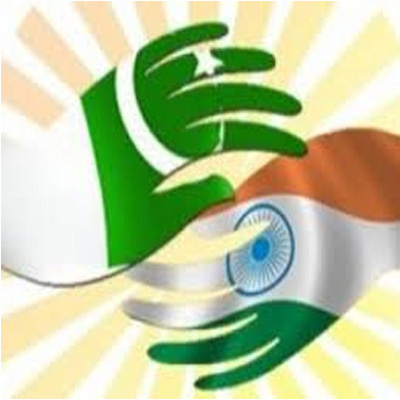
    MUMBAI: Star News has launched a show ‘Wah! Cricket’ for the on-going Indo-Pak cricket series. It provides updated happenings on and off the ground and forecasts right through the series under its umbrella program ‘Wah! Cricket’.

    The Hindi news channel has signed exclusive contract with Pakistani batsman Shahid Afridi and Indian pacer Zaheer Khan along with Sandeep Patil, Saba Karim and Arun Lal to be part of the show.

    Shahid and Zaheer will give viewers a hawk eye view on the feelings and temperament prevailing on the ground during post match analysis from the cricketers. The viewers will see an exclusive interview with the cricketers which will encapsulate behind the scenes, anecdotes, and trivia.

  • ‘We are identifying short term tasks and medium term tasks to get to a new, bigger Star’

    ‘We are identifying short term tasks and medium term tasks to get to a new, bigger Star’

    It’s the festival of lights. And for many the festival of noise courtesy exploding fireworks. In the hope of reducing the number of those belonging to the latter tribe, we, at indiantelevision.com, decided to put a display of firecracker articles for visitors this Diwali. We have had many top journalists reporting, analysing, over the many years of indiantelevision.com’s existence. The articles we are presenting are representative of some of the best writing on the business of cable and satellite television and media for which we have gained renown. Read on to get a flavour and taste of indiantelevision.com over the years from some of its finest writers. And have a happy and safe Diwali!

     (Written by: Thomas Abraham in 2007)

    Two men under whose collective leadership rest the fortunes of Asia’s most powerful media conglomerate. In a way, there is a commonality in how both have risen to the top at Rupert Murdoch’s Asian media arm – from the blue as it were. It was just under ten months ago that Paul Aiello, a one time investment banker, was pitchforked into the hot seat of a company riven by internal power politics and stalled growth stories in the key markets it was operating in.

    Three months later, Aiello opted for another dark horse in then Star News CEO Uday Shankar, giving the newshound turned corporate honcho operational charge of India’s lead broadcast network and the difficult task of setting things right there.

    In conversation with Indiantelevision.com’s Thomas Abraham a day after Shankar was elevated to Star India CEO (on 25 October), the two offer their most detailed overview yet, of the media conglomerate’s plans for this market and the region as a whole. Excerpts:

    These are exciting times for the industry with the economy booming and the sector seeing 20-25 % growth. How does Star view all this? What are the key factors that will drive its growth? What could work as impediments?
    Aiello: I continue to be extremely excited about the market and its growth, even though there are numerous uncertainties. You can argue that there are regulatory uncertainties, uncertainties created by increased fragmentation in viewership and increased competition. But these things are to be expected in a highly dynamic market place.

    The challenge for us is not about focusing on what Star is. It is really about what should the next Star be? What should Star be in the next five to ten years from now? That requires a lot of internal focus and development of strategies. 

    So whether it’s about our core broadcast business where we must deal with increased fragmentation, regionalization… all the phenomena that everyone looks at, we need to be there. As well as looking at the overall growth in the media market and knowing that there are other areas that we’re not in as Star; but areas where we have tremendous capabilities within News Corp and in Star, that we should move in to and make sense of.

    So we’ve been through a strategic review process and now we are coming out of that and are identifying the short term tasks and the medium term tasks to get to a new and bigger Star.

    If you get detracted by a noise event like a new show that someone else has come up with in the last one week or some uncertain ruling or regulatory decision, you can get paralysed and miss what is the more important strategic initiative on where you want to be.

    It is really important to keep that strategic vision because then you become really disciplined to stand by what the vision is and do the execution of the steps necessary, whether it is people moves or moving into new areas of business.

    So which are the new areas?
    Aiello: Certainly we need to expand the footprint of our core business of our channels. In the next six to nine months, we are going to be launching more channels.

    Five channels?
    Aiello:
    Five, six channels, yes. That is one manifestation of the extension of our core business. But we are looking at many other ways to build our business.

    Like for example?
    Aiello: News Corp has tremendous capabilities when it comes to films.

    Everybody was waiting for that. Are you going to go the Sony Pictures route? Will you be getting into movies big time and will that be under your mandate?
    Aiello:
    It is something for not just me to decide, but Fox to decide. We work very closely with our sister companies at New Corp. Let us see what we can do together if such opportunities make sense.

    News Corp is pretty strong in new media, internet as well.

    MySpace?
    Aiello: Yes, MySpace, Fox Interactive Media.

    Ajay Vidyasagar will be on that I am told.
    Aiello: Ajay is very involved in our new media strategy.

    If Ajay will be overseeing that side of the business, there are also the content challenges that lie ahead. How will all this be managed?
    Shankar: Ajay did an amazing job in the last eight-nine months when there was a creative management vacuum when people had left and gone away. Now we have ramped up our content team. So there is Anupama (Mandloi), there is Vivek (Behl), there is Monica and two or three others who have come in. We’ve also created a structure which is more channel focused. So there is a general manager of Star Plus, who’s Keertan (Adyanthaya). There is a GM of Star One, that’s Ravi (Menon). So the day to day channel management activities have become pretty much independent and self contained.

    So, for any of the other senior management, including myself, we don’t have that kind of daily interface. Our task has moved on to doing strategic and long term planning for the channels. Our internal understanding is that Ajay is going to primarily spend his time in building the internet business. And that’s in collaboration with MySpace wherever it’s possible. And internally, we will do a whole lot of other things.

    Where MySpace might not be a partner?
    Aiello: That’s right. Star will have its own new media strategy. At the same time Star will work with MySpace, Fox Interactive Media, in as many places as it makes sense. 


    The times of 50-on-50 top shows is history and we could soon well have a situation of three to four networks fighting it out for top honours. How do you see that panning out? 
    Shankar: I really feel that in this market, in the entertainment space, for a long time will continue to primarily be a two player market. Maybe there might be a third player who will have a little bit of traction. Who that first, second or third player is may change, in two or even in five years time. But I still think that for many years, that is what is going to be the situation.

    The big difference will be this. Typically in broadcasting globally, two key players will be the ones making money. In this market, in GEC, simply because of the size of the universe, it is possible that if people have a disciplined content approach, even the No. 3 and the No. 4 can make money.

    And our advertising space is becoming so segmented. Not everybody has to take big corporate advertisers. Not everybody has to target the same clients.

    What it requires is for people to clearly identify their TG, their target geography and smartly design unique or signature content for these TGs. My big problem is that in category after category you see, people are just cloning the leader.

    The fact is that it has worked because of the very size of the market. News is a classic example of that.

    Shankar: It has worked. But the returns are diminishing. If you see sustainable leadership in whichever category, somebody has been able to challenge the leader’s content model. Star News did whatever turnaround it could manage because it did not follow the Aaj Tak route of live breaking news. It went into appointment viewing and other kinds of signature programming.

    Now what you see is that everybody is chasing one or other player. The same thing is happening in music. You are seeing more and more commoditization of content and less and less differentiation. That is a big challenge.

    I think distribution is a huge challenge for this market; copy content is a big challenge. And the third, I am not saying necessarily in that order, huge challenge is the shortage of original quality talent; which nobody is really talking about. It is the same talent that is going around.

    If you are smart, you change three jobs in two years, your salary will go up four times, and you will get three more promotions. That does not mean that the person’s maturity has gone up or that person’s quality of skills have increased.

    Aiello: This is an issue that applies not only of India, but practically to all of Asia. You have to get fresh new talent. It is critical nurturing them and taking risks in developing them. 


    So the three biggest challenges over the next three years are distribution, commoditisation of content and talent management?

    Shankar: In distribution, if you were to further focus, the two challenges would be, 1) to strengthen the cable infrastructure to allow more and more channels to be delivered to the end customer, 2) is to create a regulatory environment where premium content is encouraged by monetizing.it.

    Not everybody has to pay Rs 500. There should be a good, decent family package available for Rs 75; but, somebody who wants to pay Rs 500 or Rs 1,000 and get great content, should have access to that. It is not to make an argument that people should pay through their noses; but people should have a choice.

    What is your view on Trai’s mandating pricing in non-Cas areas? I am told that broadcasters, as in the IBF, are debating challenging it legally. 

    Shankar: If there is a regulatory order, then everybody will have to comply with that. Obviously we have no choice.

    But this kind of price cap in non Cas areas, in an Indian environment where there is so much of opacity in declarations of subscriber base, is going to be extremely counterproductive for this industry. Because you’re operating in a situation where the cost of distribution has become a very important line item for all broadcasters. Except for one or two channels like Star Plus, everybody else has to shell out a large sum of money on distribution.

    The problem is that this kind of artificial cap on value, when the input costs are not being controlled, is very, very counterproductive. A whole bunch of broadcasters and many of the niches are going to become uncompetitive because of distortions in the distribution space. I think this is going to be highly detrimental.

    Yet you have all these new launches, new networks coming up.
    Shankar: Three reasons. People have faith in the Government, in God and the Regulator. 

    ‘You have to get fresh new talent. It is critical nurturing them and taking risks in developing them’

    It’s ‘karma’ then?
    Shankar: Seriously, if you look at it, there are niche channels where 30-40 per cent of their opex is the distribution fee. It is clearly unsustainable.

    This is a market where the talent costs are going through the roof because of the supply side shortage. It is a market where new competitors are coming, so your content costs are going up. Because clutter is going up, your marketing costs are going up. And your distribution costs are going completely out of whack.

    There is not even a logical relationship. Last year what you spent has no bearing on what you will have to spend this year. And in this market what you spend has no correlation to what you spend for similar deliveries in an adjoining market. This is clearly an insane situation.

    Aiello: That is not to say that some of these people will not succeed.

  • Big Fight in Hindi news turf

    iding high on the claim of carrying ‘exclusive’ and ‘breaking’ stories, news channels are rating their success stories. The route is not through digging a story from the rubles of Nandigram or Singur but the passing game of the pot of gold begins with high end stories on the World Cup, Shilpa Shetty winning the Big Brother title or being kissed by Richarsd Gere and the great Indian Abhi-Ash wedding.

    Indiantelevision.com’s analysis of Hindi news channels using Tam data (HSM, C&S 15 + years) during the six-month period beginning January 2007 throws up some interesting insights into the genre while the battle among the players intensifies.

    The reigning Hindi news channel in the category during this period is TV Today’s flagship channel Aaj Tak. The channel has held on to its top position. With a six month average of 21.3 per cent (Tam C&S 15 + years, HSM), it has topped the chart with a share of 23 in January. But it has yielded ground in June and has shared the top slot in this month with a 19 per cent share.

    Meanwhile, Aaj Tak’s sister concern Tez has managed to be consistent in its performance with an average of 4 per cent for the period. 

    Second in the ratings game performance is Star News which has been consistent and stable across the period. Securing the second spot in the January to May period, Star news has gripped the market with 17 per cent share. However, in the month of June, it soared to the very top, sharing position with Aaj Tak. Star News clocked a six month average of 16.8 per cent.

    But a closer look at the half-yearly score card (January -June 2007) of news channels across the Hindi speaking belt reveals grave concerns for some players.

    One that has seen the slide is NDTV India. From January to June, the relative market share has been dipping considerably. From a 13 per cent market share in January, the channel reached 9 in June, while the six-month average stood at 10.8 per cent, which does not even place the channel among the top three.

    Explains NDTV group CEO Narayan Rao, “It is a short term passing phase. In the long term for any news channel it is credibility and authencity that matters. Whatever the situation is, we never opted to go down a certain route. We still have the same philosophy as we had when we conceived the channel.” 

    The channel had the guts to stay out of sensationalism which was grabbing eyeballs. “News can be of any kind. It depends on the channel’s ideology to present the same story without sensationalising it. We strive to get the hard core stories. Dibang who was our managing editor, on his special request, is now sent on special assignment. He will travel across India and bring core issues into light,” Rao says.

    NDTV’s hope is that sensationalism would ease out in the long run. Says Rao, “Undoubtedly the differentiating factor is how we package the content. We never want to titillate the viewer but rather have a impact on him. On 14 and 15 August, when all the news channels were showing the footage of the gory fake encounter in Allahabad, we edited the video and showed it only for a limited number of times. This makes a difference in the long run.”

    As a rule, somebody’s loss is somebody’s gain. Giving tough competition to the other news channels, India TV has upped its status in the ranks. Holding 11 per cent share in January (Tam C&S 15 + years, HSM), the channel jumped up to 16 cent and 15 per cent in May and June to clutch the second position in the respective months.

    Is Hindi journalism in the electronic media going the tabloid way?

    A media observer says, “The division is like the caste system in India. When the bigger channels show anything exclusive, people say the channel deserved it. Yet, people call it ‘tabloidisation’ when a smaller channel shows anything of that sort.”

    The news is not so good for Zee News. A matter of concern is that Zee News has not been able to go beyond the third spot. In the January to June period, Zee News’ has been hovering around 13 to 11 per cent (Tam C&S 15 + years, HSM). However in the month of June, the channel lost its long held third position to IBN 7.

    IBN 7, a later entrant into the space, has been working hard to get into the top league. The channel leaped into the competition in the months of May and June with 12 per cent each, prior to which it accounted for merely 9 per cent of the market in the month of January.

    Says IBN 7 managing editor Ashutosh, “We were the first to expose the Nithari case. It was us first who brought to light the first case of cannibalism in India.”

    “These days hardcore news is disappearing from the channel. It is not that all the news channels are here to do moral lesson stories. The news stories are selected on the basis of popularity. However, we at IBN 7 have always invested in the hardcore stories. This is the USP of the channel,” he explains further.

    The other channels in the fray have not been able to stand the heat of the competition in the Hindi speaking belt. Whatever the reasons may be, the Hindi heartland fails to be satisfied by the likes of DD News, Sahara Samay Rashtriya and Janmat (now re-positioned as Live India).

    The figures of the government run DD News tells a sad story. Starting as low as three in the month of January, DD News could only manage a mere four per cent in June.

    Lagging further behind is Broadcast Initiatives’ Janmat with an average of 1.83 per cent over the six month period. Following its recent re-positioning from a ‘views’ channel to adopting the live news approach, the challenge ahead will be to make its mark in the market.

    Sahara Samay Rashtriya has also been losing its existing hold in the market with a share of 7 per cent in January, slipping down to 5 in the month of May.

    Currently obsessed with the three C’s – crime, cricket and cinema – another C (for comedy) has become the new found love of Hindi news channels.

    Meanwhile, the deadly Content Code proposed by the information and broadcasting ministry is threatening to whack news channels going astray. Facing much opposition from these channels, the restrictions of the Content Code might, in fact, turn the tables of the numbers game or even determine whether tabloidisation or credible and authentic journalism is what will rule the roost.

    Once the ‘big brother’ steps in, it will be interesting to see the strategy each news channel churns out to outdo competition and be ahead of the game.

    But that is another story we will have to wait for as the government is coming under increasing pressure to bow down on the Content Code.

    Graphs by Roshnni

  • Star adds Marathi news channel, eyes more

    MUMBAI: Media Content and Communications Services (MCCS), the joint venture between Star and ABP Group, has decided to roll out a slew of regional news channels ahead of an English news channel launch.

    The company is launching the Marathi-language news channel, Star Majha (My Star), on 22 June. MCCS already operates Star News and Star Ananda in Hindi and Bengali.

    “We are going to launch more news channels in the regional space as they are mass-based. We, however, haven’t yet firmed up our plans on the markets we are going to launch next,” says MCCS vice president Barun Das.

    Star Majha’s tag line is ‘Open your eyes, Look closely’. There will also be an official website for the channel, www.starmajha.com.

    The news channel will initially be free to air (FTA). With 17 bureaus spread all over Maharasthra, Star Majha will leverage the strengths of Star News for national content and the Fox and Sky network for international news.

    The youngest sibling in the bouquet will stay with the image of being a “people’s” channel. It will focus on issues and not just events with the core target audience in the age group between 22-35 years.

    The channel will have a “Maharashtra-centric” approach and highlight the “modern and new outlook of every Marathi.” It will cover a variety of shows on politics, sports, entertainment, culture, education, career, real estate, religion, yoga, astrology and lifestyle.

    Commenting on the requirement of another news channel in the already cluttered market, Das has this to offer. “Hindi news channel viewership has doubled over last year, which clearly indicates that there is huge appetite for news. It does not create fatigue unlike the general entertainment channels. The definition of news is also changing. Anything that is relevant and contemporary is news and even news shows on saas-bahu serials in the afternoon slot is almost like a prime time band.” 

    Says Star India CEO Uday Shankar, “Maharashtra is at the forefront of reshaping the Indian society and economy and Star Majha is a new age channel for the new age Maharashtrian. Given the pattern of growing demand the launch of a specialized Marathi news channel of this nature is a natural requirement for the region.”

    The Marathi news space is going to see a flood of launches including TV 18 Group which has signed a joint venture with Lokmat Group, and Hyderabad-based TV9. Early this year, Zee launched 24 Tas.

  • Sahara appoints Ernst & Young for restructuring news business

    Sahara appoints Ernst & Young for restructuring news business

    MUMBAI: Sahara supremo Subroto Roy is looking at restructuring his loss-making news channel business and has asked for suggestions from consulting firm Ernst & Young.

    Sahara’s bouquet of six news channels are sinking in losses of around Rs 1 billion a year, a source close to the company says. “Ernst & Young has been appointed to come up with recommendations for restructuring the operations. There is no mandate to find an investor. Clearly, the whole exercise is to make the venture profitable,” he adds.

    The Hindi news space is dominated by four channels (Aaj Tak, Star News, NDTV India and Zee News) which together garner close to 70 per cent market share in viewership, making the fragmentation at the lower end among several players tough for Sahara Samay Rashtriya.

    And it is not just the national news but also the region and city-specific channels (Sahara Samay Mumbai, Sahara Samay Bihar & Jharkhand, Sahara Samay Madhya Pradesh & Chattisgarh, and Sahara Samay Uttar Pradesh & Uttranchal and Sahara Samay NCR) that are struggling to stay profitable.

    According to the source, Ernst & Young has recommended a revamp of the business in the areas of operations, ad sales and content. Each channel should have a business head whose role should be properly defined, the consulting firm has suggested. The operations should also be streamlined and structured for more efficient running.

    Under the existing structure, each of the six channels has an ad sales head who reports to a three-member core committee. Since mid-2006 Sahara has done away with a national ad sales head. The distribution team also reports to this committee.

    “Ernst & Young has made a presentation of its recommendations recently. It has not yet been decided what Sahara would adopt,” the source says.

    Earlier, Ernst & Young had submitted a valuation report on Sahara One Media & Entertainment Ltd, the company that runs the Hindi general entertainment channel Sahara One and the motion pictures business. Later in April 2006, NRI businessman C Sivasankaran acquired 14.98 per cent stake in the company for Rs 1.2 billion.


  • Star News special features track North Indian politics

    MUMBAI: The complexities of North Indian politics can make or break political parties and the battle is intense. As UP, Punjab, Uttaranchal and Manipur go to elections in March, Star News the 24-hour Hindi news channel brings in the latest from the political hotbed. Star News has lined up special features covering political updates starting with the daily special election bulletin ‘Kaun Banega Mukhyamantri?’

    The month long bulletin will air from the 28 January to 27 of February, featuring updates and election related developments throughout the day and will include:

    Kahiye Netaji is a series of live on-ground debates.

    Pehli Tasveer is a pre-elections opinion poll

    Taaza Tasveer is a special feature on exit poll

    On the vote counting days Kaun Banega Mukhyamantri will provide continuous
    updates on the tally of votes and feature an expert post poll analysis

    The special feature line up also consists of travelogues Punjab Mail and UP Roadways. To be
    aired in February, this programme will feature as segments in the morning and afternoon time bands.

    Chun Chun Kar Haso is a special segment by a host of television stand up artistes who mock and spoof the election process.

  • ‘A very good year for TV news business, with a huge upside for the industry’

    ‘A very good year for TV news business, with a huge upside for the industry’

    Yes, whenever there is a boom period, there are problems, and in the long run, there will be consolidation and some channels would peter out, but I would like to believe that the serious players who have come and made a name for themselves would stay.

    This was a year when the question was asked where the advertisers were putting their money: trash channels or genuine ones. From the limited perspective of a news channel, particularly Hindi news, I can see that a large number of them have gone the tabloid way: the sex-and-violence route.

    I have actually seen a crime show on an important Hindi news channel that said, “Stay with us, and after the break we shall show you a rape”! Now, you cannot have that kind of thing on news, and those of us who are news professionals and journalists will not accept that kind of a thing.

    What this has done in the immediate and short term is it has taken away some bits of viewership from serious news. But that shift has not been reflected in revenue accruals. The reason as I see it is quite simple: you cannot possibly have a news channel that can say something like “After the break shall bring you “Rape of the Day” by Hindustan Lever”, or whatever other company or big brand. So the advertisers have stayed with the respectable channels.

    So in terms of rating you have Aaj Tak at the top and then Star News and some others high up, but in terms of revenue we are still there right at the number two position. Ultimately, no advertiser would like to spend money beyond a point on such shows. So, if there has been an impact on viewership, there is no significant impact on revenues.

    Finally, it is going to be hard hitting, proper investigative journalism that will have to come back to the news channels
    _____****_____

    There can be no doubt that there is some problem with the rating system (TAM), but the fact is that this is the industry standard. Some of the key components of the system are not clear. It is suspected that some of the people-meter homes have been compromised. For instance, some channels find out which are some of the people-meter homes. They approach those homes and give them a new TV set and say: “You watch whatever channels you want on the new set, but on the old set just run my channel.”

    Sometimes the rating weightage gets skewed just because of one or two homes in the country. For example if you talk of the English news market, it would be the metros, to start with, and then the larger cities like Hyderabad, or Ahmedabad, etc. But if someone says that an English news channel on a given day has dominated, and that domination has come from Dasua in Punjab, or some small place in Andhra Pradesh, then you would say: “Hey there is something wrong here. That is not your market so how come that one little weightage has totally distorted the picture?”

    Besides, TAM has not taken into account the heterogeneity of India, because we are not homogenous, in terms of language, culture etc, like the United States. Indians are so diverse, that people from each state are almost like different races, if I may use that term. Any measurement system has to take these kinds of factors into account. I think it has been a direct copy of a system that works elsewhere in the world, not taking into account the nuances that India has as a nation.

    Plus, you have people-meters in just about 8,000 homes, in a country of a billion people. Even for exit polls for a state election, we have sample size of 40,000 to 50,000 voters, and for the general elections we have something up to 200,000 voters as the sample size before you can even remotely forecast anything. These are the pitfalls of the rating system, which needs to become better.

    But having said that, TAM is the current industry standard and we shall have to go with it. If it says that on a certain night some news channel was number one, then more or less it works that way. It is another matter that that news channel was then showing a sex show. But that is for the viewer to decide. If he wants to see a sex show in news, it is his choice.

    But in the long run I believe that finally, it is going to be hard hitting, proper investigative journalism that will have to come back to the news channels.

  • Star One, Star Gold launch on Sky in the UK

    Star One, Star Gold launch on Sky in the UK

    MUMBAI: Pan Asian broadcaster Star has announced the launch of Star One and Star Gold on the Sky digital TV platform in the UK.

    The launch expands Star’s Indian channel offering on BSkyB from the current line-up of Star Plus and Star News to a total of four channels.

    Indiantelevision.com was the first to report on 3 November that Entertainment channel Star One and movie platform Star Gold would debut in the UK later this month on BSkyB, which is over-35 per cent owned by Rupert Murdoch’s News Corp.

    Star One and Star Gold will be available on BSkyB’s Entertainment Pack. The channels will enhance South Asian programming for viewers in 8.2 million households across the UK and Ireland.

  • News broadcasters look at innovative ad sales

    News broadcasters look at innovative ad sales

    Mumbai: Approximately Rs. 600-700 million news market in India may get radically stirred if a proposal being considered by the newly-formed News Broadcasters Association of India sees the light of day.

    According to the still-under-discussion proposal, hindi language news broadcasters with sizable market shares are looking at the pros and cons of offering a uniform advertising rate to clients.

    The proposal, reportedly mooted by a few news market leaders in India who are part of News Broadcasters Association of India, may initially exclude the english news channels from this proposed uniform approach to ad sales, which might be a stumbling block in it going through.

    Scepticism notwithstanding, one news channel head admitted that the proposal is being considered.

    “It’s (having common ad rates across hindi news channels) certainly on the agenda, but there are too many ifs and buts to be sorted out before any possibility of actual implementation,” the chief executive who did not want to be named said.

    The executive explained that the idea is to find common ground on various news broadcast-related issues, including infrastructure, distribution and, probably, ad sales too.

    Still, the revenue sharing formula being suggested too is debatable. As per an initial suggestion, after offering common ad rates, the revenue would be split amongst news channels as per respective market share in terms of viewership and ratings.

    For example, if Rs. 100 is generated through this common plank, then the bulk of it would go to the news channel boasting the largest market share and then split up as per market share percentage.

    However, another news channel head questioned the model suggested, saying the proposal may be “lofty, but the revenue share formula would throw up various questions.”

    Still, most news channels admit there’s no denying that having common approach to issues, including editorial, distribution and infrastructure, is worth exploring in the Indian market as certain expenses are spiraling.

    For instance, distribution and placement charges of news channels have increased manifold over the last two years with limited bandwidth of cable networks and mushrooming news channels.

    Presently, the major Indian news channels in hindi and English include Aaj Tak, Star News, Zee News, NDTV India, NDTV 24×7, Sahara’s eight-odd channels, India TV, CNBC TV18, Awaaz, CNN IBN and IBN7.

    The News Broadcasters Association of India is also in the process of finalizing content code for its member companies and exploring having an ombudsman on the lines of Editors’ Guild of India, which primarily oversees the print medium.

  • News broadcasters look at innovative ad sales

    News broadcasters look at innovative ad sales

    Mumbai: The approximately Rs. 600-700 million news market in India may get radically stirred if a proposal being considered by the newly-formed News Broadcasters Association of India sees the light of day.

    According to the still-under-discussion proposal, Hindi language news broadcasters with sizable market shares are looking at the pros cons of offering a uniform advertising rate to clients.

    The proposal, reportedly mooted by a few news market leaders in India who are part of News Broadcasters Association of India, may initially exclude the English news channels from this proposed uniform approach to ad sales, which might be a stumbling block in it going through.

    Scepticism notwithstanding, one news channel head admitted that the proposal is being considered.

    “It’s (having common ad rates across Hindi news channels) certainly on the agenda, but there are too many ifs and buts to be sorted out before any possibility of actual implementation,” the chief executive who did not want to be named said.

    The executive explained that the idea is to find common ground on various news broadcast-related issues, including infrastructure, distribution and, probably, ad sales too.

    Still, the revenue sharing formula being suggested too is debatable. As per an initial suggestion, after offering common ad rates, the revenue would be split amongst news channels as per respective market share in terms of viewership and ratings.

    For example, if Rs. 100 is generated through this common plank, then the bulk of it would go to the news channel boasting the largest market share and then split up as per market share percentage.

    However, another news channel head questioned the model suggested, saying the proposal may be “lofty, but the revenue share formula would throw up various questions.”

    Still, most news channels admit there’s no denying that having common approach to issues, including editorial, distribution and infrastructure, is worth exploring in the Indian market as certain expenses are spiraling.

    For instance, distribution and placement charges of news channels have increased manifold over the last two years with limited bandwidth of cable networks and mushrooming news channels.

    Presently, the major Indian news channels in Hindi and English include Aaj Tak, Star News, Zee News, NDTV India, NDTV 24×7, Sahara’s eight-odd channels, India TV, CNBC TV18, Awaaz, CNN IBN and IBN7.

    The News Broadcasters Association of India is also in the process of finalizing content code for its member companies and exploring having an ombudsman on the lines of Editors’ Guild of India, which primarily oversees the print medium.