Tag: Star Majha

  • Times Network appoints Amitabh Biswas to Head Marketing for the English Entertainment cluster

    Times Network appoints Amitabh Biswas to Head Marketing for the English Entertainment cluster

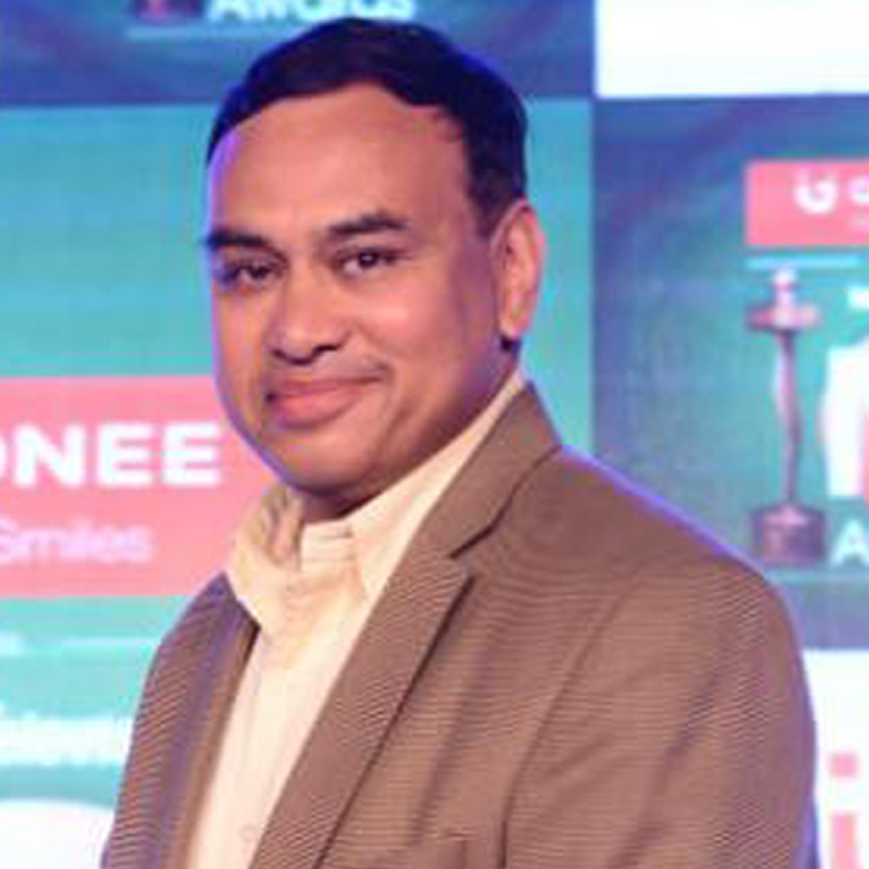
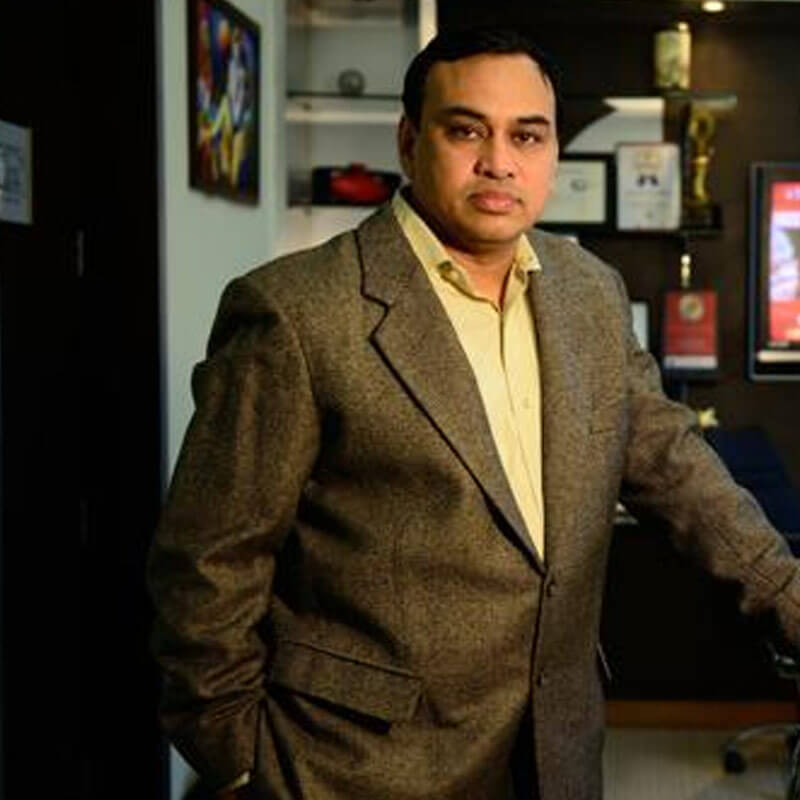
    Mumbai: Times Network, India’s leading television broadcasting network, today announced the appointment of Amitabh Biswas as Head of Marketing, English Entertainment cluster. In his role, Amitabh will lead the brand and media strategy for the Network’s English Entertainment channels (Movies Now, Romedy Now, MNX and MN+) across platforms. Based in Mumbai, Amitabh will report to Vivek Srivastava, EVP and Head Entertainment Cluster, Times Network. 

    Commenting on the appointment, Vivek Srivastava, EVP and Head Entertainment Cluster, Times Network said, “I’m delighted to welcome Amitabh to the Times Network team.A versatile marketing professional with a proven track record in brand building along with a strong understanding of the business, Amitabhwill be an asset to our brands. I am confident that he will add tremendous value to our ambitious growth strategy in the English Entertainment segment.”

    Speaking on his new role, Amitabh Biswassaid,“It’s great to be back at the organization where I’ve grown through critical stages of my career.With continuous break-throughs in the media platforms, evolution of the connected consumer and tectonic shifts in their content appetite, I look forward to this opportunity to enter the next era with these leading entertainment brands.”

    With over 15 years ofbrand management experience acrossbroadcasting, advertising, telecom and management consulting, Amitabh joins Times Network after his entrepreneurial venture. In his previous roles, Amitabh has worked with Times Network’s news channels, RelianceInfocom, Star News, Bloomberg UTV,Star Majha, Star Ananda, where he focused on brand inventions, market research, strategic planning and operations.
     

  • ABP News Network CEO Ashok Venkatramani departs

    ABP News Network CEO Ashok Venkatramani departs

    MUMBAI: Even as the week was ending, came another shocking piece of news. Ashok Venkatramani, the CEO of ABP News Network (ANN) had quit and in fact had even served out his notice period with Friday (4 November 2016) being his last day at work.

    A hardcore Hindustan Lever professional, Venkatramani was given charge of the network in 2008, when it was a 76:24 per cent joint venture Media Content and Communications Services (MCCS) between West Bengal based print media group ABP and Rupert Murdoch’s Star India.  The joint venture launched three channels Star News, Star Ananda, and Star Majha, in the Hindi, Bengali and Marathi news space.

    The two parted ways in 2012 as Star India wanted to focus on its entertainment and sports business under CEO Uday Shankar with ABP buying out the Star India stake. The parting agreement included the dropping of the Star name from the channels.  Something which many thought would be detrimental for the ABP group in revenue terms.

    Venkatramani had the responsibility of overseeing the rebranding of the channels to ABP News, ABP Ananda and ABP Majha. And he did that pretty effectively. Revenues not only stayed put, they also grew. Venkatramani, after some struggle with the ministry of information and broadcasting on getting a licence, also launched ABP Sanjha in July 2014. His efforts were recognized at 2016’s indiantelevision.com News Television (NT) Awards this earlier this year and he was inducted into the NT Awards Hall of Fame.

    Venkatramani confirmed his departure to indiantelevision.com, saying that he was leaving for newer challenges. And he confirmed that he was being replaced by Atideb Sarkar (the son of ABP editor in chief Arup Sarkar). Not much is known about where Venkatramani is headed, but his deputy and the company’s COO Avinash Pandey appreciated his efforts in a comment to a media portal. As did the ABP managing director and CEO D. D. Purkayastha.

    Venkatramani is currently the president and director on the Board of the News Broadcasters Association of India (NBA) and chairs its HR and sales sub-committees. He is also a former director of the Indian Broadcasting Foundation. Ashok is also a member of the Digitization Task Force appointed by the Indian government.

    He is is a B. Tech from Bombay and has done his management post graduation from Indian Institute of Management Ahmedabad and Harvard Business School.

    Also Read:

    Murdoch set to exit TV news biz in India

    Star, ABP announce divorce; Star News to be ABP News

    ABP’s Punjabi channel, Sanjha, finally gets its licence
     

  • ABP News Network CEO Ashok Venkatramani departs

    ABP News Network CEO Ashok Venkatramani departs

    MUMBAI: Even as the week was ending, came another shocking piece of news. Ashok Venkatramani, the CEO of ABP News Network (ANN) had quit and in fact had even served out his notice period with Friday (4 November 2016) being his last day at work.

    A hardcore Hindustan Lever professional, Venkatramani was given charge of the network in 2008, when it was a 76:24 per cent joint venture Media Content and Communications Services (MCCS) between West Bengal based print media group ABP and Rupert Murdoch’s Star India.  The joint venture launched three channels Star News, Star Ananda, and Star Majha, in the Hindi, Bengali and Marathi news space.

    The two parted ways in 2012 as Star India wanted to focus on its entertainment and sports business under CEO Uday Shankar with ABP buying out the Star India stake. The parting agreement included the dropping of the Star name from the channels.  Something which many thought would be detrimental for the ABP group in revenue terms.

    Venkatramani had the responsibility of overseeing the rebranding of the channels to ABP News, ABP Ananda and ABP Majha. And he did that pretty effectively. Revenues not only stayed put, they also grew. Venkatramani, after some struggle with the ministry of information and broadcasting on getting a licence, also launched ABP Sanjha in July 2014. His efforts were recognized at 2016’s indiantelevision.com News Television (NT) Awards this earlier this year and he was inducted into the NT Awards Hall of Fame.

    Venkatramani confirmed his departure to indiantelevision.com, saying that he was leaving for newer challenges. And he confirmed that he was being replaced by Atideb Sarkar (the son of ABP editor in chief Arup Sarkar). Not much is known about where Venkatramani is headed, but his deputy and the company’s COO Avinash Pandey appreciated his efforts in a comment to a media portal. As did the ABP managing director and CEO D. D. Purkayastha.

    Venkatramani is currently the president and director on the Board of the News Broadcasters Association of India (NBA) and chairs its HR and sales sub-committees. He is also a former director of the Indian Broadcasting Foundation. Ashok is also a member of the Digitization Task Force appointed by the Indian government.

    He is is a B. Tech from Bombay and has done his management post graduation from Indian Institute of Management Ahmedabad and Harvard Business School.

    Also Read:

    Murdoch set to exit TV news biz in India

    Star, ABP announce divorce; Star News to be ABP News

    ABP’s Punjabi channel, Sanjha, finally gets its licence
     

  • “Media today is suffering from ideological corruption”: Tulsidas Bhoite

    “Media today is suffering from ideological corruption”: Tulsidas Bhoite

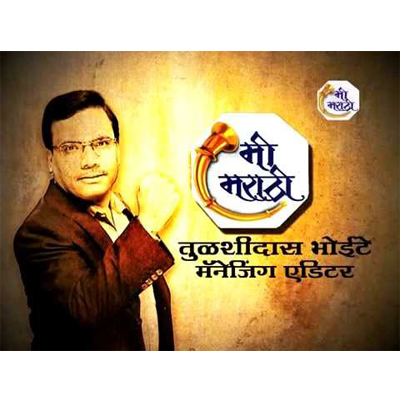
    Mi Marathi, a Marathi news channel has been working hard to gain cognizance since its revamp from an entertainment channel to a news channel in March 2014. The channel, after a year of constant endeavour to connect with the viewers, has become the chart topper in the Marathi news space.

    At the forefront of Mi Marathi is a team of veteran journalists and among them is the channel’s managing editor Tulsidas Bhoite.  

    Bhoite started his career in 1992 in print media. It was in 2000 that he moved to electronic media with his debut stint at ETV. He has worked with leading channels like Zee Marathi, IBN7, Star Majha, Zee 24 Taas, TV 9 and Jai Maharashtra.

    Indiantelevision.com’s Seema Singh spoke to Bhoite about the transition of Mi Marathi from an entertainment channel to a news channel, the challenges and much more.

    Excerpts:

    What was the reason behind converting the entertainment channel Mi Marathi to a news channel?

    I think it was a wise decision by the management. I travel a lot with all segments of people, be it with commoners or professionals from different field. As per my analysis, there is space for more than 10 news channels in Maharashtra. The market here is quite weak in terms of both revenue and TRP, and so far, not a single channel has tapped the market fully. Currently with seven players in the region, we have only just managed to tap 50 per cent of the market.

    How did the transition take place? What happened to the GEC employees?

    We haven’t removed a single employee from any department because we didn’t want to write-off any people. Everyone has their own talent, and it was our duty to cultivate that talent for the betterment of the channel. We decided to use GEC talent for news and fortunately the management allowed us to do that. As the pace of work in a news channel differs from that of a GEC, we do face the problem of speed but our employees are coping and trying to change their functioning style.

    When the management decided to relaunch the channel as a news channel, they started hiring best professionals from the industry. The hiring process is still on and we have on board the three best faces from the industry in Kumar Ketkar, Nikhil Wagle and Bharatkumar Raut.

    We are hiring more talent from the news industry now. Even today, we do not have any technical backup like the other news channels, because of the space crunch. Plans are also afoot to shift to a new office and buy more technical equipments. With no technical support and just 60 per cent workforce as compared to the other news channels, I think we have been doing a fairly good job.

    How is the management-employee relationship in the company? Are employees involved while taking decisions?

    We ask our employees to give ideas. We may or may not accept the ideas, but we always ask people to participate in the ideation process. In fact, Jhingroo, the icon created by the channel during elections, was the idea of our creative team, which is still being appreciated by many.

    Being the seventh player in the market, what was the strategy to attract viewers? 

    Yes, we entered the market as the seventh player in the regional news space in March 2014. In order to remain relevant in the space, we had to create a new market for ourselves. As I mentioned, there is a large part of Maharashtra, which is still uncovered by news channels. So our strategy was to create a new segment for ourselves in the news market and also grab existing viewers of other news channels.

    We decided to cover news differently. For example in Mumbai, channels generally cover Mantralaya when it comes to politics, stock market for financial and a select two or three theatres or multiplexes when it comes to entertainment news. We changed this. We sent our cameras to that part of the society, where others hesitated. The news industry generally works on a myth of the up market and down market. But if you see, only 10 per cent of the news channel viewer comes from the so called up market strata.

    Even in the rural parts of Maharashtra, channels focus on the sugar belt of Pune or Nasik. We completely changed that. We always cover every news right from rural to urban, from upper to middle to lower middle class. And I’m not saying this because I’m a journalist, but this is the most practical approach. Even advertisers want to cater to the rural markets these days.

    What were the challenges you faced when you entered the market?

    The first challenge that came our way was that no one wanted to accept us as we weren’t big faces, when we launched. Traditional leaders thought we could not carry on the channel. But when we applied our strategies to run the channel, after four months they started taking cognizance of the channel.

    What did you do right to get to the number one position?

    Firstly, the selection of issues and subjects to cover. Secondly, we consider the opinion of each person in the team as important. Thirdly, when others are trying to think on an issue, we have already acted on it. We connect our channel directly to viewers, from all segments. We are always trying to give them a say in each and every programme. To understand the pulse of the audience, we never forcefully apply our views on the audience. We give the audience a chance to express their opinion.

    What’s your Target Group?

    While we don’t focus on one TG, we look at targeting the 15-45 year olds. For example, our character Jhigroo, resonates not just with politicians, but also the younger generation, who while are not too interested in politics or the news, but like the animated character. We want to catch the young audiences.

    How did you ensure that you did not lose out on your viewers from the entertainment channel, while making new ones in the transition?

    Most channels apply the ‘Hot Cut’ policy. But during the relaunch, we did not make the mistake of ‘Hot Cut.’ So while a show was on air, we did not cut the programme to go on air on something that was happening now because that could have harmed us. So we used the phase out process. We kept 50 per cent programming and 50 per cent news from September 2013 to March 2014. And from March, we relaunched fully as a news channel and we continue treating news in a different way. A lot of emphasis is being given to the presentation of the news, despite lacking on the technical front.

    How do you plan to maintain the number one position?

    When we announced the relaunch in the newsroom, I had said ‘our struggle is man vs machine.’ While content is the king, distribution plays a crucial role and we are hoping to expand our reach.

    My aim is to not just get good numbers. My ultimate goal is that the channel should be cognizable, right from the top person to someone sitting in the rural area. People should know the channel and the content. Number one, two doesn’t really matter.

    We would like to capture 50 per cent of the market to be able to do more experiments with the content.

    What are the challenges in the Marathi news space?

    In Maharashtra, people are open to other languages, and so we have to compete with Hindi news channels as well. Our strategy is to go to people, pick up their issues and give them a voice.

    Do you think advertisers should put in more money in regional channels? Is there scope?

    There is an untapped market in Maharashtra. However, when it comes to news genre, I don’t think any sales team in any of the channels has the potential to tap that huge market, and this includes my channel. There is a need to set up that team. We need to look at people with good ideas, who can tap that market.

    The logo has remained the same even after the relaunch. Any plans to change that?

    We thought on that. The creative team has created a different logo as well, but for now we will stick to the current logo. Our communication from class to mass shows that they like our current logo.

    Are you looking at revamping the channel?

    My team is currently struggling with the limited resource. But we need to move to a new space and as soon as we find that space, we will have two studios and better equipment and lighting. The revamp will be in the next six months.

    We are also working towards bringing in more graphics in the next 15 days. We will not stick to a single rule of programming. Adding more content to the channel is an unending process. We are making rules, only to break them.

    How has Nikhil Wagle’s presence helped the channel?

    If you study our viewership pattern, we are equally distributed throughout the day, from 3 pm to 11 pm. We wanted to strengthen our 9 – 10 pm time band and so when Nikhil Wagle agreed to join our channel, we offered him that time band. He has his own followers in Maharashtra, and that cannot be denied. Our mood and his is the same and that helps the channel a lot.

    How many journalists and bureaus do you currently have?

    In all over Maharashtra, we have nine bureaus and we will increase that to 12 in the next three months.

    Of the nine, seven are connected by lease lines. We will also start our studios in the next three months. We want to give our correspondents in these studios an opportunity to handle their own small shows on regional basis.

    In Mumbai, we have a team of 12 reporters and 20 camerapersons and out of Mumbai we have 60 reporters and 30 camerapersons.

    What’s your take on prime time debate?

    When deciding the strategy for the channel, I think like a viewer and not like a journalist. People are fed up of debates and that’s a fact. Fortunately, we only have one debate showPoint Blank hosted by Wagle, who is a man of content.

    We take only four people on the panel in order to give proper time to each one to represent their point of view. Media is suffering from ideological corruption. We are media, we are supposed to give equal opportunity for people to give their opinion. There should be discussion and not debate.

    Vir Sanghvi had once said, “We don’t have news channels, we have low cost entertainment channels.” But I think people are fed up of such low cost entertainment and so we are trying to deliver hard core news.

    If you check our ratings, we aren’t getting good ratings for any of our entertainment shows.

    Have you subscribed to BARC? Will you be discontinuing your TAM subscription? 

    We haven’t yet subscribed to BARC, but we will. We haven’t taken a decision on whether we will continue with TAM or not. We may continue with both TAM and BARC.

  • Star in process of selling its 26% stake in MCCS to ABP

    Star in process of selling its 26% stake in MCCS to ABP

    MUMBAI: Star India is in the process of transacting the sale of its 26 per cent stake in Media Content & Communications Services (MCCS), the company that owns and operates three news channels, to its joint venture partner Ananda Bazar Patrika (ABP) Group.

    “We have offered our shares to ABP Group at a mutually agreed value. We are in the process of selling our entire stake in MCCS”, said Star India chief executive officer Uday Shankar in an interview with Indiantelevision.com.

    The completion of the transaction will free News Corp from owning any stake in a local news venture in India. Star had already disengaged itself from any involvement in MCCS and the Star brand name had been taken out of the Hindi, Bengali and Marathi news channels.

    In April this year, Star and Ananda Bazar Patrika (ABP) Group had announced their divorce. MCCS, the joint venture company with Star as a 26 per cent stake owner and ABP holding the balance 74 per cent, launched Star News in March 2004, Star Ananda (Bengali) in June 2005 and Star Majha (Marathi) in June 2007.

    According to a source, Star is selling its stake at a value that is not high. Shankar, however, declined to talk on this. “We do not talk about our financials. All that I can say is that we have split amicably,” he said.

    MCCS has operationally broken even since FY’11, from its loss of around Rs 60 million in the earlier year on a revenue of Rs 2.13 billion, according to market estimates. The company’s revenue in FY’12 has crossed Rs 2.6 billion.

    When asked whether Star was planning to buy a stake in NDTV, Shankar said the company had decided to exit the news business in India because of the 26 per cent FDI cap in the news sector. “We will not invest in any news venture including NDTV till the FDI cap is upped. “

    Star feels that the whole economics of the TV news business in India is not working. “News Corp is not a financial investor. If you are not in the driver’s seat or have no significant say in the business, it doesn’t make strategic sense at all,” said Shankar.

    But won’t the former MCCS CEO and a newsman himself miss the news business? “We have created a tremendous entertainment footprint and will now build the sports business. News is definitely a gap in our portfolio. But unless there is a change in the FDI limit, it doesn’t make sense,” said Shankar.

    Balaji Telefilms is the other joint venture company where Star has exited from any involvement but is holding on to its 25.9 per cent stake. While Star has been wanting to sell for long, the promoters of Balaji Telefilms have not made the purchase yet as the share prices have slipped drastically over the years. In the joint venture termination agreement inked in 2008, Balaji had the right to purchase the shareholding held by Star for an aggregate price of Rs 190 per share. But that period has lapsed and Star has the right to independently find a buyer for its stake in Balaji Telefilms.

  • Narayan Rao re-elected NBA president

    Narayan Rao re-elected NBA president

    MUMBAI: NDTV Group executive vice chairman KVL Narayan Rao has been re-appointed president of the News Broadcasters Association (NBA) for 2011-12.

    In the Annual General Meeting held today, Zee News Ltd CEO Barun Das has been re-elected as vice president, while Media Content and Communications Services (which manages news television channels Star News, Star Majha and Star Ananda) CEO Ashok Venkatramani is the honorary treasurer.

    The other members on the NBA board are Independent News Services chairman Rajat Sharma; Times Television Network MD and CEO Sunil Lulla; and Network18 Group COO B Sai Kumar.

  • A repeat show for IBN Lokmat as Q1 net loss stands at Rs 40 million

    A repeat show for IBN Lokmat as Q1 net loss stands at Rs 40 million

    MUMBAI: IBN Lokmat, the joint venture company that runs the Marathi news channel, is still bleeding as its revenue stays flat even after completing three years of operations.

    The company has posted a net loss of Rs 40 million for the first quarter of the fiscal, similar to what it had registered in the corresponding quarter of the previous fiscal. In the trailing quarter, however, IBN Lokmat had reported a net loss of Rs 60 million.

    The main problem area for IBN Lokmat is that in a market which has two strong players – Zee 24 Taas and Star Majha- the channel’s revenue seems to have hit a ceiling while it has failed to curb expenses.

    Revenue for the quarter ended 30 June stood at Rs 40 million, same as the year-ago period. In the trailing quarter, revenue was Rs 30 million.

    IBN Lokmat’s quarter expenses stood at Rs 70 million, up from Rs 60 million the company incurred in the corresponding quarter of the previous fiscal. In the trailing quarter, expenses were at Rs 80 mllion.

    The channel’s Ebitda loss remained at Rs 30 million, same as the year-ago period, but less than the trailing quarter (Rs 60 million).

    IBN Lokmat was launched in March 2008 as a joint venture between Network18 Group and Lokmat.

  • NDTV gains on Star deal; market expects equity partnership

    NDTV gains on Star deal; market expects equity partnership

    MUMBAI: A day after NDTV announced its five-year ad sales deal with Star India, the scrip of the news broadcaster has gained for the second consecutive day.

    Shares of NDTV rose 5.35 per cent today to Rs 74.80 till the filing of this report (1 pm). The scrip had gained 2.82 per cent on Tuesday, the day NDTV said it had given the mandate to Star to manage the ad sales of its news channels.  
         
      NDTV was the biggest gainer among the news broadcasters. Incidentally, barring IBN18, all the listed players in the news broadcasting business are seeing an upsurge.

    Shares of Zee News Ltd rose 5.07 per cent to Rs 11.60 till the filing of this report. TV Today also saw a 2.35 per cent surge with the scrip trading at Rs 60.85.

    BAG Films and Media gained 2.98 per cent to Rs 7.25.

    TV18 gained 0.60 per cent and was trading at Rs 75.75, while IBN18 lost 0.92 per cent (Rs 91.65).

    “NDTV has seen a rally because of the ad sales deal. But the scrip will sustain momentum only if an equity deal is announced between NDTV and Star. The market is expecting it as they feel that the deal is a conflict of interest with MCCS, the company which runs Star News, Star Anand and Star Majha where Star has a 26 per cent stake,” says a media analyst.
     

  • NDTV hands over ad sales duties to Star

    NDTV hands over ad sales duties to Star

    MUMBAI: In a cluttered environment where news channels are struggling to up advertising rates, NDTV has assigned Star India to exclusively handle the airtime sales of all its news channels – NDTV 24×7, NDTV India and NDTV Profit.

    The five-year deal will come into effect from 1 April, bringing together two broadcasting companies that would fight it out in a marketplace that is unfriendly to ad rate hikes.

    For Rupert Murdoch’s Star India, the commercial alliance will mean that it has news in its bouquet mix. The network had earlier handled the ad sales of MCCS, the news broadcasting company where it owns 26 per cent stake with ABP Group as the senior partner, but that got separated and is now managed independently.

    Said Star India CEO Uday Shankar, “The combination of the NDTV news brand and Star’s leadership should be able to unlock significant value for NDTV. The presence of NDTV news shall strengthen Star’s sales bouquet and enable Star to offer a comprehensive option to advertisers and agencies.”

    NDTV, which has seen a slowdown in its advertising revenue from news operations, will continue its ad sales arrangement with Raj Nayak‘s Aidem Ventures for lifestyle channel NDTV Good Times, while pulling out all its news outfits from the media consulting, marketing and advertising sales company.

    NDTV will focus on content and business development, areas where it is more comfortable with. For consolidating its revenues, it will adopt the outsourcing model. While Star will handle its ad sales, NDTV will depend on Star Den, a 50:50 joint venture between Star India and Den, for its subscription income.

    Prannoy Roy has worked with Murdoch earlier before they split in 2003. After the divorce, Roy went on to launch his news channels and got the company listed in 2004.

    Said NDTV chairman Roy, “Star, India‘s leading and most successful television network, has been a trusted partner in the past and NDTV looks forward to this new initiative which we are certain will be of mutual benefit. In many ways, it‘s a perfect fit.”  
         
      Will the alliance jack up ad rates for the news business? “The deal does not necessarily mean that ad rates will go up for NDTV. News is a cluttered market and all will depend on the demand and supply equation,” said Madison Media group CEO Punitha Arumugam.

    Star India, however, believes that the getting together of the two broadcasting companies will help create value. Said Star India EVP – business development Nitin Kukreja, “There is value to be unlocked with proper packaging. We can command a premium for the news genre.”

    Selling airtime for NDTV will help strengthen Star‘s offering for male targeted advertisers. “We have a bouquet of English channels including Star World, Star Movies and National Geographic. We, however, haven‘t yet decided which of our channels we are going to package with the NDTV news channels and offer to advertisers,” Kukreja added.

    Some senior executives, however, believe that the outsourcing model is not a good strategy. “The reality in today‘s world is that in the news business, there is a lot of healthy interaction between business and content. There is overlap in events and sponsorship. So it is better to have the ad sales functions handled internally,” the CEO of a news broadcasting company said on condition of anonymity.

    Some experts also feel that it won‘t be possible to club general entertainment channels with news channels. “The advertisers are different. The target segments are also different,” a media analyst said.

    Will Star‘s relationship with ABP be strained? Will MCCS, which owns and operates Star News (Hindi), Star Majha (Marathi) and Star Anand (Bengali), be impacted?

    When contacted, MCCS CEO Ashok Venkatramani did not want to comment on the new deal between Star and NDTV.

  • Distressed, news channels seek rescue in digitisation

    Distressed, news channels seek rescue in digitisation

    NEW DELHI: Stung by high carriage costs and a slump in advertising rates, television news channels are looking at tapping subscription revenues to drive growth.

    The subscription income of news channels is pegged at around Rs 2 billion, but is restricted to only a few players like CNBC TV18, NDTV, TV Today Network and Zee News.

    “We have to open up subscription revenues. There is a future there,” said TV Today Network CEO and executive director G Krishnan, while speaking at the 4th News Television Summit organised by Indiantelevision.com.

    News channels are struggling, as they depend heavily on advertising revenues, and media buying agencies do not give them a fair ad price commensurate to their reach.

    “We are not given a premium for the impact that we have. We are treated like commodities by the media buying agencies,” Krishnan said.

    Madison Media CEO Basab Datta Chowdhury, however, did not agree. “The news channels deliver a genre share of 7 per cent while they command a revenue share of 11 per cent. So there is a premium that is given to them. The problem is that there is a plethora of news channels and it is very difficult to differentiate. News is commoditised today,” she said.

    The rise in advertising revenue, though, has come from more inventory utilisation than an increase in ad rates.

    “The 10-second rates have come down. Ad revenue is growing because news channels have flooded the market with inventory. That’s a mistake we have done,” said Krishnan.
            
      News channels have as high as 20-22 minutes of commercial time per hour of telecast, a path they do not prefer to follow, but are led to by a softening of ad rates.

    MCCS (which owns and operates Star News, Star Ananda and Star Majha) CEO Ashok Venkatramani said the value of the content of news channels does not get realised by the agencies. “Media buyers do not look at the profile of audiences. On the cable TV front also, we do not have transparency. There is no proper mechanism at all,” he added.

    BAG Films & Media CMD Anurradha Prasad urged the news broadcasters to get together to fight against “unreasonable carriage fees” demanded by the multi-system operators (MSOs).

    “It is a rat race out there and broadcasters should collectively fight against high carriage fees. And on the advertising front, we are not paid for the reach that we have. We are not getting the kind of revenues that we had anticipated,” Prasad said.

    Media Network and Distribution (India) Ltd (a joint venture with Bennett, Coleman & Co Ltd) Yogesh Radhakrishnan believed at the crux of the problem was the rapid growth of the media industry in a short span of time. “The Indian TV market had grown too fast too soon. But post digitisation, news channels can drive subscription revenues and up ad rates as they create differentiated content,” he said.

    Krishnan, however, is bullish about the TV news industry. “Currently the ability to grow is limited. But five years down the line, we will see strong growth. Digitisation will lower our carriage fees and we can fetch more pay-TV revenues,” he said.

    The challenge for the news broadcasting industry, thus, is to cap ad inventory, aggressively chase subscription revenues and create value for advertisers.