Tag: Star India

  • Industry doing nothing to transform biz models for digital world: Uday Shankar

    Industry doing nothing to transform biz models for digital world: Uday Shankar

    MUMBAI: Star India CEO and Ficci Broadcast Forum chairman Uday Shankar set the ball rolling at the inaugural of the 13th edition of the Ficci Frames by saying that the industry is at the cusp of what is set to completely transform broadcasting in India, forever.

    Shankar was talking about the universal digitisation of television distribution. A subject that has dominated all discussions at all forums last year and which he presumed will continue to do so for a long time to come.

    “Most of the discussions that I have participated in are still around whether digitisation will happen and if it indeed were to go through, how chaotic it would be. With all humility may I suggest that it is a meaningless discussion triggered by a bunch of retrograde interests who are living in denial,” he said.

    The Cable Television Networks Amendment Act is not the beginning of digitisation. Digitisation of distribution is a big reality and the 40 – 45 million homes that have bought DTH boxes at some point or the other are a conclusive evidence of that. “In fact as we speak, India may just have overtaken the United States as the world’s largest DTH market,” he said.

    Shankar added, “The critics and the cynics who are still wondering whether digitisation would happen, my answer is: Look around, it is already happening and the rest of it is bound to happen because even in this country it would be difficult to undo such a momentous shift. To those who wonder how chaotic it would be, my response is that there would be some chaos, but chaos is not necessarily bad if the alternative is status quo or regression.”

    However, he also cautioned that his biggest concern now is a chaos of another kind that we are all set to create by our inaction. “Whether we like it or not, in a few years time, the vast majority of this country will receive its content through digital media – digital cable, DTH, 4G, wireless and Internet. But are we preparing for that? The answer is a big no,” he regretted.

    He said that while we debate a digital future day-in-and –day-out, the industry is doing nothing to transform or find business models for a digital world. “Let’s face it. Universal digitisation is going to force us to change the way we do business and we are not ready for it. We often blame the cable operators and MSOs that they are not ready but I am afraid that even the broadcasters and the content creators are not ready for a digital world. Are we then setting ourselves up to become uncompetitive and irrelevant?,” he asked.

    DTH has launched services like HD, Dolby sound and digital video recorder” and yet the broadcasters are doing nothing differently to service this segment. DTH has been around now for about six years and broadcasters or the content community have done nothing as an example of a strategy to exploit the new technology. This, he said, is despite an intuitive and an experiential understanding that the behaviour and the consumption patterns in DTH homes are significantly different from analogue homes. “The data also show that the average time spent on content in digital homes is much more and yet we do not treat them differently,” he said.

    Shankar said that it is scary how “we have force-fitted an analogue broadcasting model into the digital domain.”

    Is that what we are going to do even after cable goes digital, he asked. “I am afraid if the past behaviour is anything to go by, we are not ready to offer anything significantly different and therein lies the biggest crisis and risk of a chaos,” he said.

    He said there is enough global experience to suggest that digitisation leads to decentralisation, regionalisation or localisation of content creation and distribution.

    “Creatively, it is a huge catalyst for innovation and diversity. Essentially what it means is that with universal digitisation the business models of broadcasting, which are built on centralised creation and distribution of content and even a centralized advertising revenue model, may come under a huge pressure,” he cautioned.

    Shankar said that the cable community is still busy lamenting the potential loss of carriage fees and not realising what an amazing opportunity it has to participate in the local economic boom that is sweeping most parts of this country.

    “The first phase of digitisation that covers the 4 metros will be a huge unshackling of broadcasting and content opportunities. These are the cities that have crumbled under the weight of analogue frequency limitations. Just imagine the opportunities that these metros also our economic hotspots present when, from the first of July access to frequency will no longer be a constraint. So to my mind the MSOs and the cable operators may potentially become a powerful content creator that the traditional broadcasters have to contend with. There may be new creative talent ready to ride this technological transition. As the subsequent phases roll on, the decentralisation of broadcasting is bound to gain enormous momentum. However, I don’t see anyone trying to race ahead to take a pole position here,” he said.

    He also pointed out that HD TV sets have been available in this country and while many people were buying them, their off-take was still low primarily because there was no HD content and nobody was willing to invest in HD content because there were not enough HD consumers. “It was the classic chicken and egg problem. However early last year, when we at Star launched 5 HD channels with Dolby 5.1 surround sounds, even we were surprised by the rapidity with which HD gained acceptance. Today, in less than a year there are around 25 HD channels. But, I have to admit with a touch of disappointment that I am yet to see an adequate recognition of the potential of HD and a superior sound possibility by my fraternity. It is a classic case of the old mindsets struggling with a new technology,” he rued.

    Are we going to stay locked into this struggle or are we going to create a new generation of television which would be designed for the digital world?, he asked.

    Shankar said he has been an admirer of the current information and broadcasting dispensation which he thinks has shown more vision than any other dispensation in his two decades of interaction with the broadcasting establishment. “However, let me point out that we still need a lot of official and legislative enablers to remove the bottlenecks on this expressway. For instance, a clear policy to enable multiplicity of beams and splits would be a powerful trigger for proliferation of content and revenue opportunities,” Shankar said.

    He ended his keynote with the example of the latest Oscar success from Hollywood – The Artist – which is a portrayal of how a talented and accomplished artist from the silent era could become completely irrelevant because he refused to see that the times have changed.

    “Let’s not try to thwart a revolution which people are crying for. We will only hurt ourselves. The question is whether we will lead the change or whether we will vacate the space for a new set of entrepreneurs and visionaries who will replace us. It is up to us to use it or lose it,” he said.


  • Star to provide tapeless TVC delivery service to advertisers

    Star to provide tapeless TVC delivery service to advertisers

    MUMBAI: Star India has announced the launch of a digital solution, ‘Star Content Live‘, that will provide its advertisers and business partners a tapeless TV commercial delivery service.

    It will enable the advertisers to deliver their TVC for telecast across the Star Network. The service will ensure better cost and time efficiencies across the value chain and is a tapeless end-to-end workflow that is safe for HD and SD digital advertisement distribution.

    According to the company, with Star Content Live, the advertisers can turn around their campaign ‘Faster‘ by instantly uploading their TVC. It is ‘Cheaper‘ because it helps save costs incurred on betas for multiple campaigns, edits, languages and channels. It is also a ‘Greener‘ option that helps reduce carbon footprint.

    Star India president-ad sales Kevin Vaz said, “At Star, we believe that receiving tape-based commercials from advertisers is riddled with time and cost inefficiencies. The order-to-air cycle is slow and involves logistical and preparation costs such as purchasing tape, dubbing, shipping and digitising again for play-out. It is also vulnerable to outside factors such as custom hold-ups, traffic etc. which can further delay the process. Going tapeless, in addition to being a greener option, also eliminates many of these inefficiencies. We are sure that our advertisers, business partners and eventually the whole TV broadcast industry would move to this digital solution sooner rather than later.”

  • Star’s 2nd GEC strategy clicks, Life OK touches 100 GRPs

    Star’s 2nd GEC strategy clicks, Life OK touches 100 GRPs

    MUMBAI: Star India’s strategy of having a strong second general entertainment channel, supporting its flagship Star Plus, has finally started working.

    Life OK, the four-week-old channel from the stable, has swiftly jumped to 100 GRPs (gross rating points), consolidating its position further. For the channel, the 10 pm show Saubhayawati Bhav, produced by UTV Television, is leading the lineup with an average 2.4 TVR.

    The 9.40 pm show Mai Laxmi Tere Angan Ki, made by BBC Worldwide Productions, is averaging 1.4 TVR.

    As per TAM data for week ended 7 January (C&S, 4+, HSM), the top four GECs have, however, seen a dip in the ratings. Interestingly, after a long time, Star Plus has come below 300 GRPs.

    Though it is holding on to its leading position, Star Plus lost 24 GRPs and registered 287 GRPs in the week (311 GRPs in the last week).

    Sony Entertainment Television (Set) has maintained its second position and closed the week with 226 GRPs (last week 236). Colors saw a 5-GRP loss to end the week with 208 GRPs. The new fiction show, Na Bole Tum Na Maine Kuchh Kaha, opened with 2.2 TVR.

    Zee TV, remained at No. 4 with 180 GRPs, compared to 184 GRPs in the previous week.

    Sab, meanwhile, added six GRPs to end the week with 130 GRPs.

    However, Imagine TV has touched its lowest ratings, ending the week six points lower with 58 GRPs.

    Sahara One was at the end of the ladder with 38 GRPs, compared to 42 GRPs in the previous week.

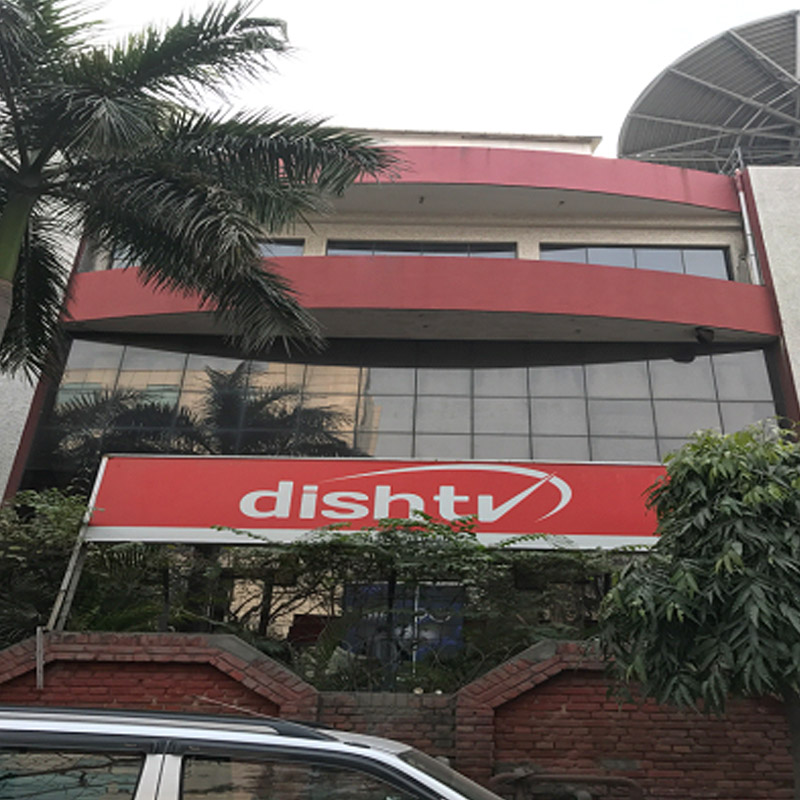
  • Dish TV, Star India ads pulled up by Asci

    Dish TV, Star India ads pulled up by Asci

    MUMBAI: Advertising Standards Council of India’s (Asci) Consumer Complaints Council (CCC) upheld complaints made against 27 advertisements during the quarter April – June 2011.

    During the same quarter, the CCC also rejected complaints against 15 advertisements as they did not violate the Asci Code.

    The CCC did not uphold complaints against 17 advertisements of various advertisers that include MakeMyTrip, Mankind Pharma, P&G WellaKolestint, Dabur India, McNroe Consumer Products, Royal Hygiene, Tata Chemicals, HUL’s Axe Googly Deo, Times of India, amongst others as these advertisements did not contravene Asci’s codes or guidelines.

    The complaints were upheld against advertisers from FMCG, education, healthcare, DTH and media sectors.

    Dish TV‘s claim to offer “30 True HD channels” was rejected by the CCC citing that the use of the word ‘True‘ to denote “upscaled standard definition” channels as HD was misleading.

    Their claim of providing maximum number of HD channels was also challenged, stating that Dish TV can provide only a limited number of HD channels and the other “claimed” HD channels were SD channels upscaled to HD at the DTH end. This claim would lead to consumers expecting an HD experience being misled.

    Similarly, complaints against certain claims made by Star India on the AsliHD campaign were upheld by the CCC stating that the claims of AsliHD were framed to exploit consumers‘ lack of knowledge of HD technology.

    In the educational sector, a complaint against IMS Learning Resources’ advertisement claiming “8 out of 10 toppers in CBS” and other similar claims was upheld since the claims could not be substantiated with evidence duly validated by an independent agency.

    Similarly, complaint against Roots Education‘s advertisement claiming No 1 CAT coaching in Delhi and other claims was upheld due to lack of evidence to back the claim.

    The complaint against Career Launcher advertisement claiming 303 Calls in DU (BBS/ BFIA) without mentioning whether they were final admission calls or just interview calls was also upheld by the CCC.

    The complaint against Sri Balaji Society’s advertisement claiming 829 students being placed from the 2009-11 batch without mentioning the total number of students was upheld on the ground that the claim contravened Section 4C of Asci’s guidelines for advertising of educational institutions and programmes as the advertisement shows images of colleges which do not seem real.

    ITM Institute of Fashion, Design & Technology in their advertisement state that their study programmess are approved by PIFT and MS University, but fail to provide details like full name and location. This contravenes the Asci Guidelines for advertising of educational institutions and programmes, hence the complaint was upheld.

    Similarly, ITM Institute of Hotel Management stated that their degree programme was affiliated to Mumbai University but failed to provide a specific institution or college and its location. Also, their claim of being voted Top Hotel Management College of the country by ‘Competition and Success Review‘ was not substantiated. Thus, the complaints against this advertisement were upheld by the CCC.

    Advertisement claims by FMCG majors HUL, P&G, Reckitt Benckiser, Paras Pharma amongst others came under the CCC’s scanner.

    FMCG major Hindustan Unilever was faced with a complaint regarding their advertisement on a leaflet of ‘Pureit Water Purifier’ which contains numerous disparaging and false statements about the competitor product – Tata Swach. The distribution of anti-Tata Swach danglers on Tata Swach packages by the advertiser was seen as undermining the Tata brand but also an unfair and unethical trade practice. Following the CCC’s intervention and upholding the complaints, HUL withdrew the leaflet from the market.

    Another HUL advertisement that came under the scanner was the Axe Effect campaign. This complaint was upheld on the grounds that the visual used was overtly sexual and vulgar and portrayed women in an indecent manner. The complaint against Paras Pharmaceutical’s sexually explicit advertisement of Set Wet Deodorant was upheld on the grounds that it was portraying women as sexual tools.

    Some complaints on certain claims made by P&G’s Pantene Pro-V Hair Fall Control were upheld by the CCC on the grounds that the depiction of a stylised golden circular drop misleads consumers into believing that 150 crore and not 15 crore women found Pantene to be effective.

    Moreover, P&G’s claim that 80 per cent of Indian women say that the new Pantene is better than anything else they have tried before, based on a study of just 360 women, was misleading. Following the CCC’s decision, P&G removed the stylised golden circular drop in the advertisement.

    Similarly, complaints received against Reckitt Benckiser’s advertisement for Dettol Skincare Soap was upheld on the ground that it was misleading consumers by wrongly linking the skin condition to germs, where in reality there is no correlation between the two.

    The complaint against Sundrop Heart’s advertisement was upheld on the ground that its statement “jeenekadaarnahi, khaaneka oil badaliye” can lead consumers to believe they can neglect the importance of healthy lifestyle by merely changing the cooking oil they use.

    Complaints against an advertisement of International Tractors Ltd for their brand Sonalika Tractors were upheld as they used the creative property ‘Mileage ka Master’ of Mahindra Tractors, thus taking unfair advantage of the goodwill attached to the Mahindra products.

    The complaints against GCMMF’s advertisement claiming that Amul butter tops the food triangle, was upheld in the absence of an appropriate disclaimer, ‘to be used in moderation’, which could mislead consumers to believe that Amul Butter is the best food to have, thus leading to over-consumption of butter.

    A few healthcare advertisements also came under the CCC’s scanner because of the claims made by the advertisers.
    A complaint was received against The Institute of Indian Therapies for their advertisement of ‘AyuCare Lavana Tailam’, which claims that the external application of oil helps reduce the size of one’s stomach and lose all fat. The CCC considered the report of the clinical trial submitted by the advertiser and concluded that the advertisement was misleading.

    In another case, AMA Herbal Labs advertisement mentions that competitors use PPD (Paraphenyenediamine) which can be harmful to the hair. The CCC concluded that the specific mention of PPD as a harmful chemical was misleading and unfairly denigrates other products.

    Business World magazine claimed to be the No. 1 business magazine in India which was most read and most sold. However, the IRS for the 3rd Quarter of 2010 showed the magazine in third place. Since the claim was not supported by any independent research, the complaint against the advertisement was upheld.

    The complaint against JyothyLabs’s Exo Dish Shine Bar advertisement claiming that it can kill disease-causing germs in just 20 seconds was upheld as the technical data submitted did not support the claim that it “starts” killing germs in 20 seconds. The advertiser made appropriate modifications to the advertisement post the CCC’s decision.
    The complaints against the Amul Body Warmer advertisement were upheld as the CCC concluded that the depiction of Draupadi in a frivolous manner could hurt religious sentiments of a large section of society, thus causing grave and widespread offence.

    The complaints against claims made by Shree Maruti Herbal’s D-Diabetes Smart Powder advertisement were upheld as these were not substantiated with clinical trials and technical data.

    Complaints against Micromax Mobile advertisement showing a student experimenting in a chemical laboratory which ends in a blast were upheld as it sends the wrong message to students and that it may encourage many students to emulate an act that could cause injury or harm.

  • ‘If you are up in the hierarchy, you will get pricing power’ : Star India president ad sales Kevin Vaz

    ‘If you are up in the hierarchy, you will get pricing power’ : Star India president ad sales Kevin Vaz

    Leading broadcasters will continue to post strong ad revenue growth while the long tail will be severely hurt as advertisers tend to consolidate their spends in a cautionary environment.


    Genre leaders will benefit as advertising monies get rejigged. It is the weaker performers that will not find support from advertisers; they will degrow.


    The television sector will see a 13-15 per cent growth in ad revenue this fiscal while print will be pushed back in a slowing economy.


    Star India, which has leader channels in most genres, has done more annual and network deals this year. Its top 10 clients, for instance, have done deals stretching from a minimum of 12 months to three years.


    The Hindi general entertainment channel (GEC) genre is on an upswing even as ad monies are moving away from cricket.


    The Hindi movie channel genre is set to grow at 15-20 per cent. The news genre will, however, continue to struggle this year.


    In an interview with Indiantelevision.com‘s Sibabrata Das, Star India president ad sales Kevin Vaz talks about the changing equations in the television advertising space.


    Excerpts:

    Is India‘s leading broadcasting network ready to announce that the advertising economy is slowing down?
    The ad market is not as buoyant as it was in January. The television sector will not see a 20-25 per cent growth in ad revenue this fiscal as was forecasted earlier. But it will still post a 13-15 per cent growth while print will be pushed back in a slowing economy. With print crawling at a 0-3 per cent growth rate, ad monies will move to television.

    Even then it is a slower growth for the TV broadcast segment. Is Star beginning to feel the heat?
    Leading broadcasters will continue to post healthy growth while the long tail will be severely hurt as advertisers tend to consolidate their spends in a cautionary environment.


    Genre leaders will benefit as advertising monies get rejigged. It is the weaker performers that will not find support from advertisers; they will degrow.

    Aren‘t Star‘s top advertisers noticing a slowdown?
    We have actually done more annual and network deals this year. Our top 10 clients, who account for 30 per cent of our revenues, have done deals stretching from a minimum of 12 months to 36 months. We will buck the trend and grow much faster than the industry. Having leader channels in most genres has helped us stitch long term deals.

    The fiscal first-quarter is indicating a slowdown for certain listed media companies. So isn‘t there a negative sentiment already prevailing in the market?
    The April-June quarter has been good for us. And the July-September quarter is even better. Of course, the channel performance has also improved. If you are up in the hierarchy, you will get pricing power.

    ‘The hard core press categories are shifting more to TV. The automobiles category is now spending 60 per cent of its ad budgets on
    TV, up from 30 per cent. The consumer durables segment is also
    following this trend‘

    But aren‘t we seeing a small dip in FMCG spending in the first quarter?
    The FMCG category is going to be aggressive this year. Some of them may have issues, but as a whole they will continue to spend more. P&G, Marico and ITC, for instance, will not shrink their promotional budgets. There are variants being launched and competition in the category is fierce. TV is the last thing they will cut down on as it is the most efficient medium for the category. And within TV, they will consolidate their spends.


    In a toughening economy, advertisers tend to flirt less; they commit their spends to the bigger players and keep aside a lesser amount for shopping with the rest.

    Are Hindi general entertainment channels going to benefit because cricket is not delivering due to India‘s poor performance?
    Cricket is hit in a big way. GECs are on an upswing even as ad monies are moving away from cricket. The Hindi GEC genre, pegged at Rs 37-40 billion, will grow at 12-15 per cent this year.


    It is important to note that cricket is losing out because of India‘s dismal performance; this has nothing to do with a slowdown. In fact, the Indian Premier League (IPL) will be tested next year; as ratings slip, there will be a churn.


    So what is working well for us? Cricket and print are on the losing side this fiscal.

    Are tentpole properties bringing in revenue spikes in GECs?
    Advertisers are supporting tentpole properties as they look at buying impact. Brands like Maruti and Cadbury, who are on cricket, are sponsors of Just Dance. Kaun Banega Crorepati has got Idea. If cricket was doing well, we could have come under some pressure. Even in regional language channels, we are seeing tentpole properties being created.

    What about the Hindi movie channel space?
    The ad revenue market for this genre is around Rs 8 billion. It is set to grow this year at 15-20 per cent.


    Star Gold will capitalise heavily as the channel is performing very well. We have cut the ad inventory time by 33 per cent with effect from 15 August to give it a Hindi GEC environment (Channel V saw a similar ad cut time from 1 January) and ramped up our investment on movie acquisitions.

    How will the launch of a Hindi movie channel by Viacom18 impact the market?
    We will see a huge erosion in viewership for some channels who have not invested in movies. But from a revenue perspective, we must remember that it is a very efficient genre.

    In the Bengali and Marathi regional markets, it is becoming a three-horse race with Star performing well. So how will this fragmentation impact?
    The successful launch of Star Jalsha has actually grown the market. The Bangla GEC advertising market has grown from Rs 3 billion two years ago to a size of Rs 6 billion. Even in Marathi, there will be a revenue expansion as we start monetising the growth of Star Pravah. In these stand-by-itself markets, advertisers had only limited GRPs to buy. Now that the supply has increased, we expect a 30-40 per cent expansion. National brands are going deeper and deeper and local brands are getting more aggressive.

    Now that Star is also handling ad sales of NDTV, how do you see the growth in the news genre?
    The news genre will continue to struggle this year. Banking, finance and automobile categories are seeing a huge hit; so news television will feel the impact. With the resurgence of GECs, the news genre has actually stagnated for the last few years.


    Regarding NDTV, we are selling it along with the network. So we are bringing in a wider range of advertisers.

    Do you see consortium selling growing as a concept?
    Yes, leading broadcasters will become the rallying point. It has happened in the case of distribution (Star and Zee merger) because they sensed value; we will see it in the advertising arena as well.

    Is the English entertainment segment under pressure?
    English general entertainment channels will benefit as the premium segment grows. High-end cars, for instance, will increase their exposure to TV. The English GEC genre will see a 30 per cent growth this fiscal.

    So is TV gaining at the cost of print?
    The hard core press categories are shifting more to TV. The
    automobiles category is now spending 60 per cent of its ad budgets on TV, up from 30 per cent. The consumer durables segment is also following this trend.

  • Leading broadcasters to gain as advertisers rejig spends: Vaz

    Leading broadcasters to gain as advertisers rejig spends: Vaz

    MUMBAI: Leading broadcasters will continue to post strong ad revenue growth while the long tail will be severely hurt as advertisers tend to consolidate their spends in a cautionary environment, said Star India president ad sales Kevin Vaz in an interview with Indiantelevision.com.


    The television sector will see a 13-15 per cent growth in ad revenue this fiscal while print will be pushed back in a slowing economy.


    “The ad market is not as buoyant as it was in January. We will not see a 20-25 per cent growth as was forecasted earlier. But the leaders in any genre will benefit as advertising monies get rejigged. The long tail will not find support from advertisers,” said Vaz.


    Star India, which has leader channels in most genres, has done more annual and network deals this year. “Our top 10 clients, for instance, have done deals stretching from a minimum of 12 months to 36 months. We will beat the trend and grow much faster than the industry. Being in leadership position has helped stitch long term deals,” averred Vaz.


    In an earlier interview, Zee Entertainment Enterprises Ltd executive director revenue and niche channels Joy Chakraborthy had stated that advertisers were looking at shorter term and quarterly deals.


    The Hindi general entertainment channel (GEC) genre, pegged at Rs 37-40 billion, will grow at 12-15 per cent this year. “Cricket is hit in a big way. GECs are on an upswing even as ad monies are moving away from cricket,” stated Vaz.


    The Hindi movie channel genre is set to grow at 15-20 per cent. “Star Gold will capitalise heavily as the channel is performing very well. We have cut the ad inventory time by 33 per cent to give it a Hindi GEC environment and ramped up our investment on movie acquisitions,” said Vaz.


    The news genre will continue to struggle this year. “With the resurgence of GECs, the news genre has stagnated for the last few years,” Vaz said.

  • ‘Our revenue target is to grow upwards of 30%’ : Star India senior VP, GM English Channels Saurabh Yagnik

    ‘Our revenue target is to grow upwards of 30%’ : Star India senior VP, GM English Channels Saurabh Yagnik

    star India is aggressively building a wide portfolio of English entertainment channels. Its aim: to capture specific needs of different viewers.


    Backed by a rise in audience share, Star is eyeing a revenue growth of 30 per cent from its English channels.


    In an interview with Indiantelevision.com’s Ashwin Pinto, Star India senior VP, GM English Channels Saurabh Yagnik talks about the strategy the network has adopted in growing the consumption for English entertainment channels.


    Excerpts:

    After Star India started overseeing the operations of the English channels, what has been the difference?
    The English channels got managed in October 2009. That was when we had a transition from Hong Kong to India. We set up a full team to look into content, marketing and positioning of the channels. With our better understanding of the local market conditions and what people watch, we have added value to the viewer. This is reflected in how our category shares have grown.

    Could you elaborate on the growth of these channels, particularly with reference to this year?
    We have seen results coming from the momentum of the things we did last year. We also launched more channels to strengthen the portfolio; HD feeds for Star Movies and Star World were recently launched. We upped the ante for marketing on Fox Crime and FX. We are going about aggressively building a portfolio that caters to specific viewer needs in various ways. We use this to build consumption and grow the share of Star as a network.

    Even in revenues?
    The pace of growth has been fantastic. Our target is to grow upwards of 30 per cent. This is the kind of momentum we are looking at.

    What are the challenges before English channels at this point of time?
    Growing consumption for English content is the biggest challenge; it is also an opportunity. We tackle this by driving the relativity and relevance of content. You are seeing more on-ground led activities for promotions. Last year we aired the Oscars and did a 360 degree campaign. This time we did the James Bond festival and had a 360 degree approach. This helped the viewers relate more. A similar thing was done with ‘Avatar’ to drive awareness of Star Movies and we used Star Plus as well for the film.


    We have done local shows on Star World like ‘Koffee With Karan’ to drive viewership. We are also doing localised promotions around shows. For Masterchef Australia, we brought a jury member down here. Among other things a live chat happened which was well received by the audience. We put legs to our promotional strategy to ensure that people find content that is relevant and relatable. Then you intersperse it with aggregator shows like Koffee With Karan. This is how you break barriers for English consumption.

    Primarily, Star World is a destination for Hollywood shows. That is the DNA. All local content will have to be as exclusive and exquisite as Hollywood aspirations. We will be selective and bring in what fits into our criteria of exclusivity

    Do content costs present a challenge to the business model?
    We have been noticing that in some cases there is irrational pricing for content. This might not sustain itself. What gives us comfort is that we have long term strategic relationships with a lot of studios that gives us depth and width of content. While there are short term challenges in terms of costs going up, we managed to mitigate some of those risks through our long term contracts.

    With more players coming in, how is Star Movies fine-tuning its strategy to hold on to its position?
    Star Movies positions itself not just as a destination for movies but as a destination for Hollywood. The programming strategy is about making content relatable and relevant which means having differentiated and sharply focused festivals throughout the year. We have access to the best titles from various studios. The aim is to amplify properties like a ‘Superheroes Festival’ by adopting a multi-pronged approach.


    Also, there are a huge amount of online viewers. We will use this to market and talk about our properties.

    Is viewer loyalty growing for this genre or is it still very much title driven?
    Viewership is largely determined by the titles that are placed but the differentiation that Star Movies brings in is through its premieres and sharply crafted festivals. This helps ensure a very sharp and insightful promise and we are able to reach a considerable set of viewers by going beyond just titles.

    Is HD the future for this genre? Do all English movie channels need to move towards it?
    The future will be beyond HD as well and there will be more innovations. The viewership will move towards HD because of the viewership quality. However, we are not stopping at that as Star Movies is always inventing and innovating and will bring in the latest technology for its viewers.

    By when do you expect to breakeven on the HD feeds?
    They are a premium offering. You need an HD STB and an HDTV. We are driven by advertising and subscription. The idea is to breakeven in the second year.

    Tam data shows that Star World has increased its share despite new entrants. What have been the reasons for this?
    A lot has happened on Star World. We started with the stripped format on the weekdays with a sharp promise and focus. This helped grow appointment viewing. We did exclusive, glamorous local shows like Koffee With Karan. This aggregated audiences. Our digital engagement and what we did in the social media space has helped us build a loyal set of viewers. They are excited about watching us.

    Which are the genres that are working the best for you? Sitcoms and crime dramas work very well as does local programming. ‘Masterchef Australia’ is also performing well. The range of shows that do well is broad based.

    What role does localisation play for Star World?
    Primarily, Star World is a destination for Hollywood shows. That is the DNA. All local content will have to be as exclusive and exquisite as Hollywood aspirations. We will be selective and bring in what fits into our criteria of exclusivity. While localisation is important, it is not our backbone.

    Is non primetime becoming important?
    Yes! We see viewership here as well. The scheduling is based on viewership patterns so that we get unduplicated audiences across time bands for various shows. We slot shows based on viewer profile. We run omnibuses of our weekly offerings on the weekend. So people can do a catch up. This allows more viewers to watch us outside primetime as well.

    Could you talk about the increase in marketing innovations?
    There has been a significant step up in this area. For instance when ‘Community’ was launched, people got a customised message explaining the show by star. When we launch shows we talk to people asking them their views and why they want to watch it. We put this as a part of our promotions. We could have stars of a show coming down to India. This is an interesting possibility. On Star World, you have the biggest shows launching.


    We are doing a high decibel campaign around ‘Terra Nova’ which is a sci-fi show. The Torrentz property on weekends is to bring shows as close to the US airing date to India. This is how we build Star World as the destination for the best American shows fresh from the US.

    Are you expanding distribution beyond DTH for FX and Fox Crime?
    Digital is the right place. This is where a large part of consumption of English GECs is going to happen. The kind of audience that we target is affluent and will move towards DTH as the viewing experience there is better. That is where people consume more. We believe that digital is the right way to go. We don’t have analogue plans for them.
    Is the English GEC big enough to have channels according to TG and audience profile?
    We have had a different strategy based on our own insights. Star World has a healthy portfolio. Fox Crime is not based on a demographic cut or of the TG; it is based on the fascination that people have for a particular genre. With FX, we looked at catering to the evolved sensibilities of the more discerning viewer. Our strategy is based on viewer behaviour and mindset.
    As more entrants come in, how much of a challenge is fragmentation?
    There is enough penetration but lesser category share. We are the second largest English speaking population in the world. But the share of English GECs is nothing to talk about in relation to that. With more affluence, education and people becoming more global in their mindset, the consumption of English content will only grow. Also disposable incomes are growing and the propensity to consume branded products is the highest in this category.
  • Arpita Menon joins Star India as media planning & buying head

    Arpita Menon joins Star India as media planning & buying head

    MUMBAI: Star India has roped in Arpita Menon to head the media planning and buying team of the network.


    Menon will report to Star India EVP and marketing head Gayatri Yadav.


    Prior to Star, Menon was managing partner at media analytics company Quantemplate.


    She comes with over 18 years of experience in media and advertising across planning, media buying, research and client management. She has worked with companies like 9.9 Media, ABP, Lodestar Universal, Starcom and FCB Ulka.


    Menon has also authored a book, ‘Media Buying and Planning – Principles & Practice in the Indian Context‘.

  • After 2 years, Star ups ad rates

    After 2 years, Star ups ad rates

    MUMBAI: Advertisers will need to cough out more to place their ads on television as two leading Indian broadcasters have indicated that they would be upping their rates this fiscal.

    After a gap of two years, Star India said Tuesday it would increase the advertising rates for its bouquet of channels by 20 per cent with immediate effect.

    “We expect our revenues to grow by around 15-20 per cent this fiscal as compared to 12-13 per cent in the last year. Since advertisements are the major source of income for this industry, the increase in rates will help us achieve the target,” says Star India COO Sanjay Gupta.

    The other leading broadcasting company, Zee Entertainment Enterprises Ltd (Zeel), has forecast a 12-14 per cent ad revenue growth in FY‘12.

    Star‘s decision has come amid rising content costs, an increase in market share and a leadership position of its flagship Hindi general entertainment channel Star Plus.

    Says Gupta, “We have achieved an unprecedented growth of 30 per cent in the last two years. Today we are leaders in 18 key states of India. This unstoppable growth is riding on the back bone of significant investments, innovative content and delivery of quality of experience through technologically advanced platforms.”

    Broadcasters have been pressing for a fair rise in ad rates as the cable and satellite homes in India have increased from 90 million in 2009 to 116 million in 2011, while the digital homes have almost double (from 15 million in 2009 to 26 million in 2011).

    Star claims that its market share and reach has gone up substantially. However, the advertising revenue growth has not kept the same pace.
     
    Says Gupta, “The total viewership share of the network in 2009 was 12.4 per cent, which today stands at 16.1 per cent. Advertisers should accept our increase.”

    Star justifies the increase in ad rates as it has come in the backdrop of spiraling cost of talent, increased investments in technology, advanced delivery and distribution platforms as well as increased production costs.

    Says Star India ad sales president Kevin Vaz, “Our network reach has increased and at the same time for the advertiser, the cost of reaching 1000 people has reduced by 38 per cent in the last two years. This rate increase of 20 per cent is just a part correction in lieu of the phenomenal growth the network has shown in the past two years.”
     
    Some senior industry executives do not find sense in Star making a public announcement. “Why do you need to announce the hike in ad rates when you don’t do business on rate cards? The deals are signed after negotiations and advertisers always try to beat down the price. This announcement is amusing,” says a senior ad sales executive from a rival network.

    Media buyers feel the pricing will be determined by the demand-supply equation.

    Says Madison Media Group COO Punitha Arumugam, “The television rates are decided by the TVR performance and not by rate cards. As Star is performing, it can charge premium. It all depends on the ratings and not on rate cards.”
     
    On the point of CPT (cost per thousand) going down, RK Swamy Media Group president Chintamani Rao believes that in India deals are not signed on the basis of CPT. “Deals are done on CPRP (Cost Per Rating Point). If deals would have been signed on CPT basis, the rates would have been much higher,” he says.
     

  • Channel [v] launches youth report for marketers

    Channel [v] launches youth report for marketers

    MUMBAI: Star India’s youth brand Channel [v] has launched FYI Youth Report 2010, a study commissioned by the channel to understand the youth better.

    Through this research, the channel provides marketers a medium to comprehend best the youth and discover their ever evolving facets.

    “FYI is the most organised and structured study, leading to significant research and findings about the youth,” the channel said.

    The research comprised around 5000 respondents, with 800,000 internet ethnographies.

    Star India EVP and GM – Channel [v] Prem Kamath said, “FYI Youth report 2010 is a Channel [v] initiative to demystify the largest and most profitable demographic of the country to brands. It is the most extensive guidebook of insights and trends of the Indian youth, which can be used by brands through its widespread findings. India’s most comprehensive youth research will help brands dissect the youth and know exactly what makes them tick.”

    The study includes many variables such as gender, mainstream vs trendsetters as well as the various geographies to get a more holistic approach and cover all aspects of the youth.

    Nine touchpoints such as entertainment, relationships, education and career are analysed to completely understand the respondent’s attitudes, behaviours and opinions.

    The FYI research is undertaken amongst the top 20 cities in India in the time period of the first quarter of Year 2010, targeting the age group of 16-19 SEC AB.