Tag: Star India

  • Some channels yet to join IBF ad clampdown

    Some channels yet to join IBF ad clampdown

    MUMBAI: Is the Indian Broadcasting Foundation‘s (IBF) diktat ordering its members to take TV commercials off the air waves being adhered to the T? While TV commercials have done the vanishing act from a majority of channels and networks, some were still airing them, which include regional channels.

    Multi Screen Media (MSM), Star India, Zee Entertainment Enterprises, Times Television Network, Big CBS, ETV and the Viacom18 group are among the big daddies of the TV biz which are strictly following the clampdown.

    But networks such as Discovery and Turner International India still had TV commercials running between programming, even as recently as the evening of 2 May. As had other regional players in the south. These included: the Sun Group channels (Udaya and Gemini), Raj TV channels, Maa TV, Kasthuri TV V3 (Kannada), Makkal (Tamil), Janashree (Kannada), and KF (Kannada music channel).

    Why have these channels not joined in the TV commercial ban as the IBF seeks to force the AAAI to change the advertising billings system from gross to net?

    IBF secretary general Shailesh Shah told Indiantelevision.com that hardly one in twenty channels have not fallen in line. He said that even these will comply in a day or two should the impasse continue. “Channels being uplinked from overseas have also assured compliance,” he said. At the same time, he further stated, channels were free to carry ads of those agencies which agree to the net billing system.

    “It is our endeavour to always uphold the best practices and compliance standards of the industry. As members of the IBF we will comply with the stand taken by the federation,” explained Discovery South Asia senior VP and GM Rahul Johri. “Since Discovery‘s offerings are being uplinked from outside the country, we have been given more time to stop carrying ads and we should stop by 6 pm tomorrow.” He stated.

    RBNL CEO Tarun Katial confirmed that the Big CBS channels have toed the line. “We as an industry have to stand together,” he added.

    Meanwhile, Shah said that talks are on at various levels in Delhi and Mumbai with the agencies and office bearers of the AAAI to resolve the issue.


  • What’s-on-India’s TSM expands reach to 2200 head-ends

    What’s-on-India’s TSM expands reach to 2200 head-ends

    MUMBAI: TV guidance company What‘s-on-India today said it has expanded the reach of its TV channel distribution and connectivity monitoring system Television Street Maps (TSM) to 2,200 cable-head ends and control rooms across 1700 towns up from 700 head-ends and 250 towns that it used to cover.

    Some of the new markets added by TSM in the expansion plan include small (less-than-one-lakh) population towns in Hindi-Speaking-Markets (HSM LC1).

    These markets are being analysed anew by the industry as they become critical for subscription revenues with digitalisation. The HSM LC1 markets now play a more crucial role in TV Channel‘s ad revenues and TSM has already launched data for these markets.

    The company plans to make TSM a census of cable headends and control-rooms through aggressive expansion. The target is to reach coverage of 3,000+ head-ends by the end of 2013.

    TSM business head Joydip Kapadia said, “We‘ve seen tremendous support from broadcasters for our initiatives. They understand that in the fast evolving digital landscape, distribution, reach and quality play key roles. The consumer is spoilt for choice and the onus is on the broadcasters to ensure that their channel is readily available to viewers in the best possible quality. Last year, TSM promised the industry a huge expansion and we have delivered it.”

    TSM delivers day-to-day TV channel monitoring by head-ends and towns to the TV industry. It also monitors cable and DTH Channel Packs, pack prices and EPG quality.

    Over the last two years, it has sharpened the delivery of its Weekly Reports, alerts and other extended offerings such as neighbourhood analysis, sensitivity analysis, short term daily placement monitoring, EPG scan, EPG quality monitoring, leading & following gap analysis.

    Launched more than a year ago, TSM already counts the likes of TheOneAlliance, Star India, BBC, Multi Screen Media (MSM), Disney-UTV, and Viacom18.

  • Dish TV adds Star India’s five HD channels to its bouquet

    Dish TV adds Star India’s five HD channels to its bouquet

    MUMBAI: Dish TV Monday said it has added five new HD channels from Star India bouquet comprising Star Plus HD, Star Gold HD, Star World HD, Star Movies HD, and Life OK HD effective 8 April.

    Star bouquet of HD channels will be included and made available in all existing HD packages starting from Rs. 399. With this addition Dish TV now boasts of 25 HD channels and 17 HD services.

    Speaking on the occasion, Dish TV COO Salil Kapoor said, “We are excited to add the most anticipated Star channels bouquet in HD and give our customers a viewing experience that is incredibly lifelike. We recognise that our customers have already been enjoying many of their favorite programmes in HD, and I‘m delighted that we can now broaden their choice with maximum 25 HD channels and 17 HD services.”

  • ASCI upholds a record 99 complaints in January

    MUMBAI: Kicking off the new year, The Consumer Complaints Council (CCC) of the Advertising Standards Council of India (ASCI) upheld the highest ever number of complaints against misleading advertisements in January.

    Ninety-nine out of 108 complaints received have been upheld by the CCC. ASCI’s National Advertising Monitoring Service (NAMS) also contributed in tracking down the misleading claims made in ads in various sectors.

    ASCI said in a statement, “The NAMS initiative has helped in strengthening the self-regulation and redressal process manifold. The proactive monitoring has helped in tracking a wider numbers of misleading ads month on month. This is a positive development as it is helping to protect consumer’s interest in India.”

    The highest number of advertisements was pulled back in the healthcare segment with 28 complaints being upheld. The second highest number of complaints was upheld in the education sector with the CCC finding 22 advertisements misleading or making claims that are not substantiated by sufficient data. Sixteen advertisements in the personal care category, 10 in consumer durables segment, nine in the miscellaneous category, three each in the food and beverages and real estate segments and two advertisements in the media category were pulled up by the CCC as they were found to have contravened Chapter I.4 of the Code.

    The advertisers that were asked to pull out or modify their ads for the month of January included Star India, Whirpool, Natraj Electricals, Radikal Foods, Bennett Coleman Co Ltd, Tata Housing Frankfin Institute of Air Hostesses, Marico, Hindustan Unilever, Gillette and Rupa.

    Star India Ltd’s Star Cricket TVC shows “a boy with cricket bat jumping over a creek and his face changing to Chestshwar Pujara‘s”. The advertisement is trying to communicate that children who take risks turn into top cricketers. The element of risk is clearly visible when other children are shown astonished to see the feat of the boy jumping the creek. This scene clearly violates the ASCI Code. Also the shown jump seems morphed which accentuates the risk as normal child cannot jump such a broad creek.

    The CCC concluded that the boy jumping over small creek shows a dangerous practice and manifests a disregard for safety without justifiable reason. The TVC contravened Chapter III.3 of the ASCI Code and the complaint was UPHELD.

    BCCL’s ET NOW has a print advertisement that shows a comparison of viewership of some English business news channels in a stated target audience group and market. The primary objection is that the source of the data is not mentioned. Assuming that the source is TAM, the market share numbers stated in the graph are incorrect. The visual has pictures of people who are Engineers, Doctors, Entrepreneurs & Corporates whereas the TG stated for the graph is males, 25-44, Sec A which would include these professionals, students and non-working individuals as well. The CCC concluded that the source of the data substantiating the claim was not mentioned in the advertisement and the manner in which the comparative data was presented was misleading as the base level was not mentioned. The advertisement was found misleading and contravened Chapter I.4 of the Code. The complaint was, thus, upheld.

  • Court passes landmark judgement to protect digital sports rights holders against telcos

    Court passes landmark judgement to protect digital sports rights holders against telcos

    NEW DELHI: In a landmark judgment that will have long term effects on revenue sharing and monetisation, the Delhi High Court has said mobile phone companies cannot provide to their subscribers live match updates for sporting content for which Star India has the rights.

    Mobile operates can offer updates of cricket scores with a lag of 15 minutes or by obtaining a license from Star.

    The Court upheld the petition by Star India against Crickbuzz, On Mobile and Idea Cellular.

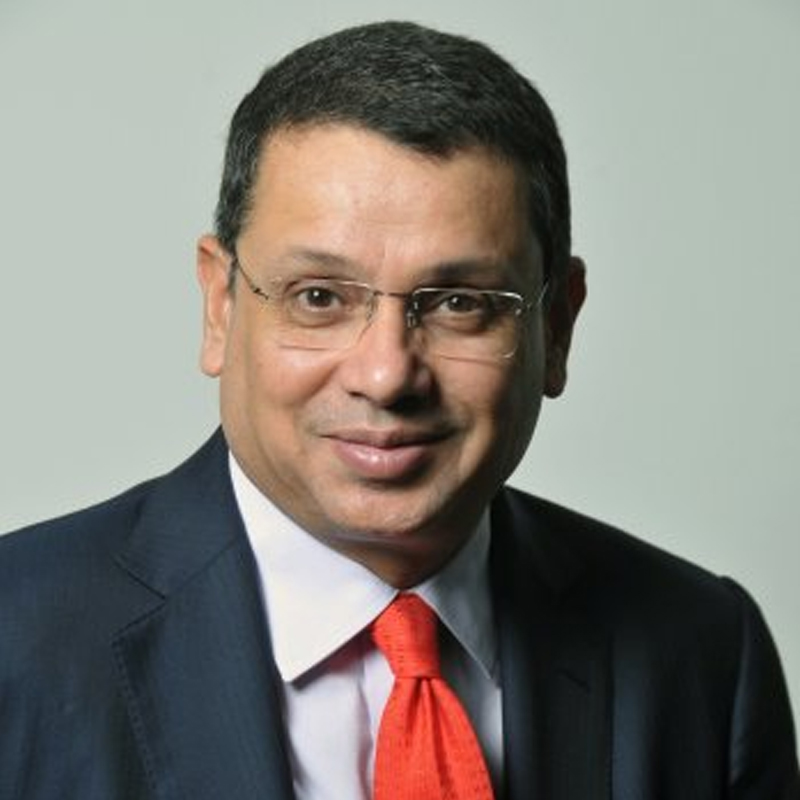
    “We had moved the court against these companies and the verdict could be a harbinger of change in monetising digitised content,” Star India CEO Uday Shankar said.

    Star India paid Rs.38.51 billion in 2012 for exclusive media rights to cricket matches organised by the Board of Cricket Control in India (BCCI) between 2012 and 2018. This included all international cricket matches in India and domestic competitions including the Ranji Trophy and the Irani Cup. The Star deal also includes Internet and mobile rights and covers 96 matches.

    Shankar said this was the first time that such an order had come and it would lay the foundation on how the rights can be exploited and monetised on mobile platforms.

    “When we bid for the cricket rights last year, our idea was to create a homogenous high quality consumer experience. We had bid for all rights, including mobile and digital, where there was no monetisation. We pay Rs 5 million per match for the digital rights, but have not monetised so far”.

    Shankar added that the lack of clarity on this was severely compromising the ability of rights owners to invest to create great experiences for sports fans. “This decisive verdict finally creates clarity on who owns the rights and a mechanism for monetisation and fair revenue share. For me, this is a huge boost to the entire digital and mobile space.”

    In his judgment, Justice M L Mehta issued a limited interim injunction restraining the defendants from disseminating contemporaneous match information in the form of ball-by-ball or minute-by-minute score updates/match alerts for a premium without obtaining a license from the plaintiff.

    At the same time, the Judge said: “There shall be no restriction upon the defendants to report ‘noteworthy information’ or ‘news’ from cricket matches, as and when they arise, because ‘stale news is no news’.”

    Furthermore, there will be no requirement for the license if the telecom operators ‘do it gratuitously or after a time lag of 15 minutes’, he added.

    The Court reiterated that ‘there is a difference between contemporaneous dissemination of match information in the form of ball-by-ball or minute-by-minute score updates/match alerts and reporting noteworthy information or news.’

    While hearing Star India’s petition, the High Court also observed that providing live score updates prevents Star India from effectively monetising its exclusive rights.

    “It would be just and reasonable for the defendants to either obtain a license and gain equal rights to their subscribers, or make them wait for some time, in order to not prejudice the right of the plaintiff (Star India) to earn revenue from the match information,” the court said in its order.

    “Those who do not obtain a license from the plaintiff, may not disseminate the score update or match alert before 15 minutes from the moment such score update or match alert is telecasted or broadcasted by the plaintiff (Star India).”

    The Court rejected the argument that the moment the match goes live on television, it is in the public domain. “I find that match information has not entered ‘public domain’ that is, it is not readily available to the class of persons who do not have access to TV/radio, who also happen to be the target consumers.”

    However, he said there was ‘considerable merit’ in the argument that the operators had a fundamental right to disseminate such information as demanded by the public.

    But he said that “it is imperative for this Court to balance the right of the organiser of an event to monetize his own event as against the right of the public to receive information regarding such event and the right of the media to provide access to such information demanded”.

  • Zee TV highest gainer in week 6 of 2013; Star Plus retains top spot

    MUMBAI: Zee TV was the only Hindi GEC with significant gains in week six of 2013 at 243 gross rating points (GRPs), allowing it to narrow the gap with leader channel Star Plus.

    Zee TV added 29 GRPs to week five’s 214 GRPs and maintained its No. 2 position in the Hindi general entertainment channel hierarchy. The jump is the combined result of all the regular shows (weekend and weekdays) gaining or maintaining the ratings and a fair performance of the weekend properties — English Vinglish 1.1 GRP for 12 noon airing and 1.6 GRP for 8.00 pm airing; Fear Files 1.2 GRP on Sunday and 2.3 on Saturday; and the Valentines Event that raked in 3.2 GRPs.

    Star India’s Hindi GEC Star Plus continued to lead the ratings race at 264 GRPs, though it did suffer a loss of 17 GRPs from the trailing week.

    There has been no change in the pecking order of GECs since last week as Colors takes the third spot with 206 GRPs (week five – 210 GRPs).

    Sony Entertainment Television gained one GRP to reach 160 GRPs and maintained its position at number four, according to TAM data (HSM including 5 new LC1 markets, C&S, 4+) for the week ended 9 February, sourced from a Hindi GEC.

    While last week saw Star Plus as a big leader with a lead of 67 GRPs, this week the gap between number one and number two narrowed to 21 GRPs. Consequently, the gap between the second and third place increased from four GRPs in week five to 37 GRPs in week six.

    Zee gained seven GRPs for the weekday primetime slot (7.00 pm to 11.30 pm) to collect a total of 115 GRPs from this band. In the weekday afternoon slot too, Zee was the highest gainer (four GRPs) at 27 GRPs as was the case in the weekend primetime slot where it gained four GRPs to collect 36 GRPs in all.

    Star Plus gained six GRPs in the weekday primetime slot (total 119 GRPs), two GRPs in the weekday afternoon slot (total 24 GRPS) and lost 16 GRPs in the weekend primetime slot (total 39 GRPs).

    In the case of Colors, the channel lost 12 GRPs in the weekday primetime slot (total 98), gained two GRPs in the weekday afternoon slot (total 18 GRPs) and gained 11 GRPs in the weekend primetime slot (total 40 GRPs).

    Sony remained more or less stable from week five to week six shedding just three GRPs in the weekday primetime band (total 45), gaining one GRP (total 13 GRP) and losing two GRPs (total 40 GRPs) in the weekday afternoon and weekend primetime segments respectively.

    Zee’s show Sapne Suhane Ladakpan KE was the highest rated show for week six at 4.3 TVR (3.8 TVR), followed very closely by Star Plus’ Diya Aur Bati Hum at 4.2 TVR (4.3 TVR). Star’s Saathiya Saath Nibhaana raked in 3.6 TVR (3.9 TVR) while Zee’s daily soaps Qubool Hai (3.1 TVR) and Pavitra Rishta (3.3 TVR) both got ratings of 3.3 TVR. CID continued to be Sony’s top performing show with 2.8 TVR, unchanged from week five. Star Plus’ dancing reality show Nach Baliye raked in 3.0 TVR (3.5 TVR) while Sasural Simmar ka on Colors earned 3.1 TVR (4.0 TVR).

    Star India’s second GEC Life OK gained three GRPs to reach 124 GRPs in week six (week five – 121 GRP) while Sab TV lost two GRPs to end up at 132 GRPs in week six.

  • Star India claims solid engagement levels on its cricket portal

    Star India claims solid engagement levels on its cricket portal

    MUMBAI: Star India, which recently launched Starsports.com, says that the site has recorded the highest time spent by users on any sports website per visit.

    Cricket fans, the broadcaster says, spent as much as 19 minutes per visit and viewed 342 years-equivalent of video in the first month of launch.

    The average time spent per visit in December, as per Comscore, despite the site being active for only five days that month, was 17.8 minutes and increased to 19 minutes in the first month.

    The 5.5 million unique viewers to the site across devices are enough to fill 83 `Eden Gardens‘ that, according to BCCI, has a capacity of 66,349. Starsports.com crossed 100,000 concurrent users consuming video during the third one-day international between India and England.

    The cricket timeline allows users to pull out past matches, view top moments, play around with the scorecard, while all the while enjoying unmatched video streaming.

    Star India COO Sanjay Gupta said, “Sports content in India has not seen much innovation across mediums. We want to change that and give fans the control to engage even more deeply with their favourite content. Through the world‘s first cricket timeline, viewers can pick the exact moments they want to see, during or after the live match.”

    “In fact we want to seamlessly integrate data and video throughout the site so that it‘s an unmatched viewing experience. We are excited about this leap and the response so far, and look forward to scaling it up further,” Gupta said.

    The broadcaster said every feature of the site aims to engage the consumer – from the video timeline to the reinvented commentary section that focusses on the action ball-by-ball, while pulling in real-time conversations on social media. The site boasts of a video scorecard bringing alive the statistics with video clips, analytics and graphics.

  • Star India launches video portal starsports.com

    Star India launches video portal starsports.com

    MUMBAI: Star India, which holds the BCCI media rights, has launched an India-focussed online platform starsports.com to exploit the digital media rights that it owns along with its sister concerns.

    The website which flagged-off with the Pakistan tour of India will provide a video experience for cricket fans that includes high definition video streaming, an advanced player that can be individually controlled and the ability to catch up on the game through both a video scorecard and a video timeline that marks the key moments of the game.

    Commenting on the launch, Star India CEO Uday Shankar said, "At Star, we have always focused on dramatically enhancing the overall consumer experience. Smart technology, combined with powerful content, can be disruptive and we are excited about offering Indian fans an entirely new way of experiencing their favorite game."

    The live streaming and video content will playback on select iOS devices and Android OS version 3.0 and above. However access to video content is currently limited to select operators.

    The non-video sections of the website pages will work on all tablets. The Live streaming and Video content will play back on select iOS devices and Android OS version 3.0 and above.

  • Star’s Bengali movie channel opens with 154 GRPs

    MUMBAI: Star India‘s Bengali movie channel Jalsha Movies which launched on 16 December made a debut with 154 GRPs in West Bengal, which the broadcaster claims is the biggest ever opening for any channel in the Bengali market since 2008.

    According to Star India president – ad sales and Star Jalsha president and GM Kevin Vaz, the channel‘s superior content coupled with aggressive marketing and distribution contributed to the ratings.

    “The channel is already setting new benchmarks and is redefining the pleasure of watching movies for our audiences within a week of its launch. This is a stepping stone for us and we hope to further live up to the expectations by offering a never before entertainment experience to our viewers,” he said.

    The channel was launched with the television premiere of Bengali superstar Jeet-starrer Awara that clocked 5.3 TVR.

    Jalsha Movies, which has a five-year deal with Bengali production house Shree Venkatesh Films, already has a library of 350 movies under its belt. The deal with Shree Venkatesh will give Jalsha Movies the exclusive right to air all the movies of the banner to be released in next five years.

    Going forward Vaz said that Jalsha Movies will continue to have big movie festivals like Dev festival, Mithun festival and so on.

    “We will also have one or two big movie premieres every month. We are soon premiering Challenge II which is the biggest blockbuster during Diwali in West Bengal market,” Vaz added.

    The free-to-air channel is available on all cable platforms including Manthan, DigiCable and Siti Cable apart from DTH platforms like Tata Sky, Videocon d2h and Airtel digital TV.

  • Jagdish Kumar new Hathway Cable CEO; Jayaraman made vice chairman

    Jagdish Kumar new Hathway Cable CEO; Jayaraman made vice chairman

    MUMBAI: In a major reshuffle, Hathway Cable & Datacom has appointed Jagdish Kumar as the new managing director and CEO of the company. He joins with immediate effect.

    K Jayaraman, who was occupying this chair, moves to the position of vice chairman.

    Kumar will report directly to the Hathway board, sources say.

    In his earlier stint, Kumar was the president of Reliance Industries Limited‘s (RIL) media and entertainment business.

    Before RIL, Kumar had a 16-year stint at Star India where he was involved in several key initiatives including the media company‘s direct-to-home (DTH) venture and acquisition of regional broadcasting company Asianet.

    Incidentally, Kumar was on the board of Hathway Cable & Datacom as a representative from Star. Earlier this year News Corp had exited Hathway by selling its 17.3 per cent stake in Hathway for Rs 3.58 billion.

    Kumar was also made Star India chief operating officer when Uday Shankar was made chief executive officer.

    In his last assignment at Star, Kumar was given the operational charge of Kannada general entertainment channel Suvarna. This was in addition to his earlier functions as Star India president – South.