Tag: Star India

  • ‘Satyamev Jayate 2’ to kick start soon

    ‘Satyamev Jayate 2’ to kick start soon

    MUMBAI: He isn’t the Mr Strategist and Perfectionist of Bollywood for no reason. This time around actor Aamir Khan has made sure that the second season of his TV show – Satyamev Jayate, the shooting of which began recently, remains in the news throughout the year.


    The season one of the show highlighted the social evils and also brought to the light the sufferings that people at large go through because of those. While the second edition is again set to bring forth the evils of the Indian society that’s becoming a hindrance in the country’s growth, the actor has devised a plan to give the audience enough time to execute the ideas promoted through the show in reality. The 12-episode show, this time, would be presented in installments – four episodes at the beginning of the year, four mid-year and the last four at the year end.


    While the other details are still being worked upon, what has come out is that the season is set to kick start soon with an episode focusing on the plight of rape victims. The episode has already been shot at the Yash Raj Studios and the actor has requested the audience present at the shoot to keep the details to themselves.


    The TV audience are set to witness some life-changing incidents, it seems.

  • Man Jit Singh likely to continue as IBF president

    Man Jit Singh likely to continue as IBF president

    MUMBAI: It was in early January of this year, that a major announcement emerged from MultiScreen Media (MSM – Sony Entertainment) wherein NP Singh was announced as CEO of the network, replacing Man Jit Singh. 


    The industry hadn’t digested the news when another one broke which stated that  Man Jit Singh was being moved into a global position as president of  Sony Pictures Home Entertainment, replacing David Bishop who will depart in March when his contract expires.


    What this elevation means is that Man Jit Singh will now be located in Los Angeles (LA). 


    So what does it mean for Indian Broadcasting Foundation (IBF) of which he is the president?


    Last year in September, the IBF re-elected Singh as its president at its 14th annual general meeting. But with him spending more time in LA, will IBF look for someone else to take his place? 


    No, comes the unanimous response from highly placed industry sources. An IBF representative states that:  “Man Jit Singh will continue to preside over the body as the president. For us, things are working smoothly and we don’t expect to see any changes.”


    Another source from the industry who is in agreement adds, “There is a board meeting to discuss the issue on 16 of this month but we see status quo being maintained.”


    When we called up Man Jit Singh to get his view on the same, he was unreachable. However, sources reveal he will be jetting to and fro between India and the US even now like he used to earlier. “He is used to the travel and has been doing it for ages now, so we don’t think distance is going to change anything.”

  • Uday Shankar receives award for contribution to Bengali Television

    Uday Shankar receives award for contribution to Bengali Television

    MUMBAI: Star India has received the 2014 West Bengal Tele Academy Award that celebrates the group’s significant contribution to Bengali television, making it the first broadcaster to win the coveted recognition. 


    The network’s CEO Uday Shankar was conferred the award by West Bengal Chief Minister Mamata Banerjee. The award recognises Star’s special contribution to Bengali television through two successful TV channels – Star Jalsha and Star Ananda (currently known as ABP Ananda).

    “As a group, we are delighted to receive the West Bengal Tele Academy Award, as it clearly shows the society has embraced our focus on quality content,” Shankar said.  “I really believe socially sensitive content is the way forward for the future of a healthy society. The plaudits go to the entire team.”


    Star Jalsha, the entertainment channel, has set new benchmarks in regional programming through innovative content and compelling storytelling. It enjoys an undisputed leadership position in the Bengali general entertainment space in terms of viewership, surpassing immediate competition by over 200 GRPs, according to recent TAM data.


    Star Ananda (now known as ABP Ananda) is a Bengali TV news channel that was launched under the stewardship of Shankar when he was the CEO of MCCS India. The channel was an erstwhile joint venture between STAR and ABP TV.


    The West Bengal Tele Academy Awards 2014 covers the entire gamut of film and TV, rewarding excellence in production, programming, photography and technology, among others. Headed by the Ministry of Information & Broadcasting, with Aroop Biswas as the chairman, the awards have been constituted as a token of respect and gratitude to the entire industry in West Bengal.

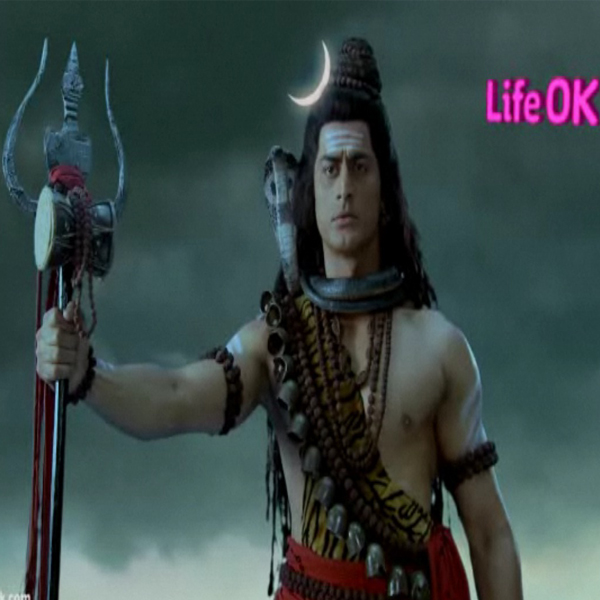
  • Life OK’s mythological saga ‘Devon Ke Dev Mahadev’ launches on DVD

    Life OK’s mythological saga ‘Devon Ke Dev Mahadev’ launches on DVD

    MUMBAI: In order to expand its reach and brand beyond television, Star India has released its Life OK’s mythological saga ‘Devon Ke Dev… Mahadev’ on DVD.

    The company has tied up with Ultra for this purpose.

    Star India CEO Uday Shankar said, “A nation and its people derive their collective identity and pride from stories passed on to it from earlier generations. It is our job not only to keep those stories alive but to tell them well in order to inspire a future generation. Like OK had its task cut out from the very first day and it has lived up to that challenge remarkably well by weaving gripping and inspirational stories with new approaches in production and technology.”


    While 300 episodes was a big achievement for show, it is just the beginning of the story for the mythological saga and for Life OK. “30 years ago you had Ramayana and Mahabharata which were fantastic. They fostered creativity. However later on, mythological shows were done the same way. They became old fashioned in look. That is why they did not have much success. When we started on ‘Devon Ke Dev Mahadev’, we knew that the way in which the story was told would have to change. We wanted to take the show beyond the Amar Chita Katha level. We have created new parameter of creativity. At the same time we did not compromise on the quality of entertainment,” Shankar said.

    Life OK, which completed one year in December 2012, is among the top five channels, Shankar added. “The aim is to make it a top three player.”

    Life OK GM Ajit Thakur said that the success of Life OK went beyond ratings. “While we have done well in terms of ratings, we have also dwelt on issues including crime, domestic violence, terror and religion. We have done things both on the air and on the ground. We want to be the home of big. new stories. While our show has finished 300 episodes, we still have lots of stories to tell within that show. We made an earnest attempt to make it as contemporary as possible by highliting Lord Shiva’s views on pertinent issues such as pollution and gender equality. This distinction has been pivotal to the resounding success of the show. At the same time while mythology is a platform that will be showcased on Life OK, it is not the only thing”.

    Life OK is doing a social awareness campaign to clean up the Ganga. “We did 15 days of activity last month. In this manner Life OK has gone beyond just being a TV brand,” Thakur said.

    Ultra Group CMD Sushilkumar Agrawal said that his company aims to bring content that blends entertainment with cultural and educational values. “This philosophy drew us to join hands with Life OK and launch ‘Devon Ke Dev Mahadev’ on DVD. This show is not just an epic but an amalgamation of Indian culture, tradition and values that will continue to be passed on to forthcoming generations.”

  • All new shows on Star this year

    All new shows on Star this year

    MUMBAI: Star India is all set to flag off the new year with a host of new shows on its English entertainment channels, Star World and Star World Premiere.


    Starting this month, Star World Premiere, will air the all-new American cyber-themed action-adventure series, Intelligence, which stars Josh Holloway as Gabriel Vaughn, a hi-tech intelligence operative with a supercomputer microchip lodged in his brain.


    A new-age super soldier, Gabriel can hack into any data centre and access critical intelligence to protect the US from its enemies. Intelligence also stars Marg Helgenberger as head of the government cyber security agency supporting Gabriel and Meghan Ory as Secret Service Agent.


    Come February, the channel is expected to telecast a new comedy-drama titled Rake, which sees Greg Kinnear as criminal defence lawyer Keegan Deane whose personal problems threaten to turn his entire world upside down.


    Apart from the new shows, the latest season of American Horror Story: Coven will also air on Star World Premiere. Having debuted in October last year, the anthology series features different characters and locations, including a haunted house, a mental asylum and a witch coven. The upcoming season revolves round themes such as oppression, witchcraft and voodoo. With actors the likes of Kathy Bates and Jessica Lange, the series has won both critical and commercial acclaim.


    Not to be left behind, Star World will telecast a new comedy-drama Bunheads starring Sutton Foster as Michelle Simms, a Las Vegas showgirl who gets married on impulse, only to end up in small town California, where she teaches ballet alongside her mother-in-law, Fanny Flowers, reprised by Kelly Bishop.


    Also airing on the channel will be the first and second seasons of Suburgatory, a series that follows the life of George Altman (Jeremy Sisto), a single dad from New York who moves upstate to the suburbs in search of a better life for his daughter Tessa (Jane Levy). This apart, Star World will telecast new seasons of old favourites like Melissa & Joey starring Melissa Joan Hart and Joey Lawrence as the main protagonists.


    Exults Star India general manager English channels Kevin Vaz: “We’ve got some great shows scheduled to air in the New Year. We will be showing new seasons of a few old favorites as well as some brand new shows. 2014 is going to see some excellent television content from the Star Network.”


    While Star World has been around for long now, Star World Premiere, which was launched only in September last year, has already taken TV viewers by storm with its dynamic content.


    The channel is a pioneering initiative by the Star Network to present brand new content to Indian audiences with the latest episodes of their favorite shows broadcasting simultaneously in the US.  So, viewers can watch all the popular shows as they air in the west, without having to wait for the latest episodes.

  • The puzzling case of TRAI’s ad cap

    The puzzling case of TRAI’s ad cap

    MUMBAI: The Telecom Regulatory Authority of India (TRAI) found some unlikely supporters on the ad cap issue last week. On the one hand, Zee Entertainment, Star India and Viacom18 approached the Telecom Disputes Settlement and Appellate Tribunal (TDSAT) saying that they were in favour of a limit to how much advertising should be allowed per hour and that they would like to become respondents to the cases filed by other broadcasters. Among these figure the News Broadcasters Association (NBA), regional and music channels all of whom have been opposing the regulation and have sought relief from the tribunal. The other supporter of the ad cap is an NGO called MediaWatch which said the ad cap should be extended to cable TV also and that TRAI should also ensure that broadcasters don’t cross the line on audio levels of commercials and also specialised ad formats on the TV screen.

    Though the intervention filed by Zee, Star India and Viacom18 was rejected in the hearing that took place on 31 October, the tribunal has asked the networks to file a separate application, which would be heard only after the main case filed by NBA, music and regional channels, the next court hearing for which is 11 November.

    “Well! We had filed for an intervention which was postponed,” is what Star India president and general counsel – legal and regulatory affairs Deepak Jacob said when Indiantelevision.com contacted him to enquire more about the case. However, he refused to divulge any more on the matter.

    The three mainline Hindi GECs have been following the 10+2 ad cap regulation since 1 October, which was the deadline set by TRAI.

    Industry watchers are asking what is it that made the three networks come out so blatantly in support of the ad cap when fourth network Sony Entertainment has not been following the TRAI diktat at all?

    “They are in a position of strength as they have a tremendous share of viewer eyeballs,” says a media observer. “Hence, they can afford to take a hard stance in favour of the ad cap. Their belief is that advertisers have no alternative but to advertise on their channels. Their following the ad cap allowed them to jack up air time rates which more than made up for the drop in inventory. They would ideally like the status quo of lower advertising time to continue as it has benefited them and will continue to benefit them because paucity will result in better yields and rates.”

    Another media observer believes that the approaches that the leading GECs have taken will add to the chaos and confusion. “The TV broadcast industry seems to have learnt very well how to stall any disruptive regulatory changes,” says a media planner laughingly. “You have several opposing and pro-voices speaking up at the same time which tends to lead to policy paralysis.”

    She elaborates: “On the one side, the advertisers, agencies, news broadcasters, music channels and niche channels are against the TRAI ad cap. One of the major networks are also opposing it; while the other three are showing that they want it. It will be tough for anyone to decide which direction should things move. If the ad cap is on – in an election year – the news channels will take umbrage and the government cannot afford to have a negative fallout in an election year. If the ad cap is stalled for a while, that is good for everyone: the leading GECs have already got rate hikes of some sort; Sony can join in and hike rates and finally the news channels will not be faced with shriveling air time revenues. So they will be happy.”

    “We are also taking a leadership position by complying with the TRAI regulations,” says an executive with one of the three networks. “We believe the time for change on TV advertising is now and hence are supporting it.”

    What move will the telecom industry’s conscience – the TDSAT – and the regulator – TRAI- make next? Our guess is as good as any, but the ad cap game play is surely beginning to resemble a very complicated game of chess.

  • ‘We want to be number one. Life OK has always grown in leaps’

    ‘We want to be number one. Life OK has always grown in leaps’

    When two years ago Star India decided to “reincarnate” one of its older channels Star One as Life OK and repackage it with new, fresh content, nobody expected that in a short span of time it would offer stiff competition to the other existing general entertainment offerings. For hadn’t the Star India management been at a loss for quite some time as to what it would do with it.


    But with some path breaking content like Saubhagyavati Bhava initially and Savdhaan India and Devon Ke Dev…Mahadev later, not only did the newbie Life OK lure viewers to itself but it also got industry pundits to take notice and nod their heads in appreciation.


    It still describes itself as, “a brand new general entertainment channel (GEC) that turns up the volume on the things that really matter through its unique and poignant stories” on its online homepage. And general manager Ajit Thakur is happy that he “didn’t succumb to the temptation of doing the usual GEC saas-bahu soaps.”


    On the occasion of its second anniversary Thakur had a chat with Indiantelevision.com’s Disha Shah on its journey so far. Excerpts from the conversation:


    Two years for any media entity implies that it is here to stay. Would you say that for your channel?


    Absolutely we are here to stay. But I think two years later there are lots of thoughts – the first thought is that – when we started two years back, we had the backing of Uday Shankar, Sanjay Gupta and the Star Network that this was the channel which was not going to be a flanker to Star Plus but a challenger. It was a promise. 


    Two years later, I think the promise is more than fulfilled and real. And there are many good things about it – the fact that in this year almost all channels have declined, and Life OK is only one of the two channels which have grown through January-December this year.


    We are happy at the fact that we didn’t succumb to the temptation of doing the usual general entertainment channel (GEC) – saas-bahu soaps. We have stayed away from it because we didn’t want to divide the family; we wanted to entertain the entire family. We are not targeting women, men or kids but all of them. We have managed to do it differently and with a lot of conviction, remained profitable, continued to grow, so that is a very happy place to be in, but are we there yet? No, I don’t think so we are there yet. It is a glass half full. We have a lot more shows working but we haven’t had a big impact like Mahadev in the last two years.


    In terms of marketing, we have a long way to go with the brand. Life OK is there in terms of reach and people are talking about us, but we are still not the number one channel in terms of overall numbers. And it is equally important from the perception point of view, we now have to start scaling and telling people that we are amongst the top channel. Thus perception, big shows and somewhat impact has to come through.


    What have been the high and the low points for the channel in the last two years?


    The launch of the channel was itself a high. When Mahadev took off after four months of the launch, it was a high. The fact that on weekends nobody gave us a chance but today we are at number two/three without a single singing, dancing or a big non-fiction show, on the back of alternative content like Savdhaan India and Shapath.


    I think the big high for us is that almost every day I have people calling from other channels and some production houses saying that, “We don’t care if you are at number six or four or number one. There is something working for Life OK and we want to join.” And this call comes to us every single day. That is something about the culture we have created. The young team and everybody doing their job for the first time even at the HOD level – that is the big high.


    We are still not number one, that is the low point for us. We want to be number one. The lows are that for every one hit we had three failures. But we take it in our stride, I think the day we stop failing, we stop learning. Without the low the high is not as enjoyed as when you have a low.


    To what do you attribute the success of Life OK?


    First and foremost, Star Network had the vision to create its own competition for Star Plus. Without the network, we would not have been where we were. Second, it is the sharpness and clarity of the brand vision that we wanted to be the brand for the family, we will not do saas-bahu, we will go beyond entertainment into social media messaging. Third and the most important reason is the kind of people and culture we have attracted. Even though we stay in the same Star Network building, Life OK has its different kind of culture of its own.


    How would you rate Life OK today and before you joined?


    When I came in, the channel’s work was in progress. Since I have been in the Star Network, one thing I have done for Life OK is that I have put people and team together. Most of the people who used to work for Star One are still with Life OK. So it’s about commitment to the new vision rather than different people.


    What is the life-cycle of a programme on Life OK?


    The attrition rate is very high. One, we pick up stories that are more of a finite series. Second is we don’t take regular saas-bahu stories where you know that you cannot keep the story stretching for long. Third, we always take risk in trying something new. Our risk appetite is high and also failure rate is high. But like I said, I have enjoyed. There is so much to learn from each failure. Because if we don’t try the new genre, how will we learn?


    How do you differentiate between Star Plus and Life OK’s target audiences?


    Star Plus is focused on the young new women of new India today. At Life OK, we don’t want to take a TG cut because we don’t think that is important. We want to cater to the entire family. But within that the mindset which Star Plus is targeting is different than Life OK. The difference is very clear when you see the channel – we offer something for the entire family. If you watch the channel at 7 pm and 9 pm, there will be different kind of stories. It will not be the same story set in the same house. And that is what we take pride in.


    What is the channel’s reach as compared to other channels?


    Our reach has been growing. In many weeks, we have been number two or three in the ratings chart. People were not sure what will happen to the channel after LC1 and digitization but we are the ones who have been growing right through because digitisation meant that our platform was available and we got an equal chance. 

    So in LC1, we are always going to be deeper because when we launch, we launch with 100 markets in 100 towns with outdoor and everything. So from that point of view we were fairly clear that we will be able to stick to our strategy and deliver some numbers.

    The highest reach is 55 per cent and we have reached almost to 50-54 per cent. We have hit 54 in some ways depending upon the launches and other activities. Now what we want to add to this reach is impact.


    Has the channel attracted new producers?


    Absolutely. Even when we were at number six, we have had some of the best producers working with us. Today the line-up in the next six months includes productions by Ekta Kapoor and the Barjatyas. We are also working with many Bollywood directors and actors. Whether we are at number six, four or one, the attitude and culture of Life OK has remained unmatched.


    Are you looking at pushing the envelope of storytelling further?


    All the time. It will be edgy and extreme. If you watch Ek Boond Ishq, it is extremely edgy. It is the reflection of what is happening in that household. Dil Se Di Dua… Saubhagyavati Bhavawas extremely edgy, like a thriller, Main Lakshmi Tere Aangan Ki was almost a love story in comic.


    What new genres you plan to get into programming?


    We have done fantasy with Hatim. For me Ringa Ringa Roses is also very interesting – it is not a typical horror, but about paranormal activity. I want to do a family thriller. I also want to do a period drama, which we have not done yet. These are the next two genres I can think off.


    Are you considering adapting international formats?


    That is the big part of our strategy. We will do more formats. First we started with books –Navvidhaan – which is already on-air as Tumahri Paakhi. We are looking at two more books. We are also looking at three-four American series. Also, for the first time a lot of new producers are working for the channel. All this is happening in the next six months.


    How much research work goes into developing the channel? Is it rigorous?


    A lot, because this is something I fundamentally believe in it. Research is not about should we do this or not, our research is primarily focused on what is small town in UP? What is Bombay? What are they thinking? What are the shifting preferences? Most of our research is about understanding aspirations of the audience. What they want to do? How are they reacting to things? What are their views on India or elections and many more? We are trying to understand everything that is happening in their lives. We have a very consumer focused outlook.


    How have the advertisers taken to the channel?


    If you look at the channel a year back, except for Mahadev we did not have sponsors for any show. Today, we have a sponsor for every show. In some shows, we even have two sponsors. We have grown on reach. One year back only Mahadev was delivering on reach, now shows like SavdhaanShapathEk Boond IshqGustakh Dil and even Tumahri Paakhi has good reach. Each one is attracting more advertisers and each is different.


    We have everything from Shakti Bhog to Hindustan Unilever on the channel. They are as different from each other, but they co-exist because the brand delivers reach in different markets and in different TG. And you can slice and cut it in different ways and do that. We have telecom, automobile, all the big FMCG brands and also the local brands which are coming out in a big way to advertise with us.


    What are the cumulative between men and women viewership? How much of it is children?


    It is 52 per cent female and 48 per cent male. Lot of GECs would have 58 per cent women. Within male and female, kids would be 15 per cent.


    Which are your big markets internationally apart from India?


    When Bachelorette India launched, UK and US were big markets for us. We have experimented but some of it has not worked in India. However, in International markets, it has worked well. Other markets like Canada, Middle East is very big for us and I think with Hatim it will become even bigger.


    Life OK is at number four right now, any specific programming strategy?


    Historically when we have grown, we grew to 100 then we have stayed for some time, then we went to 120 and stayed for some time, then 140 and 160. So we launched at eight per cent share, and we have seen a growth of 14 per cent share now. We have always grown in leaps. It is not a trick. What we did with Mahadev, Hatim is one scale above. We are going to take content to the next level.


    What is your plan for the next few years?


    Of course we want to continue to grow. Big plan for next year is that we want to tell people that when Life OK is serious about something, it really makes an impact. And that is what we want to do. We want to create an impact. We want to create three-four shows but all done differently. We want to have some impact properties, some big stars and directors on board.


    But most importantly, we want to break few more norms. We want to create new genres, we want to look at some American content coming to Indian television but done differently, we want to shoot in new light – what we did with mythology, we want to do the same with other shows. So anything to push the content, marketing and people agenda in a different direction.


    On the digital side, how do you keep your viewers engaged?


    I want to build the brand. I just don’t want people to come and see posters. Hatim is very active on digital but we want people to come and see the show. We talk about serious issues through all our shows. We just launched our Savdhaan app which is about when you travel to any city in the country that app can tell you what to watch out for and which streets not to go to. So the brand thought is so powerful that we want to continue to build the brand on digital. Our digital agenda is not going to be only about the show.


    Has the channel achieved a break even? (Estimated 300-350 crore per year)


    We are profitable in our year two. We are very different from the GECs. Shapath being the classic example, at 9 pm, every other GEC on weekend has singing and dancing shows – that cost is 5x and Shapath is x (20 per cent of that cost). Shapath manages 2 TVR, all the other shows get around 2.8. It is working because it is different.


    What was the biggest challenge for you?


    Biggest challenge was to stay quiet and don’t talk too much about it and just deliver results. And why should I talk about it? Viewers are accepting it, advertisers are advertising in it. Trade is interested in it.


    What future do you foresee for the channel in the digitised world?


    I think digitised world is only going to demand more content. Content will be the king. People will demand the kind of content they want. So for me, the fact that we have variety and we are younger, fresher – all of it is keeping us in good place in the digitised world.
  • Life OK gets a content head in Aniruddh Pathak

    Life OK gets a content head in Aniruddh Pathak

    MUMBAI: Even as the folks at Star India’s second GEC Life OK were popping the champagne on the occasion of its second anniversary, it announced that it had promoted Aniruddh Pathak to the position of content head. Pathak is the man behind the channel’s successful properties like Mahadev and now soon-to-be-launched fantasy series Hatim.


    So what will be his new responsibility as the content head? Answers Pathak: “There will be two major responsibilities. One is to develop new content and second how to make the content which is on-air more engaging and contemporary for the audiences.”


    He further goes on to say that: “If we talk about Mahadev, for the first three months the show was going haywire, but after three months we changed some plots and storyline and now it is the face of the channel.”


    Pathak, a creative professional who has been writing TV for more than 10 years. At Zee, he started in 2000, with shows like Piya Ka Ghar and later Kasamh Se. In 2007 he became the associate creative head at Star India, launching 10 shows including Bidaai and Yeh Rishta Kya Kehlata Hai.

  • “We will use the Indian jersey to promote all our brands” : STAR INDIA COO SANJAY GUPTA

    “We will use the Indian jersey to promote all our brands” : STAR INDIA COO SANJAY GUPTA

    Cricket – a game played on the greens with men in various colours battling it out with a bat and a cherry. And watched by billions of viewers worldwide. And the Rupert Murdoch-owned 21st Century Fox’s Indian arm Star India once again reaffirmed how much it is committed to  the game when the Board for Control of Cricket in India (BCCI) announced that it had agreed to become the title sponsor of the men in blue for the next four years.

    It already has the television, internet and mobile broadcasting rights to domestic cricket, it made a lucrative offer to become an associate sponsor of the IPL, and is investing in different language streams of commentary and channels for the game, and what have you. Clearly, apart from entertainment, sport is coursing through the management’s veins in India.

    Indiantelevision.com’s Seema Singh spoke to Star India COO Sanjay Gupta on the reasons behind the sports drive, the title sponsorship of team India, the challenges that lie ahead in monetising all its investments.

    Excerpts: 

    What was the need to take the title sponsorship of the Indian cricket team? How many days of cricket will be played from 2014 to 2017?

    It is a very important sponsorship for us. Cricket helps build awareness of brands and associations and we are seeking value coming from both. It is a serious value that we see as a business and hence this sponsorship.  Broadcast right gives us the opportunity to put TV ads on air. What the Title Sponsorship gives us is the name on the jersey, which is a very different asset. So now we can put an ad and also logo on the jersey. So in my mind, the way we are using it is that the jersey will be used to make the Star brand more salient in our viewer’s minds. Approximately 100 or more matches will be played in this period.

    Are you planning on any innovation as compared to Sahara, the previous title sponsor?

    We believe that sport is an asset that can be used for building and marketing brands in a very effective way. This hasn’t been exploited so far in India, as compared to sports globally.

    Our aim is to reinvent sports and we spoke about this when we said ‘refresh sports.’ We thought of adding non-live content and we wanted to do it in Hindi.

    We would be using Star brands, and it could be Star Sports, Star Plus or Life OK, which could find its presence on the Indian jersey once our sponsorship commences. We would like to build our brand in a very effective way using this association.

    When Sahara sponsored the Indian team, it never put any money on television. But, we believe that the combination of putting money on television and sponsoring the jersey could be a great innovation to build stronger brands. We will get a multiplier with television.

    When the jersey has a Star Plus logo, viewers will also be informed about Star Plus shows and what the channel stands for.

    Are you allowed to change the cricketing gear as part of the title sponsorship deal?  If yes, are you looking at changing the look of the jersey?

    The jersey’s look is the call of BCCI.  Since we are the title sponsor, the jersey will now have our brand name. We are looking at using multiple brands on the jersey depending on the need. So we could start with Star Plus, and after a year think of putting Life OK’s logo on the jersey.

    With Star India banking getting its hands so deeply embedded in cricketing, there is a perception of a monopolistic setup coming into the picture?  Your take on that.

    In my mind, if I look at cricket content, it is very equitably distributed amongst all the three sports channels. So, while we have the BCCI content, Sony runs the IPL, which is the biggest cricket tournament. Besides this, Ten Sports has the rights to South Africa, West Indies and the Sri Lanka series.

    All the three brands have strong cricket content. This makes it interesting, since having cricket on all platforms makes it reach larger audience base and in turn builds sports in the country.

    Many feel that cricket is overvalued, then why is Star investing so much on the sports?

    In my mind, cricket is undervalued. If you see all pieces of content: drama, sports, news, Bollywood, the content which has the biggest affinity and reaches the largest audience is cricket. 64 crore people watched the sport last year, which is higher than any piece of content and this cuts across all regions and languages. So cricket according to me is not at all overvalued.

    Sports help build brands, not locally, but nationally. And most people who today look at building brands are looking nationally and not only in select states. Anybody who feels that cricket is overvalued and doesn’t have power, needs to see its power through its reach and the impact it has on consumers.


    I personally feel that the sports content has been limited to English language and a few people. So taking sports deeper into regional market is essential and this hasn’t been done so far.

    The biggest heroes are the cricketers of the country. They are young talented people, performing well. Investment in sports and cricket is justified.

    You can never get enough of good quality sports and content; viewers  will always want more.

    Will you be backing other sports and diversifying your sports portfolio?

    Yes! We want to. We think cricket is the main stake, but we are not a single sports nation. There is a large followership of football. We are investing in football and hockey in a big way. We are going ahead and investing in Hockey India League. We have already shown our intent in badminton, by sponsoring the Indian Badminton League. We will invest money in all sports.

    Cricket was the one sport where we were not the partners. Now we have invested in that as well.

    With India losing on foreign grounds, do you see that as a problem for your investment and viewership?

    No, I don’t. I have high level of confidence that both sport in general and cricket in particular, will have its following and deeper engagement. We have opportunity to perform better even outside and it is not that we haven’t performed. In England we did well. We performed well across best teams and across best seaming pitches. It is a phase in any team.  But fundamentally, I feel that Indian team is performing dramatically. The game of cricket has got deeper in this country. All these new cricketers are from smaller towns. Even younger generation now feels they can be a part of team. The coming in of IPL has just deepened that desire of becoming a part of the team.

    What is needed to monetise your investments in sports? Do you think digitisation will help? Even if it is not proceeding as smoothly as you expect? 

    I personally feel that the sports content has been limited to English language and a few people. So taking sports deeper into regional market is essential and this hasn’t been done so far. So to fortify sports we want to reach out to different regions and into other sports, beyond cricket. We want to make sports big for every member of the family.

    Monetisation of sports is a challenge, given there is very limited transparency in terms of numbers given by analogue distribution system. I think, with digitisation we are seeing that changing over the next few years.

    Yes, there is a challenge with the MSO vs LCO tussle. But, I am an optimist and I feel there will be a better tomorrow than what is today. Also I think the overall content and media market is growing so much that every stakeholder has a potential to earn and earn reasonably and in a fair way.

    So, I see a very fair distribution of income and every stakeholder: MSO, LCO, Broadcaster will earn a fair amount.  The reality is that of the 140 million cable TV homes, already 70 million are digital between DTH and cable, which is a big leap in two years time. This market is large and is growing fast. Though there are hiccups, I am confident that things will be better.

    Digitisation will ensure that every household is well connected with a transparent set top box, a measurement system which is more transparent and fair money will exchange hands. I don’t know if it will happen in couple of months, but I am sure that in the next three to five years, life will be dramatically different.

    But the time is limited between the sponsorship, the broadcast rights and digitisation. What if there is a mismatch? How will you recover investments?

    Our sponsorship is a way to build our brand.  We have an opportunity to make our brands bigger.  As far as the broadcast rights are concerned, we will work towards resolving issues on the ground and related to monetisation as we move forward. Yes, I agree there is a risk, but we believe there is a reasonable risk and hence the investment. 

    Is your associate sponsorship continuing for the IPL?  Also would you take the broadcast rights once the rights for Sony expires in 2017?

    We had taken the rights for three years. So it will continue for two more years.
    As for the broadcast rights, there is nothing definite right now. We have invested a lot of money in sports already and we would like to see some returns first, before we make up our mind if we want to invest more. The big question for us today is how to ensure that the big investments we have made start reaping results.
    Our commitment made in rights is close to Rs 20,000 crore. It is a huge bet. We need to now unlock value and how do we take content deeper and also invest in more sports.

    Are you seeing an uptick in Star India’s ad revenues?

    Overall the mood in the economy is not very buoyant and I think everybody this year has been very careful on where they are investing. However, as we move forward, people will look at building their brands, so they will spend on advertising as it helps build strong brands. We will have bilateral discussions with brands. We are excited about the future.

    Growth rate in this country will not be less than 4.5 to 5 per cent in the next few quarters. And it may get better depending on the policies, with the party coming to power.

    Star India is seeing a very healthy growth rate, much ahead of what the market is seeing. I think the market will in the next seven to nine months grow at 10-12 per cent and we are significantly ahead of that in terms of numbers.

    Is there scope for sports viewership to grow in India and what is the advertising revenue earned through this reach?

    The sports channel viewership is approximately 4 per cent in India, while that globally is 15 per cent. We think there is a scope for growth and Hindi and other regional language commentary will help achieve that growth in reach.  Of the total advertising revenue, sports amounts to 10 per cent revenue share. 

  • Uday Shankar honours Sachin with Star Sports Believe trophy

    Uday Shankar honours Sachin with Star Sports Believe trophy

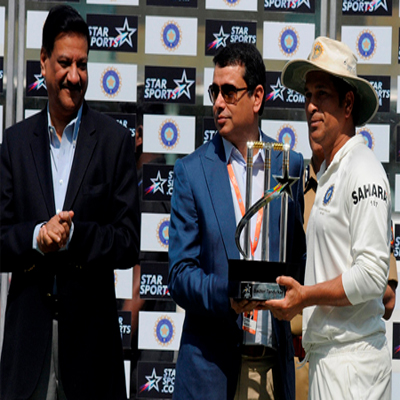
    MUMBAI: Star India CEO Uday Shankar presented the first Star Sports ‘Believe’ trophy to master blaster Sachin Tendulkar at the post presentation ceremony of India’s second test against West Indies in Mumbai.

    ee Coin’ on the top of stumps alongside bails. This is inspired by the real childhood story of Sachin Tendulkar who sparkled under the tutelage of coach Ramakant Achrekar. It is common knowledge that Achrekar used an interesting strategy to inspire Sachin- he would put a one-rupee coin on the top of the stumps when Sachin used to bat in the nets. Any bowler who dismissed him would be rewarded with the coin; however the coach would hand over this coin to Sachin himself if he passed the whole session without getting dismissed. This remarkable way of rewarding ensured that Sachin kept a very high prize on his wicket throughout his career.


    Uday Shankar presenting the first Star Sports Believe Trophy to Sachin Tendulkar


    Star Sports’ new network’s campaign urges India to ‘Believe’ with an aim to inspire the hero in each and every Indian.