Tag: Star India

  • There is no channel loyalty in the genre: Monica Tata

    There is no channel loyalty in the genre: Monica Tata

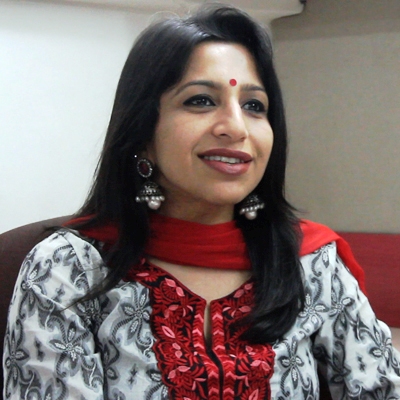
    With nearly 25 years of experience behind her, HBO South Asia MD Monica Tata brings expertise in the management of television networks’ operations to the table.


    Tata has worked as part of the leadership team at Turner and has had a consistent record of increasing sales, effective negotiations, profit and loss analysis and strategic implementation of business operations; her performance with Turner and prior to that, Star India, stand testimony to her path of excellence. 


    An ability to overcome obstacles and capture opportunities by closing exclusive deals and creating and implementing savvy marketing strategies has been her forte. Tata’s efforts have been validated in the past, when she was adjudged one of India’s hottest young executives in media in 2009 by Business Today; counted among the ‘Next 30’ most powerful women to look out for in 2010; and among the top 50 influential women in media, marketing and advertising by a leading industry magazine – IMPACT in 2012.


    Sidharth Iyer of Indiantelevision.com spoke to Tata, who was also the Guest Editor of the Day, about the progress made by HBO in the past decade and the traction received by HBO Defined and HBO Hits among other things. Excerpts…


    Currently, the market is cluttered with nearly 10 English movie channels. What is HBO’s strategy to stay ahead of competition? What is the impact that the new players have had on the genre? Has it really eaten into someone’s ad pie?


    HBO has been around for 13 years, but when we launched HBO Defined and HBO Hits, the whole integrated strategy was what we were working towards for sustaining all the three channels.


    The proposition in premium and basic is very different; the basic clearly runs on advertising revenues and the content mix that you will witness in the basic version is driven by genres that are well received, primarily action and comedy. And that is what drives ratings, viewership and ad revenues in the end.  


    For our premium channel, the main proposition is that it is 100 per cent ad-free, and it has HBO original content and allows us to take more risks as we don’t have the sword of ratings hanging over our head as we are creating and providing a proposition.


    So, the way the sharing of the content is structured, it brings about a viewership experience between the three which is quite unique by itself. There is competition in this space now compared to a decade back, when there were only three major players.


    I think there is clear fragmentation in the genre and the major point of concern is that if you compare it to the English news channels, where there was an advent of more channels and it helped in increasing the size of the advertising pie; the same can’t be said for the movie space.


    Even as more and more channels have come on-board, the pie hasn’t really grown and that is a cause for concern for the genre. The viewership pie has grown by about 5-6 per cent but the revenue generated from advertising still stands between Rs 450 – Rs 500 crore, which was around Rs 350 crore a decade back… so really not much has changed.


    Having said that, this is one of the few genres where the revenue index to ratings is very high because of the premium value it holds in the market and with genre-specific channels also coming out now, the opportunities are there to be harvested.


    Which studios do you have first output deals with? How big is the movie library of HBO?


    We have tie-ups with Warner Bros and Paramount for first output deals, and the concept in the category has been changing in recent history. And the other prevalent issue is that content flows from one studio to one broadcaster and then to others with first, second, third and fourth runs.


    So, if we take an example of any movie in the last five years, it would have been seen on five different channels. But, where we are different is in the fact that apart from the deals with bigger studios like Warner Bros and Paramount, we have deals with other smaller and independent studios and producers of content as well.


    On the acquisition front, we not only look at acquiring big titles, but also some niche movies which are high on brand value and content as well. We recently got on-board some of the best movies from the recently concluded Oscars and are proud to have exclusive rights to titles like ‘12 Years A Slave’, ‘Gravity’ and ‘The Great Gatsby’.


    We would be having anything between 700-800 movie titles and are certainly focused on building on this along with creating more engaging original content globally.


    How has the traction been for HBO Defined and HBO Hits? What are the challenges faced by the genre in today’s day and age? How can they be overcome?


    When HBO basic was launched, the lay of the land was only ad revenue supported and we have continued to grow in the space. And we were able to bring HBO Defined and HBO Hits into the country on the back of digitisation.


    The response for the ad-free service is really encouraging, after having executed it on key platforms. The challenge now lies in growing that base, as the transition on the DTH platforms has been really smooth but the hurdle comes with the cable services. I believe the cause for the issue is the fact that there are too many stakeholders coming into play with multi-system operators and then the local cable operators to funnel it down to the end consumer.

    In the end, the industry needs to come together and keep in mind the interest of all the stakeholders and come up with the right value chain for a healthy ecosystem.


    HBO GO – the online streaming service of HBO – was launched in the Philippines yesterday, any plans of bringing the service to India? 


    HBO GO is a versatile service enabling subscribers to maximise their HBO experience across multiple devices, whether at home or on the move. But, there are a lot of hurdles that we need to consider before getting such a service to India. HBO GO’s broadband streaming service allows users to enjoy uncut, award-winning HBO and Cinemax Original content on multiple devices including computers, tablets and smartphones (iOS and Android) anywhere, anytime. The service is currently available only in Hong Kong and now Philippines.


    In India the service can’t be launched currently because we want to ensure that when the consumer logs on to watch some of his/her favourite HBO originals, they should not have to wait for the video to buffer and should be able to enjoy seamless viewing. The opportunity is really a great proposition for subscribers, who will have unlimited access to an extensive library of original movies, concerts, documentaries, and series, including complete seasons of favorites like Sex and the City, Band of Brothers, The Pacific, The Sopranos, and Entourage, and thought-provoking titles like Angels in America and John Adams. Special behind-the-scenes content of HBO Originals such as Boardwalk Empire, True Blood and Banshee will also be available exclusively on HBO GO, if and when the service comes to India.  


    Social media is a platform that is really acting as a great catalyst for most channels in the English movie genre, what is HBO’s strategy in the space?


    Social media is certainly a great focus point for us. We make a lot of effort in keeping our fans engaged on our social platforms, with a fanbase of over 3.1 million on Facebook and nearly 36,500 followers on Twitter, I believe we have encouraged the fans to really voice their thoughts on the kind of programming that they would like to view on the channel and we do consider their views.


    Our digital media is handled by New Delhi based OMLogic, who really help in keeping our social audience engaged with continuous uploads and comments flowing in. DDB Mudramax helps us with the planning and execution of our creative campaigns and we are well represented by Madison PR, who do a great job in handling our public relations for us.


    What do you think works in today’s day and age, appointment viewing or brand loyalty; or a good mix of both? What is it that viewers expect from the English movie genre?


    If you cover the logo of any movie channel with your hand, you won’t really know which channel you are seeing and this will be the case even five years down the line. To me, this is the biggest problem with the genre as there is no loyalty; the consumer is not watching the channel but the titles.


    So, if they are aware that a certain movie is coming on one channel, they will go to that channel, so the question really is how to create brand loyalty. In today’s fragmented world, there is so much of choice; the consumer is spoilt for choice.


    So the added value that we believe in to promote the proposition of brand loyalty is the cinematic experience. We believe we are doing that with HBO Defined and HBO Hits, with no advertisements, there will be no breaks, there is an HD experience and add to that, the technologically advanced sound with Dolby Digital surround sound.


    And the future lies in adopting technology in a big way, to the extent that I would go on to state that in today’s day and age, technology is king. And the idea is to bring the technological experience to the audience. We have taken the first step with ‘HBO on Demand’ on Tata Sky and these are the kind of things that will be bringing a revolution in the genre.

     

  • The bids for Indian Super League heat up!

    The bids for Indian Super League heat up!

    MUMBAI: It’s been just three weeks since the Football Sports Development, a company owned by IMG-Reliance, and broadcaster Star India, invited bids for Indian Super League (ISL) football teams from Indian companies and things are heating up already.


    “Between 3 March to 21 March 2014, League organisers have recorded about 30 ‘Invitation to Bid’ (ITB) document purchase. In terms of the numbers, this is by far the highest level of interest that any similar franchise-based sports property has garnered in India,” tournament organisers IMG-Reliance said in a statement. 


    The curiosity around the ISL football seems to be building with the organisers receiving positive response from about 30 interested parties, even as the deadline for submitting the bid documents has been extended by two days to 26 and 27 March.     


    The original dates for submission of bid documents were 24 and 25 March.


    “The league organisers had requests coming in from a large number of prospective bidders to extend the deadline for submission of the bid. Based on these requests, IMG-Reliance, together with Star India and in consultation with advisory firm Ernst & Young, has decided to grant a one-time extension for bid submission by further two-days,” said a statement released by ISL promoters.    


    Some of the big names from the country’s corporate world, Bollywood biggies and present sports team owners have shown keen interest to be part of the tourney.     


    The league was to begin in January but had to be postponed owing to issues like scheduling and lack of a window.


    The league is backed by the All India Football Federation (AIFF), the commercial partner of IMG-Reliance and is expected to attract an entire new generation of sports fans into the football grounds throughout the country. With names like former Manchester United striker Dwight Yorke, former England forward Michael Owen and former Argentina striker Hernan Crespo associated with the league, it is certain to help expand the market for football in the country.     


    Bids have been invited for nine cities – Bengaluru, Chennai, Delhi, Goa, Guwahati, Kochi, Kolkata, Mumbai and Pune. The top eight bids will win the right to own and operate football clubs and participate in the Indian Super League.


    The ITB is available for a fee of Rs 5 lakh. The bid document has been picked up by actor Shah Rukh Khan, who recently announced that he would like to extend his Indian Premier League (IPL) franchise, Kolkata Knight Riders, to other sports, especially football. Former Indian cricket team captain Sourav Ganguly is also said to have picked up a bid document, and he would certainly want to bid for his city (Kolkata).


    Others in the fray include actor and producer John Abraham, actor Ranbir Kapoor, Ronnie Screwvala, Rhiti Sports and JSW Sports. Salman Khan too is part of a Mumbai-based group which has picked up the bid documents for owning a team in the league.


    It was also learnt that Rendezvous, group of builders who owned the former IPL franchise Kochi Tuskers, too have picked up the bid documents and is one of the 30 parties who have shown interest in the league.


    “The mandate for winning a city team in the Indian Super League had a novelty factor wherein it’s not only based on the highest financial bid, but also on the bidders’ proposal of a sound plan for developing football in the catchment area they wish to bid,” said the statement.


    This plan would also form a part of the agreement that each franchise would sign with the League, and would be expected to adhere to it. It also involves a robust business proposal and a committed five-year grassroot/community development plan (spending Rs 2 crore every year) starting with a million in-school kids engagement plan, age group specific training, youth team and leading to having a full-time football academy.  


    The delay in submitting bids was due to the “demanding documentation.”   


    The winning bids announcement will take place in the second week of April. Ernst & Young, the advisory firm, has been entrusted the responsibility of evaluating the bid documents.


    The new bid submission process will start from today and will now be open till 5:00 pm of 27 March instead of the earlier-announced date of 25 March. The winning bids will now be announced in the second week of April.

    The base price for bidding for a franchise is Rs 12 crore per year for a tenure of 10 years. The football league, fashioned after the cash-rich IPL twenty-twenty tournament, will have eight teams in its inaugural year.

  • Nike Cricket brings the new ‘Men in Blue’ jersey

    Nike Cricket brings the new ‘Men in Blue’ jersey

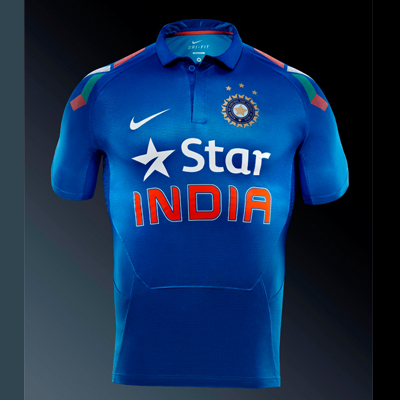
    MUMBAI: Nike, the official apparel sponsor of the Board of Control for Cricket in India (BCCI), has revealed the limited-overs uniform that Team India will wear this cricket season.

    Nike’s Team India kit draws inspiration from the passion and support fans have for the sport and the national team. The uniform is a striking contemporary blue, with a textured, premium finish.

    Designed to enhance the modern requirements of the game and its players, the jersey has a dynamic fit tailored to the athlete’s body, a result of 3D body mapping of the world’s top athletes and insights gleaned from collaboration with the Indian cricket team.  Players expressed the desire for a jersey that moves with them and is comfortable enabling a complete focus on their game. The jersey is accented with a cutting edge graphic on the shoulders.

    Nike India VP and GM Bob Coombes said in a press statement: “The country’s love for the sport and its team is what drives us to deliver our very best in technology and design to cricket India. This kit combines superior lightweight performance made from 100 per cent recycled polyester, causing minimal impact on the environment while ensuring that the design aptly reflects the winning attitude of the team.  We stay committed in our endeavour to deliver the best and continue to wish our ‘Men in Blue’ greater success in the coming tournament.”

    In an earlier interview to indiantelevison.com Star India – also the official sponsor for Team India – COO Sanjay Gupta had stated: “Cricket helps build awareness of brands and associations and we are seeking value coming from both. It is a serious value that we see as a business and hence this sponsorship.”

    Star India with the association with Team India cricket, is very clear on using the placement of its logo on the jersey to make the Star brand more salient in its viewers eyes. With the sponsorship rights from 2014 to 2017 and over 100 matches to be played, Star is clearly leveraging its association with sports and continuing to invest heavily on sports.  

    In keeping with Nike’s Better World philosophy, Team India’s kit is constructed with 100 per cent recycled polyester fabric that is lightweight, reinforced with increased stretchability and enhanced moisture-wicking capabilities. Improved ventilation zones provide additional comfort and cooling.

    The four-way stretch pants for Team India complete the kit. The pants feature a more streamlined, shrink-wrap fit for better movement on the field. A woven fabric has been introduced to help athletes move better and enhance durability.

    The Team India kits will be available at select Nike retail outlets.

  • Should creative content be barred from widespread dissemination?

    Should creative content be barred from widespread dissemination?

    MUMBAI: Companies and people logger heading over Intellectual Property (IP) is nothing new in India. Over decade, we have seen people taking each other to court for “stealing” their ideas and this has raise the question: should the intellectual property or creative content be barred from widespread dissemination to protect the hard work of producers, or should it be freely spread around the world in a global economic era that often doesn’t have boundaries?


    To find a solution to these and similar questions, a panel anchored by NDTV editor and senior anchor Vishnu Som highlighted issues around intellectual property and the dynamics of its ownership in an industry that is rapidly becoming characterised by multiple content distributors over multiple delivery platforms discussion on “Intellectual Property, Piracy and the Creative Industries” on the third and final day of the FICCI FRAMES convention being held in Mumbai.


    Present on the panel was Government of India registrar of copyrights Dr G Raghavender. He spoke about the Copyright Amendment Act, 2012. The amendments were designed to extend copyright protection to the digital environment in harmony with the World Intellectual Property Organisation (WIPO) Copyright Treaty and the WIPO Phonograms Treaty, 1996. The bill introduced exclusive economic rights for performance, and, for the first time, moral rights for performers.


    But Star India president and general counsel Deepak Jacob differed in his view about the bill. He said that it had a fundamental problem: Of the five key stakeholders that come under copyright, viz. the print , film, television, radio and animation and gaming sectors, not a single one was consulted when these amendments were proposed. They were proposed at the behest of certain vested interests, primarily authors of literary and musical works, and certain performers. The amendments have actually created an impasse in the film and television industry, where authors have become trade unions holding film and television producers and content creators to ransom by demanding exorbitant royalties.


    Saikrishna & Associates partner Ameet Datta, felt that the statutory requirement that when government evolves policy, it will focus on multiple stakeholders, is a positive development. Yet, there was bound to be friction between the expanding numbers of stakeholders and levels of dissemination; he suggested that involuntary licensing could provide industry with seamless access to works.  He also flagged up the issue about the biggest brands being advertised on pirate websites.


    “The dumber you act, the less responsibility you will have,” is what the law is suggesting, said Copyright Integrity International Nandan Kamath. The laws need to take responsibility for content on networks. He felt that the issue of digital piracy is not just legal but has ripple effects into the monetisation of content. Piracy itself is not well defined, and has lots of grey areas.


    World Economic Forum Entertainment and Information Industries media director Annie Luo, discussed about her work on intellectual property in the digital context, that identified cultural differences as an element affecting how people related to the digital media.


    FIAPF director general Beniot Ginisty felt that it was important for producers to enjoy full contractual freedom to produce films and robust operate in a high risk financial environment.


    Questions from the audience revolved around who in a team would be the “owner” of a script, how young people could be educated about piracy, and when permissions were needed to use content.

  • Television…. will remain eternal

    Television…. will remain eternal

    MUMBAI: Television will continue to be a dominant medium notwithstanding the emergence of new means of consuming content. New mediums of content delivery are likely to change viewing habits, but more importantly are likely to increase the time spent on watching the stories that are delivered and also provide more opportunities to content creators.


    Rather than fragment television viewership, new mediums of content delivery would open up new opportunities for content creators as well as platform providers.


    To drive home this message, India’s largest broadcaster Star India COO Sanjay Gupta pointed out that 10 years ago the topic of discussion was that newspapers are dead. The fact is that in the last 10 years the size of the newspaper industry has doubled.


    The topic now is ‘Television is Dead’ but like the newspaper industry television will continue to grow, said Gupta, participating in a panel discussion on “Television is Dead – Long Live Television” on the second day of FICCI Frames 2014.


    Fundamentally, new mediums provide new avenues to carry content and to tell stories, Gupta said underlining that there will be greater opportunities with the digital medium opening up.


    IndiaCast Media Distribution Group CEO Anuj Gandhi said, “Fundamentally, we as a nation are a daily soap market. In India daily soaps sell.”


    IndiaCast distributes a multitude of content but in the global markets it has found demand for its serial 24, based on an American thriller series in a real-time format, and not for the Indian staple daily soaps. IndiaCast is mandated to drive domestic and international channel distribution, placement services and content syndication for TV18 Broadcast, Viacom18 and A+E Networks I TV18.


    Celestial Tiger Entertainment CEO Todd Miller echoed the prevalent view. He said, “It is still the living room that is the bulk of our business.” Celestial Tiger is a Hong Kong-based diversified media company that focuses on Asian consumers.


    TELEVISION TO TRANSFORM


    Television as a medium is expected to undergo a transformation from being a linear gadget to a multi-functional smart device. The reinvention of television will allow it to not only survive but blossom despite the onslaught of new mediums of content delivery.


    Effective use of the mobile as a means of content delivery is still a distant given the bandwidth constraints. “For me the biggest challenge is bandwidth. 3G and 4G will change consuming patterns. It will still be sports and news that will be largely consumed on mobiles,” said IndiaCast’s Gandhi.


    There have been so far no serious efforts at making differentiated content. With 3G and 4G, there would be real efforts at making meaningful content.


    Star India’s Gupta said Star Sports’ tie-up with Vodafone has shown there is deep desire among consumers to view content on mobile, even though not at huge costs but by spending smaller amounts.


     “Millions are coming in to check content on Vodafone. They may not want to spend in small amounts,” Gupta said.


    Consumers will seek more and more stories, different stories with the rise of the digital medium of content delivery.  The broadcasters as they now exist and the new means of content delivery and the new content creators would be collaborating rather than working at cross-purposes.


    IndiCast’s Gandhi reiterated that TV Everywhere in the digital era will still remain largely confined to shorter duration content.


    CHANGING DYNAMICS


    Almost 50 per cent of Olympics was watched on mobile. This suggests there is great opportunity to deliver what the consumer wants.


    “We can’t wish it away. Dynamics are changing fast. The distinction between the content creators and platforms is blurring,” said Gupta.


    Industry players expect disruptions to happen but are wary as history shows an outsider has most of the time been the disruptive force.


    New mediums will provide new platforms for content. The broadcasters may go downstream to business to consumer model and the distributors may move up the chain to be the content producers.


    In the US, the average time spent watching television is six hours. In India the average time spent is three hours and the new mediums are seeing an increase in the time spent watching television content.


    Celestial Tiger’s Miller said, “Most of the innovation that comes is from Telcos and DTH.”


    Media Partners Asia executive director Vivek Couto, anchoring the panel discussion, said, “Precedents have already been set for digital deals in the US.”


    Gupta, however, said the cap on prices of television content is hindering creation of quality content. “People are willing to spend. We have 2.5 million HD customers, which is likely to rise to 8 million by the end of this year,” he said.


    The whole ecosystem of story-telling is set for a transformation aided by improved delivery platforms and more creative content creation, and a dominant part of the viewership would still be on television.

  • “Grow sports first, before thinking of monetizing from it”

    “Grow sports first, before thinking of monetizing from it”

    MUMBAI: Looking at its entertainment quotient, cricket is the sport that comes closest to Hindi movies. However, not just cricket but the entire gamut of sports and how to better monetise this ecosystem formed the subject of a panel discussion on day two of FICCI FRAMES 2014, the 15th edition of the annual convention.


    The panel was constituted by NBA India MD Yannick Colaco, Star India president sports Nitin Kukreja, Dempo Group chairman Srinivas Dempo and cricket presenter Gautam Bhimani.


    “If I had Rs 10 lakh, I would put nearly Rs 9.3 lakh in cricket and the remaining amount in other sports,” said Bhimani, at his quirkiest best. He began by drawing attention to two things – the fight for visibility between cricket and other sports and how to take the million dollar baby i.e. cricket, to an even higher level.


    Colaco expressed the view that before monetizing any sport, it had to be built from the ground up. “There are a lot of opportunities but we need to build and grow a sport before actually thinking of monetizing from it,” he said. Once the sport was popularized, money would follow in time.


    Echoing similar thoughts, Dempo said, “Football in India is an approximately Rs 150 crore market. Even the I-League, which has around 14 teams, is only about Rs 10 crore in size and these are all operating expenses without any returns.”


    According to recent statistics by TAM, the reach of a Barclays Premiere League is nearly 27 million as compared to that of the I-League at 6.5 million. “There is a lot of cash burn that takes place and football is currently running in the nation only because the people running it are passionate about the game, but this needs to change,” said Dempo.


    Kukreja brought in the business angle and said, “We also need to look at numbers and return of investment (ROI), which is the most important proposition for a sports broadcaster. The existence of the price cap regulation is a hurdle and with foreign exchange soaring by 50 per cent in recent history, there is only so much that a broadcaster can do.”


    Not only is money not flowing to broadcasters and federations as it is supposed to but complete monetization is not possible due to the existence of the public broadcaster. “Earlier, the idea was to reach homes which were not lucky enough to have cable and satellite and only had terrestrial TV sets, but things have changed now, and yet, we have to continue sharing rights with the public broadcaster, which deters us from monetizing to the best of our ability,” said Kukreja.


    While there are opportunities to invest in other sports, there is a need for proactive participation from sporting federations as well.


    According to Colaco, “A regulatory framework needs to be put in place to make things work more smoothly. India is still developing as a sports market and there are limitless possibilities.” Citing the example of NBA, he said, “The kind of coverage and following that the sport there is incredible. There is a great following and coverage across school, college, and finally, the national teams.” Reason being the sport is promoted at the grassroots level and people are encouraged to inculcate the spirit of sportsmanship from a very young age.


    “I really can’t understand the rat race to start various leagues in India, to the extent there is even a Kabbadi league that is on the cards. I have no problems with leagues, it’s only great for the game, but the problem is to sustain the noise and hype created for such events with ample amount of content to follow as well. That is something that the federations need to ponder upon,” said Colaco.


    Adding to this, Kukrjea said, “IPL works because it’s an experience, it brings families together, it is packaged very slickly and this is how various leagues work around the globe. The point that Colaco made rightly is the number of days that a sport is on – there is 300 days of cricket, but there are only 70 days of hockey and maybe 100-odd days of badminton. So the real question is do we have the required content that can keep fans engaged like we have in cricket?”


    Thanks to the kind of ad revenues that cricket generates, it ends up receiving a lot of flak. For instance, a mega cricket event like the World Cup earns anywhere close to Rs 8-9 lakh for a 10 second spot as compared to a big-ticket NBA event which sells for a meager Rs 2,500 for the same 10 second spot.


    Elaborating on this, Kukreja said, “Sports is ideally a distribution revenue-driven market but cricket, for reasons best known to the stakeholders, is ad-driven. And a marquee event like the World Cup can’t be compared to any other event in India, where, if there are 10 channels to choose from, numbers one to nine will have live cricket and number ten will have highlights of some live match.”


    Speaking of the lack of excitement around the U-17 football world cup coming to India in 2017, Dempo said, “I really can’t believe that there is no buzz around such a big event and that the buzz will start only a year prior to the live action. The media needs to come together and ensure this gets proper coverage. I am sure it will work as a catalyst for the sport of football in the nation, but the national side really needs to pull up its socks, because I have seen Mexico and Brazil play and I fear we stand nowhere unless we really push ourselves against the wall.”


    In a similar vein, Kukreja spoke of the premature death of Formula One in India. “The sport has a lot of potential and is the pinnacle for the sport of driving, but the entire buzz that was created around the Buddh International Circuit died down after just one race,” he said.


    Colaco pointed out that there was ample infrastructure available for sports like basketball and football but the problem was lack of participation in these sports.


    On the subject of how the popularity of a certain sport is sometimes higher than that of the other simply because of the buzz around it, Colaco said, “Basketball is a hugely popular sport in the US but pales in comparison to NFL in terms of viewership. However, the social media buzz created by basketball is twice that of NFL.”


    With nearly 3,000 basketball matches every season, they see a huge turnout with ticket sales higher than 90 per cent. “The most important thing for the game of basketball is the experience and the way the game is played; this sport is very fast and is played in small quarters with loads of action, along with mid-session performances and celebrities often seen at the matches,” said Colaco.


    Speaking on behalf of the broadcasters, Kukreja said, “We will continue doing our bit to help promote and get the right exposure for other sports apart from just cricket, but it’s also important that the different federations along with the government come together to help push and cultivate a sporting culture in the country.”


    Bhimani reiterated Kukreja’s views by drawing a parallel with cinema. Just like there are independent film makers and art house directors vying for screens, sports other than cricket too deserve the right push and visibility in the market.

  • ‘New government should lay foundation for improving relationship with media industry’

    ‘New government should lay foundation for improving relationship with media industry’

    MUMBAI: The relationship between the media and entertainment industry and the government has “broken”. The industry and the new government that would be formed after the general elections should lay a new foundation for improving the relationship.


    That was the clarion call by Star India CEO and FICCI Media and Entertainment Committee Chairman Uday Shankar in his opening remarks at the 15th FICCI-Frames in Mumbai.


    Unless all the stakeholders get together for the betterment of the industry, the vibrancy of the media and entertainment sector will be at stake and the biggest victim will be free expression, said Shankar.


    He asked, “Why not nourish an industry that has huge potential? Why not support an industry that needs policy support and nor resources support?”


    The media and entertainment industry needs recognition that it is a potential economic growth engine and a force multiplier, he stated.


    He said the media and entertainment industry grew by 12 per cent in 2013 despite economic headwinds and added “it is a testament to the tenacity of the industry.”


    There is now tension between the media and entertainment industry and the government with the successive governments limiting free speech, he said.


    Surprisingly, irrespective of the party, the media has been at the receiving end. “Whether you trumpet youth leaders or the state leaders, media is asked to be accountable,” Shankar said.


    He also pointed out that the media created a political party out of thin air and put it in power, but eventually the same outfit has started making accusations against the media the moment accountability was sought.


    The government has not been able to harness the potential of the media and before the elections kick starts there needs to be a new “contract” between the media industry and the government, Shankar said.

  • Satyamev Jayate campaign pays off

    Satyamev Jayate campaign pays off

    MUMBAI: When it aired on Star Plus two years ago, it took the nation by storm even as it brought home uncomfortable realities for not one but 13 weeks. At the time, Satyamev Jayate was the most talked about television show; its title the most searched phrase on Google. The channel claimed that the Aamir Khan-hosted show, simulcast in seven languages, reached a staggering 600 million viewers in its first season.


    Two years later, the show is back by popular demand, with even more hard-hitting content – pertinent social issues that a majority of Indians are cut off from. And while it’s too early to predict how season two will fare, judging by viewer response to the first couple of episodes, one can safely say that Star Plus’ 360-degree promotional campaign is working well for the show, and the channel.


    The Campaign


    Launched on 26 January this year, the marketing campaign for season two of Satyamev Jayate was conceptualised around the thought, “Jinhe Desh Ki Fikr Hai” (Those who care for their country).


    Spread across platforms including TV, print, digital, radio and outdoor, a series of on-ground activations with ambient touch-points called ‘Fikr touch points’ were held across the country. To drive greater affinity in the south, actors Mohanlal and Suriya were roped in as cultural ambassadors. A special people’s version of the Satyamev Jayate anthem was created on Radio Mirchi that had ordinary people singing the original anthem and making it their own. What’s more, the show promo garnered 4.4 million views on YouTube before its launch, which is a massive number.


    On social media, on the day of the launch of season two, #SatyamevJayate trended as the number one topic across both Twitter and Facebook and together, resulted in 54.2 million impressions. On Yahoo, the show owned it for a day across each Yahoo webpage, resulting in more than 108 million impressions per day and more than four lakh clicks.


    To top it all, out-bound calls in Khan’s voice went out to people across the country, resulting in a total 23 million impressions in a day.


    The Launch


    The opening episode, focused on rape, received an overwhelming response from viewers. The show urged Indians to ‘Vote for change’ and one of Star Plus’ leading protagonists took the cause forward by urging viewers to give a missed call on a toll-free number to help create One stop rape crisis centres across the country. Over 57 lakh missed calls were registered, of which 40 lakh calls were made within the first 72 hours of telecast of the show.


    Among the seven hash tags created around the first episode, #FightingRape became the top trending hash tag in India on the day of the launch.


    Four weeks before the launch, Satyamev Jayate‘s facebook page had nearly 10,000 PTAT (people talking about this). Today, the number is 7.5 lakh and counting.


    At the end of season one of the show, the fan base was 1.4 million fans on facebook, which has now more than doubled to 3.4 million.


    The Strategy


    Satyamev Jayate is very important for the network at every level; be it content, marketing or any other.


    “It’s a unique show like no other. It’s a show that leverages the power of a celebrity and the Star platform to create social impact. The reason it works is because it resonates with the citizen and the viewer who cares for the country and is concerned about these issues. Because these are issues that impact every family,” says Star India EVP marketing and communications Gayatri Yadav.


    The theme of the entire first season was “Dil pe lagegi, tab hi baat banegi”. True to its theme, the show talked about issues that touched everybody’s heart. The second season takes it a notch higher.


    “The second season takes the whole promise forward. Because it taps into a sense of commitment and concerns that the average citizen has for the country,” she says.


    As for the theme of season two, the germ of the idea came from Star India CEO Uday Shankar. “We were thinking about what should be the theme of season two. From the season one, some complained that the show was too heavy and too difficult to watch on a Sunday morning. And we felt that is the nature of the show. The show is intense, it is going to be dealing with issues that are important to address,” she says.


    While it may not be the kind of stuff you’d want to see on a Sunday morning, people still do watch it because of the deep love they have for the country. Tapping into the love and concern every citizen has for the country is the promise of season two. “We don’t really see as the episode is over, the cause is over,” says Yadav. “This year, you will see a lot more engagement with the causes, even after the episode airs. As there are only five episodes this month, there will be a real focus on driving a very strong season finale which is the fifth day.”

  • Star India paid $160 mn for added 12% interest in Asianet Communications

    Star India paid $160 mn for added 12% interest in Asianet Communications

    MUMBAI:  Star India’s equity interest in Asianet Communications in June 2013 increased by 12 per cent to 87 per cent from the earlier 75 percent. The price the India subsidiary of 21st Century Fox paid for the additional interest in the south Indian general entertainment television network was approximately $160 million.


    The price paid by Star India for the additional interest values Asianet Communications at $1.33 billion.


    According to 21st Century Fox, in June 2013, it acquired the 19 per cent stake in Vijay Television that it didn’t own and, as a result, it now owns 87 per cent interest in Asianet Communications.


    Star India holds its interest in Asianet Communications through Vijay Television. The 19 per cent equity stake in Vijay Television that it bought in June 2013 was held by Rajeev Chandrasekhar and K Madhavan.


    In January 2009, Star India and Asianet TV Holdings formed a venture Star Jupiter and the Asianet Communication’s general entertainment channels were brought under the joint venture. Star India’s Tamil channel, Star Vijay was also consolidated with the Asianet channels but the shareholding structure of Asianet Communications is not clearly known as it is a closely held company.


    In 2009, Star India paid approximately $235 million in cash and assumed net debt of approximately $20 million for a controlling interest in the four channels owned by Asianet. The price Star India paid for the 51 per cent stake in 2009 meant Asianet Communications was then valued at $500 million.


    Asianet Communications broadcasts Malayalam language channels Asianet and Asianet Plus, Kannada language channel Suvarna and Telugu channel Sitara.


    In July 2010, Star India increased its stake in Asianet communications to 75 per cent from 51 per cent, for which it paid approximately $90 million in cash.


    Asianet Communications was founded in 1991 by Reju Menon and Shashi Kumar. Rajeev Chandrasekhar acquired a 51 per cent stake in the company in 2006 for a reported price of Rs 150 crore (about $25 million at the current exchange rate) and also became its chairman.

  • IMG Reliance invites bids for Indian Super League football teams

    IMG Reliance invites bids for Indian Super League football teams

    MUMBAI: Football too would now have twenty-20 cricket’s Indian Premier League-like tournament. Football Sports Development, a company owned by IMG-Reliance , and broadcaster Star India, today invited bids for Indian Super League (ISL) football teams from Indian companies.

    Football Sports Development plans to hold the Indian Super League tournament from September to November 2014. The league will look to foster local talent and feature international stars with the aim of raising football’s popularity in the country.

    The league will be played in strict accordance with international standards and regulations. The league will have world-class international players play with the best from India. Each team will consist of a minimum of 22 players consisting of 1 marquee player, 7 international players and 14 Indian players. And each team will have a set of home and away matches.

    The league is backed by the All India Football Federation (AIFF), the commercial partner of IMG-Reliance. The league is expected to attract an entire new generation of sports fans into the football grounds throughout the country and is expected to help expand the market for football in the country.

    An Indian company can collaborate with a foreign company to bid for a team.

    Bids have been invited for nine cities  — Bangalore, Chennai, Dehli, Goa, Guwahati, Kochi, Kolkata, Mumbai and Pune. The top eight bids will win the right to own and operate football clubs and participate in the Indian Super League.

    The league promises to revolutionise the sport, leveraging the strengths of all three partners who are focused on uplifting the game to national prominence and offer Indian football greater global exposure.

    All bidding parties need to satisfy the eligibility criteria and other requirements specified in the invitation to bid. Interested parties need to submit the bidding documents at IMG-Reliance Mumbai office no later than 5:00 pm on 25 March 2014 and the winning bids will  be announced in the first week of April 2014.

    Actor Shah Rukh Khan, who owns the IPL cricket team Kolkata Knight Riders, has already expressed his interest in owning a football team in the Indian Super League.

    Star India, which also owns broadcast and sponsorship rights, will use its sports properties to take the league to millions of households and also monetise the content on and off the field. 

    Globally, football is the world’s favourite sport, ranking in the highest in terms of participation, number of fans, TV viewership, sponsorship and revenues. Annual revenue for football globally is estimated at $28 billion, according to a study by AT Kearney.

    Star India, which also holds telecast rights to BCCI cricket matches in India, will use its superior content creation, packaging and presentation expertise to attract and retain viewer interest. 

    The Indian Super League will also implement various football development projects aimed at holistic development of the sport in the country, including engaging with the masses to get them excited about football, encouraging families to regularly involve their children in football, creating an infrastructure to identify talented footballers at a young age and groom them into elite professionals and creating a critical mass of highly talented coaches to work at all levels of football in India.