Tag: Star India

  • Media can be the most exciting “Made in India” story of the next decade, says Star India COO Sanjay Gupta

    Media can be the most exciting “Made in India” story of the next decade, says Star India COO Sanjay Gupta

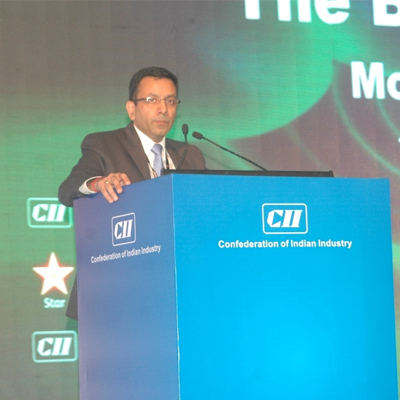
    MUMBAI: Amid India’s steadfast focus on economic growth, the Media & Entertainment has the potential to serve as the country’s key engine of growth, both socially and economically, if the government unlocks its true potential by giving the industry the policy priority it deserves, Mr. Sanjay Gupta, Star India COO, said at the inaugural session of the CII Big Picture Summit 2014.


    The two-day summit will deliberate on this year’s theme “Monetizing Strategies: The Tryst for a USD 100 billion Indian M & E Industry” by the end of this decade.


    Delivering the theme address at the summit, one of the most influential platforms that brings together the industry and policy makers to discuss issues critical to the Industry, Mr. Gupta said that the industry needs some changes in outlook and policy to keep growing and continuing to make a strong social impact.


    “The Indian media industry is the biggest in the world by output — over 500,000 hours of television content, 80,000 newspapers published daily, 1,600 feature films each year,” Mr. Gupta said. “With 98% of this output being conceptualized, shaped and produced in India… and very often exported to various parts of the world, very few industries can claim this extent of indigenous creation,” he said.


    He said the industry has tremendous positive impact on society too. “We all know the impact of the M&E sector is not just economic. Years ago, the University of Chicago did a study across a large number of villages in India. They were trying to understand the impact of satellite television. Their results were startling. Within 2 years of cable TV coming to town, women were less likely to tolerate domestic violence, less likely to prefer sons over daughters, and more inclined to enrol their girls in schools. The power of this sector is in its ability to inspire imaginations.”


    Mr. Gupta said that in spite of such economic impact and positive societal change and growth, the sector is not taken seriously as a growth engine. “Despite growing at 3 times GDP consistently for the last few years, despite employing 6 million people, despite being a 90,000-crore industry… what can be a uniquely ‘Made in India’ story is being ignored,” Mr. Gupta said.


    He felt there are two reasons why the media and entertainment industry is not really seen as a growth engine or as an exciting part of the Made in India story.


    “The biggest reason is that many successive governments have seen it as just a vehicle of glitz and glamour or … through the narrow lens of a very small and hyper-critical news sector,” he said.  Therefore issues that are intrinsic to unlocking growth in this sector are either misunderstood or deprioritized, or both.”


    Examining the case of digitization and pricing, Mr. Gupta felt that the debate around Digitization seems to have come down to issues such as LCO problems in making the shift … or how important it is to get the boxes manufactured in India.  “In reality, the real issue is whether we are serious about creating an enabling framework for delivery of content that will dramatically increase diversity of content and boost creativity.”


    On the second important issue of pricing, Mr. Gupta lamented that the “…price control and regimentation (in the M&E sector)  reminds us of an era that we have put behind us. The biggest victim again is growth because keeping prices controlled in a market where consumers are demanding a lot more and willing to pay a lot more, only means that the sector is starved of the investment resources it needs to fuel growth,” he observed


    Mr. Gupta felt that to continue to script the best ‘Made in India’ story, the M&E industry also needs to look within. “The problem lies with us too.”


    He elaborated that the strong increase in production volumes need to be accompanied by a consistent increase in quality for which “we have always set the bar too low.”


    In his view, “our films need to create a truly global market for our creative work” and that channels and producers should try to be more innovative and original in their dramatic content.  On the digital pipeline of delivery for TV content, Mr. Gupta felt that the industry needs to rise above the myopic view that clips shot by TV will suffice as long as they are made available online. He emphasized that the business of shaping content requires shaping each part of the ecosystem including applications and middleware.


    Mr. Gupta also brought up the “serious issue of talent”, saying there was a “real crisis on both supply and quality,” and the need to recognize the scale of the talent challenge for the sector. Actively finding the right talent and building the right skills, with stronger discipline than seen at present, where “we hide under the pretense of creativity … to be informal and chaotic”, are needs of the hour.  


    “How can we aspire to be a $100 billion industry, if we ourselves have not raised the bar on what we create and how we shape the agenda for this sector?” Mr. Gupta exclaimed.


    “The possibilities are immense. And underlining the opportunity is a uniquely Made in India story – the Indian media and entertainment sector – that can excite and shape the world if we are alive to the possibilities,” he concluded.

  • Hero ISL launches ambitious broadcast plan

    Hero ISL launches ambitious broadcast plan

    MUMBAI: The upcoming Hero Indian Super League (ISL) is all set for a mega start as Star India will broadcast it live across eight television channels in five languages. It will also have a multi screen experience on starsports.com.


    With this move, Star India will have a potential to reach around 85 per cent of India’s television audience says the channel.


    The league will be televised on Star Sports 2 (English), Star Sports 3 (Hindi), Star Sports HD 2 (English), Star Gold (Hindi), Star Utsav (Hindi), Asianet Movies (Malayalam), Jalsha Movies (Bengali) and Suvarna Plus (Kannada) while there will be live streaming on www.starsports.com. Asianet Network runs channels in Kerala and Karnataka and is fully under Star India.


    Star India COO Sanjay Gupta said, “We plan to take the viewer experience to the next level. In order to take the game of football closer to its fans, we are providing a never-seen before plan, leveraging the strength of sports, entertainment, regional and multi-screen. The magnitude of what we are setting out to do has never been attempted. The network believes in the potential of football as a sport that cuts across culture, race, religion and economic might.”


    The Hero ISL is scheduled to kick off from 12 October 2014, featuring eight clubs, 56 league matches followed by two-stage home and away knock-out leg and final on 20 December 2014.

  • Star India bags International Premier Tennis League rights

    Star India bags International Premier Tennis League rights

    MUMBAI: After the successful stint with Pro Kabaddi League, Star India is all set to promote tennis in the country.


    It is the broadcast partner for the Mahesh Bhupathi founded International Premier Tennis League (IPTL), which is a brand new team tennis format played across several countries in Asia with its first-ever edition to be held later this year.


    Sources confirmed to indiantelevision.com that Star India has bagged the rights for the new tennis league. “Who else could broadcast such a league?” says the source.


    All the matches will be produced in HD quality with IPTL graphics and commentary. The IPTL is a team tennis competition with $1 million in prize money featuring the best ATP and WTA players across selected cities in Asia from 28 November to 13 December 2014. The India franchise tennis team will compete with three teams from Philippines, Singapore and the UAE.


    UFA Sports is the exclusive marketer of the worldwide media rights of the IPTL.


     The official announcements are expected to be made in a few days.


  • Star India’s bet with Pro Kabaddi League gets a thumbs up

    Star India’s bet with Pro Kabaddi League gets a thumbs up

    MUMBAI: Fans and advertisers who until now were most familiar with boundaries and record breaking centuries scored by cricketers in India are learning how to tackle a new game-Kabaddi which slowly yet steadily is raiding the hearts of many.


    During the 37 day Pro Kabaddi League (PKL), a massive 435 million viewers tuned in to catch the action which is almost triple the number of people who watched FIFA World Cup 2014 in India.  When compared to the glitzy Indian Premiere League (IPL) which garnered 552 million viewers, Kabaddi undoubtedly has become India’s second most favourite sport after cricket for now. (Source: CS4+; Extrapolated from TAM panel).


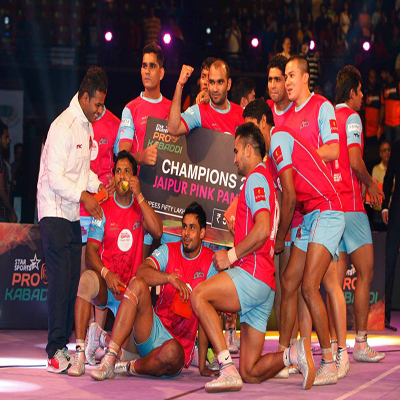
    A record 86.4 million people tuned in during the finale between Jaipur Pink Panthers and U-Mumba or three fourth of an average Indian Premier League match where the Abhishek Bachchan owned Jaipur Pink Panthers were crowned winners of the first season. Star has compared this number to global events like the FIFA World Cup, WWE Wrestlemania and Hockey World Cup and the Wimbledon Men’s final which recorded 24.6 million, 32.2 million, 10.4 million and 6.1 million respectively.


    When asked what contributed to the contact sports success, Star India president sports Nitin Kukreja says, “To bring viewers closer to the game, we aired the action on prime time. We also invested a lot for building an entire facility for the matches in most cities where the league travelled, simply because of the lack of infrastructure for the game in India.”


    According to Star India, one out of every four Indian TV viewers was watching the finale coverage between 8 pm and 10:30 pm on 31 August (All numbers are based on TAM panel reach using standard extrapolation estimates). Star says the ratings of 3.7 TVR in male 15+ABC TG is higher than most movie premiers and equivalent to top sporting events like IPL.


    While women came in full gear to the stadiums to watch the matches, they also accounted for over 39 per cent of all viewership and children 22 per cent which has also broken the stereotype that this was only a male dominated sport.


    On social media the league recorded a whopping 2.3 billion plus impressions during its successful run. Over 90 per cent comments and reactions noted on social media with regards to the league had a positive tone. Both 29 August and 31 August (series culmination day) generated the most ever daily conversations for the Star Sports Twitter handle with more than 25,000 tweets coming in each day. Kukreja informs that approximately 25 per cent of the total conversations happening on social media were initiated by women. “Never before has the Indian woman been so receptive to any other full contact sport,” he says.


    In terms of production values, the global best-in-class production teams were put together from other full contact sports with the aim of offering an unadulterated viewing experience to the sports fans through live coverage of the games. This effort was supported by International Management Group (IMG), Prometheus and Alston Elliot. Along with using as many as 15 cameras to cover every piece of action during the league, the sport was analysed in terms of statistics to boost the perception of the game being a serious sport and make it more engaging for the viewers.


    Kukreja informs that their marketing efforts were focused on creating a shift in perception to make Kabaddi relevant and aspirational to the urban youth. In order to create awareness and a sense of excitement around the league, they planned the promotion through an aggressive marketing campaign with the backing of the Star India network.


    “Our strategy was to indulge in a 360 degree marketing plan and also promote PKL through outdoors, on-ground activities and radio. The TV campaigns portrayed Kabaddi like never before and were conceptualised to achieve a perception shift from Kabaddi being a poor man’s game to it being a cool sport,” he says. 


    The on-air effort was complemented by a strong on-ground activation which got consumers across the eight franchise cities to experience the sport. These eight cities were Jaipur, Mumbai, Bengaluru, Delhi, Pune, Vizag, Kolkata, and Patna. Bollywood celebrities like Salman Khan, Abhishek Bachchan, Priyanka Chopra, Ajay Devgn and Anupam Kher added the glamour quotient to the league.


    In November 2013, Star had committed an investment of Rs 20,000 crore to help grow a multi sports culture in India. And for Star India CEO Uday Shankar, PKL is a signal of their commitment to foster the same.


    Indian businessman Anand G.Mahindra who set the vision for the game and is a co promoter of Mashal Sports along with popular commentator Charu Sharma said, “Charu and I feel humbled that our conviction in the potential and the popularity of the game has been vindicated.” In fact, looking at the success of the game, Mahindra also announced the second edition of the league that will kick off in March 2015.


    While advertisers played a wait and watch game during this maiden season, Kukreja says that the interest from advertisers kept building up as the tournament’s reach and popularity exponentially increased week after week.  He says, “While we continue working towards building Pro Kabaddi as a premium property, we’re confident that there will be a rush from the advertisers in the next season.”


    According to Group M ESP national director- entertainment sports and live events Vinit Karnik, while the industry was unsure initially, the league has performed above expectations and broken the perception that Kabaddi is a rural game. “Advertiser interest in the league has definitely increased, thanks to the surprise packaging of the game. The property should combine the on ground and on air packages together for the next season,” he opines.

  • CFL Derby watched by 19.7 lakh viewers on Jalsha Movies

    CFL Derby watched by 19.7 lakh viewers on Jalsha Movies

    MUMBAI: It is a known fact that Bengal is the mecca of Indian football. That East Bengal and Mohun Bagan continue to rule the hearts of millions of Bengali’s was proven yet again with the success of the Derby match held during Calcutta Football League. People tuned in hoards to watch the most followed tie in Bengal, according to Star India.


    The match was watched by 19.7 lakh viewers on Jalsha Movies that surpassed the viewership of the FIFA World Cup Finals (18.3 lakh) on Sony Aath, according to data provided by Star India.


    This is also the highest rated Derby match ever across any channel in Bengal. It garnered a rating of 266 TVTs in M 25 + AB and 801 TVTs in CS 4+ beating all previous records.


    Not only did the viewers tune in but on an average they spent over 66 minutes watching this engrossing match.


    The hall mark of this year’s CFL is its short, tighter schedule and for the first time ever in the leagues history, the tournament will be decided in a month’s time.


    Star Jalsha and Jalsha Movies business head Kevin Vaz commented, “The success of the Derby match and the average match ratings of CFL strengthens our belief that football is big in Bengal.”


    He added that the the channel would continue to bring unmatched football coverage with never before seen packaging, high definition slow motion cameras along with commentary by former national football captains which they hope will bring in new viewers.


    Jalsha Movies reaches out to nine million viewers every week. The channel which has showcased some of the biggest movies is optimistic of increasing its footprint even further with its foray into football.


  • Hero ISL launches campaign heralding birth of a footballing nation

    Hero ISL launches campaign heralding birth of a footballing nation

    MUMBAI: The most eagerly awaited football league in the country; Hero Indian Super League launched its official TV campaign on 7 September with a panoramic 100 second film capturing the hope of people wishing to see the building a footballing nation.


    The first TVC sparks the start of the league’s lead up to a 36-day, 360 degree launch marketing campaign, with opening game scheduled on 12 October 2014.


    Conceptualised by Ogilvy &Mather, the newly launched TV commercial urges Indians to be part of their very own league with a simple yet powerful phrase, “C’mon India, let’s football”. Composed by Amit Trivedi, the peppy soundtrack strives to capture the spirit of hundreds of millions of fans across India. The TVC features the fishermen of Kerala, dancers from Rajasthan, monks in the northeast and everybody who is gripped with the football fever. These fans then through their combined effort and power are seen taking the shape of a human stadium. The film ends with hope in the eyes of young kids as the sky fills with raining footballs.


    Star India marketing head Gayatri Yadav says, “The single line brief for the campaign was ‘the birth of a footballing nation.’ The creative is loyal to the magnitude of this project and brings alive the dreams, aspirations and talent that will ultimately see India take its rightful place in football world. The track is brilliant and we are confident that it’ll have the nation buzzing in anticipation for the 12 October launch of the league.”


    Ogilvy & Mather executive chairman and creative director South Asia Piyush Pandey, who feels he was born a sportsman adds, “India is a great nation which will excel in everything possible and football is our next goal. I’m extremely excited about the league and the communication. The only thing I want to hear is 1.2 billion people saying “Come on India, let’s football.”


    The film shot across 20 plus locations in India by Manoj Pillai of ThinkPot films was launched on Sunday’s T20 game – followed with a heavy promotional blitz across Star channels network.


    Indian Super League AVP marketing and commercial Srinivvasan Gopalkrishnan says, “This film showcases India’s grand welcome to the beautiful game and with it, the passion and dreams of all Indians out there.”

  • Star India commits to renew agreements with MSOs only on basis of RIO, hearing concludes

    Star India commits to renew agreements with MSOs only on basis of RIO, hearing concludes

    NEW DELHI: Judgment was reserved today by the Telecom Disputes Settlement and Appellate Tribunal (TDSAT) in the ‘deep-rooted’ dispute between Hathway and Taj TV, after the hearing that commenced on 25 August and continued on a day-to-day basis.


    Before the Tribunal reserved its order, Star India filed an affidavit in which it said it would ‘henceforth’ enter into agreements under the Reference Interconnect Order on a year-to-year basis with all multi-system operators.


    It said the RIO would commence three months after the expiry of the erstwhile agreement and would only be on the basis of a published RIO.


    It also said it will sign any new agreement on cost per subscriber basis with MSOs operating at national level.


    However, it listed eight MSOs working at regional or state level with which it already has CPS agreements and said these will continue for the term for which they are valid and thus last the full term.


    The eight MSOs are Inspire Infotech of Delhi, Novabase Digital Entertainment of Delhi, E-Infrastructure and Entertainment, Bangalore, Satellite Channels, Poona Cables Systems and Services of Pune, Sky Channel of Delhi, Home Cable Networks of Chittore District in Andhra Pradesh and City TV of Coimbatore.


    In reply to certain queries by the Tribunal in reference to the statement made in paragraph-3 of the affidavit, Star India counsel Saikrishna on instructions received from duly authorised officers present in court stated that in DAS notified areas, any new interconnect agreement with any MSOs operating under a national license or a regional/local license would only be on the basis of the RIO of M/s Star India Pvt. Ltd. and it would not enter into any interconnect agreement in the DAS areas with anyone on fixed fee or on CPS basis for a period of one year.


    Primarily, the Tribunal would have to decide on two matters: the first is an interpretation of the date of renewal under Clause 5(16) of the Telecom (Digital Addressable Systems) Interconnect Regulations relating to renewal of agreements, and the other is about the rates according to the arguments put forth by the various parties.


    Earlier, counsel Tejveer Singh Bhatia who had been asked by TDSAT chairman Aftab Alam and member Kuldip Singh to assist the Tribunal in clarifying certain issues said the Regulations were clear that if certain channels were provided to one MSO, they had to be provided to any other MSO that asked for them. However, this did not mean that the terms would be the same for all MSOs.


    Furthermore, even if channels were put in bouquets, the rates could not be the same as some were regional channels meant for specific areas and others were national channels and the charges would depend on eyeballs. Hence, the negotiation may differ from region to region. But this also meant creation of RIO agreements for every region depending on number of eyeballs.


    He also claimed that the Interconnect Regulations allowed him to change the terms and conditions from time to time.


    But he was categorical that a RIO could not be thrust upon him as it was only an offer. Clause 5(10) provides the remedy in case the broadcaster turns down a RIO agreement.


    He said that the ‘must carry; clause did not mean automatically that the broadcaster will be paid for every channel he beams. It would depend to the number of channels that the subscriber decides to take.


    During the hearing, the Tribunal heard various counsel on behalf of Taj TV and Zee TV, Star India, Hathway, Bhaskar (MSO) from Jabalpur and Scod, an MSO from Mumbai and Navi Mumbai.


    When listing the case for 25 August, the Tribunal had said: “Unfortunately, the dispute between the two sides is playing out in highly aggressive way and one may add in a rather unpleasant manner. It seems to be affecting a large number of people in viewing their favourite TV channels. The disputants themselves are approaching the Tribunal on a weekly basis complaining against the actions of each other and seeking some interim directions of the Tribunal consuming a lot of time on arguments on miscellaneous applications.”


    The Tribunal noted that both sides had assured that they would avoid issuing the offensive advertisements against each other.


    In the order last month, the Tribunal directed Taj TV to file their respective replies in petitions nos.319(C) of 2014 and 47(C) of 2014 and asked Hathway to file its rejoinder.


    The Tribunal noted that the dispute has arisen at a stage when the earlier fixed fee agreement between the parties has come to end and they are unable to come to agreed terms for a fresh agreement and under the circumstances the MSO has no option but to take the broadcasters’ channels on their RIO terms.

  • IBF appoints Uday Shankar as the new president

    IBF appoints Uday Shankar as the new president

    MUMBAI: At the just concluded Indian Broadcasting Foundation (IBF) 15th annual general meeting (AGM), Star India CEO Uday Shankar has been appointed as the new president of the organisation.


    The position was earlier held by MSM non executive chairman Man Jit Singh.


    This is a comeback for Shankar who held on to the position from 2010 to 2012.


    Confirming the news to indiantelevision.com, Shankar said that he was happy to take charge. “I am privileged to be trusted by the members of IBF to lead the industry body at a critical juncture when the industry needs to leap to the next level by working collaboratively with the Government and other stake holders,”said Shankar and added, “Punit Goenka would have been my personal preference for the president’s role since I have already done a stint as IBF president.  However, in view of Punit’s existing commitment to BARC, he proposed that I hold the reigns at IBF”.


    The IBF Board also elected Punit Goenka as vice president – Measurement, N P Singh as vice president – Distribution, Rajat Sharma as vice president – Strategic Affairs and Rahul Johri as treasurer.

  • MSOs prepared to accept RIO if broadcasters assure parity, MSOs’ counsel tell TDSAT

    MSOs prepared to accept RIO if broadcasters assure parity, MSOs’ counsel tell TDSAT

    NEW DELHI: An agreement under reference interconnect offer (RIO) is acceptable if there is parity to all, Hathway counsel Arun Kathpalia and Bhaskar Networks counsel Navin Chawla told the Telecom Disputes Settlement and Appellate Tribunal (TDSAT) in the cases linked to Taj TV signals for Zee and Turner and Star India’s signals to Hathway and other multi-system operators (MSOs).


    Earlier, both Star India counsel Rakesh Dwivedi, on behalf of the case against Hathway and counsel Amit Sibal appearing on behalf of Star India in the petition by Bhaskar Networks of Jabalpur indicated that they were prepared to give affidavits with the assurance of parity.


    However, counsel were divided on when the agreements should commence and wanted the Tribunal to decide the matter in the light of clause 5(16) of the DAS interconnect regulations.


    Dwivedi said that since the last agreement ended in June, any agreement will only be till June irrespective of the date when it commences. He said there had been delay only on the part of Hathway in proceeding with the negotiations. Sibal also said there could be no concession on the date.


    Kathpalia however said that the agreement will be for one year from the date it commences. However, he said this was subject to the interpretation given by the Tribunal to clause 5(16).


    At one stage, Kathpalia argued that Star India wanted to give RIO agreement to all MSOs whereas Hathway had been negotiating on the basis of cost per subscriber (CPS).


    Referring to Star Sports’ feed to Bhaskar, Sibal said that MediaPro wrote to all MSOs asking them to approach the broadcasters individually. Star India had on 19 May written to Bhaskar to negotiate for a new agreement, but had not mentioned RIO since clause 5(3) provides for negotiations or RIO.


    He said Bhaskar did not respond till 2 July when Star India disconnected the signals and insisted that the broadcaster should have given one month’s notice. A fresh notice was given on 1 August for terminating channels.


    Siblal said Bhaskar’s case appeared to be that the rate of Rs 39 for the sports channel was not reasonable. He said this figure cannot be a benchmark as it was not the basis for negotiation. 


    At one stage, Justice Aftab Alam said RIO defines the parameters of the limitation of the figure. Member Kuldeep Singh asked why MSOs should have any objection if there was no discrimination in the RIO.

  • Star and Zee not conspiring to drive Hathway out of business: Star India counsel Rakesh Dwivedi

    Star and Zee not conspiring to drive Hathway out of business: Star India counsel Rakesh Dwivedi

    NEW DELHI: Admitting that Star India and Zee Turner had created MediaPro, Star counsel Rakesh Dwivedi said that the arrangement had been dismantled and “MediaPro is dead in the sense that it is no longer an authorised agent of Star India.”


    Arguing before the Telecom Disputes Settlement and Appellate Tribunal in the cases linked to Taj TV signals for Turner and Zee TV and Star India signals to Hathway and other multi-system operators, Dwivedi said that Star had no stake in Den Networks or Zee and had no problems with Siticable.


    Referring to the Regulations which refer to being non-discriminatory and reasonable, he said the petitioners (Hathway and the other MSOs) had not been able to show how Star India was discriminatory.


    In any case, he said Star India was treating all MSOs at par, adding that there was no challenge to the reasonableness of the Reference Interconnect Offer agreement. He said it was also incorrect to say that the RIO was not in consonance with market rates.


    He also pointed out that on the one hand Star India had been accused of only offering packages and not giving the channels on a la carte, the petitioners themselves then bundled some channels into various packages.


    He quoted both the Regulations of the Telecom Regulatory Authority of India and the Competition Commission of India to show that MSOs hold a more dominant position in the cable industry.  


    Dwivedi also said that the previous agreement with MediaPro cannot form the basis of the agreement with Hathway or other MSOs as “they proceed on different methodologies.”


    He again denied the charge that Star and Zee were conspiring with other MSOs to drive the petitioner MSOs out of business.