Tag: Star India

  • Star India and brands gear up for the launch of Hero ISL

    Star India and brands gear up for the launch of Hero ISL

    MUMBAI:  As India is gearing up for its own Waka Waka moment with the Hero Indian Super League kicking off tomorrow, football fans from across the country are invited to be a part of the footballing moment.  With an ambitious broadcast and on ground blue print in place, the Hero ISL by IMG-Reliance and Star India along with the AIFF  is gearing up to score a goal through its campaign- ‘C’mon India, Let’s football’.  The league kicks off tomorrow at the Salt Lake Stadium Kolkata.

    The league unlike the Pro Kabaddi league has already garnered a good amount of sponsorship interest. Hero MotoCorp has come on board for the league as the title sponsor while Maruti Suzuki has been signed as the associate sponsor. FMCG brands PepsiCo India and Amul are the official partners. The Muthoot Group along with Puma and Dr Reddy’s Nise Gel have also been signed as the official partners of the league. Industry sources peg the title sponsorship deal at Rs 54 crore for a period of three years. According to sources, the associate sponsorship deal could be pegged close to Rs 20 to Rs 22 crore for three years while the associate sponsors could have shelled out close to Rs 13 crore to Rs 15 crore for three years.

    Ogilvy & Mather has created the official TV campaign for the league which includes TVCs and snippets featuring the co-owners of various teams like Sachin Tendulkar, Virat Kohli, Saurav Ganguly and Virat Kohli urging football fans to take to the game.  The ad is being telecast across the Star network. A peppy soundtrack for the same has been composed by Amit Trivedi. Industry sources say that Star which has around a 30 per cent stake in the league is spending close to Rs 25 to Rs 30 crore on its marketing initiatives and create visibility for the league in different cities.

    GroupM ESP national director entertainment sports and live events Vinit Karnik speaking on the various stakeholders of the league says, “The Hero ISL has come at the right time to India. The grassroots programme undertaken by the various teams and the support provided by the league organisers such as the strategic partnership with the English Premier League is fantastic. Star’s move to broadcast the league in five languages will see a very high reach through its various platforms. Brands on the other hand, need to look at this league as long term investments that will provide good returns.”

    The eight different teams for the league are Atletico de Kolkata, Chennaiyin FC, Delhi Dynamos FC, FC Goa, FC Pune City, Kerala Blasters FC, Mumbai City FC and Northest United FC. The teams too are busy promoting the league and undertaking various grassroots programme in their home turfs. FC Pune City CEO Gaurav Modwel says that his team is creating visibility through multiple pub and mall activations in Pune. Various schools are being targeted while many BTL and ATL activities are being initiated. The team has got on board Avanse Education Finance Services and lifestyle brand HRX as its sponsors.

    Down South, Kerala Blasters general manager Viren D’silva says that some brands already believe that the league will succeed.  “There are the believers who are optimistic about the sport and then there are the non-believers who are playing a wait and watch game to see how the game pans out before investing,” he says.  When asked if it is easier to lure sponsors since cricketing icon Sachin Tendulkar is a co owner of the team, D’silva replies that the master blaster is not just an owner but part of the team’s psychology and  the deals they are working with are commercially independent and brands look at it from the returns they would receive.  Muthoot Pappachan is the title sponsor for the team which has also locked deals with other local brands.

    Some of the teams too have got sponsors on board. Chennaiyin FC has Ozone Group as the principal sponsor. Atletico de Kolkata has Aircel as its principal sponsor while its other partners include Peerless Hospitals and Lux Cozi. Max Healthcare is the health partner for Delhi Dynamos which has an alliance with Dutch club Feyenoord that will help in development of the team besides providing players and technical staff. Videocon d2h is the principal sponsor of FC Goa while Usha International is its co sponsor.
    Madison Media COO Karthik Lakshminarayanan elaborating further on these brands locking deals with the franchises says, “Given the success of the Star Sports Pro Kabaddi League, people are hoping the same for the Hero ISL. Kabaddi was not a very popular sport until now and with football already having a fan following in the country, advertisers are optimistic that the league will be a success.”

    And money was not an issue when both domestic and international players were selected during the draft. Close to Rs 16 crore was spent on international players who were picked by eight teams in seven rounds while on the other hand, Rs 24 crore was spent by teams during the domestic draft. The total insurance cover for the league is pegged close to Rs 600 crore including that of the teams.
     
     The league will be televised on Star Sports 2 (English), Star Sports 3 (Hindi), Star Sports HD 2 (English), Star Gold (Hindi), Star Utsav (Hindi), Asianet Movies (Malayalam), Jalsha Movies (Bengali) and Suvarna Plus (Kannada) while there will be live streaming on www.starsports.com.  The portal will present video on demand content, match highlights and full match replays. The channel says with this move it plans to reach around 85 per cent of India’s television audience. Star has partnered with international agencies such as IMG for the live programming of the matches. It has also roped in Argentina-based 4HUMANS to put forth superlative graphics design and the UK-based AE Graphics for its execution.

    The league featuring 56 matches will have its final match on 20 December 2014.The entertainment packed proceedings will be telecast tomorrow starting 6 pm on the eight channels and on www.starsports.com, whereas the on-ground entertainment will start 5:20 pm onwards. The highlight of the grand opening ceremony will be a special performance by Bollywood diva Priyanka Chopra, accompanied by Salim Merchant of the Salim and Suleiman famed duo. Following the inauguration ceremony, the first match of the Hero ISL will be played between Atletico de Kolkata and Mumbai City FC, locking horns against each other on the field.
    Star India COO Sanjay Gupta had earlier said, “We believe in the potential of football as a sport that cuts across culture, race, religion and economic might. As the leading sports broadcasting network in India, we plan to take the viewer experience to the next level. The magnitude of what we are setting out to do has never been attempted.”


  • TDSAT wants to hear all MSOs on common date for RIOs, lists matter for 30 October

    TDSAT wants to hear all MSOs on common date for RIOs, lists matter for 30 October

    NEW DELHI: The Telecom Disputes Settlement and Arbitration Tribunal (TDSAT) today issued notice to multi-system operators Siti Cable and Den Networks to file their viewpoint on a petition by Hathway Cable & Datacom seeking a common date for implementation of reference interconnect order (RIO) agreements.


    The date suggested by Hathway was 1 October, but Star India against whom the application had been filed argued that the matter had already been settled in the judgment of the Tribunal on 25 September in the Taj TV case.


    However, chairman Aftab Alam and member Kuldip Singh fixed the matter for further hearing on 30 October, while at the same time calling upon other MSOs to implead themselves in the matter so that it could be resolved.


    After a fiery battle that lasted just over seven months, Hathway and Star India had last month been directed to execute an interconnect agreement based on Star’s Reference Interconnect Offer for Star general entertainment channels and Star Sports channels by 30 September.


    The Tribunal had also said Zee would also execute the RIO by 30 September in case it had not so far countersigned the RIO sent to it duly signed on behalf of Hathway.


    Before parting with the case, the Tribunal said it was “constrained to observe that the TRAI has failed to examine the rates quoted in the RIO submitted before it from the point of view indicated above. In an earlier judgment [Petitions nos.836(C)/2012 & 382(C)/2011 – Dish TV India. Ltd. Vs. ESPN Software India Pvt. Ltd.], we had asked the TRAI to pay attention to this aspect of the matter but unfortunately our observations failed to receive due attention. We reiterate the urgent need for TRAI to examine the RIOs submitted to it, especially the rates quoted by broadcasters and MSOs, to make these serve the purpose as intended in the regulations.”


    The Tribunal “categorically rejected” the submission made on behalf of the broadcasters that publication of their RIO on their websites satisfies the condition to act non-discriminatingly. However it added that though this may be the ideal, it can never be accepted as valid having regard to the way RIOs are being framed by the broadcasters and the MSOs at present. “In the state in which we find the RIOs at present, this argument becomes a ploy to turn the RIO into a coercive tool and a threat to the seeker of the TV channels, and it undermines the essence of the regulations, which is to promote healthy competition by providing a level playing ground”, the Tribunal added.  

  • Hrithik Roshan set to replace Salman Khan as FC Pune City co owner

    Hrithik Roshan set to replace Salman Khan as FC Pune City co owner

    MUMBAI:  With three days to go for the inaugural season of the Hero Indian Super League (ISL), Salman Khan tweeted that he is not a co owner of any ISL team.  He said that his friends Dheeraj and Kapil Wadhawan had asked him to be the partner for the team. He further stated the reason for the same was because of his endorsement contract with Suzuki and Thums Up which conflicted with the league sponsors. Bollywood actor Hrithik Roshan is set to replace him as the new co owner.


    He further went on to tweet that he supported Nita Ambani’s vision in the football grassroots programme and would work wholeheartedly in supporting it. According to him, by creating the ISL, IMG Reliance and Star have put in place an important building block to put Indian football on the global football map.

  • Thor, The God of Thunder himself will descend onto your screens this Diwali

    Thor, The God of Thunder himself will descend onto your screens this Diwali

    9th October, 2014: It takes more than mere mortals to showcase the God of Thunder on the small screen. No wonder then that it’s Star Movies, the leading English movie channel of the country who’s introducing Thor: The Dark World on 19th October, 2014.

     
    Star Movies always creates new benchmarks in movie marketing every time they showcase an epic film and this time they have captured the essence of mighty Thor in the best possible way. This Diwali, as Thor ensures that good wins over evil with his mighty hammer; Star Movies has ensured that you don’t miss Thor’s greatest source of power.
     

    They have created a first-of-its-kind 3D art installation that will showcase the magic and brilliance of the Mjölnir – Thor’s Hammer. When you witness this three dimensional immersive and intimidating masterpiece make sure you watch your step, else you might just fall into an abyss.
     

    This Diwali, darkness in the form ether may try to dampen our spirits, but Thor and Star Movies along with their followers will try to put an end to the evil and lighten up the day.


    Facebook and Twitter campaigns using #ThorOnStarMoies will give its followers a chance to win exclusive Thor merchandise every day leading up to the premiere.
     

    To ensure that the God of Thunder gets a loud welcome as he flies down to earth, there will be special messaging on Jet Airways & PVR Cinemas as a part of the integrated promotional campaign.

     
    Star Movies has also partnered with the leading chain of Gold’s Gym for the Thor Try-outs – the ultimate competition of strength and endurance across Mumbai, Delhi, Pune and Bangalore. After all, even the mighty Thor might need back-up.

     
    On the occasion of the premiere, Mr. Kevin Vaz, General Manager – English Cluster, Star India said, “Diwali is one of the most awaited festive seasons in India. So what better way to welcome the onset of Diwali on Star Movies than to showcase one of the biggest Hollywood blockbusters of 2013 – Thor: The Dark World on 19th Oct. The movie had a worldwide collection of more than $644 million and is a visual treat to our viewers. As always, at Star Movies we want to immerse our viewers in a holistic movie screening experience.”


  • “Hero ISL will be equivalent to the Barclays Premier League”: Nitin Kukreja

    “Hero ISL will be equivalent to the Barclays Premier League”: Nitin Kukreja


    Try naming some of the sports played in India and one will be able to count them on one’s fingers. Cricket will top the list leading to clichés such as ‘India is a cricket obsessed nation’ or ‘cricket is a religion in India’.


    Ironically, India’s National Sports Developmental Bill 2013 recognises 66 sports in the country.  


    Off late, we are witnessing a rousing appetite for emerging sports from the birth of leagues like the Pro Kabaddi League (PKL), World Kabaddi League and the upcoming Hero Indian Super League (ISL).


    Star India is one of the broadcasters aiding the growth of a multi-sport ecosystem in India. After the success of the PKL, it is gearing to make the ISL a roaring success too. Leading the sports division is Star India president sports Nitin Kukreja who joined the group in August 2007. With earlier stints at Pricewaterhouse Coopers and Morgan Stanley, the young executive talks about how the broadcaster plans to reach out to multiple sports fans in India and the strategy ahead of India’s footballing movement exclusively to indiantelevision.com’s Herman Gomes.


    Excerpts:


    Which are the sports Star is looking at experimenting with in the next five years?

    Over the past year, we have invested in sports like kabaddi, hockey, badminton and football, apart from cricket. Whichever sport we invest in, our objective is to make the game relevant and exciting even for the un-introduced population, thereby attracting viewers and eventually helping the entire sports ecosystem of the country.


    For the first time we have a TV network which is the promoter of the upcoming Hero Indian Super League. Is the league based on the Japanese J league model where the teams were named after their home city and emphasis was laid on the grassroots development programme?

    Football is a universal language that cuts across culture, race, religion and economic might. Being a prime provider of sports content to the sports fans in India, it was natural for us to become one of the promoters of the Hero ISL. We have gone a step ahead, as for the first time in the history of football, we’ll telecast the matches live with commentary in five different languages – English, Hindi, Malayalam, Kannada and Bengali.


    The Hero ISL is conceptualised jointly by IMG-Reliance and Star India. We’re also fortunate to have the support of the All India Football Federation (AIFF) that reaffirms the commitment of the governing body to develop and promote the game in the country. With the league, India has joined the world of football and Star Sports is attempting to reach each and every sport lover in the country in his own language.


    Grassroots development is one of the most important aspects in the agenda for the Hero ISL. The mandate for winning a city team in this league was not just based on the highest financial bid, but also on the bidders’ proposal of a sound plan for developing football in the catchment area they wished to bid for.

    What are the factors that offer huge consumption potential for the businesses of sports in India?


    Our country is one of the youngest in the world and statistics show that over 50 per cent of India’s population is aged less than 25 years. In fact, India is set to be the youngest country in the world by 2020. It is this segment that provides a huge potential for the business of sports in India. For far too long, we have been a single-sport country. At Star, our efforts are aimed at inspiring people to make sports an integral part of their daily lives. We believe sports is more than getting people to watch TV, it is about shaping a culture where sports can thrive and talent can be honed.


    We realised that there is a growing appetite from Indian sports fans for cricket and other kinds of sports. We want to address this need and offer the best of cricket, international sports as well as domestic and global leagues that will give birth to a new sporting nation.

    The success of Star Sports Pro Kabaddi League indicates that the appetite of sports fans in India has grown beyond the boundaries of just cricket. However, all of sports constitute just four per cent of the total TV viewership in our country, which is substantially below general entertainment and news. Of this, almost 3.5 per cent is contributed by cricket. While cricket remains central to our business, Star is making significant investments to increase the fan following for non-cricket sports in India. The passion with which the Indian youth connects with different sports is the key to this business.


    How many viewers are you planning to reach out to, during the League?

    The Hero ISL will be the first sporting event in the country to be backed by a never seen before ubiquitous broadcast plan, with a potential to reach around 85 per cent of India’s television audience. This ambitious plan is expected to herald an unparalleled reach for any content, in the history of Indian television. Spanning over eight channels in the sports and general entertainment categories, the Hero ISL will be televised in five languages: Star Sports 2 (English), Star Sports 3 (Hindi), Star Sports HD 2 (English), Star Gold (Hindi), Star Utsav (Hindi), Asianet Movies (Malayalam), Jalsha Movies (Bengali) and Suvarna Plus (Kannada). Through this, we would engage more viewers in non-English speaking regions of our nation and present the game in the language that the fans speak.


    Which are the international agencies that you have got on board to provide better production values for the ISL?


    While there are millions of football lovers in our country, the popularity for international tournaments and European leagues has been predominant. We plan to change this with the Hero ISL, which will be a world-class product equivalent to European leagues like the Barclays Premier League.


    In our commitment to showcase a truly global league, we have partnered premier international agencies such as IMG for the live programming of the matches, Argentina-based 4HUMANS to put forth superlative graphics design and the UK-based AE Graphics for its execution.
     

    While Star invested in the infrastructure for the Pro Kabaddi League, how much will you be investing in infrastructure in different cities for the Hero ISL?


    We are investing heavily in the sport, not just monetarily but by putting in sincere and significant efforts as well. Our investments go beyond infrastructure building, whereby we’re working towards grassroots development for the sport that will help putting India on the global map for football.


    The league has invested in stadium refurbishment in the eight identified venues to create a platform to groom young footballing talent in the country. These include Salt Lake Stadium (Kolkata), Jawaharlal Nehru Stadium (Chennai), Jawaharlal Nehru Stadium (Delhi), Fatorda Stadium (Goa), Jawaharlal Nehru Stadium (Kochi), DY Patil Stadium (Mumbai), Indira Gandhi Athletic Stadium (Delhi) and Shree Shiv Chhatrapati Sports Complex (Pune).
     

     In how many years do you see the franchise teams breaking even?


    It is too early to talk about that. All our efforts at this point in time are pointed towards building it as a premium property. But given that the game has such an enormous potential we’re confident that the league will enthrall sports fans and be commercially successful as well.

    Many football experts and club owners in India are of the opinion that the Hero ISL will affect the I-League and lead to it becoming an inconsequential format. What are your thoughts?


    We’re glad that I-League exists today, as having multiple properties that support the game only help the overall sports ecosystem in a country. However, the Hero ISL is an entirely different property with a well-differentiated offering.

    Some I-League clubs have joined our property; team owners from Salgaocar, Dempo and Shillong Lajong FC co-own teams in the Hero Indian Super League. This really benefits Indian football as a whole in the long run.


    How has starsports.com been performing and how will you utilise the platform during the Hero ISL?

    All matches of the Hero ISL will be telecast live on starsports.com. Over a short span of time, the traction on starsports.com has grown significantly and we are expecting a steep growth in online traffic for all our upcoming football properties. The website is currently approaching a 100 per cent growth already over last year’s football subscription numbers, with almost 70 per cent of the traffic coming from the age group 18 – 24.

    Besides live telecast of all Hero ISL matches, starsports.com will also present video on demand content, match highlights and full match replays. Our reach on football this season is touching 25 per cent of the entire core football watching audience on TV.


    What is more exciting for a football fan is that Starsports.com offers all matches of the Barclays Premier League, Spanish La Liga , Italian Serie A and the Hero ISL offering a wide variety of content to the viewers.


    While advertisers missed the bus for the Pro Kabaddi League how many advertisers have you got on board for the ISL besides Hero Motocorp? Are you looking at providing a combined on ground and on air package for advertisers?


    There are no preset benchmarks for the game of football in India and we intend to set them right at an unprecedented scale and vision to serve our product. Our focus has been on building the Hero ISL as a premium property and we’ll continue with that approach. For the first season of the league, we are offering package deals for brand visibility, both, on-ground as well as on air. With Hero Motocorp being signed as the title sponsor, there is a lot of buzz and anticipation around the associate sponsorships. We’ll announce the names of the associate sponsors as well soon.


    What was the ad revenue from the Pro Kabaddi league?

    Firstly, we did not sell Pro Kabaddi to advertisers, simply because we treated it as a start-up in its investment phase, like any other new business. Star Sports was the title sponsor for the league. However, the advertiser interest kept mounting as the league progressed and got an unprecedented, rather historic response from people across the country.

    Don’t you think two Kabaddi leagues will cause a viewer fatigue?


    Cricket has demonstrated that the fans just cannot have enough of the sport that they love. We are used to seeing cricket, tournament after tournament, all year long. The recently concluded Pro Kabaddi League indicates the mass acceptance of Kabaddi as an engaging sport and there is no way that having two Kabaddi leagues will create a viewer fatigue of sorts. In fact, the two leagues are different from each other in terms of their formats and the game-play, which overall makes Kabaddi even more interesting. It only increases the exposure and penetration that the game deserves.

    Are you looking at building new leagues in India for volleyball and basket ball?

    Following the overwhelming success of Pro Kabaddi League, we are currently focused on repeating the act with the Hero ISL. As of now, we don’t want to divulge the details of properties in the pipeline. Being the leading sports network in India, we have continually worked for the betterment of sports, and we’ll take up any opportunity that is aligned with this objective. Rest assured, we will keep you abreast with any further developments.

    Do you now see India becoming a multi sports nation soon?
    The appetite of the Indian sports fans has been steadily increasing and there is an increasing acceptance of non-cricket sports. However, the nation is still far away from being known as a multi-sports nation today.

    At Star, we believe that India with its 1.2 billion population should not be a single-sport nation. Hence, we’re putting forth and reintroducing other sports like kabaddi, football, hockey, badminton, etc. to revolutionise the sporting landscape in the country. We are sowing the seeds to spawn a multi-sport culture, and our vision will definitely translate into reality.
     

  • Star India on watch as Hathway implements RIO TDSAT order

    Star India on watch as Hathway implements RIO TDSAT order

    MUMBAI: The seven month long battle between multisystem operator (MSO) Hathway Cable and Datacom on one hand and Star India and Taj Television on the other, finally ended last week, with the Telecom Disputes Settlement and Appellate Tribunal (TDSAT) directing Hathway to execute an interconnect agreement based on Star’s Reference Interconnect Offer (RIO). 


    The TDSAT had directed the two to sign the interconnect agreement in its current form and approach the Telecom Regulatory Authority of India (TRAI) in case of any objections with parts of the RIO. “We have signed the RIO in its current form and have sent it to Star,” informs Hathway Cable and Datacom MD and CEO Jagdish Kumar.


    But, having said this, Star still seems to have some concerns. “As of today, the Star channels have been dropped on Hathway in Mumbai, Delhi, Kolkata and Ahmedabad. So while channels like Star Movies, Star World have been switched off from the Mumbai headend, in Ahmedabad, except Star Plus and Star Movies, all the other channels from the network have been dropped,” says a industry source close to the development.


    According to the same source, Hathway, fundamentally has been offering less channels at a higher price to consumers, as compared to the other MSOs or DTH operators in the same market.


    “Currently, the MSO has shown a consistent behaviour and pattern of taking on the broadcasters. It has been dropping channels and moving them to a la carte and has been depriving a significant number of consumers of good content,” he further adds.


    The network is looking forward to the way the changes will be communicated by the MSO to the customers. “The consumers will have to call the MSO and find out how they can subscribe to the channels as it is no longer available in the packs. And so communication is crucial,” the source informs. 


    According to Hathway’s Kumar, with the court ordering the MSO to follow procedures from 1 October, it is doing everything they can to inform their subscribers.  “We are using various means of communication. So while the first thing we are doing is communicating to our local cable operators, we have also put tickers on our channels, informing consumers that Star channels will be available on a la carte, henceforth. This apart, all the MSOs together are coming up with a press release in order to inform the consumers about the change,” says Kumar.


    Kumar says, that Hathway will continue to inform its LCOs and subscribers, even after the initial phase.


    Hathway will be providing non-sports channels of Star at Rs 10 each, and sports channels for Rs 20 to its consumers.


     The MSO believes it can still make a good profit margin at these rates, even though this looks challenging, considering the range of RIO pricing for the Star package is from 52 paisa for Channel V to Rs 17.39 for Star Sports2 and Rs 2.36 for Star World.


    “But we didn’t want to confuse our customers with so many price points, and so came up with this plan. So while we expect to make a good margin for Channel V, the margin for Star Plus which is for Rs 9 will be small. But overall, we hope to make a good margin,” ends Kumar. 

  • Star India and Satyamev Jayante say #MumkinHai

    Star India and Satyamev Jayante say #MumkinHai

    MUMBAI: A show that bought home uncomfortable realities, Satyamev Jayate (SMJ) is returning for a third season on Star Plus and key channels of Star Network to inspire hope in a nation of more than a billion people that change is possible.  


    After influencing change at an individual, societal and policy level in the first two seasons, the show is returning with the core theme ‘Mumkin Hai’ or ‘Change is Possible’. The focus will be on creating hope and positivity, and showcasing how SMJ has truly become a brand of the people.


    Aamir Khan will be interacting with viewers live through phone calls and social media interactions. This was based on feedback from viewers that they wished to interact and have their voice hear and their opinion registered. The live show will air right after the main episode and will be telecast each week from a different city in India.


    Star India CEO Uday Shankar believes that it began to build awareness around urgent social issues, but now it’s gone way beyond that and has emerged as the best showcase of the role media can and should play in driving change in the country.


    “I am particularly proud that SMJ has also become the most powerful platform to inspire individuals and groups and acknowledge the extraordinary contribution that seemingly ordinary people are making to our country. For us at Star India, it has given purpose to why we exist,” adds Shankar.


    Producer and host of the show Khan says that ninety per cent of his time this year he has invested on SMJ. “We have an unusual mix of topics, and some really moving and inspirational first person accounts. Importantly, the major new aspect of our show is what I am really looking forward to, and that is the live response of the audience. Up till now the show was a one way communication, but now I get to hear live the response of the audience, through direct phone calls, Twitter and Facebook.  Hope is the key word for me and it is with great hope that I look forward to 5 October.”


    SMJ has created awareness on several issues, portraying success stories in a bid to encourage more people among us to take actionable steps toward positive change. The entire campaign for the new season has been divided in two phases focusing on the change already inspired by the show and how change is possible when all of us take active interest and act responsibly.


    The first phase kick started four weeks back with the Satyamev Jayate Impact Films, which have been playing across the entire Star Network. The films showcase the impact that the show has had through individual and emotional stories of change. The films end with a message from Khan, sharing with audiences the message that change is indeed possible.


    These films are being followed up by the next phase which celebrates regular people, who act responsibly and take a stance in a tricky situation, inspired by the values of SMJ. The campaign has been created by Ogilvy and Mather and produced by Corcoise Films.


    The marketing plan of the show includes innovations across mediums, right from digital, print, TV and radio.  One of the innovations which was used for digital was tying up with Twitter to become the first ever show in the world to release a promo through ‘Tweet to Unlock’.


    As a part of the activity, users had send in a tweet with #MumkinHai, and as the counter reached 100%, the first promo was unlocked exclusively for the fans who had taken part in this activity. The promo subsequently got over a million views on digital within a couple of days itself and registered over 600 million impressions on social media. Over the course of the campaign the promos will play in more than 30 channels, and will have promotions across the leading print publications and radio stations, apart from many exciting digital innovations.


    Satyamev Jayate launches on 5 October, Sunday mornings at 11 am. This season will have six episodes in total. The show will be aired in five languages (Hindi, English, Marathi, Tamil and Malayalam) across eight channels (Star Plus, Star Utsav, Star Pravah, Star World, Star Vijay, Asianet, ETV Telegu and Doordarshan).


    The show will also be available on www.satyamevjayate.in.

  • IDOS 2014: Industry solutions to distribution dynamics gain momentum

    IDOS 2014: Industry solutions to distribution dynamics gain momentum

    GOA: The India Digital Operators Summit (IDOS) 2014, the largest TV distribution summit in India ended with significant progress and a level of stakeholder unity on the way forward for digitisation in India, embracing voluntary and mandatory DAS, ground level pricing, interconnect and revenue sharing between LCOs, LMOs and MSOs and broadcaster support for standard, uniform pricing based on addressable deployment. Key stakeholders also agreed that it’s critical to further improve hygiene in Phase I and II of DAS while various ecosystem entities, including DTH pay-TV operators, domestic STB manufacturers, alternative TV distribution  platforms (HITS, Free Dish) along with the cable fraternity agreed that ahead of the delayed DAS mandate, voluntary DAS has legs in Phase III and Phase IV.


    IDOS 2014 had a full attendance of the who’s who of the industry with more than 300 professionals from the digital TV landscape making their way to the beautiful picturesque resort of Hotel Leela in south Goa.


    The summit which kickstarted with the biggest opening night party organised by HBO on 25 September, saw some eye opener facts presented by Media Partners Asia executive director Vivek Couto on the current status of Indian cable TV industry. He said, “Out of the 262 million households in the country only 162 million houses have a TV. Of this, 27 million is taken up by the free to air service providers such as Freedish via satellite and 7 million by terrestrial DD, while the rest comes under cable and satellite.”


    He also informed the gathering that over Rs 32000 crore has been invested in digitisation since 2005 with a bulk of the investment coming from the DTH operators followed by the MSOs and LCOs since 2011. Out of this, over Rs 11000 crore in the last 24 to 30 months has been invested by MSOs and LCOs.


    He pointed out that while the cost of all the pay channels on a wholesale basis is Rs 922 to digital platforms, the highest pack price is Rs 550 which is an anomaly and needs correction. “Wholesale channel rates should be reflective of retail  prices,” he highlighted. “The sector needs to move towards retail pricing to foster trust between broadcasters, cable TV operators, and LCOs. Retail pricing will make rates transparent. Competition amongst six DTH, two HITS, five national MSOs and several regional ones and the local cable ops will keep retail rates in check.”


    Another important point that came out during the session was that carriage fees which were declining before the digitisation mandate have now reversed their path following completion of phase of phase I and phase II .  “The carriage fee has gone up by 14 per cent on Q1 of FY15 over the previous corresponding quarter,” he informed.


    Indian Television Dot Com founder CEO Anil Wanvari suggested the way forward for the cable TV fraternity. He said, “The first thing is to look at digitisation and pay TV with a changed mindset that it will be beneficial to all. The government could look at setting up a digitisation transition fund that will help educate, train, provide seed capital to go digital – this is specially relevant in phase III and phase IV areas. The fund could be discontinued once the transition is completed successfully, say in the next four to five years. A mechanism needs to be put in place to reward people who follow the rules and ensure strict penalties for those who don’t.”


    Apart from this, Wanvari also suggested that Subscriber Management System (SMS) should be set up with correct KYC  details and bills be issued to consumers. The government or regulator could also look at laying down standards and tech specifications for set top boxes (STBs) which were in keeping in making the customer technology-future-proofed for at least three to four years and to ensure quality control. That’s if the mandate of made in India set top boxes is to become a reality. “The first wave of digitisation has seen low end zapper boxes being shipped in from China – of maybe not the best quality – and being dumped on to the Indian customer to meet the so-called deadlines in phase I and phase II,” he said. “Which is not fair on the lay customer who may have to go in for a new one in the not to distant future.”


    “On the pricing front, industry could be allowed to price their content based on market demand,” Wanvari added. “The prepaid model as followed by DTH with recharges being made available from your kiranawala (neighbourhood store) or paanwala will allow for more transparent collection from the ground for MSOs and the cable sector. The base pack price could rise; and content costs on cable could be brought on a parity with DTH.  On the other hand, different packages could be made available to the consumer.”


    One key take away from the three day summit was the fact that right from the broadcaster, to the MSOs, DTH operators and also a few local cable operators, no one is happy with the delayed digitisation. The captains of the industry expressed similar opinion  to what the Telecom Regulatory Authority of India chairman Rahul Khullar has been airing on several occasions, that ‘delayed digitisation sends out a wrong message to the world and helps no one.’


    Many also felt that the Average Revenue Per User (ARPU) needs to go up from the current Rs 150 to Rs 250-Rs 300. “ARPUs can see an upward trend only if there is trust amongst the various stakeholders,” said IndiaCast CEO Anuj Gandhi.


    Star India president and general counsel Deepak Jacob during a session suggested putting together a commercial model which is uniform. While Siti Cable CEO VD Wadhwa opined to opt for voluntary digitisation, if the broadcasters and LCOs support the MSOs.


    “IDOS is a great platform for the industry to express their point of view, which for this year was delayed digitisation. I am very pleased with the discussions and the quality turnout at IDOS,” said Wadhwa.


    “As a first timer, I got to learn a lot through all the sessions that were conducted. Given a chance, I will keep coming back,” said Scripps Networks Asia Pacific managing director Derek Chang.


    “The session on STB was very informative and there is no other platform where all the stakeholders can meet and discuss the issues related to the cable TV industry,” said Times Television Network MD and CEO MK Anand.


    The highlight of IDOS 2014 was the closed door interaction with TRAI chairman Dr Khullar via videoconference with the various industry stakeholders.

  • TDSAT directs Hathway to enter into RIO pacts with Zee, Star India

    TDSAT directs Hathway to enter into RIO pacts with Zee, Star India

    NEW DELHI:  After a fiery battle that lasted over seven months, Hathway Datacom and Star India have been are directed to execute an interconnect agreement based on Star’s Reference Interconnect Offer for Star general entertainment channels and Star Sports channels by 30 September.


    The Telecom Disputes Settlement and Appellate Tribunal (TDSAT), which had reserved orders in the ‘deep-rooted’ dispute between Hathway and others and Taj TV after a hearing that commenced on 25 August and continued on a day-to-day basis, also said Zee would also execute the RIO by 30 September in case it had not so far countersigned the RIO sent to it duly signed on behalf of Hathway.


    TDSAT Chairman Aftab Alam and member Kuldip Singh in a 51-page judgment said in case Hathway has any objections to any of the clauses in the RIOs of Star and/or Zee, it would be open to it to make representations in that connection to TRAI. But the clauses under representations would continue to be binding upon it unless and until those are set aside or modified by TRAI.


    Hathway has also been asked make payment of licence fees to the broadcasters at the RIO rates from the date of execution of the RIO based agreement.


    For the interregnum between the expiry of the previous agreement and coming into existence of the new RIO based agreement, the Tribunal said Hathway will pay for the Star GEC channels and Zee at the rate of Rs 23 cost and Rs 21.50 respectively per subscriber. The licence fee on CPS basis as directed will be computed by taking into account every set top box by means of which any Star channel is viewable.


    Hathway will pay the licence fee to Star Sports at the rate of Rs four cost per subscriber for the interregnum between the expiry of the previous agreement and coming into existence of the new RIO based agreement. The licence fee on CPS basis as directed will be computed by taking into account every set top box by means of which any Star Sports channel is viewable.


    Taking into consideration the payments made earlier by Hathway, the payments will be made following reconciliation of the accounts.


    Before parting with the case, the Tribunal said it was “constrained to observe that the TRAI has failed to examine the rates quoted in the RIO submitted before it from the point of view indicated above. In an earlier judgment [Petitions nos.836(C)/2012 & 382(C)/2011 – Dish TV India vs. ESPN Software India, we had asked the TRAI to pay attention to this aspect of the matter but unfortunately our observations failed to receive due attention. We reiterate the urgent need for TRAI to examine the RIOs submitted to it, especially the rates quoted by broadcasters and MSOs, to make these serve the purpose as intended in the regulations.”


    The Tribunal “categorically rejected” the submission made on behalf of the broadcasters that publication of their RIO on their websites satisfies the condition to act non-discriminatingly. However it added that though this may be the ideal, it can never be accepted as valid having regard to the way RIOs are being framed by the broadcasters and the MSOs at present. “In the state in which we find the RIOs at present, this argument becomes a ploy to turn the RIO into a coercive tool and a threat to the seeker of the TV channels, and it undermines the essence of the regulations, which is to promote healthy competition by providing a level playing ground”, the Tribunal added. 


    The Tribunal also clarified that its observation was not directed to the broadcasters in this case alone, but found true not only of most of the broadcasters but also of multi-system operators in their dealings with the seeker of the signals below them in the distribution line. “We find, in case after case, an MSO or an LCO complaining that it was being required (by the broadcaster or the MSO, as the case may be) to take the signals at the price quoted by the provider or to sign on the dotted lines in the RIO.”


    It noted that the “Reference Interconnect Offer”, as defined under the Regulations, is a positive concept and if framed properly it should go a long way in ensuring a level playing ground. In Europe, and in an increasing number of jurisdictions worldwide, incumbent operators and/or those with significant market power are required to produce a RIO. This Specimen offer provides a common and transparent basis for all agreements for the provision of interconnection services subject to regulation. It also helps to ensure that new entrant operators can be confident of gaining terms which will not be less favourable to those applied to others (including the interconnection provider’s own retail operation).


    The RIO may therefore be said to define the parameters of negotiations for arriving at an agreement on mutually acceptable terms. It may be argued that the RIO must contain the details and rates relating to all the bases on which the maker of the RIO intends to enter into a negotiated agreement, the Tribunal said.


    It noted that ‘unfortunately’, RIOs are framed in India seemingly in negation of these attributes. “RIOs mostly give only a-la-carte rates and even those rates are fixed with reference to the maximum permissible under the tariff orders. But in reality the maker of the reference would be giving signals to most parties, or at least its favoured ones, at rates far lower than those stated in the RIO. In other words, the RIO rates are completely divorced from the market rates. The vast difference between the realistic market prices and the rate in the RIO gives the provider a free hand to quote a price much higher than the market price to a new seeker or one in disfavour, a price that would be commercially unviable and force the seeker either to accept that price or to accept the RIO.”


    Furthermore, Clause 4(1) of the DAS Regulations requires the RIOs to be submitted to the TRAI and clause 6 requires that any amendments in the RIO must also be similarly submitted to the Telecom Regulatory Authority of India. The Regulations thus imply the endorsement of the RIOs by TRAI and that gives the RIOs a certain degree of sanctity. “


    Before the Tribunal reserved its order on 10 September, Star India had filed an affidavit in which it said it would ‘henceforth’ enter into agreements under the RIO on a year-to-year basis with all multi-system operators. It said the RIO would commence three months after the expiry of the erstwhile agreement and would only be on the basis of a published RIO. It also said it was sign any new agreement on cost per subscriber basis with MSOs operating at national level.


    However, it listed eight MSOs working at regional or state level with which it already has CPS agreements and said these will continue for the term for which they are valid and thus last the full term.


    The eight MSOs are Inspire Infotech Pvt Ltd of Delhi, Novabase Digital Entertainment Pvt Ltd of Delhi, E-Infrastructure and Entertainment Pvt (India) Ltd of Bangalore, Satellite Channels Pvt Ltd, of Delhi, Poona Cables Systems and Services of Pune, Sky Channel of Delhi, Home Cable Networks of Chittore District in Andhra Pradesh, and City TV of Coimbatore.


    During the hearing, the Tribunal heard various counsel on behalf of Taj TV and Zee TV, Star India, Hathway, Bhaskar (MSO) from Jabalpur and Scod, an MSO from Mumbai and Navi Mumbai.


    When listing the case for 25 August, the Tribunal had said: ‘unfortunately, the dispute between the two sides is playing out in highly aggressive way and one may add in a rather unpleasant manner. It seems to be affecting a large number of people in viewing their favourite TV channels. The disputants themselves are approaching the Tribunal on a weekly basis complaining against the actions of each other and seeking some interim directions of the Tribunal consuming a lot of time on arguments on miscellaneous applications.”


    The Tribunal noted that both sides had assured the Tribunal that they would avoid issuing the offensive advertisements against each other.


    In the order last month, the Tribunal directed Taj TV to file their respective replies in petitions nos.319(C) of 2014 and 47(C) of 2014 and asked Hathway to file its rejoinder.


    The Tribunal noted that the dispute has arisen at a stage when the earlier fixed fee agreement between the parties has come to end and they are unable to come to agreed terms for a fresh agreement and under the circumstances the MSO has no option but to take the broadcasters’ channels on their RIO terms.


    Earlier last month, TDSAT had directed Taj Television to restore with immediate effect the signals of Zee TV channels to Hathway Cable and Datacom pending the final hearing a petition by the latter.


    It had also directed Hathway as an interim measure to make payment of the monthly subscription fees from 1 April 2014 (in case of in case of Kolkata and Digital Addressable System – II areas) and from 1 May 2014 (in case of Delhi and Mumbai) up to 31 July at the of Rs.21.60 cost per subscriber basis.


    Zee Channels were earlier being distributed to Hathway by Media Pro but the latter was not in a position to renew the agreements In view of the Aggregator Regulations issued by the Telecom Regulatory Authority of India in February this year, around the same time the earlier agreements came to end.


    Thus, the Zee group of channels came to be handled by Taj Television. But when discussions between Hathway and Taj Television for Zee TV channels failed to yield any results, Taj TV on 26 June sent the RIO based agreement executed from its side. There was delay on the part of Hathway in executing the RIO based agreement and in the meanwhile Taj Television issued the disconnection notice under regulation 6.1 on 8 July 2014 and the public notice under regulation 6.5 on 11 July 2014. However, Hathway later counter-signed the RIO based agreement and sent it back to Taj Television which refused to accept a cheque sent by Hathway. This led to the petition by Hathway.

  • Star Plus’  ‘Iss Pyaar Ko Kya Naam Doon’ travels to Namibia

    Star Plus’ ‘Iss Pyaar Ko Kya Naam Doon’ travels to Namibia

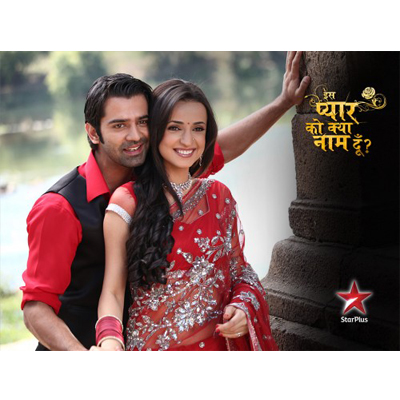
    MUMBAI: Viewers in Namibia will now have a reason to rejoice. Star India in partnership with content sales agency GoQuest Media Ventures has secured a deal with the Namibian Broadcasting Corporation for its popular series – ‘Iss Pyaar Ko Kya Naam Doon’.


    With this development, it makes ‘Iss Pyaar Ko Kya Naam Doon’ the first Indian TV series to reach the country.  The series is a light hearted love story of two individuals with opposite personalities entwined in a relationship swinging between love and hate, which captivated millions of viewers in India and abroad.


    Commenting on the success of the show across geographies, Star India head – commercial and procurement Sandeep Jain said, “Is Pyaar Ko Kya Naam Doon has been licensed to ten territories in very a short span of time, and we’re humbled with the response that the show has received. We have had a productive and long-standing association with GoQuest Media, and with their support, we have also been able to license this highly popular series to territories like Nigeria and Uganda in Africa.”


    GoQuest MD Vivek Lath believes that there is a tremendous demand for Indian content in Africa as broadcasters in many African countries rely on Indian films and TV series to meet the audiences’ ever-increasing demands.


    The choice of the show comes after a careful selection done by the channel in order to show the Namibian viewers a love story that’s one of the most loved and appealing TV series from India. The series was aired in India on Star Plus.


    As a content sales agency with strong relationships in Africa, MENA, Eastern Europe, the Caribbean and South-East Asia, GoQuest Media contends to reach newer territories this year with the best of Indian content.