Tag: Star India

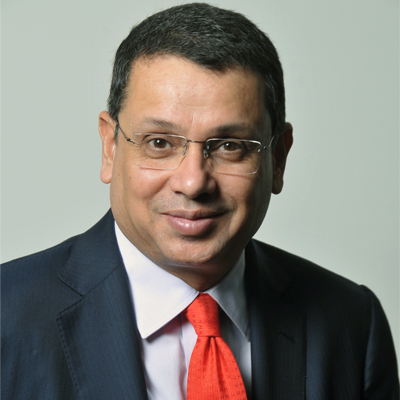
  • “Govt needs to look at broadcast as an important sector”: Uday Shankar

    “Govt needs to look at broadcast as an important sector”: Uday Shankar

    MUMBAI: It was in September that Star India’s Uday Shankar was once again handed over the reins of Indian Broadcasting Foundation (IBF), and since then, he has been working on a three-point agenda.


    Says the man who has been very vocal about his views on digitisation in India, “When you are heading an organisation like IBF, there are three things that we all need to look at. First and foremost is digitisation. It is the most fundamental thing that the industry requires and so we need to ensure that we engage with government and put the digitisation road map back on track.”


    The second is the carriage fees for both big and small channels, particularly for niche channels which are dying under the weight of this. He points out that the investment done by niche channels on content is totally destroyed because they don’t have the money. “Most of them are going bankrupt and carriage fee is the single biggest destructive influence on the industry. The key objective of digitisation was that it would expand carriage capacity and the carriage fees will get substantially reduced or would go away. That has not happened. We need to work on that,” he says.


    Thirdly, the foundation needs to make sure that the new government looks at broadcast as an important sector. “The government is genuinely reviewing it also,” he adds.


    The view at the IBF , currently, is that broadcast will play a huge role in the Narendra Modi government’s agenda of creating more jobs, creating more opportunities, entrepreneurship and wealth for people. “We as IBF want to take the plan to the government and tell them the way we can carry forward the government’s agenda,” says Shankar.


     With a view to benefit the industry and the customer, the foundation aims to work closely with all its synergies as well as other bodies like BARC India.   

  • Star’s incentives to MSOs

    Star’s incentives to MSOs

    MUMBAI: The industry could now move to a whole new module of distribution, if Star India is able to successfully attract MSOs to its new formula of distribution.

     
    The national broadcaster has from today decided to give incentives to the multi system operators (MSOs) for carrying its channels. The move will empower the viewer and platforms, usher in a new era of transparency, and boost the entire digitisation eco-system.

     
    Star India, which over the next three to four days will talk to all the platform operators for getting the deals in place, hopes it see the light of the day soon.


    According to Star India CEO Uday Shankar, the platforms and subscribers have one goal: to save money, while the broadcaster’s aim is to ensure that its content is available to as many people as possible. “We want to create an alignment between both the goals and so have created an attractive incentive plan,” says Shankar.


    The broadcaster has decided to incentivise platform operators, if they meet the three criteria: Firstly, provide more Star channels on its platform, secondly. give it to as many subscribers as it can and thirdly. give easy access by placing the channels in the top LCN on its platform. “The greater the reach of the channel, the cheaper the content would become for the operator,” informs Shankar.


    So why come up with this incentive? Answers Shankar, “Earlier, RIO was the default price on which negotiations took place between the broadcaster and platform operator. Negotiations are a process of give and take. However, because of some of the issues that cropped up in the TDSAT, the Tribunal said that broadcasters must make non-discriminatory deals. But how do you do deals which is equal in a scenario when two parties are completely different, in terms of size, importance of market etc. Hence, we decided that we will offer our content only on RIO.”


    RIO for the first time has been made the trading currency for deals between the broadcaster (Star) and the platform. “And now, in order to make sure that costs for the platform and the subscribers remain in control and manageable, we have decided to give incentives to platforms that help us achieve our goal of maximum reach,” he says.


     “We have done two things. One, made RIO the trading currency and because it is the common currency, it is non-discriminatory and secondly, have created a very transparent alignment between Star’s objectives and the platforms’ goals,” he adds.


    The revised RIO will be in force for one year with digital platforms in DAS areas. And as per the DAS Act, the broadcaster has the right to audit the subscriber details provided by the platform. This will help Star ensure that the MSOs are complying by the figures they present while doing the deal. 


    The one big question now is will the MSOs accept the new system? “The concept has been proven by the DTH operators over the years. They do not sell everything to every customer and instead make sharp packages. The consumer picks the package which is what is offered to them. At a broadcaster level, this is what we are aiming at doing. I think this will work for MSOs as well, if they were to make the packages and sell them.”


    Shankar expects the module to take off soon. “The only way to have Star content on one’s platform is through RIO and so I am sure the MSOs will take this up.”


    The MSO, if accepts all the three conditions: Of taking as many channels, of providing it to all its subscribers and give it on a certain LCN, the incentives could add up to giving the platform a discount of up to 60 per cent.


    “We need to understand that not all the channels will be taken by everyone. So if we take that, then some channels will have 100 per cent penetration, while some may have 80 per cent or 60 per cent penetration and on top of that if you layer it with LCN incentives, then the total benefit to the platform will be very lucrative,” informs Shankar.


    The MSOs, with these incentives, can put the Star channels back in their existing packages.


    So do we see this becoming an industry norm? Says Shankar, “This is a pricing issue and one cannot work as a group on this. We are doing it because of a set of issues that came to us. There were too many litigations and as Star we are clear that we want to be totally transparent of how we do business.”


    Platforms that still opt out of the revised RIO will have the option to choose and take channels as per the original list price.


    Click here to read the full RIO


    Click here to read about the rate card

  • Kolkata MSOs to meet Star to resolve RIO rates issue on 28 October

    Kolkata MSOs to meet Star to resolve RIO rates issue on 28 October

    KOLKATA: Multi system operators (MSOs) in Kolkata are likely to meet Star India representatives on 28 October to discuss the issue of RIO rates as per the outcome of the Telecom Disputes Settlement Appellate Tribunal’s (TDSAT) order of putting Star India channels on a la carte.


    On one hand, the package prices will go down by Rs 9, Rs 12 and Rs 16 respectively for different packages but cable TV consumers will have to spend an additional amount for watching their favourite Star channels if the MSOs put Star India channels on a la carte.


    Siti Cable Kolkata director Suresh Sethiya says, “We are meeting Star India officials on 28 October to find a solution. The rates should be fashioned in such a way that the broadcaster does not lose revenue and at the same time, consumers do not have to shell out huge amounts to watch cable TV.”


    Star Network comprising Star Plus, Star Jalsha, Star Movies, Star Sports, National Geographic and other channels, are likely to lose viewers if the MSOs remove the bouquet of Star channels from the packages and offer to subscribers on a-la-carte basis only, cable TV analysts claim.


    Initially, almost all the MSOs in Kolkata had agreed to remove the channels on the Star Network from basic, smart and premium packages and had issued advertisements across major newspapers notifying consumers about the same. “The ground is not prepared for RIO rates. If Star India comes on a negotiation, it is good for the industry,” says Advance Multisystem Broadband Communication (AMBC) managing director Sujit Das.


    While Manthan Broadband director Sudip Ghosh hopes that the negotiations between MSOs and Star Network would bear fruit.


    Though Star India had mailed the change to MSOs on 30 September, MSOs have cited the festive season for delay in implementing it.


    A source says, “Star Jalsha that currently reaches 100 per cent households here may lose around 40 per cent subscribers in a la carte as more than 50 per cent non-Bengali population in Kolkata would opt out.”

  • Star’s youth-turn

    Star’s youth-turn

    From Tulsi to Sandhya to Yo Yo Honey Singh, the country’s oldest general entertainment channel (GEC), Star Plus, is definitely keeping pace with the changing tastes of viewers.

    A gamble for News Corp executive chairman Rupert Murdoch, when launched in 1992, has been churning out content, which has created enough and more loyalists. Be it the 2000 revamp, which saw the launch of ‘Kaun Banega Crorepati’ and the ‘K’ series led by ‘Kyunki Saas Bhi Kabhi Bahu Thi’ and many others or the current array of hits like ‘Diya Aur Baati Hum’ and ‘Yeh Rishta Kya Kehlata Hai’.

    So what is the secret ingredient for its success? “It’s the stories we tell,” says Star Plus general manager Gaurav Banerjee, who took charge in 2010 when the channel went through a second revamp.

    Star, over the years, has changed the way GECs told stories and made the characters a household name. Families sat together to watch the story of Tulsi and the Virani parivar. However, as the stories stretched, people’s interest diminished, giving birth to newer channels to proliferate and reasons to the strong team to move on.

    It is at this time that the channel again repositioned itself with ‘Rishta Wahi, Soch Nayi’ in 2010, which saw the birth of new characters and different and interesting stories.  In the last decade or so, viewers have evolved; as more women stepped out of their homes to work, the thinking changed as well. Keeping pace with this, the channel brought in the new “progressive bahus” of television.

    The most popular of them being Sandhya of ‘Diya Aur Baati Hum’, which went on air in 2011 and tells a story of a girl with aspirations married to an illiterate halwai and conservative in-laws. Banerjee believes that the channel has always come up with some of the biggest ideas. “It was ‘Kyunki…’ 15 years ago, today its ‘Diya aur Bati’.”

    Some of other shows launched with the new philosophy of the channel were ‘Pratigya’, ‘Sasural Genda Phool’, which died a natural death, while some like ‘Yeh Rishta Kya Kehlata Hai’ continue the successful run.

    “The times are changing, but even today the role of a family, especially the relationship between a saas and a bahu is an integral part of our society,” says Banerjee, who feels it would be wrong to call the channel, a saas-bahu channel. “In our stories, relationships are important but the characters are stronger.”

    In 2012, with ‘Satyamev Jayate’, the channel once again shook the industry by revamping the Sunday morning slot which no one dared to experiment with, after the success of ‘Mahabharat’ and ‘Ramayan’ on Doordarshan. The weekly show created and hosted by Aamir Khan highlighted social issues prevalent in India and discussed possible solutions.

    Star India CEO Uday Shankar has gone on record to say that he had called up James Murdoch and told him about the risk associated with SMJ because of the investment and he told him ‘we would live.’ The channel had invested Rs 4 crore per episode in season one, the amount unheard of then for a reality show. The series is now in its third season.

    As we move towards the end of 2014, the channel still continues to enjoy its number one position in the TAM TV ratings with a huge margin. In the week 42 of TAM TV ratings, it witnessed a huge hike and clocked 600,523 GVTs while Colors recorded 436,422GVTs.

    A year back, with shows like ‘Veera’, ‘Pyaar Ka Dard Hai Meetha Meetha Pyaara Pyaara’ and more recently, with ‘Yeh Hai Mohabbatein’ and ‘Ek Hassena Thi’, the channel has moved its programming strategy towards youngsters. The same was also donned by the actors and actresses during the 2014 Star Parivar Awards, who wore ‘modern’ outfits while thanking the channel going ‘younger’.   

    And now with the four new shows – ‘India’s Raw Star’, ‘Airlines’, ‘Nisha Aur Uske Cousins’ and ‘Everest’ – the channel is once again changing its programming strategy.

    Is Star Plus going younger?

     “Why shouldn’t we?” comes the prompt response from Banerjee who feels that with consumers’ tastes evolving, the channel which entertains the youngest democracy in the world, needs to change as well.

    The continuous effort to do something new and different has once again made the channel take a step forward to cater to the younger audiences. The now Balaji group CEO Sameer Nair, who is credited for the 2000 revamp of the channel, believes that if Star is moving towards catering the youth, then it is good. “One needs to move with time and Star has always been aiming to give the viewers what they want,” he adds.

    The channel, which has a strong in-house research team and associates with various agencies, is continuously conducting researches across the country to know what the viewers want. The recent studies tell that there is a certain section of youngsters who want to watch different stories, something that won’t put off the elders and can be enjoyed by the whole family.

    The research emphasised on today’s women who want more financial freedom and want a career; though marriage is important but that is not a priority anymore. It also highlighted that GECs weren’t reflecting that desire in their content.

    The channel informs that as per TAM data, 50 per cent of the total television viewership comes from women and only 10 per cent of this comes from the age group of 15 to 24. “We are already higher in this category as 16-17 per cent of our audience comes from within that age group, but we think there are still a number of women who don’t watch enough of Star Plus and we want to cater to them,” says Star India SVP Nikhil Madhok.

    The 10 second ad slot for the weekend properties ‘India’s Raw Star’ is touted at Rs 3 lakh while ‘Airlines’ is anything between Rs 80,000 and 1 lakh. The daily soap ‘Nisha Aur Uske Cousins’ is Rs 50,000 plus.

     “The viewers are giving us direction and as market leaders we have to lead that change,” says Banerjee.

    However, media planners say that though Star isn’t averse to experimenting and state the example of ‘Satyamev Jayate,’ they point out that GECs work on loyalty and Star Plus enjoys a huge following, but somewhere the shift is to tap in the youth segment so that the revenue doesn’t get impacted.

    Planners state that sometimes for a brand, ratings don’t matter but the TG does. Hence, they opt to be associated with channels or shows which are talking to that TG. They give the example of Tata Safari and ‘24’ on Colors.

    Banerjee dispels the argument and firmly says that the channel doesn’t need to change to woo advertisers. “We are not under any pressure, but we wish to change as the country is young.”

    But do planners believe that the change will impact Star’s brand equity? Maxus MD Kartik says, “I don’t think the move to go younger will impact the channel’s image or brand value because the core of the shows is still entertainment. They are not moving away from the brand’s identity.”

    On the other hand, brand consultant Harish Bijoor thinks that while the brand will alienate a set of its older viewers, the big segment to harvest is the young. “Indian demographics today do not necessarily go hand in hand with channel viewer profiles today. The audience is young. If one is to grow, one needs to harvest young viewership. Star Plus should go young in slots. A 50: 50 skew would work well for it.”

    The process of bringing out the best content isn’t simple. After numerous meetings with the best in the business as Banerjee says, pilots are shown to viewers to get their feedback as it is very important, so much so, that sometimes numerous set of viewers watch a particular pilot to tell the right story.

     “Fiction is our greatest strength and we make sure that we get all the elements right apart from the story. The settings, the actors all need to fit the story and it takes time before we put out a show for consumption,” says Banerjee. For instance, the channel worked on the finer details and concept for years on ‘SMJ’ and ‘Mahabharat’.

    Weekend programming head Ashish Golwalkar says that people have grown up watching their serials, but with time one needs to look at the current lot of youngsters. “Today a lot of youngsters think of Star Plus as a ‘mummy’ channel and if we didn’t change now, five years down the line nobody will be watching us,” opines Golwalkar.

    Banerjee along with his team, which consists mostly of 30 years-olds, put in a lot of effort to bring a variety on the channel’s platter. Research is an important part, but the team also depends on its understanding of the consumer as well as learning gained from its previous hits and misses.

    He doesn’t shy away from admitting the shortcomings of the channel. For instance, he agrees to the fact that with no innovation, the channel’s dance reality show, ‘Nach Baliye’, will not be able to grab the eyeballs in the future. Same goes for ‘MasterChef’ where the channel experimented with ‘Masterchef Junior’ and was able to make some headway. Banerjee proudly boasts about the channel’s biggest bet with mythological show, ‘Mahabharat’ which was aired in the 8:30 pm slot giving tough competition to Sab’s ‘Tarak Mehta ka Oolta Chashma’.

    For Madhok, while content on the channel has seen a change, the marketing too will soon have a changed approach. “Our main communication is our promo which gives us enough leeway to widen our approach and position. Also, since the TG (women between the age group of 22-25) which we are focusing on are very active online, hence, that will be our major catchment area,” says Madhok.

    It is very clear that Star Plus  doesn’t want to overlap with its youth channel, Channel V. “We want to cater to young women, not girls, therefore, the content will talk about marriage and relationships but the theme will resonate what is priority for these young women,” adds Madhok. In the past couple of years, the channel has already increased its digital spends from 5 per cent to 20 per cent.

    On social media, the channel lags behind Colors, which has more likes on Facebook and followers on Twitter. The channel has 6,233,082 likes on Facebook while Colors has 7,652,409 likes, Zee has 3,620,047 likes. On Twitter it has 335K followers while Colors has 395K and Zee has 153K followers.

    At the recently concluded MIPCOM 2014, 21st Century Fox co-chief operating officer James Murdoch said, “If we continue to innovate and lead in India, it will prove to be a game changer for us.” And moving ahead with this is Star India which is now gearing to lure the women in business suits.

  • Hero ISL sizzles as 170 million witness the league during opening week

    Hero ISL sizzles as 170 million witness the league during opening week

    MUMBAI: The first edition of Hero Indian Super League (ISL) which has promised to open a new footballing movement in the country has achieved a new milestone for the sport during the opening week of the league.


    75 million people witnessed the birth of the new football league on day one and 170 million in week one. According to Star, this is 12 times the FIFA World Cup 2014 opening day and double of opening week reach for FIFA World Cup 2014 in India. The weekly reach is over 20-30X of the other football leagues viewership in India said the channel which is also the promoter along with AIFF and IMG-Reliance.


    These are aggregated reach numbers across eight channels that the network had telecast the league. These are (Star Sports 2 (English), Star Sports 3 (Hindi), Star Sports HD 2 (English), Star Gold (Hindi), Star Utsav (Hindi), Asianet Movies (Malayalam), Jalsha Movies (Bengali) and Suvarna Plus (Kannada). (Tam Panel CS4+; Extrapolated to all TV viewing universe).


    The viewership numbers also performed well not just on television but also the web portal www.starsports.com.The website recorded 8,00,000 visits each for the first two days of the tournament which is 80 per cent of the average IPL viewership on www.starsports.com. No other non-cricketing event has seen such digital traction in India, Star said. The number of visitors to the site continued to grow as the league gained momentum and recorded five million visits over the opening week.


    On digital media, Hero ISL saw 2.5 billion potential impressions so far. Within 24 hours of the grand kick off, the league dominated twitter trends in India with a perfect score of 10 out 10 topics on web and 15 out of 17 topics on mobile as the country reveled in the birth of a footballing nation. On Facebook, the league trended at number one in India with the hashtag #IndianSuperLeague.


    Football Sports Development founding chairperson Nita Ambani said, “Right from the outset, Hero ISL has been geared towards one overarching objective— to develop football across the country in a systematic and holistic manner. The enthusiasm with which the Hero Indian Super league has been greeted, gives us the perfect platform from which to drive grassroots development of football in India.”


    Star India CEO Uday Shankar added, “The early success of the Hero ISL has been phenomenal as millions of fans have thronged to watch the action – on television, on digital and in-stadia. This is a historic moment in the era of sports in India as fans embrace the global game and see a quality of football never witnessed before being played in India. This is the first step in a long journey of making India a footballing nation and providing the platform for future champions to emerge. The endeavour has been to create a world class tournament to global production standards with the ubiquitous reach and platform of the Star network.” He further thanked fans for their belief and said they would redouble their efforts to make it a spectacular tournament.


    The Hero Indian Super League is being beamed across a global audience, expanding the reach of the most exciting new football league across five continents and in 23 languages. In India, the Hero ISL is being telecast live on eight channels across five languages on Star Sports 2 (English), Star Sports 3 (Hindi), Star Sports HD 2 (English), Star Gold (Hindi), Star Utsav (Hindi), Asianet Movies (Malayalam), Jalsha Movies (Bengali) and Suvarna Plus (Kannada). It is also available live on www.starsports.com.

  • MIPCOM 2014: Aamir Khan’s three conditions before starting ‘Satyamev Jayate’…

    MIPCOM 2014: Aamir Khan’s three conditions before starting ‘Satyamev Jayate’…

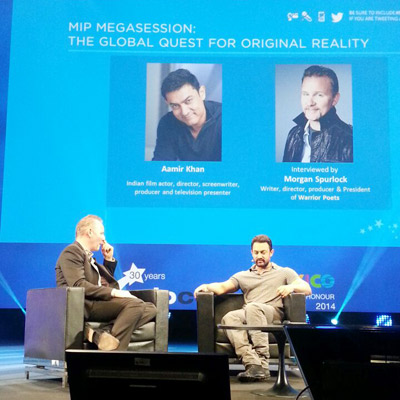
    CANNES: He is a man who can make his mark even on a distant land, far away from home. Yes! We are talking about Indian film actor Aamir Khan, who was in Cannes, giving the MIP Megasession keynote at the ongoing MIPCOM 2014 in a packed Grand Auditorium about his landmark show Satyamev Jayate (SMJ). Indiantelevision.com founder, CEO and editor in chief Anil Wanvari is the Indian representative for all MIP markets.


    So how did it all start? Said Khan, “It all started, becuase I was very inspired from my friend Satya (Satyajit Bhatkal, director of SMJ), who was my friend and class topper from school, was working in the social space. And I being an actor, was doing well in my career, but wasn’t doing much on this.”


    He further went on to say that as TV grew in India, this idea, of doing something on this front, grew bigger. “Star India CEO Uday (Shankar) offered me a game show, which I refused, he then asked me if I could do anything on TV. So I asked him if we could work on something that can bring some change. And he agreed,” he added.


    Khan and his small team comprising Satyajit worked together to create the show, which has gone down in the history of Indian television as one of the most popular shows. “Through the show, we try to understand the society. We try and put the issues to the people, be it child abuse, honour killing, rights and responsibilities etc,” he informed the audience which comprised of content creators from across the globe.  


    All that we see on television wasn’t created in a day. “We took a year to work on research. The reason we researched was to find out if we had a show,” he said. In order to be sure, the team researched with four topics “and once we were confident, it didn’t matter to us if Star would take the show or not. We knew we could go ahead with it and put it on YouTube or anywhere,” he said adding that it took just five minutes for Shankar to approve the concept of the show.


    But, it was not all that easy. Khan then put three conditions in front of Shankar before agreeing to go ahead with Satyamev Jayate.


    One, he wanted the programme to be in multiple languages, since he wanted to reach out to people in their language. “I just didn’t want the main Star channel, but wanted the whole network, which would air the show at the same day and time.”


    The second condition was that in the states, where Star didn’t have a presence, the show was to be given to its competitor and the third was to give it to the terrestrial network Doordarshan. “Many villages in India do not have satellite TV even now and we wanted to reach those homes through Doordarshan,” he announced.  


    But, Shankar, coming from a journalism background, understood where Khan was coming from. “I was talking of a show where I was not investing money but investing time. Star and my team is a part of the show which is made of love,” he said.


    Of the 1.2 billion population in India, 600 million people watch SMJ every week. “We didn’t know if people would be interested in a show like this. It was heartwarming to see how people connected emotionally. There is a huge vacuum of content on social issues and people want a show like SMJ,” he added.


    So how does Satyamev Jayate impact the society? “Well, we empower people by selecting an organisation each week so that one can help financially. What we also do is have partners, who help us on issues.” So far the show has been able to raise $ 45 million for the NGOs connected with it.


    Khan also mentioned how the political and administrative class of the country had also shown interest in the show. “Our show hits out on political and administrative class most of the times and so we didn’t know how they would respond, but I can tell you that there have been 9-10 examples where these people have come ahead and supported us.”


    Explaining the reasons for the show doing so well, Khan said, “There was a need and desire for things to change. India is on a cusp of change so a show like this helps them understand the issue and move towards change,” he said.


    “Sometimes when we research, we feel angry about certain things. But we have to approach people with love. We can’t attack them, if we do that, we will close the door for ourselves,” he added.


    Khan feels that the audiences in India today are looking for content that is engaging. “Even serious content can be made engaging.”


    One of the things that they do to catch the attention of the audience is keep the topic of the show a secret. “No one knows the topic, till the episode is aired. This attracts them to the show.”


    Khan also believes that serious issues can be presented in a way that people can relate to. Giving an example he said, “So when I talk about female foeticide, I do not start with the fact that women are being forced into abortion. That drives away audience, what I do is, I start by asking them, their most favourite person and then go on talking about their mother, my mother and then tell them the reality,” he narrated.


    Khan and his team is taking journalism and combining it with drama and storytelling. “My job as a storyteller is to be engaging,” he concluded.  

  • MIPCOM 2014: Star India eyes newer formats, greater reach

    MIPCOM 2014: Star India eyes newer formats, greater reach

    CANNES: It is a meeting place for the content industry across the globe. And this is precisely what the seven member team of Star India is doing in Cannes, at the ongoing MIPCOM 2014. The network, which includes Hindi general entertainment channels: Star Plus and Life OK as well as its movie cluster: Star Movies, Star Movies Action, Star Gold, and Movies OK is having a busy MIPCOM.


    While a three member team is here selling its content, which ranges from drama to mythology, a four member team: two each for GECs and movie channels is looking to buy formats that can be adapted for the Indian audiences, both fiction and non-fiction.


    Uncountable meetings have kept the seven member team busy on both day one and day two of the market, which will be here till 16 October, the last day of MIPCOM 2014.


    On sale is the entire cluster of shows from both Star Plus and Life OK. But what is being pushed more is Yeh Hai Mohabbatein, Ek Hasina Thi, Saraswatichandra and Mahabharat, apart from its other hit shows, including the just launched Airlines, Nisha Aur Uske Cousins and the biggest hit on Life OK, Mahadev.


    While the GEC cluster is looking at the entire world market for both selling and buying shows and formats, the English movie cluster is focusing on Hollywood movies.


    The number one channel in the Hindi GEC space, as per the TAM TV ratings, is also of key importance to 21st Century Fox co-chief operating officer James Murdoch.  “The business in India has been doing great. We are the number one network there. If we continue to innovate and lead in India, it will prove to be a game changer for us,” he had said during his keynote, here in Cannes.

  • “Star India will prove to be a game changer for us”: James Murdoch

    “Star India will prove to be a game changer for us”: James Murdoch

    CANNES: 21st Century Fox co-chief operating officer James Murdoch has lots of hopes from Star India. During his keynote on day one of the ongoing MIPCOM 2014, he said, “If we continue to innovate and lead in India, it will prove to be a game changer for us. It is the number one network in India.” He further stressed that the India business is really doing well for them and so was Sky in the UK.


    Murdoch believes in giving freedom and creating a company which backs talent. “At 21st Century Fox, we aspire to be one of the biggest homes for creativity and storytelling. We want to be a place where we can attract some of the best talent and encourage them to take risks, when they can’t take it anywhere else,” stressed Murdoch.


    21st Century Fox which is in different businesses, right from television to movies to cable and satellite, believes that the main business at the end of the day is of digital video and about story telling. “A lot of barriers in different lines of our business is breaking down. The challenges in terms of strategies and customer behaviour is similar from place to place and business to business,” he added.


    The biggest media giant believes in giving its executives and talent the freedom to think and create. “The culture that we are creating is that right from Mumbai to LA, the executives should have the confidence for risk taking and do great story telling,” he said. The company believes in empowering people to do great business.


    Murdoch laid a lot of emphasis on taking risks. “Larger companies have the ability to take risks. We learn lessons along the way. As a company we have made investments in challenging businesses. We are trying to create a culture where people understand that it is better to take risks, even if you get it wrong, at least you have tried. Great successes come from great risks. We have a culture where we do not get traumatised with failures.  We want to be a place where people feel that they can be backed,” he announced.


    He feels that all of Fox’s business is of risk. “Investing in original programming is the biggest risk we take, as investing in original programming means delaying some profits for the company,” he said while giving example of Simpsons, which they made and then acquired for cable syndication in the US. “When we took the step, we didn’t know how customers would react to it.”


    “These are the sort of risks one needs to take. I love the moment in the business when you say, ‘Holy Cow, we did it!’” he stressed.


    The son of media baron Rupert Murdoch, also spoke about the Shine and Endemol joint venture. “We saw opportunity in merging with Endemol. This is a business which will benefit from scale, breadth and diversity of creativity. Both Shine and Endemol have a great future.”


    Murdoch feels that in a creative business, one cannot over-synergise. “You have to allow people to run their own show.”


    According to Murdoch, consolidation in infrastructure business of cable and television has begun. “The upstream business will see further consolidation. People will seek to invest more in programming, because they see value in it,” he said.


    He also touched upon the most talked about collaboration between Time Warner Cable and 21st Century Fox, which did not take place.  “We had thought that the combination could be exciting. It was an opportunity at a moment in time. Given the nature of these things, we didn’t want to get into things like hostile takeovers and so moved out.”


    The company will soon be completing the merger of its three Sky businesses in Europe: UK, Germany and Italy. So why merge the three, he said, “Each one of them in their lifecycle has done really well. There are a lot of common things they do. We feel that together there is a huge opportunity to accelerate the business. Also with this they can create great stories. In Europe there is great opportunity for studio business.”


    According to Murdoch, consumers like bundling, because that drives down prices and consumption up. “People will bundle things in different ways and the stack will be re-ordered. Subscription TV is alive and kicking, and it is changing, driven by competition,” he said.


    He is happy when customers surprise him. “We need to create authenticity in the content. Customers are being better served today.”


    He concluded by saying, “TV industry has been very progressive and we need to be pacesetter.”

  • Hero ISL to air in 23 different languages across the world

    Hero ISL to air in 23 different languages across the world

    MUMBAI: The Hero Indian Super League is all set for the global audience and expand its reach across five continents in 18 different languages, other than the five languages that the football league will be aired in India.

    The global distribution of the league paves the way for making the Hero ISL the first Indian football event to be broadcast globally at such a large scale. Apart from a broadcast plan for Indian viewers, the league will also have a global broadcast footprint. This, together with the reach over the internet, promises to deliver the league over the next 70 days and 61 games to sports fans around the globe.

    Through the European broadcaster Eurosport, the league will be telecast widely in continental Europe. Football fans in the UK will be able to catch the action on Star Gold, which is readily accessible to all TV viewers as part of base packs in that country. Besides, the league will also be telecast in Canada, United States, Middle East, North Africa, South Africa, Sub-Saharan Africa, Indian Sub-Continent, South East Asia and Australia, through other broadcasters such as ATN, Fox Sports, OSN and Supersport among others.

    Star India chief operating officer Sanjay Gupta said, “We are extremely delighted to take the Hero ISL to a global audience. The league is a collaborative effort by IMG-Reliance and Star India that brings together the best of international footballing talent, and we are confident that sports fans across the world will enjoy watching the arrival of India on the global footballing scene,”

    The latest agreement further expands the league’s reach to cover nearly three quarters of a global audience. The detailed list of international territories and broadcasters is as follows:


    This league is being telecast live on eight channels of the Star network: Star Sports 2 (English), Star Sports 3 (Hindi), Star Sports HD 2 (English), Star Gold (Hindi), Star Utsav (Hindi), Asianet Movies (Malayalam), Jalsha Movies (Bengali) and Suvarna Plus (Kannada). Furthermore, it would also be aired live on www.starsports.com.

    The star studded international line up of the Hero ISL consists of the likes of World Cup Winners like Alessandro Del Piero, Joan Capdevila, Marco Materazzi and members of the famous Arsenal ‘Invincibles’ team Robert Pires and Freddie Ljungberg. Thanks to the agreement, footballing fans across the world will be able to relive some of the magic of these legends of the sport.

  • ICC broadcast rights till 2023 bagged by Star India

    ICC broadcast rights till 2023 bagged by Star India

    MUMBAI: In one of the most anticipated sports deal, The International Cricket Council (ICC) jointly awarded its audio-visual rights for ICC Events from 2015 to 2023 to Star India and Star Middle East.


    Though the exact final value of the rights fee has not been disclosed, it is much in excess of the ICC’s previous commercial deals.


    Commenting on the decision to name the two broadcasters as the successful bidders, ICC chairman N Srinivasan said, “We are delighted that our partnership with the Star group has extended to the next cycle of ICC Events. This illustrates the strong relationship we have built in the current cycle and the value we have delivered since 2007.”


    He further went on to say that Star has an outstanding reputation as a sports broadcaster and has played an integral role in promoting and growing the game by taking coverage of ICC Events to a truly global and record-breaking audience.


    This commitment for the next eight years will ensure greater stability for ICC members as well as increased funding for developing and established countries. Emerging nations will have access to the largest funding resource in the history of the game and the board has fully endorsed this framework as the best means of safeguarding the future of the sport,” he added.


    Speaking on the investment by Star,  Srinivasan said the level of investment committed by Star showed that the game is stronger than ever before and hopefully with the financial stability for the next eight years, they could implement plans to strengthen and grow the game further, making it an even bigger and better global game.


    The new eight-year period includes 18 ICC tournaments, including two ICC Cricket World Cups (2019 and 2023), two ICC Champions Trophy tournaments (2017 and 2021) and two ICC World Twenty20 tournaments (2016 and 2020).


    Star India CEO Uday Shankar said, “We are delighted and honoured to extend our partnership with ICC. This is a tribute to Star’s commitment and ICC’s trust in our ability to take the great game of cricket to the next level. Star will constantly attempt to reinvent the viewer experience to make cricket bigger and bigger.”


    The current cycle has seen ESPN Star Sports hold the audio-visual rights until the contract expires at the end of next year’s ICC Cricket World Cup 2015.


    IBC’s finance and commercial affairs committee chairman Giles Clarke commented, “This innovative and exciting partnership will underpin the long-term financial health of the global game and provide real stability for all our members. It will help the ICC and our members to grow participation in areas such as the women’s game where there have been great strides made as well as supporting the emerging nations. This deal benefits all ICC members and will allow them to improve their competitiveness and public interest in a targeted and sustainable way. The partnership will also guarantee increased promotion and marketing of the game in key markets across the globe.” 


    The decision was made by the ICC Business Corporation (IBC) Board, ICC’s commercial arm, during a meeting at the ICC headquarters in Dubai on Sunday. The decision followed a robust tender, bidding and evaluation process, which started in July 2014. The process, which involved two rounds of bidding, received 17 competitive bids from various broadcasters across different territories for the rights.


    ICC chief executive David Richardson said, “This agreement guarantees more money for all our members, thereby underpinning the growth and development of the game. Star has been an excellent partner for the ICC during the current rights cycle, promoting and supporting ICC Events and cricket in general in the sub-continent, and I am pleased that we now have a chance to build on that success over the next eight years on a global level.”