Tag: Star India

  • 2014: A year of de-aggregation

    2014: A year of de-aggregation

    2014 was a year when the Telecom Regulatory Authority of India (TRAI) issued, as many said, the ‘death warrant’ for the powerful aggregators. The year started with the regulator throwing the ‘big bomb’ on the channel aggregators by introducing the ‘de-aggregation paper’. The paper clearly stated that the broadcaster appointed content aggregators could not mix and bundle channels from different networks before signing deals with the distribution platforms.

    With the regulation, the once content aggregators were given a new name, that of ‘agents’ who would carry out the deals ‘on behalf of’ the broadcaster. TRAI gave the aggregators six months to dismantle operations, or realign as agents. As part of the regulation, it was the broadcasters who could now sign deals with the distribution platforms either directly or through agents, who could only work on behalf of the broadcaster and not bundle channels from different networks. The regulation came as a shock as it curbed the power of aggregators Media Pro, IndiaCast UTV Media Distribution and TheOneAlliance.

    Soon after, aggregators started disintegrating. MediaPro, the JV between Star Den and Zee Turner was the first to announce its separation. Thereafter, both of them began distributing on their own. Zee Network created a separate distribution entity called Taj Television which would also act as agents for Turner channels. MediaPro CEO Gurjeev Singh Kapoor headed off to handle Star India’s international business while COO Arun Kapoor became CEO of Taj. Soon after this, MediaPro terminated its alliance with NDTV, MGM and MCCS.

    The next in line to break up was IndiaCast UTV, the JV between Network 18 (TV18) and UTV. The last to do so was TheOneAlliance (a JV between MSM and Discovery) which has already announced its decision to break away but will formally happen only on 1 January 2015. Meanwhile IndiaCast will act as an agent for UTV as well as Epic TV channel, while MSM and Discovery will be setting up their own operations.

    While on one hand broadcasters were figuring out how they could deal with the new clause from TRAI, on the other hand distribution issues were being fought in the Telecom Disputes Settlement Appellate Tribunal (TDSAT). The fiercest of them was between Hathway Cable & Datacom and Star India/Taj Television that lasted for nearly seven months.

    The first accusation was from Star when it stated that Hathway had removed its sports channels and placed them as a separate pack. Zee Network was nearing the end of its deal with Hathway and wanted to re-negotiate it with the MSO. Hathway failed to reply on time, leading to disconnection of signals from the broadcaster. Thereby, the MSO took Zee to court.

    After long hearings between the three parties, the two cases got combined and it was settled that till the time the case does not come to an end, Hathway would pay Star and Zee at the rate of Rs 23 and Rs 21.5 cost per subscriber (CPS) basis for their entertainment channels and Rs 4 CPS for Star’s sports channels. The last verdict of the hearing came as the TDSAT directed Hathway to enter into RIO agreements with Taj Television and Star India for the DAS markets.

    When everyone thought that the case would come to an end, Hathway went to TDSAT once again claiming that there would be partiality in providing RIO rates to various platform operators. The case came to an end with Star India coming forth and stating that it would only be executing RIO deals for DAS markets with all distribution platforms from 10 November. Though Taj Television had also been ordered to get into a RIO deal with Hathway, the broadcaster later on signed a CPS (carriage) deal.

    The year’s ending saw much discussion on Star’s incentives that were being provided on the basis of channel penetration, reach and channel placement. While most MSOs vehemently protested against the new RIO at first, in the end they took up the channels on incentive basis and created new packs. Most MSOs decided to put the popular channels on the base pack and give the remaining as separate packs, in higher packs or as a-la-carte.

    The year also saw a rise in the carriage fees, which according to many has risen by 20-25 per cent for niche and news channels.
  • Milind Naik joins Pepper Media as Tech director

    Milind Naik joins Pepper Media as Tech director

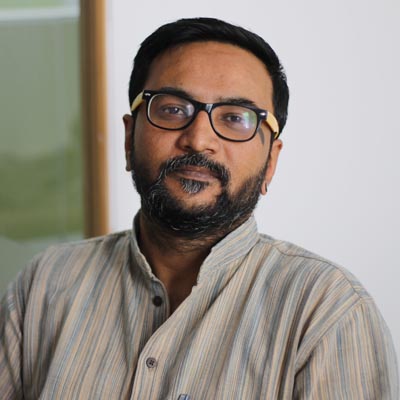
     MUMBAI: Milind Naik, the former Star and Widen Cricinfo CTO, has been roped in by Pepper Media as technology director.

    Pepper Media, a multi-channel network (MCN) on YouTube, floated by former founder and CEO of iStream.com, Radhakrishnan Ramachandran. iStream.com was a premium video-on-demand service launched in 2011 with backing from SAIF Partners.

    “If you are looking at building a sustainable business model in the MCN space, technology will be one of the key accelerators. We are looking at marrying brands with content concepts and we need to see brand managers looking at online videos as a cost effective and powerful alternative to TV. Technology will play that key role in simplifying the model for brand managers, by helping them analyse the impact of their video campaigns on platforms like YouTube,” said Ramachandran

    Naik has over 22 years of experience. This includes an entrepreneurial stint; when he launched Pappilon, one of the earliest mobile application development companies. He then launched an analytics firm specialising in buying patterns and consumer analytics for brands for the international markets.

    “With videos being watched more on multi devices, it is imperative for brands to maximise on the same, the likes, dislikes, what is trending is yet to be captured in a 360 degree and that is the aim here at Pepper Media.  I am excited to be part of a team that has been pioneers in the online video space. Metrics for consumer analytics on video is the next big thing. Technology analytics are faster and accurate as people are moving towards a more expressive form of personal views. For technology to make a difference it is the collective intelligence of the team which matters the most and that is what I see here at Pepper Media,” said Naik.


  • Sumantra ‘Sumo’  Dutta moves on from Star

    Sumantra ‘Sumo’ Dutta moves on from Star

    MUMBAI: A score of years of relationship with a company is not something that many a senior executive in media can boast of. But Sumantra Dutta (or Sumo as he is fondly called) had that with the News Corp owned Star India. And in his twentieth year of employment with India’s leading broadcast network, Sumo has said sayonara. He was Star Middle East, Pakistan and Africa country head, at the time of leaving.


    Star India CEO Uday Shankar said, “Sumantra has had a long and fruitful career marked by strong performance across diverse portfolios at STAR. His leadership has helped STAR establish itself as a leading network in the Middle East, Pakistan and Africa. Sumantra has always demonstrated sound judgement and a willingness to take on risk in everything he did, and has contributed significantly to Star’s success.”


    Dutta said, “I have spent most of my professional life so far at Star, and it has been  a truly enriching and fulfilling experience. I am grateful to Uday and the great team at Star for the belief, passion and support, and I wish them all the very best. I shall always remain a brand ambassador of this great network.”


    Dutta joined Star India as ad sales manager in Kolkata in 1994, after which he moved to Delhi  in 1996 and Mumbai in 1999, where he grew to finally head ad sales and marketing as EVP in 2000. A year later, as Radio City COO, he was part of the team that successfully launched the FM network, which he went on to head as CEO in 2003. In October 2008, Dutta moved to Dubai to spearhead STAR’s expansion in the Middle East, Pakistan and Africa as Country Manager.


    Prior to joining Star India, Dutta worked with brands like Nestle, Times of India and Mudra.

  • Ajit Thakur resigns from Star India

    Ajit Thakur resigns from Star India

    MUMBAI: The man credited for Life OK’s success story, Ajit Thakur, has decided to move on.

    The channel completed three years on 18 December and is gearing up for a revamp early next year.

    It was in July this year that he, who has led Life OK to soar on the ratings chart, was given an additional charge of managing the network’s youth entertainment channel, Channel V.

    But in a shocking development, Thakur has ended his three-year stint with the network. According to sources, he put down his papers on 15 December and is currently serving his notice period. His last day in the organisation will be February 2015.

    Sources from the channel confirmed the news and said that he is interested in making films and hence, has decided to take such a drastic step.

    The buzz is that he is joining Sunil Lulla’s Eros.

    Thakur could not be reached at the time of filing this report.


  • Life OK turns 3; sets for a revamp early next year

    Life OK turns 3; sets for a revamp early next year

    MUMBAI: Star Network had a vision to create its own competition for the leading general entertainment channel (GEC), Star Plus. So while on one side, Star Plus catered to the women in the households, the network wanted to create a channel that catered to the entire family. It decided to reincarnate one of its older channels Star One (defunct youth-oriented) and repackaged it with a new and fresh content. And that is how on 18 December 2011 Life OK was born.

    The network decided that the differentiating factor for the channel will be that it will not fall prey to the regular saas-bahu soaps. Reason, it didn’t want to divide the family but wanted to entertain the entire family and wanted to go beyond entertainment and into social media messaging.

    It began with shows like Saubhagyavati Bhava and Mahadev which struck a right chord with the audiences. And since then there has been no stopping for the channel which has given hits after hits with its crime properties like Shapath and Savdhaan India. So far, the channel has experimented with four reality shows – Hunarbaaz, Laugh India Laugh, Welcome and The Bachelorette India – all of which garnered mediocre viewership.

    However, when the tough gets going, the going gets tough. For one hit the channel gave, it had three failures. But Life OK EVP and general manager Ajit Thakur has always enjoyed failures because according to him without the low, there is no value of a high.

    Now in its third year, Life OK takes 14 per cent market share of the entire pie as it continues to showcase innovative and disruptive content to stay in the game. Not only did it climb up to the number three position by beating Colors in week 22 of TAM TV ratings, it also made naysayers sit and take notice.  

    Talking about this year’s highlights, the channel started the year with its first big-ticket Bollywood event, The 20th Annual Life OK Screen Awards that registered a whopping 9 million TVTs, three per cent more than the 6.9 million TVTs (ratings provided by Life OK) garnered by Colors for its last year’s edition.

    Riding high on the success of Screen Awards, the channel decided to get more Bollywood stars on board and launched Life OK Now Awards which celebrates excellence in the field of film, television and music, every month. The channel has aired only four editions till now.

    This year, it made many ‘firsts’. The channel saw the  birth of shows like Comedy Classes, its first stint with comedy which delivered decent numbers at the ratings chart and Dare 2 Dance, its first reality dance show where the Khiladi of Bollywood, Akshay Kumar came on-board as the host. The channel also introduced an action thriller series christened Pukaar – Call for the Hero which is delivering decent numbers.

    After a successful three year run, the channel’s flagship property Mahadev saw its curtains fall. The culmination of Mahadev paved way for, Mahakumbh- Ek Rahasya, Ek Kahani.

    Not only is the channel proud of its achievements but rivals too have applauded the experiments it has done throughout the year. An official from a rival channel believes that Life OK has established itself in the space. “We didn’t expect the channel to do so well in such a short span of time. It did come out with some great tacks like Mahadev and Savdhaan India. However, this year we didn’t see a huge property coming from it even though it did wonderful at the ratings chart. Nonetheless, we wish the channel good luck for the future.”

    Advertisers too have been appreciative of the channel and have supported it throughout.

    After a successful 2014, it is going to be an eventful 2015 for the channel as it gears up for a revamp. As per sources, the revamp will happen early next year, between January and March.


  • DTH could push HD penetration in next one year: MPA

    DTH could push HD penetration in next one year: MPA

    MUMBAI: As the year comes to an end, the multi system operators (MSOs) have finally come out with their packages and the pricing module for the Star India channels, after the broadcaster decided to give its channels only on Reference Interconnect Offer (RIO) basis.


    But according to Media Partners Asia (MPA) while Star has the right intent, it has to remain flexible on the incentives offered for better ground adoption. From the operator’s viewpoint, the Star scheme needs to address the following issues:


    1. Despite availing of the maximum discount on the scheme, the content cost for operators remains higher than previous CPS deals, exacerbated as operators are not receiving any carriage fees.


    2. The scheme does not factor in volume discounts on the basis of an absolute number of subscribers offered through a given operator network.


    3. Channel pricing is based on filed RIO rates. These are not reflective of consumer preferences. For instance, Star Plus which enjoys 2x the viewership of Life OK, has a lower price than Life OK.


    4. To generate higher discounts, the scheme demands carrying maximum channels with 90 per cent penetration. This will result in a rich basic pack offering which will disincentivise future upselling to an operator’s high value packages.


    5. Even if operators are able to pass through content costs to subscribers, MSOs face the risk of paying more and collecting less as the current backend systems for operators are not robust and transparent enough to collect and pass on revenues for channels on an a-la carte basis.


    6. The scheme does not factor in HD channels. MSO action plan and execution risk Star has been transparent on rates and discounts for its channels. Some national MSOs have accordingly started to work on their blueprint of tiering channels through a broad revenue share arrangement with local cable operators (LCOs). On the backend, according to MPA, the operators now critically need to have their technology systems in sync with consumer preferences, collected through KYC (Know Your Customer) forms. They will also need to decentralise control by extending their consumer databases to respective LCOs to enable the upgrading and downgrading of packages as per consumer choice. As backend systems get re-engineered, MSOs will need to concurrently conduct roadshows and training programmes for LCOs. MSOs will also need to undertake marketing campaigns to create awareness on a consumer’s need to make choices on revised cable packages.


    MPA also feels that MSOs intend to pass their increase in net content cost to consumers by undertaking an average price hike of Rs 40-60 ($0.7-1) per month. Even if consumers accept the price increase, the risk to MSOs lies in collecting their legitimate share of incremental revenues from LCOs. In order to offset this, MSOs plan to shift to trade prepaid services, which should have positive consequences.


    Long term implications for the Pay TV industry


    Broadcasters: Currently, all broadcasters are looking to reduce carriage fees and bring it to parity with DTH in terms of total payout. A number of broadcast networks are taking a wait-and-see approach. Having already eliminated carriage in DAS markets, if Star manages to obtain reasonable viewership for its driver channels with a nominal growth in subscription revenues, MPA believes that others too will broadly follow Star’s approach.


    According to MPA, non-carriage discounted rate schemes could become the template for future content deals. This will have direct implications on several advertisement-skewed and reach-dependent genres, such as news and music. Channels in such genres might then remain feasible by converting to free-to-air. Launching new channels will become difficult and as a result, the industry could see rebranding and a frequent change in the programming mix of existing channels.


    MSOs: As carriage and placement revenues start to dry up, the priority for MSOs for the next 12 months will be to shift to establishing robust back-end systems for better subscription monetisation in phases I and II. Consequently, voluntary digitisation and reach expansion in phases III and IV could take a back seat. MPA in its report also points out that national MSOs have already invested and outsourced backend systems to renowned IT vendors, which need to now streamline the secondary point network in order to attain authenticated customer information and deliver strong customer support services.


    “Critical is the increasingly important need to successfully rollout trade prepaid services and rationalising content cost by identifying active paying subscribers which will address the current cash flow crisis and determine the future feasibility of an MSOs business model.


    As the industry shifts gears, we may see more consolidation of cable players which fail to invest and execute on establishing B2C processes,” says MPA.


    DTH: Over the last 30 months, the DTH industry had implemented a 53 per cent increase in its base pack pricing. Just when it seemed that rate hikes on base packs had hit a ceiling, the price hikes implemented by MSOs provided the DTH industry with additional headroom to undertake further price increases. In addition, with tiering of channels on cable, the value gap in the form of realisation per channel between cable and DTH operators will narrow, feels MPA.


    As per MPA, a lighter base pack for both cable and DTH will gradually result in the upselling of subscribers to high value packs, thereby boosting ARPU growth.


    Moreover, Star’s entertainment and sports channels have been key drivers for HD in India.


    MPA in its concluding remarks points out that acquiring Star’s HD channels on RIO makes it unfeasible for cable and thus enables DTH operators to push HD penetration aggressively for the next one year. Through attractive pricing and marketing, DTH operators could leverage HD to win some subscribers from cable.

  • Aamir Khan all praise for Star India CEO Uday Shankar

    Aamir Khan all praise for Star India CEO Uday Shankar

    MUMBAI: Film star Aamir Khan has been passionate about Satyamev Jayate, and it was thanks to his passion and the great platform and tremendous support he received from Star India, that today, his show has turned out to be India’s most meaningful and impactful TV show for positive social change.

    So it was understandable that Aamir Khan was delighted when Star India CEO Uday Shankar was named the Impact Person of The Decade – an award he received from the Governor of Maharashtra, C V Rao, in Mumbai.

    The prestigious award recognizes the one individual who has made maximum and far-reaching impact on and influenced and helped shape the media, marketing and advertising industry tremendously over the last 10 years. And obviously, amongst the many initiatives that Star India leader Uday Shankar has rolled out over the past decade, one of the most significant, with tremendous positive social impact, has been Satyamev Jayate with Aamir Khan.

    “I’ve known Uday for about five years now — his razor-sharp mind, his intelligence, his courage, his boldness to take difficult decisions…” Aamir Khan told a galaxy of top professionals through a recorded message at the award ceremony, adding, “Uday believes in the impossible! That is why he achieves the impossible!”

    An initiative of the scale of Satyamev Jayate could never have been executed to perfection unless both leaders of the show – Aamir Khan and Uday Shankar – did not have the same kind of passionate belief in and commitment to working for social good through the show.

    This shared passion and commitment was obvious when Uday Shankar, who believes strongly in collaboration,  told the audience in his acceptance speech, that “The willingness to collaborate has been built on solid conviction to do the right thing – not just for Star but for the entire industry and society.  The conviction to not do regressive content, the conviction to not compromise the larger interest of community and the conviction to be not bogged down by fear of failure.”

    Referring to three other top, acclaimed Bollywood film directors whom Star India brought to television, Uday Shankar said, “If at Star we have been able to change the content landscape, that’s happened largely because Star has shown a better ability to attract and work with an eclectic spectrum of talent – be it the likes of Aamir Khan or Karan Johar or Ashutosh Gowarikar or Sanjay Leela Bhansali.  Together we have all raised the bar for content at Star.”

  • Star’s RIO approach should form template for other broadcasters: MPA

    Star’s RIO approach should form template for other broadcasters: MPA

    MUMBAI: Leading broadcaster Star India’s move towards a more transparent and uniform template for distribution deals with cable multi-system operators (MSOs) should form a template for other major broadcast groups (i.e. Zee, Network 18 / IndiaCast, Discovery) to follow over 2015.

    According to a report released by Media Partners Asia (MPA), over the next few months, all eyes will be on the MSO’s readiness to rollout channel packages and related consumer acceptance of price increases as well as potential churn to DTH.
    Also critical will be the rollout of prepaid services for legitimate pass through of subscription revenues to MSOs and broadcasters. “If executed successfully, these new mechanisms will help bring in long-awaited addressability across the cable industry, reduce dependence on carriage fees while also drive ARPU growth to improve economics for all industry stakeholders,” the MPA reports says.

    Star’s decision of providing channels on Reference Interconnect Offer (RIO) came after the Telecom Regulatory Authority of India (TRAI) came up with its regulation to unbundle channel aggregators, which further raised the prospect of a level playing field between broadcasters and distributors.

    The unbundling of aggregators, according to MPA, exposed platforms favoured by vertically aligned broadcasters, thereby bringing to the fore the disparity of content costs amongst operators.

    In the midst of the dissolution of top channel aggregator MediaPro in April 2014, major MSO Hathway levied a charge of disparate pricing by MediaPro in DAS (Digital Addressable System) markets, offering favourable channel rates to Den, which had an effective 25 per cent stake in MediaPro, as well as Siti Cable, a sister concern of the Zee group. “Hathway, despite having more digital subscribers in DAS markets than both Den and Siti Cable was asked to pay a ~15 per cent higher cost per sub or CPS (at Rs 35 per sub per month) for MediaPro channels,” the report reveals.

    Hathway referred the matter to Telecom Disputes Settlement and Appellate Tribunal (TDSAT), claiming a refund of Rs 700 million from MediaPro.

    It was In November that Hathway, which had been receiving channels from Zee on a RIO basis, settled with Zee and signed a CPS-based agreement.

    Star, however, to bridge the divide on disparate pricing for operators, subsequently filed an affidavit making all its channels (including sports channels) available only at RIO rates. And since 10 November, all Star channels have been available, on a RIO basis, for cable operators.

    Implications of Star’s distribution strategy for DAS markets

    According to MPA, Star’s filed RIO rates are steep and are not reflective of the actual fees collected from subscribers. As a result of this Star rolled out an incentive scheme (based on number of channels carried, logical channel number and channel penetration) for MSOs. “The existing DAS markets remain characterised by an absence of tiers and limited addressability to monetise on subscription income; therefore, MSO dependence on carriage in these markets remains high,” says the report.

    As per MPA, Star’s “RIO-only but incentivised distribution approach” is a bold step as it deprives cable operators of carriage fees. “In addition, we expect Star’s content cost for all MSOs to increase by at least 15-20 per cent, at a minimum. Therefore, in order to absorb the increase in net content costs and benefit from available price incentives, MSOs have been forced to introduce tiering and implement rate hikes in DAS markets,” highlights the report.


  • RIO to affect Star’s sports and niche channel distribution: MPA

    RIO to affect Star’s sports and niche channel distribution: MPA

    MUMBAI: Star India’s new distribution approach has been the talking point for the industry. And now highlighting the same is Media Partners Asia (MPA) in its new report.

    Post the announcement of Reference Interconnect Offer (RIO) deals by Star, most multi system operators (MSOs)in order to keep both content cost and churn under check, opted to carry Star’s key Hindi channels on the base pack, along with free-to-air channels and lower RIO rate channels such as Nat Geo. In certain markets, 1-2 relevant regional channels have been bundled in the base pack.

    Not only this, many of the niche channels (English cluster) have been moved to higher or expanded basic tiers or available on a-la-carte basis.

    “This will adversely impact channel reach and viewership. However, the revenue losses on these channels will be partially compensated by reduction in carriage fee costs,” says MPA in its report.

    MPA, however sees a bigger risk, potentially to Star’s sports channels, as sizeable investments have already been made to creating non-cricket sports leagues leveraging Indian soccer and badminton.

    “These leagues are still in their infancy and require maximum distribution reach,” points out MPA.

    It further goes on to say that in cricket too, Star will broadcast the ICC World Cup in February 2015. However, according to MPA, with all India matches, semis and finals also available to viewers on public broadcaster Doordarshan, Star may have to rethink its incentive schemes in order to maximise its distribution of sports channels.  

    MPA estimates that the commercial rollout of package could take at least two to three months (completing in the early half of Q1 2015) and in the meantime, the delay will put pressure on the distribution of Star’s niche channels.

    “New channel launches for Star could also become equally challenging as it loses the luxury of having 100 per cent sampling on the cable platform,” it reports.

    In conclusion, Star’s new distribution strategy, will be a true acid test of consumer demand for its portfolio of channels. Viewership trends over the coming weeks will reflect such demand.

    “On a positive note, the outcome will help Star to prioritise and rationalise its content budgets, which have swelled across multiple genres, in recent years,” opines MPA.

  • Chrome Data: A reality check for Star’s RIO?

    Chrome Data: A reality check for Star’s RIO?

    MUMBAI: In a move that was bound to give birth to a whole new module of distribution, Star India, after deciding to enter only into Reference Interconnect Offer (RIO) deals, in late October this year, decided to give incentives to the multi system operators (MSOs) for carrying its channels.

    With a promise to empower the viewer and platforms, usher in a new era of transparency, and boost the entire digitisation eco-system, the broadcaster decided to incentivise platform operators, if they meet the three criteria: firstly, provide more Star channels on its platform; secondly, give it to as many subscribers as it can; and thirdly, give easy access by placing the channels in the top LCN on its platform.

    However, the shift didn’t go down well with the multi system operators (MSOs). Voices were raised; only to go down with a pinch of salt as slowly they agreed to put all Star channels on a la carte. With IndusInd Media and Communications Limited (IMCL) being the first one to agree to the demands of Maharashtra Cable Operators Federation (MCOF), the others including Den Networks, Digicable and Siti Cable also agreed to give the Star network channels only on viewer’s choice.

    Hathway Cable & Datacom joined the bandwagon after almost a month, by coming out with its new pricing and packaging system.

    And now with everyone toeing the same lines, one would expect things getting in place, if not perfect. However, a look at the opportunity to see (OTS) collated week-on-week by Chrome Data Media & Analytics tells another story.
    If numbers are to be believed, the OTS of channels from the network have seen a setback after the announcement of RIO. There has been a certain percentage difference between the pre and the post RIO era. And suffering the most are the niche and sports channels from the network’s stable.

    Sports channel s across India saw a drop of 9.5 per cent OTS. Channels impacted by this drop are Star Sports 1, 2, 3 & 4. Similarly, English entertainment and movie channels too have felt the heat. With 27.7 per cent OTS drop and 11.7 per cent OTS loss, channels like Star Movies and Star Movies Action and Star World and Fox Crime are losing out in their respective genres.

    The only channels which haven’t seen much impact from the RIO deal belong to the general entertainment category. It has seen a marginal drop of 0.5 per cent OTS from 81.76 per cent to 81.39 per cent, thanks to high demand of channels like Channel V, Star Utsav and Star Plus.

    To fix the damage done, the network will have to work hand-in-hand with the MSOs and advertise as much as possible to let consumers want to avail all its channels.