Tag: Star India

  • Hotstar notches record 340 million views during WC

    Hotstar notches record 340 million views during WC

    MUMBAI: The ICC Cricket World Cup 2015 has registered 340 million video views on Hotstar through the tourney making it the most viewed sporting event ever on digital in the world. The eleventh edition of the World Cup registered a record 87 million unique users on Star’s digital platforms – Hotstar and starsports.com, over the course of the tournament, the highest ever aggregation of users for a sporting event on digital, claims Star India.

    With 13.5 billion hits during the course of the event, the tournament registered an all-time high for any single digital broadcaster for a sporting event globally. The tournament also created global history for digital viewership with 50 million video views for the India Australia semi-final clash, the largest for a single event for any broadcaster anywhere in the world on digital. The game surpassed the previous record of 25 million video views set by the India – Pakistan league game of the WC.

    Speaking on the achievement, Star India COO Sanjay Gupta said, “The tournament logged record views on digital from the opening day itself and broke the internet during the India – Pakistan game. Mobile has emerged as a preferred platform for the 87 million Indians, and we will look to renew the fans’ relationship with their sport again with the Pepsi IPL on Hotstar.”

    Hotstar will stream all the 60 games of the Pepsi IPL live, including the qualifiers, eliminators and the final. With a dramatic surge in viewership on digital platforms in the last 12 months, Hotstar is likely to reach more than 100 million fans over the course of the IPL. Hotstar will also be programming a digital-only pre show that builds on the dramatic success of the two original shows it created for the WC, One Tip One Hand and Juicy Half Volley.

    The Pepsi IPL has also witnessed interest from a mix of large traditional advertisers as well as new advertisers looking to associate with cricket. Key categories of advertisers include two-wheelers, four-wheelers, e-commerce, FMCG, handsets and durables.

    Hotstar digital platform that has content across sports, TV shows and movies in seven languages, was launched on 1 February, 2015, 14 days before the ICC Cricket World Cup 2015. With over 12 million downloads in a month, the application has witnessed the fastest adoption of any digital service in the world.

  • Star India’s Hotstar records 7.2 million views on IPL day 1

    Star India’s Hotstar records 7.2 million views on IPL day 1

    MUMBAI: After setting the record for the largest sporting event on digital with the ICC Cricket World Cup 2015, Star India’s Hotstar is off to a stunning start with Pepsi Indian Premier League (IPL) 2015. 


    The platform recorded 7.2 million video views for the first match between Mumbai Indians and Kolkata Knight Riders on 8 February. This is six times the viewership on starsports.com last year for the first match of Pepsi IPL 2014.


    Coming soon on the back of the World Cup, which recorded the biggest digital traffic for a single sporting event for a broadcaster globally, the surge in traffic for the start of start of Pepsi IPL 2015 suggests that the tournament is likely to set new global records for Hotstar.  


    Hotstar is streaming all the 60 games of the IPL. With a dramatic surge in viewership on digital platforms in the last 12 months, the platform is likely to reach more than 100 million fans over the course of Pepsi IPL 2015. It is also likely to see a striking growth in video consumption over last year’s version, which was broadcast on starsports.com.


    Hotstar will also be programming a digital-only pre-show that builds on the dramatic success of the two original shows it created for the ICC Cricket World Cup 2015, One Tip One Hand and Juicy Half Volley.

  • 8 Reasons to tune in to Indian Premier League 8

    8 Reasons to tune in to Indian Premier League 8

    MUMBAI: India has Diwali, Christmas and Eid. And then India also has the Indian Premier League (IPL). No other celebration than the IPL can unite a Bengali and a Tamil in the same vein.

    In its eighth season now, the sports property has grown by leaps and bounds. It continues to get bigger and better with international participation each passing year.

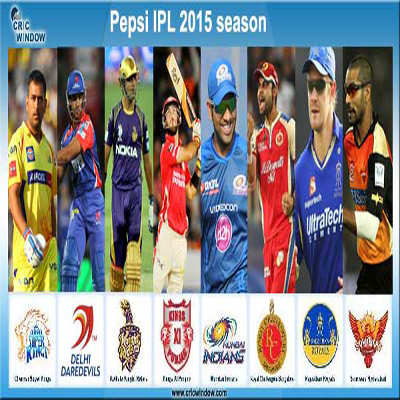
    While India may have lost its mauka at the ICC Cricket World Cup 2015, this is one celebration where India wins with every new wicket taken and every ball crossing the boundary. As the teams battle on field and Kolkata Knight Riders sets out to pick their trophy once again, Indiantelevision.com gives you eight reasons why you should tune in to the eighth season of India Ka Tyohaar!

    Perform or Perish for star players

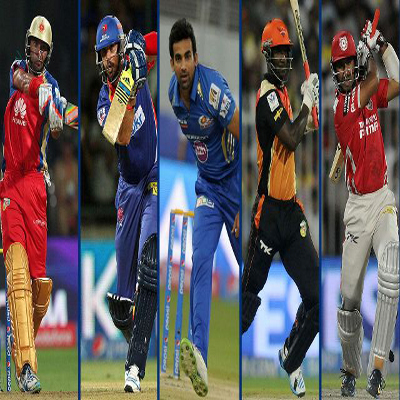
    For players like Yuvraj Singh, Virender Sehwag, Zaheer Khan, Gautam Gambhir and Harbhajan Singh, who missed out on playing at the Cricket World Cup 2015, this is the ultimate chance to prove themselves and set the record straight about their playing capabilities on field. Delhi Daredevils even paid a whopping Rs 16 crore for Yuvraj for this season, making him the highest fetched cricketer. Tales of united sportsmanship that brought teams together during this World Cup will stand divided now, as the battle of the ultimate champions begins during India Ka Tyohaar!

    Think Global, Act Local

    The IPL is India’s product and as such should be accessible for all. Official broadcast network Multi Screen Media (MSM) knows that and in this season, it has even decided to launch a brand new channel Sony Kix with IPL feeds in Tamil and Telugu. Its sister channel Sony Aath will ensure Kolkata Knight Riders fans are closer to their champions (And Shah Rukh Khan) with its Bengali feed. Max, again from its stable, will cater to the Hindi speaking audience, while Six will carry the English feed. No one will be a stranger to the IPL season 8!

    WAGs to watch out for

    Stuart Binny has Mayanti Langer, M.S Dhoni has Sakshi Dhoni and Kevin Pietersen has his posh spice of cricket, Jessica Taylor! But the star of the pack to watch out from the Wives And Girlfriends (WAGs) list is clearly Anushka Sharma. Post her innocent outing at the World Cup, Virat Kohli will have to really ensure his girlfriend’s oomph factor matches his own on the field. Mitchell Johnson’s celebrity wife Jessica Bratich and Michael Clarke’s Kyly Boldy are other reasons why you should tune in to this season of the IPL!

    Come One, Come All

    Fret not if you do not feel a little spendthrift this season. BCCI along with MSM will be treating fans to an exclusive fan park-screening cross 16 cities. The mass screenings are not only free but also come along with fireworks and music display. The experience promises to be one of a kind, treating fans to an experience as similar as the stadiums.

    Make in India, play in India

    Post its last outing to UAE last season, this season of the IPL will be played exclusively in India. It was then shifted out of the country for some time because of the Lok Sabha General Elections. However, now with Narendra Modi at the helm and his promising ’Make in India’ campaign, the IPL returns to India as the Indian made sports property will be played only in India and its diverse cities. 

    Women commentators and Cheer Leaders 

    Who said cricket was only a gentlemen’s game? Lending their wisdom and knowledge in IPL season 8 will be Anjum Chopra, Isa Guha, Lisa Sthaleker and Melanie Jones, who will be part of the 26-member strong commentary team. And then there will also be the sizzling set of cheer leaders ensuring their moves are in sync with the boys on field.

    Remote Mode: Only IPL Season 8

    During the seventh season of the IPL, households had tiffs over the remote as the general election was the eyeball grabber. However, post the tamasha and the country already gripped with India’s lost mauka, there is only one reason to settle for the remote: IPL.

    IPL season 8 on the Go

    No passes? Download Hotstar. Hotstar, which is Star India’s recent digital mammoth app, promises to provide netizens and the tech savvy audience seamless streaming of the IPL. People who are not near a television set can download the app and continue watching the playback continuously in as little as 64 kbps.


  • Star India partners Accenture for Hotstar

    Star India partners Accenture for Hotstar

    MUMBAI: Intending to spark a billion imaginations, Star India roped in Accenture to help develop, launch and deliver its over-the-air programming through Hotstar. 


    The video on demand (VOD) platform, built on the Accenture Video Solution (AVS) software platform, is funded primarily through advertising, using the platform’s new digital advertising functions. Taking advantage of a fully cloud-based infrastructure, Hotstar is serving the entire country with a catalogue of more than 45,000 movies and television series.


    Accenture helped Star India develop and launch the online video service to establish an online entertainment destination by building on a “mobile first” strategy. Leveraging AVS, Star can deliver broadcast-quality content to consumers on a wide variety of devices over Wi-Fi, 4G, 3G and 2G networks, including those with limited bandwidth resources such as 2G feature phones.


    “With Hotstar, our ambition is nothing less than the establishment of a whole new model for on demand video consumption in the world,” said Star India COO Sanjay Gupta. 


    “We will drive dramatic innovation on this platform with benefits for both users and advertisers. Accenture has been a valuable partner in this effort. They are walking side by side with us in creating this compelling platform, bringing the best of their product and technology expertise to the table. Together, we will establish compelling new benchmarks in the Over the Top space,” he added.


    In addition to service delivery, Accenture is managing the Hotstar operations round the clock utilising the client’s on-site team in Hyderabad and Accenture’s Global Video Operations Center in the Philippines. The service supports more than 7,000 different digital devices with its mobile-friendly platform, which delivers video streaming and downloads in any of India’s urban and suburban areas. The powerful AVS analytics engine will also provide Star with the capability to predict and help drive user behaviors with personalized content recommendations.


    In February, Hotstaralong with starsports.com, its digital platform counterpart, served more than 25 million video views during an Indian-Pakistan cricket match to make it the most watched sports event online of all time.


    “By creating a digital video service available on multiple screens, Star has secured its status as India’s most advanced next-generation content provider,” said Accenture communications, media & technology managing director Ashish Khanna.


    “It is one of the first services globally to offer entertainment, movies and sports on a single platform for free while enabling new consumption models. This provides consumers access to a rich catalogue of content delivered online with interactive advertising formats that provide multiple opportunities for content monetization by Star’s advertisers and we’re excited to be Star’s delivery partner,” he added.

  • Five Reasons Why Hotstar is Hot

    Five Reasons Why Hotstar is Hot

    With 10 million users in just 40 days, it set a benchmark in the digital space. In a record time span, Hotstar the new app from the Star India network, catapulted the audience’s attention and is showing continued signs of growth.

    While VOD platforms are being selective in drawing up their content map, Hotstar has opened its large library for users, that too in regional languages. With smartphones increasingly altering the consumption landscape in the country, Indiantelevision.com gives you five reasons why this is a must have app for your phones.

    A rich video experience

    Gone are the days when enthusiasm levels of experiencing a video would be marred by buffering issues. Through almost zero buffering, the app claims that it can change the pixel value of the content depending on the bandwidth so that users witness uninterrupted services. In layman’s terms, when the bandwidth decreases, the video will continue playing but there will be a decline in the HD pixilation value. Video is downward optimized to playback continuously in as little as 64 kbps.  

    Want IPL, download Hotstar!

    With the eighth season of India Kya Tyohar returning, the Indian Premier League (IPL) is one of the biggest event on the sports calendar this year. Therefore, it is imperative that you download the app so that you don’t miss out on your favourite Kolkata Knight Riders or Chennai Super Kings scoring some brilliant wins on the palm of your hands. 

    Novi Digital Entertainment, a unit of Star India, which owns the digital rights of the Indian Premier League, will stream this glitzy event on the VOD platform in its first such endeavour. Plus, in this cricket event, India has no fears of losing in the semi finals. Everyone is a winner here including Stuart Binny!

    India’s content hub 

    Where will you find 20,000 hours of content, across languages including 12 plus full length TV shows, 500 plus movies and live screening of popular sports like cricket, football, tennis and kabaddi on a single platform? The answer is – Hotstar! 

    In a first for India, Indya Interactive Services (which runs Hotstar.com) earlier premiered the Star Guild Awards 2015 on the video on demand service on 17 January. The award function was aired on Star Plus a day later on 18 January.  It recently also premiered Bollywood movies like Baby and Roy first on the platform, much before the world TV premieres. Star India also recently acquired the weekly film and entertainment broadsheet Screen from the Express Group. Content from here will now move to digital as the print edition gets closed. Hotstar is definitely turning hotter! 

    Marketers, catch up with your digital audiences

    Marketers and brands dread when audiences click on the tiny yet powerful option Skip This Ad Now. Weeks of ideation and production of a costly advertisement that is invested on digital mediums, goes down the drain. But fret not, Hotstar does not allow this potent option as audiences have to witness the ads. Besides, consumers wouldn’t mind the same as fresh as well as nostalgic content like Sarabhai versus Sarabhai too is up for grabs. With the India-Pakistan match during the World Cup receiving 25 million views on digital, there is a large chunk of young audiences that can’t be missed by marketers and brands alike. 

    Personalization and availability across devices

    The app allows users to create their own playlists with content they curate for at leisure viewing. Individual episodes, movies, full collections of even movies can be curated. It has also managed to do the impossible as it unites a diverse range of mobile phone users. It doesn’t matter if you own a Samsung or an iPhone, it is compatible for Android, iOS and Nokia ASHA users too.


  • Cricket World Cup 2015 sets new viewership record

    Cricket World Cup 2015 sets new viewership record

    MUMBAI: The ICC World Cup 2015, till the semifinals stage, garnered 635 million viewers, which makes it the highest viewed event in Indian television.


    The unprecedented 635 million reach signifies that every second Indian tuned in to watch the biggest extravaganza of 50 overs cricket.


    A record 309 million Indians (TAM Panel CS4+ extrapolated to the universe using a standard conversion factor) tuned in to watch India’s semi-final clash with Australia on their televisions, as the two best teams in the world battled for a berth in the World Cup finals. The pivotal game was the most-watched cricket match of the ICC Cricket World Cup 2015, and bettered the blockbuster India versus Pakistan group stage clash in terms of reach. The match rated 15.0 TVR across the Star network including DD and 12.7 TVR on Star Network and 2.3 TVR on DD. (TAM data M15+ ABC)


    This World Cup was truly a ‘Cup for All’ as the tournament was showcased in six different languages – Bengali, Tamil, Malayalam and Kannada, apart from English and Hindi. The regional feed strategy proved successful with Hindi and regional feeds contributing to 77 per cent of the overall viewership. 


    Star India CEO Uday Shankar said, “The ICC Cricket World Cup 2015 has been an epic event in terms of scale, reach and following. With over 600 million viewers, largest aggregation of advertisers ever, and one of the most talked about marketing campaigns, this edition has validated that there is nothing bigger than the World Cup for Indian consumers. Fittingly for an event of such scale, Star India took the game of cricket to the next level redefining the viewer experience. The fans’ unflinching faith and passion for the game has abetted our efforts to make this World Cup bigger and better than ever before.”


    Led by Star India’s disruptive campaign on India’s World Cup journey, the passion and fan following for cricket as a sport scaled new heights. The ‘Mauka’ campaign, which met with tremendous response online and on social media, was inundated with spoofs and iterations making ‘Mauka’ the buzzword during the World Cup. The campaign went viral with over 33 million views online making it amongst the most viewed campaigns ever on digital in India.


    On the back of regional feeds, this edition saw advertising options for brands looking to associate with the World Cup. With many first time World Cup sponsors advertising on this edition, the advertiser count for the ICC Cricket World Cup 2015 has been the highest ever, 50 per cent more than the last edition held in India (2011).


    India was talking cricket online too with the ICC Cricket World Cup 2015 scoring strongly on social media dominating conversations through the tourney; a record 750,000 authors driving 3.6 million conversations with a reach of over 44 billion potential impressions.


  • Hot Star takes to cinema advertising to reach younger TG : Feb ’15 CAM report

    Hot Star takes to cinema advertising to reach younger TG : Feb ’15 CAM report

    MUMBAI: Being the newest entrant on the bloc, Star India’s digital baby Hot Star has managed to create the necessary buzz around it. The digital app, in a bid to reach a wider segment of young audiences, has chosen cinema advertising as part of its mega marketing campaign. 


    Using the movie Roy as a case study, the CAM report for the month of February 2015 found that out of the 200 screens, they were present in 32 per cent of the screens, which is close to 65 screens. “This number is more than the category that four wheeler and mobile phones undertake for their campaigns,” said Interactive Television CEO Ajay Mehta.


    According to industry experts and estimates, Hot Star undertook cinema advertising because of the demographics to reach out effectively to their TG i.e young audiences. The campaign for cinema advertising undertaken across the eight metros could have cost Star India close to Rs 50 – 70 lakhs. Such campaigns are usually undertaken for a period of four weeks. In the past, apps such as Free Charge, Viber and Hike have used cinema advertising extensively in similar patterns. 


    The report also found that during the same period, a total of 297 brands were active. Banking and Finance have emerged as the top category spending with State Bank of India topping the list. F&B followed with beauty and Personal care coming third in the hierarchy. 


    “There has been a three per cent increase in the number of brands active on cinema with the movie Roy in February 2015 round as compared to the earlier round,” adds Mehta.


    There has also been a major increase in spending of clothing/apparels category from 45 per cent in January 2015 to 79 per cent in February 2015. The automobile category has increased from 34 per cent to 57 per cent during the same period. Online portals too increased their spending from 21 per cent to 48 per cent for the same period. Choc On has the highest recall with 24 per cent present in 152 screens followed by Syska LED with 20 per cent present in 136 screens.

  • IPL is the largest reached sports event in 2014: FICCI KPMG Report

    IPL is the largest reached sports event in 2014: FICCI KPMG Report

    The global sports industry is estimated be worth of $600 – $700 billion. Revenue generated from the industry is estimated at $80 billion globally and is growing at Compound Annual Growth Rate (CAGR) of 6.5 per cent over 2009 to 2014, which includes revenues from media rights, sponsorships and ticketing.

    The market for advertising in sports in India was estimated at Rs 41 billion in 2013 growing at a CAGR of 14 per cent from Rs 21 billion in 2008. It consists of on ground advertising, team sponsorship, athlete sponsorship and media ad spends on sports. Licensing and merchandising contribute Rs 2 billion to the industry in India. Gate revenues make up another revenue stream but its contribution to the sports market in India is relatively low compared to media ad spends and sponsorship.

    Sporting events have been popular throughout history, and have gained greater viewership with bigger stadiums and TV broadcasting of domestic and global events. Annual sports viewership in India reached 276 million in 2014. But the sports genre accounts for only 2.4 per cent of total TV viewership and 4.3 per cent of AdEx (Advertisement Expenditure) revenue in the Indian TV industry, much smaller than the general entertainment genre.

    The median age in India is around 27 years and around 64 per cent of the population is expected to be in the working age group by 2020. This provides a large and growing target segment for sports in India. Moreover, an increase in percentage of middle class and rich households (households with annual income greater than Rs 2,00,000) from 6.1 per cent in 2001-02 to 14.5 per cent in 2009 -10 has increased the number of people with an appetite for sports consumption. The middle class alone is expected to increase to 41 per cent of the population by 2025. There has also been an increase in the average share of educational and recreational activities in the annual household consumption and it is estimated to increase from five per cent in 2005 to nine per cent by 2025.

    A good start to non cricket sports is one interesting to look at the growth of sports other than cricket in India. Many sports have grown well over the last half decade. A survey on the popularity of sports in the Indian online community reports that while 85 per cent of respondents followed cricket in some manner, an estimated 44 per cent followed tennis, 41 per cent followed football (soccer) and 32 per cent followed badminton. With economic development, sports viewership in a country usually moves from single sport to multi sport. Africa and the Indian subcontinent have been traditionally dominated by football and cricket respectively. However, with greater economic development, India is seeing a growth in other sports as well. 

    League formats have helped in increasing popularity of sports Globally

    The leagues system has served as an important way for companies to enter the sports sector. A sports league creates several opportunities for private companies in domains such as league management, franchisee, broadcasting and sports videos production houses, advertising, sports infrastructure such as multipurpose venues, player management, licensing and merchandising. One of India’s most successful leagues in terms of viewership and revenues has been the Indian Premier League (IPL), which is based on the English Premier League (EPL) format. The league was launched in 2008 by the Board of Control for Cricket in India (BCCI) with eight city franchisees. Though it is still small in comparison to some of the biggest leagues of the world, it has been able to achieve success in a short span of time, which other mature leagues could not manage to do. The evolution of IPL as a brand is an example of successful product innovation, which effectively combined entertainment and sports. The Twenty20 (T20) format of IPL has made the sport more popular and convenient to watch for cricket enthusiasts. The success of the IPL, which is estimated to have had a viewership of 191 million people and ad revenue of Rs 8 billion in 2014 has led to the creation of several other league-format sporting events, such as the Indian Badminton League, Hockey India League and the recently launched Pro-Kabaddi League. The inaugural season of football’s Indian Super League has been fairly successful as well. Cumulative reach of Pro Kabaddi League was 435 million compared to 560 million for IPL in 2014. Football’s Indian Super League was close with 410 million cumulative reach. The new domestic sports leagues however require significant management efforts over a period of time to get established and be successful. 

    Viewership refers to sum of weekly GVTs, which is a factor of number of viewers and frequency.

    IPL leads the cumulative reach chart amongst sporting events held in 2014
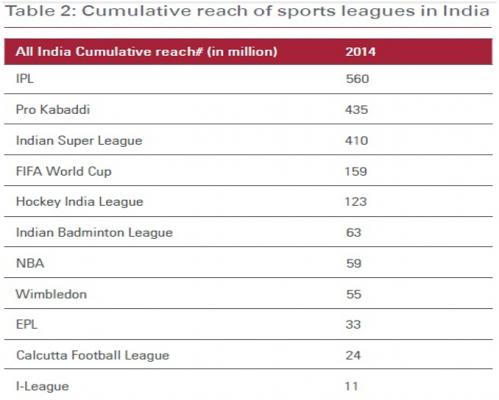
    Cumulative reach refers to the number of individuals within the target group who viewed the tournament over a certain period of time, including duplication.

    Ecosystem to support sports development in India

    However, in order to sustain the growth in sports and sports-related businesses, a flexible regulatory and policy framework that is able to realise synergies between various segments of sports needs to be developed. This in turn requires the sports ecosystem and its stakeholders to be recognised under the purview of a dedicated industry of sports which can provide impetus to an organised and professional business environment for sports in India.

    Sports Broadcasting in India

    There has been a surge in the number of sporting events broadcast in the past few years. These events include tournaments and leagues played at state, national and international levels. Several international tournaments and leagues played at the regional or global level are now telecast in India bringing in a larger and much diverse audience. Males form around 60 to 65 per cent of viewers and are expected to continue to be the main target segment. However, the number of female viewers has been increasing. About 57 per cent of the viewership of ISL and 53 per cent of the viewership of Pro – Kabaddi League was made up of women and children. Broadcasters are supplementing the sports with other entertaining and informative pieces to make the program more inclusive.

    Getting to the right content mix

    With the rise in number of sporting events, sports channels are covering several sporting events in their annual calendar. It consists of a mix of marquee events from domestic and international leagues, major tournaments along with minor domestic leagues and tournaments.

    Star Sports has revamped itself with uniformly branded eight channels to showcase a variety of domestic and international sports both cricket and non – cricket and in English as well as Hindi. While international cricket matches featuring India will make up 65 per cent of Star Sports 1, Ranji matches, university and women’s cricket and international cricket matches not featuring India will form 50 to 60 per cent of content on Star Sports 2. This will enable Star to nearly double its cricket content, which is the major revenue driver for sports channels in India. Star Sports 4 will feature other sports, which include international football (soccer), European soccer leagues, badminton, tennis and Formula-1 racing.

    The new Indian leagues, which include hockey, badminton and soccer, will be telecast on Star Sports 1 to 3 to reach a larger audience. Such a strategy enables Star Sports to increase its cricket content as well as broadcast non – cricket sports, which are seeing increasing traction. There is also an increasing trend towards multi-sports channels, as the viewership of different sports are increasing and sports channels are vying for TV rights across sports. Star has seen a shift from having a cricket specific channel in its cluster to multi-sports channels. It enables Star to broadcast both international and domestic cricket content simultaneously as well as gives it flexibility to show different sports across different channels. This can be attributed to the large investments made by Star to purchase rights for domestic and international cricket, football, tennis, badminton etc.

    On the other hand, Neo has rebranded its cricket specific Neo Cricket to Neo Prime on account of reduced live cricket properties and surge in volume of several sports.

    Ten however, has sports specific channels with Ten Cricket for cricket, Ten Action for football and Ten Golf for Golf broadcasting. Availability of sufficient single sport media rights and a definite viewership base for that particular sport drives the presence of sports specific channels. This helps advertisers to target a specific audience, for example luxury products have tied up with Ten Golf. Although, digitization and lower costs of distribution make single – sport channels more viable than before, it can take some time to evolve in India and reach the popularity of golf and tennis channels in some developed countries.

    Regional language boost to broadcasting

    Another strategy to target a specific audience is the language of telecast. Hindi and other regional languages increase the audience reach for sports as English has a limited audience. Star Sports 3 replicates Star Sports 1 in Hindi. In 2014, it telecast the domestic football league – Indian Super League in five languages. Its regional TV channels were used to telecast the league in Bengali, Kannada and Malayalam apart from English and Hindi broadcasts. During FIFA World Cup 2014, Bengal accounted for half the country’s viewership mainly because of regional language feed by Multi Screen Media (MSM) on its Bengali general entertainment and film channel Sony Aath. Hindi broadcast of the Pro Kabaddi League on Star Gold also helped take the cumulative reach to 435 million for the event. Other than using regional sister channels for feed in local languages, sports channels may spin off separate regional language sports channels if the demand picks up.

    Revenue and Profitability model

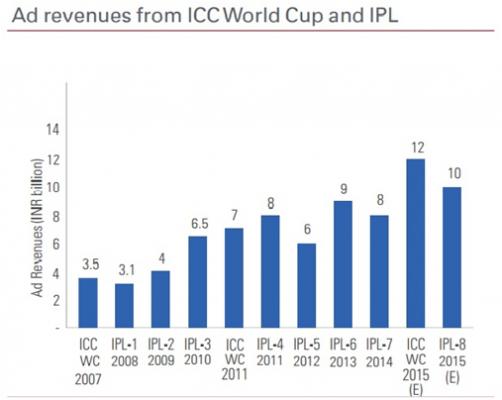
    Sports industry is still an ad driven revenue model. Media spends on sports, most of which is on TV, increased from Rs 11.5 billion to Rs 22.5 billion over 2008 to 2013 at a CAGR of 14 per cent. In mature markets, subscription is the main revenue driver for sports channels, contributing nearly 60 to 90 per cent of the revenues. However in India, advertisements still account for nearly 60 per cent of the revenues of sports channels, mainly driven by cricket, which is the largest revenue spinner and accounts for nearly 80 to 85 per cent of the total television sports media revenue. Non-cricket sports provide live sports content around the year, which gives advertisers a regular touch-point to their target segments. Revenues from advertisements in any year vary depending on the tournaments and series held during the year. Cricket mostly forms the peaks whereas the troughs are being evened out with non–cricket sports and non-live cricket content. In 2011, ad spends on TV for cricket was estimated to have crossed Rs 20 billion. In 2015, ad spends from the ICC World Cup and IPL 8 alone are expected to be around Rs 22 – 25 billion. Ad revenues for non-cricket sports are only a small fraction of cricket revenues. In 2013, ad revenues from Indian Badminton League and Hockey India League were Rs 0.9 billion and Rs 0.7 billion respectively.
    Key challenges facing the spurt of non-cricket leagues in India includes:

    • Poor investor confidence

    For instance the Indian Badminton League (IBL) suffered a loss of Rs 25 crore in the opening season in 2013 owing to investors pulling out casting doubt on the return of IBL with its second season. However, despite no play in 2014, the IBL is set to return in 2015.

    • Lack of industry status

    Provision of industry status could lead to an organized sports industry leading to higher available capital, newer sports businesses, additional revenue streams for stakeholders making leagues commercially viable ventures.

    • Lack of a culture for sports

    Sporting leagues in India are designed to last just a couple months every year. However, many major sporting league seasons in the world last for longer durations every year. Sporting leagues need to become year round (or at least three – four months a year) ventures. Apart from the benefit of a longer engagement with viewers (allowing the building of a larger fan base and culture for the game), this also touts the idea of sport becoming a year round profession furthering the advent of sports businesses.

    Revenue model in leagues

    Major sources of revenue for any league come from media rights, sponsorships and revenue from franchisees. Share of franchisee consideration in IPL has increased from 30 per cent in 2010 -11 to 37 per cent in 2012- 13 with a corresponding decrease in the revenues from sponsorship rights. Income from media rights and other sources have nearly the same share in 2012-13 as in 2010- 11.

    Major Sources of revenue for a League Franchisee

    Major sources of revenue for any league franchisee are share of the central revenues, local revenue and performance revenue.

    • Share of central revenue

    This includes a percentage of the revenue to the league from media rights and central sponsors like Pepsi in the IPL. In India, media rights are a major revenue sources both for the league and the franchisees. Channels are expected to further increase the subscription revenue for sports channels.

    • Local revenue

    Local revenue for a franchise entails revenue from match day ticket sales (gate revenue) and commercial revenue that includes funds from franchise sponsors, merchandise sales and revenue generated from membership with the franchise club if any. However, revenue from franchise sponsors makes for a majority of the commercial revenue. Sports merchandise sales is a fast growing segment with Rs 2 billion in retail sales in 2013. Moreover, contribution of gate revenue to overall revenue of franchises is low due to inexpensive ticket pricing, especially in non-cricket leagues. This is in contrast to leagues abroad where gate revenues are a significant contributor to a franchisee’s revenue.

    How can leagues be further popularised/ monetized?

    Some of the critical success factors of a league in India are identified below:

    • Players

    Involvement of top players of the world creates interest in the viewers and increases the quality of the game. The IPL is a successful example of the same. On the other hand, I-League is struggling to attract top players resulting in poor viewership.

    • Marketing

    An effective marketing campaign is another critical factor in making the league popular. Again, the involvement of various celebrities as brand ambassadors or owners in the IPL contributed to generating larger viewer interest in the league. In fact, the marriage of the Indian entertainment industry and cricket has aided in making IPL a commercial success.

    • Governance framework

     It is seen that leagues, which are run with the support of the approved federation have been able to sustain. The ICL failed due to lack of support from BCCI and World Series Hockey (WSH) is facing similar troubles due to non-recognition of the founding federation as the official national sports federation of hockey itself.

    • Stadium Infrastructure

    Quality of stadium infrastructure improves the viewing experience, hence increases the level of interest in the sport. It is important to create supporting infrastructure like restaurants, bars, fast-food chains, merchandise, stores, books and music stores, etc. to develop stadiums into popular entertainment spots for the family. Hike in ticket prices subsequent to rise in viewership, organizing multiple sporting events and entertainment shows wherever possible can help monetise stadium infrastructure.

    • Fan base

    An effective strategy to increase a franchisee fan base is engagement of respective franchises with local community. This helps generate greater TV viewership, increase attendance of matches and sale of merchandise. Performance of national team or players at international level increases the interest in the game, hence the league.

    League timing

    The tournament should be held at a time when there is no clash with international tournaments that could divert a significant section of the viewers, many players are available and weather is suitable for holding matches. The length of games and timing of matches (conducive for family viewing) are also important factors to consider, both having further helped significant viewership of the IPL. Other factors may include spectator friendly broadcasting such as better viewing angles and broadcasting in Hindi and English.

  • YouTube readies to conquer India in 2015

    YouTube readies to conquer India in 2015

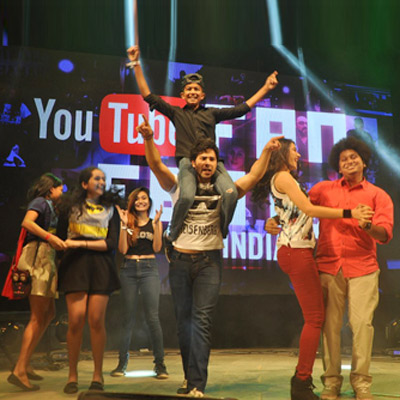
    roar fills the swanky indoor stadium of the National Sports Club of India (NSCI) in central Mumbai. It is followed by screams, and a scampering across numerous rows as hordes of ‘screenagers’ scramble to get a view of a tiny young woman clad in jeans, a T-shirt and a cap worn the wrong way on stage. She opens her mouth to speak, and the screams get even louder. She shushes the audiences, exalting them to allow her to speak, but the decibel levels refused to go down. The pandemonium goes on for three minutes or more with the screeches and screams getting louder.

    But speak she has to, which she does. The 4,000-odd crowd has been waiting to listen to her, get a glimpse of her and her alone for a good four hours.

    “I am so glad to be in Mumbai,” she gushes, amidst shushes targeted at the crowds. “I could not resist it when I was invited once again. I had promised you that I would be explaining what the hashtag #AT2UI means which I had revealed on my Twitter account over this week. Well, let me make the big announcement: #AT2UI is A Trip to Unicorn Island and I am embarking on a world tour with it, beginning with India next month.”

    Before she even finishes making the statement, the crowd goes berserk once again with ecstasy. The screams rise to a crescendo and refuse to die down. “OMG,” says a young thing, six rows ahead of us. “I can’t believe it. She is coming here for a tour. I can’t believe it.” The tears roll down her cheeks and she raises her hand heavenwards, saying ‘Thank you! Thank you!’

    No. No. It is not Madonna on stage. Nor is it Lady Ga-Ga. Nor is it Selena Gomez or Taylor Swift or One Direction. Nor is it a bible thumping preacher or a spiritual Hindu Guru.

    The young lass is Lily Singh aka IISuperWomanII, a 27 year Indo-Canadian, who appears to have surpassed the fan love showered on even Bollywood’s and Hollywood’s biggest stars. This kind of mania was probably something that was reserved for the Beatles in the sixties and seventies.

    Excepting IISuperWomanII is a star born of the digital era. Her fan following is totally digital in origin. She is a YouTube star with more than 5.3 million subscribers. Her Twitter handle has around 847,000 followers, whereas 1.7 million track her on Instagram. Her fans mainly are girls between 8-28, but don’t be surprised if you find a young man of 19 there too. Those are the kind of numbers mainstream broadcasters would love to boast of for their channels. But Lily Singh is a young creator, who is the star attraction at the Second YouTubeFanFest (#YTFF) in Mumbai.

    “Never let anyone tell you what to do or not to do. Be yourself,” she tells the screeching fans at the NSCI. “Go out in the sun, have fun. It does not matter if your skin gets tanned. Whether you are dark or fair. You have to live your life. Not just be a housewife.”

    It’s exactly what young girls; women in India have been wanting to hear. And IISuperwomanII has piped into that desire.

    Others have too. And they have built audiences. The Viral Fever – which started as a branded content creator – today has more than a million subscribers. All India Bakchod (AIB), which flew into controversy and some legal wrangles courtesy a roast it did a couple of months ago, too boasts a following of a million. Prior to that, it was mainstream entertainment companies such as Bollywood producers, music labels, broadcasters, who were attracting viewers on the online video streaming site started by Chad Hurley. T-Series, Star India, Sony Entertainment, Eros, Rajshri were all the rage. But the majors such as Star and Sony pulled out a majority of their content to concentrate on their own streaming apps. T-Series, Eros and Rajshri still have followings running into multiple millions and most of the video consumption on their channels is coming courtesy traditional Bollywood content.

    However, over the past couple of years an ecosystem of independent video content creators is being built up – addressing almost every genre. Kids (through Chu Chu TV), cooking (Vah-Chef), Comedy (SNG Comedy, TVF, AIB, East India Company), Education, Travel, and what have you.

    Of course revenues on YouTube are not something you would write to Mom about. Estimates are that the streaming service is on course to do about Rs 160-170 crore in ad revenues this year. That’s probably what would be just one month’s earning for a general entertainment channel. But with smart phones proliferating and bandwidth rates dropping, video consumption – both in terms of time spent viewing and number of viewers – through outlets like YouTube and Dailymotion is only going to rise. Advertisers no doubt will follow in the hope of catching consumers’ eyeballs. Estimates are that YouTube revenues will likely skyrocket to about Rs 1,500 crore by 2018.

    And of course who else will benefit but independent content creators. Estimates are that PewDiePie – the world’s top YouTuber with 35.5 million subscribers to his gaming channel – takes home about $4-5 million a year. Along with it come endorsements, live gigs, and of course superstardom status.

    But most of the YouTube stars started their video journeys with very basic gear, filming with their computer cameras, or digital cameras or even their smart phones. For edits they used Windows movie maker or iMovie, self-learning to use Adobe Premier Pro or Apple final cut pro.

    “My first videos were done with simple video cameras,” says Bethany Mota, who has more than 8.4 million followers on YouTube in just about six years since she uploaded her first video. . “And I kept waiting for views. I remember how excited I was when I touched 100 views for my videos.”

    Mota has a super following in India too. At the YouTubeFanFest, she probably drew the second highest cheers after IISuperWomanII.

    Standup comic Abish Matthew in fact did a sketch during the YTFF about the difficulties that YouTube stars face, especially in terms of getting their video blogs online. “You film, you edit and then you wait for the video to render. Time goes by. Then you wait to upload, you wait and wait and wait. The bandwidth here is limited. And then you wait for the views to come in. You wait and you wait,” he said.

    AIB, on its part, believes in producing videos of high quality. “We love to experiment with cameras and with great equipment,” says Gursimran Khamba.

    “We want our videos to be of a particular standard and even though it is all about the content, we also want it to look good,” adds Tanmay Bhat. He further says that there are ways to get your videos done cheap and cheerful, yet maintaining quality. “We reach out to our friends, acquaintances who then help us reach out to the talent we want to work on our videos,” he says. “And then we request them to work with us at low or almost no budget. We find they are willing to do it. Then there is talent available in media colleges in every city, who will work with you just to get the experience.”

    Most of the YouTubers believe in communicating with almost everyone messaging them on their social media and video posts. “I respond to almost everyone I can online,” says fashion icon Scherzarde Shroff. “I like to connect with them.”

    IISuperWomanII was at her hyperactive best through her handle on Twitter before the YouTubeFanFest giving away free VIP passes to the event and messaging her followers, thanking them for their following her. While initially it was only she who did it, these days it is teams who share that responsibility.

    But some like Rohan Joshi of AIB talk to their followers directly – a couple of the YouTube stars call their followers as friends – even today. “I like to put out what I want to myself. It reflects who I am,” he says. “I have a social strategy: I need two types of followers – those who agree with me and those who don’t. For every two people who agree with me, I need one who does not. That allows for healthy debates and conversations whenever I post something on Twitter.”

    The Viral Fever – run by Arunabh Kumar – began by making branded viral digital video content for clients such as Airtel, Flipkart, Colgate, Head and Shoulders – today boasts more than a million subscribers on YouTube, becoming the first independent original content maker outside of Bollywood to cross that landmark. Its parody of Times Now’s Arnab Goswami’s ‘The Nation Wants to Know’ has attained online cult status. And that was followed by India’s first fictional web series Permanent Roommates, which was funded by commonfloor.com.

    “Working with brands has helped us develop another layer of revenue for the company, which has allowed us to go further,” says Kumar . In fact, the TVF’s viral work has led to the company getting work on television too with a show on Bindass and numerous promos for TV channels.

    Kumar says that he and his team are careful about their creative freedom when working with brands on videos. “We value our independence and our clients trust us,” he says. “We know how to engage with our audiences, and brands rely on us to do that as long as we keep their messaging in mind.”

    In fact cola giant Pepsi has taken to YouTube in a big way. As part of its global Pepsi Challenge campaign, it has launched a ‘Crash The IPL’ initiative wherein it has asked consumers to shoot a 30 second ad film showing their love for the beverage. The entries have to be uploaded on youtube.com and the link submitted to www.crashthepepsiipl.com. These will be judged, and finalists chosen, entitling them a cash award of Rs 100,000, VIP tickets to the IPL matches, and the winning ads will be aired on TV between 8 April and 24 May 2015, replacing the agency created ads.

    Pepsi has also partnered with the Singapore based Music Matters festival for its Music Accelerator Programme. As part of this, a band or an artiste from India will be flown to Singapore to participate in the Music Matters Conference, be mentored at the Music Matters Academy and also perform at Music Matters Live to an audience of about 8,000. Music Matters’ Indian partner for this initiative is Pepsi MTV Indies.

    “Most of the great creative work, which has come on air is when we were having fun,” says PepsiCo India senior director market social beverages Ruchira Jaitly. “We want creators to have fun too and create ads for us. And that’s what’s extremely exciting for us.”

    YouTube, on its part, believes that 2015 is going to be the year of India on the online streaming network. Says YouTube’s David Powell, “We believe that Indian creators are going to break out this year. The time has come.”

    YouTube director global content operations Sara Mormino adds, “We are eager to work with newer Indian creators and who knows… another superstar like PewDiePie might emerge from India. India is a very vibrant young country.”

    Towards this end, it conducted its second Academy in India in mid-March, organsied the YouTubeFanFest in partnership with Branded, which was attended by Indian creators and thousands of fans. And it is also organizing workshops with different communities like ad filmmakers, schools and TV producers. 

    To its advantage is the fact that it has first mover advantage in this space. Star’s hotstar.com is only carrying its own content and it has managed only 10 million or so downloads. Others such as Dailymotion.com are just about getting its feet into India. And Reliance Jio – which is developing its own streaming app – is some time away.

    Keeping that in mind, YouTube.com might well become the Indian consumer’s own content tube.

  • India will shape mobile innovation: Ajit Mohan

    India will shape mobile innovation: Ajit Mohan

    MUMBAI: The digital consumer is on his way to become the king of media and entertainment. It is he who will dictate future content trends, platform specifics and most importantly revenue flows. How can the vast media and entertainment ecosystem channelise its vision towards a sustainable revenue system reaping off the all encompassing digital landscape – overhauling payment gateways, broadband speed and consumer sensitisation?


    Seeking answers to these questions, a panel discussion was held in FICCI Frames 2015 moderated by BBC Global News presenter Matthew Amroliwala. The panel comprised Star India digital head Ajit Mohan, Yahoo India MD Gurmit Singh, UCWeb India MD Kenny Ye and Airtel global voice and data business CEO and director Srinivasan Gopalan.


    The digital platform is yet to have a concrete revenue model and most of the content available now is free content. Mohan said, “India is going to shape innovation in mobile and not the United States and hence we need to have our own model and cannot refer to any other. My observation is that consumers are underserved and they are absolutely ready for real and fresh content in the VOD platform. It is a mass market and quality content will find recognition and appreciation.”


    Yahoo’s Singh added, “Yahoo is a 20 years old company that has seen technological evolution. Every 10 years, we have a new technology, which shapes the processing and the same will happen when 4G and 5G comes in. All the existing devices will talk to each other, complement each other and advertisers will have a choice of platform. The advantage of digital is that proper analysis can be done, which makes reaching the target audience easy and accurate. This will also ensure higher returns.”


    Talking about the Indian circumstances, UCWeb India’s Ye said, “The government of India launched a digital India campaign, which is highly encouraging and mobile will play a very important role in making India digital. The revenue model is yet to be figured out and a lot of that will be decided by development in infrastructure in the near future. Better online payment infrastructure and more credit and debit card holders will make the revenue model easier.”


    The online ventures need communications and carriers to carry the signal from provider to consumer. Airtel’s Gopalan asserted, “About 93 per cent of internet usage is in mobile and it’s high time that content makers and service providers collaborate in order to make things more efficient and revenue generating. We should bundle content and put it in a package for the consumers. And data is not expensive in India and it’s mobile data, which is expensive and there are different reasons behind it.”


    Star India’s digital platform Hotstar was free and it got a lot of encouragement in terms of viewership. Commenting on the success of the venture, Mohan said, “Hotstar is not free. The content needs data and the consumers are paying premium rates to see content and hence the myth is baseless.”


    It remains to be seen what revenue model the digital platforms accept and if the formula of content is king is followed.