Tag: Star India

  • BARC week 19: Star dominates GEC; Sony leads sports

    BARC week 19: Star dominates GEC; Sony leads sports

    MUMBAI: Star India’s Hindi general entertainment channel (GEC) Star Plus continues to dominate the satellite waves.


    According to Broadcast Audience Research Council (BARC) India’s Week 19 analysis, Star Plus leads with a rating of 163554 (000’s sum). With 144899 (000’s sum), Viacom 18’s Colors is placed at the second position while Star India’s other entity in the same genre Life OK with 121931 (000’s sum) sits comfortably at the third position over Zee TV 99794 (000’s sum).


    Sab with 73738 (000’s sum) is the only channel from Multi Screen Media (MSM) to feature in the top 5 channels in GEC category.  


    Star Plus’ dominance is not limited amongst channels only but the most popular programme with 2442 (000’s sum) Saath Nibhaana Saathiya also comes from the broadcaster. Zee TV’s Kumkum Bhagya with 1917 (000’s sum) is placed second, followed by Colors’ Sasural Simar Ka at the third position with 1818 (000’s sum).


    MSM emerged as the clear dominant in the sports category courtesy the Indian Premier League (IPL). Sony Max and Sony Six, official broadcasters of the IPL are placed on the first and second slot with 187924 (000’s sum) and 52731 (000’s sum) respectively.


    Backed by the strong fan base of WWE action and UEFA Champions League, Ten Sports with 15954 (000’s sum) managed to clinch its third spot back from Star Sports1.


    The Hindi News broadcasting space did not see much of a change in the list of top three channels as Aaj Tak with 14155 (000’s sum) continued to be in the first spot. Meanwhile, a close battle for the second spot was witnessed between ABP News with 12981 (000’s sum) and India TV with 12589 (000’s sum).


    Times Now led by the flamboyant Arnab Goswami continued the dominance in the English News broadcasting space with 378 (000’s sum) followed by Headlines Today at 296 (000’s sum). Narrowing the gap, 236 (000’s sum) NDTV 24/7 was placed third in the list of top three.


    Viacom’s Nick led the kids’ genre with 70516 (000’s sum) closely followed by Turner International’s Pogo with 67397 (000’s sum). Disney with 52086 (000’s sum) was placed at the third place.


  • Star India roots for OTT services; says premature to work on regulatory regime

    Star India roots for OTT services; says premature to work on regulatory regime

    NEW DELHI: With the burgeoning of Over The Top (OTT) services in the Indian ecosystem, the Telecom Regulatory Authority of India (TRAI) is looking at creating a regulatory framework to keep a check on them.


    However, media and entertainment major Star India is of the opinion that TRAI should not create ‘artificial distortions’ by creating regulatory frameworks for OTT services, as there is no any evidence of market failure, abuse of dominance, monopolistic practices, or anti-consumer and anti-competitive behavior.


    Responding to TRAI’s Consultation Paper on the subject, Star India said that no case has been made out in the Paper of anti-competitive practices. “No regulatory impact assessment has been done, there is no ‘consumer problem’ as such that has been defined, no cost benefit analysis has been conducted, no qualitative or quantitative aspects have been highlighted of the problem at hand, and so the Paper is actually deficient.”


    Star India also said that Internet based services are already covered by substantive legislative frameworks like the Copyright Act, the Information Technology Act 2008 combined with the Competition Act. These legislations not only set out the commercial and technical parameters for conducting business but also set the legal boundaries for conduct in a market based environment. “Hence, there appears to be no need for a separate regulatory framework or licensing regime, which seeks to erode or over ride the existing laws or create artificial regulatory constructs, which result in market distortions. In fact, this was the exact argument telecom operators had earlier made while stating their case for not regulating mobile value added services (MVAS), which in essence is quite similar to Internet-based services,” said News Corp’s Indian arm.


    Writing on behalf of the broadcaster, Star India vice chairman of legal and regulatory issues Pulak Bagchi said, “The very fact that OTT services have found technological solutions to increase efficiencies means that we should do everything in our ability to promote their growth, not curtail them. Licensing almost always tends to create a privileged club on the basis of restricting access, which is against the very ethos of this revolution.”


    Bagchi went on to add that lawful interception is a cost and technology issue. “The government only has to license these technologies from those who own or hold the IP for such technologies. Given that functions like lawful interception, ensuring privacy al are sovereign functions, costs towards the need to be shared by licensee telcos and the government. For this purpose, the AGR payments made by telcos should be deemed to include their contribution towards this end,” he said.


    The Indian government and law enforcement agencies access data stored by Internet platforms when deemed legally necessary. Any additional regulations carry grave risk of breaching user privacy and would also require constitutional review – especially since the Government is still working on a proposed Privacy Bill.


    Existing legal formulations can also be updated to incorporate necessary technology wherewithal for lawful interception and privacy. License conditions for telcos and ISPs can also be amended to provision for these issues.


    The government and courts also have the power to block access to websites on the grounds of national security and public order. It has taken similar steps in the past and has been widely reported by the media. The transparency reports periodically published by major Internet companies suggest that the Indian government routinely requests for user data and blocking of user accounts.Between July 2014 and December 2014, Indian authorities had 5,473 requests for data, covering 7,281 user accounts from Facebook and the company had a compliance rate of 44.69 per cent. Google had a compliance rate of 61 per cent with respect to the requests made by different government agencies across.


    The broadcaster further said there was multiple evidence to suggest that the so-called “communication OTT services” are capable of being lawfully intercepted with the right kind of technology being deployed for the purpose by law enforcement agencies.


    ThedramaticinnovationintheInternetspaceisprovidingenormousbenefitsto consumers through lower costs, multiple choices and universal access to information and this is sufficient evidence to put on hold any proposed regulatory intervention.


    Referring to a question about the growth of OTT impacting the traditional revenue stream of TSPs, Star India said, “There seems to be almost a suggestion that it is the duty of the regulator to guarantee the revenues of the TSPs. All that the OTTs have done is to remove inefficiencies in the value chain delivering better value to the consumers and instead of looking at it from the consumers’ point of view, there seems to be an inclination to try and protect incumbent and in many cases, outdated revenue streams of the TSPs. The only thing that OTTs have done is to create a level playing field for all and the incumbents are more than welcome to evolve their current business models to participate in this.However, we fail to recognize any obligation on the part of the regulator, society or the government to protect traditional revenue streams at the cost of burgeoning inefficiencies.”


    It further said that communicationOTT should be welcomed if it can serve the same purpose as that of traditional telecom services in a far less expensive and efficient manner, resulting in relative affordability, greater value and added ease to the consumers. If communication OTT services are less reliant on network capacity or capability because of their low data usage and higher tolerance for latency, it should be encouraged rather than be called in for questioning whether they are impacting traditional revenues of TSPs.


    The broadcaster said that TRAI should keep consumer interests in mind rather than being weighed down by perceived challenges to incumbent telcos or losses accruing to them because of so called decrease in messaging and voice services. Consumers have not been shown to be impacted so as to requiring OTTs to be licensed or registered.


    Furthermore, OTT services help in driving up data usage/consumption and resultant revenues for telcos/ISPs, and with greater broadband penetration there will be a rise in volumes and increased revenues from data usage shall more than set off any loss to telcos on account of traditional services like SMS and calls. Further, OTT services also pay at the back end for connectivity and hosting services to the ISP’s /TSP’s backbone.


    At the outset, Star India agrees that it was too early for a regulatory framework for OTT services. “It is correct that the Internet ecosystem is still in an embryonic stage of evolution with limited penetration in India (19.19 per cent of Indian population has access to Internet and India’s share of world Internet users is at an abysmal 8.33 per cent). High speed broadband continues to be a pipe dream. Consumer propositions and business models around the Internet in India are still in a state of flux.


    Summing up, Star India said that OTT services are at a nascent stage in India and any intervention is likely to throttle innovation or investments in this space with the biggest casualty being start-ups.OTT already has enough bottlenecks and barriers: In any event there are structural bottlenecks and barriers to OTT usage viz. poor networks, low penetration of plastic money, limited customisation etc. Intervention would result in creating further entry barriers thereby stifling competition, hence are best avoided; intervention shall skew level playing fields in negotiations between telcos/ISPs on one hand and OTT service providers on the other, telcos clearly have a higher hand in negotiations always.


    OTTservicesarenotinfrastructureproviders; OTT makes money from its content or service offering – owned or licensed (be it ads or subs) while telcos/ is monetize public property viz. spectrum licensed to it by the government.


    Star India said any intervention that adversely impacts OTT services could impinge on freedom of speech and expression and hence be deemed unconstitutional.


    OTT apps are not completely substitutable to communication services as they are not interoperable – i.e devices that communicate through such apps, require installations of the same, unlike communication services, which can talk across networks regardless of underpinning technologies (GSM, CDMA, 3G, 4G, etc), therefore TSPs cannot allege that they are losing out to OTT.


    Star India noted, “We have already seen how the VAS industry had an untimely demise owing to revenue sharing conflicts. Any regulatory intervention that mandates payments by OTTs to TSPs shall result in a similar destruction for the former.”


    In reply to one of the questions, Star India said that OTTs are paying for network usage, streaming and technology costs. Just the fact that they have found a more efficient way of utilizing the pipes does not mean that they should be penalized for the same.


    OTT players should not be asked to pay for use of the TSP’s network over and above data charges paid by consumers. “We are of the view that the real question that needs to be considered is whether the TSPs should pay the OTTs a share of data revenue for significantly driving data consumption, which is borne out by the manifold increase in telco data revenues. We believe that it is too early to have a regulatory framework around the relationship between TSPs and OTTs given the nascency of the ecosystem. Given the fact that numerous OTT services have created a strong consumer proposition for the Internet, thereby driving penetration, it is equally likely that TSPs incentivise / compensate OTT services that are responsible for driving u p data consumption by sharing a percentage of their data revenues. Given the rapidly evolving business practices, we believe overarching regulations would only stifle innovative partnership models and be detrimental to the consumer and the business community at this stage.”


    According to Star India, TSPs should not differentiate on the quality of service based on an economic arrangement with OTT players. However, it is too early to put constraints on any partnership arrangements between TSPs and OTT players that can result in tangible benefits to consumers.


    Internet-based services and apps do not pay for telecom operators for using the network, and it should remain the same going forward. Forcing Internet-based services to pay extra for using a particular network negatively impact consumers and harm the Indian digital ecosystem. As mentioned in the above answer, data revenues of Indian telecom operators is already on an upswing and is slated to increase rapidly over the next few years, hence the argument for creating a new revenue source is not justified.


    Charging users extra for specific apps or services will overburden them, which in turn will lead to them not using the services at all. It is also akin to breaking up the Internet into pieces, which is fundamentally against what Net Neutrality stands for. Also, the Internet depends on interconnectivity and the users being able to have seamless experience – differential pricing will destroy the very basic tenets of the Internet.


    In its covering note Star India said that it realised that the issue was of far reaching consequences and would have a huge impact in the industry going forward.

  • Star packs a punch to celebrate 15 years of ‘Star Parivaar Awards’

    Star packs a punch to celebrate 15 years of ‘Star Parivaar Awards’

    MUMBAI: Star India is leaving no stones unturned to celebrate 15 years of its in-house award ceremony – Star Parivaar Awards.


    Fifteen years ago, the network started telling a story, which has until now spun many wonders. Star Plus’ successful awards property Star Parivaar Awards is like a sumptuous platter served for viewers where one gets to watch different forms of entertainment and see their favorite stars sizzle on stage.


    This year, the channel is packing a punch to its lineup with a new producer on board for the gala event. Unlike last year, where Cineyug had produced the awards for the channel, this year Frames Productions has donned the production hat.


    To celebrate 15 years of the awards, the set design this time round is going to be different from the usual sets seen at multiple award shows.


    Frames Productions founder Ranjeet Thakur tells Indiantelevision.com that the sets this time round for the Star Parivaar Awards will be interactive.


    Thakur says, “There won’t be a fixed set this year. We are going to change the look, feel and dynamics of the set depending on the demands of the act that will be performed. This year, projection will play a key role in enhancing the entire look and feel of the awards ceremony.”


    With almost 45 graphic artists from UK and India working on the awards, the network will be doling out oodles of cash to ensure that top quality graphics are used throughout the show. “It is not a structured or a fixed set like we are used to watching in award shows. Special attention is being paid to the graphics this time round and that costs money,” laughs Thakur.


    From shooting the graphics to portraying it on screen, the process took almost four months. “We wanted to ensure that our vision for the look of the show was being realised by each and every one who was working on the Star Parivaar Awards,” states Thakur.


    On the content front, Frames Productions has created multiple small gimmicks that will keep the entertainment quotient high. “For the first time ever, we are stringing the show via musical acts. What we are looking at is an interactive LED digital space,” explains Thakur.


    Unlike previous years, where set designer Omung Kumar worked on the awards, this year the design is being provided by Kunal Bandola.


    A new award category has also been added this year, with the introduction of the special ‘Five Scroll of Honors’ (big achievement of each show).


    Moreover, to celebrate the 15 glorious years, Star India has invited some iconic faces, who have been associated with India’s leading GEC over the past 15 years. Some of them include the likes of Smriti Irani, Sakshi Tanwar, Shweta Tiwari and Ronit Roy amongst others.


    “To bring alive the magic of 15 years, we are getting popular faces on-board. However, confirmation is still awaited from them,” informs Thakur.


    The network also had a jury meeting today in Mumbai to decide 11 categories. Senior Bollywood journalist, writer and film critic Bhawana Somaaya,  Indiantelevision.com group founder, CEO & editor in chief Anil Wanvari, ABP News executive editor Vibha Kaul Bhat, and Cinevistaas writer, producer & creative head Siddharth Malhotra.


    Star India SVP network programming and events head Anil Jha (he has been behind the hugely successful awards show every year) took to twitter to thank the jury. Love the opportunity to meet this August body (the Star Parivaar Awards juryevery year,” he tweeted.   


    The Star Parivaar Awards 2015 will be held on 17 May at The National Sports Club of India (NSCI) in Mumbai. The awards will be aired on Star Plus in June.

  • ‘Doctor Who’ to air on FX from 15 May

    ‘Doctor Who’ to air on FX from 15 May

    MUMBAI: Come 15 May, and FX is all set to invade Indian television screens with one of the greatest science fiction series Doctor Who.


    It may be recalled that Indiantelevision.com has reported last month that the channel was all set to launch the cult show in India.


    Doctor Who will be aired every Monday to Friday at 9 pm on FX.


    Produced by the BBC Wales, Doctor Whois the longest running sci-fi TV show in the world. A significant part of British popular culture, the iconic series follows the adventures of the Doctor, a Time Lord – a time-travelling humanoid alien. He explores the universe in his Tardis, a sentient time-travelling space ship. Along with a succession of companions, the Doctor combats a variety of foes while working to save civilizations and help people in need.


    Doctor Who executive producer Brian Minchin says, “We are delighted that Doctor Who is going to hit the screens of FX. We’re hugely proud of the show and the Doctor’s adventures in time and space. Hold on tight – there are thrills and wonders ahead! 51 years ago, the very first episode of Doctor Who was directed by Waris Hussein, born in Lucknow. I like to think we’ve finally come full circle with the new modern series launching in India on FX.”


    Doctor Who has a phenomenal following millions fans across the globe winning 98 television awards. Until 2015, the series even holds the Guinness World Record for the largest simulcast of a TV drama – 98 countries across six continents. Over the recent years, Doctor Who has won over five million fans on Facebook, 1.2 million followers on Twitter, and in November 2014, the YouTube channel bagged a new subscriber every 41 seconds.


    To give the show an apt promotional platform, FX has created an integrated marketing campaign reiterating the channel’s tagline- The Edge of Entertainment. Reaching out to all the ‘edge seekers’, FX India has also made a music video complete with original composition, zany graphics and footage that has been specially created to announce the show’s launch and the impending arrival of the Doctor.


    Commenting on the cult fan-following and Doctor Who’s travel to India, an official spokesperson from Star India said, “We are very excited to be associating with BBC and bringing a cult show such as Doctor Who to Indian audiences. The show has garnered tremendous popularity internationally, and we believe that the unique concept along with a strong integrated marketing campaign at FX will make it big in India too. We are already receiving a great response from fans post the announcement, and anticipate much more.”

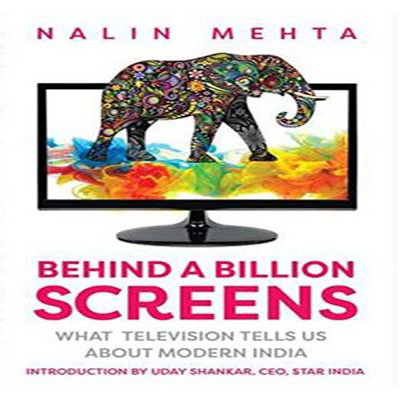
  • Nalin Mehta’s ‘Behind a Billion Screens’ examines Indian TV industry

    Nalin Mehta’s ‘Behind a Billion Screens’ examines Indian TV industry

    MUMBAI: India is a country where television forms the most important part of one’s life. Everybody watches television, everybody has an opinion on it and everybody thinks they know exactly what is wrong with it. 


    It’s a topic that often raises a lot of heat and smoke but too little light. Throwing some light on this trend of television is author and journalist Nalin Mehta’s new book ‘Behind a Billion Screens.’


    The book closely examines how television works in India, how TV channels make their money or not, how this is changing and what this means for the cacophony that appears on our screens.


    The book, which was initially going to be a joint effort by Star India CEO Uday Shankar and Mehta, was later written independently by the latter.
    The book answers key questions like:


    • Who owns Indian television? Just how much is it controlled by politicians, corporations and real estate companies? What are the patterns of control nationally and across regional languages? How does India compare with other countries and why does this matter?


    • What explains television’s terrible crisis of content? Is there really no market for intelligence in India and is dumped down content the only thing that audiences want? Why do channels keep behaving like Bollywood producers of the 1980s who kept churning out the same old tired formula films till a new multiplex-savvy breed of film-makers started challenging old orthodoxies? Is there a talent problem or management problem or a crisis of business models?


    • What is wrong with current government controlling system on television and why this ‘terrible-backend’ needs to change? Indian television continues to be controlled by outdated regulations, even as it is mired in public battles for greater regulation, as called for by Justice Katju. Studying the role of the Ministry of Information and Broadcasting, Telecom Regulatory Authority of India (TRAI), state governments and the judiciary, this book answers just how much control the state still has on broadcasting, why its jugaad nature of regulation is now unsustainable and why a major change is needed.


    • Does self-regulation work? How did self-regulatory bodies governing television come into being and what has been their factual record? Has self-regulation made any difference to programming or is it simply a chimera only designed to keep government out?How does India compare to other countries?
    • Does public broadcasting still matter, what exactly is wrong with Prasar Bharti and how can it be fixed?


    • Is television becoming irrelevant in the digital age? How is television shape-shifting in response to mobiles and the net, how are companies changing their businesses and programming, where is India going and how different is India from the rest of the world.


    The book highlights how India’s $15 billion media and entertainment industry – including television, print, radio, digital media – is growing at roughly 14 per cent a year. This, by some accounts, is impressive, benefitting immensely from the tailwinds of GDP growth of the last decade. But the stark fact is that even at $15 billion, India’s entire media taken together is just about one fourth the size of Google ($59 billion in revenues) – a fourteen-year-old company that is younger than most major Indian TV channels.


    “Let us not even go that far. If the entire Indian media was a company, it would rank seventh or eighth in India! Media is a globally growing industry but our participation in that ecosystem is zero and India is hardly factored into the global thought process of technology or content,” the book points out.


    Mehta, in the book, highlights how India is drunk on its own volumes: the largest number of newspapers in circulation, the second largest number of television viewers and millions of digital consumers. Digital, in particular, is an indictment of our creative and strategic limitations.


    “We have over 700 million mobile screens and yet we do not have a relatively unique content proposition for the medium. So, our ability to convert that into corresponding value is disappointing. Both in business and creative terms, the Indian media and entertainment sector still remains much smaller than it should be in a country of 1.2 billion people,” the book says.


    Even at these volumes, the reach as a percentage of population is not spectacular. India has 100 million households with no television, their time spent on it is abysmally low when compared to global standards; some 350 million people read the newspaper – but that tells us how many do not read!


    Mehta points out that in television, India needs a lot more content and this will come not only by scaling up production but through a fundamental transformation of the ecosystem. Resources, talent and every related facet have to evolve dramatically. For example, the production infrastructure in Mumbai, studio space, access to talent is creaking and unable to keep pace with the demand.


    Despite all the gloom and doom, India’s media and entertainment sector has consistently delivered impressive growth rates for the past few years. But, this is not a sector whose value is measured just by the size of its financial contribution. Media and entertainment remains central to defining the direction of India’s social and economic path; its work remains key to the imagination and inspiration of a billion Indians every day; and its health will be central to the ethos and values of the society we collectively shape.


    Mehta, through the book, says that with Narendra Modi’s new government in place, since May 2014, there is a renewed focus on reassessing things and trying to improve them. 

    “We need to make the case, for example, digitisation is not just about putting boxes and laying cables. It entails a fundamental transformation of the way we look at media and there is an opportunity for Indian media and content to move from just being a provider of entertainment content to being a creative industry, like the IT sector, for example, that plays a much larger role in the overall economic vision for the country,” Mehta opines in the book.


    He further writes that the media has been more than just a silent victim. Too often, the news media has focused on what is sensational rather than what is important. Too often, the point of news seems to be to reduce the extraordinary diversity of the country to the most banal, a contest between extremes that canonly be resolved through a shouting match on live television. With singular dominant narratives, the trend seems to be to create heroes on a particular day only to label them as thugs and crooks the next.


    Until recently, for a long time the media–government equation seemed like a broken relationship, and one that has had dire consequences for both the industry as well as the government. The failure to establish credibility and importance meant the industry perennially stayed on the back foot, defending itself against every new wave of regulation aimed only at curtailing its wings further. In return, governments were not able to leverage either the impact that mass media can have in India or harness the power of media as an economic engine that can create jobs and wealth.


    The book, in order to put things in perspective, says, “As a $15 billion industry, we employ over six million people. This can be so much more significant and meaningful. According to official estimates, about fifteen million people are entering the job market every year while the country is generating only about three million new jobs a year. This means that we are adding, as filmmaker Shekhar Kapur eloquently put it, a city of unemployed people as big as Delhi every year. And yet, the lens often used to look at this industry is largely one of glamour and propaganda and the biggest debate is on how to control and contain it.”


    There are 161 million cable and satellite homes but the measured universe so far is much smaller. “I do not know how many subscribers I have with a particular MSO and the MSO doesn’t know how many households his LCO delivers the signals to. The same is true in advertising too. The country’s premier media agencies can’t even seem to agree on a fact as basic as the size of the advertising market. One leading agency recently estimated the total market size to be Rs 35,000 crore, while the other, equally illustrious, estimated it to be Rs 29,000 crore. A variance of no less than 20 per cent! The ambiguity in data for other sectors of the media and entertainment industry is no less. Numbers are supposed to be the foundations of rational business decisions but how can we make decisions when professionals in the business of numbers can’t get their numbers straight?”


    Reacting on the book, Shankar said, “Nalin is probably the best media academic in India…this book is a seminal contribution to the evolving debate about the role of the Indian media.”


    Author and India Today Group consulting editor Rajdeep Sardesai added, “Excellent… an incisive and much needed study of how television is changing in India.”
    Times Now editor in chief Arnab Goswami said, “Fantastic… Nalin has beautifully pieced together the real, untold story behind the sound bytes.

  • “In Prannoy’s legacy lives a hope:” Uday Shankar

    “In Prannoy’s legacy lives a hope:” Uday Shankar

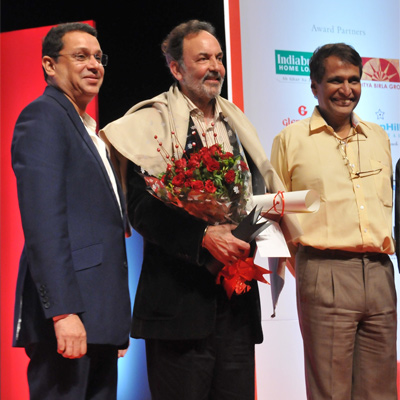
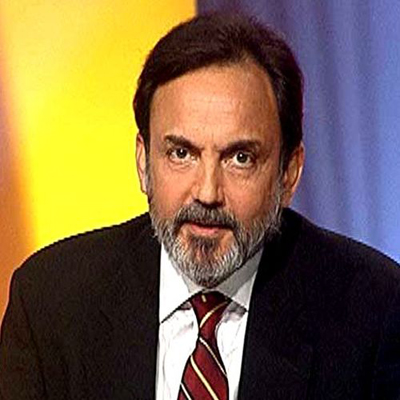
    MUMBAI: NDTV executive co-chairman Dr Prannoy Roy was honoured with the Lifetime Achievement Award at the recently held Red Ink Awards 2015.


    Star India CEO Uday Shankar presented the award to Roy and thanked him for giving the country and the media community “not just a legacy, but a whole category of intellect, industry, business and communication’ through ‘professional television journalism.”


    Shankar said, “Let me tell you a story. This is from when people like us had just gone to college and television had just come in. It was a device for occasional viewing. And suddenly one night, when I was looking for something interesting to do — something a little more interesting than watch Krishi Darshan on TV – there popped a show, which was talking about what was happening in the US, UK and China, and there was a young man with a beard who was presenting the show. That show was called The World This Week, and that was my first interaction with what TV was meant to be.”


    Talking more about Roy and the show, Shankar added, “Here we were, fed on a diet of what came out of Mandi House, and suddenly, we saw this show, which was about information, production, technology, graphics, and credibility of presentation. That was the day I decided that television was a viable and exciting career option. And when I say this here tonight, I don’t think I’m the only one who feels so.” 


    Shankar, during his opening remarks, said that a large number of people who came to television were drawn by the personality, charisma and opportunity or potential to contribute because of what they saw through the eyes of Prannoy Roy. 


    “There are a very few people who can retire — at some stage I hope he will — but there are very few people who can retire with the satisfaction that they created not just a legacy, but a whole category of intellect, an industry, business and communication,” he added.


    Describing the work done by Roy, Shankar said, “This country had only Doordarshan and nothing else… this country had no reference to what modern, professional television communication could be… and in came Prannoy with his vision, content, production and everything, and set these standards and thereby saved us almost two-to-two-and-a-half decades of the growth curve, the learning curve that all of us would have necessarily had to go through in order to get to a level of professional television journalism and communication.” 


    Roy became the reference point for Shankar, when he came to try his hand at TV. “We had The World This Week, NDTV, Prannoy Roy and his brand of journalism. And the sheen of that brand of journalism has never been dull. His legacy lives on, and in that legacy lives on a hope,” he concluded.

  • Star launches campaign with celebs to drive donations for Nepal & N. India

    Star launches campaign with celebs to drive donations for Nepal & N. India

    MUMBAI: Star India has launched a nationwide public service campaign ‘Ek Padosi Hi Padosi Ke Kaam Aata Hai’ with the NGO CARE India to mobilise relief for the natural disaster that struck Nepal and parts of northern India claiming more than 5,000 lives.


    A massive earthquake of 7.8 magnitude struck Nepal on 25 April, 2015, the worst to hit the Himalayan Kingdom in 80 years. In India, states of Bihar, West Bengal and Uttar Pradesh have also suffered the wrath of the earthquake.


    The Star India campaign will involve Bollywood celebrities like Ranbir Kapoor, Karan Johar, Anushka Sharma, Preity Zinta and a host of Star network’s icons, who will appeal to Indians for donations, which will be channeled directly to CARE India. Viewers will have an option to donate online, or through cheques or demand drafts. The campaign will work along the lines of Operation Maitri, initiated by the Indian government.


    “A tragedy has struck our neighbouring country resulting in a devastating loss of life, infrastructure and resources. We believe it is our responsibility to leverage the power of television as a force for good to help mobilise relief and provide immediate life-saving assistance to those affected. We are happy to associate with CARE India, an NGO highly respected for its humanitarian and development work in India and extremely humbled to see that our initiative has been embraced by some of the leading lights of the entertainment industry to appeal for relief,” said Star India CEO Uday Shankar.


    CARE India is assessing the situation on the ground in all the affected areas of Nepal and moving relief material where it is needed most. CARE has begun distribution in some of the areas and hopes to reach out to more than 50,000 people in the coming days.


    “We would appeal to all Indians for funds to ramp up the emergency response and provide immediate life-saving assistance to those affected. We are thankful to Star India for helping us raise funds for Nepal where millions are awaiting humanitarian relief. The country is running out of food, water and shelter and the onus is now on us to help them,” added CARE India board chair Dr. Nachiket Mor.


  • Pepsi IPL 2015 reigns on Hot Star with 110 million views

    Pepsi IPL 2015 reigns on Hot Star with 110 million views

    MUMBAI: After setting the record for the largest sporting event on digital with the ICC Cricket World Cup 2015, Star India’s Video On Demand (VOD) platform Hotstar is blazing a new trail for the ongoing Pepsi Indian Premier League 2015.


    The platform has recorded more than 110 million views for the tournament to date. In comparison, the entire 2014 edition of the tournament registered 62 million views on starsports.com last year.


    With 13 million views on Pepsi IPL 2014 at a similar point in the tournament last year, Hotstar has registered an 8.5x growth in viewership.


    Hotstar is streaming all the 60 games of the IPL, as well as programming original sports shows including a made-for-digital pre show 20-Minute 20-Second Twenty20 as well as a weekly show, Juicy Half Volley.

  • Star’s ‘Mauka’ campaign drives YouTube’s views in Q1

    Star’s ‘Mauka’ campaign drives YouTube’s views in Q1

    MUMBAI: With a whopping 10 million views, Star India’s ‘Mauka Mauka’ ad campaign for the ICC Cricket World Cup earlier this year, has been the second most watched campaign in the first quarter of 2015 on the video platform YouTube.


    The campaign comes second only to Gillette’s ‘the best a fan can get’ ad campaign.


    The ICC Cricket World Cup 2015 was a money raker in Q1 2015 as advertisers flocked to the tournament. With India’s stupendous performance throughout the World Cup, it was indeed one of the most important moments of the year. However, a lot has also changed since the last edition of the World Cup in 2011. For example, there are more users now on the Internet, social media commentary drives live entertainment and the match is played both on field and off the field across the Internet. Keeping the third reason in mind, YouTube India came up with the top trending ads of Q1 and cricket was the flavor of the quarter.


    A number of users lapped up campaigns built around the gentleman’s game. With the UGC around Mauka Mauka garnering a total of 10 million views only went on to prove the power of YouTube as a platform that can amplify the reach of a campaign through endemic content.


    The third campaign making it to the list was the Boost Cricket Anthem – Hey Champion, Stay Champion. The fourth in the list is the innovative #LiveItAbhi campaign undertaken by FMCG brand Pepsi.


    Ranbir Kapoor and Saavn Cricket World Cup 2015 ad featured on Valentine’s Day came in fifth followed by Pidilite. The Sony Bravia TVC called The Most Colourful Cricket Experience stood at the seventh spot while Cricket Face Paint campaign by Google+ took the eighth spot.


    The #YehGameHiHaiTasteKa brand campaign by Lays was at the ninth spot while the tenth spot was taken by the Micromax Unite Cricket Anthem 2015.


    As per the report, the list suggests that users love content that is built around things that they are passionate about, in this case cricket.


    “As a marketer, when these big sporting moments occur, one wants to be there for people, helping them have the time of their lives before, during and after the game — not just waiting for a break in play to get a word in,” states the YouTube India report.

  • Prannoy Roy to receive RedInk Lifetime Achievement Award

    Prannoy Roy to receive RedInk Lifetime Achievement Award

    MUMBAI: NDTV Group executive co chairman Dr Prannoy Roy has been awarded the 2015 RedInk Award for Lifetime Achievement for Excellence in Journalism for his consistent and pioneering contribution to news television in India. Dr Roy will be honoured for his service to journalism at a glittering ceremony on Thursday, 30 April in Mumbai at the Jamshed Bhaba Auditorium, NCPA.


    Dr Roy along with his wife and journalist Radhika Roy in 1988, were the first to set up a television news production company called New Delhi Television, now called NDTV. In later years, Dr Roy made a mark for his incisive and pioneering coverage of election news and changed the way people consumed TV news with his ground-breaking programmes such as ‘The News Tonight’ and ‘The World This Week’. After years of producing the news for Star News, Dr Roy launched his own broadcasting network with NDTV 24X7, NDTV India and other channels in 2003. NDTV, one of the largest news networks in the country today, has set up benchmarks for good, ethical and no-frills news coverage.


    The RedInk Award for ‘Journalist of the Year’, instituted for the first time, has gone to Sreenivasan Jain of NDTV for his consistent investigative work epitomized in his series ‘Truth versus Hype’ and other programmes. Times Now editor in chief Arnab Goswami was selected as the ‘Impact Editor’ of the Year for his ability to capture eyeballs and expand audience reach with his ‘News Hour’ show. Scroll.in will be awarded the ‘News Start-up of the Year’ for scaling up its influence rapidly as an alternative source of news and features.


    Judging for the RedInk Awards, which includes as many as 10 categories have just been completed, and as many as 24 journalists who have produced outstanding and impactful stories in calendar 2014 will also receive awards along with Dr Prannoy Roy, Sreenivasan Jain, Arnab Goswami and Scoll.in on 30 April at the NCPA.


    Judging process proved to be a herculean task with over 800 entries in the print/online category and nearly 250 stories from television journalists. Each of the categories – politics, crime, environment, sports, human rights, etc – had a dedicated jury of senior persons with domain knowledge assigned to judge the entries. A special curator was also assigned to sift the large number of entries in each section and guide the judges.