Tag: Star India

  • Star Sports extends broadcasting rights of Indian Hockey for three years

    Star Sports extends broadcasting rights of Indian Hockey for three years

    MUMBAI: That Star India is looking to take sports to another level is now well known. The network, which launched eight sports channels including four HD channels since 2013, is keen on taking India from being a cricket nation to a sports nation.


    Star India, which had joined hands with Hockey India to promote the sport in 2012 for an initial period of three years, has now extended the same for another three years. As part of the agreement, the telecast rights of Hockey India League and all other international hockey matches hosted by Hockey India in the country will be with Star Sports from 2016 to 2018 inclusive.


    The agreement comes on the heels of Star Sports being the global broadcast partner for the International Hockey Federation for the next eight years, starting from January 2015. With the extension to the agreement, Star Sports will also be the host broadcaster of Hockey India League (in India and globally) and the Hockey India International matches (in India and globally) for the period 2016 – 2018.


    Star India CEO Uday Shankar said, “The decision to continue our association with Hockey India is in line with our commitment towards development of a multi sports culture in India. Over the last year, the national team has performed phenomenally well winning medals and accolades across the world, making the country proud. We believe in the potential of hockey as a sport and through our association with Hockey India, will work towards popularising the sport and bring the fans back to Hockey. This association signals our commitment towards this transformation, through world class production of all international matches and the vibrant Hockey India League.”


    Hockey India president Narinder Dhruv Batra added, “Star Sports is known for its strong content and production quality, which helps increase viewers experience. They understand the target audience’s pulse and they package the entire show accordingly. They are known for creating a complete experience for each tournament and that’s what makes them stand out. We have seen this in our association with them since the inception of the Hockey India League as well as the International tournaments that they have hosted in the past. Keeping this in mind they are the ideal choice and we are happy that we have mutually agreed to continue this association for the next three years.”

  • “While we want films to be our anchor, we are equally excited about digital & TV:” Ajit Thakur

    “While we want films to be our anchor, we are equally excited about digital & TV:” Ajit Thakur

    From transitioning from Unilever in London to the Indian media space, Trinity Pictures CEO Ajit Thakur was lucky enough to get mentorship from two of the best minds in the media space – Ronnie Screwvala and Ekta Kapoor. Having learnt a lot from Screwvala in terms of business in media and from Kapoor, the madness of creativity, Thakur couldn’t have asked for a better learning ground.


    Since the time he came to India in 2007, he always wanted to make films, but then only landed up doing television stints with Sony and Life OK, which he found equally exciting.


    With a specific agenda on films that is to create his own label, he then finally got a platform in Eros International (with Trinity Pictures) to realise his dream.


    In conversation with Indiantelevision.com’s Disha Shah, Thakur speaks about his movie making passion, what Trinity Picture stands for, his journey from TV to films and more.


    Excerpts:


    What are the three core elements that you envisioned while launching the Trinity Pictures banner?


    Since the time I came back to India in 2007, I always wanted to make films. But when I came here I realised that all the platforms were equally exciting. Even after having moved to films, I still believe that television is as exciting a medium. But I had done two very good stints in TV with Sony and Life OK, so I thought it was time for me to do something in films now.


    My agenda was to be very specific – create a different studio and when I met Sunil Lulla and Kishore Lulla at Eros, they were both excited about it. Most importantly, they had the ideal platform for me to do what I wanted to do. So in February, Trinity Pictures was set-up as an in-house production house within Eros.


    There are three unique things about Trinity. Firstly, as a company we will focus only on developing franchises films because I believe focus gets you success. Keeping in mind Indian and global box office trends, there is space for franchise films. In India, as of June the top two films are returning films like Tanu Weds Manu Returns and Furious 7. While India is slowly waking up to the power of franchises, Hollywood has been tasting success with it for more than a decade. Even if we do come across a great script, which we can’t convert into a franchise, Trinity will pass it on to Eros. Our focus is very clear.


    Secondly, at Trinity we are not looking at ourselves as being just a film franchise studio. We will create franchises that can go across and beyond screens. It can happen that we develop a idea for digital, take it to TV and then to films. We are keen at making digital comics and character games for each franchise. One franchise might start with a comic and then become a film, while another might begin as a film and then hop on to the gaming platform. The possibilities are endless.


    Thirdly, we will be the first studio to have an in-house writers’ room. We are hiring 10-12 writers and three are already on-board through this unique open application that we have. We will have all these writers developing concepts and ideas for us in-house.


    From Yash Raj Films to UTV, many studios today have multiple film banners to cater to different genres. Why did Eros feel the need to launch a separate banner too?


    I think it is not about the need for a separate banner as much as about the fact that all these films could have been done under Eros. However, when I presented the idea to Kishore, he saw the merit in having a separate identity to these franchise films. So, while Eros stands for certain kind of big films across genres, Trinity will stand for big films within the franchise space. And moreover, I believe it sits in well as a strategic thing from a market’s promise that both the brands can grow.


    Eros is at the threshold of really aggressive growth in the next five years. It fits in the plan to have a second brand under it. More importantly, Trinity is not like the second label of other studios. Other studios use the second label to make small and alternative films; Trinity will cater to mainstream and big films.


    From TV to films, what were the initial challenges that you faced and how have you adapted to the new medium?


    There were no challenges, just opportunities. I am a curious person and for me it’s a process of evolution, so I don’t see them as challenges. Between Ronnie Screwvala and Ekta Kapoor, I couldn’t have asked for a better learning ground. My stints in broadcasting were also fantastic. I never thought I would do TV for so long but I did enjoy it a lot.


    At Sony, it was a great learning curve. It was a place where I really felt confident for the first time as we did Kaun Banega Crorepati and Crime Patrol and a lot of alternative shows. At Sony, we moved away from the saas-bahu sagas and experimented with alternative programming, which worked. I had great support from Man Jit Singh and NP Singh.


    Post Sony, Life OK was a dream job and I couldn’t have asked for more. From the foundations of Screwvala and Kapoor to witnessing growth as a person and professional, my Star India experience was fantastic. I haven’t seen a company with more talented people between Uday Shankar and Sanjay Gupta and all the colleagues I have worked with. I was learning everyday at Star.


    Life OK is like my baby, but more than Life OK, it is about just how much I learnt from the Star system. I couldn’t have asked for a better place to get to that level of confidence. And I believe it was great I did that and then jumped into films. I wish I had given more time to Channel V but my dream was to make films. I am now applying a lot of my learnings from there. Finally, it is about content and how you create it.


    Bollywood has a different set of dynamics and the only challenge has been to get to know big stars and directors and telling them that how somebody who has not made films before wants to make big films.


    What was the mandate that was given to you for launching this new banner? Walk us through your responsibilities at Eros.


    Eros is at a threshold of the next level in its journey. What we have charted out for the next three-five years is to become one of the leading global players in entertainment. Not just film entertainment, but also across digital, TV etc. Trinity Pictures fits in well with that plan for Eros to go to the next level. Eros’ top brass comprising Kishore, Sunil and Jyoti Deshpande believe that we can create four-five valuable franchises in films and beyond over the next three years.


    The second thing within that is to get the best talent to work with us directly. Traditionally, we have been following the acquisition model as well as producing our own films. Trinity will produce all of it in-house. The idea is to build relationship with talent because Trinity is a content production studio, which goes beyond just films. I am also helping develop content for Eros Now in space of original mini-series.


    How are you going to use all the different mediums? What is your strategy?


    The only difference between all the mediums is the target group that we are looking at. There is a certain target group that goes to theatres to watch films, a different group that watches digital content and a slightly different group that watches TV. More women drive television and more men drive films in terms of the demographic profile. That is the only thing I have to keep in mind.


    All we are looking for is good ideas and once the idea comes, we slot it for television, films or digital and then we will move it around. The main beauty of franchises is that it is platform agnostic. We can take the same franchise across mediums. The key point is where we want to start from and the target audience.


    Trinity is a multi-screen studio. Of course, we want to anchor ourselves in films but we are equally excited about digital and television.


    Give us an insight into the working of Trinity Pictures? What is the team structure like?


    It is a very small team. Till a month back, I was the only employee along with my assistant. We are taking time to find the right people. The aim is to have three teams comprising project managers, production heads and in-house writers. We already have on-board one of the top writers of Bollywood – Shridhar Raghavan, working with us as a consultant.


    As of now we have three full time writers. On 22 June, we are holding our first writer’s assessment workshop, wherein 250 applicants have evinced interest. Hopefully by next month, we should have 10 writers on-board. We are also looking at scouting for writers in Delhi and Kolkata.


    What is the potential that you see in building franchises in the Indian market?


    Significant. Like I said, this year the top two grossing films have been franchises. Look at Hollywood in the last one year, out of top 12 films, 10 films were franchises. Moreover, from 2008 onwards it has been the same. While franchises have tremendous potential, it needs a lot more development. It is almost like television where you build characters, even if the story gets over, people come in for characters and that is what franchises are about. You invest in characters and once when people fall in love with characters, they come for the next film.


    For example, Jurassic World has done the highest weekend ever in US. It is another returning franchise! The truth is all around this, but yes these are big films and you have to mount it well and get it right.


    What genres will Trinity Pictures be looking at to build movie franchise? How many films you have pitched to the management till now? When can we see first movie going on-floor?


    We are looking at full range of genres. We are looking at Superheroes, action – thrillers, spy and detectives, super natural horror, period and mythological as well as teens and kids. Within franchises, we want to explore everything.


    We have an agreement on eight projects and we will hopefully lock four by next month. We are hoping that a couple of these films to go on floors by September-October and we will definitely have two releases next year.


    Are Superhero films the best bet as far as franchises go or do other genres like comedy, thriller, horror have potential too?


    Making superhero films in India is difficult. I think, Hollywood has set a benchmark that we have to really find a right idea to be able to compete with them. If you make something like a pale replica, it won’t work.


    Will Trinity be making films that have a wider reach and appeal than just the Indian market?


    Yes. The franchises have the potential to reach out to the global audiences because they are universal themes and not just Indians. We are looking at all markets like UK, US and the Middle East for our films.


    Will you be looking at producing only Hindi films or is regional cinema also on the cards?


    At Trinity, we want to first focus on Hindi films and we might look at couple of English language films. However, regional cinema is part of Eros portfolio. We have a massive presence in South and we are expanding in Marathi and Bengali. Eros will continue doing a lot of regional cinema, while Trinity will focus on Hindi currently.


    Mythology as a genre has been working great guns on Indian television. However, as far as films go, Indian producers have so far failed to exploit the genre on the big screen. Will Trinity be looking at building on mythological films?


    I definitely relate to mythology and historicals, but obviously they have to be at a scale that is very different for TV for it to be worth being a film. I have a couple of subjects but I want to make sure that the right investments and right technicians are available to make it happen. Mythology in films has to be much bigger. Moreover, the average filmgoer is younger, so just mythology pitched like that won’t work. You will have to make it larger than life to pull in the younger audience.


    What is your target in the first year of operations?


    To have four films ready, make two films till next year and also make one very big franchise. For the four films, the story is done. We will be now be getting into screenplay writing. Over three years, we are aiming to have four-five big franchises across mediums and are also hoping to create a mini-series that completely changes the way content is seen for digital.


    What about the other talents like directors, actors?


    Like I mentioned earlier, that films is not the only criteria at Trinity Pictures. Having said that, we definitely want to work with established directors for our bigger films. At the same time, I am also very open to new directors and writers. However, some films will need experienced hands. The great thing is that all the directors I have spoken to, have been very excited about what Trinity wants to do in terms of franchises, having a writers’ room etc. We are in discussions and negotiations with a few directors.


    As far as actors go, we have not thought about it at the moment. Directors will finally decide on the actors. Our focus is to create good scripts and get good directors in.


    Is Trinity Pictures looking to exploit the film franchises for merchandising, animation etc?


    Absolutely. Like I said, gaming and comics will be a part of merchandising. We will also be looking at animation films but that will take some time. First, we want to get a couple of good films and franchises rolling… but everything will travel from one medium to another.


    What kind of budgets is Trinity Pictures looking at for making films?


    All kinds of budgets from Rs 5 crore to Rs 50 crore to even Rs 100 crore films.

     

  • Star India gets FIPB nod for Maa TV investment; Jhakaas & Eros proposals deferred

    Star India gets FIPB nod for Maa TV investment; Jhakaas & Eros proposals deferred

    NEW DELHI: Star India has received permission for investing Rs 2500 crore in foreign direct investment in expanding its growth in the country. The approval by the Foreign Investments Promotion Board (FIPB) includes acquisition of the broadcasting business of Maa TV – engaged in broadcasting sector on a slump sale basis.


    A source in Star India told Indiantelevision.com that this meant acquisition of software and liabilities of Maa TV and not a take-over of the company.


    As was reported by this website earlier in February, Star India said it will acquire Maa Television Network’s four Telugu channels namely Maa TV, Maa Movies, Maa Music and Maa Gold. “Star will acquire all assets of Maa TV including broadcasting rights subject to regulatory approvals. After the approvals, Maa TV will become part of Star network. We do not have any Telugu channel in our portfolio,” Star India CEO Uday Shankar had then said.


    Maa TV group is owned by industrialist Nimmagadda Prasad, Rajya Sabha member Chiranjeevi and actor Nagarjuna.


    In addition, Star India has received the nod from FIPB for further issuance and transfer of shares to its foreign collaborator.


    Meanwhile, the FIPB once again deferred the proposal by INX Music to undertake the additional activity of broadcasting of a non-news and current affairs channels in various Indian languages. As proposed scheme of arrangement, the 9X Jhakaas Marathi channel shall be merged into INX Music, a company which aggregates and distributes music content for TV channels, having 70.85 per cent indirect foreign investment.


    Additionally, Eros International Media’s proposal for making downstream investment by way of acquisition of shares of an Indian company for non-cash consideration, that is, by issuance of shares of the applicant company to the existing shareholders of the investee company has been deferred.


    Today Magazines Lifestyle Private Limited received approval for Rs 2.05 crore foreign investment of 49 per cent by Cooperatief International Publications Holding through transfer and further issue for an aggregate consideration.


    Approval has also been given to Indium IV (Mauritius) Limited through India Value Fund IV for an investment of up to Rs 200 crore in an Indian company – Atria Convergence Technologies engaged in providing internet services. The two companies together propose to invest in the capital of Atria in excess of 49 per cent up to 100 per cent by subscribing to equity or compulsorily convertible preference shares or fully convertible debentures.

  • Star launches emotional TVC to rejuvenate hockey

    Star launches emotional TVC to rejuvenate hockey

    MUMBAI: India’s national sports hockey is losing its relevance in the country in terms of viewership, ground interaction and brand endorsements despite registering strong performances in recent times. In order to rejuvenate the below par statistics, Star Sports, which will be telecasting Hockey World League matches, has launched a TVC in association with Opticus to secure emotional connect with the Indian audience.


    The league will be telecast from 20 June to 5 July.


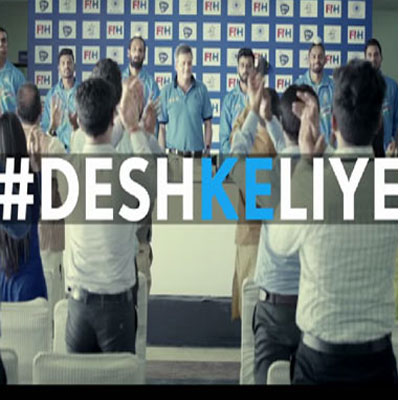
    The 45-second ad opens with the Indian hockey team along with coach Paul Van Ass fielding questions at a press conference before leaving for Belgium. Highlighting the lack of interest, only a handful of journalists have turned up and most of the seats are empty. The question-answer round starts with a journalist skeptically asking what is the future of Indian hockey. Led by Captain Sardar Singh and coach Paul Van Ass, the players list out the present set of achievements by the team. 


    “The world knows about it but India doesn’t,” Van Ass says, referring to the lack of awareness in the country about their national team’s successes.


    Another journalist asks if Pakistan will be at the semi-finals in Belgium. In response Singh reminds the assembled media that they had defeated Pakistan to win Gold at the Asian Games, pointing out that that victory made India the first team to qualify for the 2016 Olympics in Rio. 


    “Par kya fayda (but what’s the point),” Akashdeep Singh asks before team-mate Gurbaj Singh adds, “India ke dil mein qualify nahin kar paye (we couldn’t win India’s heart).”


    The film ends with Sardar Singh saying the team will now head to Belgium and play for the nation, #DeshKeLiye, as they always have. 


    Speaking exclusively to Indiantelevision.com the director of the TVC Sanjay Shetty says, “The brief and the list of the players was given by Star and we drew the concept on the basis of their brief. The main motto was to keep it simple and leave a mark on viewers’ mind.”


    It was a single camera setup and was shot at Dhyan Chand National Stadium. “We wanted it to look like an actual press conference and covey the message that while Indian Hockey is garnering recognition globally on the basis of their performance India is oblivious about it,” he adds.


    Hockey registered an abysmally low cumulative reach in 2013 with only 53 million. The figures saw some respite in 2014 as it ascended to 107 million. Now it remains to be seen if the national sport of the country manages to improve the figures and Star manages to spell success with the TVC.


    Credits

    Production House: Opticus Inc 

    Producer: Varun Shetty  

    Director: Sanjay Shetty

    DOP: Demant Vyas

    Editor: Vishal Kharat

    SVP-Marketing head: Shubhranshu Singh

    AVP-Marketing: Jarmanjeet Singh Randhawa

    Concept and Story: Vikas dubey

    AVP-On Air Promotions: Vaibhav Chib 

    In-house team: Prashant Pawar and Saikat Sengupta

  • Star Plus ups stakes; extends early prime time with new show at 5.30 pm

    Star Plus ups stakes; extends early prime time with new show at 5.30 pm

    MUMBAI: Doing away with traditional time bands, Star Plus is upping the stakes as it looks to change the rules of the game yet again. Time bands have played a crucial role for Hindi general entertainment channels (GECs) in targeting different audience groups.


    Though, the main prime time band (8 – 10 pm) continues to be of primary interest, in order to bring about freshness in their overall programming and strategy Hindi GECs have many a times experimented with different slots like early prime time, late prime and the afternoon slot.


    To comprehend the development nature of early prime-time slot, Star Plus has now opened up a ‘silent’ slot by extending its early prime time from 5.30 pm.


    To target the untapped potential, the channel is launching a one-hour daily fiction called Mere Angne Mein at 5.30 pm, which will be aired from Monday to Saturday. With this development, the channel will now churn out seven hours of original programming i.e. from 5.30 to 11.30 pm (keeping in mind that Ye Hai Mohabbatein occupies the dual time slot).


    Produced by Sphere Origins, the new show will hit television screens from 15 June and replace the repeat telecast of Iss Pyaar Ko Kya Naam Doon… Ek Baar Phir, which is also produced by the same company.


    Concept: Clashes between two ideologies


    Mere Angne Mein will find resonance with small town India where the joint family system dominates society. With an ensemble cast featuring some of the best-known names of Indian television, Star Plus and Sphere Origins will offer an entertaining peak into the Indian hinterland.


    Every household is governed by a certain set of rules, thoughts, values and one all-encompassing philosophy. While some believe that families need to adapt to changing times, there are some who resist any deviation from the tried and tested. Mere Angne Mein showcases the clash of ideology between two such people – on the one hand is Shanti Devi (played by veteran Krutika Desai), the dominating matriarch of the Shrivastav family who believes in autocracy and running the family on her terms; on the other hand is Riya Saxena (essayed by Ekta Kaul), Shanti Devi’s granddaughter-in-law who believes in running a democratic household.


    The show depicts the interesting chemistry as a clash occurs between these two ideologies. Joining Desai and Kaul are actors like Varun Badola, Sucheta Trivedi, Ananya Khare and Karam Rajpal.


    What’s more, the show rides high on technology as for the first time ever it will be achieved through a revolutionary production method involving a multi-camera set up, and pre-shoot scene rehearsals with all actors.


    Sphere Origins producer Sunjoy Waddhwa says that churning out a one hour episode daily is a tough job. “As compared to other daily fiction shows, we are producing double content. So in order to churn those hours, we thought of using a multi-camera set up. Most of the times, considering the nature of the show, we also use four-five cameras simultaneously,” he informs.


    Waddhwa is of the opinion that every time slot has a hidden opportunity and is unperturbed about viewership.


    With the set located at Madh Island, Waddhwa reveals that it takes more than a day to shoot one single episode and tries to churn minimum 30-35 minutes of content out of the single episode.


    Moreover, the production house also does the live editing on the set, which is then sent to the master for the edit.


    While refusing to divulge the financials of producing a show like this, Waddhwa says that efficiencies are required and a lot of infrastructure cost is put in to deliver the desired results.


    As is known, a daily fiction show demands anywhere between Rs 6-8 lakh per episode, and sources indicate that considering the show’s high involvement on technology, it must be ranging from Rs 10-12 lakh per episode.


    Speaking to Indiantelevision.com, a media planner opines that prime time rates at Star range from Rs 1 -1.5 lakh for 10 seconds and if the 5.30 pm slot delivers, it could easily demand a 10-sec rate of at least Rs 60,000 – 65,000, opening up a whole new band for other GECs as well.


    The media planning fraternity believes that the placement of a show largely depends on the content and target audiences. “If the show appeals to a younger set of audience, it will be put on an early time slot. Whereas if the content is more aggressive and caters to more matured audience, it will be suitable for late prime slot,” said a planner.


    Another media expert believes that while early prime time is a viable band for smaller towns, the late prime time band is more conducive to urban programming and Star Plus aims to reach out to every mass possible, matching to the lifestyle of people from the respective strata of towns.

  • Star India directed to restore Vishal Cables’ signals subject to Rs 15 lakh payment

    Star India directed to restore Vishal Cables’ signals subject to Rs 15 lakh payment

    NEW DELHI: Star India was today directed by the Telecom Disputes Settlement and Arbitration Tribunal (TDSAT) to restore signals to Vishal Cable Network provided the latter makes an on account payment of Rs 15 lakh to the company in three equal fortnightly installments.


    TDSAT has directed Vishal Cable Network to pay the first installment of Rs 5 lakh in the course of the day and another sum of Rs 5 lakh by 24 June and the third installment for the same amount by 9 July.


    The payment “shall be on account and without prejudice to the rights and contentions of the parties.”


    The matter will come up on 24 July for further directions.


    In the meanwhile, the parties are directed to have reconciliation of accounts to ascertain the exact dues against the petitioner.


    The vacation bench of TSDAT chairman Aftab Alam and member B B Srivastava said that during the pendency of this petition, Vishal Cable will continue to make payments of the monthly subscription fees on the basis of invoices raised by Star India.


    In case of default in payment of the installments and / or monthly subscription fees as per the invoices of Star India, it will be open to it to disconnect the supply of its signals without any further orders from the Tribunal.


    Star India was directed to file the reply within four weeks from today; and rejoinder, if any, may be filed within two weeks from the date of receipt of a copy of the reply.  

    The petition was filed against the disconnection notice of 12 May issued under Clause 6.1 of the 2012 interconnect regulation. In pursuance of the notice, Star India has disconnected the supply of its signals to the petitioner on 5 June.


    The disconnection notice is based on the grounds of non-submission of SMS reports, non-payment of license fees and non-cooperation in audit. According to the notice, the dues of license fee against the petitioner amount to Rs 13.2 lakh as on 31 March this year.


    Vishal Cable has been directed to give Star India SMS reports for the months of April and May 2015 within two days from today, i.e. 11 June. Star can commence the audit of the Vishal Cable’s technical system on 16 June and the Vishal will offer full cooperation in conduct of the audit.

  • Fox Star Studios inks nine film production & distribution deal with Karan Johar

    Fox Star Studios inks nine film production & distribution deal with Karan Johar

    MUMBAI: In one of the biggest deals in recent times, Fox Star Studios has inked a nine-film deal with Karan Johar’s Dharma Productions.


    As per the deal, which will run over the next three years, the two companies will jointly produce and distribute films, which will be helmed by directors like Johar, Ayan Mukerji and Karan Malhotra amongst others. The films are also likely to stars names like Ranbir Kapoor, Aishwarya Rai Bachchan, Shahid Kapoor and Alia Bhatt to name a few.


    Under the terms of this deal, while some films will be co-produced by the two companies, others will be for distribution only.


    Star India CEO Uday Shankar said, “The Indian film industry is an important market for us and this strategic partnership offers us an excellent opportunity to fundamentally change the content quality paradigm. This venture is the natural step in our progression to create entertaining and eclectic content for a global audience and to grow the business through game-changing innovation in content, marketing and distribution.”


    Johar added, “Movies for me have always been a blend of artistic and commercial resources. Dharma Productions has always endeavored to attain the highest form of celluloid excellence and entertain simultaneously. I am glad we have found a partner in Star India and Fox Star Studios for a visionary nine films alliance. This partnership will not only be the coming together of two forces who understand the need of the cinematic hour but also work as a unit to increase the footfall strength at the movies and empower other verticals. It’s a new age of cinema and this association is a glorious reflection of the times.”


    Fox Star Studios CEO Vijay Singh said, “This strategic alliance is path-breaking as it envisages the stakeholders pooling in their collective strengths and thereby chalking a new path for Bollywood, specifically in the way in which films are marketed and distributed. Consolidation through strategic alliances is the way forward in the film industry.”


    Dharma Productions CEO Apoorva Mehta added, “It is by far the biggest collaboration that the Indian film Industry has ever seen. With this strategic deal, Dharma has entered into a new phase of movie business, which will provide a disruptive growth model for all the parties involved. This landmark decision will bring on board the most visionary and astute leaders together who will drive the overall strategy for making, promoting and distributing movies. I am happy to say that Dharma is excited and geared up for these new opportunities in the coming years and it definitely looks like the beginning of a game-changing era for the industry.”

  • Pro Kabaddi League season 2 to kick-start on 18 July

    Pro Kabaddi League season 2 to kick-start on 18 July

    MUMBAI: Pro Kabaddi League, which was a grand success in 2014, will be back with its second season on 18 July, 2015 with the opening leg to be held at National Sports Club of India (NSCI) in Mumbai.


    The season opener will pit the two finalists of last year, as host team U Mumba take on reigning Champions Jaipur Pink Panthers.


    The league promoted by Mashal Sports and Star India with the backing of the Amateur Kabaddi Federation of India and International Kabaddi Federation, will feature 60 games played across 37 days in eight cities.


    Following the same ‘caravan style’ format like in the first season, the league will be played at each franchise city for a duration of four days, where the home team will play four of the visiting franchises. All seven visiting franchises will play a set of away games in each city.


    After the opening leg in Mumbai, the league will move on to the Netaji Indoor Stadium, Kolkata, followed by the home of current champions, Jaipur Pink Panthers at Sawai Mangsingh Stadium in Jaipur. The Indoor Stadium at the Patliputra Sports Complex, Patna will be the venue for the culmination to the first half of PKL season 2.


    Hyderabad, the new home of the Telugu Titans, will play host to the second half of the league with the caravan arriving at the Gachibowli Indoor Stadium on 4 August. Moving on from Hyderabad, the league will be played in at Thyagaraj Indoor Stadium in the capital city and move onto the Kanteerava Indoor Stadium in Bangalore before culminating at the Balewadi Sports Complex in Pune.


    For the grand finale, the play offs will return to NSCI Mumbai, with the semi-finals scheduled for 21 August and the finals and play-offs scheduled for 23 August.


    For the entire schedule click here

  • Hero Indian Super League 2015 to kickoff on 3 October; extended by 9 days

    Hero Indian Super League 2015 to kickoff on 3 October; extended by 9 days

    MUMBAI: Hero Indian Super League (ISL), which sparked a football revolution in India with its inaugural edition last year, featuring eight city franchises, renowned international footballing stars, coaches and a host of Indian talents, is all set to stage its second season starting Saturday, 3 October, 2015.


    The promoters of Indian Super League, Football Sports Development— a joint venture between IMG, Reliance Industries and Star India; has announced the fixtures for its second season, featuring 61 games spread across 79 days.


    The League stage will witness 56 games in a home and away format, followed by two-legged semi-finals starting 11 December, 2015 with the ‘Super Sunday’ final scheduled on 20 December, 2015 at a pre-decided venue to be announced at a later date. All the matches will kick off at 1900 hrs (IST).


    Chennaiyin FC will host the opener when they take on the might of Hero ISL defending champions Atletico de Kolkata on 3 October, 2015 at their home ground Jawaharlal Nehru Stadium. The action will then move to Goa the next day with FC Goa pitted against Delhi Dynamos FC, while fans in Mumbai will witness the ‘Maharashtra Derby’ on 5 October, 2015 when Mumbai City FC locks horns with FC Pune City at D Y Patil Stadium, Navi Mumbai.


    The Hero ISL bandwagon will reach Kerala on 6 October, 2015 when last year’s runners-up Kerala Blasters FC play their first home fixture against NorthEast United FC. The newly laid pitch at Salt Lake Stadium, Kolkata will be put to test for its first big match night when Atletico de Kolkata tussle with arch rivals FC Goa on 7 October, 2015. Delhi Dynamos FC, FC Pune City and NorthEast United FC will host their first home matches on 8, 9 and 16 October, 2015, respectively.


    The inaugural year of Hero Indian Super League witnessed an unprecedented response in the history of Indian football, achieving a rare feat of being the fourth most watched football league in the world. For the first time in Indian football, globally renowned players like, Alessandro Del Piero, Nicolas Anelka, Robert Pires, Fredrik Ljungberg, David James, Luis Garcia, David Trezeguet, Elano Blumer and Joan Capdevila played alongside the best Indian football talents.


    Hero ISL’s first edition saw participation of footballers from 36 varied nationalities, including India; changing the way football was perceived in the country so far. The globally viewed tournament had 129 goals scored at an average of 2.11 goals per game.


    Over 1.5 million fans made their way to eight city based club’s home stadiums to witness this footballing event unfold. As per the data released by the broadcaster, the inaugural season of Hero ISL was watched by 429 million viewers on TV in India, which was more than 2.5 times of the viewership of 2014 FIFA World Cup.


    Talking of the engagement on social media, a release says, “The social media presence of Hero ISL has grown exponentially since the inaugural season with over 1.7 million ‘Likes’ on the League’s official Facebook page in addition to another 120 thousands that follow @IndSuperLeague on Twitter. The ISL website www.indiansuperleague.com has received 3.4 million unique visitors and over 28 million page views over the duration of the League with 32 million online views on www.starsports.com.”

  • Star India eyes big revenue from Pro Kabaddi League 2

    Star India eyes big revenue from Pro Kabaddi League 2

    MUMBAI: Kabaddi – a sport, predominantly known as villagers’ entertainment, successfully garnered cumulative reach of 435 million and managed to change popular perception when it made its debut in 2014. Star India’s Pro Kabaddi League became an avenue that has the potential to generate enormous revenue.

    While in the first edition, Star Sports was the title sponsor of the league instead of a brand, given the high ratings; it is unlikely that the second edition will see a similar occurrence. According to sources close to the development, in the first week of June, Star India will formally announce the sponsors and date of the tournament.

    So far, 2015 has been an action packed calendar for sports with the ICC Cricket World Cup, followed by the Indian Premier League (IPL). The entire sports loving fraternity is buoyed, which is a positive for broadcasters and organisers. However, an issue they might have to contend with is advertisers’ fatigue since multiple brands have spent heavily on the two cricket tournaments.        

    Pro Kabaddi League is a Mashal Sports initiative, which was initially a joint venture between quizmaster and commentator Charu Sharma and industrialist Anand Mahindra. However, Star India, in April 2015, acquired 74 per cent stake in Mashal Sports.

    Speaking about the second edition of the tournament, Sharma tells Indiantelevision.com, “It is going to be bigger and better than last year. The previous edition ended even before people got into it. While they wanted tickets, the stadiums were full. Pro Kabaddi League is an exhibition of athleticism and action. People liked the innovation because of the raw nature of the sport. This year, I am sure Star will back it with aggressive and accurate promotion, which will apprise the viewer of each and every minor occurrence. I am sure we are going to have an exquisite extravaganza this year.”

    A senior executive from the media fraternity is of the opinion that the ad rates for a 10 second slot during the tournament will be somewhere between Rs 75,000 – 80,000.

    Madison Media COO Dinesh Singh Rathod says, “Last year, it delivered the ratings and hence brands, who missed out on it or probably were unsure will aggressively forge for it. I see the sport as a good medium for promotions and subsequently won’t be surprise if there are brands galore in this edition.”

    The sports rules and regulations were twisted and turned to make the format interestingly elite says entrepreneur and franchisee owner Ronnie Screwvala. “When Charu introduced me to the facts and figures associated with the sport, I was surprised to know the number of players across the country who actively play Kabaddi and hence I was quite sure that the sport will work on television but for that it was necessary to make few changes and the federation (International Kabaddi Federation) was immensely cooperative. Mat came in, the sport from muddy outdoor land went indoor, the raider instead of chanting ‘kabaddi kabaddi’ without break of breath were given a time span to ensure fair judgment as it is impossible to make out for the referee if the raider broke the breath in an indoor stadium that is packed. So all this subtle changes made Kabaddi what it is,” Screwvala tells indiantelevision.com in an exclusive chat.

    Besides players and the innovations in the format, celebrities also played a vital role in the success of the tournament.  All eight franchises had a celebrity connect and names like Amitabh Bachchan and Aamir Khan were spotted sidelines screaming ‘Kabaddi ek Kabaddi do,’ which in turn drove their fan base to the sport.

    It now remains to be seen how many brands go aggressively to use Pro Kabaddi League as a platform to grab eyeballs and whether the sport turns out to be a productive asset for the Rupert Murdoch owned Star Sports.