Tag: Star India

  • 74.5 million tune in to ‘Bajrangi Bhaijaan’ TV premiere on Star Gold

    74.5 million tune in to ‘Bajrangi Bhaijaan’ TV premiere on Star Gold

    MUMBAI: A staggering 74.5 million people across the country tuned into the television premiere of the Salman Khan starrer Bajrangi Bhaijaan on Star Gold, which is close to three times the number of people that watched the movie in theatres.


    According to the all India data (Urban + Rural) provided by Broadcast Audience Research Council (BARC) India, Star Gold emerged as the number one movie channel in the Hindi movie genre riding on the back of the world television premiere of Bajrangi Bhaijaan.


    Star Gold grabbed the first position in the genre with 486374 (000Sums). The film has garnered a whopping 25 million TVTs (HSM CS 4+ Urban and Rural), an unprecedented number in the history of Indian television. 


    Star India Hindi movie business executive vice president and general manager Hemal Jhaveri said, “Staying true to our brand identity, Home of Blockbusters, Star Gold promises to bring the biggest films to its viewers within a short span of their theatrical release. We are overwhelmed by the response on Bajrangi Bhaijaan. The film’s ratings are a strong validation that our strategy is aligned with the viewers’ demands. At Star Gold, we stand committed to our viewers and trade partners in our promise of bringing the biggest blockbusters on television.”


    The channel had rolled out a massive marketing campaign for the premiere. After its premiere on television, Star also made available the movie on its over the top (OTT) platform Hotstar.

  • Ditto TV aims to double revenues this fiscal; plans more original shows

    Ditto TV aims to double revenues this fiscal; plans more original shows

    MUMBAI: It’s gotten late off the blocks but it sure is looking to sprint ahead and fast. We are talking about the Zee network’s digital over the top (OTT) offering Ditto TV.


    Zee Digital Convergence (ZDC) Chief Executive Officer Debashish Ghosh told PTI over the weekend  that his goal is to double his company’s revenue from around Rs 30 crore to Rs 60 crore this year, with almost 95 per cent of it coming courtesy subscription.


    With 1.8 million subscribers on a monthly basis and almost 60 percent of them being repeat viewers, Ditto TV is present in 167 countries. Most of its consumption is however happening in India. With the exception of Star and Sun group channels, Ditto TV offers 156 channels across 13 languages. Ghosh further told PTI that almost 30 per cent of Ditto TV subscribers consume live TV.


    ZDC  has invested around $5 million in Ditto TV over the past three to four years, Ghosh disclosed. That is slated to go up in the coming months as it starts pumping in money into original content. The first of these is a music based show called Life is Music; other programmes are being planned in-house as well as with outside producers.


    Clearly, the OTT original content space is seeing a lot of action.


    Netflix is slated to launch in India by mid next year and invest top dollar in cutting edge content. Star India’s Hotstar already has an average of 20 million users every month. It has paid a fat commissioning fee to stand up comedy group All India Bakchod to produce shows running over 20 episodes. Then it has been premiering some of its big-ticket Bollywood movies and TV shows on Hotstar.


    Entertainment major Eros International recently announced that the registered user base of its OTT service Eros Now has grown to 30 million as of 30 September.  It has ordered six new original shows which are slated to debut soon and feature big name stars.


    MSM Media’s Sony Liv, on the other hand, notches up an average of 5-7 million monthly users, and is also getting into OTT content.  It is experimenting with a fiction show titled  Love Bytes. Then the Viacom18 group is also pacing on the sidelines, gearing up to launch its own OTT service under the leadership of Gaurav Gandhi.


    Ghosh, while speaking at IDOS (organized by Indiantelevision.com and MPA in September) said that the hyper activity is good for the OTT sector as a whole.


    He further  told PTI, that India is expected to have 500 million Internet users by 2017, out of which 382 million would be smartphone users, 70 per cent whom would be 3G/4G customers. And that is what is exciting the Zee TV network to further invest in Ditto TV.  Add to that the prediction that almost 60 per cent of India’s population is going to below 40 by 2020, and that both wired and wireless broadband infrastructure will be in place. That’s the positive side.


    “But the fact is that the OTT players will find the going challenging,” says a media observer. “At least until the numbers really scale up and bandwidth constraints and costs fall. Indian consumers are chary of paying for content, apart from cricket. Hence, Hotstar has taken the AVOD route (advertising video on demand). But advertisers and agencies have been reluctant to buy into the medium; at least at prices Star has envisaged. Eros Now has announced a multiple revenue stream offering which includes advertising, transactional (TVOD) and subscription video on demand (SVOD), with differential pricing for Indian and international consumers. Ditto TV is primarily SVOD and its growth has been limited so far. Each of them has to find a robust and sustainable revenue model.”

  • ‘M&E industry’s $100 billion dream remains elusive with choking of investment:’ Star India COO Sanjay Gupta

    ‘M&E industry’s $100 billion dream remains elusive with choking of investment:’ Star India COO Sanjay Gupta

    MUMBAI: Despite the India Shining and Digital India waves that the country has been witnessing, the $100 billion dream has remained elusive for the Indian media and entertainment (M&E) industry.

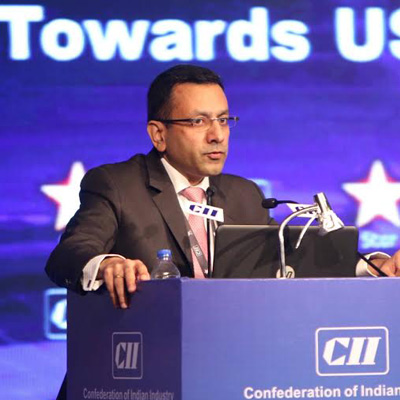
    Speaking at a CII conclave in New Delhi today, Star India COO Sanjay Gupta lamented this fact that saying that from 0.8 per cent of GDP three years ago, the industry had resolved to grow to 1.5 per cent within a decade. However, in the past three years, media as a percentage of GDP has instead fallen by two basis points and the $100 billion dream has continued to remain distant.

    “The biggest hurdle has been the choking of investment. To meet ambitious targets, a business either needs to generate large profits internally, which are then invested back into the business or they grow on the back of external investments – national or international. But the M&E industry boasts of neither,” he said

    CII National Committee on Media and Entertainment and Group CEO, Viacom 18 Group CEO and CII National Committee on Media and Entertainment chairman Sudhanshu Vats, Prasar Bharati CEO Jawahar Sircar, Information and Broadcasting Ministry special secretary JS Mathur and Minister of State for Information and Broadcasting Rajyavardhan Singh Rathore were among those present at the summit.

    During the past 15 years, the M&E sector has barely seen any new entrants and only around $4 billion in foreign direct investment (FDI). To garner $100 billion, the industry needs to invest at least $50 billion over the next decade – something that seems farfetched, given the present circumstances. “With M&E remaining an unattractive destination for investments, investors have no interest to invest in a fragmented and unprofitable business. Despite the 12 per cent year-on-year growth touted for the industry, the sector is paradoxically riddled with a host of unprofitable verticals. For example, sports is a $2 billion industry that could easily grow to around $10 in the next five years. Be it Hockey, Football, Kabaddi or Badminton, the new sporting leagues are being lapped up by the audiences,” Gupta said.

    Yet, the M&E industry has been unable to take off on the back of these investments. “Although Star India has been investing almost Rs 200 crore every season for the past two years, dividends are not commensurate. For this to happen, one needs to scale up the volume of content. In other words, more teams, more players and more days of Kabaddi are required annually to capitalize on this opportunity,” Gupta added.

    “A bizarre challenge confronts us here, however. Although Punjab and Haryana contribute large numbers of Kabaddi players, one cannot add more teams based in either of these two states because they do not have a single indoor stadium that could host a Kabaddi match. In Mumbai, the game is hosted at the NSCI Dome, but the biggest constraint is the availability of this facility for a reasonably long period of time. One venue for a city with more than 1,000 Kabaddi clubs simply does not make sense. In this case, consumer interest and the ability to invest are no hurdles, but the fact that the sporting infrastructure required is simply non-existent. Worse, there are no plans to address this situation,” Gupta continued.

    The movie business is no different. With around 7,000 screens, India has one of the world’s lowest screen densities. Despite breakthrough movies such as Queen, PK or Bajrangi Bhaijaan, revenues are stagnant, although the cost of producing these movies has soared dramatically in the past decade. Therefore, a $2 billion industry that sets a billion hearts racing earns zero profits.

    Even news channels fare no better. Without a robust business model, news channel have no money to invest in their business. Whether English or regional, number one channel or last, none of the channels make any money because none earn any money from subscription. Globally, subscription contributes as much as 60-70 per cent of the total earnings of a news channel.

    Television distribution is roughly a third of the total value of the media industry. In the past few years, immense investments have been made in both direct to home (DTH) and the cable business. But the tragedy of this sector is that even after many years of continued investment not a single company or business makes any money. Since the sector is considered a basic need from a consumer viewpoint, the prices at which content is sold by creators to platforms is regulated – prices frozen in 2003 haven’t changed in the past 12 years. In the same 12-year period, even the price of milk has jumped from Rs 12-15 a litre to Rs 35-40 a litre. 

    “Such anomalies are making the sector bleed. But no one seems to care,” Gupta lamented. “In Delhi, for example, the new government has doubled entertainment tax. Consequently, almost 30 per cent of revenue is paid as entertainment tax. The lack of political alignment and consistency of policy in the sector makes it impossible to plan a sustainable business model.”

    In 2015, where millions across the country receive their daily dose of news from Facebook feed, radio broadcasters can only air news snippets from All India Radio (AIR). “In the US, radio has gone hyper local and people spend an hour daily listening to radio. This gives a fillip to local brands since a quick and cheap platform is available to build their business. In India, conversely, there are a limited number of radio stations and limited content that can be aired – and without any news. It is no surprise then that even in large cities where FM exists, the time spent on radio per person is five minutes. Can any industry on Earth make money in such circumstances?” he asked.

    Gupta concluded by asserting, “Unless we unblock minds, we cannot unblock capital.”

    Accordingly, there is an urgent need to make distribution profitable, position animation as the next wave of export-oriented growth, support a serious scale-up of exhibition screens and sports stadiums and allow content innovation in radio. A hugely attractive pitch for domestic and international investors is required, giving them clarity on the policy environment for the next 10 years and confidence of generating sizeable returns on the investments.

    All stakeholders, businesses, policymakers and regulators need to stop being happy with the status quo and incrementalism. In the new era backed by technology, every sector from automobiles to financial institutions and even grocery shopping have witnessed dramatic growth and serious disruptions on the back of serious flow of capital.

    “M&E too needs to see brave new entrepreneurs, disruptive ideas and unconventional business models but this will only happen if we unblock the capital,” stressed Gupta.
  • TDSAT directs Star India not to disconnect Bangalore MSO’s signals if dues received

    TDSAT directs Star India not to disconnect Bangalore MSO’s signals if dues received

    NEW DELHI: Star India has been asked not to disconnect signals to Bangalore multi system operator (MSO) Digi Hanamkonda Network India Ltd if the latter pays a provisional payment of Rs 10.5 lakh within a week as directed by the Telecom Disputes Settlement and Arbitration Tribunal (TDSAY).


    TDSAT chairman Aftab Alam and members Kuldip Singh and B B Srivastava “made clear that the payment is purely provisional and on account and the rights and liabilities of the parties  will abide by the final adjudication of the petition.”


    The Tribunal also noted that the previous agreement between the parties had expired more than three months ago. 


    The MSO was accordingly directed to visit Star India’s Bangalore office in order to execute the renewal of agreement without any further delay, and the matter was put up for hearing by the Tribunal on 30 October.


    By an order passed on 10 July, the Tribunal had directed the MSO to pay to Star India Rs 4.7 lakh, which was due admitted by the petitioner itself. Subject to that payment, it was understood that the respondent shall not discontinue the supply of its signals.


    During the time the matter has remained pending before the Tribunal, the respondent’s dues against the petitioner have once again accumulated.


    According to Star India counsel Saurabh Srivastava, the petitioner is liable to pay to Star a sum of Rs 16.03 lakh as dues upto 31 August.


    Diggaj Pathak, counsel appearing for the MSO disputes the amount claimed by the respondent as due. 


    The last interconnect agreement between the parties was executed on 31 January. This agreement is for non-DAS areas and the agreement states the number of subscribers for each of its channels and the specific amounts payable by it for those channels.


    Pathak however contended that the figures of monthly licence fees mentioned in the agreement were arrived at by factoring in 15 per cent increase in the rates as allowed by the tariff order issued by TRAI, which was set aside by the Tribunal by its judgment and order dated 28 April. 


    The petitioner is therefore making payment of the monthly licence fee after taking off 15 per cent from the amounts mentioned in the agreement and according to Pathak, the amount of Rs 16.03 lakh as claimed by Star is the differential amount of 15 per cent.


    Pathak also stated that an earlier payment of Rs 3.74 lakh, made by the petitioner was wrongly credited in the account of another entity called Shri Bhadrakali Communications and that amount too should be deducted from the amount of Rs 16.03 lakh as claimed by Star.


    The Tribunal felt that the MSO’s claim of deducting of Rs 3.94 lakh from its dues “is rather debatable and we are not fully convinced that the petitioner is entitled to that deduction. Further, we are not satisfied that the amount claimed by Star is not based on the agreement and that it is not payable by the petitioner being the differential amount,” it said.

  • Star Plus’ ‘AKRHZ’ aims to infuse optimism in life with Amitabh Bachchan

    Star Plus’ ‘AKRHZ’ aims to infuse optimism in life with Amitabh Bachchan

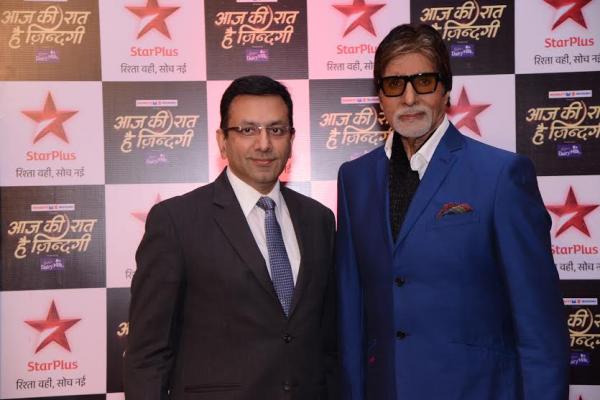
    MUMBAI: Star Plus’ upcoming show Aaj Ki Raat Hai Zindagi is soon going to beam across television screens. The show will showcase Indian superstar Amitabh Bachchan in a pivotal role as he embarks upon a journey to celebrate life and aims to infuse optimism in people.


    As was previously reported by Indiantelevision.com, the show will go on air from 18 October and will be aired on Sundays at 8 pm.


    Aaj Ki Raat Hai Zindagi aims to inspire people to change their outlook, and cherish the good that life has to offer, apart from entertaining them of course.


    Star India COO Sanjay Gupta said, “Entertainment when done with a sense of purpose can be a very powerful tool, one that can break the cynicism and bring about happiness. As a network, we have always strived to inspire a billion imaginations while working towards giving our audience something new and exciting. And with Aaj Ki Raat Hai Zindagi, we are happy to collaborate again with Amitabh Bachchan on a project, which is so special. Off late, an overexposure of negative news has impacted our perspective towards life, so the show is an attempt to bring back a sense of optimism.”


    Sharing his views about the show, Bachchan said, ”The show is all about a celebration of life and people who have made a difference. I am working with Star after a gap of 15 years and wanted a project that befitted the legacy. Aaj Ki Raat Hai Zindagi is One such endeavour that will make you smile, dance, clap and go ‘HuuHaa’ with joy. Life Is all about living, loving and celebrating moments with pepole who put a smile on your face and it is celebration that matters most.”


    The channel has roped in Maruti Suzuki as the presenting sponsor and Cadbury Dairy Milk as the powered by sponsor.


    Maruti Suzuki India marketing and sales executive director R S Kalsi said, “We at Maruti Suzuki always believe in making a difference to every Indian and our inspiration comes from one place – India’s hopes, dreams and aspirations. It’s a privilege to be associated with a show that shares the same belief. Our vision is to be the ‘Pride of India’ and Aaj Ki Raat Hai Zindagi celebrates the pride of the ordinary people who have contributed and made a difference to the society in some form or the other.”


    “Cadbury Dairy Milk has always stood for triggering joy through unlocking relationships and this program is all about people who go beyond to bring joy to the lives of others. CDM stands for generosity, optimism and authenticity and we felt that the stories of AKRHZ mirror those very values- hence it seemed like a great,” added Mondelez India director Prashant Peres.


    The show is based on the Tonight’s The Night format, which is owned and produced by BBC Worldwide.


    The extensive marketing campaign by Star Plus before the launch of the show, has led to immense curiosity and discussions all over. The first teaser of the campaign received over one million views on Facebook in less than 20 hours, creating a new benchmark for TV shows.  The creative campaign has been conceived by O&M and produced by Bubble Wrap Films.


    The punch line of the teasers, ‘Huuhaa’ got the nation talking about the show with #HuuHaa trending on social media. The entire campaign on social media has received over 400 million potential impressions till date creating a lot of positive buzz. This will be followed by a marketing blitz on television, radio, digital and outdoor.


    HuuHaa to that!

  • Star India rakes in over Rs 100 crore from ISL Season 2 sponsorships

    Star India rakes in over Rs 100 crore from ISL Season 2 sponsorships

    MUMBAI: When the Indian Super League (ISL) launched last year with the ‘Let’s Football’ tag line, it created a significant buzz across the country. With many a ‘firsts’ like having Nicolas Anelka dribbling on Indian ground and Indian spectators getting an opportunity to witness living legends like Luis Garcia, Del Piero and Robert Pires playing in front of their eyes, 410 million people in India echoed ‘Let’s Football’ with Neeta Ambani and Star India CEO Uday Shankar.


    That said, the big looming question was: Was football a revenue generating asset for broadcasters? There is virtually no time for a single advertisement in either of the two 45 minutes halves, and in an era where constant partial attention is at its peak, for viewers to stick to same channel during half time break seemed to be an unrealistic proposition.


    Nonetheless, as the saying goes, “Where there is a will there is a way!” The second season of ISL, which kicked-off on 3 October on Star Sports, has already brought the broadcaster in excess of Rs 100 crore in revenue from multiple brand sponsorships.


    While before the season began, it was speculated that Star Sports head Nitin Kukreja and his team raked in close to Rs 97 crore excluding revenues from digital broadcast from ISL season 2, the figure has now crossed the Rs 100 crore mark.


    A source close to the development tells Indiantelevision.com, “The last minute inclusion of Servo as a sponsor has made the Rs 100 crore landmark look possible. The way Star has sold the inventory is an example for the industry. There were so many new avenues that opened up. If we include digital revenues, Star has easily crossed the Rs 100 crore mark.”


    Hero Motocorp, as the title sponsor, pays close to Rs 20 crore per year to Star. Apart from that, the channel has Maruti Suzuki, DHL, Pond’s Men, Gatorade, Flipkart, Servo, U Quit I Quit, Hewlett Packard, Puma, Volini, The Muthoot Group, Amul, Manyavar and Imperial Blue as advertisers in its kitty.


    DHL, the official partners of Manchester United and Bayern Munchen, has also joined hands with Star India to be the logistics and time partner. As a part of the partnership, DHL gets presence on the screen that shows time on ground.


    Speaking to Indiantelevision.com, DHL India country manager and senior vice president R S Subramaniam says, “Last year’s performance and prominence of the league was the main reason behind us joining the league. It is a one year deal that we have signed and we may renew it in the future too.”


    Mumbai City FC CEO and CAA Kwan COO Indranil Das Blah adds, “The league has kicked off to a flyer. Once the TV numbers are out, we will have a better understanding of the scenario. Overall, the on-ground interaction has gone up and so has the sponsor’s interest.”


    Mumbai City FC also witnessed a 20 per cent growth in terms of revenue generation as per sources.


    “Sports no longer is a sport on screen now. It’s all about packaging and Star, first with Pro Kabaddi League and now with ISL, has proved that smart packaging can make every sport lucrative. Revenue generation was never a concern this season. The concern was with expectations. Last year, ISL was a surprise. Now there is a burden of expectation and if the tourney fails to meet expectations, it would be considered as a flying bubble,” a senior media planner says on condition of anonymity.


    While it remains to be seen if the tournament will help India in becoming a footballing nation but the revenue created from the sport certainly creates new benchmarks. No doubt proper packaging and smart monetisation can make every sport lucrative.

  • Zee Group’s HD channels lead pack in ratings

    Zee Group’s HD channels lead pack in ratings

    MUMBAI: The Zee Group’s high definition (HD) channels led the chart in HD groups and secured leadership position with 59.11 TVTs as per the Broadcast Audience Research Council (BARC) India data of week 36-38.

    The group’s HD channels include Ten HD, Zee Café HD, Zee Cinema HD, Zee Studio HD, Zee TV HD and &TV HD. 

    On the other hand, IndiaCast, which has in its bouquet the Colors HD and Colors Infinity HD channels grabbed second position with 58.65 TVTs. 

    Star India was at third place in the HD segment pecking order with 58.22 TVTs. 

    Multi Screen Media, which owns Sony Entertainment HD, Sony Six HD and Sony Pix HD, bagged 20.83 TVTs to stand in the fourth position.

    Sun TV held the fifth spot with 6.67 TVTs, whereas with 5.72 TVTs Travel XP HD was in sixth position. 


    Data Set: BARC (Wk 36-38), CS4+, All-India

    Click Here to read the full report.

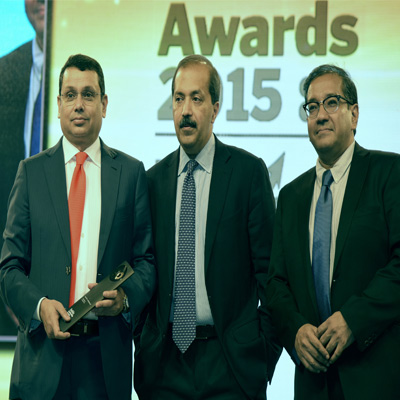
  • Uday Shankar named Best CEO at Forbes India Leadership Award 2015

    Uday Shankar named Best CEO at Forbes India Leadership Award 2015

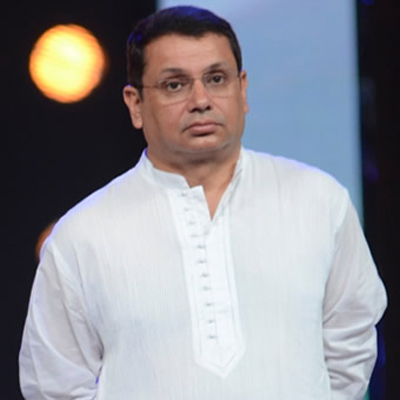
    MUMBAI: Leading one of India’s biggest broadcast company from the front – Star India CEO Uday Shankar – has time and again challenged the status quo and taken multiple risks, which have in turn reaped multiple rewards.


    One of the most powerful man in the Indian media and entertainment industry, Shankar has been named as the Best CEO of a Multi-National Company (MNC) at the Forbes India Leadership Awards (FILA) 2015, which were held at the Grand Hyatt, Mumbai.


    The award marks a break from convention at FILA, with Shankar becoming the first MNC head of a media and entertainment company to receive the honour.


    Shankar was selected from amongst a shortlist of nominees that included leaders from top-notch companies like Hindustan Unilever, Samsung, ABB India and Maruti Suzuki India Ltd.


    The jury for the Forbes India Leadership Award 2015 comprised the likes Marico India chairman Harish Mariwala, HSBC India chairman Naina Lal Kidwai, McKinsey India managing director Noshir Kaka and Kohlberg Kravis Roberts & Co India country head Sanjay Nayar.


    Accepting the award, Shankar said, “I feel enormously humbled to be receiving this honour on behalf of Star India. We are a multinational company albeit with an Indian heart. Our endeavour has been to harness the transformational power of media to foster social change and thereby inspire a billion imaginations.’”


    “I would not be here receiving this award, if I was not a journalist – that introduced me to the value of being socially relevant and to see the nuances that the untrained eye could easily miss. It also showed me that the value in life comes from doing big things – the headlines. And finally, it taught me to do the right thing, not be intimidated by competition because everybody makes as many mistakes,” he added.


    From shaping the content and marketing strategy for Star India’s multiple channels across genres, charting out the company’s digital strategy with Hotstar, heading the Indian Broadcasting Federation (IBF) – the apex organisation representing television broadcasters, to being a part of power-packed policy meetings with Prime Minister Narendra Modi and 21st Century Fox CEO James Murdoch, Shankar juggles multiple responsibilities with élan. In fact, he was the only Indian CEO to be present at PM Modi’s roundtable meeting on media, technology and communications in the US recently alongside News Corp and 21st Century Fox executive chairman Rupert Murdoch and a host of other CEOs from various American organisations.


    Shankar took on as CEO of Star India in 2006 and will be completing a decade in the role next year.

  • Uday Shankar re-elected as IBF president

    Uday Shankar re-elected as IBF president

    MUMBAI: Star India CEO Uday Shankar has been re-elected as the president of The Indian Broadcasting Foundation (IBF) at the Sixteenth Annual General Meeting (AGM) for the second term running.

    The AGM was held in New Delhi today (29 September, 2015).

    The IBF Board also re-elected Zee Media Corp managing director Punit Goenka, Multi Screen Media CEO N P Singh and India TV chairman Rajat Sharma as IBF vice presidents, and Discovery Networks Asia-Pacific executive vice president and general manager, South Asia Rahul Johri as IBF treasurer.

    On being re-elected IBF president, Shankar said, “I am humbled by IBF members’ confidence in re-electing me. The broadcasting sector is going through a transition due to changes in technology and business environment and I hope to work with the government, industry and other stakeholders for realisation of the sector’s potential.”

  • TDSAT asks Star to show cause on Rudhrapur Cable Network’s contempt proceeding

    TDSAT asks Star to show cause on Rudhrapur Cable Network’s contempt proceeding

    NEW DELHI: Notice has been issued to Star India to show cause why contempt proceedings should not be initiated against it for not complying with the Telecom Disputes Settlement and Arbitration Tribunal (TDSAT) order of 18 August relating to Rudhrapur Cable Network.


    Star India was asked to respond within a week with TDSAT listing the matter for 7 October. 


    The Cable Network had come to the Tribunal seeking a direction to Star India for supply of its signals to the petitioner for retransmission in the areas of Rudrapur, Gadarpur, Kichha and rural areas.


    The Tribunal after arguments had directed that the parties should enter into an interconnect agreement without any delay applicable till 31 December, 2015. The areas under the interconnect agreement would be exactly same as the areas of the STN Television Network in Rudrapur, the Tribunal had said and added that following the execution of the agreement, the decoder boxes will be issued simultaneously to the petitioner for all the channels. 


    It had been argued by Star at that time that areas under question are in the third phase of DAS notification, hence as currently these areas are in the analogue mode and they are due to come under the DAS regime after 31 December, 2015. Star also declined to give signals to the petitioner on ground that STN has objected to any supply of signals to the petitioner on the ground that it owed large sum of money to STN.