Tag: Star India

  • Siticable & Fastway resolve dispute; yet to sign interconnect agreement

    Siticable & Fastway resolve dispute; yet to sign interconnect agreement

    NEW DELHI: The Telecom Disputes Settlement and Appellate Tribunal (TDSAT) has asked Siticable Services Pvt Ltd not to re-transmit the signals of any broadcasters in the area of Panchkula unless a proper interconnect agreement with Fastway Transmission comes into existence.


    Earlier, TDSAT chairtman Justice Aftab Alam and members Kuldip Singh and B B Srivastava were told that both sides had arrived at an agreement.


    TDSAT disposed of the petition after it was told that all that remained was the formal execution of the interconnect agreement.


    The petition had been filed by Fastway against Siticable and Star India.

  • TDSAT asks Star India to audit Rudrapur Cable systems to enable ICA

    TDSAT asks Star India to audit Rudrapur Cable systems to enable ICA

    NEW DELHI: Star India has been directed by the Telecom Disputes Settlement and Appellate Tribunal (TDSAT) to audit the systems of Rudrapur Cable TV Network to enable an interconnect agreement (ICA).


    TDSAT chairman Justice Aftab Alam and members Kuldip Singh and B B Srivastava listed the matter for further hearing on 29 January by which time they said the audit must be over.


    Earlier, Rudrapur Counsel Vineet Bhagat, on the basis of instructions received by him, said his client wanted to execute an interconnect agreement with Star India on its RIO terms.


    However, Star India told the Tribunal that it wanted the system audited before entering into an agreement on that basis.


  • TDSAT asks Star India to audit Rudrapur Cable systems to enable ICA

    TDSAT asks Star India to audit Rudrapur Cable systems to enable ICA

    NEW DELHI: Star India has been directed by the Telecom Disputes Settlement and Appellate Tribunal (TDSAT) to audit the systems of Rudrapur Cable TV Network to enable an interconnect agreement (ICA).


    TDSAT chairman Justice Aftab Alam and members Kuldip Singh and B B Srivastava listed the matter for further hearing on 29 January by which time they said the audit must be over.


    Earlier, Rudrapur Counsel Vineet Bhagat, on the basis of instructions received by him, said his client wanted to execute an interconnect agreement with Star India on its RIO terms.


    However, Star India told the Tribunal that it wanted the system audited before entering into an agreement on that basis.


  • Delhi High Court declines to interfere on TDSAT’s HITS order; Star may move SC

    Delhi High Court declines to interfere on TDSAT’s HITS order; Star may move SC

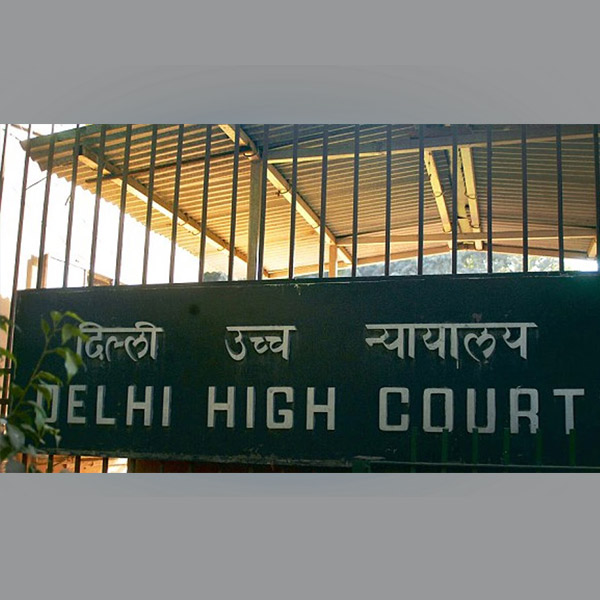
    NEW DELHI: The Delhi High Court today said that it did not feel the need to examine whether the Telecom Disputes Settlement and Appellate Tribunal (TDSAT) had the jurisdiction to direct broadcasters to treat the headend-in-the-sky (HITS) operator Noida Software Technology Park Ltd (NSTPL) at the same level as pan-India multi-system operators (MSOs).


    Justice Rajiv Sahai Endlaw said that there was a statutory provision for parties aggrieved by orders of TDSAT to go to the Supreme Court.


    The judge had on 7 January reserved its orders on the petition by Star India arising out of the Tribunal’s judgment of 7 December.


    The Court also agreed that all questions were open for being taken up by the Supreme Court if it is approached by the broadcaster.


    Star India had filed the petition on the ground that TDSAT exceeded its jurisdiction as it did not have the authority to ‘re-write the regulation.’


    A Star India spokesperson told Indiantelevision.com late in the evening that the broadcaster was examining future course of action. It is understood that this includes the opening of an appeal before the apex court.


    The High Court on 7 January had also said that a directive by TDSAT of 18 December asking Star India and other broadcasters to produce the kind of agreements it had with Hathway, Den and Siti Cable and listing the matter for 12 January, would stand suspended until the outcome of the High Court case.


    The Court heard arguments presented by Star India and NSTPL, whose petition had been accepted on 7 December by the Tribunal, which had asked Star India and Taj TV to execute fresh agreements with NSTPL. However, TDSAT had kept the operation of the judgment pending till 31 March this year.


    It had said that on past occasions as well similar suggestions were made with the hope of nudging the TRAI to take proactive steps to reduce the scope of disputes arising out of the regulations. “At the same time, the fact that regulatory intervention may be the ideal way forward cannot and should not be an excuse for this Tribunal to shirk the interpretative issues that have come before us. This is particularly so when there appears to be regulatory inertia,” TDSAT had said.


    The Tribunal had, on 18 December, impleaded Zee Turner and others in another petition by Star India against NSTPL and asked the broadcasters to produce the agreements between the broadcasters and major MSOs. It opined that some agreements have to be suspended by Star and Taj TV.

  • Delhi High Court declines to interfere on TDSAT’s HITS order; Star may move SC

    Delhi High Court declines to interfere on TDSAT’s HITS order; Star may move SC

    NEW DELHI: The Delhi High Court today said that it did not feel the need to examine whether the Telecom Disputes Settlement and Appellate Tribunal (TDSAT) had the jurisdiction to direct broadcasters to treat the headend-in-the-sky (HITS) operator Noida Software Technology Park Ltd (NSTPL) at the same level as pan-India multi-system operators (MSOs).


    Justice Rajiv Sahai Endlaw said that there was a statutory provision for parties aggrieved by orders of TDSAT to go to the Supreme Court.


    The judge had on 7 January reserved its orders on the petition by Star India arising out of the Tribunal’s judgment of 7 December.


    The Court also agreed that all questions were open for being taken up by the Supreme Court if it is approached by the broadcaster.


    Star India had filed the petition on the ground that TDSAT exceeded its jurisdiction as it did not have the authority to ‘re-write the regulation.’


    A Star India spokesperson told Indiantelevision.com late in the evening that the broadcaster was examining future course of action. It is understood that this includes the opening of an appeal before the apex court.


    The High Court on 7 January had also said that a directive by TDSAT of 18 December asking Star India and other broadcasters to produce the kind of agreements it had with Hathway, Den and Siti Cable and listing the matter for 12 January, would stand suspended until the outcome of the High Court case.


    The Court heard arguments presented by Star India and NSTPL, whose petition had been accepted on 7 December by the Tribunal, which had asked Star India and Taj TV to execute fresh agreements with NSTPL. However, TDSAT had kept the operation of the judgment pending till 31 March this year.


    It had said that on past occasions as well similar suggestions were made with the hope of nudging the TRAI to take proactive steps to reduce the scope of disputes arising out of the regulations. “At the same time, the fact that regulatory intervention may be the ideal way forward cannot and should not be an excuse for this Tribunal to shirk the interpretative issues that have come before us. This is particularly so when there appears to be regulatory inertia,” TDSAT had said.


    The Tribunal had, on 18 December, impleaded Zee Turner and others in another petition by Star India against NSTPL and asked the broadcasters to produce the agreements between the broadcasters and major MSOs. It opined that some agreements have to be suspended by Star and Taj TV.

  • Krishnan Kutty to take charge of Star’s English cluster by Jan-end

    Krishnan Kutty to take charge of Star’s English cluster by Jan-end

    MUMBAI: Star India distribution head Krishnan Kutty is all set to take charge of the network’s English channel cluster by the end of January.


    The development comes in the light of the fact that Star India business head – English cluster, Star Jalsha, Jalsha Movies, Channel V & Hindi GECs Kevin Vaz will no longer will be handling the English cluster. He will, however, continue to handle the other portfolios under him.


    A source close to the development informed Indiantelevision.com, “While Vaz will continue to head Star’s Bangla cluster, Hindi general entertainment channels, and Channel V, Kutty will oversee the English entertainment channels. He will take charge of the English cluster by the end of January 2016.”


    The channels that he will take charge of are Star World, Star World HD, Star World Premiere HD, FX, FX HD, Star Movies, Star Movies HD, Star Movies Action and Star Movies Select HD.


    Kutty joined the company as VP – research & on-air in 2005 and was then promoted to EVP of distribution in January 2009. He was made the head of distribution in April 2015.


    Prior to his stint with Star India, he has also worked with companies like GroupM, Vodafone and NDTV.

  • Channel V vice president – programming Lavanya Anand resigns

    Channel V vice president – programming Lavanya Anand resigns

    MUMBAI: Channel V vice president – programming Lavanya Anand has put in her papers at the company.


    Anand served as the content head of Star India’s music channel Channel V from December 2012. In this role, her primary responsibility was to create and manage content on the channel – both fiction and non-fiction – across genres. She was also involved in the strategic running of the channel.


    With more than 15 years of experience in the Indian broadcast entertainment industry, Anand has been a part of over 75 shows in different media companies like UTV, Yash Raj Films and Zee Entertainment amongst others with a particular focus on content creation.


    Sources confirmed to Indiantelevision.com that the new hire for the designation is currently under process by the channel.

  • TDSAT asks Canara Star MD to attend Star India dispute hearing

    TDSAT asks Canara Star MD to attend Star India dispute hearing

    NEW DELHI: The Telecom Disputes Settlement and Appellate Tribunal (TDSAT) has directed Canara Star, Bangalore’s managing director to be present in the next hearing on 28 January to answer queries relating to its ongoing dispute with Star India.


    In the last hearing, which was held in the third week of December 2015, the Tribunal had asked Canara Star to intimate Star India whether it admits the SMS reports submitted by the broadcaster for the period 2014 to January 2015.


    The common order by the Tribunal on three petitions including one by Star India against Canara Star claiming recovery dues of about Rs 3 crore pertaining to the MSO’s operations in Digital Addressable Area (DAS) of Bangalore said this was subject to the two parties failing to arrive at a final settlement.


    The directive by TDSAT chairman Justice Aftab Alam and members Kuldip Singh and B B Srivastava came after being informed by Canara Star counsel Tushar Singh that the parties had failed to resolve dispute.


    However, Star India counsels Kunal Tandon and Arjun Natarajan told the Tribunal that no attempts had been made by Canara Star to resolve the dispute.


    Justice Alam said that TDSAT would be forced to issue warrants if the MD of Canara Star is not present on the next date.


    In the last hearing, the Tribunal had also asked Canara to produce its bank statements and materials to show payments made by it towards invoices raised by Star India based on Canara’s SMS reports.


    Canara, which has allegedly sold off its business to another MSO – All Digital, will produce its deed of transfer of establishment to All Digital, which was made a party in the petition filed by Star India.


    The other two petitions are by Canara Star challenging disconnection notices issues by Star India for analogue areas of Kumta and Bhatkal.


    Star India counsels Tandon and Natarajan had produced the SMS reports on the basis of which it had billed Canara Star.


    Star India argued that Canara cannot withhold payments to it for invoices, which were raised by the broadcaster on the basis of Canara Star’s SMS reports.


    All the three matters had been before the mediator from early August till mid November but no settlement could be arrived at.

  • Colors remains No. 1 in BARC week 1

    Colors remains No. 1 in BARC week 1

    MUMBAI: Colors continued to lead the Hindi general entertainment channel (GEC) pack  with a rise in ratings and secured the leadership position in the first week of 2016 according to Broadcast Audience Research Data (BARC) India ratings.


    On the other hand, free to air channel (FTA) Zee Anmol and Star India’s Hindi GEC Star Plus were the only channels, which failed to garner positive ratings in week 1.


    Colors claimed the pole position with 756549 (‘000s) against 744923 (‘000s) in week 52.


    Zee Anmol witnessed a fall in ratings and grabbed second position with 719713 (‘000s) against 742876 (‘000s) in the previous week followed by Star Plus, which stood at number three with 699211 (‘000s) against 712114 (‘000s).


    Zee TV maintained its claim on the fourth spot with 681259 (‘000s) followed by Star India’s FTA channel Star Ustav in the fifth slot with 462298 (‘000s) and Life OK at number six with 421720 (‘000s).


    Rishtey stood at number seven in week 1 with 390305 (‘000s), while Sony Pal climbed up at number eight with 352393 (‘000s). Sab TV was down to number nine with 334235 (‘000s).


    Sony Entertainment Television maintained its presence in the top 10 Hindi GECs at the tenth position with 328025 (‘000s).

  • Star opposes differential data pricing on websites;draws analogy with MSOs & channel placement

    Star opposes differential data pricing on websites;draws analogy with MSOs & channel placement

    NEW DELHI: Opposing differential pricing for data usage for accessing different websites, applications or platforms, Star India has said this violates the core principles of differential pricing, as well as alters and distorts the role of telecom service providers to acting as an interested party instead of just providing telecom services.


    Responding to the Telecom Regulatory Authority India’s (TRAI) Consultation Paper on Differential Pricing for Data Services, Star India said it will open the door to unholy alliances between TSPs and content providers to play the role of gatekeepers for both consumers as well as other content providers. 


    “If differential pricing is permitted, then all the principles of non-discrimination, transparency, affordable access, healthy competition and innovation are likely to be severely violated. In fact, it will represent a big reversal in achieving the vision of Digital India,” Star India said.


    However, the broadcaster said that it had a fundamental concern that has been at the heart of the creative industry in all ongoing discussions and deliberations on “Net Neutrality.” Star India said it must be noted that the owners of copyrightable works are granted the exclusive right to exploit or authorise the exploitation of their works in accordance with market practices. It must further be noted that even under the Act exclusive licensing arrangements are not treated as being presumptively anti-­competitive in nature. This would therefore mean that exclusive licensing would be subject to a case to case examination for an appreciable adverse effect on competition. Consequently, this would mean that instead of being subject to broad brush and overarching regulation or rules, which impose restrictions or are in conflict and in effect unwind or defeat the statutory rights granted to the owners of copyrighted works under copyright law, the legislature has determined that such  conduct would be subject to a case to  case examination. 


    “Clearly there is no justifiable and cogent reason to change this policy at this time. Whilst the principles of net neutrality are of utmost importance to ensure a transparent world wide web, it is pertinent that market forces should determine the relationship of TSPs, content providers and other parties active in the digital environment to foster innovation, creativity and the development of a hyper competitive yet nascent content industry. In a nascent industry still coming to grips with business models, pricing strategies, consumption patterns, it is imperative for the TRAI and the Department of Telecom to understand that the economics of industries dependent on Intellectual Property rights for value creation are very different from economics of TSPs/ ISPs and other distribution pipes and thus superimposing a Network centric regulatory construct on content creators would be akin to putting a square peg in a round hole. In effect the net neutrality principle has never been applicable to or determined how content is licensed but   rather to the behaviour of distribution pipes and network service providers. We will therefore urge both TRAI and DOT to shape and delineate the debate and discourse on Net Neutrality accordingly,” the broadcaster said.


    The arguments against differential pricing are clear and substantive, Star India said. Firstly, allowing differential pricing violates the core principles of tariffing: that they are non-discriminatory in nature and that they are not anti-competitive.


    Star India added that allowing the TSP to charge differently for different uses of data (or different “termination points” of data) “essentially creates a tariff regime where the TSP creates different classes of subscribers based on the kind of content they want to access.” In addition, by allowing the TSP to determine different prices for different websites, applications and platforms, the regime allows TSPs to fundamentally alter the nature of competition between these websites, applications and platforms in a manner not linked to the quality of the services they deliver to consumers, and the business models of their choosing.


    Secondly, giving TSPs the power to do differential pricing “fundamentally alters and distorts the role of TSPs from that of providing a telecom service (provision of data), for which it has been licensed and  for which it uses public resources like spectrum, to that acting as an interested   party intermediating between consumers and the websites, applications and  platforms that these consumers choose to use. Not only is this counter to the license under which TSPs provide services but it also introduces the damaging potential of TSPs being incentivised to extract unfair value from its presence as an intermediary with the power to dramatically change the nature of the relationship between users and service providers. Focus on playing this intermediary role is also likely to distract the TSP from its primary role of providing better and cheaper access to telecom services (including data) for a larger and larger number of users in India.


    Thirdly, differential pricing from TSPs will open the door to unholy alliances between TSPs and content providers to play the role of gatekeepers for both consumers as well as other content providers. Differential pricing will enable large incumbents to create a framework with TSPs that allow them, covertly or overtly, to create different versions of the Internet: an Internet that they package and control, available at a lower price and including only the content and service providers that have chosen to play by the rules established by the large incumbents, and a less privileged Internet: expensive, more difficult to discover, and occupied by the smaller players who do not have the financial ability and muscle to take on powerful incumbents. The most likely scenario is that bigger websites and app platforms will be able to strike deals with TSPs while the smaller players will be left in the cold. The premium that shall be paid by the larger players to the TSPs would provide the necessary incentives for TSPs to differentially price data whereby the bigger players will have better traction with users owing to the resultant subsidy that shall be factored in the data costs.


    Star India said, “We have already seen the harmful effects of such arrangements between carriage and content playing out in the cable and satellite space. MSOs instead of consumers have been prioritising the content to be carried in their cable platforms. The basis of such prioritisation on the part of the MSOs is the Carriage and Placement fees being paid by content owners. This anti-competitive behavior by MSOs have led to small content providers being hit the most as carriage and placement fees act as entry barriers for new content providers. Given that the MSOs own the last mile, they are in a position to abuse their dominance by squeezing as much carriage and placement fees possible from content providers. Instead of consumer choice shaping retail packaging by MSOs, it is carriage and placement fees that prompt MSOs to deliberately prioritise, package and push unwanted channels to the detriment of the consumer. The consumer ends up paying for content that he has no desire to subscribe for, in the first place.”


    In addition, it is almost guaranteed that TSPs will differentially price data to promote their own in-house applications, websites and platforms to the detriment of better, cheaper applications, websites and platforms from competing providers.


    “Nothing will stifle innovation more decisively than enabling such a scenario to emerge,” Star said.


    As the consultation paper suggests, just like in the early days of the voice regime, the same principles should apply to “on-net” as well. Given the data usage and ecosystem is still very early, it is imperative that the non-discrimination applies equally to on-net and off-net.


    Star India added, “It also violates the basic tenet of Internet access: that the flow of information is free (subject to the laws of the country) and no private player can determine what information can be accessed and what is less easily available. In fact, it is pretty obvious, as is evident in the mass disinformation campaign around the idea of a “free Internet” in the last few weeks, that such a framework is but a naked offer to large, for-profit, self-interested incumbents to present themselves as arbitrators of what  is “essential” and “basic.” We have seen the power of a single social media company to present an entirely new definition of the Internet with a level of marketing spend and lobbying that is unprecedented in the country. The effort seems to be to hoodwink the regulator into allowing a practice that is clearly discriminatory in nature. History teaches us that no government or regulator should ever allow the definition of public good to be set, managed and controlled by interested private parties.”


    “Fourthly, we already have a system in which net neutrality is under attack in many ways; where consumer choice is stifled and incumbents set the rules of the game. Therefore, allowing TSPs to do differential pricing will sound the death knell on the idea of a free and neutral Internet,” the broadcaster voiced. 


    The same exploitation of dominance extends to search as well. A dominant search provider is the gateway to the Internet in India with search neutrality not even up for discussion.


    Lastly, even with moderate expansion in access to data, India has seen an explosion in websites, applications and platforms that have had a dramatically positive impact on the country’s GDP growth and in generating employment. Creating a new regime that has the potential of introducing artificial distortions at a critical stage may have a devastating impact on the number and diversity of applications and services, and therefore on GDP growth and employment.


    Star India said its strong stand on net neutrality and differential pricing from TSPs is not meant to stifle companies from doing what is right for their consumers and what is right to grow their private enterprises. “We strongly believe that websites, applications, and platforms non-financial in nature, based on their own economic models and principles. But these transactions should be firmly between the consumer and the website/application/platform. Such incentives are a regular order of business in the offline world as well and limiting the ability to provide such incentives will have a devastating impact on innovation and the emergence of new business models. However, we do not see any role for a TSP in any such transaction,” Star India said.


    It added, “We are deeply supportive of the underlying objective evident in the consultation paper: expanding Internet access to the largest number of consumers in the country as possible in the shortest period of time.”


    Instead of using differential pricing to employ this goal (and it is quite clear that differential pricing will only lead to reduced access) with the attendant risks of market distortions, Star suggested that a more direct path be employed to achieve it. It said that many alternate routes are possible to expand free Internet access to consumers, including: free access for rural consumers, time based models that allow TSPs to provide free Internet access consumers at certain time periods when the network utilisation is low; introductory models allowing TSPs to provide free Internet access to new consumers (those who are new to the Internet or are using data on the TSP’s network for the first time); or public or community networks.