Tag: Star India

  • Star Plus salutes Moms through Dhoni, Kohli and Ajinkya in promos

    Star Plus salutes Moms through Dhoni, Kohli and Ajinkya in promos

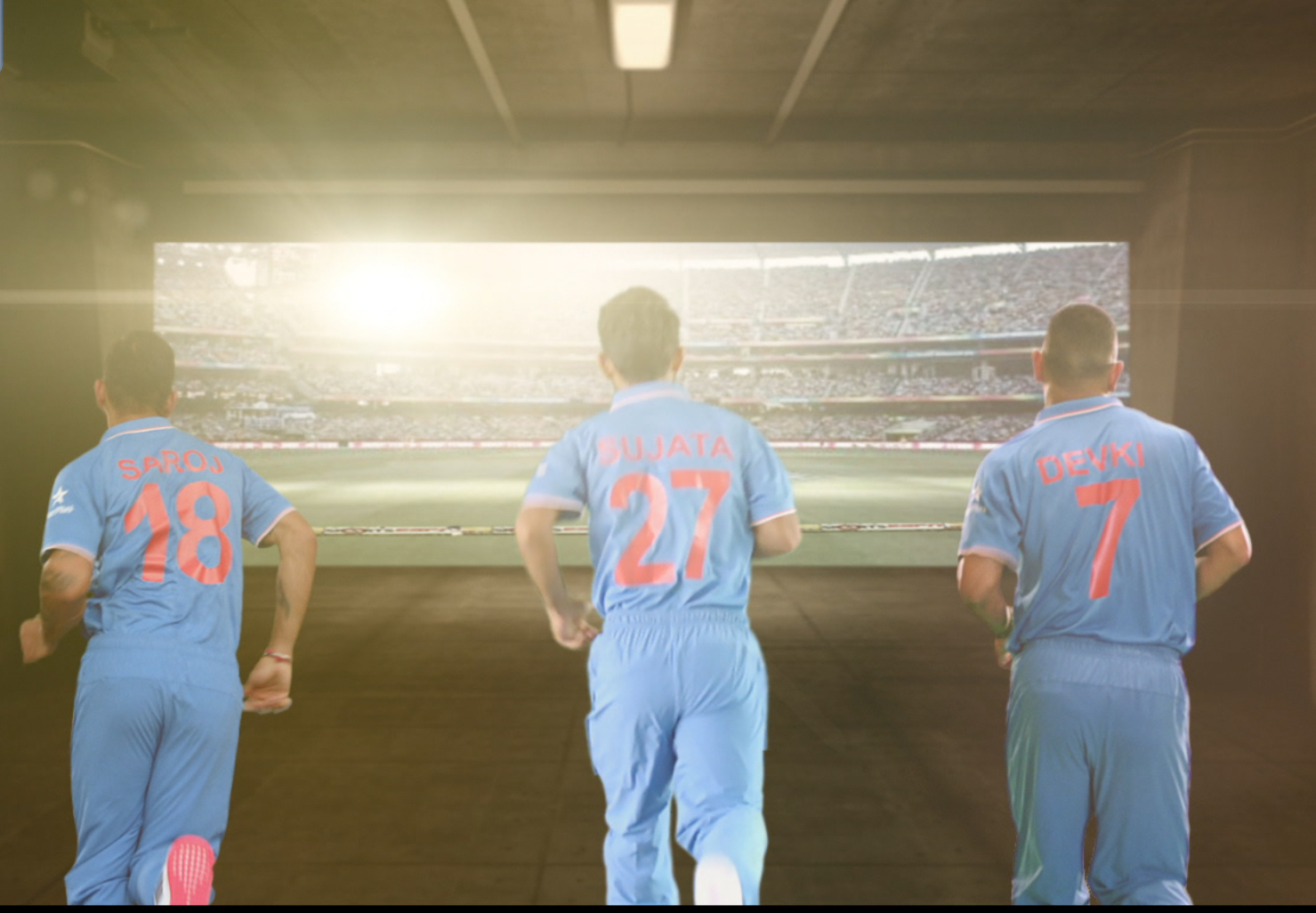
    MUMBAI: Moms are what make each one of us who we are. That’s something we all acknowledge in private, and sometimes in public. The Twenty First Century Corop subsidiary Star India has roped in India’s cricket superstars MS Dhoni, Virat Kohli and Ajinkya Rahane for a TV campaign for Star Plus in which the trio has dropped their surnames or their own names from their jerseys,  replacing it with their respective mom’s names.

    The campaign (part of the Nayi Soch initiative) – sure to warm the cockles of many an Indian heart and possibly bring a lump to our throats – rolled out on TV screens just as the one day series between India and the Kiwis commenced.

    The intent: Star India says is to push forward the agenda for Indian women, something which it has been doing through its entertainment TV shows and promos. A press release issued by Star India says that the three promos are supported by the Board of Control for Cricket in India (BCCI)  and that it (as the Indian cricket team’s sponsor) along with the cricket board is seeking  to break the stereotypical societal notions around lineage and identity and the role of women in all our lives.

    In the promos, Dhoni, Virat and Ajinkya proudly acknowledge that they derive their identity as much from their mothers as their fathers.

    “We at Star India are very happy to partner with the BCCI for an iconic brand initiative of Nayi Soch. Star Plus has been a lighthouse brand for women,” says Star India managing director Sanjay Gupta. “We have always put women first, told their stories and are now set to take it to the next level by challenging orthodoxy and stereotypes that come in the way of progress for women.”

    http://www.indiantelevision.com/sites/drupal7.indiantelevision.co.in/files/styles/large/public/dhonistarplus_1.jpg?itok=qsNmJY_f

    In the MS Dhoni short film, a journalist questions him about the fact that he has put the name of Devki on his jersey. Dhoni responds with the usual calmness and smile on his face:
    “Main itne saal se, apne pita aka naam pahen raha tha, tab to aap ne kabhi nahin poocha, ki koi khaas vajaah.”
    (“For so many years, I wore my father’s name on my jersey, you never asked me if there is a special occasion.”)

    http://www.indiantelevision.com/sites/drupal7.indiantelevision.co.in/files/styles/large/public/ajinkyarahanestarplus_0.jpg?itok=TnDblKqp

    Ajinkya Rahane, in his film,  says
    “Log kahante hain, baap ka naam roshan karo, lekin mere liye ma (Sujata) ka naam roshan karna itna hi important hain.”
    (People say make your father proud and renowned, but for me making my mother proud and well known is as important)

    http://www.indiantelevision.com/sites/drupal7.indiantelevision.co.in/files/styles/large/public/viratstarplus_0.jpg?itok=FLdqxZrR

    The Virat Kohli film has him saying:
    “Aaj mein jo bhi hoon, Mummy ke vajaah se bhi hoon. To zaher si baat hain meri pehachaan bhi, sirf papa ke naam se kyon? Mein jitna Kohli hoon, utna Saroj bhi hoon.”
    (Whatever I am today is because of my Mummy. Then the question is why I am known only by my father. I am as much a Saroj as I am a Kohli)

  • Star India seals ‘script deal’ with Eccho Rights

    Star India seals ‘script deal’ with Eccho Rights

    MUMBAI: An attempt is being made to push three fiction drama shows from the Star India stable to global content creators. Eccho Rights, a global rights management company with offices in Stockholm, Istanbul, Madrid, Hong Kong, and Manila, has entered into an agreement with Star India, taking on an initial representation for three scripts – Tangled Sisters (Ek Hazaaron Mein Meri Behena – 515 x 30 min), Vera (Ek Veer Ki Ardaas…Veera – 282 x 30 min), and Unexpected Love (Diya Aur Baati Hum – 1118 x 30 min).

    Eccho Rights will now represent the script rights worldwide exclusively outside of India.

    “It is with great excitement that we are starting this cooperation with Star India. The globalization of drama is developing at a very interesting speed and one focus of Eccho Rights is to expand our partnership with leading producers to manage their script assets in new markets,” says Nixon Yau Lim, head of Asia Pacific at Eccho Rights.

    The three titles represent some of the most successful Indian drama series ever.

    Stockholm headquartered Eccho Rights has in the last two years taken no less than 12 scripts into local versions including three versions of the Turkish series The End into Europe as well as Nurses from Finland into Sweden and The Clinic from Belgium into Spain. Just last month, it sold the remake rights of Ukraine’s top rated show – a political comedy on Kvartal 93 – titled Servant of the People to Fox Studios in the US. The same month saw it conclude a major deal for 450 hours of top notch Turkish dramas with Netflix. Among these figure Ezel, Karadayi, Kurt Seyit & Sura, The End, Can’t Run From Love, Kacak, Gonul, Mahmut & Meryem , Black Heart, and Winter Sun. In fact, it has been one of the prime drivers of the rapid uptake that Turkish shows have got worldwide.

    Indian TV networks led by Zee TV, Star India, and Viacom18 and smaller players such as Grey Matter Entertainment and GoQuest have been slowly but steadily making efforts to make inroads into the format licensing business.

    Eccho Rights works with independent producers to empower creativity worldwide. The distributor believes that producers deserve a better distribution service. Its experience of selling finished series, scripted and entertainment formats, plus its hands-on approach and global reach, makes it an ideal partner for Star India. Eccho ensures creators retain their rights, protect their brand and maintain quality whilst optimising the value of their products, it is stated on the Eccho company web site.

    A media observer agrees that Star India’s alliance with Eccho Rights is a step in the right direction. “With the kind of reach and track record Eccho has one can expect a few deals to be struck,” says she.

  • Star India seals ‘script deal’ with Eccho Rights

    Star India seals ‘script deal’ with Eccho Rights

    MUMBAI: An attempt is being made to push three fiction drama shows from the Star India stable to global content creators. Eccho Rights, a global rights management company with offices in Stockholm, Istanbul, Madrid, Hong Kong, and Manila, has entered into an agreement with Star India, taking on an initial representation for three scripts – Tangled Sisters (Ek Hazaaron Mein Meri Behena – 515 x 30 min), Vera (Ek Veer Ki Ardaas…Veera – 282 x 30 min), and Unexpected Love (Diya Aur Baati Hum – 1118 x 30 min).

    Eccho Rights will now represent the script rights worldwide exclusively outside of India.

    “It is with great excitement that we are starting this cooperation with Star India. The globalization of drama is developing at a very interesting speed and one focus of Eccho Rights is to expand our partnership with leading producers to manage their script assets in new markets,” says Nixon Yau Lim, head of Asia Pacific at Eccho Rights.

    The three titles represent some of the most successful Indian drama series ever.

    Stockholm headquartered Eccho Rights has in the last two years taken no less than 12 scripts into local versions including three versions of the Turkish series The End into Europe as well as Nurses from Finland into Sweden and The Clinic from Belgium into Spain. Just last month, it sold the remake rights of Ukraine’s top rated show – a political comedy on Kvartal 93 – titled Servant of the People to Fox Studios in the US. The same month saw it conclude a major deal for 450 hours of top notch Turkish dramas with Netflix. Among these figure Ezel, Karadayi, Kurt Seyit & Sura, The End, Can’t Run From Love, Kacak, Gonul, Mahmut & Meryem , Black Heart, and Winter Sun. In fact, it has been one of the prime drivers of the rapid uptake that Turkish shows have got worldwide.

    Indian TV networks led by Zee TV, Star India, and Viacom18 and smaller players such as Grey Matter Entertainment and GoQuest have been slowly but steadily making efforts to make inroads into the format licensing business.

    Eccho Rights works with independent producers to empower creativity worldwide. The distributor believes that producers deserve a better distribution service. Its experience of selling finished series, scripted and entertainment formats, plus its hands-on approach and global reach, makes it an ideal partner for Star India. Eccho ensures creators retain their rights, protect their brand and maintain quality whilst optimising the value of their products, it is stated on the Eccho company web site.

    A media observer agrees that Star India’s alliance with Eccho Rights is a step in the right direction. “With the kind of reach and track record Eccho has one can expect a few deals to be struck,” says she.

  • Going a la carte with Star and Indiacast has helped: Bibhu Prasad Rath

    Going a la carte with Star and Indiacast has helped: Bibhu Prasad Rath

    Bhibu Rath heads one of the small regional cable TV players in the TV distribution business: Ortel Communications. The MSO began as a local player in the state of Odisha. But, it has since spread into neighboring states such as Chattishgarh, West Bengal, Andhra Pradesh and Telangana. In fact, it is one of a handful of cable TV distribution companies which went in for an IPO and are listed on the Bombay Stock Exchange.

    Rath has been with Ortel since 1999 and no one probably knows the company and the business it operates better than he does. Hence, he has focused on building a two-way state-of-the-art communication network enabled for ‘triple play’ services (video, data, and voice capabilities) with control over the ‘last mile’ over the last few years. That regulation has stymied his VoIP ambitions, has not been a stumbling block. In fact, it has emboldened him to move aggressively in the direction of broadband.

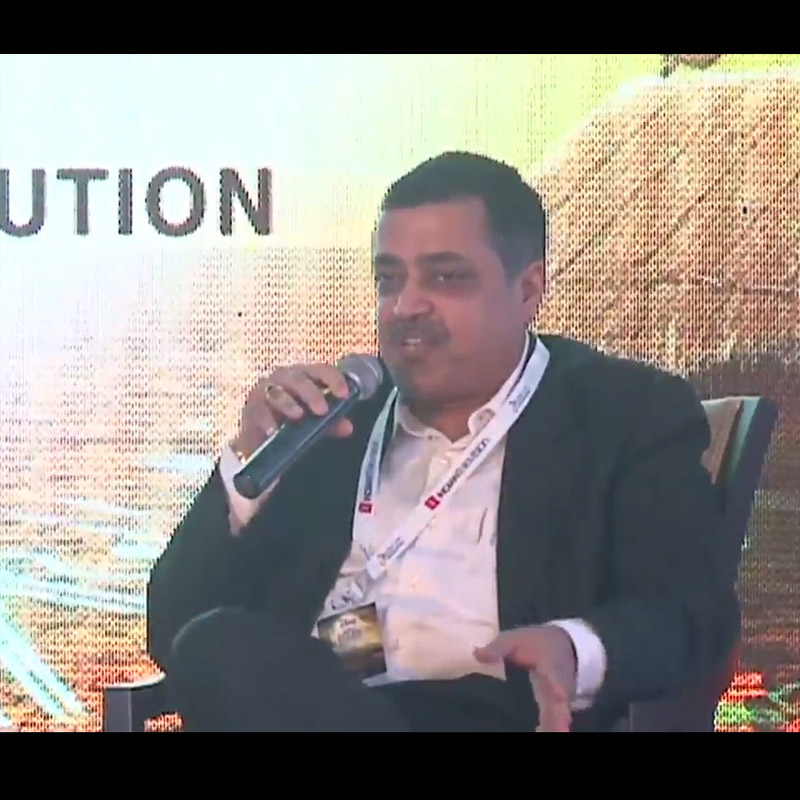
    Rath was one of the key note speakers at IDOS 2016 here. And, he had a one-on-one conversation with the Indiantelevision.com CEO and Editor-in-Chief Anil Wanvari. He was forthcoming and transparent on a range of issues. Read on to find out what he had to say:

    Are you at an advantage or disadvantage of being a niche player ?

    It’s a great advantage actually. You need to understand that why we are a regional player.  Because, we have always believed in depth and not in width. So, we are actually a last-mile player unlike other national MSOs. In a lighter vein, in fact, I keep telling people that we are not a MSO, we are the largest LCO. So, if you are  doing a last-mile network, you have limitations of national presence. So, we have consistently focused on the regional markets and, even within regional market, we have consistently focused on Phase III markets – tier 2, tier 3 markets. Not on the metros.  Like we are there in Telangana but not in Hyderabad. So, currently, we are focusing on four states even though we are present in six states  — that is Odisha, Chattisgarh, Andhra Pradesh and Telangana. And, we have a small presence in West Bengal and Madhya Pradesh. So, it gives us a great advantage that we are focused, we are localized, we are last mile, we are going directly to the consumer.

    Your non-Odisha market is around 233,000 subscribers and your major part, that is, 770,000 subscribers, are in Odisha. Is non-Odisha market going to grow or Odisha?

    That’s (non-Odisha) the one which is growing. In March 2015, when we went public we had half a million subs. Today, we are close to 800,000. Our guidance to the market has been — we will get to a million by March 2017.  If you see the growth in the last five quarters — that is four quarters of last year and Q1 of this year — you will see 70-75 per cent incremental growth has come from outside Odisha, and they are mostly in Andhra Pradesh, Telangana and Chhattisgarh. So that’s the trend going to continue and most of the growth will come from outside Odisha.

    Your analog and digital ARPUs are at Rs 141 and Rs 169 a month, but your digital ARPUs have come down. Why is that and where do you see it going?

    Well, digital ARPUs have come down marginally. But, the mix of analog and digital has gone up. So, digital as a percentage of cable TV swap has gone up very significantly in last five quarters. As of June-end, it was 45 per cent. That’s the reason why ARPU has marginally gone down.

    I have a slightly different view from the rest of the people from the industry. We don’t think this is a great ARPU-driven business. You need to realize that this is a wireline business — not wireless like DTH. So, the wireless guys like DTH have an inherent advantage that they can choose and pick their customer. 5,000 customers in Delhi, 50,000 in Odisha – it’s the same for them. We are in the wireline business. We are laying cable in front of homes and its extremely capex-heavy unlike the MSOs model. If you keep aside the STB, the last mile model is capex-heavy as compared to the MSO-LCO model, because a large part of the network is actually built by the LCO. Whereas, here we deal with it ourselves.

    Now, say, you network 100 homes. My objective is to get as as many of these 100 homes as I can as my customers instead of trying to raise my ARPU by Rs 10. I would prefer to operate at a moderate to low ARPU but I increase my market share and penetration ratio and make up through the number of customers than trying to increase the ARPUs.  So, if you see my penetration ratio: 770,000 customers I have 1.2 million home passes – that is like 60 per cent. To my mind that is a more important metric in the business than just the ARPU numbers. Having said that ARPU will increase – but only marginally, I am not a great believer invery high level of ARPU increase.

    Even in the context of digitization, I kept saying that its objective is not to increase ARPU. Why would the government and the regulator do something wherein the cost to the customer would go up? That’s just the antithesis of what the government does. The government would like to do what helps the consumers, and what helps the consumers is to give them choice, not raise prices.

    So, in doing digitization, give the choice to the consumer — let the consumer pick up at Rs 99, and let someone else pick up at Rs 500. Let your average be at Rs 150-200. Hence, we operate at high penetration, and moderate ARPUs.

    Being a regional player, do you have enough negotiating power? You recently concluded deals with Star and Indiacast which were challenging. Has it become easier for you to deal with the broadcaster?

    It’s a relationship  with the broadcasters — which has been going on but recently we have tried to bring a major shift in the relationship. The two deals which you mentioned with Indiacast and Star TV – they are two of the top half a dozen bouquets operating in India. What we tried to do actually is we tried to test and implement the true spirit of digitization. This means consumer should decide. Whether he wants a channel or not, he should decide and if he should pay.

    With these two deals, we said we will go a la carte. And, as you know, a la carte prices are extremely high. The effective price that a broadcaster gets from the consumers is typically between 10–15 per cent of a la carte price.

    So, for example, the Star TV bouquet – the a la carte prices are at Rs 200, the bouquet prices are typically at Rs 25-26. Despite the a la carte being high, we decided to try it. And we decided to offer it to our viewers and consumers, and allowed them to decide. And, to my surprise, the results have been fantastic.

    Being a last mile model, I don’t have issues of packaging, etc. So, we have complete packaging on our network. We have a backend which can activate a channel. A consumer can send an SMS and get his channel in two minutes via a call centre as well. The payout to me has come down significantly – very significantly — on these two bouquets. But, for consumers, it has gone up, for some it has gone down. So, it’s working very well. This is the way forward. Having done these two deals, I don’t want to do any more soon. I would like to stabilize these two first.

    Has your revenue been impacted because of this?

    Not at all, because when you put a channel on a la carte, there are two models that have been implemented. One is we have put a la carte add-on – that is consumers pay and take it. In another experiment I did, I just threw open the channels to consumers. I said you don’t have to pay anything extra, just decide what you want.  There are
    consumers who will be happy to pay a significant amount for the channels like Fox Life, CNBC, TLC and that’s beauty of doing a la carte, instead of dumping a CNBC channel on the entire base.

    In our markets, 90-95 per cent of the viewers don’t watch CNBC or Fox Life. Why should I dump it? Instead, let me give it to these 2-3 per cent consumers, and let them pay.

    So my revenue has not gone down and my costs have reduced. I am even ready to let go my revenue because these two are interrelated. Whether I increase the ARPU by Rs 10  or I reduce my cost by Rs 10, it doesn’t matter to my ROC. The whole idea is to move on to a pass on the model where consumers decide. The revenue may increase or decrease, only time will tell.

    The MIB says that 93 per cent of Phase III has been digitized whereas you have stated in your areas it is 50-55 per cent. Where lies the truth?

    I don’t want to comment on the MIB numbers because I actually don’t know where the numbers are coming from. We are below 50 per cent. As regards the litigation of DAS Phase III, we are one of the guys who went to court and got a stay. And, that hearing for case is coming up in October.

    That does not mean I did not want to digitize. I definitely want to godigital. I definitely want to get to 100 per cent but we wanted time. And, in many parts of the country, analogue was running in the month of January, and it is running even today. And I can safely tell you, if there was no stay order, analogue would have continued for some more time. I wanted legal cover that If I am doing analogue, I am not doing something illegal. I am pursuing digital in the true spirit. And, the offtake of digital has been very good actually. And, I don’t expect the court order to continue for a very long period. Irrespective of what happens in court, I am pursuing it and I will complete digitalization. We are fully committed to it.

    Your content cost has come down to Rs 50 or so is it because of Star and Indiacast deals or is it because of other factors? Do you expect them to go down further?

    I expect content costs to go down little further. It has been the combination of a couple of factors;  it is not because I got better deals with  broadcasters. The content cost has come down is because of two factors — one is the deal with Star TV and Indiacast on a la carte basis. But, this cost will go up in the long run because consumers will adopt more and more channels and we are mentally prepared that this will go up.

    And, at some point, even a la carte may actually exceed and go beyond what I was paying on a fixed-fee model. It will take time. But, we should be prepared to pay more on a la carte model. But, by then, consumers should also take more a la carte channels and my revenue should also go up.

    The other reason is that we are expanding a lot to other markets and, our expansion strategy has been to acquire LCOs  and the local MSOs. So, we basically do a lump sum, lock stock and barrel buyout. And, those guys we take over have been extremely efficient as compared to what we were doing in terms of negotiating with the broadcaster – their costs are low. Their costs essentially get passed on to us. So that counts for a little cheaper price. But, it will increase.

    You will not set up digital headends rather will go with opex model by taking intercity bandwidth. Is it a way forward for smaller players rather than investing in digital headends which are expensive?

    I think it cost around Rs 10 lakhs a year per link – that’s the deal I have.  I am sure Hathway, Den and Siti must be having better deals because of the size.. So we have taken a view that we will go on opex model. It will be like we will have one head end in Odisha and one for Andhra and Telangana  and one for Bengal and Chhattisgarh because they have language issues and content mix is different. That’s the way forward for the smaller guys.  But when you talk about the smaller guys, they may not have multiple locations to take link actually one of the reason the cable community in Phase III and Phase IV are finding difficult to execute digitization is essentially this.

    Because of this in Phase III you have markets with a million population and you have markets with 10,000 population. If you see the list that the government has issued, there are markets with 10,000-15,000 population at the low end. There are some states which have removed those lists and there are some states which never reacted.

    I have seen the Telangana, Andhra Pradesh list. There are homes with 10,00-20,000  population. For 20,000 population places,  that is about 4,000-5,000 homes. Out of this, 1,000 will be on DTH. You will have 3,000-4,000 cable customers. How does one actually do digital? Hathway, DEN, Siti and I can do it. Because, I have many other locations, I can take a link for Rs 10 lakh.

    But, if there is an independent guy, it is simply not possible, not viable from his perspective to set up a headend. The link is not an option for the smaller guys. That is one of the fundamental reasons why there has been a resistance to digitalization in Phase III and Phase IV. So that’s slowly getting sorted out. The link costs are coming down. The headend costs are coming down. The awareness is going up. So I am sure it will happen.

    You are investing  Rs 120 crore in coming year?

    When I did my IPO on 15 March, I had a two-year capex plan for FY-16 and FY-17. For FY-16 and FY-17, my plan was to go from half a million to one million by  FY17. So, to add this 500,000 customers, we had to put a capex of Rs 250 crore in these two years. Maybe this year’s numbers are part of it. So, if you are asking me, where is this going – in video, broadband or cable? In technology, nothing is called video or broadband, everything is based on the packet. So, given that we are a last mile player, our entire money goes into the network or buying out the LCO. And, even when I buy out an LCO, I dismantle the entire network and build my own network. So, the entire money goes into the network, creating the homes passed.

    Your broadband ARPUs are Rs 400. Are they going to up? Are the markets resistant to ARPU hikes in broadband?

    On the broadband side, the story is different. Video operates on a high penetration ratio. Broadband is on low penetration.  And, I believe that Broadband ARPUs will grow faster than cable TV ARPUs. Simply because there is a lot of upgradation change happening in the product itself. Earlier, we were on DOCSIS 2.0. We could provide 10 MBPs. Most of the consumers were on 512 KBPs or 1 MBPS or 2 MBPS. Now we have started DOCSIS 3.0. The technical spec is 300 MBPs. On the ground, we are able to deliver 100 MBPs. And the offers we have are 10 MBPS, 20 MBPs, 50 MBPS, and 100MBPs. This number is very less. This ratio between DOCSIS 2.0 and DCOSIS 3.0 is going to change. Increasing the speed will obviously lead to more downloads and streaming online. Hence, these ARPUS will increase.

    What we also have been doing is build mobility into the wire line. For example, you have a home wifi modem, you can use it to make your home wireless. You don’t need to put a separate router, the cable models of DOCSIS 3.0 have inbuilt routers. We are also building public hotspots. A KFC or a coffee shop — where consumers spend an hour or so. So you use the public hot spot and use your login and password to continue enjoy all the broadband speeds you enjoy at home. All these factors will lead to our broadband ARPUs going up.
  • Going a la carte with Star and Indiacast has helped: Bibhu Prasad Rath

    Going a la carte with Star and Indiacast has helped: Bibhu Prasad Rath

    Bhibu Rath heads one of the small regional cable TV players in the TV distribution business: Ortel Communications. The MSO began as a local player in the state of Odisha. But, it has since spread into neighboring states such as Chattishgarh, West Bengal, Andhra Pradesh and Telangana. In fact, it is one of a handful of cable TV distribution companies which went in for an IPO and are listed on the Bombay Stock Exchange.

    Rath has been with Ortel since 1999 and no one probably knows the company and the business it operates better than he does. Hence, he has focused on building a two-way state-of-the-art communication network enabled for ‘triple play’ services (video, data, and voice capabilities) with control over the ‘last mile’ over the last few years. That regulation has stymied his VoIP ambitions, has not been a stumbling block. In fact, it has emboldened him to move aggressively in the direction of broadband.

    Rath was one of the key note speakers at IDOS 2016 here. And, he had a one-on-one conversation with the Indiantelevision.com CEO and Editor-in-Chief Anil Wanvari. He was forthcoming and transparent on a range of issues. Read on to find out what he had to say:

    Are you at an advantage or disadvantage of being a niche player ?

    It’s a great advantage actually. You need to understand that why we are a regional player.  Because, we have always believed in depth and not in width. So, we are actually a last-mile player unlike other national MSOs. In a lighter vein, in fact, I keep telling people that we are not a MSO, we are the largest LCO. So, if you are  doing a last-mile network, you have limitations of national presence. So, we have consistently focused on the regional markets and, even within regional market, we have consistently focused on Phase III markets – tier 2, tier 3 markets. Not on the metros.  Like we are there in Telangana but not in Hyderabad. So, currently, we are focusing on four states even though we are present in six states  — that is Odisha, Chattisgarh, Andhra Pradesh and Telangana. And, we have a small presence in West Bengal and Madhya Pradesh. So, it gives us a great advantage that we are focused, we are localized, we are last mile, we are going directly to the consumer.

    Your non-Odisha market is around 233,000 subscribers and your major part, that is, 770,000 subscribers, are in Odisha. Is non-Odisha market going to grow or Odisha?

    That’s (non-Odisha) the one which is growing. In March 2015, when we went public we had half a million subs. Today, we are close to 800,000. Our guidance to the market has been — we will get to a million by March 2017.  If you see the growth in the last five quarters — that is four quarters of last year and Q1 of this year — you will see 70-75 per cent incremental growth has come from outside Odisha, and they are mostly in Andhra Pradesh, Telangana and Chhattisgarh. So that’s the trend going to continue and most of the growth will come from outside Odisha.

    Your analog and digital ARPUs are at Rs 141 and Rs 169 a month, but your digital ARPUs have come down. Why is that and where do you see it going?

    Well, digital ARPUs have come down marginally. But, the mix of analog and digital has gone up. So, digital as a percentage of cable TV swap has gone up very significantly in last five quarters. As of June-end, it was 45 per cent. That’s the reason why ARPU has marginally gone down.

    I have a slightly different view from the rest of the people from the industry. We don’t think this is a great ARPU-driven business. You need to realize that this is a wireline business — not wireless like DTH. So, the wireless guys like DTH have an inherent advantage that they can choose and pick their customer. 5,000 customers in Delhi, 50,000 in Odisha – it’s the same for them. We are in the wireline business. We are laying cable in front of homes and its extremely capex-heavy unlike the MSOs model. If you keep aside the STB, the last mile model is capex-heavy as compared to the MSO-LCO model, because a large part of the network is actually built by the LCO. Whereas, here we deal with it ourselves.

    Now, say, you network 100 homes. My objective is to get as as many of these 100 homes as I can as my customers instead of trying to raise my ARPU by Rs 10. I would prefer to operate at a moderate to low ARPU but I increase my market share and penetration ratio and make up through the number of customers than trying to increase the ARPUs.  So, if you see my penetration ratio: 770,000 customers I have 1.2 million home passes – that is like 60 per cent. To my mind that is a more important metric in the business than just the ARPU numbers. Having said that ARPU will increase – but only marginally, I am not a great believer invery high level of ARPU increase.

    Even in the context of digitization, I kept saying that its objective is not to increase ARPU. Why would the government and the regulator do something wherein the cost to the customer would go up? That’s just the antithesis of what the government does. The government would like to do what helps the consumers, and what helps the consumers is to give them choice, not raise prices.

    So, in doing digitization, give the choice to the consumer — let the consumer pick up at Rs 99, and let someone else pick up at Rs 500. Let your average be at Rs 150-200. Hence, we operate at high penetration, and moderate ARPUs.

    Being a regional player, do you have enough negotiating power? You recently concluded deals with Star and Indiacast which were challenging. Has it become easier for you to deal with the broadcaster?

    It’s a relationship  with the broadcasters — which has been going on but recently we have tried to bring a major shift in the relationship. The two deals which you mentioned with Indiacast and Star TV – they are two of the top half a dozen bouquets operating in India. What we tried to do actually is we tried to test and implement the true spirit of digitization. This means consumer should decide. Whether he wants a channel or not, he should decide and if he should pay.

    With these two deals, we said we will go a la carte. And, as you know, a la carte prices are extremely high. The effective price that a broadcaster gets from the consumers is typically between 10–15 per cent of a la carte price.

    So, for example, the Star TV bouquet – the a la carte prices are at Rs 200, the bouquet prices are typically at Rs 25-26. Despite the a la carte being high, we decided to try it. And we decided to offer it to our viewers and consumers, and allowed them to decide. And, to my surprise, the results have been fantastic.

    Being a last mile model, I don’t have issues of packaging, etc. So, we have complete packaging on our network. We have a backend which can activate a channel. A consumer can send an SMS and get his channel in two minutes via a call centre as well. The payout to me has come down significantly – very significantly — on these two bouquets. But, for consumers, it has gone up, for some it has gone down. So, it’s working very well. This is the way forward. Having done these two deals, I don’t want to do any more soon. I would like to stabilize these two first.

    Has your revenue been impacted because of this?

    Not at all, because when you put a channel on a la carte, there are two models that have been implemented. One is we have put a la carte add-on – that is consumers pay and take it. In another experiment I did, I just threw open the channels to consumers. I said you don’t have to pay anything extra, just decide what you want.  There are
    consumers who will be happy to pay a significant amount for the channels like Fox Life, CNBC, TLC and that’s beauty of doing a la carte, instead of dumping a CNBC channel on the entire base.

    In our markets, 90-95 per cent of the viewers don’t watch CNBC or Fox Life. Why should I dump it? Instead, let me give it to these 2-3 per cent consumers, and let them pay.

    So my revenue has not gone down and my costs have reduced. I am even ready to let go my revenue because these two are interrelated. Whether I increase the ARPU by Rs 10  or I reduce my cost by Rs 10, it doesn’t matter to my ROC. The whole idea is to move on to a pass on the model where consumers decide. The revenue may increase or decrease, only time will tell.

    The MIB says that 93 per cent of Phase III has been digitized whereas you have stated in your areas it is 50-55 per cent. Where lies the truth?

    I don’t want to comment on the MIB numbers because I actually don’t know where the numbers are coming from. We are below 50 per cent. As regards the litigation of DAS Phase III, we are one of the guys who went to court and got a stay. And, that hearing for case is coming up in October.

    That does not mean I did not want to digitize. I definitely want to godigital. I definitely want to get to 100 per cent but we wanted time. And, in many parts of the country, analogue was running in the month of January, and it is running even today. And I can safely tell you, if there was no stay order, analogue would have continued for some more time. I wanted legal cover that If I am doing analogue, I am not doing something illegal. I am pursuing digital in the true spirit. And, the offtake of digital has been very good actually. And, I don’t expect the court order to continue for a very long period. Irrespective of what happens in court, I am pursuing it and I will complete digitalization. We are fully committed to it.

    Your content cost has come down to Rs 50 or so is it because of Star and Indiacast deals or is it because of other factors? Do you expect them to go down further?

    I expect content costs to go down little further. It has been the combination of a couple of factors;  it is not because I got better deals with  broadcasters. The content cost has come down is because of two factors — one is the deal with Star TV and Indiacast on a la carte basis. But, this cost will go up in the long run because consumers will adopt more and more channels and we are mentally prepared that this will go up.

    And, at some point, even a la carte may actually exceed and go beyond what I was paying on a fixed-fee model. It will take time. But, we should be prepared to pay more on a la carte model. But, by then, consumers should also take more a la carte channels and my revenue should also go up.

    The other reason is that we are expanding a lot to other markets and, our expansion strategy has been to acquire LCOs  and the local MSOs. So, we basically do a lump sum, lock stock and barrel buyout. And, those guys we take over have been extremely efficient as compared to what we were doing in terms of negotiating with the broadcaster – their costs are low. Their costs essentially get passed on to us. So that counts for a little cheaper price. But, it will increase.

    You will not set up digital headends rather will go with opex model by taking intercity bandwidth. Is it a way forward for smaller players rather than investing in digital headends which are expensive?

    I think it cost around Rs 10 lakhs a year per link – that’s the deal I have.  I am sure Hathway, Den and Siti must be having better deals because of the size.. So we have taken a view that we will go on opex model. It will be like we will have one head end in Odisha and one for Andhra and Telangana  and one for Bengal and Chhattisgarh because they have language issues and content mix is different. That’s the way forward for the smaller guys.  But when you talk about the smaller guys, they may not have multiple locations to take link actually one of the reason the cable community in Phase III and Phase IV are finding difficult to execute digitization is essentially this.

    Because of this in Phase III you have markets with a million population and you have markets with 10,000 population. If you see the list that the government has issued, there are markets with 10,000-15,000 population at the low end. There are some states which have removed those lists and there are some states which never reacted.

    I have seen the Telangana, Andhra Pradesh list. There are homes with 10,00-20,000  population. For 20,000 population places,  that is about 4,000-5,000 homes. Out of this, 1,000 will be on DTH. You will have 3,000-4,000 cable customers. How does one actually do digital? Hathway, DEN, Siti and I can do it. Because, I have many other locations, I can take a link for Rs 10 lakh.

    But, if there is an independent guy, it is simply not possible, not viable from his perspective to set up a headend. The link is not an option for the smaller guys. That is one of the fundamental reasons why there has been a resistance to digitalization in Phase III and Phase IV. So that’s slowly getting sorted out. The link costs are coming down. The headend costs are coming down. The awareness is going up. So I am sure it will happen.

    You are investing  Rs 120 crore in coming year?

    When I did my IPO on 15 March, I had a two-year capex plan for FY-16 and FY-17. For FY-16 and FY-17, my plan was to go from half a million to one million by  FY17. So, to add this 500,000 customers, we had to put a capex of Rs 250 crore in these two years. Maybe this year’s numbers are part of it. So, if you are asking me, where is this going – in video, broadband or cable? In technology, nothing is called video or broadband, everything is based on the packet. So, given that we are a last mile player, our entire money goes into the network or buying out the LCO. And, even when I buy out an LCO, I dismantle the entire network and build my own network. So, the entire money goes into the network, creating the homes passed.

    Your broadband ARPUs are Rs 400. Are they going to up? Are the markets resistant to ARPU hikes in broadband?

    On the broadband side, the story is different. Video operates on a high penetration ratio. Broadband is on low penetration.  And, I believe that Broadband ARPUs will grow faster than cable TV ARPUs. Simply because there is a lot of upgradation change happening in the product itself. Earlier, we were on DOCSIS 2.0. We could provide 10 MBPs. Most of the consumers were on 512 KBPs or 1 MBPS or 2 MBPS. Now we have started DOCSIS 3.0. The technical spec is 300 MBPs. On the ground, we are able to deliver 100 MBPs. And the offers we have are 10 MBPS, 20 MBPs, 50 MBPS, and 100MBPs. This number is very less. This ratio between DOCSIS 2.0 and DCOSIS 3.0 is going to change. Increasing the speed will obviously lead to more downloads and streaming online. Hence, these ARPUS will increase.

    What we also have been doing is build mobility into the wire line. For example, you have a home wifi modem, you can use it to make your home wireless. You don’t need to put a separate router, the cable models of DOCSIS 3.0 have inbuilt routers. We are also building public hotspots. A KFC or a coffee shop — where consumers spend an hour or so. So you use the public hot spot and use your login and password to continue enjoy all the broadband speeds you enjoy at home. All these factors will lead to our broadband ARPUs going up.

  • Reliance Jio, Times Internet throw their hats into the IPL telecast rights ring

    Reliance Jio, Times Internet throw their hats into the IPL telecast rights ring

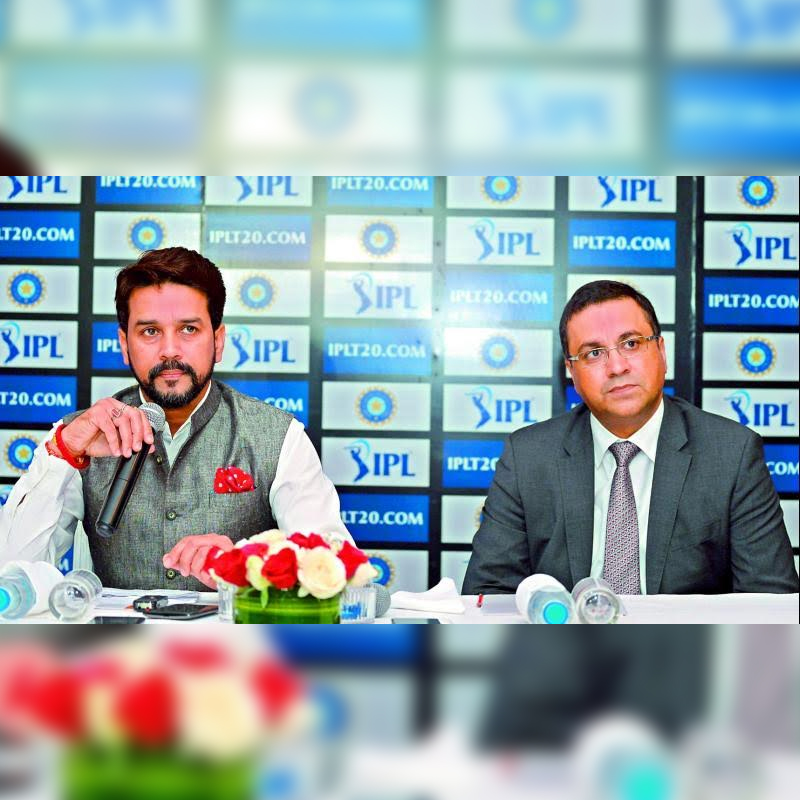
    MUMBAI: The names are spilling out about those who could be taking a stab at acquiring the broadcast television and digital streaming rights to the richest cricket league in the world – the Indian Premier League (IPL). Star India, Sony Pictures Network India (without prejudice), Amazon India, are amongst the names known to have coughed up $10,000 to pick up a copy of the Board of Control for Cricket in India (BCCI) tender document for the IPL.

    Apparently the Mukesh Ambani-owned Reliance Jio has also called for the tender, according to news reports in The Times of India and The Mint. Other companies which the media says have reportedly evinced interest include: Times Internet, Super Sport (a South African network), Econet, OSN (Dubai), BT, Sky Sports (both from the UK), ESPN and Followon (US). Sources reveal that sports OTT platform VEQTA has also bought a tender. Though a report has stated that Zee TV is also in the running, it is not clear how it will do so as sources say the tender document strictly forbids any one involved in litigation with the BCCI from participating in the bidding.

    The BCCI threw open the bids to potential bidders on 19 September with the last date for purchasing the document being slotted as 18 October and last date of submission being 25 October.

    The current bidding round will give the winner the television rights for 10 years, while the digital rights are being offered for five years.

  • Reliance Jio, Times Internet throw their hats into the IPL telecast rights ring

    Reliance Jio, Times Internet throw their hats into the IPL telecast rights ring

    MUMBAI: The names are spilling out about those who could be taking a stab at acquiring the broadcast television and digital streaming rights to the richest cricket league in the world – the Indian Premier League (IPL). Star India, Sony Pictures Network India (without prejudice), Amazon India, are amongst the names known to have coughed up $10,000 to pick up a copy of the Board of Control for Cricket in India (BCCI) tender document for the IPL.

    Apparently the Mukesh Ambani-owned Reliance Jio has also called for the tender, according to news reports in The Times of India and The Mint. Other companies which the media says have reportedly evinced interest include: Times Internet, Super Sport (a South African network), Econet, OSN (Dubai), BT, Sky Sports (both from the UK), ESPN and Followon (US). Sources reveal that sports OTT platform VEQTA has also bought a tender. Though a report has stated that Zee TV is also in the running, it is not clear how it will do so as sources say the tender document strictly forbids any one involved in litigation with the BCCI from participating in the bidding.

    The BCCI threw open the bids to potential bidders on 19 September with the last date for purchasing the document being slotted as 18 October and last date of submission being 25 October.

    The current bidding round will give the winner the television rights for 10 years, while the digital rights are being offered for five years.

  • Star India, Sony Pictures Network India pick up IPL tender document

    Star India, Sony Pictures Network India pick up IPL tender document

    MUMBAI: The race to pocket the broadcast rights to India’s top cricket franchise, the IPL, has commenced. According to reports appearing in the media, Sony Pictures Network India (SPN-India) has picked up the IPL tender document. A Times of India news item reports that SPN-India took this decision “without prejudice.”

    What that means is that SPN-India can still take the BCCI to court for allegedly reneging on its earlier broadcast rights contract with the cricket body, which gave the broadcaster the first right of refusal.

    The BCCI, on its part, says it is under public scrutiny and the Supreme Court has ordered it to maintain transparency in all its financial dealings. Any deal would be questionable unless done openly through a transparent auctioning process, it says.

    Amogst other bidders who picked up the tender document are Star India which has been pretty gung-ho on sports; it made an announcement in 2013 that it was plonking down Rs 20,000 crore towards developing sports and sports television in India over the next five years. Rs 1,500 crore of this would be towards developing hockey.

    Amazon Prime Video has been reported by the media to be interested in throwing its hat in the ring as well, media reports stated. Who else will enter the fray will become clearer over the next few days.

    The IPL tender envisages the television rights to be assigned for 10 years, whereas the digital rights will be for five years. Punters are betting as to what extent the bidders will open their wallets to acquire the rights. $2 billion to $4 billion is the range that is being talked about.

  • Star India, Sony Pictures Network India pick up IPL tender document

    Star India, Sony Pictures Network India pick up IPL tender document

    MUMBAI: The race to pocket the broadcast rights to India’s top cricket franchise, the IPL, has commenced. According to reports appearing in the media, Sony Pictures Network India (SPN-India) has picked up the IPL tender document. A Times of India news item reports that SPN-India took this decision “without prejudice.”

    What that means is that SPN-India can still take the BCCI to court for allegedly reneging on its earlier broadcast rights contract with the cricket body, which gave the broadcaster the first right of refusal.

    The BCCI, on its part, says it is under public scrutiny and the Supreme Court has ordered it to maintain transparency in all its financial dealings. Any deal would be questionable unless done openly through a transparent auctioning process, it says.

    Amogst other bidders who picked up the tender document are Star India which has been pretty gung-ho on sports; it made an announcement in 2013 that it was plonking down Rs 20,000 crore towards developing sports and sports television in India over the next five years. Rs 1,500 crore of this would be towards developing hockey.

    Amazon Prime Video has been reported by the media to be interested in throwing its hat in the ring as well, media reports stated. Who else will enter the fray will become clearer over the next few days.

    The IPL tender envisages the television rights to be assigned for 10 years, whereas the digital rights will be for five years. Punters are betting as to what extent the bidders will open their wallets to acquire the rights. $2 billion to $4 billion is the range that is being talked about.

  • ‘Love Cinema Live Cinema’ with Tata Sky’s new service

    ‘Love Cinema Live Cinema’ with Tata Sky’s new service

    MUMBAI: If you are a passionate movie-lover but miss screenings or are closely related to some aspect of filmmaking which only few are privy to, you need not worry at all as Tata Sky has brought in a solution. After brainstorming for a year, the DTH player has launched a first-of-its-kind service in cooperation with the Jio MAMI Festival with Star. Purpose: To retain and make their existing subscribers happy. This comes after a successful run of its kids showcase which will now be replaced with this new initiative. 

    An ad-free service, Tata Sky Mumbai Film Festival will not just cheer up the movie buffs but will also highlight the efforts that are invested during the film festival.

    With no additional cost, this service is available to all the subscribers irrespective of their package, set top box, demography and geography.  Despite having a very good story line, made in high quality, movies sometimes do not find their way to the public. The idea with this initiative is to give niche movies a boost by screening them on TV.

    Starting from 7 October, the service will be available on channel no 302 &302 in both SD and HD. The temporary service will complement the new edition of the film festival and will also be a catch-up for all the movies that were premiered in the previous editions. It  will run three films on a daily basis and already has 20+ movies to air from renowned Indian and international directors in multiple languages.

    Silent films, movies made in Hindi, English, Assamese, Marathi, Malayalam, Punjabi, Arabic, Russian, French, etc will be featured on this service for the subscribers.  They can also enjoy works of directors like Hansal Mehta, Anup Singh, Ravi Jadav, Bikas Mishra, Pan Nalin, Nitin Kakkar, Lea Hjort Mathiesen.

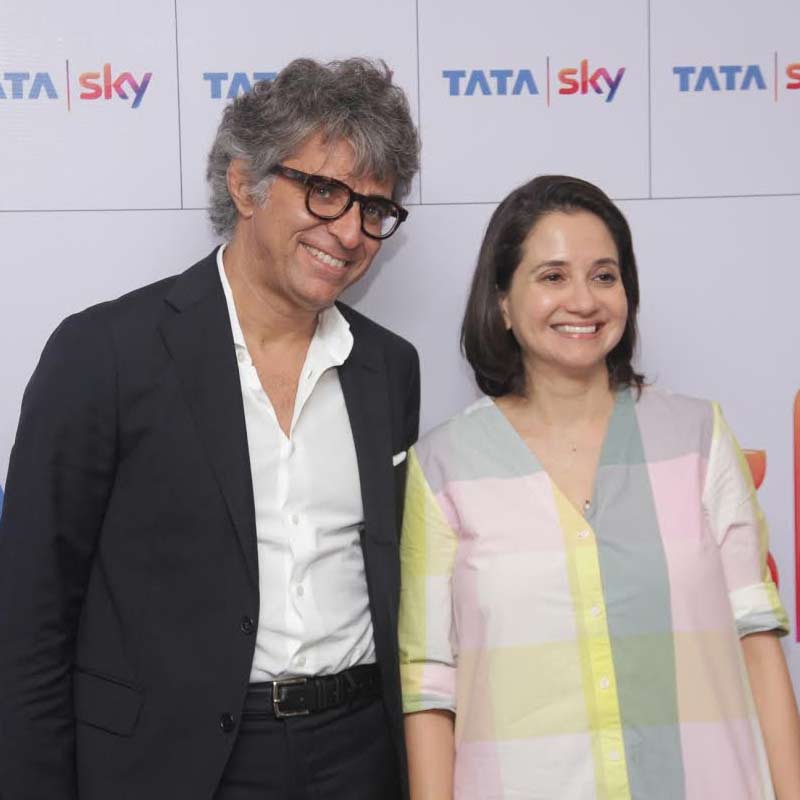
    “We are not selling this service. We care enough to curate and create a mix of some popular and some hidden gems from the field of film-making for our viewers from the last few editions of the Mumbai Film Festival. We have several people who pay us on a monthly basis. We are in the business of acquiring subscribers but we also have to retain them. Sometimes you do things because you want to make them happy. The monetizing cannot always be direct and immediate. The ambition and aspiration with this is that people will be more loyal to us after this,” asserts  Tata Sky chief content and business development officer Paolo Agostinelli.

    Agostinelli further adds, “We have talked to the producers and have bought rights for selective titles. We did not want them exclusively with us. A person can still put it on his/her digital platform, we are just giving them one extra opportunity. Technology is only going to make good stories available to people who deserve and want to watch them.”

    Through this unsponsored yet innovative initiative, subscribers can look forward to an exciting mix of award winning and nominated features, short films, documentaries, animations covering varied genres of comedy, drama, thriller, mystery, crime and adventure. The promising star casts include names such as Sanjay Suri, Irfan Khan, Seema Biswas, Atul Kulkarni, Tisca Chopra, Soham Maitra, Manoj Bajpai, Rajkummar Rao, etc.

    MAMI Festival director Anupama Chopra added, “We were delighted when Tata Sky extended their support and suggested taking these curated films from both Indian and international to viewers living across the country. This unique and unconventional approach just goes to prove that the entertainment and media industry needs to come together for the benefit of the extraordinary passion and talent of movie makers and lovers in India.”

    Research was done to make good movies available for people at a different level. This service will bring a selection of movies from the film festival on TV giving them exposure at a different level.

    “The fact that this MAMI Festival needs to be promoted and needs awareness is what we are working for. India is the most prolific and probably the most receptive movie country in the world. The number of people who are passionate about movies and the number  of people working in the film industry  are enormous. So, people care about movies here.”

    Several DTH players have expanded their services to rural India which is only expanding. Agostinelli is of the opinion that the people living in rural areas were sometimes more educated about movies than urban. He said, “Rural market is definitely a huge market and is expanding enormously. People there are equally passionate and love entertainment as in cities. So, we aim to serve also this potential subscribers.”

    The initiative will be promoted through direct marketing  via its various other channel. They will also leverage social media. All the normal modes through which their subscriber is in touch will be used. Agostinelli is also of the opinion that the DTH industry has place for more players. “There is enough space for many players to serve this industry.” 

    Tata Sky will continue to explore new ideas and take up various initiatives to make a difference in this competitive industry. They might look at other festivals depending on the success  with this one. 

    With such initiatives in its kitty and presence in 1.5 lakh towns, it only plans to expand in the future. It currently has 418 SD, 77 HD channels, 15 interactive service, 6 SD, 6 HD movie showcase platforms and several interactive services.

    http://www.indiantelevision.com/sites/drupal7.indiantelevision.co.in/files/styles/large/public/tata-sky.jpg?itok=DrjyssM8