Tag: Star India

  • Why  Disney-Star India aligned with Reliance?

    Why Disney-Star India aligned with Reliance?

    MUMBAI: What was the rationale behind Disney Star India’s decision to align with the Mukesh Ambani-led Reliance Industries? Speaking at the Morgan Stanley Technology, Media & Telecom Conference in the US on 5 March (during a question and answer session,) Disney CEO Bob Iger, gave some insights.

    First he said the mouse house wanted to stay in India. “We made a big investment in India when we purchased the assets of 21st Century Fox. We’re one of the biggest media companies in India. But even though it’s the most populous country in the world, and we felt we want to be there because of that, we also know that there are challenges in that market.”

    He added that the company got a chance to align with Reliance, and he grabbed it fast. “(It) …is obviously the company that has done very well there and one that we respect. And in doing so, end up owning part of a bigger media company. And we believe that, that not only should benefit us in terms of the bottom-line, but derisk us as well there.”

    “So, it’s kind of the best of both worlds. We stay in the market at a significant level. We have a very good partner in Reliance, and we get to have a chance of growing a business and lowering the risk of doing so,” he concluded.

    Now it’s up to time and the new structure to prove whether these reasons were well-founded. 

  • Ajit Mohan takes over Snap’s APAC operations

    Ajit Mohan takes over Snap’s APAC operations

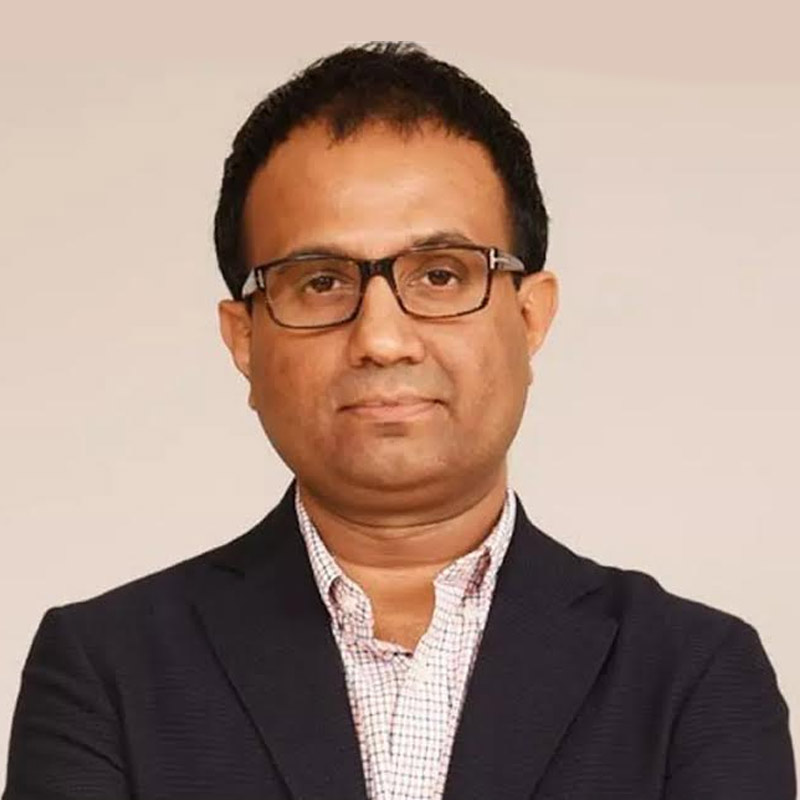
    Mumbai: As reported by Indiantelevision.com on 3 November, Meta India country leader Ajit Mohan had quit and was reportedly set to join Snap. In a LinkedIn post, Mohan has confirmed joining the APAC team of Snap.

    His LinkedIn post reads, “After almost 4 years leading Meta (Facebook) in India, I am stepping down from my role. I am grateful to the company for the amazing opportunity to lead its efforts in one of its most important countries and I am absolutely proud of the work the team and I have done to create impact for people, creators and businesses around the country. “

    He goes on, “When I took on this role, my objective was to build a team and a company that would be a valuable ally to India and play a useful role in fuelling its economic and social transformation. This is exactly what we have managed to do in the last four years.”

    He confirms, “Am also excited to share that I am going to lead the Asia Pacific region for Snap and be a part of the company’s executive team. Can’t wait to get started!”

    Mohan had joined Meta (the erstwhile Facebook) as the managing director for the India market in January 2019. He was preceded by Umang Bedi who quit in October 2017.

    Prior to Meta, Mohan was CEO of Star India’s (now Disney Star’s) video streaming service Hotstar for four years.

  • India’s M&E industry needs to focus on incredible creative endeavours: Disney+ Hotstar’s Gaurav Banerjee

    India’s M&E industry needs to focus on incredible creative endeavours: Disney+ Hotstar’s Gaurav Banerjee

    MUMBAI: Delivering an address at a session of Ficci Frames Fasttrack 2022 called ‘The Magic of Online Curated Content (OCC)’, Disney+ Hotstar head content Gaurav Banerjee said that the time is now for India’s media and entertainment industry to focus on incredible creative endeavours. 

    “We need to do better when it comes to incredible creative endeavours. The time for us to crack the code of creating incredible stories that travel all over the world is now. It is up to all of us to do better, to equip ourselves better. We must note that this is what our potential is. That is when massive success for all of us will follow,” Banerjee added.

    He gave an example of Korean content. The movie “Parasite” won multiple Oscars including best picture, director and screenplay. Recently, a Korean actor won an Emmy. It was a Korean show on Netflix that got incredible followership all over the world.

    He also said that the entertainment industry choosing to do things for profit or a larger social cause is a false choice. “We must do both.” 

    He gave the example of Satyamev Jayate, a show that Star did. When the show returned, he took the decision not to market other shows. Only this show was marketed. Interestingly, nobody complained. Instead, the fact that the show took a position against female infanticide was greatly appreciated. His company always wanted to be part of a large cause. That was when greater success followed. He added that there were two components in the media and entertainment industry – artists and fans. “They want us to do more and do the right thing.” This, he said, had massive business benefits. And even if doing the right thing does not always produce big benefits one must still do it.

    In his address, he mentioned the media and entertainment are accountable to society. “Creativity works in the service of society.” Disney, he said, believes in this contract. When it has followed the reward has happened. But equally, when it didn’t follow there were punishments. In terms of Disney Star’s curated content journey, he said it is notable for how women have been treated over the years. 

    This was never the case earlier even though cinema had existed for decades. The first phase for him was the early 2000s with the K serials and other shows like Sanjivani. The decision was taken to put women at the centre of storytelling. It was not just about entertaining people. This was a big massive change happening at scale. “The impact was massive and significant.” He pointed to a study done by two American scholars from the University of Chicago. They went to homes before they got satellite TV and went back to the same homes three years later after they got exposed to those shows from Star India and other companies. As a result, women’s preference for male children fell by 20 per cent. Women’s tolerance for abuse decreased by 10 per cent. 8 per cent of girls between the ages of 6-10 went to school. “There was a lot of power in this room. Sometimes, we lost sight of it.”

    The Chicago study was phase one. This second phase came around 10-11 years later. The broadcaster decided that it was not enough to just put women at the centre. They need to work and become successful professionals. They were backed by their husbands and in-laws. Star did a show. 

    On TV, people were told that there is no job that a woman cannot do. However, at that time some things were sacred like marriage. This changed with the third phase in 2020. The show Anupama questioned marriage. The storyline, he noted, was powerful. If a woman was taken for granted, was that worth it? At 45, she could start a new life cheered by India.

    When asked a question on TV versus OTT he noted that the creativity paths were similar. All content on Star’s TV channel is put first on OTT. So for example new episodes of Anupama come first to Disney+Hotstar at 6 a.m. Creativity answers are the same. A good show is a good show. The same logic applies to movies. But he also acknowledged that distribution channels make a difference in digital because people use mobile content to watch solo. So edgier themes and shorter stories are more convenient. He added that his team watches a lot of content. They watch Youtube, OTT and TV. Often they call creative people like filmmakers about the possibility of working together. The best way to get a yes in terms of working with Disney+Hotstar is if he calls.

    The keynote address was delivered by the Ministry of Information & Broadcasting (MIB) joint secretary (P&A) Vikram Sahay. He was in favour of the government keeping itself away from the area. Online content curation must have self-discipline and grow. There is self-certification. He noted that people are taking advantage of the low Internet costs. “Today online, curated content is the big thing in terms of reach, popularity. OTT is here to stay. We have been producing some very good original, value-based content.” He added that actors, screenwriters, etc., who were not getting a chance in films now got a space. More people can showcase their talent. He noted that six months back the MIB ministry had developed a mobile game on India’s freedom struggle and this was done with Zynga. It is in English and Hindi. There are prizes to incentivise children. For promotion, a 30-second rap song was created. 

    “Now the game has been launched globally.” While the government around a year and a half back introduced a three-tier system, a grievance mechanism where people can voice their complaints about digital content, he said that this has not inconvenienced any of the OTT platforms. That is because most people are happy when their grievance is heard and they get a response. “We have not heard a single OTT platform complain about the grievance system. Nobody will be inconvenienced or be burdened.”

    During a panel discussion on being asked how the journey of The Viral Fever (TVF) started, Head- TVF Originals Shreyansh Pandey said, “TVF came into existence because a unique set of audience who were not getting entertained from the television or let’s say the shows which were being run at that time – they wanted something fresh, they wanted something new.”

    The actor Divya Dutta, on being asked how it has been for an actor when OTT is booming, said, “It’s a good time for actors. It is the layer of characters now. You get that time when it comes to a series vis-à-vis a short film or a feature film.”

    The filmmaker Nikhil Advani talked about the lack of pressure in creating content and the freedom which follows. He said, “On OTT, the shelf life is longer. The word of mouth stays for a longer time. The pressure to get stars the numbers vis-à-vis a story…this is easy when you have OTT.”

    The actor Sohum Shah also talked about the reach of OTT and its rising popularity. “Films like Tumbbad have reached more audiences because of OTT. As an actor, it also allows you not to get typecast and work like a chameleon. It is also good, especially for female actors. Talent is flourishing because of OTT,” he added.

  • 2022 IPL media rights value touches Rs 46,700 crore on Day 2

    2022 IPL media rights value touches Rs 46,700 crore on Day 2

    Mumbai: The Indian Premier League (IPL) media rights value has touched Rs 46,700 crore at the end of day two of the e-auction on Monday. The rights period is from 2023 to 2027 for 410 matches.

    TV rights went for Rs 23,575 crore while digital went for Rs 20,500 crore. TV will cost Rs 57.5 crore a game while digital will cost Rs 50 crore a game. There will be at least two broadcast partners.

    Two different broadcasters won the TV (Package A) and digital (Package B) broadcast rights. Reports indicate that Reliance Jio has won Package B. So far, the price of the combined TV and digital rights this year is almost three times the amount that Star India had paid in 2017.

    On the second day, the price of digital rights per match rose by Rs 2 crore from Rs 48 crore at the end of day one. But the price for TV rights only rose by Rs 50 lakhs a match when the bidding resumed on the second day.

    There is more drama to come. The digital non-exclusive rights (Package C) that include 98 games over five years are valued at Rs 18.5 crore per match. Bidders that did not get their hands on Package A and B may make a play for Package C. If Reliance Jio is unable to win the bid for Package C it would be unable to maximise the value of the digital broadcast rights which would be a blow to its revenue.

    Package D includes the media rights for the rest of the world and is set at a base price of Rs 3 crore per match or Rs 1,110 crore over five years.

    The highly anticipated auction was first announced on 29 March by the Board of Control for Cricket in India (BCCI). The contenders for broadcast rights included Disney Star, Sony Pictures Networks India and Viacom18. The bidders for digital rights include Zee Entertainment Enterprises, Disney+ Hotstar and Reliance Jio. Mjunction is conducting the auction.

    The IPL is the second most valuable sports property after the National Football League (NFL) in terms of broadcast price per match. The value of the media rights per match has reached almost Rs 114 crore leaving the Premier League behind which is valued at around Rs 81 crore per match. The action continues tomorrow.

  • ALTBalaji onboards Snehil Dixit Mehra as head of content & digital media

    ALTBalaji onboards Snehil Dixit Mehra as head of content & digital media

    Mumbai: A wholly-owned subsidiary of Balaji Telefilms ALT Digital Media Entertainment appointed Snehil Dixit Mehra as the head of content & digital media. Earlier, Mehra worked with filmmaker Sanjay Leela Bhansali as associate director.

    Mehra has a vivid professional portfolio and worked as a writer, director and digital influencer. He recently forayed into acting with her stellar performance in Jio Studios’ Apharan Season 2.

    Mehra brings with her an enviable experience in the media and entertainment space and over 16 years of experience in the broadcast industry. She has held various leadership positions at Bhansali Productions, Star India, Sony Entertainment Television & Endemol India. Ektaa R Kapoor is keen on expanding her digital footprint with producing more originals and after the immense success of her digital reality show Lock Upp she aspires to create more original formats for the non-fiction audiences. Thus, a high-profile acquisition was expected, given the content powerhouse wanted the leadership to work in close association with content creators and producers.

    In her new role, Snehil will be leading the content and programming division for ALTBalaji and will be responsible for managing the upcoming original content line-up and the platform’s creative strategy.

    Talking about joining the team, Snehil said, “This is my second innings at ALTBalaji, a homecoming for me, however with a larger mandate now. I am looking forward to planning a roadmap for further accelerated growth of ALTBalaji as a leading digital content hub.”

  • ‘We’re a company of technologists and storytellers’: Disney+ Hotstar’s Content Head Gaurav Banerjee

    ‘We’re a company of technologists and storytellers’: Disney+ Hotstar’s Content Head Gaurav Banerjee

    Mumbai: Gaurav Banerjee has successfully straddled the realms of television and digital to deliver the most popular content in India. He runs Star India’s content studio that has delivered nine out of the top 15 web series and six out of the top 10 Hindi TV shows in the country. On the TV side, he’s responsible for popular shows such as Diya Aur Baati Hum, Sasural Genda Phool and on the digital side he’s responsible for hits such as Aarya and Special Ops amongst others.

    He began his career at Star TV Network as a primetime anchor and senior producer at Star News. He launched the Bengali news channel of the group Star Ananda in 2005 and later moved to lead the content strategy of the network’s regional entertainment channels in 2008. Banerjee was responsible for expanding the network’s reach in two key markets West Bengal and Maharashtra with the channels Star Jalsha and Star Pravah, respectively. In 2009, he led the content strategy for the Hindi entertainment channel Star Plus as general manager. He propelled Star Plus into a leading brand with hit shows like Yeh Hai Mohabattein and Mahabharata. In 2015-16, he took charge of Star India’s content studio and refreshed the storytelling approach for Star Plus and Star Bharat.

    Transforming India’s Content Landscape

    Banerjee is a man on a mission to transform India’s content landscape. He is leading Disney+ Hotstar’s foray into original content and has produced several Hotstar Specials that appeal to the unique tastes of digital audiences. While media executives are accustomed to treating television and digital as disparate creative ecosystems, Banerjee’s view is that good content can find its audience on any medium.

    Disney Star head content for HSM entertainment network and Disney+ Hotstar Gaurav Banerjee joined The Adaptation Company creative entrepreneur specialist and producer Sunil Doshi for a candid fireside chat at an event held recently in Mumbai. He spoke about driving the storytelling agenda at Star India, the advantage of being a legacy media company, producing innovative content for Disney+ Hotstar and helming Star India’s writers’ program.

    Edited Excerpts…

    Sunil Doshi: The traditional wisdom says that creating stories for television medium and creating stories for OTT medium are two different things. How have you successfully straddled both these words making Disney+ Hotstar a leader with enviable subscriptions?

    Gaurav Banerjee: We’ve always thought of ourselves as a storytelling and content company. When we’re looking at a script, we want to understand three simple things. First, how is the story going to be fresh to us and our viewers as well? Second, whether it might be relevant to our audience. Third, who is the storyteller and why is he/she excited to tell this story.

    We’ve always approached our scripts essentially using this process. We don’t think too much about distribution in the beginning phase because linear television and streaming are just different ways of distributing content. We’re comfortable with the idea that consumers can choose what technology or distribution platform works for them best. There may be format related choices depending on the media (some formats sit better on TV while others sit better on digital) but those are second order questions.

    Fundamentally, Star has a rich tradition of storytelling that goes back two decades. When we entered digital, we wanted to be native to the digital world and so, we expanded the brief of what we were as a company. Today, we’re a company of technologists and storytellers. The journey we have traversed has taken us from being a company with a consumer and storyteller mindset to a company that understood the product, technology, engineering and storytelling.

    Sunil Doshi: The economic models of streaming are changing. There is global inflation and war in Ukraine. There are streaming platforms that are gaining subscribers and others that are losing subscribers. Amidst all of this do you see Disney+ Hotstar as a technology company or a creative company?

    Gaurav Banerjee: I think Disney+ Hotstar is both. We see ourselves as a content platform that is always thinking about how to create technology that is intuitive for our viewers in India today. As we were building this platform eight years ago, we realised to achieve the scale we needed to reside on mobile phones. This was different from what was happening in the West where streaming was happening on connected TVs in people’s homes. The fact that we were mobile-first meant that our technology needed to be different.

    We were a legacy media company thinking about streaming. There were two advantages to this. First, we knew India’s consumers because we were the biggest broadcaster in the country and second, we understood storytelling having done it for two decades. The fundamentals we arrived at to be a platform that had scale were three things. First, we needed to have a big presence in live sports. Second, we needed to have a big presence in the movie business. Third, we needed to have a really big presence in drama.

    From day one, our content portfolio has tried to traverse and build on these three pillars. I’ve been in TV for 22 years now and these are the big pillars of Indian television. These three pillars take care of most of the entertainment needs of consumers.

    Sunil Doshi: You’ve dealt with technology. Now, you’ve done some exciting content innovations at Disney+ Hotstar where traditional TV content is feeding streaming content. What is your creative team doing to spot such opportunities?

    Gaurav Banerjee: Star is an interesting company with a great culture. While in some ways we’ve been leaders of entertainment in this country, we’ve always thought of ourselves as challenges.

    When we entered the digital space, we felt that there was a bias working against us. We were this legacy media company that has entered the streaming space and was not accustomed to the industry jargon or ways of working. We didn’t create this ecosystem or arrive here first. But we asked some fundamental questions and reimagined this world.

    The first decision we took was that streaming is something that can and should happen at scale. Therefore, the kind of content that is made for streaming should be high quality but cater to all audiences and not some niche.

    We took two strategic decisions, first, we decided to put our best content on streaming platforms. So, our linear TV content is first available on Disney+ Hotstar for paying subscribers. We observed that a lot of fans of the show will catch up on the latest episode during the day without waiting for it to be telecast at 10 pm on Star Plus.

    In a traditional setup, if we had taken such a decision, I would be worried because I’m doing something that’s threatening the ratings and viewership of the TV show. However, we changed the way we incentivized creative teams to focus on building a great show and not where consumers are supposed to watch it.

    There was a real feeling that TV shows, TV producers, and TV actors are in some way not good enough for digital. As someone who’s coming from a television background, we were clear that we were not going to participate and fuel this bias against TV content in any way.

    That’s why I’m incredibly proud of our Anupama prequel that’s streaming on Disney+ Hotstar called Namaste America. The show reveals when the first cracks appeared in Anupama’s marriage before the events in the TV series transpired. Another popular franchise Bigg Boss was doing well for our regional channels in Telugu and Tamil. Here, we felt a digital-only version with Stars like Kamal Haasan and Nagarjuna would work and both those seasons have done well. There are franchises such as “Special Ops” where we did a spin-off series that was just four episodes which worked on digital. We’re open to more experiments on OTT like Namaste India, Bigg Boss and Dance+.

    Sunil Doshi: I consider Star television as a thought leader as they have created so many iconic IPs. In the near absence of TV schools and film schools in our country, where is the new talent that is going to fuel creativity on digital and television going to come from?

    Gaurav Banerjee: We look at ourselves as an IP creation company. If we keep creating high-quality IP and continue to capture the imagination of audiences then monetisation will follow. That also means that we’re in the business of finding the best creative people, the best creative ideas and jostling with them in a healthy environment. The writing and creative community deserve our empathy because as an executive I’m looking at several scripts every day but they’re working on 1-3 stories and putting pen and ink to paper. We need to be conscious that we’re doing a good job of finding the best creative talent and treating them with empathy.

    When I was a student, I wanted to get into the creative business and understand how to make a TV show or film. This was in the year 1998 and after coming out of college I discovered there were only two places in India of any repute where you could learn to become a filmmaker or TV producer. One of them admitted 15 people and the other admitted 18 people. There were just 33 seats and I hoped to get one of those 33 seats. The luck of the draw.

    I got lucky but I realised this is a small number for an industry that is so big. For several years, I struggled to find new writers to bring to television. The belief we had as broadcasters is that there is a market need and so someone will come and build these institutions to feed this market. But nobody came. I urged both the institutions known for TV and filmmaking to start a course that teaches students how to write TV series. But that did not happen. How is the industry going to get better if no one is going to share knowledge, best practices and learn from each other?

    Star India put together a budget, teachers and a syllabus and a website to launch the program. We hired people and essentially, I asked all my writer friends in the industry to come to take classes and get the program going. We hired someone to put together a syllabus as this was a specialised program. I don’t know how many other companies are there where you can go to the CFO and say we’re spending a few X crores and there’s going to be no monetary return at the end of it. With a new show, you can get some revenue but with the writer’s program, no money is immediately going to come. It was just something to set up these budding writers and hopefully, if they become good writers, they might write something for us in three to four years but not necessarily.

    The great thing about our company and my pitch was that as long as the industry improves and there’s great writing then it is understood that we will also improve. That’s how we created the Star writers’ program and we had about 35-40 writers on our payroll over the last three to four years. While it undoubtedly has had its share of problems, it is also something that we’re very proud of.

  • No coercive action against Disney Star: Bombay HC to CCI

    No coercive action against Disney Star: Bombay HC to CCI

    Mumbai: The Bombay high court has directed the Competition Commission of India (CCI) not to take coercive action against three broadcasters – Asianet Star Communications, Disney Broadcasting (India), and Star India in furtherance of an order initiating investigation against such companies. A bench of justices Gautam Patel and Madhav Jamdar passed the judgement, according to Bar and Bench report on Friday.

    The court also directed the petitioners to furnish to the director general of CCI the documentary material called for in response to the queries in furtherance of the order, on a without prejudice and no-equities basis.

    The director general was also ordered to keep the information collected by him confidential as required by law until the next hearing date.

    The bench passed the order in writ petitions filed by the three petitioners challenging an order of CCI passed on 28 February directing its director general to initiate investigation under Section 26 of the Competition Act based on a complaint by Asianet Network Digital.

    Asianet is in the business of distribution of TV channels to customers through local cable operators predominantly in Kerala. It had contended in its complaint that broadcasters such as the petitioners, must not have discriminatory pricing in commercial contracts with multi-service operators (MSOs) such as Asianet.

    In the complaint, Asianet referred to the regulations of the Telecom Regulatory Authority of India (Trai) and the Telecom Disputes Settlement and Appellate Tribunal (TDSAT), which prohibits discriminatory in commercial contracts with MSOs.  

    Asianet stated that the petitioners, by abusing their position of dominance, provided significant discounts to a direct competitor through allied agreements that apparently offered a cashback system. The petitioners intended to bypass the Trai/TDSAT set-caps or upper limits with an intent to provide unfair advantage to Asianet’s competitors.

    In view of this, CCI ordered the director general to conduct an investigation and submit a report within 60 days. The same was challenged before the high court.  

  • Star Bharat aims to expand its reach within HSM: Kevin Vaz

    Star Bharat aims to expand its reach within HSM: Kevin Vaz

    Mumbai: There was a buzz about Star Bharat’s revamp when many shows including “Meri Gudiya” and “Kartik Purnima” were axed during the lockdown. Now, in a conversation with IndianTelevision.com, Disney Star head for network entertainment channels Kevin Vaz confirms that with a new content lineup, the channel is gradually shifting towards its new concept philosophy of romance-laden family entertainment shows.

    “With new content lineup, Star Bharat is aiming to expand its reach to a larger Hindi speaking market (HSM). The channel already has a loyal viewer base in Delhi, Punjab, and Madhya Pradesh. We will commission new shows along this line targeting more Hindi speaking states including Uttar Pradesh, Haryana, Some part of Bihar, Rajasthan etc,” Vaz highlights.

    After Start Plus, Star Bharat is the second-largest Hindi GEC from the aegis of Star with a stronghold in the three largest Hindi-speaking markets – Delhi, Punjab, and Madhya Pradesh. And with its revamp plan, the channel is all set to grab more eyeballs from viewers as well as advertisers.

    Star Bharat announces ‘Swayamavar: Mika Di Vohti’ to amp up programming lineup

    Throwing some light on their content strategy to fulfill their goal to reach a larger audience, Vaz says that the channel has no plans to stick to a particular genre. Rather they are aiming to establish Star Bahrat as a light-entertainment hotspot that offers something interesting to all age groups but romance and entertainment will remain the central theme for all programmes.

    “With our recent launches ‘Woh Toh Hai Albela’ and ‘Swayamvar: Mika Di Vohti,’ we have demonstrated that Star Bahrat will have a mix of shows themed on romance and entertainment,” he shares.

    Adding onto his statement, Vaz says that based on their research they have identified romance as a central theme and we can expect future launches crafted around the romance theme.  

    Last month the channel launched “Woh Toh Hai Albela”- a show already creating a buzz in the market, followed by their recent launch “Swayamavar: Mika Ki Voti.” The channel is also planning to launch “Gud Se Meetha Ishq” and “Kall Bhairav” in the coming months.

    “If we take a deep look at the shows being launched, it can be said that the channel is keeping love as its basic theme but the content is full of variety,” he says, adding that, “We have just begun with fresh content. We have more shows in the pipeline which will add value to its bouquet of content in the next six months,” he further adds.

    While the sponsors and advertisers are not yet revealed for the upcoming programming, it is expected that this expansion of content bouquet will help Star Bharat become a new favorite for advertisers across categories.

  • Probe against Star India for alleged abuse of dominant position

    Probe against Star India for alleged abuse of dominant position

    Mumbai: The Competition Commission of India (CCI) has ordered a probe into the alleged abuse of dominant position by Star India. The complaint was filed by Asianet Digital Network against Star India, Disney Broadcasting (India), and Asianet Star Communications, said PTI in a news report.

    According to the complaint, Star India was providing a bouquet of channels to the competitor of the informant at lesser prices resulting into denial of market access and also amounting to unfair/discriminatory pricing.

    It chose an indirect way to provide these discounts to circumvent the New Regulatory Framework of Trai by way of promotion and advertisement payments to informant’s competitor through high valued advertising deals, the complaint alleged.

    “Therefore, on the basis of market share, dependence of consumers, size and resources of the enterprise (being part of global media conglomerate), vertical integration of the enterprise and countervailing power, the Commission is of prima facie view that OP-1 enjoy a position of dominance in the relevant market delineated supra,” it noted.

    The relevant market prima facie appears to be “market for provision of broadcasting services in the state of Kerala,” the regulator said.

    “The alleged discriminatory conduct of price discrimination between different multi-system operators of Star India has resulted into significant loss in the consumer base of the Informant and therefore prima facie appears to be in violation of the provisions of section 4 of the Competition Act, due to discriminatory pricing and denial of market access.”

    The section 4 pertains to abuse of dominant position.

    “Accordingly, the Commission directs the Director General (DG) to cause an investigation to be made into the matter and submit an investigation report within a period of 60 days from the date of receipt of this order,” CCI said in an order dated 28 February.

    It further said that nothing in this order shall be tantamount to a final expression of opinion on the merits of the case, and the DG shall conduct the investigation without being swayed by the observations. Separately, the regulator has dismissed a plea of interim relief filed by the informant.

  • Disney India elevates Aravamudhan K as executive director, government relations

    Disney India elevates Aravamudhan K as executive director, government relations

    Mumbai: The Walt Disney Company India has elevated Aravamudhan K to the position of executive director, government relations. Previously, he served as senior vice president at Star TV Network.

    Aravamudhan K has been associated with the TV broadcast industry since 1993. He joined Star TV India in 2007 as manager of corporate communications.

    On Friday, he took to LinkedIn to announce completing 15 years at Star India. “Today completed my 15 exciting and eventful years at Star India. Witnessed many changes in the broadcasting sector and in the company thanks to my mentors, colleagues, friends, family and external stakeholders who played a major role in my evolution as a GR professional,” he said.

    He spent five years working with the Indian government at the ministry of industry. He has had stints at media houses such as SAB TV, UTV, ITV, and Star News before joining Star TV Network.