Tag: Star India

  • ALTBalaji is essentially everything that Balaji on TV is not: Sameer Nair

    MUMBAI: It was in the year 1994 that Sameer Nair was hired as a director-producer in the television industry. Shortly later, he became Star Movies’ executive producer.

    In the following years, he controlled acquisitions of movies for Star in India, and subsequently became its programming head. He eventually became the CEO of Star TV-India, a position he enjoyed till 2007. In 2008, Nair became the CEO of NDTV Imagine, a Hindi general entertainment channel from the NDTV stable, which went off air in 2011. In 2012, after quitting NDTV Imagine, Nair partnered with a few ex-colleagues and founded few startups in the media sector. In 2014, Nair became part of Ekta Kapoor’s Balaji Telefilms, a company that he had given break while in Star TV. He joined as group CEO and expanded Balaji’s digital business. In a recent development, just before Balaji and Reliance Industries announced that the latter has taken an equity stake in BLT a shade less than 25 per cent, Nair announced his departure from BLT end July.

    Nair was one of the speakers at indiantelevision.com’s second edition of Vidnet2017, held mid-July. He had a one-on-one conversation with Indiantelevision.com consulting editor Anjan Mitra.  Edited excerpts from the conversation:

    Has being in Balaji different from what you’ve been doing at Star and Imagine TV or even at a startup company?

    First of all, I have been associated with Balaji for many years because we used to work with them in Star. Balaji is primarily a television production house and is one of the most successful television production houses in India. And, the plan with Balaji was that how do you take a business like this and scale it up. How do you grow 10x? For example, for a company that is already having eight to nine shows on air, we have 20 per cent market share in general entertainment Hindi fiction. We make some movies too. So how do you grow 10x? We can’t go from 8 shows to 80 shows. So the sense was we have to go from being a B2B business to being a B2C business, which is where this plan of creating a (digital) platform came up. Now, if you could take all the Balaji shows today and put it on one channel, then that one channel would become the #1 channel. But obviously that ship has sailed and we couldn’t have started one more GEC channel. So it became clear that we should go B2C and should go digital (OTT). We should create content for it and act on our key strength, which is content creation.

    Which segment of the Balaji media business drives the revenues?

    Currently, television, obviously. TV is our base business where all the money comes from. But the future will be the digital business, which is Alt Balaji that we launched on April 16, 2017. That’s where the future is.

    How is Alt Balaji different?

    Balaji is known for its daily soaps on TV…shows that have been extremely popular and also have been criticized (for regressive themes, at times). Alt Balaji is essentially everything that Balaji on TV is not! The kind of content that we get to create (for Alt) is stuff that’s not available on TV; that you don’t see on TV and is exclusive to a platform. And, it’s in the fiction space because that’s what we specialize in. This is a big market. We have chosen to be in the OTT SVOD space.

    But critics say that the Indian digital realm is still more of traditional broadcasters, TV companies putting content available on linear or traditional television onto a digital platform. Do you agree with this line of thinking?

    It’s true. It’s common sense. Whenever a new medium starts and it grows, it lives off content from an old medium. That’s the way it goes. When satellite TV started in India, it was living off the English language programming from the West. Then English language programming was dubbed into Hindi and finally original Hindi and regional language programming came. It’s a process of evolution. Logically, if you got to put the content out there into a new medium, by default, Star’s Hotstar would put its own TV shows. In fact, that drove a lot of the viewership (to the digital platform) to start with. But as it goes forward, if you can get content everywhere, then why would you pay for it? If you actually want people to pay for anything, then it (content) has to be good and exclusive and people must see value in it.

    You mean content that you once famously described “between Narcos and Naagin”. Has that median changed or are you still grappling to traverse that terrain?

    In India in the 2000 (decade), we did the ‘K’ soaps — `Kyunki’, `Kahaani Ghar…’, etc. In 2017, that is pretty much the staple on Indian television, almost after a generation has gone. So, what we have missed as an evolutionary step is premium subscription television — the likes of HBO and Showtime. The closest India came to premium subscription television was, may be, Star One. So that’s where the opportunity is. The need (today) is the world between `Narcos’ and `Naagin’. It’s a world between a Colors Infinity and Colors — in all languages, not just in Hindi. And, that’s what we (at Balaji) are going after.

    I was reading an interview of Reed Hastings where he said that new shows, especially when they are released, do affect the seasonality of the business and the bottomlines. Do you feel in India it is still the same story or India is still an evolving drama?

    Even if you look at the TV business, the content business tends to work like that. So, in the Diwali quarter, your spends are up and your revenues too go up. However, I think, the big difference between Netflix and traditional content houses is if you have a subscriber model, then you have a basket of programming for a basket of revenue.

    Would you like to share some of the numbers?

    I am not going to share the numbers, but I can tell you what we are doing and why we think what we are doing makes sense.

    Why are you shying away from numbers?

    I am going to come to that. I got to build up to it. What we are doing is we are creating fiction shows— 10 to 12 or 15 episodes in a series and with multiple seasons going forward. We will give five episodes free. So we don’t have a one-month free scheme. What we have is every series of ours is free for the first five episodes — three episodes you can see on YouTube, two you can see on the app and then it means you have liked it; which means you are hooked on to it. We are going to ask you for some (subscription) money then. That’s the play we are aiming at. There are some things you want to pay money for and some you would not. For a movie like `Dangal’, a big section of the audience in India gave Aamir Khan Rs 300-400 crore (Rs. 3-4 billion in ticket sales) despite being aware that the film would come on TV for free technically, in a few months (of its theatrical release). But they still thronged the theatres and bought tickets. There is a draw that (good) content has…where people want to pay and see it. Our sense is to create content that people would want to watch and pay for.

    Coming back to numbers, we have got a great start. We have got about four-five million downloads. We have got subscriptions from day one, primarily because we are in five-episode free model. I can’t give you subscription numbers, but we are doing well compared to the market now. We have got subscriptions from about 70 countries. Most people have taken the quarterly pack and not the annual pack, which is fair I guess. They may first want to sample the content and see how the service is. We have got good reaction to our content.

    People who have downloaded your app are mostly of the Indian diaspora?

    Indians mostly. It’s an Indian and Indian diaspora game. It’s all in Hindi for now. We have done one Tamil show and are going to do one Bengali show. But it’s targeted towards Indians primarily. So we are not yet in the foreign (audience and non-Hindi speaking) space.

    What are the expansion plans for Alt Balaji?

    For first couple of years, we are going to focus on content, build up customer base and do content in multiple languages. We are doing content in Hindi, Tamil and Bengali. We want to add Gujarati, Punjabi and Telugu too, which we are planning to launch within 18 months time.

    The sense that I get from feedback that even the big OTT players don’t know where the revenue is going to come from in India. What is Alt Balaji’s point of view on revenues and business model, considering you are quite a late entrant?

    We are looking at the revenue from a subscription point of view and we are not in the AVOD space. We are not looking for advertising support. Within the SVOD space, our business plan is to spend some amount of money on content and getting to a certain number of paying subscribers by the end of two to three years, which takes us to break-even. That’s the plan. And, for that, the kind of content we are creating is premium subscription television content — the kind India has not seen so far. We are putting it out there (and) giving consumers the opportunity to sample it. We think the market is pretty large. There are two million homes that are watching Star World or Colors Infinity and there are 165 million (TV) homes that actually a Colors or a Star Plus reaches. The in-between audience, say about 25-30 million homes, today are already spending Rs.1000 to Rs. 2000 on a combination of Internet, entertainment and telecom (per month). They have two-three smartphones, have a DTH connection and watch one or two movies in a month. These guys will potentially spend $10 more per month in the next five years. That figure when you take to 25 million homes becomes a $3 million market. Now, what will they spend it on? They will spend it on OTT services, watching new movies. So, we are focusing on those 25 million homes, which will, in the next five years, probably become 25-40 million homes. Out of that, we want a fair share.

    By 2019-2020 you will reach the breakeven point. So, where are the stumbling blocks? Which are the three biggest stumbling blocks for digital platforms in India?   

    One of the big stumbling blocks used to be the connectivity issue. We used to wonder how this is going to work and how would we reach the consumers. Call-drops and bad connectivity is a problem. But in the last year or so, with the kind of push Jio is doing, the (digital) highways are being built. Second big stumbling block would be, would people pay? We keep saying that Indians get everything for free and that’s like a constant refrain. But ideally you pay for everything. You get nothing for free. If you go to a temple, you got to put money in the pooja thaali for blessings. So, I think people will pay. They are paying for movies, IPL matches…In fact, people have always paid for TV. For all this drama around ‘Indians like to get everything for free’, ever tried to not pay for your cable connection? They’ll (LCOs) just cut it (connection) off. Right? And, from 1992 this is going on. The third stumbling block would be if consumers are willing to pay, what are they going to pay for? That’s where the content comes in. Already, almost all of us have become Netflix subscribers. It may be expensive, but for a certain set of audience it is good to go. Amazon has come along too. So, these are the three key things and they are being addressed.

    In all this, do you feel somewhere the government can be helpful in removing the stumbling blocks?

    I don’t know actually. But government should stay far away from it. This is going reasonably well. Private players are helping in building infrastructure and are building businesses. Let market forces decide.

    At the moment, it is almost like ‘free for all’ without any regulations for the digital players; something like what cable and satellite TV was once upon a time before MIB and TRAI waded into it in 2003-04 onwards. How do you view the growth of the digital world vis-a-vis regulations or its absence?

    This is a tough one because the Internet is open; so technically at this point of time you can go out on the net and find porn too. Now going forward, more and more people will create (digital) content and somebody will push the boundaries and maybe or maybe not the government decides to regulate it. Ideally, if the players together are not creating obscene content just for the sake of creating obscene content, that would be the best self-regulated environment. But it is a big a market; too many content creators are out there and it’s hard to assume things. But I feel there are already some rules and regulations in place.

    And where do the OTT platforms fit into the Indian debate of net neutrality?

    Obviously, there should be net neutrality. I think all the OTT platforms are now pushing for net neutrality. If we don’t have net neutrality, then it would be like the TV business’ carriage phase, which still persists, though it has gone down because of the digitization.

    Is the digital world at the moment a content driven business or a technology driven business?

    Well, it’s a combination of both. Tech is equally important.
     

  • Life OK rebranded as Star Bharat may start from 15 Aug

    MUMBAI: Star India is planning to relaunch its existing general entertainment channel — Life OK, renamed as Star Bharat. The channel plans to have modern outlook but Indian feel.

    According to reports, it will be relaunched with the new look on 15 August.

    Since 2011, the channel will be branded for the second time. At the earlier launch, Star One was rebranded as Life OK. In 2016, the network changed the programming line-up of the channel. But, it seems the revamp of the programming strategy did not work.

    According to sources, shows such as “May I come in Madam,” “Sher-E-Punjab Ranjeet Singh” and “Chandrakanta” will go off air, and shows including Savdhaan India and Ghulam will continue. Shows like Kya Haal Paanchaal, Ayushamaan Bhava and Shatranj will be launched on Star Bharat shortly.

    ‘Shatranj’ is basically an Indian adaptation of the English show ‘House of Cards’ that features Sonal Vengurkar, Akshay Anand and Bhanu Uday. Another show called ‘Kya Haal Paanchal’, produced by Optimystic, is based on polygamy, starring Maninder Singh in the lead and five girls.

    At the time of filing this report, an official confirmation did not come through. It is hoped that the second rebranding works for Star.

  • No BRR implication on b’caster & DPO link flawed: Vijay TV, IBF affidavit rejected

    No BRR implication on b’caster & DPO link flawed: Vijay TV, IBF affidavit rejected

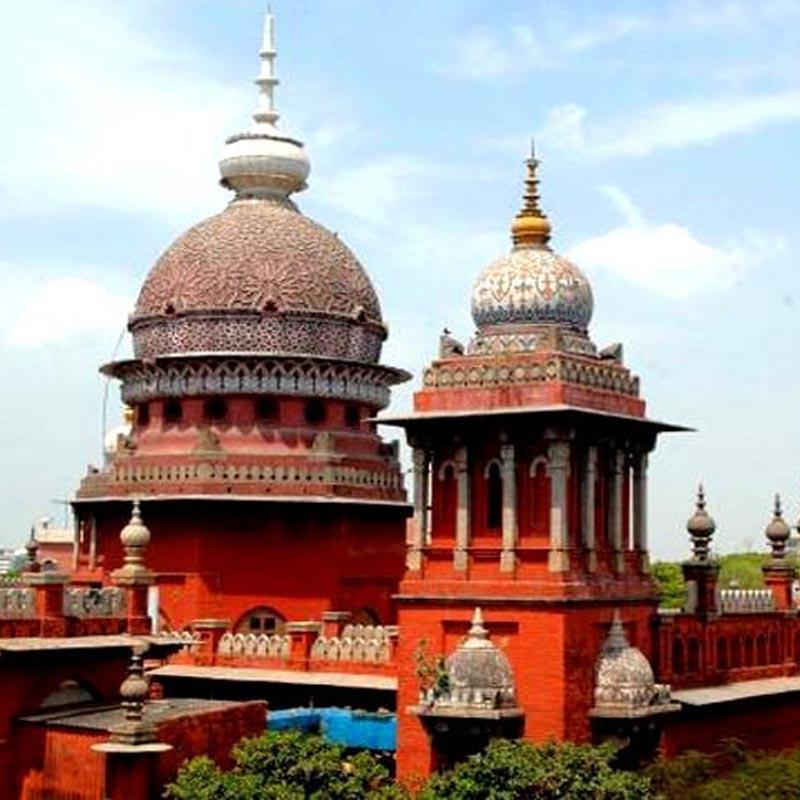
    NEW DELHI: Even as arguments concluded in the Star India and Vijay TV case challenging the jurisdiction of Telecom Regulatory Authority of India to issue tariff orders on the ground that content came under the Copyright Act, the Madras High Court directed all parties to submit written statements by 27 July 2017.

    The Court refused to accept an affidavit by the Indian Broadcasting Foundation which had neither a notary stamp nor a date. Earlier, in his arguments, TRAI counsel Saket Singh had said that IBF represented a mere 20 per cent of the broadcasters in the country. In fact, the bench expressed its annoyance at the manner in which the affidavit had been presented.

    If the written submissions are accepted by the court, it will reserve its judgment in the matter.

    Vijay TV counsel Abhishek Manu Singhvi, while presenting his rejoinder, also furnished a number of new arguments, and therefore the court wanted all these to be put into written submissions. Singhvi said that the dichotomy between copyright works and their compilations were false, and TRAIs assertion that a TV channel was a separate product was not ‘protectable.’ He said that public interest would not confer non-existent jurisdiction on TRAI.

    In any event, TRAI will continue to regulate carriage and the broadcasters business.

    Singhvi said that TRAI seemed to assert that broadcast reproduction rights did not have had anything to do with a channel but was merely a compilation of copyright works. That understanding was flawed. The impression that TRAI was not regulating content but only the manner of offering of the TV channel was completely flawed since price, manner of offering and market place were inextricably linked.

    Singhvi contended that TRAI was indulging in disguised encroachment. It might have jurisdiction on transmission but cannot extend to other sectors.

    He said the reliance on the 2009 Delhi HC judgement of Star vs Trai was completely misleading. The principles of ‘res judicata’ and ‘constructive res judicata’ would not confer jurisdiction on TRAI  to regulate content.

    In any event, the issue raised in the instant writ had never been dealt before any court/ tribunal, thus the earlier judgements could not operate as res judicata / constructive res judicata. Similarly, the reliance on NSTPL judgment was completely misplaced. He said acquiescence / estoppel / concession in law was not binding.

    TRAI’s reliance on TRAI vs BSNL decision of TDSAT to assert Star was stopped from challenging the regulations was completely misleading.

    On his points as rejoinder, he said TRAI and intervenors suggestion that broadcast came into existence only after TV channel signal reaches the set-top box and thus there was no BRR (broadcast reproduction right) implication in the arrangement between the broadcaster and the DPO was completely flawed.

    Broadcast comes into existence from the moment the TV channel is uplinked.

    TRAI’s argument that the Copyright Act only protects individual programmes as works, and a TV channel being a ‘distinct and different product’ is not protected as a whole under the Act is completely flawed, he said, adding that a TV channel is protected as a broadcast  under the Act. The owner of TV channel is granted a substantive right known as the BRR.

    The distinction between driver/ non- driver and popular/ non popular channel- while the impinged regulation and Tariff order claim to be content agnostic. TRAI has taken every effort to rely on content to justify and defend them.

    TRAI does not have the power to administer the programme code and advertising code under the Cable Networks (Regulation) Act 1995. TRAI’s role as authority under that Act is very limited. It is recognised as an authority only for the limited period of digitisation as governed under section 4A.

    The impunged regulation and Tariff directly affects subscription and advertisement revenue of broadcaster which in turn impacts the expenses that can go into curating and programming of Tv channel which in turn directly affects the price at which programmes can be acquired which is nothing but control of pricing of copyright works and content.

    Sampling of content is the norm. Bundling of content is beneficial to promote public interest. TRAI’s impugned regulations will impact the diversity and Prularity of views.

    Although the Supreme Court had in early May while staying the tariff order directed the Madras High Court to complete hearing within four weeks, the High Court had commenced the in the last week of June.

    Meanwhile, TRAI TV reference interconnect offer (RIO) and Quality of service order (QoS) came into effect from 2 May following the order of the High Court.

    Apart from the Tariff order which had originally been issued on 10 October last year, the regulator also issued the DAS Interconnect Regulations which had been issued on 14 October last year, and the Standards of Quality of Service and Consumer Protection (Digital Addressable Systems) Regulations which had been issued on 10 October last year.

    The orders can be seen at:

    AlsO Read :

    TRAI can only regulate transmission, not broadcast material: Star tells Mds HC

    Decks cleared for TRAI tariff order implementation as HC declines stay (updated)

    Star India case questioning TRAI jurisdiction over content postponed


  • Zee TV makes it to second place across genres

    BENGALURU: For the second time in 2017, the Zee Entertainment Enterprises Limited (Zeel) network flagship Hindi GEC Zee TV found itself as the second most watched channel across genres, pushing down Star India’s flagship Hindi GEC Star Plus to third place. The first place across genres, of course, is the sole domain of The Sun TV Network’s flagship Tamil GEC Sun TV, except during the IPL that is. Over the past few weeks, the Hindi GEC and the Hindi GEC (Urban or U) markets have promoted two Zee TV programmes – a reality talent show – Sa Re Ga Ma Pa Little Champs and a Balaji Telefilms family soap Kumkum Bhagya to the top of the weekly top five Hindi GEC programmes list. – NCCS All : Prime Time (1800 – 2330 hrs) : 2+ Individuals.

    One Tamil GEC channel and One Hindi Movies channel, two Telugu GEC channels and six Hindi GEC channels made it to the weekly top 10 channels list across genres of Broadcast Audience Research Council of India (BARC) for week 27 of 2017 (Saturday, 1 July 2017 to Friday, 7 July 2017). Or, putting it across differently, two channels each from the Sun TV, Zeel, Star India, Network 18 and Sony Pictures Network India (SPN) networks made up the weekly top 10 channels across genres list for week 27 of 2017.

    Sun TV occupied its usual unassailable position as leader of the Top 10 channels across genre pack with 1,112.035 million weekly impressions in week 27 – the channel improved its impressions by 2.87 percent over week 26. Zee TV gained a rank to second place with a massive 15.65 percent gain in weekly impressions over week 26 with 686.643 million weekly impressions, followed by Star Plus at third place with 650.601 million weekly impressions (a gain of 0.91 percent over the previous week).

    Network 18’s FTA Hindi GEC Rishtey gained 4.20 percent in ratings and a rank to fourth place with 611.891 million weekly impressions in week 27 as compared to week 26. Zeel’s FTA Hindi GEC lost a rank and 4.79 percent in ratings to come fifth in week 2017 with 564.640 million weekly impressions as compared to the previous week.

    Network 18’s flagship Hindi GEC Colors retained its sixth place in week 27, but lost 4.53 percent ratings as compared to the previous week. The channel garnered 557.186 million weekly impressions. SPN’s Hindi GEC Sony Pal gained a rank to seventh place and 2.81 percent in ratings in week 27 as compared to week 26. Sony Pal scored 549.929 million impressions. SPN’s Hindi Movies channels lost a rank to eighth place and 1.04 percent in ratings with 544.322 million weekly impressions.

    The Sun TV Network’s flagship Telugu GEC Gemini came ninth in week 27, the same rank as week 26, but lost 2.03 percent in ratings with a score of 495.036 million weekly impressions. Star India’s Telugu GEC Star Maa entered the list with 477.390 million weekly impressions to tenth place, while Network 18’s Telugu GEC ETV Telugu exited the top 10 across genres list in week 27 of 2017.

  • Madras HC to hear Star India’s rejoinder in TRAI challenge today

    NEW DELHI: Following the completion of arguments of the All-India Digital Cable Federation and Videocon d2h, the Madras High Court will today commence hearing a rejoinder by the petitioners — Star India and Vijay TV.

    Concluding his arguments in the petition by Star India and Vijay TV challenging the jurisdiction of TRAI to issue tariff orders on the ground that the subject of content fell under the Copyright Act, counsel for AIDCF A R L Sundaresan explained how the Telecom Regulatory and Copyright Law do not infringe upon each other. AIDCF had intervened in the matter.

    AIDCF also explained the flow of revenue and the breakup, and what is carriage, network capacity fee, distribution fee etc. It told the court how the money would be divided amongst different stakeholders including broadcasters under the new tariff regulations. The concept of carriage fee, distribution fee and network capacity fees were explained with help of charts.

    Videoco d2h counsel Vijay Raman said the petition militates against the right of stakeholders to do business as guaranteed in Article 19 (1) of the Constitution. The new tariff order had asked broadcasters to declare their minimum retail price per channel to consumers and give ‘a la carte’ price for pay channels. This would give greater choice to the consumer.

    Earlier last week, TRAI counsel Saket Singh had said that, prior to the tariff order, the broadcaster would sell distribution right to the multi-system operators at wholesale price level, and MSOs would accordingly sell to the consumers. Thus, the consumer had no direct link with the pricing.

    The new tariff had taken away the power of distributors in terms of pricing and that has been given to the broadcaster. Hence, they are the master of their channel and can price the consumer, accordingly. The consumer also got the right to refuse to pay for channels he did not watch. Singh also explained the concept of carriage fee.

    Although the Supreme Court had, in early May, while staying the tariff order directed the Madras High Court to complete hearing within four weeks, the high court had commenced the hearing in the last week of June. The hearing had commenced with the pleadings of counsel for the petitioners.

    Meanwhile, TRAI TV reference interconnect offer (RIO) and Quality of service order (QoS) came into effect from 2 May following the order of the High Court.

    In the hearing in April-end, it had said Section 3 of the Tariff order and all other consequences of such implementation/enforcement would be subject to the outcome of the main petition.

    Apart from the Tariff order which had originally been issued on 10 October last year, the regulator also issued the DAS Interconnect Regulations which had been issued on 14 October last year, and the Standards of Quality of Service and Consumer Protection (Digital Addressable Systems) Regulations which had been issued on 10 October last year.

    The orders can be seen at:
    http://trai.gov.in/sites/default/files/Tariff_Order_English_3%20March_20…
    http://www.trai.gov.in/sites/default/files/QOS_Regulation_03_03_2017.pdf
    http://www.trai.gov.in/sites/default/files/Interconnection_Regulation_03…

    Also Read :Decks cleared for TRAI tariff order implementation as HC declines stay (updated)

    Star India case questioning TRAI jurisdiction over content postponed

  • Hearing to end next week in Madras HC on Star India challenge to TRAI Tariff order

    NEW DELHI: The Madras High Court was today told by Telecom Regulatory Authority of India counsel Saket Singh the reasons for moving from analogue to digital and the necessity of the new tariff order.

    Concluding his arguments in the petition by Star India and Vijay TV challenging the jurisdiction of TRAI to issue tariff orders on the ground that content came under the Copyright Act, Singh said digital addressable system had led to greater transparency leading to the subscriber base going up, which led to higher advertising revenue.

    While adjourning the matter for 17 July, the Court indicated that arguments will commence on behalf of intervenors All India Digital Cable Federation and Videcon d2h. This will be followed by rejoiner arguments by the petitioners, after which the court will reserve its orders.

    Singh said the aim was to create level playing field for rates to distributor platforms  and give an effective and informed choice to the consumer.

    The new tariff had asked broadcasters to declare their minimum retail price per channel to consumers and give a la carte price for pay channels. This would give greater cChoice to consumer.

    The bench asked why HD and SD cHannels could not be regulated in the same bouquet. Singh also wondered why broadcasters are using this as one of the contentions as they themselves during the consultation process wanted HD and SD to be separated. They had also said so in their responses to the consultation paper on the subject.He said that the channels at that stage had only wanted the free-to-air and pay channels to be in separate boiuquets.

    Singh showed to the court the broadcasters comments during consultation process.

    He said prior to the tariff order, broadcaster would sell distribution right to multi-system ioperators at wholesale prices level and MSOs would accordingly sell to the consumers. Thus the consumer had no direct link to pricing.

    The new tariff had taken away the power of distributors in terms of pricing and that has been given to the broadcaster. Hence they are the master of their channel and can price the consumer accordingly.

    The consumer also got the right to refuse to pay for channels he did not watch. Singh also explained the concept of carriage fee.

    Although the Supreme Court had in early May while staying the tariff order directed the Madras High Court to complete hearing within four weeks, the High Court had commenced the in the last week of June.

    The hearing had commenced with the pleadings of counsel for the petitioners.

    Meanwhile, TRAI TV reference interconnect offer (RIO) and Quality of service order (QoS) came into effect from 2 May following the order of the High Court.

    In the hearing in April-end, it had said Section 3 of the Tariff order and all other consequences of such implementation/enforcement would be subject to the outcome of the main petition.

    Apart from the Tariff order which had originally been issued on 10 October last year, the regulator also issued the DAS Interconnect Regulations which had been issued on 14 October last year, and the Standards of Quality of Service and Consumer Protection (Digital Addressable Systems) Regulations which had been issued on 10 October last year.

    The orders can be seen at:
    http://trai.gov.in/sites/default/files/Tariff_Order_English_3%20March_20…
    http://www.trai.gov.in/sites/default/files/QOS_Regulation_03_03_2017.pdf
    http://www.trai.gov.in/sites/default/files/Interconnection_Regulation_03…

    Also Read

    Decks cleared for TRAI tariff order implementation as HC declines stay (updated)

    Star India case questioning TRAI jurisdiction over content postponed
     

  • Sports channels ratings dive in week 26

    BENGALURU: After the culmination of the recent ICC Cricket Champions Trophy 2017 in the UK, the ratings of the sports genre has taken a huge hit, going by Broadcast Audience Research Council of India (BARC) weekly data for Top 5 Sports channels and Top 5 Sports programmes (All India (U+R) : NCCS All : 2+ Individuals).

    Until mid-year (week 26 of 2017: Saturday, 24 June 2017 to Friday, 30 June 2017), the top combined weekly impressions (CWI) of the top 5 sports channels peaked in week 23 (Saturday, 3 June 2017 to Friday, 9 June 2017) during which the sum of the weekly impressions of all the five channels was 1,450.328 million impressions. Weeks 24 and 25 saw a progressive decline in the CWI and week 26 has seen the combined ratings of the Sports genre plummet to a little more than a fourth (fall by 3.71 times) of week 23 ratings. Weeks 24 and 25 of 2017 saw the top 5 channels of the sports genre with 1,294.254 million impressions and 813.826 million impressions respectively.

    Going by BARC data, international limited overs matches- one day matches as well as T20 matched have been the highest number of Indian audienceeyeballs. Please refer to the figure below for combined weekly impressions of Top 5 channels of the Sports genre during the first 26 weeks of 2017.

    public://F_2.jpg

    Week 1 of 2017 saw the lowest CWI during the year until week 26 of 2017 with the top 5 sports channels registering a figure of just 171.251 million. Week 3 of 2017 during which the first and the second ODIs’ were played between India and England in India witnessed the genre garnering the highest CWI for the top 5 channels until week 23 at 811.22 million impressions. CWI of 750.335 was registered in week 5 when T20 matches were played between India and England in India. The CWI of the top 5 Sports channels then petered down until week 10 when the top 5 channels registered a total of 555.647 million impressions. This was during the India Australia second Test Match held in India.  Among the private broadcasters in India, it was Star India’s Sports channels that telecast the India England, the India Australia matches and the Champions Trophy 2017.

    Week 14 of 2017 saw the kick-off of the tenth season of the T20 cricket Indian Premier League (IPL 10 or IPL 2017). The IPL ran until week 21 of 2017. Week 15 of 2017 saw the top 5 channels of the Sports genre registering a total of 691.605 million impressions – the highest combined ratings for the Sports genre during IPL weeks. IPL was aired on Sony Pictures Network (SPN) channels.


  • FreeDish a key driver in FTA channels’ growth by ’20

    BENGALURU: Telecom Regulatory Authority of India (TRAI) numbers for the six private players in the DTH industry show a very poor growth rate of just 0.96 million and 5.8 million during the quarter and year ended 31 March 2017 (Q4-17, FY-17) respectively. This figure is far lower – less than one-third of the 17.38 million active DTH subscribers added in FY-16. According to an E&Y report titled ‘India’s Free TV’ released in July 2017, among the DTH operators in the country, DD FreeDish has grown to become the largest with estimated 22 million subscribers. This would make it the single largest distribution platform in India today. While there is no concrete data around it, because any customer can buy from a variety of hardware options and commence downlinking the FreeDish feed, DD FreeDish subscribers are expected to cross 40 million in the next 2 to 3 years.

    The report says that this growth in subscriber base has caught the attention of both broadcasters and advertisers today. All large broadcasters, including Star, Zee, Sony and Viacom, have launched their FreeDish-based channels. The content on these channels is similar to that on the broadcasters’ general entertainment pay channels but is dated by up to a year or even less. Success of channels such as Zee Anmol (with ad revenue of approximately Rs 800 million) and Sony Pal (with ad revenue of approximately Rs 1,100 million) has led to even further channel launches by broadcasters, which have now launched FTA film channels on FreeDish as well.

    Hindi news television, a segment always skewed toward FTA channels, has taken to DD FreeDish in a big way in order to protect its ad revenues and save on the carriage fees charged by distribution companies. Almost all large Hindi news channels are now on the DD FreeDish platform says the report.

    The report says that several factors are working together in the current environment in 2017, which E&Y believes will lead to a significant growth in free TV viewership over the coming years. These factors include:

    1.    Digitisation of cable TV distribution – DAS IV Given the regulatory push toward digitization, the government of India has mandated the total shutdown of analogue cable transmissions from April 2017. In effect, this will require consumers, particularly those in DAS III and IV markets, to make a choice – opt for more expensive cable TV options, DTH or free TV options such as terrestrial TV or FreeDish. Given that they would have to invest in hardware (a STB and perhaps also a dish), the more price-conscious customers may opt for free television services in the immediate term.

    public://chart1.jpg

    2.    The proposed new tariff order -With the base price set by the new tariff order at a maximum of Rs130 plus tax for carriage of 100 channels, customers paying Rs150 per month or below will now end up losing access to all pay channels they were receiving. In such an event, they would have the option to either pay more to receive pay channels of their choice or decide that free television would be a better option, given the quantum of quality content on it. Broadcasters’ FTA channel strategy may impact their subscription revenues in the event the move toward free television becomes significant.

    public://chart2_0.jpg

    3.    The fast growth of DD FreeDish – FreeDish currently provides over 80 channels and is moving toward 250 channels, many of whom have the same or similar content than pay channels. In addition, recent regulations classifying even more sports events as those of national importance (hence requiring them to be shared with DD) make the FreeDish bouquet formidable competition to pay bouquets.

    public://chart3.jpg

    4.    DTT on mobile infrastructure- One interesting development relating to mobile television is the advent of digital terrestrial distribution. Since this is a broadcast technology, the key implication will be that consumers whose mobile handsets have the required antenna would not be required to pay any bandwidth charges. Consequently, once the mobile handset ecosystem matures, DTT could also provide a strong addition to free television services.

    public://CHART4.jpg

  • Star to focus on school-level games via FTA sports channel

    NEW DELHI: A sports war may just be brewing between India’s pubcaster Prasar Bharati and private sector TV channels. Close on the heels of  Doordarshan announcing its intentions to start sports leagues involving indigenous sports for viewers of FTA channels, Star India said it would launch a FTA sports channel Star Sports First showcasing non-cricket games with emphasis on school-level sports.

    What’s more, though Star’s FTA Star Sports First could be made available to all distribution platforms, it would debut on DD FreeDish, a satellite-based TV platform comprising mostly FTA channels belonging to the pubcaster and those from private sector media companies.

    “Our FTA channel’s aim would be to highlight indigenous sports like kabaddi and also games like hockey with extra emphasis on school-level sports,” Star India MD Sanjay Gupta said, adding sports is an under-exploited sector in India and advertisers have shown interest in such a FTA offering.

    According to a recent Ernst & Young (now, E&Y) report on India’s FTA TV market, only one percent of viewership of sports channels came from the FTA market, while the pay TV market cornered the lion’s share of viewership and, also, probably, advertising. According to media experts, the FTA ad market too is likely to go north clocking approximately Rs 10 billion in 2017.

    The move by Star India comes close on the heels of DD director-general Supriya Sahu telling media that the pubcaster is working on a blueprint to launch indigenous sports leagues on a FTA channel to largely cater to those TV viewers who access FTA channels on DD FreeDish, apart from making further inroads into the regional markets with more offerings.

    Meanwhile, Star’s Gupta while earlier on Thursday delivering a keynote address at CII-organised sports conference `Scorecard’ here said despite the strides India has made in the business of sports, it’s still an under-exploited market.

    “Despite this glitz and glamour of viewership and money, the reality remains that sports as an industry is just at a $2.5 billion size today (in India). Whereas, in a country, like, the US, this sector is over $80bn. We have all been celebrating the (sports) leagues that have come up, but again US has more than 30,000 league games happening in a year and we aren’t even at a 1/50th of that number,” he highlighted.

    Highlighting the reasons for slow growth of sports and businesses related to it in India, which was also a reflection on the country’s outlook towards sporting culture in general, Gupta said in a recent survey done across the country it was found Indian kids on an average play 20 to 30 minutes in a week, which is much low to their counterparts in developed markets like the US and Europe. Compared to Indian kids, children of the same age in the US and Europe played roughly “an hour a day”.

    Pointing out that there was an urgent need to “challenge the current mindsets of parents, schools and businesses” regarding sports in general, Gupta said, “There is an initiative being run by the sports committee of CII where they are working with a group of 1,000 schools to redefine the perception of parents and school administration toward sports. But we can’t expect such initiatives alone to move mountains. Such a mammoth shift in mindset and behavior requires a movement.”

    Gupta’s vision is to unleash the power of sports, with the help of the government and corporate sector, to “inspire, to unite, to teach things the way nothing else possibly can” and for which the country needed to “get 300 million kids to play for at least an hour every day.”

    Tough task? Well, India too has some shining rags-to-glories sporting icons in games like cricket, badminton, squash, snooker, hockey, football and, lately, basketball too.

    ALSO READ:

    Star India reimagines sports business  

    Star launches Tamil sports channel, localisation features Ashwin, Dhoni, TNPL & Chennaiyin stars

  • PKL 5 advertisers grow three-fold, sponsorships rise 320%

    MUMBAI: Pro Kabaddi League (PKL) sponsorship revenue, in the fifth year, rose 320 per cent in 2017 and there was three times increase in the number of advertisers, Star India EVP and head – ad sales Anil Jayaraj said at the Mumbai event announcing the PKL 5. Star India owns the on-ground sponsorship and broadcast rights for Vivo PKL.

    Mashal Sports, the pioneers of Vivo Pro Kabaddi, and Star Sports, India’s leading sports broadcaster, began the countdown to the much-anticipated Season 5 of the league, with the unveiling of the new format and fixtures for the season. The league’s four new teams have been supported by JSW Sports and Adani Wilmar.

    The increase in sponsorship revenue and advertisers, Jayaraj said, was owing to spurt in viewership. “Season 4 of PKL witnessed higher ratings than IPL in three states — Maharashtra, Karnataka and Andhra Pradesh, that is 41 per cent as compared to IPL’s 21 per cent (as per Star’s internal analysis),” Star India EVP and head – marketing Shubhranshu Singh said.

    Jayaraj added:  “Around 50 per cent of our existing advertisers have advertised at least in one of the previous seasons, and 90 per cent realised that competition gained and as a result decided to advertise.” Looking at the sponsors from PKL 1, Fevicol was the first brand to be associated with PKL. In the second season PKL got some traction, and nine brands came on board.

    PKL has also roped in film and sports personalities such as Virender Sehwag, Shikhar Dhawan, Saina Nehwal, and Amitabh and Abhishek Bachchan to spike PKL’s visibility.

    With only four years of play, PKL is the second most popular sports after IPL in India. Overall, around Rs 47 crore (Rs 470 million) was invested on over 260 players for the fifth season. “The sponsors investing in sports these days get 15x RoI (returns on investment),” Jayaraj said.

    There was a 12 per cent increase in consideration for sponsorships from 59 per cent after PKL 4, Jayaraj informed. Brand such as Flipkart, Bajaj, TVS, Amazon India, Castrol Active, Gionee, Coca Cola and SBI, among other are associated with PKL 5. “And, I’m expecting a total of around 24 brands to be on board for this season,” Jayaraj added.

    The challenge Star India faced in the beginning was how to revive the ancient Indian sport. “Kabaddi World Cup got a viewership of 114 million which consumed around 11 billion minutes of TV,” Singh said. PKL is no doubt on the growth path.

    The on-ground sponsorship in kabaddi grew by 13 per cent year-on-year in 2016 and that cricket’s contribution in the overall sports revenue fell. “Around 61% of 2016’s on-ground sponsorship was contributed by three deals, one of which is Vivo’s title sponsor deal with Pro Kabaddi,” said media investment management company Group M business head – entertainment, sports & live events Vinit Karnik. On-ground sponsorship in 2015 and 2016 for cricket were Rs 529.5 crore (Rs 5295 million) and Rs 562.7 crore, respectively, and that for kabaddi were Rs 48.0 crore and Rs 122.0 crore, respectively.

    Vivo Pro Kabaddi Season 5 will begin on 28 July in Hyderabad and will travel across 12 host cities, culminating in Chennai with the ultimate battle of Kabaddi supremacy taking place on 28 October. The first match will see Rahul Chaudhari-led Telugu Titans clash with Tamil Thalaivas, which boasts of marquee player, Ajay Thakur.

    The 12 teams have been divided into two zones of six teams each, where each of them will be playing 15 intra-zone and seven inter-zone matches, prior to the play-offs. The play-offs stage will comprise three qualifiers and two eliminators scheduled to take place in Mumbai and Chennai.

    Vivo Pro Kabaddi league commissioner Anupam Goswami said, “For Season 5, our goal was to create a high-impact tournament which evokes euphoric sentiment among fans for their favourite teams. Strong contenders will be seen clashing in the action-packed 3 months of the league. The longer duration of the league, in addition to 12 teams battling in 138 matches, will give fans an exciting season of kabaddi to cheer for.”

    International Kabaddi Federation CEO Deoraj Chaturvedi said, “It is our foremost priority to tirelessly work towards nurturing and developing an evocative and engaging Kabaddi culture in India. The International Kabaddi Federation worked with Mashal Sports to create a dynamic schedule for Vivo  Pro Kabaddi Season 5 which will thrill the audiences. We are proud to see that the league, which is uniquely driven by innovation, has grown into one of the biggest in Indian sports.”

    Team sponsors are also gung-ho, and are investing in training. U Mumba, for example, has started a training academy in Kerala to develop talent. “We will train 50 boys each year and will also be venturing into E-sports,” U Mumba CEO Supratik Sen said.

    Click here for detailed schedule