Tag: Star India

  • Guest Column: Star India’s IPL deal raises three crucial questions

    Guest Column: Star India’s IPL deal raises three crucial questions

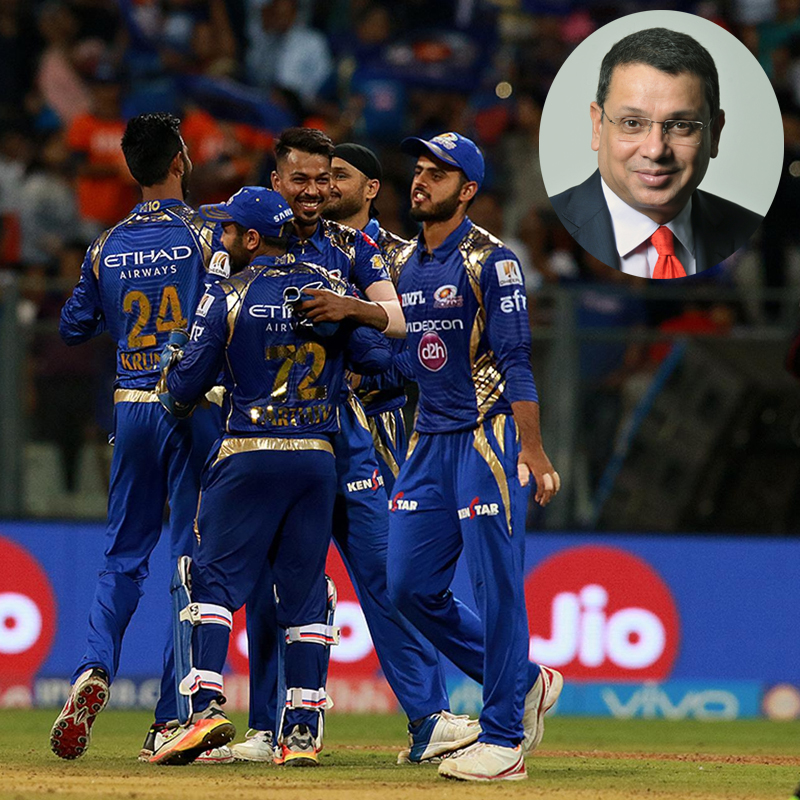
    “Astronomical”, “whopping” and “staggering” were some of the words used to describe Star Group’s consolidated global bid of $2.55 billion for the media rights of the Indian premier League (IPL). Several newspapers described it as the “costliest” cricket property in the world.

    It seems to be an opportune time to look at the truth behind the numbers, and answer a few relevant questions. Was Star’s “all or nothing” bidding strategy exceptionally brilliant or extremely stupid? Does the seemingly-high price reflect the enormous and growing valuation of the IPL? Are IPL’s media rights costlier than those for the Indian national team?

    The Board of Control for Cricket in India (BCCI) allowed two kinds of bids – a consolidated global bid for the seven rights, including TV and digital, through a consortium, or individual bids for the specific rights. For example, a company could bid for the TV rights for the sub-continent only or only for the ‘Rest of the World’. Another could bid for two, three or four of the seven rights. A fourth could bid for all the seven rights separately. A fifth could do this, and also put in a consolidated global bid through a consortium.

    All-or-nothing Strategy

    From the information that’s available, Star was the only bidder to exercise the last option – a consolidated bid and separate bids for the seven rights. The others chose to focus on specific rights based on their strengths. Sony, which held the IPL TV rights for the first 10 years (2008-2017), put almost all its budgeted payment – over 99 per cent — on the TV rights for the sub-continent. Facebook, Airtel and Reliance Jio had huge, but single, bids each for the digital rights.

    The second component of Star’s “all or nothing” strategy was to bid really high for its consolidated bid, and fairly low for the specific rights. The idea was simple: make sure that it had a relatively higher chance to bag the composite bid, and ensure that if it got only a few individual rights, it paid much less. This is clear from the bid amounts. Star’s consolidated bid was Rs 163,475 million for five years. However, the sum of its bids for the seven individual rights was only Rs 788,247 million, or less than half of the former amount.

    Take a look at the comparative individual bids by the various players to understand Star’s game plan.

    Its bid for the subcontinent TV rights was Rs 61,969 million or much less than Sony’s Rs 110,500 million. Its price for the digital rights was Rs 14,430 million, or even lesser in percentage terms than Facebook’s Rs 39,000 million, Airtel’s Rs 32,800 million, and Reliance Jio’s Rs 30,757 million. Thus, Star made certain that it wouldn’t overpay for the individual rights.

    But Star was willing to go overboard for the consolidated and overall rights. The reason for this was obvious: BCCI’s tender stated that a combined bid could win only if the amount was higher than the sum of the highest bids in the individual categories. The latter figure, as it turned out, was Rs 158,195 million, or just over 3 per cent lower than Star’s consolidated bid of Rs 163,475 million. It was a lucky break for the winner – if its bid had been four per cent lower, it would have got only a puny ‘Rest of the World’ right that was worth Rs 487.5 million.

    Seeking Synergies

    In the future, the “all or nothing” strategy may turn out to be exceptionally brilliant or extremely stupid.

    This can be explained by two examples. When entrepreneurs opt for mega takeovers, they generally have two kinds of plans. The first is to sell off the various assets as they feel that the sum of the parts will be considerably higher than the whole. The other is to leverage and extract synergies that will result in a higher valuation for the whole.

    Both can work, but will the latter strategy work for Star? The quick answer: only if it knows the art and science of synergies.

    Over the past several years, sports organizers, media rights-winners (bidders) and advertisers have explored ways to take advantage of sport viewers’ habits in the age of convergence. According to a 2016 working paper by the Harvard Business School, some of the organizers, like UEFA (football), have successfully integrated “commercial activities and resources of sponsors into sports events” to improve “audience experience”.

    According to a 2016 piece by Patrick Hanavan, Chief Client Officer, Extreme Reach, a cloud technology platform, “There is increasing evidence that consumers are pairing their TV watching with ‘second-screen’ behaviour on social media….” This provides advertisers with “more opportunities for synergy between their TV buys and video buys… and potentially more cost-effective inventory.”

    public://BCCI_1.jpg

    Given such trends, a rights-holder, who has combined and comprehensive TV and digital rights presence, is ideally-placed to woo a larger set of audience, reach more advertisers, grab more spend from the same advertiser, and work closely with the sport organizer. The global trend is towards a seamless ‘rights’ strategy that encompasses TV, digital, broadband and social media.

    Although it’s not strictly similar, Turner Sports’ handling of the NBA media properties is an example. According to a report, Turner’s handling of the NBA’s digital business became so extensive to encompass “everything from mobile and social to broadband and the NBA’s out-of-market package”. Add TV to this mix, and what you have can be a winning combination.

    Star can easily drive, rather than merely woo, IPL traffic to its different properties. Star owns Indian cricket as it has the crucial rights for IPL and national team (the Indian cricket rights are with Star till first half 2018). It can extract cricket synergies if it innovates and thinks differently. Over time, the IPL viewership can translate into increased audience for non-IPL content on Star’s properties like Hotstar. The net result: higher returns on overall investment.

    Unfortunately, such grand strategies can unwind easily. Star’s attempt to drive traffic internally can drive it away. Seamless integration requires time, and five years may not be enough to translate the objectives into reality. Moreover, the fresh bidding for the Indian team’s rights will take place in 2018, and Star may lose them. It will be left with the IPL rights for a short summer period.

    Crucially, competition will keep nipping at Star’s heels, and may overtake it in the future. Next year, Sony, Facebook, Airtel and Reliance Jio will bid more aggressively. This will definitely happen when fresh tender for the IPL bids are floated in 2022. The story of how the bidding for the IPL digital rights has panned out is an indicator. The last time, Star won them for mere Rs 3,030 million for three years or Rs 1,010 million a year. This time, FB bid Rs 39,000 million for five years or Rs 7,800 million a year. It implies that the annual worth has gone up by nearly 225 per cent. Clearly, the social media network hopes to ride the cricket wave. The next time, Star’s “all or nothing” may come to nothing.

    Worth of IPL

    In 2009, when the IPL rights were renegotiated, Sony agreed to pay Rs 82,000 million for a nine-year period or Rs 9,111 million a year. At a simple inflation rate of 10 per cent, the figure will escalate to Rs 17,311 million over nine seasons. At a compounded rate of 10 per cent, the figure will be Rs 21,483 million. Star agreed to pay Rs 32,695 million per year, or a sizeable over 50 per cent higher than the 10 per cent compounded figure. This indicates that the IPL’s valuation has shot up, or at least the stakeholders think so.

    Of course, if one accounts for the rupee devaluation between 2009 and 2017, the math will be different. In 2009, the dollar averaged Rs 46, and is now just over Rs 64.

    A similar 10 per cent inflationary calculation for the price paid per match for the national team (the contract was bagged by Star in 2012) and IPL (2017 deal) will reveal that the conclusion that IPL is more expensive isn’t correct. If one looks at the overall scenario from a different perspective, IPL’s valuation has come down. A couple of years after the inaugural season, the league’s value was $4.1 billion in 2010. In 2016, Duff & Phelps found that it was still worth the same — $4.16 billion.

    Only this year did Duff & Phelps upgraded the valuation of IPL to $5.3 billion. Even this signifies an increase of 29 per cent over seven years, or less than what you can earn on fixed deposits. In fact, according to Brand Finance, the value of the league has diminished from a high of $4.1 billion to $3.8 billion now, after reaching a low of $2.9 billion in 2012.

    But at the same time, other deals indicate that the stakeholders still have faith in IPL. Recently, IPL title sponsorship was sold for Rs 22,000 million or twice the figure for the Indian team sponsorship.

    Only time will tell whether Star India can convert the opportunities to shore up its bottomlines further, considering its financial clout and business acumen.

    ALSO READ:

    Star bids highest for BCCI’s IPL media & digital rights and is the winner

    IPL has come to the rightful home of cricket in India: Star’s Uday Shankar


    public://Alam_Srinivas.jpg(Alam Srinivas, a senior business journalist and Executive Editor of Patriot, has authored two books on IPL, `IPL: Cricket and Commerce’, and `Cricket Czars: Two men who changed the gentleman’s game’. The views expressed are personal and Indiantelevision.com need not necessarily subscribe to them.)
  • Comment: With IPL rights Uday Shankar gambles audaciously, must plan pragmatically

    Comment: With IPL rights Uday Shankar gambles audaciously, must plan pragmatically

    The numbers were close to what we at indiantelevision.com were betting on. In conversations with senior executives from various companies, we had predicted that the telecast rights to the Board of Control for Cricket in India’s (BCCI)’s Indian Premier League (IPL) would fetch it around twice the price that Sony had earlier coughed up. And that too for a rights period which has been halved as compared to Sony’s time.

    Star India’s bid of Rs 16,347.50 crore ($2.56 billion) lived up to that expectation. Sony had last paid Rs 82,000 million ($1.6 billion then) for the rights. In rupee terms that’s close to twice what was earlier paid.

    Of course, the key execs in Star India – led by chairman & CEO Uday Shankar – have good reason to pop the bubbly. They bested a slew of broadcasters, telcos, OTT players and more experienced global sports rights owners to the IPL rights tape with an offer that may appear  mindboggling – nay mind numbing – to many an industry observer.

    Star India, however, got through by what many might say is a thin whisker. The combined highest individual bids for all the rights on offer including India, digital, ROW A,B,C,D, E totted up to Rs 15,8195 million, whereas the 21st Century Fox owned network’s global bid for all rights was Rs 16,3475 million — a difference of just Rs 5000 million. A seasoned industry observer like Kunal Dasgupta, former head of  Sony Entertainment in India, said Star hasn’t bid too high — if one takes into account the combined figure of bids of others.

    Star India led the individual bidding for only one territory – the UK. Elsewhere its rivals bid higher. So, if Star India had not safeguarded itself by putting in a global bid, it well may have been sitting on the losing side with telecast rights only for old Blighty.

    However, it is on the winning side now. And media watchers are questioning whether  Shankar and his team have  bitten off more than they can chew. The network is already anteing up Rs 430 million a match since 2012 for telecast and digital rights to all international cricket that India plays. Thankfully, the Rs 38,510 million deal ends mid-2018 when the IPL-Star era begins.

    But who knows the broadcaster might make its pitch for the same rights once again. If one goes by its hunger to create and own Indian sport, one can expect a spurt in prices for the rights to international cricket featuring India too. So much so that the Rs 550 million per IPL match it is now committed to pay out may look relatively cheap. As things stand today, India cricket rights are cheaper than theIPL’s— and that says a lot about a league that has been valued at a shade over $ 5 billion by an international company.

    That’s for another day. Clearly, new benchmarks have been set with the new IPL deal. For Shankar, it is a calculated gamble that may actually help him raise his stocks within the 21CF family. Star is clearly pulling out all the stops in India. As are his bosses Rupert, Lachlan and James Murdoch. Because it is something they have been used to doing. Up the stakes and keep a stranglehold on sport that viewers cannot do without. Monetising it effectively comes later; remember Kaun Banega Crorepati, the Indian version of Who Wants To Be A Millionaire.

    In 2015, the UK’s monolith satellite operator Sky (21st Century Fox owns 39.14  per cent of Sky and is seeking to own completely through its December 2016 offer of pounds sterling 11.7 billion) agreed to fork out £4.176bn to keep hold of the maximum possible number of English Premier League matches – 126 – in the new three-year cycle, almost double the £2.28bn it shelled out in 2013. That worked out almost £10.2 million (Rs 844 million per game). So doesn’t Rs 550 million look cheap?

    Sky had signed a cheque of just £191 million for rights to the EPL (60 matches a year) from 1992 to 1997 – a steal at £0.6 million per match.

    In  July 2017, the leading UK DTH player  raised the stakes even further by launching an English Premier League channel, which would air the 126 matches as part of an initiative to revamp its sports channels. Ten of its sports channels were available at £27.50 per month, whereas individual channels could be subscribed to at £18 a month.

    Will Star go for a similar spin-off play in India?

    Will it launch an exclusive IPL Star Sports channel with debates and coverage of what the various teams and team owners are doing?  And biopics around some of the main players in the teams? Can it start a talent hunt to zoom in on cricketers who could play in the IPL? Can it create special programmes, format shows around the IPL? Sure the creative ideas are many, and many of them could end up being money spinners as well as duds. A lot of this has not been attempted before and is new territory for all, but Star India knows how to enchant viewers with its programming. However, one expects a lot more from it then just bringing TV characters and actors from its top shows onto the field for some of the ceremonies – something it did when it was the India team sponsor.

    Or will the network go for a simpler idea— broad base its telecast across its TV channel network with regional language commentary? Will it work with the BCCI to bring in further entertainment or excitement into cricket?

    While some may question Uday Shankar and team’s thinking behind paying out such a fat purse, clearly there’s some arithmetic and growth strategy in place. Shankar admitted to that when at a post bidding press conference he hinted that the winning bid seemed the “right” figure keeping in view the competitiveness of the bidding by others. Star India has displayed what many considered derring-do when it took the path to develop very local Indian sports like kabaddi, not to mention badminton, table tennis, football and other sports in India. But it has had the last laugh; especially with kabaddi that has found traction and is emerging as a money-spinner.

    With the world as his playground and the rights to digital and television globally at his disposal, expect Shankar and co to do magic. In one market the Star India team could sell the rights to a telco for the live feed, in the same market,  it could sell it to a VOD player for a delayed telecast and also sell it to a broadcaster there for pay TV or run a pay TV channel. In the UK, it has got a ready buyer in the Sky Sports cricket channel, which it launched along with  EPL Sports.

    The IPL teams have got representation from several cricket and emerging cricket playing countries; so the interest is bound to be there. And, if it is limited, Star and local partners will work to whip up the excitement.

    Otherwise, it could use the fun and action on the IPL cricket field to seduce subscribers in various countries to opt for its VOD and streaming service Hotstar. It has just about begun its global journey for Hotstar with its launch in Canada and the US a couple of days ago.

    The VOD platform has been blanked out in all other nations apart from these two and India. Viewers in these markets are used to paying – even if it is only a monthly fee of $9.99 to $13.99. In Indian rupees that is a lot of money: around Rs 650 to Rs 800. If Star manages to lure in even five million paid subscribers, at those levels it will generate an average of a whopping Rs 100,00 million annually per three month IPL season. Over a five year period it can expect its total subscription pie to grow to Rs 65,000 million in digital revenues from just Hotstar. Of course, one has to calculate expenses and operational costs. But then it will also rope in ad revenue too for the service.

    It is in India where it will seek to really exploit the IPL magic. Television advertising and subscription revenues,  premium VOD revenues for both live and delayed feeds – as well as ad  commercial sales  revenues on the free basic Hotstar service. Or, it could license the live digital feed to a social media network or a telco. Remember Facebook, Airtel and Reliance Jio bid in excess of Rs 30,000 million for the India digital rights alone. If any of them bite when Star makes them an offer, it would secure the broadcaster’s India’s revenue to some extent at least. Star well might keep the free delayed feed in house and stream it on Hotstar or sell even that to another player. The opportunities are mind-boggling.

    Of course, the big money monster is clearly going to be TV in India for the next five years, and even 10 or more, possibly. And that’s where Star India will go in for the kill.  The Indian cable TV ecosystem is evolving. However, cable TV operators and DTH players have been wary of raising subscription rates as well paying more for the content to broadcast partners.
    Though, through cricket, Star may look at building a walled garden — something that competitors have hinted at — the success or failure of it could only be gauged by a future time. As they say, hindsight is a great teacher.

    ALSO READ:

    Star bids highest for BCCI’s IPL media & digital rights and is the winner


  • IPL has come to the rightful home of cricket in India: Star’s Uday Shankar

    IPL has come to the rightful home of cricket in India: Star’s Uday Shankar

    NEW DELHI: Star India chairman and CEO Uday Shankar today said that the winning bid figure for IPL media rights of approximately $ 2.55 billion (Rs. 163475 million) was the “right” amount for a property as exciting as the Indian Premier League and justified the acquisition by asserting the competitiveness in bidding in various categories proved it.

    “We are delighted to bring IPL to the rightful home of cricket in India and elsewhere,” Shankar said at a post-bid press conference in Mumbai, adding that the eco-system of IPL and sports broadcasting has changed over the last 10 years, which reflected in the figures bid by players anxious to corner a slice of the cricket pie.

    “We believe that the IPL is a powerful property and lots of value can be created in the digital (world) and on TV for fans,” Shankar said explaining why Star bid both, for the digital and TV rights of the premier cricket property that was with Sony for the last 10 years.

    Shankar drove home the point that, as Star had a strong presence in TV and was also the owner of a robust digital platform (Hotstar), it made sense for the company to get complete rights of IPL. 

    However, Shankar made no bones of the fact that the company would have to think hard on the strategies to monetise the IPL as pay TV revenues were “highly regulated” in India, courtesy sector regulator TRAI’s new proposed tariff regime.

    For the record, Star India had challenged the tariff regime proposed by the TRAI in Madras High Court and a final directive form the court is still pending.

    Pointing out that Star would “continue to work within the law” in an effort to get better return on investment, especially now that it has invested heavily in IPL too, Shankar jocularly added, “We’d have to figure out something or we have a problem.”

    Shankar was also of the opinion that the Indian consumer had surprised critics and skeptics alike by taking to digital quite well. “As a country, we were told India was not broadband-ready (but) in less than two years India has emerged as one of the exciting markets (for digital players),” he said, adding that a better broadband infrastructure and cheaper data prices would further boost the market for online video consumption in India.

    The Indian cricket board, owners of the IPL brand and property, however, skirted questions on Star’s impending monopoly over the broadcast business now that it has also acquired the rights for IPL. Dish TV had written to BCCI and the government warning that if Star won the IPL rights too, it would be in a monopolistic situation to dictate terms to distributors of TV content as Star already had rights of most major cricket properties around the world.

    Meanwhile, the man credited with conceiving IPL, Lalit Kumar Modi, now living in exile in the UK, tweeted, “So, Star Sports wins the global rights for IPL. I would’ve hoped for a larger figure. Deserved greater value after 10 years of success.” 

    Also Read:

    IPL chief Shukla recuses from ‘live-streaming’ media rights auction

    Jawahar Goel raises alarm of emerging Star cricket monopoly (updated)

    IPL tendering process to commence 17 July; bidding to be fierce

  • TDSAT ‘no’ to stay Star Bharat launch, DPO payments subject to adjudication

    TDSAT ‘no’ to stay Star Bharat launch, DPO payments subject to adjudication

    NEW DELHI: Even as it declined to stay or restrain the launch of Life OK channel as Star Bharat, the Telecom Disputes Settlement and Appellate Tribunal (TDSAT) yesterday said the amounts paid to the distribution platform operators or DPOs will be subject to the final orders of the tribunal.

    The bench, comprising TDSAT chairman Shiva Keerti Singh and members B B Srivastava and A K Bhargava, observed that the agreements between broadcaster Star India and DPOs Dish TV and Videocon d2h (both entities in the process of merging) will continue to operate and the cost being offered by the broadcaster cannot be reduced unilaterally.

    While Star India was given four weeks to reply, the two DTH platforms were asked to file their counter-affidavits too. Thus, the next hearing may come up some time in October 2017.

    The tribunal said if it is proved that the presence of Star Bharat on Prasar Bharati’s free to air DTH platform FreeDish is tantamount to the channel’s conversion from pay to FTA, then both Dish TV and Videocon d2h will be entitled a refund from Star.

    Star India had contended that merely making a channel available on FreeDish platform does not tantamount to a conversion in the nature of the channel for which the DPOs are being charged.

    Dish TV and Videocon d2h had moved the tribunal earlier this week alleging that Star India was converting its pay channel Life OK into a FTA network by putting the rebranded channel (Star Bharat) on FreeDish platform without informing the Telecom Regulatory Authority of India (TRAI). In its defense before the court, Star India responded by saying that “we are only rebranding” and not “converting our pay channel” into FTA.

    Interestingly, this petition came just two days after Essel/Zee Group’s Dish TV had sent a letter to the Ministry of Information and Broadcasting, Indian cricket board BCCI, TRAI and monopoly watchdog Competition Commission of India. In the letter Dish MD Jawahar Goel had alleged that Star was trying to create a monopoly over cricket broadcast rights in the country, a move that would be detrimental for all stakeholders, including consumers who would ultimately dish out more subscription money to watch cricket on telly.

    To buttress his arrangements, Goel had contended that Star had even challenged rge sector regulator TRAI’s jurisdiction to fix tariff charges — a case that’s pending before the Madras High Court.

    ALSO READ:

    Dish TV moves TDSAT against Star Life OK name change & turning FTA

    Dish TV shoots off letter to IBF; alleges discrimination by b’casters, OTT platforms

    Jawahar Goel raises alarm of emerging Star cricket monopoly (updated)


  • Dish TV moves TDSAT against Star Life OK name change & turning FTA

    Dish TV moves TDSAT against Star Life OK name change & turning FTA

    NEW DELHI: After having raised an alarm a day back over an impending monopoly of Star India if it wins the broadcast and other rights to IPL cricket, Essel/Zee Group’s DTH platform Dish TV has moved broadcast and telecoms disputes tribunal seeking restraining order against Star Life OK’s rebranding process and turning free-to-air (FTA).

    In its interim prayer Dish TV has sought an order from disputes tribunal TDSAT to “restrain” Star India from converting Life OK from a pay channel to FTA by changing its name to Star Bharat and joining the Doordarshan FreeDish platform. Reason?

    According to the petition, reviewed by Indiantelevision.com, Star is making the changes “without informing” sector regulator TRAI as also without giving public notice about the change as “specified in clause 4-3 of the TRAI regulations.”

    Star India is in the process of renaming on-air GEC TV channel Life OK (a pay channel) into Star Bharat and put it on Doordarshan’s FTA DTH platform DD FreeDish. Though industry sources indicated that the change was to come into effect from sometime end of August 2017, sources in Prasar Bharati, owner and manager of DD, had said the pubcaster’s DTH platform was not yet technically capable of bringing on board more channels despite they winning slots to be part of the FTA KU-band service as an upgradation process was still not complete.

    The case at TDSAT is scheduled to for an initial hearing on 25 August 2017. Dish TV, along with its partner Videocon D2h, has appealed the tribunal for a restraint on Star India and any other further direction that it may “deem fit and proper” keeping in mind the facts placed before the court.

    Keep tuned in for more episodes on the new and unfolding corporate warfare in the Indian media and entertainment realm.

    ALSO READ:

    Jawahar Goel raises alarm of emerging Star cricket monopoly

    Star Bharat to be available on DD FreeDish as b’caster’s fourth FTA offering

    Life OK rebranded as Star Bharat


  • Dish TV shoots off letter to IBF; alleges discrimination by b’casters, OTT platforms

    Dish TV shoots off letter to IBF; alleges discrimination by b’casters, OTT platforms

    NEW DELHI: In a move that’s certain to set the cat amongst the pigeons, Dish TV, one of India’s biggest satellite platform in terms of subscribers, has not only accused broadcasters of  “discrimination” relating to making available content to various pay distribution platforms vis-à-vis likes of OTT, but also “creating huge disparity” in the market.

    “Broadcasters, on one hand, keep on charging huge subscription fee from us and, on the other hand, provide the same content/channel to the OTT platforms at highly subsidized rates, thereby not only creating a non-level field, but also causing huge detriment to the subscribers of Dish TV. Availability of same content/channel on alternate distribution platform on much cheaper rate vis-a-vis DTH has started resulting into migration to the alternate distribution platforms,” Dish TV has said in a letter to the Indian Broadcasting Foundation, an apex body of TV channels or broadcasting companies operating in India.

    The Dish TV letter dated 11 August 2017, reviewed by Indiantelevision.com, goes on to highlight why the move of TV channels to turn FTA, join Doordarshan’s free-to-air DTH platform DD FreeDish after paying a carriage fee, and making available content at highly subsided rates to OTT platforms like YouTube and that being proposed by Reliance Jio slides the Indian television market’s business model to be largely advertising driven.

    “It is a common industry knowledge that the broadcasters have provided their channels to the OTT platforms at a highly discounted rates, which is totally prejudicial and discriminatory to the DTH platforms,” the Dish TV letter stated, which has also been sent to the DTH Association of India and the All India Digital Cable Federation, a body of digitally-able MSOs.

    The letter from Dish TV, written by the satellite platform’s managing director Jawahar Goel, is addressed to IBF president Punit Goenka, who also is Zee Entertainment Enterprises Limited MD and CEO, and a nephew of Goel. Goenka’s father and media baron Subhash Chandra is a member of India’s Upper House or Rajya Sabha.

     According to people familiar with the development, IBF’s member-companies have been asked to give their feedback on the content of the letter, which could be put to vote some time mid-September.

    “The IBF constitutes of seven major members, viz. Star, Zee, Sony, IndiaCast, Sun (TV group), Discovery and Times, which not only control the IBF but also are the major players collecting the subscription and advertisement revenue— collecting more than 99 per cent of the subscription and advertisement revenue of the Indian broadcasting industry,” the letter stated, adding that actions of the broadcasters “clearly indicate” the focus was shifting towards increasing the advertising revenue against subscription revenue.

    Raising the issue of sector regulator TRAI and disputes tribunal TDSAT’s emphasis on “fairness, reasonability and non-discrimination” as far as making available content to distribution platforms,  Dish TV pointed out that strategies employed by broadcasters were “deterrent to the pay TV market.”

    Pointing out that certain actions of the broadcasters could amount to breach of cross-media restrictions too, the letter exhorted the IBF members to discuss “whether the emphasis has to be on pay model (where the broadcasters can collect subscription) or an FTA model (where the broadcasters can get the advertisement revenue)”.

    Till the time of writing this report, Indiantelevision.com could not get across to IBF for a reaction.

    “Availability of same content/channel on alternate distribution platform on much cheaper rate vis-a-vis DTH rate has started resulting in(to) migration to the alternate distribution platforms,” the letter highlighted, adding that big broadcasters’ own OTT platforms (like Star’s Hotstar, Viacom18’s Voot, Sony Pictures Entertainment’s SonyLIV and Zee’s dittoTV, for example) also contributed to compounding the problem.

    The letter added: “It will be critical for your (IBF) members to spell out the strategy to hold/grow the pay TV market, which has been contributing to around 35-40 per cent of the total revenue of the pay broadcasters.”

    However, it seems that the present slew of letters from Dish TV and accusations will again rock the approximately Rs 558  billion Indian media and entertainment industry, which had thought corporate skirmishes of mid 1990s to mid 2000s had been buried in favour of overall growth of the broadcast and cable sectors and the media and entertainment industry, in general.

    ALSO READ:

    Jawahar Goel raises alarm of emerging Star cricket monopoly


  • Hotstar rolls out attractively-priced Premier League offer

    Hotstar rolls out attractively-priced Premier League offer

    MUMBAI: From time to time, Hotstar, the VOD streaming service from Twenty First Century Fox’s  Star India, has been making short-term promotional subscription offers through its payment partners like HDFC, Citibank, PayTM and what have you.

    Subscribers have either been getting 100 per cent cash back for one month or two months depending on the subscriber’s card. Including the first free trial month, that effectively gives an annual subscription at anywhere between Rs 1, 800 or Rs 2,000 as compared to the monthly subscription price of Rs 199.

    However, since 11 August, it has been running an extremely tempting subscription scheme called the Premier League offer, which has a sticker price of Rs 999 for nine months. The only catch: the payment is non-refundable and has to be made using a debit card and is for a limited period till 12 September.

    The idea obviously is to get potential football lovers who have been fence sitting  so far to sign up with a massive discount of around 40-50 per cent.

    Over the past year, the government has been driving consumers toward digital payments, and also open bank accounts. The Indian consumer – normally wary of piling too much debt – has been loathe to sign up for a credit card. However, opening a bank account normally gets a bank customer a debit card in most cases.

    By pushing the Premier League offer, it is hoping to make it a very lucrative proposition for those consumers and others to start using their debit cards.

    Hotstar, smart TV apps of which are in the pipeline, currently offers around 50,000 hours of movies and television content together across eight languages, and almost all major sports are covered live.  

    Even as the research firm KalaGato reported 73 per cent jump in Hotstar’s market share in 10 months, that is expected to spurt further with the addition of the CBS catalogue, and of course Game of Thrones which has been in the news for its crackling seventh season and its leakage from different partners worldwide, including India.

    Recently announcing a pipeline with 18 originals from India, Amazon Prime offers perceptibly the most reasonable annual plan at Rs 499. Sun TV’s Sun NXT subscription plans start from Rs 50 per month. Netflix however is expensive – with plans starting at Rs 500 per month, but is reflective of the catalogue size and its target audience, the crème de la crème of Indian consumers.

    Amazon Prime has reportedly bagged a market share of just 9.66 per cent, Sony Liv pocketed 6.96 per cent share and Airtel-run Wynk Movies was at 6.36 per cent, the KalaGato report had added.

    We reached out to Hotstar CEO Ajit Mohan, but received no response.


  • Comment: War on online video piracy, which matters, is here for India to fight

    Comment: War on online video piracy, which matters, is here for India to fight

    “There’s only one war that matters. And it is here”.

    So reads the caption of HBO’s official trailer for the blockbuster sixth episode of ‘Game of Thrones’ season seven that is scheduled to be aired next week. Even as Daenerys Targaryen’s Unsullied Army took up position outside the walls of King’s Landing, the online leaks of the TV series continued with unfazed pirates threatening not only to up the ransom figures, but also breach more episodes—Khalessi and dragons, notwithstanding.

    But the caption of the trailer does resonate with the Indian media and entertainment (M&E) industry as well as the government and policy-makers. The war that matters – the battle against online pirates — is certainly here and worth fighting for.

    As the online video market grows around the globe, India being no exception, so has the fear of online piracy and loss of revenues to content owners.

    The leak of an episode of GOT that recently happened in India, courtesy Prime Focus Tech, Indian host broadcaster Star India’s technology vendor, brought to the fore that the menace is closer home and will grow in coming days. And it happened just in the week – or after Hotstar – started a high decibel media campaign  urging  viewers to stop downloading torrents and go for originals on the streaming VOD service. The comnsumer – it seemed – was cocking a snook at its suggestions, though the leak happened through its vendor-partner. 

    Earlier, it was primarily the Indian film industry that was battling online pirates through John Doe court orders and blocking of some websites. But now, it seems, the whole entertainment industry needs to come together with policy makers to put up a joint front against piracy. More importantly, admission of the fact that the scourge has arrived on Indian shores and will spread in the coming years more aggressively, will only help drive anti-piracy initiatives.

    It’s not that initiatives against piracy are not taking place, but they are individual acts. “There are various industry bodies operating in the M&E sector in India and since there can’t be divergent views on tackling piracy, it’s high time a single coalition is formed by all industry stakeholders in partnership with government, which will help align business interests in a common mission,” said Viacom18 Media group general counsel and company secretary Sujeet Jain, one of the industry execs at the forefront in the fight against piracy.

    Why the fight against online piracy is imperative and India must start taking counter measures to safeguard against revenue losses?

    Sample some figures. Singapore-based market research firm Media Partners Asia (MPA) recently estimated that the Indian online video industry generated approximately $ 230 million in total sales in 2016 and could reach approximately $340 million in 2017. Online video revenues, including net advertising and subscription fees, will grow at a 21 per cent CAGR across the Apac region between 2017 and 2022, climbing from US$17.6 billion in 2017 to US$46 billion by 2022, MPA reported.

    Data revenues across fixed and mobile networks in Apac will reach $318 billion by 2022 and average mobile broadband penetration will reach 73 per cent per capita by 2022 versus 59 per cent in 2017, with some of the biggest growth coming from India, Indonesia, the Philippines, Thailand and Vietnam.

    Indian regulator TRAI’s figures state till May-June this year India had 282 million wireless and 18.33 million wired broadband subs.

    While acknowledging the potential of the Indian online video market and its weaknesses for breaches, a TV exec, on the condition of anonymity, pointed out that lack of cohesion and unity is stopping various industry associations to come together under one umbrella for anti-piracy activities. The need for finances to keep such an initiative afloat is an impediment too.

    For example, a body called Copyright Force was announced last year with much fanfare with few Indian and foreign industry associations promising to collaborate on anti-piracy measures. But, recently a senior government official in the Ministry of Commerce, which oversees IPR-related policy-making, told indiantelevision.com that he had not heard about Copyright Force, but some individual media companies were in regular touch.

    Writing a blog on the need to uphold IPR, Viacom18’s Jain very aptly had pointed out programs such as Digital Bharat may not achieve the  desired results if online piracy is not curbed as IPR enforcement for the M&E industry was no less important than IP assets emerging from innovations and R&D from other sectors and for India to be globally successful, it must ensure safeguards against IPR breaches.

    While the government admits India is a big and complex market, officials also point out efforts are on to evolve an ecosystem where IPR is respected  and online piracy is arrested, if not totally demolished as even more developed markets are finding it difficult to plug such loopholes – leakage of GOT episodes from various parts of the globe being an example.

    A senior government official also told indiantelevision.com that the Commerce Ministry is in touch with organizations like the Ministry of Information and Broadcasting, Ministry of Electronics and IT and Ministry of Law to amend some of the existing relevant legislations (The Cinematograph Act, 1952, the IT Act and the Copyright Act, for instance) to update them in the modern context.
     
    However, the government also expects the Indian M&E industry and related industry associations to give it exhaustive and cohesive feedbacks and suggestions to help framing of futuristic legislations to fight piracy and uphold sanctity of IPRs. Probably, such a united approach is not coming forth from the industry, even while piecemeal suggestions are being given to the government.    

    That raises another question: how is the issue of IPR piracy is being sought to be addressed in other parts of the world?

    The UK has PIPCU or the Police Intellectual Property Crime Unit, which is funded by the Intellectual Property Office and run by the City of London Police to combat this criminality, with a special focus on offences committed online. Australia has a controversial, but stringent law against piracy. In Asia, various countries have different standards, but collaborate with media associations like Hong Kong-based CASBAA to crack down on pirates through jointly funded legal recourse and high-pitch anti-awareness campaigns.

    In June this year, 30 global content creators and on-demand entertainment companies launched an industry coalition called Alliance for Creativity and Entertainment (ACE) dedicated to protecting the dynamic legal market for creative content and reducing online piracy.The worldwide members of ACE include Amazon, AMC Networks, BBC Worldwide, Bell Canada and Bell Media, Canal+ Group, CBS Corporation, Foxtel, Grupo Globo, HBO, Hulu, Lionsgate, MGM, Millennium Media, NBCUniversal, Netflix, Paramount Pictures, Sky, Sony Pictures Entertainment, Studio Babelsberg, STX Entertainment, Twentieth Century Fox, Univision Communications Inc., Village Roadshow, The Walt Disney Company and Warner Bros Entertainment Inc with Star India being the lone Indian member.

    A spokesperson of ACE told indiantelevision.com that though it’d welcome more Indian companies (apart from Star), it has no India-specific initiative on its agenda at the moment. One wonders why not? Certainly ACE with its money and influencing power – some of its supporters do have large business exposure in the Indian market – can contribute a lot in terms of international practices that could help the Commerce Ministry in framing and pushing more effective anti-piracy measures; the existence and contribution of TIPCU or Telengana Intellectual Property Crime Unit or Maharashtra’s online Cyber  crime division, notwithstanding.

    If, according to MPA, India, Japan, Australia, Korea and Taiwan will emerge as the markets (apart from market leader China) with the most scale in online video revenues and distribution, can the pirates be far behind back home?

    Jain conservatively estimated large and medium sized pirate networks in India can generate between $2-6 million per annum, but another Indian M&E industry exec said the loss due to piracy could be in high double digit millions of dollars. Incidentally, the Indian government doesn’t have a figure of revenue losses due to online piracy. If it has, that figure hasn’t been made public.

    So, if there’s one war that the Indian M&E industry and the government need to take cognizance of – it’s already here – it could very well be the fight against online piracy.

    Certainly, piracy cannot be bandied as an achievement of the government’s much touted Make In India and/or Made In India programmes.

    ALSO READ :

    Indian online video to grow to US 1.6 bn at 35 percent CAGR by 2022

    MPA forecasts Asia Pacific online video opportunity at US$35 billion by 2021

    FICCI Frames ’17: Maharashtra to form IP crime unit to fight online piracy

    Online pirates beware, Copyright Force on way

  • Hotstar tech partner Prime Focus signs deals with Turner & sports broadcasters

    Hotstar tech partner Prime Focus signs deals with Turner & sports broadcasters

    MUMBAI: India’s Prime Focus, which was recently in news for admitting and plugging the leak of an upcoming episode of Game of Thrones to be broadcast by its partner Star India’s Hotstar, has signed technology deals with prominent traditional and digital broadcasters.

    A link to view Episode 4 of Season 7 of Game of Thrones bearing a Star India watermark appeared online three days before its airdate as an outcome of an illegal breach of obligations by PFT’s current and former employees. Following PFT’s forensic investigations, Mumbai Cyber Cell arrested four accused on 14 August.

    Prime Focus Technologies (PFT), the technology arm of Prime Focus, recently signed an agreement with Turner Latin America, where PFT’s CLEAR™ Broadcast Cloud will provide work order and supply chain management along with end-to-end process monitoring of critical tasks, with reports and dashboards. “CLEAR was built as an ERP system tailor made for M&E and is well-poised to help Turner improve efficiencies across their supply chain with lowest TCOP, while enabling them to be the first to publish their content to multiple destinations,” said Prime Focus Technologies CEO Ramki Sankaranarayanan.

    PFT also manages the content operations for sports broadcasters. Also, the Sports Video Group recently welcomed PFT as a corporate sponsor. PFT creates CLEAR enterprise-resource-planning (ERP) software for the media and entertainment (M&E) industry.

    Apart from Star, PFT is working with Disney, Warner Bros., Hearst, CBS Television Studios, 20th Century Fox Television Studios, Lionsgate, Showtime, A+E Networks, Tru TV, HBO, IFC Films, FX Networks, Miramax, CNBC Africa, TERN International, Sony Music, Google, YouTube, Amazon Prime, Hooq, Viacom’s Voot, Cricket Australia, BCCI, and The Associated Press and Indian Premier League.

    “We chose CLEAR for three reasons: it is cloud native, multi-platform and easy to integrate through a solid Service-Oriented Architecture (SOA) approach”, said Turner Latin America VP – technology & operations Luis Esparza.

    Operations at Turner Latin America’s main content processing hub in Buenos Aires (Argentina) will be seamlessly connected with all other supply chain locations through the CLEAR hybrid cloud architecture. This will support multi-location distributed workflows such as subtitling and dubbing, compliance mastering, promo operations, archival, playout delivery as well as schedule driven distribution for OTT and VOD.

    ALSO READ :

    Game of Thrones  episode leak with Star TV watermark traced to Prime Focus Tech; 4 people arrested

    VIDNET 2017: MINING THE BURGEONING OTT/VOD SECTOR

    Prime Focus reports flat results for first quarter

  • Star Bharat to be available on DD FreeDish as b’caster’s fourth FTA offering

    Star Bharat to be available on DD FreeDish as b’caster’s fourth FTA offering

    MUMBAI: Going FTA seems to be the flavor of the season. Star India’s Hindi general entertainment channel Life OK, which will be soon rebranded as Star Bharat, is now slated to be available on DD FreeDish.  

    Recently, one of India’s largest broadcasting company Star India had won additional slots on pubcaster’s FTA KU-band service (DD FreeDish) by bidding shades over Rs. 160 million. At present, the three Star channels on the platform are Star Utsav, Star Utsav Movies and Star Sports First.

    Prasar Bharati sources admitted to indiantelevision.com that Star India has additional slots on DD FreeDish, but could not give an immediate time frame for any new channel to be made part of the FTA platform. Reason: DD FreeDish is being upgraded with a new technology (MPEG-4) that will help it enhance overall viewer experience as also get more TV channels on board after signal compression.

    “We cannot guarantee if the technological upgradation will be complete by the end of this month so as to accommodate more TV channels,” a source in Prasar Bharati said, explaining that the arrival of Star Bharat or any other TV channel on FreeDish could get delayed beyond August.  

    Meanwhile, according to industry sources, shows such as ‘May I come in Madam’, ‘Sher-E-Punjab Ranjeet Singh’ and ‘Chandrakanta’ will go off air and shows like ‘Savdhaan India’ and ‘Ghulam’ will continue on Star Bharat. Shows like ‘Kya Haal Mr Paanchaal’, produced by Optimystix, are among the new launches. Life OK earlier carried another named and was originally launched in 2011.

    ‘Aayushman Bhava’, produced by White Horse Telefilms (a murder mystery) and Zama Habib’s ‘Nimki Mukhiyaan’, which was supposed to have aired on Star Plus, has now been shifted to soon-to-be launched Star Bharat. It’s a story about a girl who becomes a village chief and changes her entire village.

    Star Bharat is also exploring launching a bhajan reality show ‘Om Shanti Om’, produced by Colosceum Media, which will be likely judged by rock star yoga guru-turned-entrepreneur Baba Ramdev, along with Sonakshi Sinha, Kanika Kapoor and Shekhar Ravjiani.

    On 17 August 2017, Star Bharat launched its first TVC, #Bhuladedarr. The TVC gives a new definition to ‘overpowering inhibitions’.
    BARC data has shown in the past that private sector FTA channels on DD FreeDish, like Zee Anmol and Star Utsav, garner good audience and help in upping the ratings of such TV channels.

    Doordarshan’s FreeDish is a multi-channel FTA DTH service, which was  launched in December 2004 with a modest collection of 33 TV channels. Regular upgrades has enhanced capacity and presently platform has the capacity of 80 SD TV channels along with 32 radio channels. The service is a available in KU-band on GSAT-15.

    (With additional inputs from BB Nagpal in New Delhi)

    ALSO READ:

    Life OK rebranded as Star Bharat may start from 15 Aug

    FreeDish: English news channel among two come aboard (Updated)