Tag: Star India

  • The BCCI India rights conundrum

    The BCCI India rights conundrum

    MUMBAI: With BCCI’s India media rights coming up in March, big broadcasters and digital players are readying their war chest of cash.

    The current holder, Star India, acquired the rights in 2012 at Rs 3851 crore for a six-year period across 96 matches. The amount comes down to an average of Rs 40 crore per match. Multi Screen Media (Sony) bid a close second with Rs 3700 crore.

    Last year, The Hindu quoted a BCCI official who said, “I wondered how Star India even agreed to pay that price for each of the three forms of internationals. The reserve price could be Rs 30 crore for home internationals, if not even lower, next year.” In the last couple of years, BCCI officials, both former and present, have made no secret of the fact that Star India would not agree to enter the India bid race if the reserve price for a home international match (including Tests, ODIs and T20Is) is set anywhere close to Rs 43 crore.

    Therefore, it is fair to assume that Star India struggled to make money on the matches. Supporting this argument, a media observer said, “We can’t say how much of the subscription revenue they would be apportioning to India team, because when Star sells its subscription bouquet, it is sold as an overall sports package, not right wise. If we compare ad rates vis-à-vis the rights acquisition, they have not made money.”

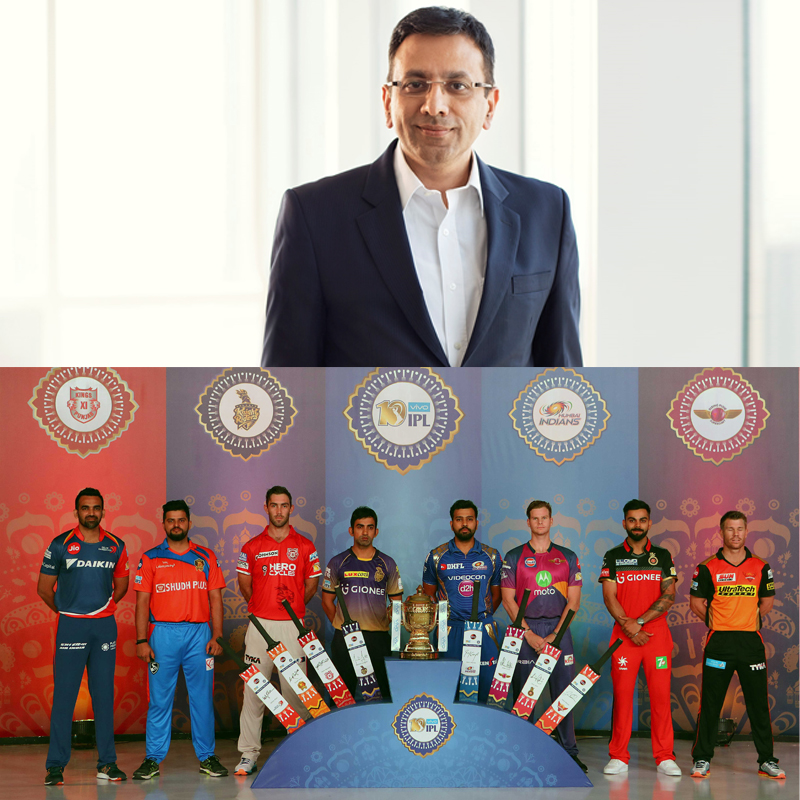
    Star India, in September 2017, hit all other bidders in the fray for a six with just one single mind-boggling global bid of Rs 16,347.50 crore to acquire the broadcast and digital rights of the Indian Premier League (IPL) for the next five years. IPL is hotter than even international events. An IPL game will fetch Rs 55 crore per whereas an international match brings about Rs 40 crore. Star India might focus on making the IPL the biggest revenue-generating property in the world after the EPL and the NBA.

    According to industry sources, broadcasters will be looking at paying Rs 35 crore per match, touted to be a fair amount in current market standards, to the BCCI for the upcoming rights acquisition.

    Sony Pictures Network (SPN) India is likely to make a strong bid for the Indian cricket team home rights. We know that Sony already has the Rs 11,000 crore that it was ready to splurge on the IPL rights.

    The other contender, Dsport, is also rumoured to throw its hat into the ring for the BCCI rights. In an interview to Mint last month, Discovery Communication India SVP and GM Karan Bajaj stated, “We may look at putting cricket on Dsport next year after launching the general entertainment channel Discovery Jeet.” The channel even picked up the bidding document for IPL media rights but didn’t turn up on the bidding day.

    For digital rights, players like Facebook, Twitter, Reliance Jio, Amazon Prime, Hotstar, and Sony Liv will play a crucial role. Facebook was the highest bidder from the digital communication platforms for the IPL with Rs 3900 crore followed by Jio with Rs 3075 crore. Hotstar, which was launched in February 2015, wasn’t in the picture when Star India acquired the BCCI rights in 2012. 

    Meanwhile, Twitter and Amazon have gotten their hands on one of the most high-profile sports properties in the world, the National Football League (NFL). In the time to come, both players have vowed to dominate the live sporting segment on digital in India, too.

    The contract with Nimbus, before the rights went to Star in 2012, had a base price of Rs 31.25 crore per game for each of the three formats purely for the broadcast rights. The BCCI’s marketing committee had kept the base price at Rs 31.25 crore plus Rs 1 crore (i.e, Rs 32.25 crore) for an international game in the A category and Rs 33 crore plus Rs 1 crore (Rs 34 crore) for B category matches.

    Looking at the current scenario, broadcasters will have to cough up a reasonable amount, which can be in the range of Rs 32-38 crore, in order to be in profit. The fact that Star India may not agree to enter the India rights bid, if the reserve price for a home international match is set anywhere close to its previous bid, will help broadcasters such as Sony and Discovery to be in strong contention.

    Also Read :

    The year of big switch in sports broadcasting

    BCCI invites brands to acquire third-party rights for IPL

    Comment: Is BCCI lbw on Star’s sponsorship googly?

  • BCCI invites brands to acquire third-party rights for IPL

    BCCI invites brands to acquire third-party rights for IPL

    MUMBAI: The Board of Control for Cricket in India (BCCI) has invited third parties to indicate their interest in acquiring rights pertaining to the VIVO Indian Premier League (IPL).

     There will be three types of partner rights, which include official partner rights, strategic time out partner rights and umpire partner rights. The term for each partnering rights will be of minimum three and maximum five years.

    Last year, Star India won the global rights, which include broadcast and digital, by bidding Rs 16347.5 crores.

    According to a BCCI release, the official partner rights include the exclusive association of the brand as the official partner, right to use the official IPL composite logo and official partner status in all communications, category exclusivity across all the central sponsorships for Vivo IPL and also the first right refusal on broadcast sponsorship in product category.

    For on-ground, the official partner will be on LED perimeter advertising boards, pitch mat on the outfield at midwicket, boundary rope branding across all matches, branding on all interview and press conference backdrops and logo featured on back panel of team dugouts.

    The cut-off date for sending in expressions of interest (EoI) is 17 January 2018.

    On the digital side, brand logos will be featured on the IPLT20 website. Match day activation integration will also be done on the website. These will be applicable to all the three types.

    The second type, IPL strategic timeout partner rights includes the right to use the official IPL composite logo and strategic timeout partner status in all communications, category exclusivity across all central sponsorships for Vivo IPL, first right of refusal on broadcast sponsorship in product category.

    On-ground will include branded timing graphic on the big screen at each strategic timeout for all the matches.

    The last type is IPL umpire partner rights, which includes the right to use the official IPL composite logo and umpire partner status in all communications, category exclusivity across all central sponsorships for Vivo IPL and first right of refusal on broadcast sponsorship in product category.

    The TV facing branding includes static logo branding on LED sight screens (50 per cent on each sight screen), big screen for 3rd umpire decisions and DRS decisions, on all interview and press conference backdrops, logo featured on back panel of team dugouts, umpire shirts, trousers, hat/cap, match referee shirts and jacket.

    No more than one third party will be granted rights in relation to each product category. BCCI intends (but shall not be obliged) to appoint up to a maximum of six official partners, one strategic timeout partner and one umpire partner. Third parties may express an interest in acquiring the rights in respect of more than one product category but no single third party will be appointed as an IPL official partner, IPL strategic timeout partner or IPL umpire partner in respect of more than one product category.

    The grant of the rights shall be conditional upon the relevant third party entering into a binding agreement with BCCI, the form of which will be sent by BCCI to any relevant third party. No legally binding obligations shall be assumed by or imposed on BCCI or its nominated representatives in connection with this document and its subject-matter, and none of the rights shall be granted until such time as a binding agreement is entered into by BCCI and any relevant third party.

    BCCI anticipates a period of negotiation with third parties submitting EoIs till 31 January 2018, and does not intend to consider any offer for the rights which are received after this date. The above time schedule is subject to revision by BCCI in its discretion.

    Also Read:

    Star bids highest for BCCI’s IPL media & digital rights and is the winner

    Comment: Does Star stand to gain or lose by sharing IPL with DD?

    Star’s Uday Shankar on distribution challenges, IPL, FTA vs. pay TV, innovations, Made in India content…and much more

    Guest Column: Star India’s IPL deal raises three crucial questions

  • Star brings Gurjeev Singh Kapoor home to head distribution

    Star brings Gurjeev Singh Kapoor home to head distribution

    MUMBAI: The industry has been abuzz about TV distribution veteran Gurjeev Singh Kapoor shifting base back to India. Well, that buzz is indeed turning out to be true. Last evening, an announcement was made in the Star India office in Mumbai stating that the London-based head of international business at the company would be leaving Blighty to come back to Bharat, a source at Star said.

    Gurjeev’s return clearly indicates Star India CEO Uday Shankar’s intent to have a senior professional who understands and has solid relationships in India’s complicated distribution sector. One of the main planks of Uday being able to do well and get a return on the high prices he has agreed to cough up for the IPL for the next five years is affiliate revenues. And bringing the affable but tough-as-nails Gurjeev on board will greatly strengthen the distribution team by attracting executives from other companies and help Uday get closer to the target.

    Sources in the industry at indicate that Gurjeev will also play an important role in licensing and distributing the global rights for the IPL, which Star has acquired.

    Gurjeev was earlier the business head of SET Discovery and later CEO of the dissolved joint venture Star DEN Media Services. He was also the COO of Star Den-Zee Turner joint venture Media Pro before making a shift to London to look after Star’s international business.

    The company had earlier this year hired a former Marico executive Sridhar Balakrishnan to head the distribution of Star’s extensive bouquet of 53 odd channels.  

    Industry sources indicate that Star has been asking anywhere between a 15-30 per cent hike in revenues from distribution affiliates, signing both fixed fee and RIO aka à la carte deals, a process that has been taking time for distribution platform operators who have been loath to agree to the hike in content costs.

    Clearly, Kapoor and team should prove themselves up to the task to speed up the process. 

    Please watch this space for further news.

    Also Read:

    Gurjeev Singh to head Star India international business

    Comment: The rise and rise of Uday Shankar

    Star’s Uday Shankar on distribution challenges, IPL, FTA vs. pay TV, innovations, Made in India content…and much more

  • TED Talks India’s first episode garners 42.4 million reach

    TED Talks India’s first episode garners 42.4 million reach

    MUMBAI: The inaugural episode of TED Talks India Nayi Soch, which aims to inspire people across the country with a new way of thinking, has received a rousing response across platforms when it premiered earlier this month. The first episode of the weekly show—which aired on Sunday, 10 December, 2017-was telecast across six channels (Star Plus, Star Pravah, Star World, Star Gold, Star Jalsa, and Movies OK) and garnered an aggregated reach of 42.4 million (Source : BARC All India 2+) on opening day.

    This, and the continuing momentum behind the seven-episode series, is borne by viewers’ reactions on social media as the show over two episodes so far has received over 140,000 mentions on social media from more than 31,000 unique users translating into over a billion impressions.

    “We are extremely pleased with the way TED Talks India Nayi Soch has been received by our audiences. The show appeals to the intellect and inspires people to think about and bring about change,” says Star India CEO Entertainment Amit Chopra. “The objective with this show is to inspire young minds and more so to encourage them to share more and more ideas. It’s very heartening to see the response.”

    Some of the innovations showcased in the first two episodes of TED Talks India Nayi Soch included Anirudh Sharma’s ink made from pollution particulates, Shubhendu Sharma, who quit his engineering job at Toyota to grow forests, Dr. Gautam Bhan’s work on rehabilitation and upgradation of slums. Also featured were outstanding personalities such as Javed Akhtar and Deepak Ramola.

    Also Read:

    Star Plus says #DontKillIdeas in first Ted Talks India campaign  

    TED Talks Nayi Soch on Star Plus, Hotstar: Content should feed passion for knowledge, says Uday Shankar

    TED Talks to get Hindi version on Star with SRK as host

  • BARC ratings: DD Sports in top 5 after 37 weeks

    BARC ratings: DD Sports in top 5 after 37 weeks

    MUMBAI: Pubcaster DD Sports surprisingly garnered third position in broadcast audience research council’s (BARC) all India ratings for week 50 in the sports genre. The live feed of India versus Sri Lanka’s second ODI match helped the channel to climb up.

    Star Sports 1 Hindi leads the chart with 20855 impressions (000s) sum followed by Star Sports 1 with 110690 impressions (000s) sum. DD Sports made an entry after 37 weeks in BARC all India ratings with 81011 impressions (000s) sum. Sony Ten 1 is in fourth position with 80695 impressions (000s) sum. We have second FTA channel in the list, Star Sports First with 57528 impressions (000s) sum.

    DD Sports’ last appearance was in week 12 at the time of India versus Australia live test series. At that time DD Sports was at fifth slot with 26973 impressions (000s) sum. Private broadcasters are up in arms against sharing their live feed with the public broadcaster.

    The Supreme Court on 22 August 2017 said that shared feed of sporting events can only be carried on the terrestrial network of Doordarshan or DD FreeDish and cannot be retransmitted to private cable and DTH operators. After this, in the month of September Prasar Bharti CEO Shashi Shekhar Vempati through a tweet directed all the private DTH and cable operators not to telecast the sporting events’ live feed from Doordarshan that have originally been shared by the rights-holding private broadcasters.

    In December some reports surfaced in the media that Star India would have to share the IPL telecasts with the pubcaster DD that will air the cricket matches on its terrestrial network and FTA DTH platform. This would be made possible as and when the government formally issues a directive as both the law and information & broadcasting ministries were being consulted under a regulation called the Sports Broadcasting Signals (Mandatory Sharing with Prasar Bharati) Act, 2007.

    If the IPL is being shared between the private broadcaster and the pubcaster, we’ll have to see which one bowls us over with higher viewership.

    Star India wins: SC disallows Prasar from retransmitting shared sports feed live

    Prasar CEO reiterates implementation of SC verdict on DD’s shared sports feed retransmission

    Comment: Does Star stand to gain or lose by sharing IPL with DD?

  • Star to air IPL on 10 channels, in 6 languages; live on Hotstar

    Star to air IPL on 10 channels, in 6 languages; live on Hotstar

    MUMBAI: Indian media and entertainment biggie Star India is going full throttle for its first season of the Indian Premier League (IPL). With 12 channels in its bouquet, Star India has decided to involve 10 of them and its digital platform Hotstar to live telecast the matches in six languages including Hindi, English, Tamil, Telugu, Kannada and Bengali.

    “By leveraging the power of TV and Hotstar, IPL will be enjoyed by a total of 700 million fans across geographies which was 550 million in the previous year,” reads a press release issued by Star India.

    The sportscaster which used to stream the action on Hotstar  with a five minute lag will be offering it live on the streaming service with the possibility of a pay option. It is believed to be in conversation with various telecom operators which would bundle it in data and talk plans for their subscribers.  

    The Star India management was quoted in newspaper reports as saying they want to make Hotstar a more massy product than the premium service that is being offered currently.

    Star India has innovated the technology for first time live on TV and digital, check-ins and live score cards on hand-held phones. What this means is that Hotstar users will be able to have a very visible score unit once they logon to the service on their handphones, as compared to earlier when it just streamed the regular TV signals with difficult to read aston bands and cards.

    Star India MD Sanjay Gupta said, “Technological innovations is at the heart of the experience, bringing the stadium home and giving the fans an interactive and immersive viewing experience.”

    public://IPL-Press-Release.jpg

    Star India may also introduce Virtual Reality (VR) for its Hotstar subscribers.

    Meanwhile, the BCCI has announced that the mega auctions for the 11 th IPL will be held in Bengaluru on 27, 28 January 2018.

    Also Read:

    Star India to introduce VR for IPL 2018

    Comment: Does Star stand to gain or lose by sharing IPL with DD?

    Star’s Uday Shankar on distribution challenges, IPL, FTA vs. pay TV, innovations, Made in India content…and much more

  • The year of big switch in sports broadcasting

    The year of big switch in sports broadcasting

    MUMBAI: This year has been nothing short of a roller-coaster ride for sports broadcasters. The industry saw it all–channel launches (pay as well as free to air [FTA]), rebranding, and battles for rights  for numerous domestic and international properties. Renowned properties changed hands while new ones also found a home in the country. It was a year that witnessed the less-fancied sports going from strength to strength in a market that has been dominated by cricket for far, too, long.

    Among the marque developments during the year was how the aggressive Uday Shankar and team stole the rights for the IPL by bidding for the entire package, rather than individual rights for digital and TV, like the rest of the bidders. What was also uncanny was the slender margin that it pocketed the property as compared to everyone else’s cumulative bid. Yes, it bid high, but has not Uday shown that he is the risk taker bar none on several occassions in the past by betting on sports like kabaddi, football, tennis,hockey, table tennis, badminton and encouraged the setting up of leagues for the poorer sports? And his efforts have borne fruit as these  have managed to rope in the viewers, advertisers and revenues. But his challenge will be to able to steer Star Sports in India in the aggressive manner he is known to do now that the India operations of Star India are in the process of coming under the Disney fold following their sale – along with other properties by the Murdochs  – to the mouse house. Star Sports meanwhile lost its leader Nitin Kukreja earlier this year when he departed to head one of the team owner’s franchise operations.

    Of course, streaming service Hotstar set its landmarks in terms of viewers that it managed to rope in for almost every tournment it rolled out.  Star Sports nearest rival now is the NP Singh headed Sony Pictures Networks India which let go of the IPL rights by bidding only for the television piece of the rights. Though its bid was higher than Star Sports’ it still did not manage to retain the rights.

    2017  was remarkable for the fact that digital players – among which figure Amazon, Facebook – are open to come head on with traditional television to snap up sports telecast rights. They of course lost to Star but who knows if they will become key game changers in terms of sports rights pricing going forward.

    The year was also remarkable for the fact that Chinese brands of mobile phones have put their might behind building sports in India by becoming sponsors for almost every major property. Either  OPPO or Vivo or some other brand has paid top dollar to be associated with Indian sport. Whether this bodes well or not only time will tell, but it would be good if Indian brands too get their foot into play.

    Launched in 2016, Veqta, India’s OTT subscription service dedicated to sports, got great traction for the first live property after the launch of the subscription package on Veqta. The boxing bout between Floyd Mayweather and Conor McGregor and the digital campaign was a huge success, garnering around 1.4 billion digital impressions across various media. Within a month of activation of a subscription package, the platform crossed over 150,000 downloads. This made it clear that in India there is a big demand for alternative sports, apart from mainline sports like cricket, and there are people willing to pay for premium sports content.

    Let’s see how each broadcaster fared this year:

    Star India

    While it restructured its bouquet, Star Sports 3 SD and Star Sports 4 SD and their HD feeds went off air. The broadcaster bet big on a regional channel as well as going Hindi with Star Sports 1 Tamil and Star Sports 1 Hindi. Moreover, it also launched Star Sports Select 1 and Star Sports Select 2, taking the broadcaster’s sports bouquet to a total of 11 channels.

    Star Sports telecast Ultimate Table Tennis’ (UTT) inaugural season in 2017 to promote table tennis as a sport in India. The league played a pivotal role in achieving this objective by working in cohesion with the stakeholders: the Table Tennis Federation of India, the franchises, and the broadcaster. Unlike other major sporting leagues being run in the country like IPL and ISL, UTT had club-based franchises instead of the usual city-based franchises. 

    The broadcaster then took a dive into going FTA route with Star Sports First. The country’s first private FTA channel hopped on board FreeDish and got off to a roaring start in cricket-crazy India. This enabled sports fans and enthusiasts to watch their favourite sports in Hindi without paying any subscription fee. Rather surprisingly, Star Sports First contributed to 31 per cent of the overall viewership for Pro Kabaddi League (PKL) season 5. With the launch of Star Sports First, it increased its channel count to 12, thereby becoming the broadcaster with the most number of sports channels in the country.

    The broadcaster took the lead on cricket in the country by acquiring the rights for the Indian Premier League (IPL) by comfortably winning it for $2.55billion for its global rights. Both the TV and digital rights for the next five years from 2018 are with Star. It will also be introducing virtual reality as a game changer.

    The digital ad revenue for the tenth season more than doubled as compared to previous season which was Rs 1.2 billion.

    Recent reports suggest that a caveat is being created to ensure broadcasters share their telecast with pubcaster DD for its terrestrial network and FreeDish. This would be made possible as and when the government formally issues a directive as both the law and information & broadcasting ministries were being consulted, under a regulation called the Sports Broadcasting Signals (Mandatory Sharing with Prasar Bharati) Act 2007.

    Sony Pictures Network (SPN) India

    SPN India started this year with the completion of the first phase of the acquisitions of Ten Sports from Subhash Chandra-led Zee Entertainment Enterprises Limited (Zeel). This involved a monetary transaction of $30 million out of the total $385 million in consideration. The second phase of the deal was mutually concluded by both the parties because of certain condition with Zeel’s receipt of the remittance of $ 36.32 million from SPN.

    SPN India roped Sachin Tendulkar as its brand ambassador for the sports bouquet. On the same day, Sony rebranded its sports portfolio by adding two HD channels Sony Ten 2 & 3 HD which took its total count to 11 channels in the sports cluster. Each channel picked its favourite sport with Sony Six and Six HD dedicating itself entirely to cricket while Sony Ten 1 and Ten 1 HD took to wrestling. Football was handed over to Sony Ten 2 and Ten 2 HD. Sony Ten 3 and its HD counterpart was given to all Hindi feed for any sport. International sports can be viewed on Sony ESPN/HD. Sony is also focusing on golf with Sony Ten Golf HD, which is a very niche market in India.

    SPN India, the official broadcaster (till 2017) of IPL, crossed the Rs 13,000 million mark in terms of ad revenue. After a decade of holding strong, it lost out to Murdoch’s Star India with its aggressive biding price which paled Sony’s proposition of Rs 11,500 crore for just India’s rights.

    The broadcaster also won the exclusive rights for the shortest format of cricket – the T10 Cricket League which is also its inaugural season. Sony has both the TV and digital rights for the league, hosted by the Emirates cricket broad.

    DSport

    DSport is a sports TV channel launched by Discovery Communications India specifically for the Indian subcontinent in February this year. The channel is focused on bringing the most live sports content, over 4000 hours, from around the world to audiences in India. Its wide portfolio of live sports content includes the exclusive rights for many of the leagues of wrestling, football, cycling, horse-racing, golf, tennis, motorsports, and many more.

    To name a few of the exclusive leagues in DSport portfolio are, wrestling properties including American Ring of Honor and Lucha Underground. The third edition of the HBL Pakistan Super League will be aired exclusively on Dsport.  Dsport also acquired the exclusive India broadcast rights of the inaugural edition of the Laver Cup as well as the ICC World XI Tour of Pakistan.

    TS Panesar was appointed as the business head in the second half of 2017.

    Nimbus Communication

    Launched in 2006, Neo Sports and Neo Prime have lost their sheen over the years. Their current portfolio includes leagues like FIFA Club World Cup, The Coppa Italia and Coupe de France in football. In tennis,Davis Cup and Fed Cup are the only two leagues the broadcaster owns. The broadcaster also owns some of the leagues from other sports like basketball, table tennis, motor racing, horse racing and many more.

    Conclusion

    The year 2017 was made memorable because of the shift in the ownership of IPL rights from Sony to Star, the country’s first private FTA sports channel, and the consolidation of other sports in the country. While plans are afoot by broadcasters for the upcoming year, here are some events to look out for in 2018.

    SPN India is likely to make an aggressive bid for the Indian cricket team home rights in a bid to shore up the rights for the few cricketing events with it. Star India is also expected to leave no stone unturned to acquire the rights with the vision of having a monopoly in the Indian sports and cricket industries. We know that Sony already has the Rs 11,000 crore that it was ready to splurge on the IPL rights. The BCCI is expected to open the bid early next year for a period of five years. Furthermore, to enhance the fan experience, Star India wants to make a mark with its first IPL edition and will introduce virtual reality for the 2018 season.

    The stage is set for a dogfight between the two big players in the sector–Star and Sony. Just the prospect of this off-field battle is mouth-watering. 

    Also read: 

    Comment: Does Star stand to gain or lose by sharing IPL with DD?

    Star’s Uday Shankar on distribution challenges, IPL, FTA vs. pay TV, innovations, Made in India content…and much more

    Star India to introduce VR for IPL 2018

    ISL piggybacks on EPL’s popularity to gain viewership

  • A tale of two giant mergers and their India fallout

    A tale of two giant mergers and their India fallout

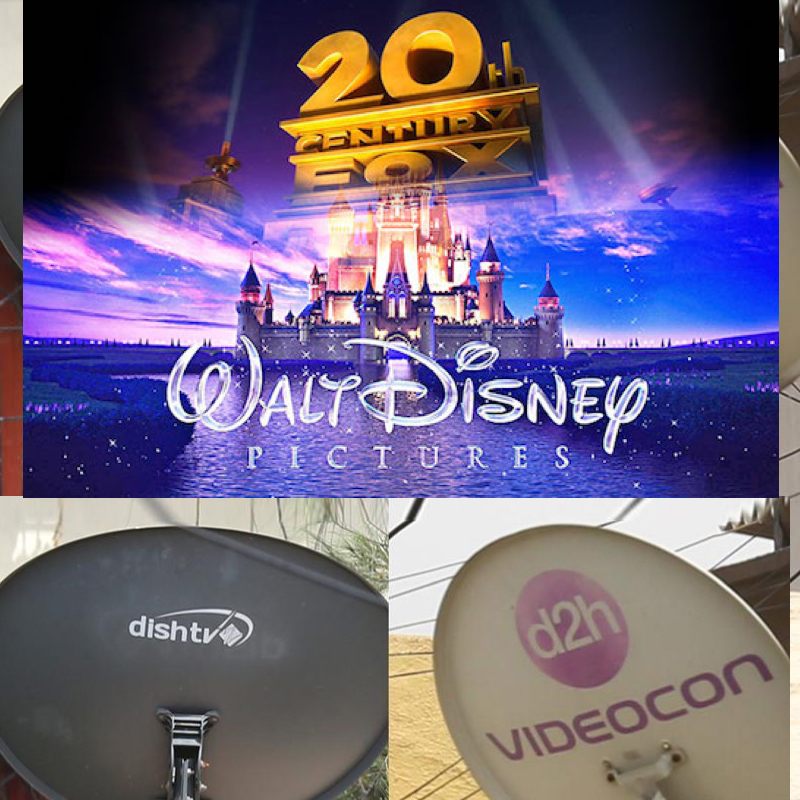
    MUMBAI: Two deals shook the world of media and entertainment last week: Disney-21st Century Fox and Dish TV-Videocon d2h. One was all about content and affects the world of media and entertainment globally including India. The second was all about content distribution and platform and impacts the world of television in India.

    Of course, the ripple effect of the first is oceanic for comparison with the other. So deep will be the impact of Bob Iger and Rupert Murdoch’s decision that the future will look back at the history of media as the pre and post-Disney-Fox and New Fox era.

    Nevertheless, it has created a behemoth in India: the new Disney, which now will house Star India, will have relationships with Tata Sky and the video streaming service Hotstar. The union of Disney and Fox is expected to bring in synergistic savings of close to $2 billion; some of that will be contributed by the Indian division, however marginal that might be.

    In India, the Dish TV-Videocon d2h merger has created the world’s second largest pay satellite TV distribution platform with 29 million subscribers, just behind AT&T’s Direct TV.

    Dish TV Videocon merged is also predicted to bring in large savings through rationalisation of the two companies’ manpower, backend resources and better combined purchasing negotiating power, distribution and infrastructure like offices etc. An estimate is that costs cumulatively will come down by about 10-20 per cent.

    The main leverage it will get is in content costs. Even though the Disney-Fox combine will be unmatchable internationally, in India, Dish TV Videocon could more than prove a match for it. With the expensive IPL under its belt, it will most probably have to kowtow to CEO Anil Dua and chairman Jawahar Goel’s diktats on how much they will pay out for carrying the Star India network’s signals, which includes its premium programming and sports.

    Also read:

    MIB clears path for Dish TV Videocon

    21st CF spins-off into new live news & sports co Fox

    With Star India, Disney emerges as India’s largest M&E firm

  • 21st CF spins-off into new live news & sports co Fox

    21st CF spins-off into new live news & sports co Fox

    MUMBAI: After the blockbuster acquisition of 21st Century Fox by The Walt Disney Company, the former has announced that it will spinoff into a new brand Fox’ that will seek to replicate its own success in the newly focussed verticals of live news and sports brands.

    Using fiscal 2017 as a base, the new Fox is expected to have annual revenue of $10 billion and EBITDA of $2.8 billion. The company will have an investment grade balance sheet conservatively levered with a maximum of $9 billion of new gross debt or under 3 times net leverage on day one.

    Fox will hold iconic branded properties Fox News Channel, Fox Business Network, Fox Broadcasting Company, Fox Sports, Fox Television Stations Group, and sports cable networks FS1, FS2, Fox Deportes and Big Ten Network (BTN). It will also include the company’s studio lot in Los Angeles and equity investment in Roku.

    This new entity will own the top cable news channel in the US and the most-watched business news channel, as well as a station group, which is present in nine out of the 10 largest metro areas. Under sports, it holds the rights for NFL, MLB, World Cup Soccer and NASCAR.

    Fox will have a strong financial profile, supported by peer-leading growth and differentiated free cash flow generation, and will be positioned to continue to deliver consistent growth driven by affiliate rate increases, retransmission growth and strong advertising demand for its live content and entertainment product.

    21st Century Fox executive chairman Rupert Murdoch said: “The new Fox will draw upon the powerful live news and sports businesses of Fox, as well as the strength of our broadcast network. It is born out of an important lesson I’ve learned in my long career in media: namely, content and news relevant to viewers will always be valuable. We are excited by the possibilities of the new Fox, which is already a leader many times over.”

    The remaining business of the company has been combined with Disney in a $52.4 billion acquisition including all its film and TV studios, cable entertainment networks and international TV business. Disney will also acquire FX Networks, Fox Sports Regional Networks, Fox Networks Group International, Star India, and 21st Century Fox’s interests in National Geographic Partners, Hulu, Sky, Tata Sky and Endemol Shine Group.

    Murdoch said that the deals are crucial to paving way for a new Fox and a better Disney. “We have always made a commitment to deliver more choices for customers; provide great storytelling, objective news, challenging opinion and compelling sports. Through today’s announcements, we are proud to recommit to that promise and enable our shareholders to benefit for years to come through ownership of two of the world’s most iconic, relevant, and dynamic media companies. They will each continue to be leaders in creating the very best experiences for consumers.”

    The spin-off transaction will be taxable to 21st Century Fox, but not to its shareholders.  The new Fox will receive a step-up in its tax basis commensurate with the amount of the corporate tax relating to the spin-off that will generate annual cash tax savings over the next 15 years.

    Following the spin-off, Fox expects to continue to pay shareholders a strong regular dividend, with the initial rate to be determined prior to the completion of the spin-off. Prior to completion of the spin-off, new Fox will pay an $8.5 billion cash dividend to 21st Century Fox, representing an estimate of such tax liability. If the final tax liability of 21st Century Fox is less than such amount, the first $2 billion of that adjustment will be made by a net reduction in the amount of the cash dividend to 21st Century Fox from new Fox. The amount of such tax liabilities will depend on several factors, including tax rates in effect at the time of closing as well as market values of Fox following the closing.

    Upon closing of the spin-off transaction, 21st Century Fox’s shareholders would receive one share of common stock in new Fox for each same class 21st Century Fox share currently held.  Following the separation, new Fox would maintain two classes of common stock: Class A Common and Class B Common Voting Shares. Details of the spin-off transaction distribution will be included in the registration statement that will be filed with the Securities and Exchange Commission.

    As part of the definitive agreement with Disney announced today, 21st Century Fox shareholders will receive 0.2745 Disney shares for each 21st Century Fox share in the merger.  The per share consideration is subject to adjustment up or down for certain tax liabilities arising from the spinoff and other transactions related to the acquisition. Terms of the transaction call for Disney to issue approximately 515 million new shares to 21st Century Fox shareholders, representing approximately a 25 percent stake in Disney on a pro forma basis. The transaction values the merged 21st Century Fox business at $28 per share using a reference Disney share price of $102 and at nearly $30 per share based on Disney’s closing share price on December 13, 2017. This equates to a total enterprise value of approximately $69 billion.

    The merger is subject to customary conditions, including regulatory and shareholder approval.

    Combining with Disney are 21st Century Fox’s critically acclaimed film production businesses including Twentieth Century Fox, Fox Searchlight and Fox 2000, which together offer diverse and compelling storytelling businesses and are the homes of Avatar, X-Men, Fantastic Four and Deadpool, as well as The Grand Budapest Hotel, Hidden Figures, Gone Girl, The Shape of Water, and The Martian– and its storied television creative units, Twentieth Century Fox Television, FX Productions and Fox21, who have brought The Americans, This Is Us, Modern Family, The Simpsons, and so many more hit TV series to viewers across the globe.

    New Fox Assets

    Fox News Channel (FNC): 24-hour all-encompassing news service dedicated to delivering breaking news as well as political and business news. FNC has been the number one cable news channel in the country for 63 straight quarters, and more recently has been the top basic cable network.  FNC is available in approximately 90 million homes and dominates the cable news landscape, routinely notching the top ten programs in the genre.

    Fox Broadcasting Company (FOX): Home to some of the highest-rated and most acclaimed series on television as well as the most sought after sports properties, it is viewed by nearly 100 million households each month, airing 15 hours of primetime programming a week, as well as major sporting events and Sunday morning news.  Through the Fox Now app, Fox viewers can watch full episodes of their favourite Fox shows on a variety of digital platforms, while enjoying enhanced interactive and social capabilities around those shows.

    Fox Business Network (FBN): Financial news channel delivering real-time information across all platforms that impact both Main Street and Wall Street, Fox Business Network has been the number one business network for four consecutive quarters. FBN launched in October 2007 and is available in more than 80 million homes in major markets across the United States. The network has bureaus in Chicago, Los Angeles, Washington, DC and London.

    FOX Television Stations Group: One of the nation’s largest owned-and-operated network broadcast groups, comprising 28 stations in 17 markets and covering over 37 per cent of US television homes. This includes a presence in nine out of the 10 largest metro areas in the US including seven duopolies in the top 10 markets: New York, Los Angeles, Chicago, Dallas, San Francisco, Washington, DC and Houston; as well as duopolies in Phoenix, Minneapolis, Orlando and Charlotte. 

    FS1 and FS2: FS1 is a popular sports cable network launched in 2013 in approximately 90 million homes boasting nearly 5,000 hours of live event, news and original programming annually. FS1 has several pillar sports: college basketball and football, MLB, NASCAR, NFL (ancillary programs), international soccer, Bundesliga, UFC, Premier Boxing Champions (PBC) and USGA. Major events televised on FS1 include the US Open, MLB Postseason, the FIFA 2018 and 2022 World Cup and the FIFA Women’s World Cup in 2019. FS2 was founded in 2013 and is focused on extreme sports, including skateboarding, snowboarding, wakeboarding, motocross, surfing, mixed martial arts, BMX and FMX. FS2 is available in approximately 50 million homes.

    Big Ten Network: The first internationally distributed network dedicated to covering America’s most storied collegiate conferences. Covering over 1,000 sporting events each year, including football, basketball, Olympic sports and championship events and award-winning original programming, in-depth studio analysis and classic games. The network is in approximately 50 million homes across the United States and Canada, including carriage by all the major video distributors.

    Also read:

    With Star India, Disney emerges as India’s largest M&E firm

    Disney to buy 21st Century Fox assets for $52.4 billion

    Disney expected to announce 21 CF buyout tomorrow: media reports

    Now, Comcast in talks to buy 21st Century Fox
     

  • With Star India, Disney emerges as India’s largest M&E firm

    With Star India, Disney emerges as India’s largest M&E firm

    MUMBAI: Unlike the US, where the merger of The Walt Disney Co and 21st Century Fox’s entertainment assets is between two near equals, the scenario in India is totally different. 21st Century Fox’s India venture Star India is a $1.7 billion dollar media and entertainment behemoth while Disney India is a minnow with just about $150 or so million in sales, including its theatrical releases, TV businesses, and merchandising and licensing of the Disney characters and brands.

    For long, the mouse house has struggled to attain scale in India, like it has done in China with its $100 million box office theatrical releases and successful Shanghai Disneyland but it has not attained the success it would have wanted.

    Acquiring Ronnie Screwvala’s UTV half a decade ago gave Disney four channels—Bindaas, Hungama TV, UTV Action and UTV Movies, apart from a film production studio which it shuttered last year despite having
    a huge hit in the Aamir Khan starrer Dangal.  Other channels in its portfolio include Disney Channel, Disney Junior, Disney Channel HD, and Disney Junior HD.

    The acquisition of Star India with its 61 channels, stakes in DTH operator Tata Sky, VOD service Hotstar, and in-film production and distribution has in one fell swoop catapulted it to the number one media and entertainment company status in India.

    However, it’s most likely that Star India chairman & CEO Uday Shankar will be given the mandate to steer and drive the enthusiastic young and new management team in Disney India, in synergy with Star India.  Shankar has been focused on regional language entertainment channel expansion, sports and Hotstar at the powerful media firm–a portfolio he has grown since he took over in 2007.

    Disney India is run by Abhishek Maheshwari–who was elevated to that position recently–following the promotion of Mahesh Samat as executive VP & managing director for South Asia.  How Shankar will manage the operations and whether he will restructure the management there will become clearer over the next few months.

    Star India has lacked kids channels in its portfolio; the addition of the Disney channels will help complete that. 

    Its Hotstar service has the most complete international portfolio and has had exclusive access to fresh Disney content, shows from HBO, Fox, CBS, and Showtime. And with it, Disney India will get more than 70 odd million active users consuming a multiple billion minutes a month of content.  

    “It is going to be an unrivalled media and entertainment powerhouse,” says a media observer. “All other media companies pale in comparison in the country.”

    The Tata Sky stake immediately brings into the Disney fold a satellite TV distribution platform making it a first for the company. UK satellite TV distributor Sky will most likely be the second one if the Murdochs’ bid for it in the UK gets the go-ahead from local authorities in time. 

    Of course, the arrangement in India will give Disney access to the world’s most valued cricket league, the IPL, for which Star India bid aggressively this year–some say too much. Then there are other sports activities that it automatically gets, like the leagues for kabaddi, football, hockey, and badminton. But being a part of Disney will aid its larger partner, too; it will have the facility to dip into the former’s massive cash trove to aid Shankar’s aggressive growth and entrepreneurial urge whether on video-streaming expansion or in sports.

    Interesting times are clearly on hand for the media and entertainment business in India.

    Also read:

    Comment: The rise and rise of Uday Shankar

    Disney to buy 21st Century Fox assets for $52.4 billion

    Disney expected to announce 21 CF buyout tomorrow: media reports

    Now, Comcast in talks to buy 21st Century Fox