Tag: Star India

  • MIB gives licences to 5 new channels

    MIB gives licences to 5 new channels

    MUMBAI: The Ministry of Information and Broadcasting (MIB) gave licenses to five new channels up until 31 December 2018. The channels are P Plus, PTunes, Living Travelz, Star Movies Kids and Star Movies Kids HD.

    Graphisads Private Ltd got the permission for uplinking and downlinking P Plus and PTunes (non-news) on GSAT-17 satellite in Hindi, English and all Indian scheduled languages on 27 December 2018.

    Essel Group-owned Living Entertainment Enterprises (LEEPL) got the permission for uplinking and downlinking Living Travelz (non-news) on Intelsat-20 in Hindi and English language on 9 December 2018. Going by the name, Living Travelz, mostly will be a lifestyle channel which will compete against FYI TV18, TLC, Fox Life. The teleport operator of the channel will be Dish TV India.

    Surprisingly, Star India is planning to target the kids' audience and got the permission for Star Movies Kids and its HD version on Asiasat-7 satellite. The competitors for the broadcaster in the kids industry are Nick, CN, Pogo, Hungama, Disney and Discovery Kids.  

    The number of private satellite TV channels having valid permission in India stands at 883 as on 31 December 2018. 497 channels are non-news channels and the remaining 386 are news channels.

    Of the 883 permitted private satellite channels, TV channels permitted for uplinking from India and also to downlink into India are 785. Nine non-news channels and five news channels are permitted for uplinking from India but not downlink into the country. 84 TV channels are uplinked from abroad which only have downlinking permission in India. This category includes 15 news and 69 non-news channels.

  • Star Movies Kids is the new kid on the block

    Star Movies Kids is the new kid on the block

    MUMBAI: A few years ago Star India decided to hive off some bits of its repertoire and focus exclusively on its main GEC Star Plus and the emerging sports scenario. Surprisingly, the channel is now taking a new turn by targeting the youngest viewers. As per industry sources, the Uday Shankar-led network is all set to launch both SD and HD versions of Star Movies Kids.

    Going by the name, the channel is likely to showcase animated movies at first, which are currently broadcast on the main Star Movies channel. It will also help star in targeting kids advertisers to maximise its investment in the cost of acquisition of the movies.

    The broadcaster already had a channel Baby TV, catering to toddlers, that was owned by parent company Fox Networks. Given the digital environment, Star not only has challengers in the broadcast space such as Nick, CN, Pogo, Hungama, Disney, Discovery Kids, etc, who have fortified their bastions over the years but also OTT players that have become the second screen for a considerable amount of kids.

    Broadcast Audience Research Council (BARC) data suggests that 29 per cent of kids like watching Hindi GECs, followed by 18 per cent for Hindi movies and only 11 per cent kids consume kids channels. The high viewership for GEC indicates parallel viewing that kids do along with parents.

    When it comes to the film based animated content, it gives better ROI with higher per minute impressions. According to the BARC data week 1 to week 32 of 2018, film-based animated content garnered 472 impressions, followed by cartoons/animation with 158 impressions and game/talk/quiz with 46 impressions.

    Kids form a big section of TV audience. Kids’ viewership is also expected to spike as broadcasters are looking to invest more in home-grown content.

    Talking about the year 2019, as per the BARC data week 2, Disney Channel, Nickelodeon, Hungama, Pogo TV and Cartoon Network stood at first, second, third, fourth and fifth positions respectively with 141953 impressions '000s, 140548 impressions '000s, 106963 impressions '000s, 73646 impressions '000s and 64072 impressions '000s.

  • Broadcasters to TRAI: No further regulation of OTT communication services

    Broadcasters to TRAI: No further regulation of OTT communication services

    MUMBAI: Major broadcasters including Star India, Sony Pictures Networks India (SPN) and Times Network are clear they do not favour any further regulatory intervention on over-the-top (OTT) communication services. All three players have argued that OTTs should not be seen as a substitute for TSPs. While submitting their feedback comments on the TRAI consultation paper, the broadcasters have highlighted that although some of the services provided by OTTs may seem similar to TSPs, they have highly dissimilar nature especially when it comes to technology and revenue model. The major focus area of the TRAI paper is the issue regarding the relationship between OTTs and TSPs.

    Star India point of view

    Apart from suggesting TRAI to not regulate OTT communication services, Star India has also highlighted that OTTs are licensed under Section 4 of the Indian Telegraph Act, 1885 and hence the regulator does not have the authority to regulate them.

    The broadcaster feels that TRAI’s concerns around “Privacy, Security and Interception” are valid but the provisions under Information Technology Act, 2000 are already in place to address those. Moreover, the Justice BN Srikrishna committee is also working towards reinforcing the provisions under Draft Personal Data Protection Bill, 2018.

    “The consultation paper assumes certain applications of OTTs (‘OTT Communication Services’) as substitutes to TSP services. This assumption appears unfounded and there is no discernible rationale in keeping with any existing legal criteria or technical parameters, such as those outlined in basic competition law on substitutability, for TRAI to have concluded so in the consultation paper,” the broadcaster points out with respect to “Substitutability” as the basis for regulating OTT ecosystem.

    SPN’s take on the issue

    SPN has strongly advocated for the forbearance of OTTs as it will ensure the growth of the sector. According to the broadcaster, any additional regulation could have an adverse impact on the growth of internet applications and platforms.

    SPN has pointed out that the consultation paper mentions OTT players do not have licensing and regulatory obligations while TSPs incur license fees and have to meet regulatory obligations. The broadcaster, in its submission, has argued that the operation of OTT platforms is not dependent on TSPs but on the internet. In addition to that, the services being provided by the OTT platforms are free of cost, although consumers do bear the cost of data charges/internet which are accrued by TSPs and the revenues are not passed on to the streamers.

    “We believe that no regulatory intervention is required since it could stifle innovation and straitjacket technological innovation and the development of this sunrise sector. A policy of forbearance on regulation [as has been the case so far] should be continued in order to avoid hampering growth in the sector,” SPN said in the submission.

    At the same time, the broadcaster has also added that telcos should be given opportunities to avail fair market pricing as well as sufficient policy-backed impetus to enable them to invest in infrastructure and upgradation of technology.

    Times Network bats for forbearance

    On a similar note, the Times Network has also highlighted the differences between OTTs and TSPs. While voice calling and text messaging are the primary services of TSPs, the same are secondary services for OTTs. Moreover, there is an inherent difference in the technology used by OTTs and TSPs for calls and messaging. Hence, Times Network thinks the services cannot be classed as “similar services” from a licensing perspective.

    “Further, TSPs as ISPs are access providers who control the underlying broadband access infrastructure, with few market players due to high barriers to market entry. By contrast, OTTs do not control the underlying broadband access point, have significantly lower barriers to market entry and are faced with many competing services, unlike TSPs. Consumers can add or stop using OTTs at will whereas switching between TSPs involves incurring the cost for the consumer and generally involves a longer relationship,” the broadcaster added in the submission.

    Due to the palpable differences between TSPs and OTTs, Times Network believes OTT platforms should not be regulated on the lines of TSP. The broadcaster is also of the view that inter-operability of the OTT services with the services provided by the TSPs may promote competition and benefit the end users.

    “We also recommend non-introduction/ non-imposition of any unwarranted regulations which may impede the growth of this buzzing as well as budding industry which has given a huge push to the start-up entrepreneurial spirit in the country. Also, interoperability of OTT apps with traditional network-based services may lead to a loss of innovative features and functions available on OTT services,” the submission also read.

    As per Times Network’s outlook, any licensing norm for OTT would affect consumer welfare, individuals, companies and entire industries. It could also create entry barriers in the industry, especially for startups.

    ZEEL also against the regulatory framework

    ZEEL submitted its response to TRAI on behalf of its digital arm ZEE5. The growing online video player has also advocated complete forbearance on any kind of regulatory framework by the authority. It has also been added that OTT service providers are intrinsically distinct from network providers like TSPs and ISPs. Like other players, ZEE5 also thinks substitutability should not be treated as the primary criterion for comparison of regulatory or licensing norms applicable to TSPs and OTT service providers. It has also added that there is no issue of a non-level playing field between OTT service providers and TSPs providing same or similar services as both OTT providers and TSPs complement each other.

    “The future of digital product offerings and growth of OTT services will depend on a robust environment which does not stifle technology-based innovation and provide a competitive market environment. Low entry barriers for new entrants, minimal regulatory barriers and technological advancement will be the cornerstone of such growth of the sector for investments, innovation, and consumer interest. Therefore, we urge the Authority that a policy of forbearance is best suited,” ZEE5 stated.

    Most of the above-mentioned players agree that OTTs have helped in the growth of TSPs. As all the OTTs require high-speed internet, data usage increases among users which in turn help TSPs’ revenue. The decline in voice calls and messaging is being complemented by high data use helping telcos to recover the loss.

  • Star India awaits cricket bonanza in 2019 after solid sports growth in 2018

    Star India awaits cricket bonanza in 2019 after solid sports growth in 2018

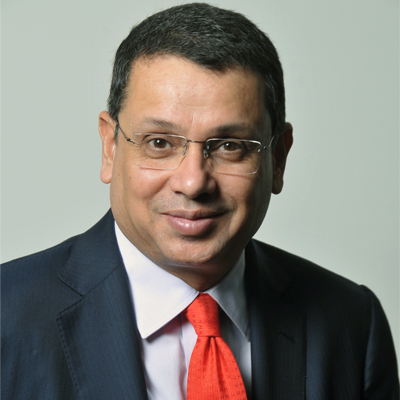
    MUMBAI: Uday Shankar, who was recently promoted to president of The Walt Disney Company Asia Pacific and chairman of Star and Disney India after the Fox-Disney units combined, has disrupted the Indian sports broadcasting business in the last couple of years. From scooping the media rights of the cash-rich Indian Premier League (IPL) to bolstering his sports networks’ regional offerings with the launch of Telugu and Kannada language, Shankar has thrown caution to the wind on more than one occasion in his bid to change the rules of the high-stakes game. Shankar’s grand vision and appetite for big bets has now placed Star India in a rather enviable position with a stranglehold over cricket properties this World Cup year.

    Tightened grip on Indian cricket

    Star wasted no time in setting the tone for the year as it appointed Gautam Thakar as the new Star Sports CEO on 15 January 2018. Thakar was roped in to fill up the void left by the exit of Nitin Kukreja, Shankar’s blue-eyed boy, who left the organisation in March 2017.

    The broadcaster tried to alter the IPL timings (8 pm game to 7 pm and the 4 pm match to 5.30 pm), a controversial development which was confirmed to Indiantelevision.com by then IPL chairman Rajeev Shukla. Despite the IPL governing council on board with the idea, opposition from team owners stalled Star’s plans.

    In February, Star won the rights for IPL’s audio-visual production as well as the BCCI domestic circuit for 2018-19, further tightening its grip on Indian cricket.

    In April, Star kept its foot on the pedal as it retained the BCCI rights, conducted via an e-auction for the first time, until 2023 for mind-boggling Rs 6,138.1 crore. Star came out on top after a fierce bidding war, which lasted three days, against Sony Pictures Network India (SPNI).

    The broadcaster paid Rs 60.1 crore per match for the 2018-23 home rights across five years which, a 50 per cent increase from the Rs 40.1 crore it shelled out for the 2012-18 cycle with a bid of Rs 3,851 crore for 96 matches.

    Kicked off IPL with a bang

    Star couldn’t have asked for a better start to its IPL reign, firing on all cylinders. The IPL final, aired live on 17 channels across eight different languages, powered the network’s growth by 34 per cent with 52.9 million average impressions. The title decider was produced with 11 live feeds across the TV network and Hotstar.

    Super streamer Hotstar, then led by Ajit Mohan, hit a world record for concurrent online viewing with 10.7 million viewers for the final. The final witnessed a sudden hike from eight million to 9.1 million and then to 9.7 million before hitting the 10.7 million mark.

    The television viewership for the tournament was 1.4 billion impressions with a growth of 15 per cent. With a total of six regional languages contributed to 22 per cent of the overall viewership.

    According to industry sources, the network clocked close to Rs 2000 crore in advertising revenue for the first season.

    For the first time, IPL was also aired on public broadcaster Doordarshan. According to the agreement, Doordarshan could telecast a select number of matches with a 60-minute delay along with some highlights.

    Another potential Star-Prasar Bharti face-off

    It wasn’t all smooth sailing for the broadcaster. In October, MIB proposed to amend the Sports Act 2007, which will provide ‘sports events of national importance’ on Prasar Bharati-owned, free-to-air Doordarshan Network an extended reach via private direct to home and cable TV Networks.

    The MIB has now proposed to amend the act to make such events available on DD through all mediums of distribution. This may result in preference changes of the consumer and would not subscribe to costly private sports network channels. This will also give the distribution platforms an opportunity to negotiate harder with the sports broadcasters.

    The move to amend the Sports Act 2007 has been necessitated due to a Supreme Court verdict which held that the public broadcaster Doordarshan cannot air events of national importance on private distribution platforms.

    In the same month, MIB issued a notice for receiving feedback/comments from general public/stakeholders on the draft bill, 2018. In a recent update, the ministry has extended the deadline to give feedback on the draft sports broadcasting signals (Mandatory sharing with Prasar Bharti) (Amendment) Bill 2018 till 15 January 2019. The earlier deadline was 31 December 2018.

    A move of this nature could adversely impact the revenues of sports broadcasters, particularly Star given its big bets on Indian cricket.

    Bolstered regional play

    Star India launched three channels in 2018, in line with its commitment of fostering a multi-sports culture in the country. Star Sports 3, a multi-lingual channel, was launched on 15 September and the first big event to air on it was Indian Super League (ISL) Season 5 in Hindi.

    Star Sports launched its third regional channel Star Sports 1 Telugu after Star Sports 1 Hindi and Star Sports 1 Tamil. The channel went on-air on 7 December.

    The broadcaster added a fourth regional channel, Star Sports 1 Kannada, on 29 December. Star India’s attempt at securing an exclusive sports channel for its Kannada viewers didn’t see the light of day for the 11th season of IPL. Regulatory hurdles made the broadcaster switch the Kannada feed to Suvarna Plus.

    According to FICCI- Re-imagining India’s M&E sector 2018, the sale of broadcasting and media rights is the biggest source of revenue for most sports organisations, and can account for 55 per cent to 70 per cent of total revenues. The global sports media rights is expected to breach the US$50 billion barrier in 2019 and could reach US$54.3 billion by 2021.

    2019 cricket bonanza

    2019 is loaded with marquee cricket events with Star India owning rights to most of them. The summer has four key series or tournaments – New Zealand versus India, India versus Australia followed by the 2019 IPL and the all-important ICC World Cup 2019. Barring two series, Star is bound to be the home for Indian cricket lovers this year. That’s not all. The broadcaster intends to further dominate the regional language market play with the launch of three additional sports channels in Bengali, Marathi and Malayalam. 

  • BARC India exhorts TRAI to ‘empower’ it as digital measurer

    BARC India exhorts TRAI to ‘empower’ it as digital measurer

    MUMBAI: In a smart move that could lead to further enhancing of its credibility and importance, Broadcast Audience Research Council India (BARC India) has exhorted Telecom Regulatory Authority of India (TRAI) to “empower” it to be the uniform measurer of audience and other data related to TV, and OTT and digital platforms.   

    “BARC, which provides significant granular measurement data on television, if empowered by this Hon’ble authority, shall provide unbiased and accurate measurement data on contents broadcasted, streamed, re-transmitted, downloaded and shared in OTT platforms. The outcome of the above will lead to one single robust measurement report for television, OTT and digital platforms,” the Indian measurement organisation has said in its submission on TRAI’s consultation paper on regulatory framework for OTT communication services.

    Interestingly, while BARC India’s commitment to roll out digital media measurement services Ekam is a work in progress, the present TRAI consultation paper is more focussed on OTT voice or communications services like WhatsApp, Facebook’s Messenger and similar Indian products like Hike. However, it must be made clear here that many of the over 80 submissions from diverse stakeholders, including big TV companies like Star India and Zee, do dwell on video OTT and possibilities relating to regulations.

    Quoting from the Mobile Eco-system and Ad-sizing Report 2018 that highlights India has 250 million registered online video viewers, 100 million OTT viewers and that viewing of video content increased by 75 per cent in recent times, BARC India drives home the point if the contents streamed, viewed, re­transmitted and downloaded on OTT services “are measured and rated” by it, “more transparency in the digital eco-system” would follow.

    Highlighting the many strengths of the system and technology that the organisation presently employs and deploys, BARC India has submitted: “The OTT platforms prevail in the mobile and virtual worlds, which allow advertisers to easily and efficiently target well-defined groups or even individual consumers across various mediums…Hence, it is imminent to regulate, analyse and derive audience measurement system on OTT platforms.”

    Although several global agencies like comScore, Nielsen, App Annie and SimilarWeb provide third-party analytics on OTT platforms, the Indian industry lacks a credible and neutral measurement agency, it has been contended. As digital ad spends increase gradually, proper data analytics will offer additional opportunity to advertisers and clients to compare the effectiveness of media spends amongst various distribution platforms.

    BARC India, which has successfully set up a transparent, accurate, and inclusive TV audience measurement system that’s built upon a robust and future-ready technology backbone, while strengthening its case to measure and analyse the digital realm, has added the “big data and insights” generated by it presently powers “efficient media spends and content decisions” in a highly dynamic and growing television sector of India.

    With a panel that is currently being scaled up to 180,000 individuals, BARC India is also the largest measurement company of its kind in the world.

  • Good news for Star as IPL 2019 to be played entirely in India

    Good news for Star as IPL 2019 to be played entirely in India

    MUMBAI: The 12th edition of the Indian Premier League (IPL) will be held in India, the Board of Control for Cricket in India (BCCI) announced, allaying fears of franchises, brands, fans and most importantly the broadcaster Star India. The cash-rich league will kick off from 23 March 2019 said the Indian board after the Supreme Court-appointed Committee of Administrators (CoA) met on Tuesday to discuss the tournament’s venues and window.

    "Based on the preliminary discussions with the appropriate central and state agencies/authorities, it was decided that the 12th edition of the world's most popular and competitive T20 tournament will be scheduled to be played in India," a statement issued by the BCCI read.

    The CoA will have detailed discussion with all the stakeholders before releasing the IPL 2019 schedule.

    "It is proposed that the IPL 2019 will commence on 23 March 2019. The detailed schedule will be finalised in consultation with the appropriate authorities," it added.

    The BCCI’s announcement put an end to months of speculation about IPL’s venue given the possibility of it clashing with the 2019 Lok Sabha elections, the dates of which are yet to be communicated by the Election Commission.

    “Franchises, sponsors and broadcast rights holders, and more importantly the fans, will be delighted,” tweeted veteran sports commentator Harsh Bhogle after the development.

    The last time the IPL was held in March was way back in 2010. Since then, the league has always commenced in the first half of April and ended in May.

    Spatial Access CEO Vineet Sodhani said, “The elections give better reach to brands than cricket at a far lesser cost. It may be a good alternative or some kind of blend that brands can do with little bit of elections and little of cricket.”

    The dates have been changed due to the ODI World Cup in England from May 30. According to the new BCCI constitution, it is mandatory to have a 15-day gap between the end of the IPL and India's international engagements.

    The IPL has hosted outside India twice due to general elections. The entire 2009 edition was moved to South Africa, while in 2014, some matches were played in the UAE.

  • Hotstar adds offline watching feature for premium content

    Hotstar adds offline watching feature for premium content

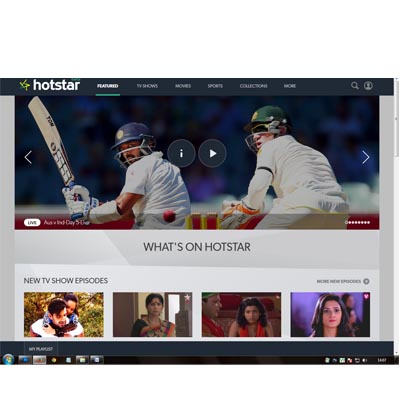
    MUMBAI: Hotstar, the leading streaming platform of India has now made the option of offline viewing available for its premium content. While the in-app download feature on rival platforms like Amazon, Netflix has been well received, Star India’s digital arm restricted the download feature to only non-premium and old content.

    The facility is available now for both Android and iOS users. It has also enabled support for watching videos in 18:9 aspect ratio, which most of the modern full-screen phones offer. However, it is not clear if the support is also available for premium users.

    “Now you can download and watch offline most of your favourite premium shows like Game of Thrones, Friends, Big Bang Theory and many more,” Hotstar Android app changelog noted on Google Play.

    Hotstar users will have the option to choose between low, medium, high and full-HD quality to download. However, downloaded premium content on the app will expire within 7 days of the download or 48 hours since the user starts watching it.

    Among the number of OTT platforms in India, Hotstar is way ahead in the race. Even streaming giant Netflix admitted that YouTube and Hotstar are till now leaders in the Indian market.

  • Star India moves Basant Dhawan from sports to entertainment biz

    Star India moves Basant Dhawan from sports to entertainment biz

    MUMBAI: Star Sports senior VP, brand solutions and sponsorships Basant Dhawan has been shifted to entertainment business by the group. He will be working as national agency head, which will contribute to the growth of the entertainment ad sales business.

    His earlier role included product and revenue strategy and sales functions. He was responsible for creating pricing and revenue assets, product packages along with sales for all new sports leagues that Star has been associated with, including Pro Kabaddi League (PKL), football leagues and Premier Badminton League (PBL). 

    Prior to Star India, Dhawan was the general manager-media in Vodafone India services. He has worked with auto, telecom, media and entertainment industries in his career.

    With over 25 years of experience, Dhawan is a result oriented marketing and business professional. His expertise lies in direct sales, distribution, product management, brand marketing media planning and buying to name a few.

    He started his career with Escotel as manager marketing and then moved to Airtel’s Landline business, Touchtel as corporate sales manager after 4 years. He has also worked with Reliance communication, Reliance Infocomm, Bharti Aitel and Aircel.

    In 2018, Star India launched two channels expanding its sports cluster named Star Sports 3 and Star Sports 1 Telugu. Star Sports 1 Kannada is also being tested and will launch before New Year.

    Under the new tariff order, Star Sports 1 Kannada (30 December) and Star Sports 1 Telugu (7 December) have been priced at Rs 19 for TV consumers.

  • Star India elevates Kevin Vaz as CEO of regional entertainment channels

    Star India elevates Kevin Vaz as CEO of regional entertainment channels

    MUMBAI: Star India has promoted Kevin Vaz as CEO of regional entertainment channels. The regions include Maharashtra, Bengal, Tamil Nadu, Andhra Pradesh, Telangana, Kerala and Karnataka.

    Previously, Vaz was CEO of South entertainment channels. He has spent 22 years serving Star India. Before heading the entertainment channels in Southern market, he was the business head of English cluster. In 2015, he was roped in to head the youth and entertainment channel, Channel V.

    Vaz, who has also worked as Star India’s president ad sales, became head of English channels (FX, Fox Crime, Star World, Star World HD, Star World Premiere HD, Star Movies, Star Movies Action) and Star Jalsha and Jalsha Movies in March 2013.

    Star India has a very large bouquet of regional entertainment channels which includes, Star Jalsha, Star Pravah, Jalsha Movies, Maa Movies with their HD versions, Maa Gold, Maa Music to name a few.

    Regional channels are outpacing many other genres in terms of growth and all large broadcasters have or are planning to enhance their regional channel bouquets. Most are entering markets not with just a GEC, but with a combined offering across entertainment, movies, kids and music.

    In FY18, however, the ad expenditure on Hindi GECs declined by 9 per cent while the regional channels saw a spike of 5.4 per cent, outlining the overall growth of the regional market in India, according to KPMG in India’s Media and Entertainment report 2018.

    According to FICCI 2018 Re-imagining India’s M&E sector report, the top 10 channel genres accounted for 47 per cent of total ad volumes. Of these, 30 per cent of all ad volumes were on Hindi channels, while the balance 17 per cent were from Tamil, Telugu and Bangla.

  • TRAI issues warning against spreading ‘fabricated’ facts on tariff

    TRAI issues warning against spreading ‘fabricated’ facts on tariff

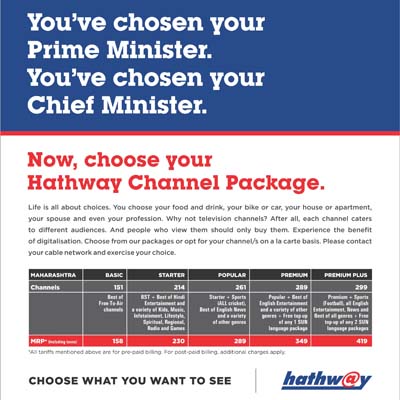
    MUMBAI: The Telecom Regulatory Authority of India (TRAI) on Tuesday cautioned stakeholders against spreading “concocted and fabricated facts” against its new tariff directive, while releasing a list of TV channels along with their respective maximum retail prices as per information received from broadcasters.

    The TRAI statement insisted that the new tariff regime will bring about more transparency in the eco-system by “separating the network capacity fee and pay channel price” and added any “malpractice” from service providers will compel the regulator to intervene.

    Pointing out that a section of the broadcasting and cable industry was creating confusion by insinuating the new tariff regime will increase the monthly cost of consumers for watching television by making inaccurate comparisons, TRAI said comparisons were “skewed” and far from the “market discovered” prices of TV channels.

    Though the Pune Cable Operators Association some days back said it’d move the Bombay High Court against TRAI’s new tariff regime as it could hurt LCOs’ earnings as also consumers, the regulator allayed such fears saying comparisons were not based on “reasoned analysis” and the standard interconnect agreements protected the revenue model of LCOs.

    Meanwhile, TRAI yesterday also released the maximum retail price of 332 pay channels offered by broadcasters to subscribers.

    As per the MRP list released by TRAI, NHK World Premium’s HD version is the costliest TV channel in the group at a stated price of Rs 1,800.

    Though most TV channels are running against time to meet the year-end deadline to disclose MRPs and also conclude signing of agreements with distributing platforms, the issue of tariff is unlikely to settle down soon as TRAI itself has filed a petition in the Supreme Court to get clarifications on the issue of 15 per cent cap on discounts on channel pricing.

    Star India on Monday was the latest one to announce the new a-la-carte prices for its TV channels and company MD Sanjay Gupta made it clear the organisation would adapt to any new pricing structure if necessitated by a future court ruling.