Tag: Star Gold

  • Star expands presence in Netherlands with UPC deal

    Star expands presence in Netherlands with UPC deal

    MUMBAI: UPC, the second largest cable operator in Netherlands, has further consolidated its Asian digital television entertainment offering to the South Asian diaspora by adding Star Gold and Star Life OK.

    With the addition of Star Gold and Star Life OK, UPC now carries three Star network channels on its platform which also includes Star Plus.

    On UPC Nederland, all the Star Network channels offer 24-hour Hindi language entertainment subtitled in English. The new channels will be available for a one-month free view from 15 April in the Hindi pack.

    Star UK and Europe SVP Yeshpal Sharma stated, “The Netherlands is home to the second largest Hindi speaking population after the UK and we are delighted to partner with UPC to offer additional Star channels in this significant market.”

    From 15 April, subscribers can watch Star Plus, Star Gold, Star Life OK, Zee TV, Zee Cinema and Zing as part of the new Hindi Pack for €15.25 per month, says UPC.

    UPC Nederland VP marketing and service Hans Blom said, “Due to the large Hindi speaking population amongst our customers, the Hindi Pack is our leading ethnic premium pack. Our Hindi speaking customers requested us to bundle our Hindi offering and expand the number of channels. In collaboration with Star TV we did. We are happy we can now announce an interesting and entertaining bundle of Hindi channels for a competitive price.”

  • TalkTalk adds Star TV Boost pack to its offering

    TalkTalk adds Star TV Boost pack to its offering

    MUMBAI: TalkTalk has further extended its popular range of On Demand content with the addition of the Star TV Boost package comprising Star Plus, Star Gold, Life OK and Star Jalsha.

    The Star TV Boost is available to TV Plus customers via the TalkTalk Player on YouView on demand for just ?5.00 a month.

    Star Plus has also been added to TalkTalk‘s Entertainment Boost, alongside the likes of Sky 1, Sky Living and Comedy Central, at no additional cost.

    TalkTalk Commercial Director Tristia Clarke said, “We are delighted to offer more award winning entertainment from the number one Asian network as part of the diverse range of content available on the TalkTalk Player. Star TV already has a fantastic following amongst our customers so I‘m sure the addition of three new channels via a single boost will be a big hit.”

    Star UK and Europe SVP Yeshpal Sharma says, “We are delighted to team up with TalkTalk to make the best of Asian television available to our loyal and growing UK audiences. Star Plus is the first Asian television channel to be retailed in the TalkTalk Entertainment Boost and the launch of the Star TV Boost is testimony to the confidence that TalkTalk has on the channel‘s performance.”

  • Sun Direct launches SD Digital Recorder box service

    Sun Direct launches SD Digital Recorder box service

    MUMBAI: Sun Direct, South India‘s leading DTH player, has launched a Standard Definition Digital Video Recorder box service, Sun Direct+, with unlimited recording facility that brings the features of pause, record and rewind at virtually the same price as the regular SD set-top box (STB).

    The new Sun Direct+ boxes will allow customers to attach external storage devices like a USB drive and gain full control of their TV viewing through functions like ‘Pause’ live TV, ‘Record’ programs for later viewing and ‘Rewind’ for reviewing any program.

    Features of Sun Direct+: recording programs you like from a channel as you watch it, schedule recordings up to a week in advance, pause any program on live TV and resume where you left and rewind and watch your favourite episodes or movies any number of times.

    Consumers opting for Sun Direct+ for Rs 1590 pack can avail of three months of super value pack free, while those selecting Sun Direct+ for Rs 1990 pack will get seven month of Super value pack free.

    Sun Direct+ is available with free subscription to the newly launched Super Value Pack four regional languages. Over and above the Tamil content and exclusive Cinema Club services, this pack also offers the best of Hindi language channels like Star Plus, Zee, Sony, Max, Star Gold, Zee Cinema and many others at Rs. 189 per month.

    Speaking on the new launch, Sun Direct MD Mahesh Kumar said, “We, at Sun Direct, strive to put great content and services within the reach of the widest cross-section of consumers. The contemporary, world-class features of pause, record and rewind will now be within reach of every consumer. True to our claim of being the best value DTH brand, Sun Direct + will bring these features at virtually no extra cost."

  • Star Gold now available on Virgin Media

    Star Gold now available on Virgin Media

    MUMBAI: Star Network has announced the launch of Star Gold on the British pay-TV and broadband provider Virgin Media as part of their ‘Asian Mela‘ offering.

    Star Network channels available on Virgin Media‘s ‘Asian Mela‘ bundle now include Star Plus, Star Life Ok and Star Gold.

    Star UK and Europe SVP Yeshpal Sharma stated, "With the launch of Star Gold on Virgin Media – the UK‘s largest cable platform, the Star Network has further strengthened its offering to its loyal and growing UK viewers."

    Virgin Media director of content acquisition Emma Jones said, "Star Gold is a fantastic addition to our Asian Mela bundle. This is great news for customers with access to even more Bollywood entertainment; Virgin Media is the TV destination to enjoy the best movies around."

    Virgin Media‘s Asian Mela bundle now provides access to 13 South Asian channels for ?12 a month.

    Star Gold is available on Virgin Media on EPG channel number 801.

  • Star Gold adopts mobile ad technology to promote Bol Bachchan

    Star Gold adopts mobile ad technology to promote Bol Bachchan

    MUMBAI: Star Gold had utilised mobile advertising technology M-AdCall to promote the premiere of Bol Bachchan wherein the user was offered one minute of free talk time for viewing a video advertisement for 30 seconds.

    M-AdCall allows one to watch a video whenever a number is dialed or a wallpaper or song is downloaded and helps bring advertising to handsets to increase itsbrand outreach.

    The Hindi movie broadcaster had built awareness for the premiere of Ajay Devgn-Abhishek Bachchan starrer film Bol Bachchan on MTS subscribers through M-AdCall powered by Astute. The technology is currently being offered by MTS and Tata Docomo, but is expected to be adopted by all operators in the near future.

    Star Gold GM Hemal Jhaveri said, “Bol Bachchan on M-AdCall was a great way of driving awareness for the Blockbuster Premiere on Star Gold. The user initiationprocess coupled with the engagement of this technology is far greater and unique than the unsolicited calls/SMS promotion which is usually the norm.”

    Leading mobile marketing company, Madhouse India COO Vinod Thadani says, “Mobile is an exciting, fast-growing category, but it‘s still a very small piece of theoverall ad pie, contributing only about 10% of the digital advertising spends in India. However, with the steep rise in mobile internet users and ever revolutionizing features and applications, this industry holds a huge opportunity for advertisers, and M-AdCall may just be that innovative technology to drive the new era of mobile advertising in India."

  • ‘Max will see 15-20% ad growth this year’ : Executive Vice-President and Business Head of Max and Sony Mix Neeraj Vyas

    ‘Max will see 15-20% ad growth this year’ : Executive Vice-President and Business Head of Max and Sony Mix Neeraj Vyas


    Neeraj Vyas, the Executive Vice-President and Business Head of Max and Sony Mix, is excited with the way the year went for Max, the Hindi movie channel from Multi Screen Media (MSM) stable.


    As the head of Max and Mix, Vyas has two challenges before him. The first is to take Max to the top position. The channel‘s strategy will be to acquire as many blockbuster movies as possible but at the same time remain judicious with the acquisition prices.


    The second challenge for Vyas is to grow Sony Mix, the music channel that was launched last year to widen the bouquet. The key for Mix, which operates in a tough genre, is to differentiate itself from other music channels through its programme offering while at the same time control costs to become viable.


    In an interview with Indiantelevision.com‘s Javed Farooqui and Urvi Malvania, Vyas shares his thoughts about the two channels and the way forward.


    Excerpts:


    Has the rise of Star Gold and the launch of its sibling channel affected the existing movie channels?
    Strictly from the ratings point of view, barring the first two months and post the IPL, it has been good for us. If you look at the ratings that were available three weeks back for the first 8-9 weeks, there is very little difference between the three of us – Star Gold, Zee Cinema, and Max. We have also had a successful movie acquisition year.


    How dependent is Max on big-ticket movie acquisitions as it has a premium positioning?
    Movie channels are completely driven by the library they have. Max has managed to have a premium image. It‘s completely by design and not by default because it‘s the way we want the channel and it‘s the way we present the channel. It‘s everything that you see on-air — the entire movie experience and our packaging. We want to set ourselves apart from others and hence did Extra Shots last year, a property where you get your trivia during the break and also put that into a half-an-hour show. This year we did something called Dirty Khabar.


    Does the premium positioning help Max get higher ad rates?
    It has helped us to extract premium from the advertisers. There are a lot of lifestyle brands, a lot of brands that are very conscious of the kind of environment they are seen in from an imagery point of view. If the advertisers have a choice between two or more channels, then Max will always be preferred.


    Did the ad slowdown have an impact on Max‘s revenues?
    There was no ad slowdown. In fact, we will see at least 15-20 per cent growth this year. The ad market for Hindi movie genre is a little under Rs 1,000 crore (Rs 10 billion).


    ‘The music genre accounts for about Rs 4 bn and is growing at 15% annually mainly due to new channel launches. We have set a 3- year period to break even‘

     
    What is driving this growth?
    There is money in the market, brands are being launched, and there are marketing activities. So there is no slowdown in my opinion. It (the slowdown) was a myth that was being created. At least till November or probably mid-December, we are tight on our inventory and are completely sold out.


    But there are broadcasters who have felt the pinch of ad slowdown?
    You tell me which broadcaster has slowed down in terms of content. Has anybody pulled back any shows? Despite no ratings, every GEC is going ahead with their biggest shows. There are two-three reality shows running on all the channels which are hugely expensive properties to produce. GECs are doing one-hour specials of their fiction shows and movie channels like us are marketing and putting more blockbusters on-air. Why would people do all these things if there was no money in the market? Give me a reason. I think the same people (who talk about a slowdown) need to answer this question.


    After a lull last year, has there been a spate of movie acquisitions this year?
    Yes, there was a lull. The way it (acquisition) works is if I have to acquire a film, I have to do it a good year-and-a-half before the film is released. If a producer doesn‘t get the price he wants, he waits for the box office performance of his film. Depending on the success or failure of the film, the price gets decided. The trend these days is strange as you have to acquire movies upfront. It sometimes works for you and sometimes it doesn‘t, so you have to be judicious.


    Has there been a price correction in acquiring movies?
    Unfortunately, what happens is that this industry is driven only by seven to eight stars. Unless we have more stars it will continue to be dominated by these 7-8 stars and it‘s essentially these men who lead the prices — the Khans, Akshay Kumar, Ajay Devgn and Ranbir Kapoor. If the price is going to be determined by these 7-8 stars, then their films will be sold at a premium.


    But a large number of movies go unsold?
    That is because the films of only these 7-8 guys get the ratings. For example, a film like Vicky Donor was liked by many but on television it won‘t get you a rating of even 1.5 TVR. Ratings for most GECs and time spent for channels like us come from the interiors of the country and the audience in the interiors is for films like Singham and Rowdy Rathore. That‘s the reality.


    Do you think acquiring movies on the basis of box office success is the criteria to follow?
    Honestly, that can be misleading. For example, Barfi is a brilliant film but put it on TV… probably it will get a rating of 2-3 TVR in the first airing, but it‘s not a movie that will get sustained ratings. Movie channels have a different model. When a film airs on television 10 times a year it has to give a certain yield and it has to give certain GRPs. As I said, the viewership comes from the interior.


    Zee walked out of the Barfi deal because at such high price point the monetisation becomes impossible. A correction is needed. It‘s a no-brainer. Zee‘s refusal to acquire Barfi rights was a step in the right direction. It also serves as a wake-up call for the producers or the corporates producing high-budget films. They have to get the pricing right irrespective of the box office collection because that is not connected to the success of the film on TV.


    Many networks have also experimented by premiering movies on GECs rather than the movie channel?
    That is a calculated gamble. Sometimes it pays off, sometimes it doesn‘t. It‘s a high-risk game because the price points of both the genres are hugely different. A GEC would trade at a certain level. Unfortunately movie channels have been under-priced since the beginning. By the time we start doing corrections, it is going to take time. The kind of money we recover on GECs will be far higher than on a movie channel. The yield is higher on GEC which is why we as an organisation have taken a decision to air certain movies like Paan Singh Tomar on Max but movies like Ek Tha Tiger and Rowdy Rathore will always be on Sony from a monetary point of view and its working for us. Once Sony has its one or two runs, it comes to Max and it really doesn‘t make a difference. What this does is safeguard our revenues and we manage our ratings better.


    How long does it take for a broadcaster to recover costs?
    For us it probably takes a little lesser time because we premiere on Sony. Our recovery is higher. It takes anywhere between two to three years to recover the costs. We acquire movies for a minimum of five years. We have a library of 800 movies and all of them are exclusive.


    Next year, IPL won‘t be there on Max since it will move to Sony Six. So what is your strategy going to be?
    We are a Hindi movie channel and we are happy that IPL is moving out. IPL moving out is a blessing for Max since we will get an opportunity to do a lot of things in the Bollywood space.


    Most Hindi movie channels also have dubbed content. How is it working?
    Almost 25-30 per cent of the content is dubbed and it is working. The prices of dubbed movies have also gone up although I can‘t give a number. The dubbed content adds variety to the channel. People in UP and MP don‘t know the actors but they love the action. Most of the South Indian films are in the realm of vendetta, revenge, high octane action, family values and so on. These are qualities that fit very well with the sensibilities of the heartland. Indian movies are Indian movies. People might look different but the basic ethos will always remain the same. The trend in Bollywood is that every big film that is going to come will be a remake of some or the other Southern language film. Everyone has acquired remake rights whether it is Salman Khan, Akshay Kumar or Aamir Khan.


    What implications will digitisation have on the genre?
    We are governed by the reality of libraries that we own. We will be able to run a large number of movies that we have not telecast. Hopefully, we will also get the opportunity to reach out to slightly more premium audiences. Also films like Silsila, Kabhi Kabhi, Rocket Singh and Saawariya which are rotting in our library will be able to see the light of the day.


    Coming to Sony Mix, how do you differentiate the channel from the other players in the genre?
    We decided to be a channel that is musical and understands the mood of the people. Our programming corresponds to the time of the day. So we have Surili Subah in the morning, Ishq Vishq in the afternoon, Mix Adda in the evening right up to Raina Beeti Jaaye, which is the slot for the retro songs. The promise of the channel is that we understand viewer‘s mood at different times of the day. We also went ahead and bought more music than anybody else simply because we wanted variety. So when other channels were playing the free plays and the new music launches, we went ahead and did deals with Yash Raj and Sony Music.


    What about your original content?
    We have a property called Mix Solos which has singers like Javed Ali, Roop Kumar Rathod and Shafqat Amanat Ali doing acoustic solos for the channel between songs. Then we have something called Mix Tippani where the channel suggests which song to listen to in which situation. We also have a show called Picture Abhi Baki hai. Here we take bytes from the actors, directors, music composers, singers etc — all with focus on the music and nothing else. It is like a sneak peak with focus on the music of the movie.


    These are the things that set us apart and we want to continue doing them. We want to do Harmony again which was on Sony 10 years back. We would love to revive that and have a show that has pure unplugged music. We also had a show “Yun Bana Yeh Song” with Swanand Kirkire where he explained how a song was made and took the viewers through the journey of the song. We have also brought back a lot of videos from the 90s that were huge back then. You see, you have to have a Mix of music for a music channel to be called a music channel.


    What is your primary TG? And what was your strategy when you launched Mix?
    Our primary TG is 15-24 age group, while our secondary TG is the 25-34 age group. We would never dilute our focus on the secondary TG. We firmly believe that you can‘t just cater to the youth which is why we have a Raina Beeti Jaaye at night. Music transcends age and we are going against the grain and not doing what everyone else is doing in the genre. Our belief is that it will pay off with digitisation and people wanting to make a choice.


    How tough is it to sustain a Hindi music channel?
    If you control your costs, then it is viable to have a music channel. But it is a tough game. We make use of our synergies with Sony Music and YRF. The challenge lies in how you programme your day as everyone has the same content in this genre. The brick of three songs before you go into an ad has to be so strong that it appeals to the audience.


    How is the revenue split between distribution and advertising?
    Distribution is negligible as a source of revenue right now. It‘s completely dependent on ad revenue. We have a wide range of advertisers come to us due to our programming. We have a broad base of viewers and though we are packaged as young and happy, our appeal is across age groups. You have to build the proposition based on the core values. The music genre accounts for about Rs 4 billion and is growing at 15 per cent annually mainly due to new channel launches. We have set a three-year period to break even.

  • Singham powers Star Gold to 221 GRPs

    Singham powers Star Gold to 221 GRPs

    MUMBAI: For Star India, the unconventional strategy of premiering a big-ticket film on its movie channel rather than on Star Plus seems to have worked.

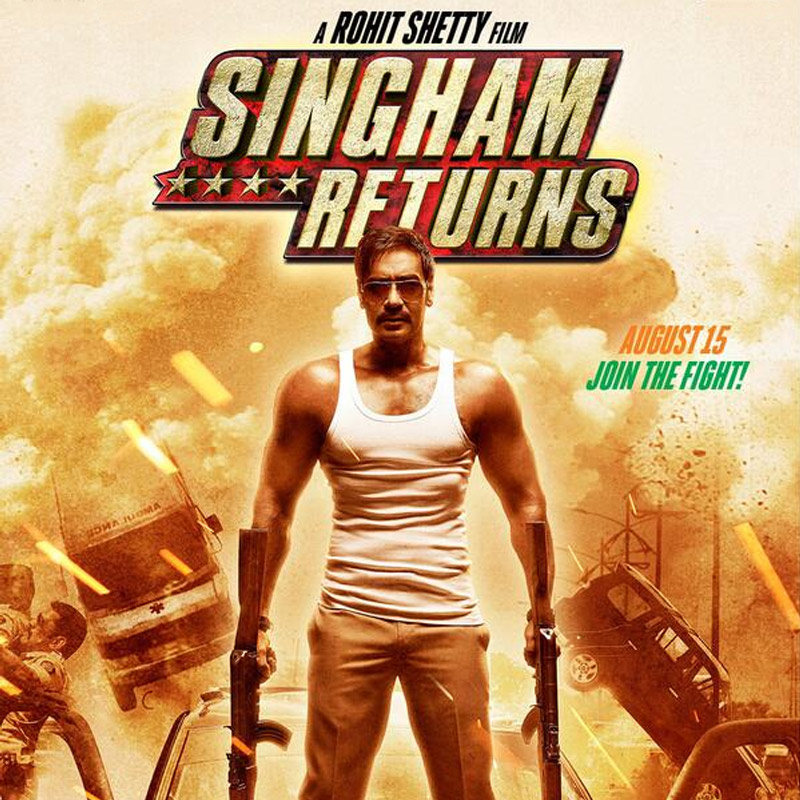
    Powered by the Ajay Devgn-starrer Singham, Star Gold has seen a 70- GRP (gross rating point) jump, aiding the channel to cross 200 points.

    Star Gold closed the week ended 10 September with 221 GRPs, up from 151 GRPs in the trailing week.

    Singham, which was premiered on 10 September, clocked 8.7 TVR, highest on any Hindi movie channel in the recent past and third highest after 3 Idiots (10.88 TVR on Sony Entertainment TV) and Dabangg (9.2 TVR on Colors).

    “We are very happy with the viewers’ and advertisers’ response for the premiere of Singham. And we have many more movies in our bank to enhance viewing experience,” Star Gold senior vice-president Hemal Jhaveri said.

    When compared to the screenings on Hindi movie channels, Singham’s roar is the loudest, followed by 3 idiots (6 TVR, second airing) and Robot (4.1 TVR), both on Max.

    Star Gold had put all the marketing efforts behind creating a buzz around the world TV premiere of the movie.

    The Hindi movie genre, fought at the top among Max, Zee Cinema and Star Gold, is marred with low stickiness.

    “The ratings may help other channels to think of premiering films on movie channels, which ideally should be the case. The top four GECs alone show 20-25 movies collectively every week. This practice should stop,” the business head of a rival movie channel said.

    Jhaveri believes that the players need to constantly change the game. “The rules are changing and there is no set formula. We are also experimenting. We were the first to air five movies a day and now have increased it to six. We have cut down on our advertising time and it is helping increasie the time spent on the channel,” he said.

  • Star Gold unveils new logo

    Star Gold unveils new logo

    MUMBAI: Star Gold has unveiled its new brand logo with a new tagline — ‘Karo Dil Ki‘.

    The new logo was launched during the television premiere of ‘Singham‘ on 10 September on the channel.

    The new identity was simulcast across Star India‘s network channels — Star Plus, Star One, Star Utsav, Star World, Star Movies, Pravah and Jalsha, via a network roadblock.

    The channel is backing-up the new identity with the screening of movies such as Zindagi Na Mile Dubara, Bodyguard, Rockstar and Ra.One.

    “Karo Dil Ki reflects the attitudes and aspirations of our viewers. As a brand we have always endeavored to give our viewers what they want to watch not just what we want them to watch. The TV premiere of Singham on 10 September is itself a landmark screening of this over Rs 1 billion grosser which is still running to packed houses,” Star India COO Sanjay Gupta said in a statement.

    According to an official communique, the refreshed Star Gold will have six-movie schedule every day. Other movie channels air five movies a day.

  • ‘Our biggest challenge is raising the low yields in the Hindi movie channel genre’ : Star Gold GM Sameer Rao

    ‘Our biggest challenge is raising the low yields in the Hindi movie channel genre’ : Star Gold GM Sameer Rao

    Star Gold general manager Sameer Rao is known to be a numbers man. A chartered account and an MBA in finance, Rao has a 19-year career graph that spans stints in UBS and Arthur Andersen.


    His baptism in media took place at Star in cable TV distribution, followed by the internet, the commercial department and then finally to his current posting. He was given additional charge of Star Utsav in end 2009.


    Indiantelevision.com’s Ashish Mitra spoke to Rao about the changes he has brought at Star Gold and the prospects for the channels he heads.


    Excerpts:


    How large is the Hindi movie channel space? What is the lay of the land?

    Our estimates are that all the movie channels put together make it a Rs 5,200 million ad revenue market. No doubt, Zee Cinema is the leader followed by MAX, and we are at the No 3 slot. For about six to eight weeks every year, because of the IPL and cricket, MAX steals ahead and then it goes back to the previous ranking.


    Raising the low yields in this channel genre is the biggest challenge. The inventory is keeping on growing with new channels launching: UTV Movies, for instance, entered the fray with two channels. GRPs of movie channels used to be much higher a year ago than is the casenow. There are times the ratings race becomes a big issue with us when competing with the likes of GECs such as Sony, Sab and Imagine as they are in the same GRP range as us. But the realisations by these channels for commercial time are higher.

    Can you gives us your analysis of the Hindi movie channel genre?

    The movies genre, if you aggregate consumption across movies channels, movies on Hindi GECs and movies on cable channels, is as big as the Hindi GEC slice. However, perception wise, it is regarded as much smaller, possibly because it is acquired content as opposed to original programming.


    On the supply side, satellite buyers have emerged as key players in the Hindi film industry and are critical to the viability of any Hindi film project. With some changes both on the buying and selling side, it is possible that movie channels will be able to offer much more value to all stakeholders – film producers, advertisers, viewers – while remaining a healthy and profitable business for the broadcast networks.

    You were looking after commercial for Star Plus when you were called to take charge of Star Gold and Star Utsav. What was your analysis of the two channels and your health report for them?

    I was responsible for programming commercial for the Hindi language channels at Star between March 2007 and November 2009. I took over as Star Gold general manager in March 2008 and Star Utsav general manager in late 2009. Star Gold is a healthy and growing business and Star Utsav is stable but a lot more could potentially be achieved.

    What changes did you initiate at Star Gold to fast pace its growth amongst its competing players ?

    My fundamental approach towards programming on Star Gold was to build slots that delivered on a defined content promise to a movie consumer. The slots were developed based on research inputs on content themes that audiences wanted to see on a movie channel.


    Thus, we built permanent action, comedy and kids slots apart from the Hollywood dubbed slot, which we had launched several years ago.


    Apart from this, we also incorporated slots for thematic movie festivals through the year, which would run from one to six weeks. For example, one of these, Sabsey Favourite Kaun, culminates in a big scale televised award show, India’s only audience polling driven movie awards.


    Hence, once we had the slots ready, we acquired movies designed to develop and grow the slots. All these initiatives helped us narrow the gap between us and the genre leaders.

    Star Gold was not being marketed aggressively. How have you changed this in terms of above the line and below the line activity?

    Marketing for the channel is in line with the programming strategy of building up slots and festivals. A lot of it happens outside Mumbai as our biggest consuming markets are Uttar Pradesh, Gujarat, Delhi and Maharashtra.

    We are just four GRPs behind Zee Cinema and 16 behind MAX. If we do the right things we can overtake the leader.

    Your list of acquisitions and syndications.

    Last year, we acquired films aggressively. We got the Salman Khan-starrer Wanted, the Amitabh Bachchan-starrers Aladin and Paa, the Akshay Kumar-starrers De Dana Dan and Housefull and the Ajay Devgn-starrer Atithi Tum Kab Jaoge. Besides Wanted, all other acquisitions were on an exclusive basis. Some runs of Wanted have been reserved for Sahara because they co-produced the film. We also have the non-exclusive rights of the latest RGV film Rann along with Life Partner and Luck.


    As far as syndication goes, we continue to syndicate with Zoom and UTV Movies. But this exercise entirely depends on the type of films the other channel wants to have.

    What are your plans for Star Gold?

    We’d like to lead the genre by the end of this calendar year. The network is building the catalogue through a mix of judicious new and library acquisitions and we continue to refine our slot-based programming and marketing strategy. I believe we need to acquire close to 20-25 more movies over a period of time. We are just four GRPs behind Zee Cinema and 16 behind MAX. If we do the right things we can overtake the leader. Our challenge is to have the right mix of old films, new films and blockbusters. We can’t buy the most expensive ones only; otherwise the low yields could erode our margins.

    Which are the major category advertisers for the channel?

    FMCG continues to be the biggest category. We are an important platform for male brands because of our deliveries in that demographic. We get the bulk of our advertising resources from the package of festivals. Going forward, several new acquisitions that we have gone into will boost the advertising pattern of our channel.

    Please highlight the milestones of Star Gold over the decade.

    Starting off in 2000 as a classic movie channel, we showed black and white films. We then switched on to telecasting coloured films from the post 70s. Rapidly, we turned into a channel with a modern look in terms of popular and critically-acclaimed cinema.

    Then in 2002, we launched the popular Sabsey Favourite Kaun (SFK) that first started as an award show. Then in December 2006, SFK went international. The show’s popularity can be measured well as last year, we received a whopping 17 million votes through SMS and internet in addition to the physical votes we received from people to select their favourite stars. This exercise lasted for over a period of two months.


    As for showing Hollywood dubbed content, we have excelled in showing the latest Hollywood films and rank above all other channels.


    Going forward, we hope to see Star Gold as a channel that boasts of new Hindi films.

    What has been the change in the channel perception over the years?

    The first major change in our channel was when we changed from a classic movie channel to a channel that specifies in several genres as far as films are concerned. Based on this, currently, we have a higher proportion of viewers. Our channel is driven around comedy films and of course Hollywood films. We want to build on the perception.

    You took charge of Star Utsav in 2009. What was your assement of the channel then and what changes have you brought in?

    Basically, Star Utsav is a channel that caters to repeat content. After I took over, I found that there were more repeats of shows of two distinct genres – mytholology and kids programmes. This was of course in addition to shows from the Star network.


    After I joined the channel, rationalising the schedule was my biggest priority.


    And now, we are looking at various opportunities keeping the taste and preference of the semi urban and rural markets in mind and devising a new strategy for Star Utsav. This will be implemented in the coming months.

    What were the ratings of Star Utsav when you took over and what are they now?

    The ratings are the same now comapred to when I hadn’t taken charge. It remains stable.

    What about advertisers? Have they been attracted to the channel?

    There is a potential beyond what the channel is currently generating in terms of advertiser participation and we are looking actively to tap such an opportunity.

  • Max leads Hindi movie channels; Zee Cinema speeds up

    It has been a busy six months for Hindi movie channels. While Max has tried to latch on to its gains from the ICC World Cup with big ticket film purchases, Zee Cinema and Star Gold have tailored their strategies to fit in with the market reality and focussed on smart purchases.

    With the help of Tam data (HSM C&S 4+), Indiantelevision.com takes a look over the performance of the Hindi movie channels across a six-month period.

    As the movie channel genre gears up to witness fierce competition, the past six months (January to June 2007) has seen a tussle between Zee Cinema and Max for the leadership spot. While Zee Cinema started ahead, it was dethroned by Max in March. Star Gold comes in at the third spot, but lagging far behind are Filmy and B4U Movies.

    The shuffle in the top slot, in fact, took place in March with Max seeing a swell in viewership because of the ICC World Cup. As the channel dished out live cricket content from the West Indies, it hogged a channel share of 49 per cent, majestically up by 17 per cent.

    Zee Cinema, on the other hand, slipped to the second position with the share dropping from 33 per cent in February to 26.

    Star Gold also couldn’t survive the cricket wave and slipped from a 24 per cent share in February to 17 per cent in March.

    However, in the months that followed, Zee Cinema got back in the game inching closer to the leader with a share of 32, as Max stands at 34 in June.

    Channel Jan-07 Feb-07 Mar-07 Apr-07 May-07 Jun-07
    MAX
    32
    32
    49
    40
    37
    34
    Zee Cinema
    34
    33
    26
    29
    31
    32
    Star Gold
    24
    24
    17
    22
    23
    25
    Filmy
    8
    9
    6
    8
    8
    7
    B4U Movies
    2
    2
    1
    1
    1
    1
    Relative shares C&S 4+ TAM

    As expected, the ICC Cricket World Cup did help Max cannibalize shares from other channels in the genre. But as India exited, so did some viewers but still it was attractive enough for Max to garner a channel share of 40 in April.

    Max business head Sneha Rajani is happy with the outcome that cricket delivered for the channel. She said, “Although the ICC Cricket World Cup was the last cricket property on the channel, it did well for us despite India’s exit.”

    Zee Cinema inched up to a share of 29 per cent in April while Star Gold gained five per cent.

    Post World Cup, Max’s task was to hang on to the lead even as it transitioned from a hybrid to a pure movie channel. The culmination of the cricket phase was immediately followed by the Amitabh Bachchan Film Festival, titled Ab Tak Bachchan, in late April. The channel also extended its primetime by bringing it forward to 8 pm from its earlier positioning at 9 pm.

    It was as if a war was on between Amitabh Bachchan Vs. Amitabh Bachchan on the two competing channels. Zee Cinema launched a Big B festival titled Shanivaar Ki Raat Amitabh Ke Saath.

    In May, Max continued to lead over Zee Cinema but dropped its share to 37. Zee Cinema stabilised in the two months with a score of 31 and 32.

    The gap has, in fact, narrowed in June with Max slipping to a share of 34.

    Sharing insight into how the channel hopes to regain its lead, Zee Cinema deputy business head Mohan Gopinath said, “We have almost reached Max with the help of film festivals. In fact we are planning several more in the coming months. The whole idea of festivals is to let the viewers know about the movies they missed out.”

    In a highly title driven TV movie market, Max is looking to maintain its current postion by betting big on blockbusters. The channel has reportedly spent over Rs 2 billion to acquire a mix of big, medium and small movies from big banners like Eros International, Yashraj Films Dharma Productions and Mukta Arts, among others.

    Max kicked off the promotional activity for these films with ‘Saal ke Sabse Bade Blockbuster’ and will be screeningNamastey London, Cheeni Kum, Gandhi My Father, Eklavyaand many more.

    The channel shelled out close to Rs 650 million for 16 films from the Eros stable alone. Rajani opines, “We have not even shown half of the Eros movies that we acquired, but I am confident that all of them will do well for the channel.”

    As far as big titles are concerned, Max has only recently started showcasing this blockbuster library with Kaabul Express, Lagey Raho Mumnnabhai and Kabhi Alvida Ne Kehna.

    Zee Cinema has not done major buys this year. The channel, instead, believes innovative programming is the route to achieve the lead.

    “We have done a few buys but all depends on how innovatively you promote and screen them,” said Gopinath.

    Top Ten movies from January – June 2007
    Tam (HSM C&S 4+ TAM)

    Speaking of titles, Zee Cinema hogged the top ten charts across the six month period with six of its films featuring in the list. Hum Aapke Hain Kaun, Ghar Ho To Aisa and Phir Heraa Pheri were aired in May and June.

    Though Star Gold has been strolling along in the third position in terms of shares, it garnered the maximum eyeballs when it showcased Krrish, topping the six month top ten movie charts with a whopping 4.1 TVR. Star Gold’s telecast of Chup Chup Kealso featured in the charts.

    From the Max stable, old timers Dilwale Dulhaniya Le Jaengeyand Kabhi Khushi Kabhi Gham came in to the top 10 charts delivering a TVR of 1.97 and 2.23 respectively.

    How does the fight for winning the ratings battle shape up?

    “You can’t escape from the fact that every movie channel is very title driven. There will be weeks when competition increases and the competitor may show stronger titles. Zee Cinema had good weeks in the past and I am sure they will have a couple of good weeks ahead, but we will remain on the top,” said a confident Rajani.

    Not perturbed by the jolt Zee Cinema received during the two cricket dominated months, Gopinath said, “People in India are very sentimental about cricket, therefore it is bound to benefit the channel. However, we are back and hope to take the leadership spot.”

    Zee Cinema has branded different time slots to generate appointment viewership. The channel recently introduced ‘Bhakti ki Shakti’, a Sunday morning slot for mythological movies, which according to the channel is doing well.


    Apart from the two movies in the top 10, Star Gold has managed to perform consistently except in April but has always stayed in the third spot.

    When most movie channels are banking on the weekends, Star Gold has introduced a Monday prime time band for screening its library of comedy flicks. These include Bheja Fry, Darwaza Band Rakho and Ek Chalis ki Last Local with more to follow.

    Additionally, Star Gold is running a Bond festival for the first time called ‘Main hoon Bond’ by dubbing these films in Hindi.

    Filmy is still struggling to achieve a share in the double digit. The channel from the Sahara stable has crossed the experimentation phase and is now is ready to offer films with a blend of other programs in comedy and reality format. It has introduced the Rajnikant film festival and has its fingers crossed for the upcoming reality show Bathroom Singer.

    Speaking of the channel’s differentiated strategy, Filmy business head Shailesh Kapoor said, “We are still new as compared to other channels. Even then we have proved ourselves. In terms of acquisitions, distribution and revenues we have grown. Now the real phase starts when we slowly unveil comedy and reality shows on our channel.”

    The channel saw a fall in shares to six in the month of March. Senior executives have blamed it on distribution which they claim to have corrected now.

    Completely isolated from all the action in the movie space is B4U Movies which has not managed to surpass a share of two over the six-month duration.

    What’s interesting, heightened activity is expected to take place in the coming months with Hindi movie channels from the Reliance Group, Viacom 18 and UTV slated for launch.

    Will there be a scarcity of content causing a threat to existing players?

    Rajani says, “There will certainly be a crunch of movies. I think there are very little movies available in the market for purchase for the next two years. Almost every major title has been tied up with some or other channel but I am sure the channels that are coming up must have planned something for themselves. There is certainly a dire need of more content. But we are not at all threatened.”

    Gopinath adds, “There is enough space available and I don’t think it will lead to any scarcity of content.”

    “Bollywood has a mass appeal. That means more viewership and advertisers. GRPs of movie channels are increasing by 20 to 25 per cent every year and that gives a lot of scope for an advertiser,” avers Kapoor.