Tag: stakeholders

  • TRAI issues draft regulations on register of interconnect agreements, wants comments by 25 April

    TRAI issues draft regulations on register of interconnect agreements, wants comments by 25 April

    New Delhi: The Telecom Regulatory Authority of India today asked stakeholders to give their views on the periodicity and authenticity of the proposed register of interconnect agreements, apart from the format for such a register.

    Stakeholders have been asked to post their comments by 25 April with counter-comments, if any, by 5 May to a consultation paper and a draft of the Register of Interconnect Agreements (Broadcasting and Cable Services) Regulations 2016.

    The primary objective of register of interconnection regulations is to prescribe the contours of a reporting system to service providers to report interconnection agreement details to the Authority so as to enable it to maintain a register of interconnect agreements as per the provisions of TRAI Act. It is also useful for monitoring and analyzing market practices prevailing for interconnection agreements. Presently, the regulations mandate service providers to report the prescribed information annually.

    One clause of the draft register is for ‘Reporting of information, relating to interconnect agreements, by broadcaster of pay channel and the distributor of TV channel’. It says every broadcaster of pay channel and distributor of TV Channel shall report the information relating to all interconnect agreements entered into by them or modifications or amendments or addendums thereto which have been signed before and after coming into effect of the regulations that are valid as on the date of commencement of the regulations and shall be reported within one month for the previous ones and by tenth of the month for the new ones.

    A para on format of reports says: “Subject to the provisions contained in regulation 5 of the regulations, the broadcaster of pay channel and the distributor of TV Channel , as the case may be, shall furnish to the Authority, the information relating to the interconnect agreements in the formats specified in Schedule-I ( Format for broadcasters of pay channels), Schedule-II (Format for MSO and HITS Operator) or Schedule-III (Format DTH and IPTV Service provider) of the regulations as applicable.”

    Stakeholders have been asked to provide suggestions on this regulation of draft regulations and also the formats given in schedules and told that they can also suggest modified format for reporting to make it simple and easy to file.

    TRAI also wants comments on how it can be ensured that service providers report accurate details in compliance of regulations, and on digitally signed method of reporting the information.

    TRAI wants to know why all information including commercial portion of register should not be made accessible to any interested stakeholders, and if the commercial information is to be made accessible, in which way can this commercial information be made accessible to fulfill the objective of non-discrimination.

    If the commercial information is not made accessible to stakeholders, then in what form the provisions under clause (vii) and (viii) of Section 11 (1) (b) of TRAI Act be implemented in broadcasting and cable sector so that the objective of non-discrimination is also met simultaneously, the stakeholders have to state.
  • Merging I-League & ISL can solve logistical chaos in Indian football calendar: Nitin Kukreja

    Merging I-League & ISL can solve logistical chaos in Indian football calendar: Nitin Kukreja

    MUMBAI: Stakeholders in the growing Indian sports industry unanimously agree that the appetite for football in India is definitely on the rise though there are numerous challenges, which have to be overcome before its full potential can be realised.


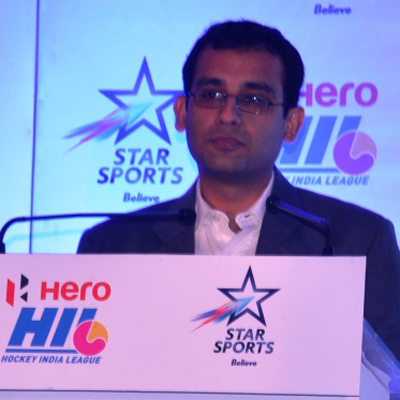
    At the recently held Star Sports India Football Forum 2015, Star India president sports Nitin Kukreja said that while merging I-League and ISL would solve much of the logistical chaos currently reigning in the Indian football calendar, no concrete progress has been made towards that. He also stressed on the need for schools and colleges to participate in the sport in a structured manner in order to allow a footballing culture to develop on a larger scale, especially in North and West India where the sport does not have much popularity.


    Senior professionals from the sports and broadcast industry deliberated on the multiple opportunities in the football sector at the forum titled: “Taking Indian Football Higher, Deeper, Wider,” held in Mumbai on 29 October.


    The day-long conference revolved around various Knowledge Sessions such as: Governance & Management – Faster Growth, Higher Visibility, Stronger Management; Maximising Fan Experience- Getting It Right on Air and In Stadia; Internet & Mobile Keys To Experiential Nirvana- Connecting To the Consumer in a Fast Evolving Media Landscape and Corporate Social Opportunity– The Business Potential in Grassroots Outreach.


    Established in 2010, the India Football Forum, the flagship property of the SportzPower Knowledge Series (SKS) in partnership with Event Capital, brings together some of the best minds in the industry on one platform to deliberate on the business of football in this market.


    Industry stalwarts such as U Sports founder Ronnie Screwvala, DFL Sports Enterprises chief representative Asia Pacific Peter Leible, Future Brands MD & CEO Santosh Desai and Kukreja spoke on the various factors that indicate the rapid strides made by football, and the initiatives required to take it to the next level.


    Leible, who drew a parallel to the recent period of revival in German football to provide context to the Indian experience, said a similar widespread initiative, with emphasis on clubs doing their bit on the grassroots and academy side of things, could lead to a uniform growth of football in India though “patience” is the key criteria while implementing such programmes.


    Screwvala, in conversation with conference chair Ayaz Memon, said that with ISL, the changes are positive in Indian football, but there needs to be an effort to develop the game at the grassroots level to actually help improve the standards of Indian football.

  • TRAI extends date for comments on delinking of license for networks by way of VNO

    TRAI extends date for comments on delinking of license for networks by way of VNO

    MUMBAI: The   Telecom  Regulatory  Authority  of India  (TRAI) which had issued  a  consultation paper  on   ‘Delinking  of   the  license  for networks from delivery of service by  way  of virtual network operators (VNO)’ on 5 December 2014 inviting comments by 5 January 2015, has today given some relief to the stakeholders.


    The decision was taken after the stakeholders requested for extension of the date for sending their inputs/comments so as to give a comprehensive response to the paper.  The Authority has considered their request and has extended the last date for submission of written comments to 15 January 2015.  TRAI has also said that there will be no further extension of date for submission of comments.


    The Authority has asked all stakeholders to submit their inputs/comments on or before the revised date i.e. 15 January 2015 and counter comments, if any, by 22 January 2015.    


    TRAI had issued the consultation paper to know if there was any need to introduce more competition in service delivery by the way of introduction of VNO and whether this will pose any threat to Network Service Operators (NSO).


     In its consultation paper, the Authority had also asked how Mergers & Acquisitions should be dealt with in the VNO/NSO licensing model and should the recently announced M&A guidelines issued by the Government for existing players be extended to cover VNOs.


    Prior to the consultation paper, TRAI had released a pre-consultation paper on “Delinking of the license for  networks from delivery of  services by  way of  Virtual Network Operators” on 3 September 2014 highlighting some of the issues associated with the proposed licensing framework by the DoT and had solicited inputs and comments of the  stakeholders on these issues or any other issues involved in the proposed  framework.

  • TRAI seeks to exempt small Internet Service Providers from tariff reporting requirement

    TRAI seeks to exempt small Internet Service Providers from tariff reporting requirement

    NEW DELHI: The Telecom Regulatory Authority of India (TRAI) has proposed exempting any Internet Service Provider (ISP) from the reporting requirement during a financial year if the total number of its subscribers is less than 10,000 on the last day of the preceding financial year.


    In a draft amendment to the Telecommunication Tariff Order 1999 for comments of the stakeholders, it has also sought to extend the existing exemption given to access providers in respect of tariff schemes offered to bulk customers in response to a tender process or as a result of negotiations between the access provider and such bulk customer to the ISPs also.


    Stakeholders have been asked to send in their responses by 14 October.


    TRAI is concerned that only 60.87 million broadband connections had been achieved against a target of 175 million connections by 2017. It says the country is nowhere near meeting the target for a service which is considered almost a basic necessity in many developed countries. Broadband is helping to deliver a wide range of services, from services directly related to the Millennium Development Goals set by the United Nations, to services in support of broader citizen participation or services leveraged across different sectors to bring more people into the formal economy. Therefore there is an urgent need to review the present policies and its implementation initiated to build infrastructure required for penetration of broadband in the country.


    The Digital India project aims to offer a one-stop shop for Government services which would use the mobile phone as the backbone for its delivery mechanism. The Rs 1,13,000-crore initiative seeks to transform India into a connected knowledge economy offering world class services at the click of a mouse. Plans to digitally connect the country will be supported by modules on digital literacy in regional languages which the Government plans to run in the next few years.

  • TRAI extends deadline to respond to consultation paper on AGR

    TRAI extends deadline to respond to consultation paper on AGR

    MUMBAI: The Telecom Regulatory Authority of India (TRAI) has given a fresh lease of life to stakeholders to respond to its consultation paper on ‘Definition of Revenue Base (AGR) for the Reckoning of Licence Fee and Spectrum Usage Charges.’


    The extension has come after some stakeholders  requested for additional time of two weeks to complete the discussions among themselves to develop a unified approach by resolving various contentious issues.


    The  Authority has  considered their request and   decided  to  extend the  last date for  submission of  written comments to  15 September and   for counter  comments,  if  any,   to  22 September. TRAI has also clarified that there is no change in the date of the Open House Discussion on the consultation paper and will be held on 1 October in New Delhi.  


    It can be noted that the Authority had issued the consultation paper on  ‘Definition of Revenue Base  (AGR) for the  Reckoning of Licence  Fee and Spectrum Usage Charges’ on 31 July 2014 inviting comments  by  1 September and counter-comments by  8 September.

  • Broadcasters and teleports asked to update contact info, again

    Broadcasters and teleports asked to update contact info, again

    NEW DELHI: A fortnight ago, the Information & Broadcasting Ministry had asked the broadcasters and teleport operators to provide full details relating to the companies operating them.


    However, the MIB has, so far, received responses from a very few companies on the same. To remind the stakeholders of the appeal again, the Ministry has sent out a fresh reminder for seeking full details relating to the companies.


    In view of the tardy response, the Ministry extended the date to 15 April. The earlier date was March-end.


    The MIB has pointed out that it is the responsibility of the company to intimate any changes to the Ministry promptly. 


    In fresh letters sent to all television channels and teleport operators, the Ministry has asked among other things for contact details of the company including the registered address, any additional address, e-mail IDs, and telephone and fax numbers.


    Also, the channels and teleports have been asked to supply the name of the authorised representative with his/her e-mail ID and mobile number.


    The information has to be sent from the company’s e-mail to broadcastercontactdetails@gmail.com.

  • TRAI to host OHD on 10 December for new DTH licences

    TRAI to host OHD on 10 December for new DTH licences

    MUMBAI: The direct-to-home (DTH) players can now put their viewpoints on issues related to new DTH licences. The Telecom Regulatory Authority of India (TRAI) has called for an open house discussion (OHD) on 10 December at Ghalib Seminar Hall, Ghalib Institute Aiwan-e-Ghalib Marg, New Delhi for stakeholders to meet the regulator and present their viewpoints on the consultation paper and the supplementary consultation paper released earlier by TRAI.


    The regulator had earlier on 1 October issued a consultation paper on extension of DTH licences. The TRAI had later on 14 November also issued a supplementary consultation paper, which sort to get views of the industry stakeholders on the comprehensive review of the provisions in the existing DTH guidelines.

  • Cabinet set to deliberate on TV ratings guidelines

    Cabinet set to deliberate on TV ratings guidelines

    MUMBAI: The Telecom Regulatory Authority of India’s (TRAI’s) recommendations are seeing movement to enable them to serve as the gold standard for television ratings. Currently with the law ministry, the file relating to TV rating guidelines is expected to be presented to the Cabinet very soon.

    The TRAI had come up with its own analysis and recommendations around how TV ratings should be done in India following  discussions with the various stakeholders in September 2013; with the Union Cabinet expected to deliberate and give it sanction soon it could well be en route to become law.

     “The recommendations are fair and are neither pro nor against any measuring body. However, it is very clear that it will be passed by the cabinet,” says the highly placed source from the Indian Broadcasting Foundation (IBF).

    As reported by indiantelevison.com in September, the regulatory body had sent out the recommendations on what should serve as guidelines to put in place a transparent, credible and reliable television ratings process in the country.  

    Amongst the recommendations is that any agency wanting to offer TV viewership monitoring or rating services has to perforce get itself registered with the ministry of Information & Broadcasting (MIB) if it fulfills the following guidelines: “The rating agency shall be set up and registered as a company under the Companies Act, 1956; any member of the board of directors of the television rating agency should not be in the business of broadcasting/ advertising/advertising agency; the rating agency should have a minimum net worth of Rs 20 crore; the rating agency should also meet the prescribed cross-holdings requirements.”

    TRAI had also stated that to keep the ratings process credible, there should be a minimum of 20,000 panel homes which have to be set up within six months of the guidelines being implemented. Thereafter the number of panel homes has to be increased by 10,000 every year until it reaches 50,000.

    To meet and fulfill the last criteria, TAM, the current measuring body, will have to invest a large sum of moolah ( Rs 100 crore plus) every year. This could well be a major challenge for it, if sources are to be believed. For the Indian broadcast industry, has pretty much been chary of funding any of its expansion plans, in the past.

    “Its very existence will be under tremendous threat over the next year or so,” says a media observer. “If it manages to raise the money despite all the cross media equity holding restrictions, then it should be all right. But it will have to contend with BARC which will be getting the industry’s support and should start by mid to late next year.  I would not like to be in TAM’s shoes.”

    However, the source adds that most stakeholders involved in it hope that TAM will be able to participate in the working of BARC as well.

    Another industry source comments, “We don’t care about what happens to TAM. The industry has opted for a new measuring system, then why should we think about TAM’s fate?”

    Watever be the case, one thing is clear BARC is no more suffering teething problems and will sooner than later  bring about a paradigm shift in the audience measuring game in India. And as far as TAM goes, it needs come up to scratch and follow the TRAI guidelines.

    The ratings race may have only just begun.

  • TRAI releases consultation paper on “Valuation and Reserve Price of Spectrum”

    TRAI releases consultation paper on “Valuation and Reserve Price of Spectrum”

    NEW DELHI: The Telecom Regulatory Authority of India (TRAI) on 23 July released a consultation paper on “Valuation and Reserve Price of Spectrum”.

    On 10 July 2013 the Department of Telecommunications (DoT) sought the TRAI’s recommendations on the applicable reserve price for the auction of spectrum in 800 MHz, 900 MHz and 1800 MHz bands. In this context, TRAI has issued this consultation paper raising specific issues for consideration of stakeholders. The key issues raised in the consultation paper are quantum of spectrum to be auctioned, eligibility for participation, roll-out obligations, methods to be used for valuation and estimation of reserve price of spectrum, review of spectrum usage charges and spectrum trading.

    Written comments on the issues raised in the consultation paper are invited from the stakeholders by 14 August 2013 and counter-comments by 21 August 2013 by the regulator. 

    Stakeholders have been requested to send their comments by the due dates as there is an urgency to complete the consultation process. In its reference, the DoT has stated that, in light of the Honourable Supreme Courts’s directive, TRAI may consider an expedited process; hence there will be no further extension of timelines.

    This is also an advance notice that open house discussion on the consultation paper will be held on 26 August 2013 in New Delhi.

  • TRAI to hold open house on Cross Media Ownership this month

    TRAI to hold open house on Cross Media Ownership this month

    NEW DELHI: After having received forty responses and counter-responses, the telecom regulatory authority of India (Trai) has decided to hold an open house to take views of stakeholders on media ownership.

    The open house has been slated for 18 May in Delhi. It had earlier been slated for 11 May but was postponed by a week.

    Interestingly one of the counter-responses is from the administrative staff college of India, which had triggered the second consultation paper by Trai on the issue.

    Trai had set 29 April as the last date for stakeholders to offer their cross-comments. The paper had been issued on 15 February but the final date had been extended in view of the ‘complexity of the issue‘.

    The paper among other issues has sought comments on devising ownership rules for vertical integration between broadcasting and distribution entities.

    The paper will also devise rules/restrictions in case of mergers and acquisitions in the media sector, and media ownership rules within and across media segments.

    Methodology to measure ownership or control of an entity over a media outlet, identification of genres to be considered while framing media ownership rules and prescribing norms for mandatory disclosures by media entities are some other issues.

    Trai has also discussed in its paper issues relating to identification of media segments wherein media ownership rules are to be prescribed, and identification of relevant markets for evaluating various parameters to be used for devising ownership rules and the methodology for measuring these parameters.

    At the outset, TRAI said the paper had been issued at the request of the information and broadcasting ministry earlier last year following a report of the administrative staff college of India, in Hyderabad.

    Trai said that it was felt that reasonable restrictions may need to be put in place on ownership in the media sector, to ensure media pluralism and to counter the ills of monopolies. It pointed out that such restrictions do exist in many international markets.