Tag: stakeholders

  • Submit ‘closure of access’ ideas by 6 Feb: TRAI

    Submit ‘closure of access’ ideas by 6 Feb: TRAI

    MUMBAI: The last  date to  receive comments and  counter-comments on TRAI  Consultation  Paper   on ‘Issues  related  to  closure  of   Access Services’ has been extended.

    The  Telecom  Regulatory  Authority  of India (TRAI) had  invited comments  and counter-comments of stakeholders on Consultation Paper ‘Issues related to  closure of  Access Services’ dated 30 November, 2016. The  last date for  receiving written comments and counter-comments from  the  stakeholders were  fixed  as 9 January 2017 and 16 January 2017, respectively.  

    Considering the request received from the  stakeholders, the  last date for submission of written comments was extended  up to  23 January 2017   and for  counter-comments  up to  30 January 2017. 

    Keeping  in  view  the  request of stakeholders for  further extension of time  for  sending their comments, it  has been   decided to  extend the  last date for  submission of written comments up to 6 February 2017  and   for counter-comments  up to   13 February  2017.  No  further  requests   for extension would  be considered.

    The  comments and   counter-comments may   be  sent preferably in electronic form. For  any   clarification/ information, contact Sanjeev Banzai, advisor  (Network  Spectrum & Licensing).

    TRAI seeks to extend the time mobile users get to change their service-provider if a particular company is shutting shop or selling its spectrum.

    The paper titled ‘Closure of Access Service” will seek feedback from telecom eco-system stakeholders to set up a framework to give an extended time and more options to users facing termination of services. A licence coming to fruition or failure of the service provider to bag spectrum or spectrum trading are normally the reasons behind an entity shutting shop.

    TRAI had taken note of three significant instances. Reliance Communications stopped CDMA services and migrated to LTE. Airtel acquired spectrum from Aircel and Videocon through trading deals. In some cases, operators do not renew the spectrum and stop offering services in a particular area. Tata Docomo has lost subscribers due to such non-renewal.

    Also Read: Consumers may get 60-day notice from unprofessional telcos

  • Jaitley, stakeholders discuss broadband speed & penetration, wi-fi, digitisation, open Net & cyber security

    Jaitley, stakeholders discuss broadband speed & penetration, wi-fi, digitisation, open Net & cyber security

    NEW DELHI: Finance minister Arun Jaitley has said the electronic market in India is one of the largest in the world, and is expected to reach $400 billion in 2020.

    Jaitley said that India’s competence in IT-Software was recognised globally and, in recent times, software development and Information Technology Enabled Services (ITeS, including BPO & KPO) industry had emerged as one of the most dynamic and vibrant sectors in India. He said that the government recognised the potential of IT sector, hence electronic systems and IT & BPM (Business Process Management) are included among 25 sectors in the ‘Make in India’ programme.

    In a pre-budget consultation with stakeholders from IT (Software / Hardware) Sector, he said that India’s external position was more robust of late, and the return to resilience to periodic global shocks was sustainable with lower trade and Current Account Deficits, stable exchange regime and the sound buffer of forex reserves.

    During the meeting, various suggestions were received from the participants for boosting the IT sector. It was brought forth that Government support was required for IT sector in view of increasing trends of protectionism and anti-globalisation abroad. Also rapid changing nature of technology in IT field makes it imperative to focus on R&D in IT, hence, the Government needs to promote R&D and innovation in IT sector in a big way.

    Further, there are issues about speed and penetration of broadband in India. Number of Wi-Fi hotspots is very low in the country. Hence, it was suggested that over-ground towers and underground fiber cable network need to be improved in a big way. At the consumer end, smart phone prices need to be further brought down so that broadband is more accessible to masses.

    It was appreciated in the discussion that green shoots are visible in smart phone manufacturing industry in India and manufacturing of these phones is increasing rapidly. Also, the street price of these Indian-made smart phones is competitive when compared to Chinese-made phones. So, the next logical focus of Indian smart phone manufacturers should be to target the export market.

    To further boost electronic manufacturing in country, suggestions were made to extend the duty differential scheme to all ITA goods, specifically for personal computers (Desktop, Laptop). A proposal requested that list of CPE goods should be make comprehensive for Duty Differential Scheme to further promote and implement ‘Make in India’ initiative. Representatives sought that this scheme must continue to exist in GST regime.

    A proposal for a ‘Component Trading Hub’ was discussed to create an ecosystem for electronics and IT hardware manufacturing. It would bring down logistics costs by creating robust infrastructure for connectivity. Participants also insisted on the need to encourage populated PCBs manufacturing in the country by restricting their direct imports.

    A representative from a robotic firm requested for incentives to boost the robotics sector in country which is non-existent now.

    Adoption of personal computers will be a catalyst for transformation of country to a digital economy and knowledge economy. It was also proposed that easy loans (3-4% per annum) should be provided by banks for the purchase of personal computers and cost of PC should be allowed for deduction under Section 80C of Income Tax Act.

    Concerns were shown in the meeting that increasing digitisation should not lead to increased digital divide in the country. So internet need to be more open, transparent and easily accessible to all. Suggestions were given to improve cyber security structure in India and establish a cyber test range. It was proposed that there should be a mechanism for reporting any vulnerability detected in a Government software System by any private person/agency.

    Along with Jaitley, the Meeting with the representatives of IT (Hardware & Software) Sector was also attended by Minister of State for Finance Santosh Gangwar, MoS (Finance &Corporate Affairs) Arjun Ram Meghwal, Finance Secretary Ashok Lavasa, Economic Affairs Affairs Department Secretary Shaktikanta Das, Financial Services Secretary Ms Anjuli Chib Duggal, Telecom Secretary J S Deepak, Department of Electronics & Information Technology (DEITY) Secretary Ms Aruna Sundararajan, Chief Economic Adviser (CEA) Dr. Arvind Subramanian, and Central Board of Direct Taxes Chairman Sushil Chandra.

    The representatives of the IT (Hardware & Software) Sector present during the meeting included NASSCOM President R Chandrashekhar, Broadband India Forum President T V Ramachandran, CMAI Association of India President N K Goyal, Fast Task Force & National President of Indian Cellular Association Pankaj Mahindroo, Electronics and Computer Software Export Promotion Council Chairman Prasad Garapati, Manufactures Association for Information Technology (MAIT) Vice President Nitin Kunkolienker, Electronic Industries Association of India Prtesident Vikram Desai, Ms Jaspreet Grewal of The Centre for Internet & Society, U B Praveen of Infosys, Arvind V.S. from WIPRO, Pauroos D Karkaria fromTCS, Ms Nisha Tompson who is Founder of Datameet, Ajith Pai who is COO of Delhivery, Sunil Dutt who is President, Device Sales, Jio Mobiles, and Grey Orange India CFO Vartul Jain among others.
  • Jaitley, stakeholders discuss broadband speed & penetration, wi-fi, digitisation, open Net & cyber security

    Jaitley, stakeholders discuss broadband speed & penetration, wi-fi, digitisation, open Net & cyber security

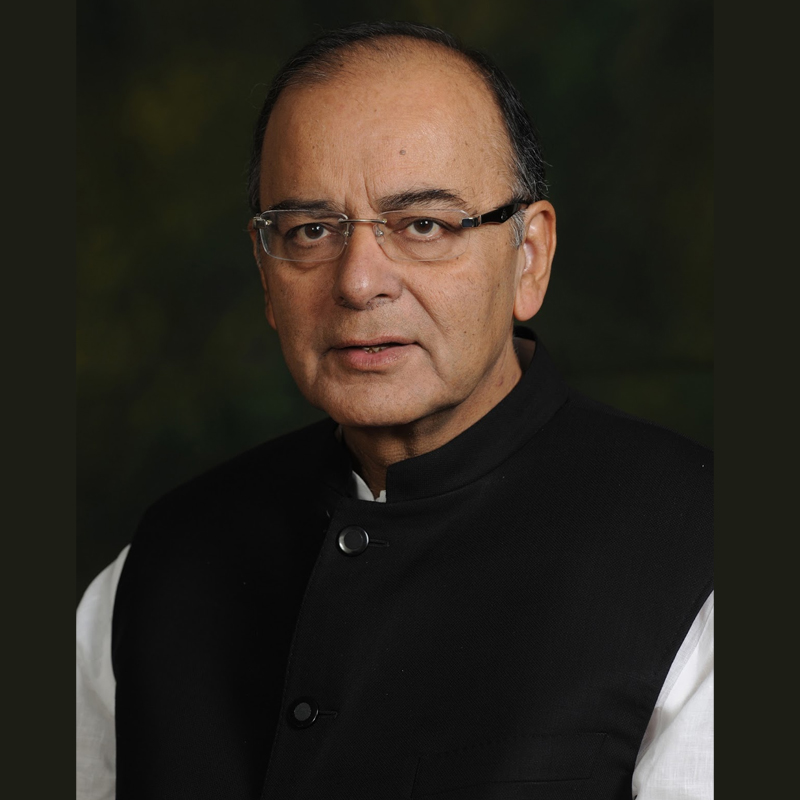
    NEW DELHI: Finance minister Arun Jaitley has said the electronic market in India is one of the largest in the world, and is expected to reach $400 billion in 2020.

    Jaitley said that India’s competence in IT-Software was recognised globally and, in recent times, software development and Information Technology Enabled Services (ITeS, including BPO & KPO) industry had emerged as one of the most dynamic and vibrant sectors in India. He said that the government recognised the potential of IT sector, hence electronic systems and IT & BPM (Business Process Management) are included among 25 sectors in the ‘Make in India’ programme.

    In a pre-budget consultation with stakeholders from IT (Software / Hardware) Sector, he said that India’s external position was more robust of late, and the return to resilience to periodic global shocks was sustainable with lower trade and Current Account Deficits, stable exchange regime and the sound buffer of forex reserves.

    During the meeting, various suggestions were received from the participants for boosting the IT sector. It was brought forth that Government support was required for IT sector in view of increasing trends of protectionism and anti-globalisation abroad. Also rapid changing nature of technology in IT field makes it imperative to focus on R&D in IT, hence, the Government needs to promote R&D and innovation in IT sector in a big way.

    Further, there are issues about speed and penetration of broadband in India. Number of Wi-Fi hotspots is very low in the country. Hence, it was suggested that over-ground towers and underground fiber cable network need to be improved in a big way. At the consumer end, smart phone prices need to be further brought down so that broadband is more accessible to masses.

    It was appreciated in the discussion that green shoots are visible in smart phone manufacturing industry in India and manufacturing of these phones is increasing rapidly. Also, the street price of these Indian-made smart phones is competitive when compared to Chinese-made phones. So, the next logical focus of Indian smart phone manufacturers should be to target the export market.

    To further boost electronic manufacturing in country, suggestions were made to extend the duty differential scheme to all ITA goods, specifically for personal computers (Desktop, Laptop). A proposal requested that list of CPE goods should be make comprehensive for Duty Differential Scheme to further promote and implement ‘Make in India’ initiative. Representatives sought that this scheme must continue to exist in GST regime.

    A proposal for a ‘Component Trading Hub’ was discussed to create an ecosystem for electronics and IT hardware manufacturing. It would bring down logistics costs by creating robust infrastructure for connectivity. Participants also insisted on the need to encourage populated PCBs manufacturing in the country by restricting their direct imports.

    A representative from a robotic firm requested for incentives to boost the robotics sector in country which is non-existent now.

    Adoption of personal computers will be a catalyst for transformation of country to a digital economy and knowledge economy. It was also proposed that easy loans (3-4% per annum) should be provided by banks for the purchase of personal computers and cost of PC should be allowed for deduction under Section 80C of Income Tax Act.

    Concerns were shown in the meeting that increasing digitisation should not lead to increased digital divide in the country. So internet need to be more open, transparent and easily accessible to all. Suggestions were given to improve cyber security structure in India and establish a cyber test range. It was proposed that there should be a mechanism for reporting any vulnerability detected in a Government software System by any private person/agency.

    Along with Jaitley, the Meeting with the representatives of IT (Hardware & Software) Sector was also attended by Minister of State for Finance Santosh Gangwar, MoS (Finance &Corporate Affairs) Arjun Ram Meghwal, Finance Secretary Ashok Lavasa, Economic Affairs Affairs Department Secretary Shaktikanta Das, Financial Services Secretary Ms Anjuli Chib Duggal, Telecom Secretary J S Deepak, Department of Electronics & Information Technology (DEITY) Secretary Ms Aruna Sundararajan, Chief Economic Adviser (CEA) Dr. Arvind Subramanian, and Central Board of Direct Taxes Chairman Sushil Chandra.

    The representatives of the IT (Hardware & Software) Sector present during the meeting included NASSCOM President R Chandrashekhar, Broadband India Forum President T V Ramachandran, CMAI Association of India President N K Goyal, Fast Task Force & National President of Indian Cellular Association Pankaj Mahindroo, Electronics and Computer Software Export Promotion Council Chairman Prasad Garapati, Manufactures Association for Information Technology (MAIT) Vice President Nitin Kunkolienker, Electronic Industries Association of India Prtesident Vikram Desai, Ms Jaspreet Grewal of The Centre for Internet & Society, U B Praveen of Infosys, Arvind V.S. from WIPRO, Pauroos D Karkaria fromTCS, Ms Nisha Tompson who is Founder of Datameet, Ajith Pai who is COO of Delhivery, Sunil Dutt who is President, Device Sales, Jio Mobiles, and Grey Orange India CFO Vartul Jain among others.
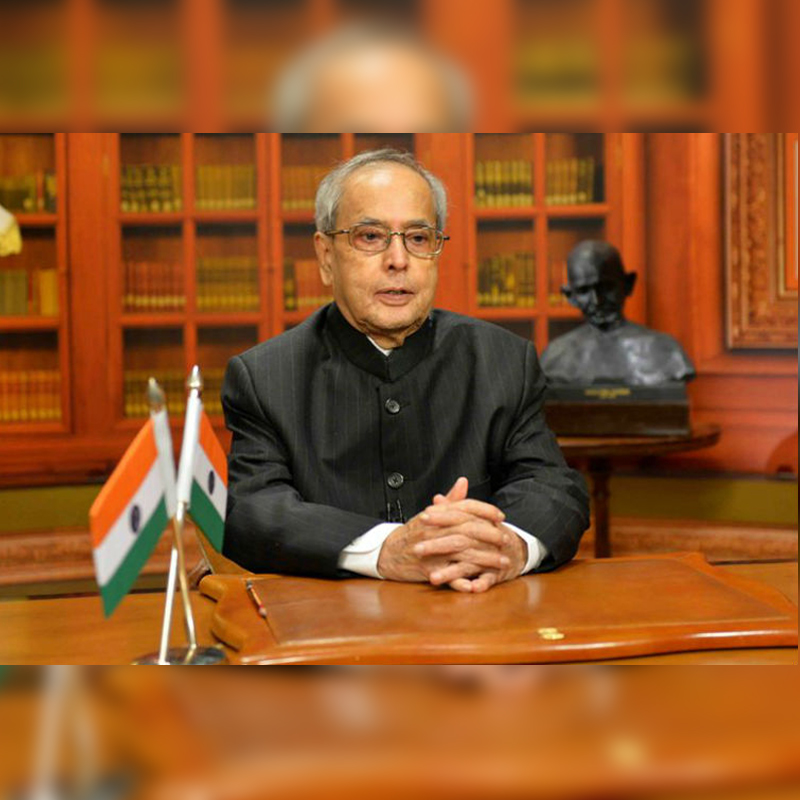
  • Skill of officers depends on effective communication of information: Mukherjee

    Skill of officers depends on effective communication of information: Mukherjee

    NEW DELHI: President Pranab Mukherjee today advised Indian Information Service officers that “the skill of the officers would depend on how effectively they are able to communicate information.”

    He said the IIS provides an opportunity to its officers to communicate proper information in the correct perspective with various stakeholders.

    “Knowledge is power and the basis of knowledge is information”, he added.

    Mukherjee was speaking to a group of probationers of IIS (2015 Batch), Indian Trade Service (2015 Batch) and Indian P&T Accounts and Finance Service (2015 Batch) who called on him at Rashtrapati Bhavan today.

    Speaking on the occasion, the President congratulated the probationers on their success in the civil services exam which is regarded as one of the toughest competitive exams in the world. He said that the civil service has a long history and different services were created at different points of time to meet various exigencies.

    He told probationers that their decision to join the civil services will provide them ample opportunity to serve the country and bear responsibilities even at a young age. He wished the probationers all success in their future assignments.

  • Skill of officers depends on effective communication of information: Mukherjee

    Skill of officers depends on effective communication of information: Mukherjee

    NEW DELHI: President Pranab Mukherjee today advised Indian Information Service officers that “the skill of the officers would depend on how effectively they are able to communicate information.”

    He said the IIS provides an opportunity to its officers to communicate proper information in the correct perspective with various stakeholders.

    “Knowledge is power and the basis of knowledge is information”, he added.

    Mukherjee was speaking to a group of probationers of IIS (2015 Batch), Indian Trade Service (2015 Batch) and Indian P&T Accounts and Finance Service (2015 Batch) who called on him at Rashtrapati Bhavan today.

    Speaking on the occasion, the President congratulated the probationers on their success in the civil services exam which is regarded as one of the toughest competitive exams in the world. He said that the civil service has a long history and different services were created at different points of time to meet various exigencies.

    He told probationers that their decision to join the civil services will provide them ample opportunity to serve the country and bear responsibilities even at a young age. He wished the probationers all success in their future assignments.

  • FICCI Frames 2016: Digitization is a boon, but subject to how it is utilized by all stakeholders

    FICCI Frames 2016: Digitization is a boon, but subject to how it is utilized by all stakeholders

    MUMBAI: Even as a general consensus emerged on digitization being a boon, questions were raised at the ongoing FICCI FRAMES meet on whether the concept and advantages of the concept have been fully understood.

    Even as the TV industry has leapfrogged to more than 800 channels, and Indian Pay TV made the leap from analogue to digital and travelled from single to multi-platforms, the session on ‘Future Proofing Broadcast Distribution’ showed there are still some apprehensions on how the new technology can be used.

    The panelist included Times Network MD& CEO MK Anand, Ortel Communication CEO Bibhu Prasad Rath, Indusind Media and Communication MD & CEO Tony D Silva and Microsoft Corporation India Microsoft Azure and server business country head Srikanth Karnakota. The session was moderated by Zee Network president (Legal & Regulatory) Avnindra Mohan.

    Mohan set the ball rolling with a perplexing question on whether the industry had fully understood the implications of ditigization and convergence and whether stakeholders realized that they can use the same network for delivering different content through different modes of mediums. Thus, he said it shows a paradigm shift in the entire gambit of the distribution system.

    “Digitization has been a boon for the broadcast industry. From the broadcaster point of view, digitization started when the Direct to Home (DTH) system launched in 2003 in India. English news and other English general entertainment channels were being treated as the outsiders for the broadcast business. We had 65 million viewers in English from 2000 to 2005 whereas the total number of television viewers was 400 million. The number of English viewers has grown to 200 million now and that happened because of digitization,” says Anand.

    Anand added that in the next five to ten years, the English entertainment viewership should cross 300 million which is almost close to Hindi general entertainment channels viewership due to digitization.  “Times Now has a very strong and loyal audience in a month we cross the viewership of two and half crores but people don’t know that we have 13 crores of viewers on New Media platform,” informs Anand.

    Being a multi-system operator sharing views on the kind of business opportunities Ortel Communication can have in such a scenario, Rath felt India has grown in a unique fashion for the last two decades but the quality of the networks has been compromised. “The Set Top Box is not a solution to a network and we need to handle Phase III and IV in a different manner and not as Phase I and II”, he added.

    Noting that “we in India do not have one definition for Digitisation.It has been portrayed differently by others”, D’silva asked what the country wanted to achieve through digitization. “I believe there should a national objective about what they want to achieve from digitization. In most the industry today including DTH, 50 per cent of revenue goes in tax”. He felt progress was difficult unless the tax was supportive, but this was not going to happen. “It is the MSOs who are putting up the money and buying the STBs. So there has to be a logical regime of taxation. The STB is the only starting point of digitization. There should be an environment where technology and digitization should go hand in hand,” he felt.

  • FICCI Frames 2016: Digitization is a boon, but subject to how it is utilized by all stakeholders

    FICCI Frames 2016: Digitization is a boon, but subject to how it is utilized by all stakeholders

    MUMBAI: Even as a general consensus emerged on digitization being a boon, questions were raised at the ongoing FICCI FRAMES meet on whether the concept and advantages of the concept have been fully understood.

    Even as the TV industry has leapfrogged to more than 800 channels, and Indian Pay TV made the leap from analogue to digital and travelled from single to multi-platforms, the session on ‘Future Proofing Broadcast Distribution’ showed there are still some apprehensions on how the new technology can be used.

    The panelist included Times Network MD& CEO MK Anand, Ortel Communication CEO Bibhu Prasad Rath, Indusind Media and Communication MD & CEO Tony D Silva and Microsoft Corporation India Microsoft Azure and server business country head Srikanth Karnakota. The session was moderated by Zee Network president (Legal & Regulatory) Avnindra Mohan.

    Mohan set the ball rolling with a perplexing question on whether the industry had fully understood the implications of ditigization and convergence and whether stakeholders realized that they can use the same network for delivering different content through different modes of mediums. Thus, he said it shows a paradigm shift in the entire gambit of the distribution system.

    “Digitization has been a boon for the broadcast industry. From the broadcaster point of view, digitization started when the Direct to Home (DTH) system launched in 2003 in India. English news and other English general entertainment channels were being treated as the outsiders for the broadcast business. We had 65 million viewers in English from 2000 to 2005 whereas the total number of television viewers was 400 million. The number of English viewers has grown to 200 million now and that happened because of digitization,” says Anand.

    Anand added that in the next five to ten years, the English entertainment viewership should cross 300 million which is almost close to Hindi general entertainment channels viewership due to digitization.  “Times Now has a very strong and loyal audience in a month we cross the viewership of two and half crores but people don’t know that we have 13 crores of viewers on New Media platform,” informs Anand.

    Being a multi-system operator sharing views on the kind of business opportunities Ortel Communication can have in such a scenario, Rath felt India has grown in a unique fashion for the last two decades but the quality of the networks has been compromised. “The Set Top Box is not a solution to a network and we need to handle Phase III and IV in a different manner and not as Phase I and II”, he added.

    Noting that “we in India do not have one definition for Digitisation.It has been portrayed differently by others”, D’silva asked what the country wanted to achieve through digitization. “I believe there should a national objective about what they want to achieve from digitization. In most the industry today including DTH, 50 per cent of revenue goes in tax”. He felt progress was difficult unless the tax was supportive, but this was not going to happen. “It is the MSOs who are putting up the money and buying the STBs. So there has to be a logical regime of taxation. The STB is the only starting point of digitization. There should be an environment where technology and digitization should go hand in hand,” he felt.

  • Consumer fail to get adequate information on packages and so any agreement remains unilateral, says Chrome study

    Consumer fail to get adequate information on packages and so any agreement remains unilateral, says Chrome study

    New Delhi, 28 March: Even when the third phase of digitization of cable television is underway and the country is proceeding towards the final phase, the average consumer remains unaware of answers to simple questions that can be provided by the local distributor/direct-to-home operator or cable operator.

    Thus, a bilateral transaction remains unilateral as consumers pay for a certain package consisting of a series of channels but are not made aware when a package is revised, leaving them to continue paying the same amount, regardless of whether the revised price of the package is lesser.

    A Chrome DM report says that “the broadcasters and consumers are both left in the dark. Similarly, consumers may not necessarily require all the channels provided in the package, and would be watching channels worth less than the amount they are paying. For example, they may pay Rs. 400 per month, whereby their content affinity may be towards channels that cost only Rs. 250”.

    In fact, the Report says even basic questions remain unanswered despite the Telecom Regulatory Authority of India have introduced the e-CAF (Consumer Application Forms) to increase the efficiency in the system, and giving it priority by advertising on all TV channels.

    For example, few consumes know what DTH platform they use at home, the package they are subscribed to, or the channels available on those packages, as they accept a lucrative offer that comes their way and accept it without asking questions.

    The Report says these basic questions give rise to huge discrepancies on-ground, impacting the stakeholders in the scenario, in various ways; namely the government, broadcasters, cable operators and consumers.

    Interestingly, the study found that consumers are under the misconception that à la carte is only for sports channels. And though there may be curious consumers who visit respective websites to get information, they find that these may or may not be updated.

    Thus, the notion that the flow of information should be two-way is undermined as the key stakeholders – the consumers – remain uninformed.

    “The total package implementation that collectively took place in Phase I and Phase II is 16 per cent, across the digital universe, with a subscriber base of 2,90,14,214. Despite Phase I and Phase II being implemented in November, 2012 and December, 2013, respectively, the package implementation in Phase I has only been 24 per cent and 13 per cent in Phase II,” the study claims.

    PHASE
    PACKAGES IMPLEMENTED
    PACKAGES NOT IMPLEMENTED
    GRAND TOTAL
    % OF IMPLEMENTATION
    Phase 1
    20
    63
    83
    24%
    Phase 2
    32
    213
    245
    13%
    Grand Total
    52
    276
    328
    16%

    “Discrepancies have definitely arisen from the problem of package implementation. The overall scenario requires much more clarity and I always believe that this is purely contingent on basics. For instance, a leading DTH provider launches a brilliant mobile application meant to be paired with a certain set-top box – however, they go wrong by not seeding the new boxes before launching the application itself! Transparency in the system facilitates concrete addressability. If there were no electricity metres and individuals were to pay electricity bills based purely on negotiations, havoc would ensue.”

    The primary data Chrome DM collected from the ground showed some grave discrepancies. In two areas in Kolkata (Rajabazar and Radhamadhav Dutta, Garden Lane), two respondents in the respective areas are paying two separate prices to their cable operators (Rs 330 and Rs 350 respectively), whereas the former is receiving only 228 available channels and the latter is receiving 342. The respondents are not even provided with receipts.

    Chrome Data Analytics & Media founder and CEO Pankaj Krishna said that “the basics should be very carefully focused upon in order to create a strong and successful foundation upon which the rest of the infrastructure can be implemented.”

    The lack of awareness of the end-consumers and the gravity of this issue as a whole has to be addressed as early as possible if digital addressable system has to succeed, says the study.


  • Consumer fail to get adequate information on packages and so any agreement remains unilateral, says Chrome study

    Consumer fail to get adequate information on packages and so any agreement remains unilateral, says Chrome study

    New Delhi, 28 March: Even when the third phase of digitization of cable television is underway and the country is proceeding towards the final phase, the average consumer remains unaware of answers to simple questions that can be provided by the local distributor/direct-to-home operator or cable operator.

    Thus, a bilateral transaction remains unilateral as consumers pay for a certain package consisting of a series of channels but are not made aware when a package is revised, leaving them to continue paying the same amount, regardless of whether the revised price of the package is lesser.

    A Chrome DM report says that “the broadcasters and consumers are both left in the dark. Similarly, consumers may not necessarily require all the channels provided in the package, and would be watching channels worth less than the amount they are paying. For example, they may pay Rs. 400 per month, whereby their content affinity may be towards channels that cost only Rs. 250”.

    In fact, the Report says even basic questions remain unanswered despite the Telecom Regulatory Authority of India have introduced the e-CAF (Consumer Application Forms) to increase the efficiency in the system, and giving it priority by advertising on all TV channels.

    For example, few consumes know what DTH platform they use at home, the package they are subscribed to, or the channels available on those packages, as they accept a lucrative offer that comes their way and accept it without asking questions.

    The Report says these basic questions give rise to huge discrepancies on-ground, impacting the stakeholders in the scenario, in various ways; namely the government, broadcasters, cable operators and consumers.

    Interestingly, the study found that consumers are under the misconception that à la carte is only for sports channels. And though there may be curious consumers who visit respective websites to get information, they find that these may or may not be updated.

    Thus, the notion that the flow of information should be two-way is undermined as the key stakeholders – the consumers – remain uninformed.

    “The total package implementation that collectively took place in Phase I and Phase II is 16 per cent, across the digital universe, with a subscriber base of 2,90,14,214. Despite Phase I and Phase II being implemented in November, 2012 and December, 2013, respectively, the package implementation in Phase I has only been 24 per cent and 13 per cent in Phase II,” the study claims.

    PHASE
    PACKAGES IMPLEMENTED
    PACKAGES NOT IMPLEMENTED
    GRAND TOTAL
    % OF IMPLEMENTATION
    Phase 1
    20
    63
    83
    24%
    Phase 2
    32
    213
    245
    13%
    Grand Total
    52
    276
    328
    16%

    “Discrepancies have definitely arisen from the problem of package implementation. The overall scenario requires much more clarity and I always believe that this is purely contingent on basics. For instance, a leading DTH provider launches a brilliant mobile application meant to be paired with a certain set-top box – however, they go wrong by not seeding the new boxes before launching the application itself! Transparency in the system facilitates concrete addressability. If there were no electricity metres and individuals were to pay electricity bills based purely on negotiations, havoc would ensue.”

    The primary data Chrome DM collected from the ground showed some grave discrepancies. In two areas in Kolkata (Rajabazar and Radhamadhav Dutta, Garden Lane), two respondents in the respective areas are paying two separate prices to their cable operators (Rs 330 and Rs 350 respectively), whereas the former is receiving only 228 available channels and the latter is receiving 342. The respondents are not even provided with receipts.

    Chrome Data Analytics & Media founder and CEO Pankaj Krishna said that “the basics should be very carefully focused upon in order to create a strong and successful foundation upon which the rest of the infrastructure can be implemented.”

    The lack of awareness of the end-consumers and the gravity of this issue as a whole has to be addressed as early as possible if digital addressable system has to succeed, says the study.


  • TRAI issues draft regulations on register of interconnect agreements, wants comments by 25 April

    TRAI issues draft regulations on register of interconnect agreements, wants comments by 25 April

    New Delhi: The Telecom Regulatory Authority of India today asked stakeholders to give their views on the periodicity and authenticity of the proposed register of interconnect agreements, apart from the format for such a register.

    Stakeholders have been asked to post their comments by 25 April with counter-comments, if any, by 5 May to a consultation paper and a draft of the Register of Interconnect Agreements (Broadcasting and Cable Services) Regulations 2016.

    The primary objective of register of interconnection regulations is to prescribe the contours of a reporting system to service providers to report interconnection agreement details to the Authority so as to enable it to maintain a register of interconnect agreements as per the provisions of TRAI Act. It is also useful for monitoring and analyzing market practices prevailing for interconnection agreements. Presently, the regulations mandate service providers to report the prescribed information annually.

    One clause of the draft register is for ‘Reporting of information, relating to interconnect agreements, by broadcaster of pay channel and the distributor of TV channel’. It says every broadcaster of pay channel and distributor of TV Channel shall report the information relating to all interconnect agreements entered into by them or modifications or amendments or addendums thereto which have been signed before and after coming into effect of the regulations that are valid as on the date of commencement of the regulations and shall be reported within one month for the previous ones and by tenth of the month for the new ones.

    A para on format of reports says: “Subject to the provisions contained in regulation 5 of the regulations, the broadcaster of pay channel and the distributor of TV Channel , as the case may be, shall furnish to the Authority, the information relating to the interconnect agreements in the formats specified in Schedule-I ( Format for broadcasters of pay channels), Schedule-II (Format for MSO and HITS Operator) or Schedule-III (Format DTH and IPTV Service provider) of the regulations as applicable.”

    Stakeholders have been asked to provide suggestions on this regulation of draft regulations and also the formats given in schedules and told that they can also suggest modified format for reporting to make it simple and easy to file.

    TRAI also wants comments on how it can be ensured that service providers report accurate details in compliance of regulations, and on digitally signed method of reporting the information.

    TRAI wants to know why all information including commercial portion of register should not be made accessible to any interested stakeholders, and if the commercial information is to be made accessible, in which way can this commercial information be made accessible to fulfill the objective of non-discrimination.

    If the commercial information is not made accessible to stakeholders, then in what form the provisions under clause (vii) and (viii) of Section 11 (1) (b) of TRAI Act be implemented in broadcasting and cable sector so that the objective of non-discrimination is also met simultaneously, the stakeholders have to state.