Tag: stakeholders

  • GUEST ARTICLE: Impact of 5G in marketing and communication

    GUEST ARTICLE: Impact of 5G in marketing and communication

    Mumbai: While the 5G discourse has been mainly centred on autonomous vehicles and telecom capabilities, the truth is that there is more to this emerging technology than simply enhancing our mobile connectivity. To elaborate, 5G will accelerate technological innovation by enabling AI and machine learning (ML) at the edge, bringing with it unprecedented new enterprises and technological capabilities. According to the report, 1.4 billion devices will be connected to 5G by 2025, opening up a world of possibilities for explosive data. As new devices and technologies are created across industries, what used to take years or months to reach the market will now be accomplished at breakneck speed.

    5G network design and connectivity are rapidly becoming more widely available. It can benefit from the rising availability of this service in a variety of ways, including marketing and communications. The faster the customers and prospects can connect to and navigate the network, the happier they’ll be. 5G ensures that more people can connect to and utilise your network or website more quickly and consistently, even when traffic levels are higher than usual.

    So, what does this all ultimately mean for marketing and communication?

    Because many industries are expected to be impacted, marketing and communications professionals must be ready to develop their messaging and properly explain the results of 5G to key influencers and stakeholders. Here’s how it works:

    5G will help in enhancing experiential marketing

    The promise of 5G — from high-power edge computing to lightning-fast speed — is an opportunity for both consumers and companies. Communication can help brands to position themselves in the community as visionaries, discussing trends and projections while emphasising the growth of their business and generating interest and enthusiasm about the beneficial effects of brands in the community through 5G. Marketing will also assist in allowing the consumer to personally experience the brand or product and obtain brand rewards through 5G. Experiential marketing has always been known for highlighting a brand’s physical presence. With 5G, brands can use artificial intelligence (AI), virtual reality (VR), and augmented reality (AR) approaches to communicate with those who are still striving to reach consumers faster.

    5G technology opens up AR and VR

    Online interactions will increasingly revolve around immersive experiences, and 5G will make this transition more seamless. Virtual reality experiences can take the role of video in marketing by immersing the client in the experience rather than simply showing them what is available. For example, you could allow a customer to enter the store where they want to buy something; allow them to try on hundreds of different items of clothing without entering a changing room; or even allow them to dine with their favourite celebrity.

    Personalization

    Data collection is probably going to get much better under 5G. Discovering your customer might take less time. From this, marketing and communication will be able to help brands know how they can connect with their target audience and consumers faster. Due to such fast connectivity, they can also help brands connect with the media. Such technology will also help marketing by making brands more personalised and immersive experiences for their consumers.

    Marketing and communication will become more interactive

    With 5G’s high-speed capabilities, communication may become more appealing in addition to being more prevalent in the media. Marketing will become more interactive, which was previously thought to be impossible. However, 5G may make this tactic more feasible for marketing professionals. It will become more digital and immersive in the future.

    5G signifies that more individuals can connect to and use the companies’ experiences or goods more swiftly and reliably. The future of marketing and communication will help brands connect with customers and prospects faster and more passively, boosting the brand’s image and awareness with the aforementioned points.

    The author of this article is Scenic Communication co-founder Anindita Gupta.

  • IKEA India elevates Nivedeeta Moirangthem to country communications manager

    IKEA India elevates Nivedeeta Moirangthem to country communications manager

    Mumbai: Ingka Group-owned IKEA India on Wednesday announced the elevation of Nivedeeta Moirangthem as the country communications manager to lead its total communications portfolio including public relations, public affairs and co-worker communication and represent the retail entity as a spokesperson and as an external representative for all Ingka entities in India. She will be a part of the IKEA India management team and report to CEO and chief sustainability officer (CSO), Peter Betzel.

    In her new role, Moirangthem will work closely with the business and key stakeholders to support IKEA India’s ambitious India expansion plans. She will also be closely involved with transformation initiatives as IKEA continues its digital transformation journey towards establishing itself as an omnichannel retailer, the company said in a statement. Moirangthem and team will continue to strengthen the communication agenda and IKEA’s positioning in India, it added.

    Moirangthem commands 23 years of experience in corporate communications & PR, advertising, internal communications, stakeholder engagement, and supply chain communication in the South Asia region. She has been associated with IKEA for close to 20 years. In her previous assignment, she has worked with McCann Erickson India.

    “I am excited to take up the new role and to be able to contribute further to build a loved, meaningful and successful IKEA in India,” Moirangthem said. “There is so much potential left to explore, connects to build and milestones to celebrate and this we do together, always with our IKEA values as the guiding star. It has been a deep learning experience during these tough times that we all are in, both professionally and personally.”

  • TRAI to hold discussions with stakeholders on new policy goals

    TRAI to hold discussions with stakeholders on new policy goals

    MUMBAI: In a bid to prepare a roadmap for the implementation of the National Digital Communications Policy 2018, the Telecom Regulatory Authority of India (TRAI) is planning to hold discussions with stakeholders.
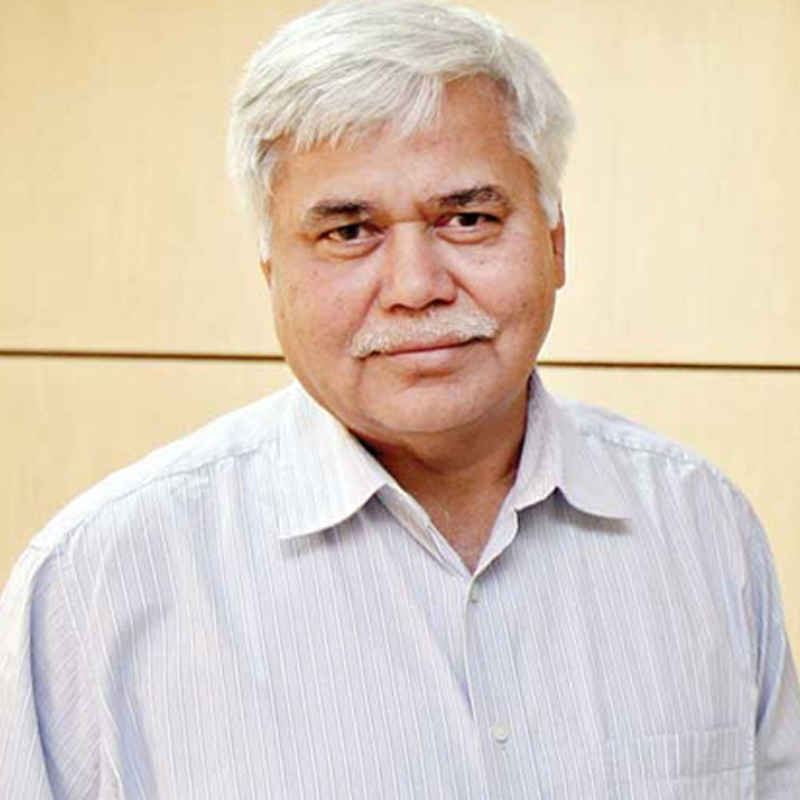
    TRAI chairman RS Sharma said, “We are readying ourselves and consult stakeholders on the policy aspects that require attention. The newly-approved National Digital Communications Policy also contained proposals put forth by the sector regulator.”
    According to him the new policy clearly lays down principles for the Digital India of tomorrow and the fifth-generation (5G) technology. The cabinet has approved the National Digital Communications Policy 2018 that aims to attract $100 billion worth of investment and create as many as 40 lakh new jobs by 2022 in the sector.
    According to the reports, Gram Panchayats or village blocks, according to the government, would be provided with up to 1 gbps connectivity by 2020 and 10 gbps by 2022. The new policy also seeks to ensure broadband coverage to uncovered regions with every citizen to be provided with connectivity of up to 50 mbps and to create common service ducts and utility corridors in cities and national highway projects.
    TRAI’s top official said, “There are multiple opportunities to create common infrastructure. Common ducts should also be implemented.”
    The initiative would allow infrastructure providers to deploy a common terminal or box for optic fibre and digital TV cable with an objective to mitigate Right-of-Way issues. Telecom infrastructure, including fiberisation, according to Sharma, would be critical part of the delivery of digital services in the country.

  • TRAI says all stakeholders responsible to protect user data

    TRAI says all stakeholders responsible to protect user data

    NEW DELHI: The Telecom Regulatory Authority of India (TRAI) has assured its commitment to protect data and define each stakeholder’s responsibility to enable the same. Speaking at ‘i-Bharat 2017’, TRAI chairman R S Sharma said that information privacy, security and data ownership need to be defined.

    Any decision will be taken only after seeking views and conducting open houses with relevant stakeholders. Several consultation papers are out in the public domain for recommendations and suggestions.

    He highlighted the plight of users who weren’t even aware of the long-term consequences of sharing their data and its being misused. In some instances, the privacy policy of a service provider seeks the right to use the data of the customer in any form.

    TRAI is expected to release its views on net neutrality soon but added that it calls for access to internet content without discrimination in data speed or cost. He added that digital consent and blockchain were emerging trends and suggested that there should be a provision for data portability as well.

  • Wireless b’band data speed ideas date extended

    NEW DELHI: With stakeholders saying that various technical and network issues are involved, the Telecom Regulatory Authority of India has once again extended the last date for views on ensuring transparency and customer awareness regarding data speeds under wireless broadband plans.

    Stakeholders can now give their comments by 10 August and counter-comments by 24 August 2017.

    In a Consultation Paper on ‘Data Speed under Wireless Broadband Plans’ early last month, TRAI had also suggested various tools that may be deployed for measuring data speeds.

    At the outset, it had said the National Telecom Policy of 2012 (NTP-2012) has the vision of Broadband on Demand and envisages leveraging telecom infrastructure to enable all citizens and businesses, both in rural and urban areas, to participate in the Internet and web economy thereby ensuring equitable and inclusive development across the nation. It provides the enabling framework for enhancing India’s competitiveness in all spheres of the economy.

    The questions raised in the paper, which discusses the various initiatives that have been taken by the Authority in relation to broadband speeds in India and their current status and provides a summary of the international experience on similar issues, are:

    Q1: Is the information on wireless broadband speeds currently being made available to consumers is transparent enough for making informed choices?

    Q2: If it is difficult to commit a minimum download speed, then could average speed be specified by the service providers? What should be the parameters for calculating average speed?

    Q3: What changes can be brought about to the existing framework on wireless broadband tariff plans to encourage better transparency and comparison between plans offered by different service providers?

    Q4: Is there a need to include/delete any of the QoS parameters and/or revise any of the  benchmarks currently stipulated in the Regulations?

    Q5: Should disclosure of average network performance over a period of time or at peak times including through broadband facts/labels be made mandatory?

    Q6: Should standard application/ websites be identified for mandating comparable disclosures about network speeds?

    Q7: What are the products/technologies that can be used to measure actual end-user experience on mobile broadband networks? At what level should the measurements take place (e.g., on the 26 device, network node)?

    Q8: Are there any legal, security, privacy or data sensitivity issues with collecting device level data?

    a) If so, how can these issues be addressed? b) Do these issues create a challenge for the adoption of any measurement tools?

    Q9: What measures can be taken to increase awareness among consumers about wireless broadband speeds, availability of various technological tools to monitor them and any potential concerns that may arise in the process?

    Also read:

    Wireless b’band speed: TRAI invites transparency & customer awareness ideas

  • Ease of doing b’cast biz date extended to 19 May

    NEW DELHI: With the fast-changing regulatory framework for the media and entertainment sector, which in India is one of the fastest growing sectors, the Telecom Regulatory Authority of India had last month embarked on a major exercise to find out easier ways of doing business and cause least harassment to entrepreneurs.

    To give stakeholders more time to respond to its pre-consultation paper on the ease of doing business in broadcasting which was issued on 17 April, the last date for responses has now been extended from 8 May to 19 May.

    The Authority has on its own decided to go for a pre-consultation with the stakeholders on ease of doing business in the broadcasting sector, taking a cue from PM Modi-led government’s efforts to ease doing businesses in India. It hopes to review various policy issues related to the broadcasting sector with a view to create a conducive and business friendly environment in the sector and identify procedural bottlenecks that affect ease of doing business in the broadcasting sector and recommend measures for simplifying the rules, regulations and bring more transparency and clarity in policies/ framework of the broadcasting sector.

    The aim is also to remove entry barriers by laying down well defined and transparent procedures and processes thereby creating level playing field and competition in the sector and to facilitate innovation and technology adoption for providing better quality of services to the consumers to steer further growth of the sector by attracting investment through investor friendly policies
    Subjects to be covered in the pre-consultation before a final consultation paper is issued are related to processes and procedures for obtaining permission/license/registration for the following broadcasting services and subsequent compliance connected with these permissions. The fields include:

    (a) Uplinking of TV channels
    (b) Downlinking of TV channels
    (c) Teleport services
    (d) Direct-to-home services
    (e) Private FM services
    (f) Headend-in-the sky services
    (g) Local Cable Operators
    (h) Multi System Operators
    (i) Community Radio Stations

  • DAS: Even official figures show cable TV digitisation is incomplete

    DAS: Even official figures show cable TV digitisation is incomplete

    NEW DELHI: Almost two weeks after the formal switch-off of analogue in all parts of the country except Tamil Nadu, a majority of multi-system (MSOs) and local cable operators (LCOs) claimed that the seeding of set-top boxes in Phase III is just over 40 per cent, and likely to be less in Phase IV areas where people cannot afford the boxes.

    In sharp contrast, the minister of state for information and broadcasting Rajyavardhan Rathore told the Parliament in mid-March that around 67 per cent seeding of set-top boxes had been achieved in Phase III and IV combined, while it was absolute in the first two phases (minus Tamil Nadu).

    All India Digital Cable Federation Secretary General Saharsh Damani told indiantelevision.com that reports of Phase III received from MSOs indicated that around 43 million STBs had been seeded even as the government had said that the total affected population in Phase III was just over 33 million.

    Furthermore, he said many MSOs said they had ample boxes lying with them, and so were stopping import of more boxes.

    With no clear picture emerging yet even as the country formally completes full digitisation of cable television, an information and broadcasting ministry official claimed told indiantelevision.com that the figure had already crossed 75 per cent in the final two phases. However, he admitted that some extensions had been allowed in some areas, and analogue was continuing in these areas though time limits had been set.

    Meanwhile an MSO who did not want to be named said people in rural areas could not afford boxes and monthly payments, and so they may opt for direct-to-home TV. Adding that MSOs were not doing ‘charity’ but involved in business, he said the chances were that they would take Doordarshan’s FreeDish as a cheaper option.

    Maharashtra Cable Operators Federation office-bearer Arvind Prabhoo told indiantelevision.com that the estimates received by him from Phase IV areas in his state showed just over 20 per cent cable TV homes had gone digital. He also said that, while the situation in Andhra Pradesh and Telangana with regard to Phase IV was very bad, his understanding was that these two states had achieved 60 per cent seeding of which most was in Phase III. Both states have already sought extensions from the centre.

    He added that, though he had no figures, the position in Uttar Pradesh and Madhya Pradesh was very bad – particularly in Phase IV.

    Interestingly, forseeing the DD FreeDish challenge, some DTH platforms have assured subscribers that, at a minimum sum fixed by them, it will be ensured that there is no stoppage of signals to them since DTH is in any case digital.

    About plans to help the poor acquire STBs, the ministry official said the Telecom Regulatory Authority of India had already announced schemes of payments in installments.

    Meanwhile a meeting of the Task Force for the final two phases held two weeks before total switch-off was told by the advisor (DAS) Yogendra Pal that registered operators in Phase III and Phase-IV areas had reported 64.4 million STBs, excluding Tamil Nadu, which came to 67% of the total requirement.

    While giving region-wise figures, he said that there was need to sit together and chalk out a plan for successful implementation of Cable TV digitisation across the country.

    It was decided that a meeting would be held in the office of the Indian Broadcasting Foundation and an action plan would be worked out in the presence of representatives of MSOs.

    Additional secretary Jayashree Mukherjee asked the members to outline the problems being faced by them in Phase IV areas and also their preparedness.

    A representative from SITI Cable stated that they have been facing some problems with regard to carrying of signals as the telecom bandwidth available in remote areas of Phase-IV is poorly served and can only be utilized by one or two MSOs and quality of service is affected. He again raised the issue of infrastructure sharing and wanted to know progress made in this regard.

    The ministry wanted to know if the MSOs had any proposal, noting that no such proposal had been received so far.

    A representative from GTPL Hathway stated they have no problem in Implementing digitization in Phase-IV areas. He further stated that some push-up from the State Government is also required.

    Mukherjee asked the DTH representative what initiatives have been taken by them to cover those areas where cable connectivity is not available. The representative stated that they are in the process of addressing the problems commercially as well.

    Representatives of national MSOs raised the issue of continuance of analogue signals in some areas, particularly in Telangana State and suggested that all broadcasters are required to undergo for total discontinuation of analogue signals.

    The IBF asked the MSOs for specific complaints in this regard so that immediate necessary action can be taken. He mentioned IBF has already issued Circulars/Notices to all their members to switch off analog signals in Phase III areas.

    The representatives from the State Governments outlined their readiness and action being taken by them with regard to successful implement of Digitization. They mentioned that they are holding meetings with stakeholders.

    All the stakeholders also said they have enough inventories of STBs to be seeded in Phase IV areas. No major issue is pending with regard to Cable TV Digitisation in Phase IV areas to be addressed.

    Also Read :

    DAS: MSOs, LCOs give low figure of STB seeding, official sources admit it’s under 80%

    Final phase STB seeding is 35% even as deadline nears

    DAS deadline extension ruled out, govt claims 66% seeding done


  • TRAI now seeks telecom biz ease ideas by 25 April

    MUMBAI: The Telecom Regulatory Authority of India (TRAI) had issued a paper on “Ease of doing Telecom Business in India” on 14 March 2017 and sought comments of stakeholders. The last date for receiving written comments from the stakeholders was fixed as 11 April 2017.

    Promoting “ease of doing business” is amongst the priority work items for unhindered growth of thetelecom sector. A number of steps have already been taken for ease of doing business. Steps like adoption of market based spectrum management such as assignment of spectrum through auction, permitting spectrum trading, spectrum sharing and liberalisation of administratively assigned spectrum, Unified Licensing regime, Merger and Acquisition guidelines, Virtual Network Operation etc. have been guided by the principles of “ease of doing business”.

    Some stakeholders requested that, since the paper deals with various issues, the time line for submission of comments may be extended. Considering the requests, it has been decided to extend the last date for submission of written comments up to 25 April 2017.

    The comments may be sent preferably in electronic form at advmn@trai.gov.in. TRAI may be contacted at Telephone Number +91-11-23210481.

    Further, the Authority is of the opinion that various processes that a telecom licensee is required to go through, should be simplified and combined to the extent possible to economise on efforts on part of the Telecom Service Providers (TSPs) as well as the Government. Therefore, it is important to identify the bottlenecks, obstacles or hindrances that are making it difficult to do telecom business in India and thus, require regulatory intervention.

  • Shifting to green tech: TRAI extends ideas date till 14 March

    NEW DELHI: Stakeholders wanting to give suggestions to the Telecom Regulatory Authority’s efforts towards the effect of telecom on climate change and green house gas emissions have been asked to send in their views by 14 March 2017.

    Stressing this is the last extension, TRAI said the counter-comments can be sent by 28 March 2017.

    Following a request received from the Department of Telecom, TRAI had issued the Consultation Paper on Approach towards Sustainable Telecommunications in mid-January this year. The paper has raised fourteen questions.

    TRAI had issued a paper on similar issues in 2012 and the DoT had in fact given directions on that basis, but new issues have cropped up with emerging technologies.

    India has the second largest and fastest growing mobile telephone market in the world. Power and energy consumption for telecom network operations is by far the most important significant contributor of carbon emissions in the telecom industry.

    Hence, it is important for the telecom operators to shift to energy efficient technologies and alternative sources of energy. Moreover, Going Green has also become a business necessity for telecom operators with energy costs becoming as large as 25 per cent of total network operations costs. A typical communications company spends nearly one per cent of its revenues on energy which for large operators may amount to several million rupees.

    Also read:

    Shift to energy-efficient tech; TRAI seeks ideas by 27 Feb

  • Submit ‘closure of access’ ideas by 6 Feb: TRAI

    Submit ‘closure of access’ ideas by 6 Feb: TRAI

    MUMBAI: The last  date to  receive comments and  counter-comments on TRAI  Consultation  Paper   on ‘Issues  related  to  closure  of   Access Services’ has been extended.

    The  Telecom  Regulatory  Authority  of India (TRAI) had  invited comments  and counter-comments of stakeholders on Consultation Paper ‘Issues related to  closure of  Access Services’ dated 30 November, 2016. The  last date for  receiving written comments and counter-comments from  the  stakeholders were  fixed  as 9 January 2017 and 16 January 2017, respectively.  

    Considering the request received from the  stakeholders, the  last date for submission of written comments was extended  up to  23 January 2017   and for  counter-comments  up to  30 January 2017. 

    Keeping  in  view  the  request of stakeholders for  further extension of time  for  sending their comments, it  has been   decided to  extend the  last date for  submission of written comments up to 6 February 2017  and   for counter-comments  up to   13 February  2017.  No  further  requests   for extension would  be considered.

    The  comments and   counter-comments may   be  sent preferably in electronic form. For  any   clarification/ information, contact Sanjeev Banzai, advisor  (Network  Spectrum & Licensing).

    TRAI seeks to extend the time mobile users get to change their service-provider if a particular company is shutting shop or selling its spectrum.

    The paper titled ‘Closure of Access Service” will seek feedback from telecom eco-system stakeholders to set up a framework to give an extended time and more options to users facing termination of services. A licence coming to fruition or failure of the service provider to bag spectrum or spectrum trading are normally the reasons behind an entity shutting shop.

    TRAI had taken note of three significant instances. Reliance Communications stopped CDMA services and migrated to LTE. Airtel acquired spectrum from Aircel and Videocon through trading deals. In some cases, operators do not renew the spectrum and stop offering services in a particular area. Tata Docomo has lost subscribers due to such non-renewal.

    Also Read: Consumers may get 60-day notice from unprofessional telcos