Geographic targeting of television advertising is a business that is still in a nascent stage in India. Once adopted by various players in the television advertising chain, it has the potential to be a game-changer in the way brands and products are promoted and aired in India.
Bangalore headquartered Amagi Media Labs (Amagi) has the advantage of being one of the first players in this space in India. Amongst the Amagi team are investor and board member N S Raghavan, who was one of the co-founders and joint managing director at Infosys, former ZeeEntertainment Enterprises Ltd CEO Pradeep Guha and ex-CEO of Tata Sky Vikram Kaushik as advisors.
Amongst the three founders at Amagi who run the show are Baskar S who works on strategy, investments and R&D, and Srividhya S who works on engineering and technology deployment.
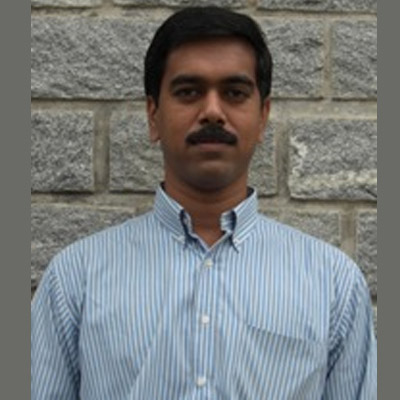
In an interview with Indiantelevision.com‘s Tarachand Wanvari, Amagi‘s third co-founder Srinivasan K A. (Srini as he is called by his friends) talks about the company‘s strategy and growth plans.
Excerpts:
How does Amagi tap into advertisers who look at geographic targeting?
We at Amagi make TV advertising smarter. If you look at all the media options available to an advertiser now, except at a language level, TV is the only medium that does not have geographic targeting. We look to strike out that disadvantage for TV by bringing targeted advertising on this medium.
By rolling out our patent-pending technology infrastructure across the country, we enable different ads to be run in different regions on the exact same ad spot. So a single 30-sec ad spot can have different creatives running in different cities across the country.
So you have a business model that can assist local as well as national advertisers?
We have two business models. The first is local ads. Purchasing power across the top 100 cities in India is growing dramatically. This has been good for a variety of regional businesses in FMCG, retail, real-estate and education catering to the local population.
These businesses have the capacity to spend significantly in advertising to build their brand, but are limited by the absence of a viable TV advertising option.
Advertising on satellite TV is expensive and there is a significant spillage beyond their target geography for these businesses. So a lot of them have stayed away from satellite TV, except in pockets like Chennai, where a viable local option was available.
Amagi for the first time in the country has brought the option of advertising on satellite TV channels for a specific region at a fraction of the national price. This enables local businesses to build brands that emotionally connect with the local audience and unleashes the power of TV advertising for these businesses in the most cost-effective manner.
The second model is Ad Versioning. This business option is specifically targeted at large national advertisers. Ad versioning allows able to play different creatives in different parts of the country on the ad spots that they have already bought from the channel.
One example could be an advertiser can have different creatives for the same brand in different parts of the country – one with Aamir Khan in the north and Vijay in the south, say during an ad spot in a cricket match.
Another example could be to have different local promotions and offers on products in different regions which today are entirely done in print as TV is not isolatable by market.
This is the Holy Grail for advertisers who want to target Internet, but want the reach of TV. Amagi‘s platform enables this for advertisers.
Amagi also works with TV channels and operators to enable this option for advertisers.
How have the various players in the equation taken your offering – advertisers, agencies, television channels, MSOs and the cable operators?
This is a change in the way TV advertising is currently done. Amagi is working with multiple partners in the TV ecosystem to speed up adoption – obviously, anything as dramatic as this option requires time and patience and we are seeing adoption rate accelerating now.
We believe that this is good for advertisers and the broadcasters – as this brings more advertising monies to TV and improves productivity and effectiveness for the advertiser.
In the US, local advertising on TV is a $5 billion business, and has been working great for the whole TV ecosystem, and we believe that we can replicate the same success here in India. Like the US, India has a vibrant local economy that has largely been underserved from media availability perspective. We are filling that gap.
Amagi is bringing in a new set of advertisers at the local level, and a new set of product advertising from larger advertisers which never looked at TV as a viable option. We believe that this a great boon for TV channels as more advertisers and product categories would advertise on their channels, leading to higher yield and revenues.
Amagi partners with MSOs who for the first time have the opportunity to participate in sharing advertising revenue.
What is the size of the market for your services?
The size of the market comes from two parts: Regional businesses which contribute 40 per cent of print advertising in the country today; and large businesses that see that Amagi platform enables their ad spends to work better and provide 20 per cent-30 per cent effective over their current ad spends.
With these two market opportunities combined, the potential for this capability is above Rs 50 billion by 2015.
‘Amagi for the first time in the country has brought the option of advertising on satellite TV channels for a specific region at a fraction of the national price‘
What is driving your growth?
We are an ad marketplace. We connect right content with right advertisers at the local level. Our growth comes from expansion across geographies, and bringing in a portfolio of TV channels that cater to the needs of local businesses.
We are currently in 15 cities across the country, including Mumbai and Delhi. We will be in 22 cities in the next 6 months. We believe that will give us the critical mass to bring a compelling bouquet of TV channels to local businesses; we will have established a local TV marketplace across the country.
Could you tell us how your system works and the safeguards from failure and intrusion or misuse or piracy that you have in your system?
Amagi places ad insertion systems in different cable MSO headends across the country. These systems uniquely and predictably identify the ad spot that is allocated for Amagi, and replaces them with different content in different regions.
Amagi is a completely automated technology platform and are securely controlled and monitored from a centralised location. So essentially these ad insertion systems cannot be programmed, tampered or intruded at these headends. The only way to programme them to do their activities is from a secure Amagi control server located in Bangalore. So, essentially these boxes have no way to be tampered at the local level.
Amagi has been running this technology for the past two years and has done close to half a million seconds of local advertisements across multiple advertisers across the country.
Amagi‘s technology is one of the most advanced, robust and comprehensive technologies in the world, where this is the only system that can handle dynamic requirements of sports, news TV channels with their dynamic scheduling needs and abrupt end of ad spots during sports events. We are in discussions with broadcasters outside the country as well, as this need is universal.
So this is a mature system with a built-in secure work-flow that guarantees no possibility of any misuse whatsoever.
How strong is competition in the space that you are in?
Rediff is one company that started earlier than us in trying to address a similar opportunity. I cannot comment on where they are in their lifecycle.
How scalable is Amagi?
We have a scalable technology platform, large sales force across 15 cities and hundreds of installations across the country, and are exponentially increasing the number of deployments as we speak. More than 230 advertisers have advertised on our platform with close to half a million seconds of advertising.
We believe this the future of TV, and would be happy to see more people exploring this opportunity as it will help build a vibrant marketplace.