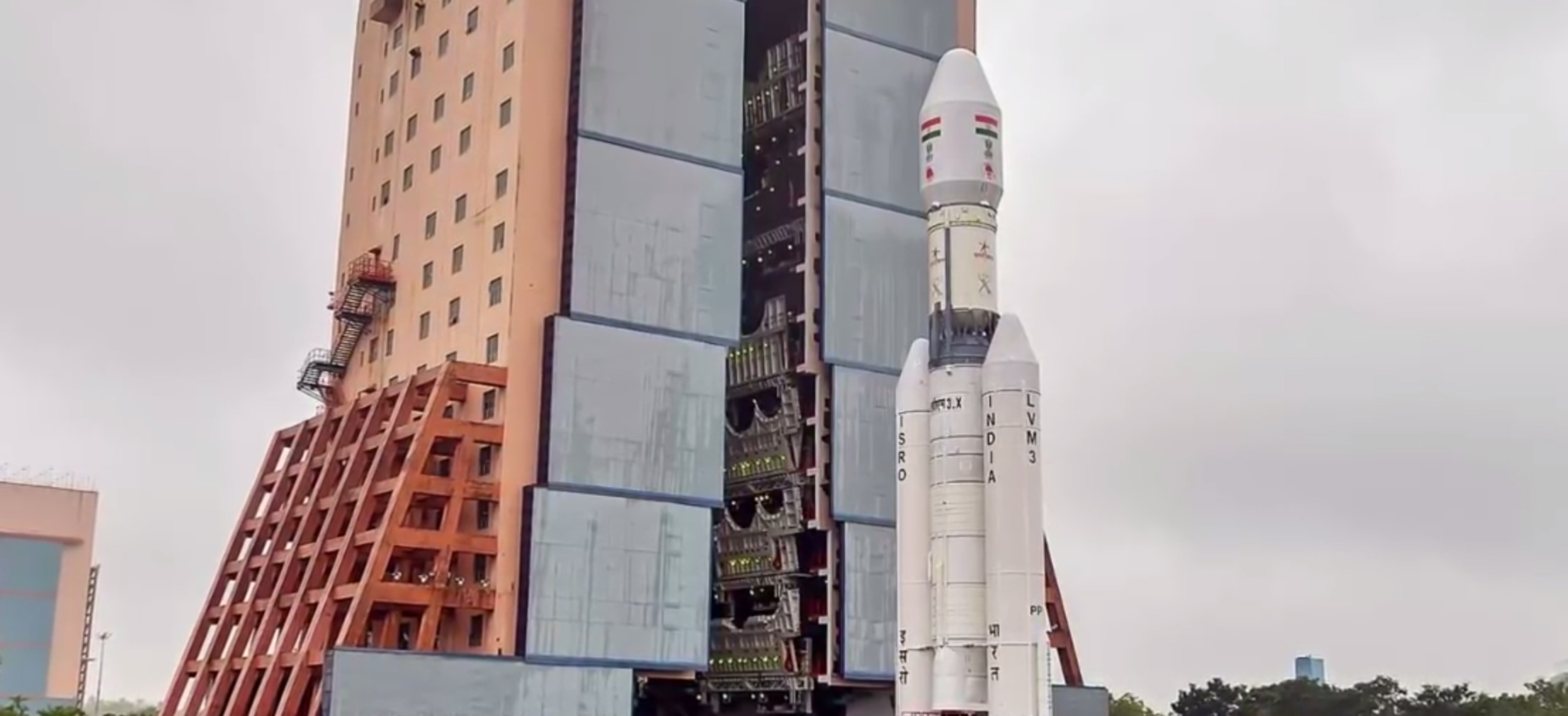
Tag: Sriharikota

  • ISRO test fires scramjet engine successfully

    ISRO test fires scramjet engine successfully

    MUMBAI: The Indian satellite launch program got a shot in the arm this morning at 6 am with the Indian Space Research Organisation (ISRO) successfully test firing its Supersonic Combustion Ramjet (scramjet) or air breathing engine from the spaceport of Sriharikota.

    Usually rocket engines carry both fuel and an oxidiser tank on board for combustion, scramjets use oxygen from the atmosphere The newly developed engines make the spacecraft’s weight ligher, smaller and faster – thereby reducing launch costs.

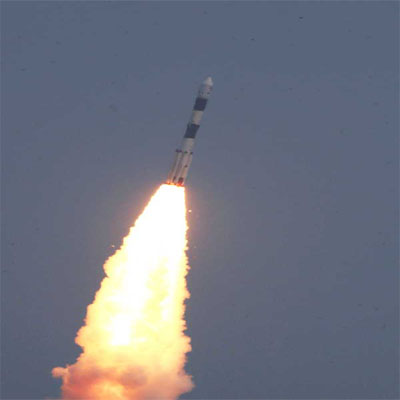
    Two scramjets were used on a RH-560 big sounding rocket that took off from the Satish Dhawan Space Centre. 11 km into space and 55 seconds into flight, the two scramjets were tested for six seconds. And the tests proved successful.

    Scientists from the Vikram Sarabhai Space Centre (VSSC) and Liquid Propulsion Systems Centre (LPSC) who were at Sriharikota had earlier told The Times of India that the Air-Breathing Propulsion System (ABPS) technology scramjets would be used to power the advanced reusable launch vehicle, which can return to earth after depositing the payload into its designation orbit.

    The scramjet test was planned for July 21 this year but was postponed as ISRO was assisting in the search operations to locate the missing IAF aircraft AN-32.

    After a smooth countdown of 12 hours, the solid rocket booster carrying the scramjet engines, lifted off at 0600 hrs (6:00 am) IST. The important flight events, namely, burn out of booster rocket stage, ignition of second stage solid rocket, functioning of Scramjet engines for 5 seconds followed by burn out of the second stage took place exactly as planned.

    After a flight of about 300 seconds, the vehicle touched down in the Bay of Bengal, approximately 320 km from Sriharikota. The vehicle was successfully tracked during its flight from the ground stations at Sriharikota.

    With this flight, critical technologies such as ignition of air breathing engines at supersonic speed, holding the flame at supersonic speed, air intake mechanism and fuel injection systems have been successfully demonstrated.

    The scramjet engine designed by ISRO uses Hydrogen as fuel and the Oxygen from the atmospheric air as the oxidiser. Today’s test was the maiden short duration experimental test of ISRO’s scramjet engine with a hypersonic flight at Mach 6. ISRO’s Advanced Technology Vehicle (ATV), which is an advanced sounding rocket, was the solid rocket booster used for today’s test of scramjet engines at supersonic conditions. ATV carrying scramjet engines weighed 3277 kg at lift-off.

    ATV is a two stage spin stabilised launcher with identical solid motors (based on Rohini RH560 sounding rocket) as the first as well as the second stage (booster and sustainer). The twin scramjet engines were mounted on the back of the second stage. Once the second stage reached the desired conditions for engine “Start-up”, necessary actions were initiated to ignite the Scramjet engines and they functioned for about 5 seconds. Today’s ATV flight operations were based on a pre-programmed sequence.

    Some of the technological challenges handled by ISRO during the development of Scramjet engine include the design and development of Hypersonic engine air intake, the supersonic combustor, development of materials withstanding very high temperatures, computational tools to simulate hypersonic flow, ensuring performance and operability of the engine across a wide range of flight speeds, proper thermal management and ground testing of the engines.

    India is the fourth country to demonstrate the flight testing of scramjet engine. The successful technology demonstration of air-breathing scramjet engines in flight by ISRO today is a modest yet important milestone in its endeavour to design and develop advanced air breathing engines including engines for ISRO’s future space transportation system.

  • ISRO test fires scramjet engine successfully

    ISRO test fires scramjet engine successfully

    MUMBAI: The Indian satellite launch program got a shot in the arm this morning at 6 am with the Indian Space Research Organisation (ISRO) successfully test firing its Supersonic Combustion Ramjet (scramjet) or air breathing engine from the spaceport of Sriharikota.

    Usually rocket engines carry both fuel and an oxidiser tank on board for combustion, scramjets use oxygen from the atmosphere The newly developed engines make the spacecraft’s weight ligher, smaller and faster – thereby reducing launch costs.

    Two scramjets were used on a RH-560 big sounding rocket that took off from the Satish Dhawan Space Centre. 11 km into space and 55 seconds into flight, the two scramjets were tested for six seconds. And the tests proved successful.

    Scientists from the Vikram Sarabhai Space Centre (VSSC) and Liquid Propulsion Systems Centre (LPSC) who were at Sriharikota had earlier told The Times of India that the Air-Breathing Propulsion System (ABPS) technology scramjets would be used to power the advanced reusable launch vehicle, which can return to earth after depositing the payload into its designation orbit.

    The scramjet test was planned for July 21 this year but was postponed as ISRO was assisting in the search operations to locate the missing IAF aircraft AN-32.

    After a smooth countdown of 12 hours, the solid rocket booster carrying the scramjet engines, lifted off at 0600 hrs (6:00 am) IST. The important flight events, namely, burn out of booster rocket stage, ignition of second stage solid rocket, functioning of Scramjet engines for 5 seconds followed by burn out of the second stage took place exactly as planned.

    After a flight of about 300 seconds, the vehicle touched down in the Bay of Bengal, approximately 320 km from Sriharikota. The vehicle was successfully tracked during its flight from the ground stations at Sriharikota.

    With this flight, critical technologies such as ignition of air breathing engines at supersonic speed, holding the flame at supersonic speed, air intake mechanism and fuel injection systems have been successfully demonstrated.

    The scramjet engine designed by ISRO uses Hydrogen as fuel and the Oxygen from the atmospheric air as the oxidiser. Today’s test was the maiden short duration experimental test of ISRO’s scramjet engine with a hypersonic flight at Mach 6. ISRO’s Advanced Technology Vehicle (ATV), which is an advanced sounding rocket, was the solid rocket booster used for today’s test of scramjet engines at supersonic conditions. ATV carrying scramjet engines weighed 3277 kg at lift-off.

    ATV is a two stage spin stabilised launcher with identical solid motors (based on Rohini RH560 sounding rocket) as the first as well as the second stage (booster and sustainer). The twin scramjet engines were mounted on the back of the second stage. Once the second stage reached the desired conditions for engine “Start-up”, necessary actions were initiated to ignite the Scramjet engines and they functioned for about 5 seconds. Today’s ATV flight operations were based on a pre-programmed sequence.

    Some of the technological challenges handled by ISRO during the development of Scramjet engine include the design and development of Hypersonic engine air intake, the supersonic combustor, development of materials withstanding very high temperatures, computational tools to simulate hypersonic flow, ensuring performance and operability of the engine across a wide range of flight speeds, proper thermal management and ground testing of the engines.

    India is the fourth country to demonstrate the flight testing of scramjet engine. The successful technology demonstration of air-breathing scramjet engines in flight by ISRO today is a modest yet important milestone in its endeavour to design and develop advanced air breathing engines including engines for ISRO’s future space transportation system.
  • ISRO launches India’s fifth navigation satellite IRNSS-1E

    ISRO launches India’s fifth navigation satellite IRNSS-1E

    MUMBAI: The Indian Space Research Organisation’s (ISRO) Polar Satellite Launch Vehicle, PSLV-C31, successfully launched the 1425 kg IRNSS-1E, the fifth satellite in the Indian Regional Navigation Satellite System (IRNSS) on the morning of 20 January, 2016 from Satish Dhawan Space Centre SHAR, Sriharikota.


    This is the 32nd consecutively successful mission of PSLV and the 11th in its ‘XL’ configuration.


    After the PSLV-C31 lift-off at 0931 hrs (9:31 am) IST from the Second Launch Pad with the ignition of the first stage, the subsequent important flight events, namely, strap-on ignitions and separations, first stage separation, second stage ignition, heat-shield separation, second stage separation, third stage ignition and separation, fourth stage ignition and satellite injection, took place as planned. After a flight of about 18 minutes 43 seconds, IRNSS-1E Satellite was injected to an elliptical orbit of 282.4 km X 20,655.3 km inclined at an angle of 19.21 degree to the equator (very close to the intended orbit) and successfully separated from the PSLV fourth stage.


    After injection, the solar panels of IRNSS-1E were deployed automatically. ISRO’s Master Control Facility (at Hassan, Karnataka) took over the control of the satellite. In the coming days, four orbit manoeuvres will be conducted from Master Control Facility to position the satellite in the Geosynchronous Orbit at 111.75 deg East longitude with 28.1 deg inclination.


    IRNSS-1E is the fifth of the seven satellites constituting the space segment of the Indian Regional Navigation Satellite System. IRNSS-1A, 1B, 1C and ID, the first four satellites of the constellation, were successfully launched by PSLV on 2 July, 2013, 4 April, 2014, 16 October, 2014 and 28 March, 2015 respectively. All the four satellites are functioning satisfactorily from their designated orbital positions.


    IRNSS is an independent regional navigation satellite system designed to provide position information in the Indian region and 1500 km around the Indian mainland. IRNSS would provide two types of services, namely, Standard Positioning Services (SPS) – provided to all users – and Restricted Services (RS), provided to authorised users.


    A number of ground stations responsible for the generation and transmission of navigation parameters, satellite ranging and monitoring, etc., have been established in eighteen locations across the country. In the coming months, the remaining two satellites of this constellation, namely, IRNSS-1F and IG, are scheduled to be launched by PSLV, thereby completing the entire IRNSS constellation.

  • ISRO launches India’s fifth navigation satellite IRNSS-1E

    ISRO launches India’s fifth navigation satellite IRNSS-1E

    MUMBAI: The Indian Space Research Organisation’s (ISRO) Polar Satellite Launch Vehicle, PSLV-C31, successfully launched the 1425 kg IRNSS-1E, the fifth satellite in the Indian Regional Navigation Satellite System (IRNSS) on the morning of 20 January, 2016 from Satish Dhawan Space Centre SHAR, Sriharikota.


    This is the 32nd consecutively successful mission of PSLV and the 11th in its ‘XL’ configuration.


    After the PSLV-C31 lift-off at 0931 hrs (9:31 am) IST from the Second Launch Pad with the ignition of the first stage, the subsequent important flight events, namely, strap-on ignitions and separations, first stage separation, second stage ignition, heat-shield separation, second stage separation, third stage ignition and separation, fourth stage ignition and satellite injection, took place as planned. After a flight of about 18 minutes 43 seconds, IRNSS-1E Satellite was injected to an elliptical orbit of 282.4 km X 20,655.3 km inclined at an angle of 19.21 degree to the equator (very close to the intended orbit) and successfully separated from the PSLV fourth stage.


    After injection, the solar panels of IRNSS-1E were deployed automatically. ISRO’s Master Control Facility (at Hassan, Karnataka) took over the control of the satellite. In the coming days, four orbit manoeuvres will be conducted from Master Control Facility to position the satellite in the Geosynchronous Orbit at 111.75 deg East longitude with 28.1 deg inclination.


    IRNSS-1E is the fifth of the seven satellites constituting the space segment of the Indian Regional Navigation Satellite System. IRNSS-1A, 1B, 1C and ID, the first four satellites of the constellation, were successfully launched by PSLV on 2 July, 2013, 4 April, 2014, 16 October, 2014 and 28 March, 2015 respectively. All the four satellites are functioning satisfactorily from their designated orbital positions.


    IRNSS is an independent regional navigation satellite system designed to provide position information in the Indian region and 1500 km around the Indian mainland. IRNSS would provide two types of services, namely, Standard Positioning Services (SPS) – provided to all users – and Restricted Services (RS), provided to authorised users.


    A number of ground stations responsible for the generation and transmission of navigation parameters, satellite ranging and monitoring, etc., have been established in eighteen locations across the country. In the coming months, the remaining two satellites of this constellation, namely, IRNSS-1F and IG, are scheduled to be launched by PSLV, thereby completing the entire IRNSS constellation.

  • ISRO successfully launches Astrosat along with six foreign satellites

    ISRO successfully launches Astrosat along with six foreign satellites

    MUMBAI: The Indian Space Research Organisation (ISRO) has been having a swell 2015. Just a few days after its Mars Orbiter completed a successful one year around the Red planet, ISRO has now launched its first dedicated multi wavelength space observatory along with six foreign customer satellites.


    In its 31st flight (PSLV-C30) conducted today (28 September, 2015), India’s Polar Satellite Launch Vehicle (PSLV) successfully launched Astrosat – multi wavelength space observatory and six foreign customer satellites into a 644.6 X 651.5 km orbit inclined at an angle of 6 deg to the equator. The achieved orbit is very close to the intended one. This was the thirtieth consecutive success for PSLV.


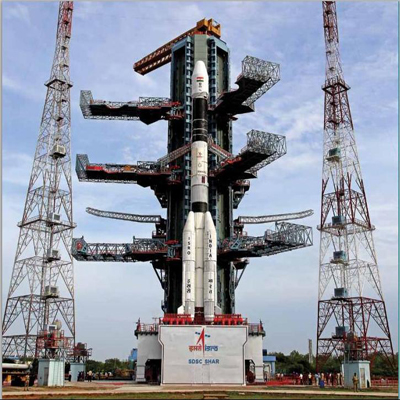
    PSLV was launched in its heaviest ‘XL’ version with six strap-on motors of the first stage. The launch took place from the First Launch Pad at the Satish Dhawan Space Centre SHAR (SDSC SHAR), Sriharikota, the spaceport of India.


    The 320 tonne, 45 m tall PSLV-C30 carrying seven satellites including the 1513 kg Astrosat, lifted off at 10:00 Hrs IST. About 22 minutes after lift-off, Astrosat was successfully placed in orbit and separated from the fourth stage of PSLV-C30. The separation of all the six co-passenger satellites was completed in the subsequent three minutes. The seven satellites carried by PSLV-C30 together weighed about 1631 kg at lift-off. 


    After a 50 hour smooth count down, the 320 ton PSLV-C28 was launched with the ignition of its first stage. The important flight events included the ignition and separation of the strap-ons, separation of the first stage, ignition of the second stage, separation of the payload fairing after the vehicle had cleared the dense atmosphere, second stage separation, third stage ignition and third stage separation, fourth stage ignition and fourth stage cut-off.  


    Through 30 successful flights during 1994-2015 period, PSLV has launched a total of 84 satellites including the seven satellites successfully launched today. The vehicle has repeatedly proved its reliability and versatility by successfully launching satellites into a variety of orbits including polar Sun Synchronous, Geosynchronous Transfer and Low Earth orbits of small inclination thereby emerging as the workhorse launch vehicle of India. 


    So far, 51 satellites have been launched by PSLV for customers from abroad. Today’s launch of six co-passenger satellites by PSLV-C30 was facilitated by Antrix Corporation Limited, the commercial arm of ISRO, a government of India Company under the Department of Space (DOS). 


    Soon after its separation from PSLV-C30, the two solar arrays of Astrosat were automatically deployed and the Spacecraft Control Centre at the Mission Operations Complex of ISRO Telemetry, Tracking and Command Network (ISTRAC) at Bangalore took control of Astrosat.


    Astrosat is India’s first dedicated multi wavelength space observatory. This scientific satellite mission endeavours for a more detailed understanding of our universe. Astrosat is designed to observe the universe in the Visible, Ultraviolet, low and high energy X-ray regions of the electromagnetic spectrum simultaneously with the help of its five payloads. 


    Astrosat was realised by ISRO with the participation of all major astronomy institutions including Inter University Centre for Astronomy and Astrophysics (IUCAA) of Pune, Tata Institute of Fundamental Research (TIFR) at Mumbai, Indian Institute of Astrophysics (IIAP) and Raman Research Institute (RRI) of Bangalore as well as some of the Universities in India and two institutions from Canada and the UK.


    In the coming days, Astrosat will be brought to the final operational configuration and all its five scientific payloads will be thoroughly tested before the commencement of regular operations.

  • PSLV-C24 launches IRNSS-1B

    PSLV-C24 launches IRNSS-1B

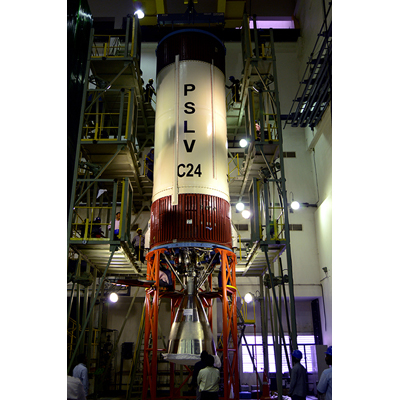
    BENGALURU: ISRO’s Polar Satellite Launch Vehicle, PSLV-C24 has successfully launched IRNSS-1B, the second satellite in the Indian Regional Navigation Satellite System (IRNSS) on 4 April at 1714 hours IST from Satish Dhawan Space Centre SHAR, Sriharikota.


    This is the twenty fifth consecutively successful mission of PSLV. The ‘XL’ configuration of PSLV was used for this mission. Previously, the same configuration of the vehicle was used five times to launch Chandrayaan-1, GSAT-12, RISAT-1, IRNSS-1A and Mars Orbiter Spacecraft.

            .                     .
    After the lift-off with the ignition of the first stage, the important flight events, namely, stage and strap-on ignitions, heat-shield separation, stage and strap-on separations and satellite injection took place exactly as planned. After a flight of about 19 minutes, IRNSS-1B Satellite, weighing 1432 kg, was injected to an elliptical orbit of 283 km X 20,630 km, which is very close to the intended orbit.

    After injection, the solar panels of IRNSS-1B were deployed automatically. ISRO’s Master Control Facility (at Hassan, Karnataka) assumed the control of the satellite. In the coming days, five orbit maneuvers will be conducted from Master Control Facility to position the satellite in its Geosynchronous Circular Orbit at 55 degree east longitude.

    IRNSS-1B is the second of the seven satellites constituting the space segment of the Indian Regional Navigation Satellite System. IRNSS-1A, the first satellite of the constellation, was successfully launched by PSLV on July 02, 2013.     IRNSS-1A is functioning satisfactorily from its designated geosynchronous orbital position.

    Being an independent regional navigation satellite system, it is designed to provide position information in the Indian region and 1500 km around the Indian mainland. IRNSS would provide two types of services, namely, Standard Positioning Services (SPS) – provided to all users – and Restricted Services (RS), provided only to authorised users.
     

    A number of ground stations responsible for the generation and transmission of navigation parameters, satellite control, satellite ranging and monitoring, etc., have been established in as many as 15 locations across the country.

    Two more satellites of this constellation, namely, IRNSS-1C and IRNSS-1D, are planned to be launched in the second half of 2014.  The entire IRNSS constellation of seven satellites is planned to be completed by 2015-16.

  • 2014’s first space mission to be India’s GSAT-14

    2014’s first space mission to be India’s GSAT-14

    MUMBAI: The first time it was about to launch in August 2013, a technical snag forced an abortion. But now, India’s Indian Space Research Organisation’s (ISRO’s)  twenty third communication satellite GSAT-14 by the is all set to be launched into space on 5 January 2014 on the Geosynchronous Satellite Launch Vehicle (GSLV)-D5.  The launcher will propel the bird into a Geosynchronous Transfer Orbit (GTS) after which it will use its own propulsion system to reach its geostationary orbital home at 74 degrees east longitude.


    The mission is important for ISRO which has been seeking to get a piece of the satellite launch action globally. But it has found things difficult since four out of the seven launches of GSLV have been failures and three previous attempts to use indigenous cryogenic engine have also ended up in a mess.


    The previous attempt to blast off GLSV into space in August 2013 was aborted following a fuel leak which developed in its engine hours before launch. ISRO worked on it and gave it a better metal covering, following which it has decided to give it another shot.


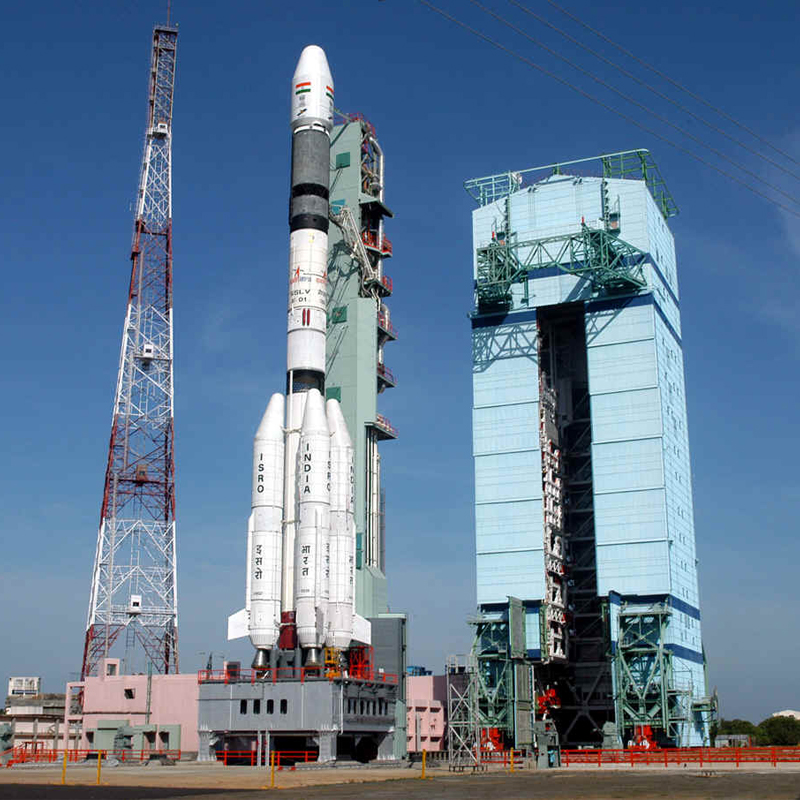
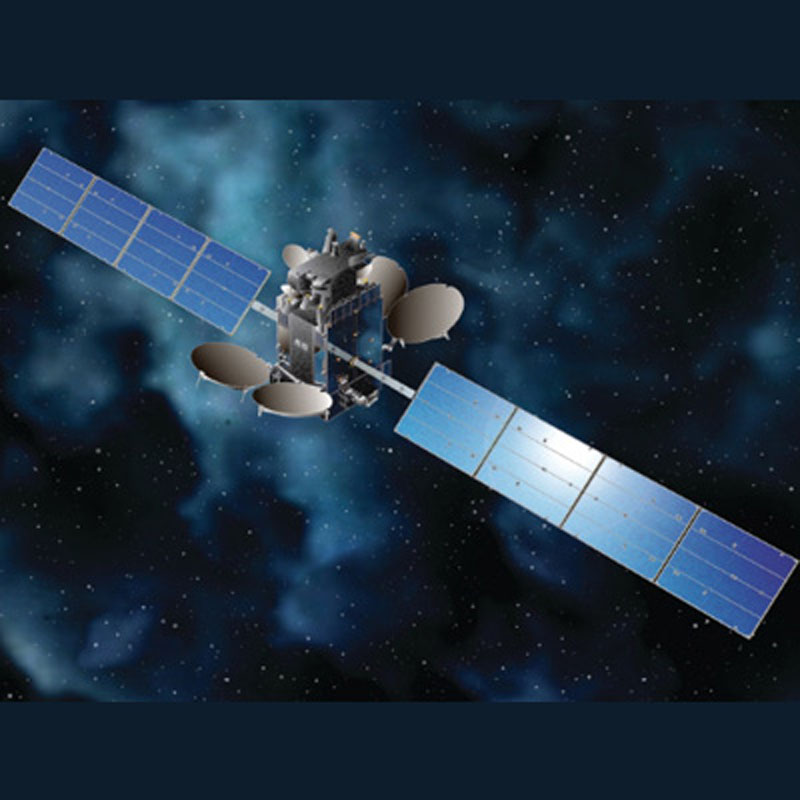
    A three stage rocket – the first stage runs on solid fuel, the second on liquid fuel and third on a cryogenic engine – the GSLV- D5 will be carrying the 1982 kgs (lift off mass) GSAT-14, which will be replacing GSAT-3 that was decommissioned in 2010. The new satellite’s structure is based on ISRO’s two ton weighing (I-2K satellite bus). The satellite has six Ku band (51.5 dBW EOC-EIRP) transponders, six C band (36 dBW EOC-EIRP) transponders and two Ka band beacons and will be co-located with INSAT-3C, INSAT-4CR and KALPANA-1.


    Most of the C- and Ku-band capacity on GSAT-14 will be utilized for long distance education and telemedicine, while the Ka band transponders will help in studying rain and atmospheric effects. This ninth operational geostationary satellite is expected to have a mission life of 12 years and will be able to provide enhanced broadcasting as compared to GSAT-3 for the whole of India.


    According to the ISRO website, the mission has three main objectives- to augment the in-orbit capacity of extended C and Ku-band transponders and to provide a platform for new experiments such as fiber optic gyro, active pixel sun sensor, Ka band beacon propagation studies and thermal control coating experiments.


    The 29 hour countdown to the launch began at 11:18 am on 3 January with the launch time set as 4:18 pm on 4 January from its launch pad at Satish Dhawan Space Centre (SDSC SHAR) at Sriharikota in Andhra Pradesh. GSLV-D5 is expected to have a 17 minute, eight second flight duration. If successful, this will be 2014’s first space launch as SpaceX’s launch of Thaicom-6 has been postponed from 3 January to between 6 and 9 January. The Elon Musk backed company decided to go in for a later liftoff as problems had emerged with Falcon 9 rocket’s fairing.


    If ISRO’s GSLV-D5 successfully plants GSAT- 14 into orbit, it is likely to have a beneficial spinoff which it badly needs. It could lead to orders to build more rockets that can carry payloads of up to four tonnes. Till now ISRO has been using the Polar Satellite Launch Vehicle (PSLV) that carries loads of around a tonne.


    The mission will be telecast live on Doordarshan and on the web from 3: 52 pm on Sunday.

  • DD to telecast live launch of Mangalyaan Mission from Sriharikota

    DD to telecast live launch of Mangalyaan Mission from Sriharikota

    NEW DELHI: Doordarshan will telecast live the launch of the India’s Mars Orbiter Mission (MOM) – which will conduct a detailed study of the Martian atmosphere and is the nation’s first ever mission to the Red Planet.

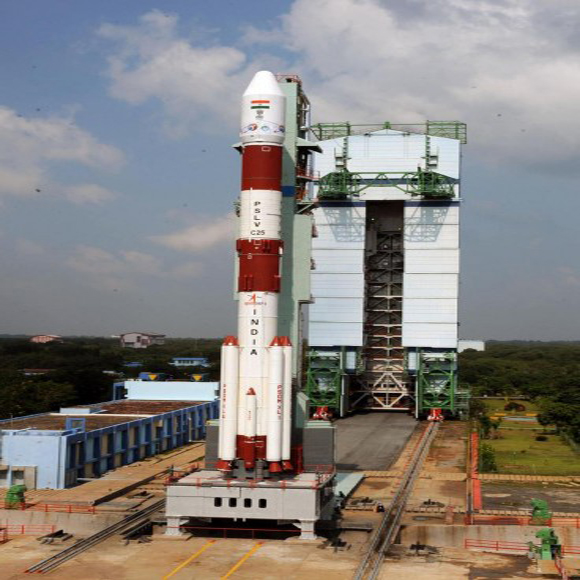
    The telecast PSLV – C25/Mars Orbiter Mission will be telecast live on DD National from 1410 hrs from Sriharikota today afternoon. Prior to that, there will be a ten-minute curtain-raiser on the mission.

    The countdown commenced on 3 November in the morning at 6.06 hrs, according to an official statement from the Indian Space Research Organization (ISRO).

    India would become only the fourth nation or entity from Earth to survey Mars up close with spacecraft, following the Soviet Union, the United States and the European Space Agency (ESA). Past attempts to reach the Red Planet from both China and Japan have failed.

    MOM is the first of two new Mars orbiter science probes from Earth set to blast off for the Red Planet this November. Half a globe away, NASA’s MAVEN orbiter remains on target to launch barely two weeks after MOM on 18 November from the Florida Space Coast.


    MOM is on schedule to lift off atop the powerful, extended XL version of India’s highly reliable four stage Polar Satellite Launch Vehicle (PSLV-C25).

    The 44 meter (144 ft) PSLV will launch MOM into an initially elliptical Earth parking orbit of 248 km x 23,500 km. A series of six orbit raising burns will eventually dispatch MOM on a trajectory to Mars around 1 December.

    Following a 300 day interplanetary cruise phase, the do or die Mars orbital insertion engine will fire on 21 September 2014 and place MOM into an 366 km x 80,000 km elliptical orbit.

    MOM arrives about the same time as NASA’s MAVEN orbiter. They will significantly bolster Earth’s armada of five operational orbiters and surface rovers currently investigating the Red Planet.

    MAVEN and MOM will “work together” to help solve the mysteries of Mars atmosphere, the Chief Bruce Jakosky of MAVEN told Universe Today. Although there are no NASA instruments on board MOM, NASA is providing key communications and navigation support to ISRO and MOM through the agency’s trio of huge tracking antennas in the Deep Space Network (DSN).

    The $ 69 million 1,350 kilogram MOM orbiter, also known as ‘Mangalyaan’, is the brainchild of ISRO.

    ‘Mangalyaan’ is outfitted with an array of five indigenous science instruments including a multi colour imager and a methane gas sniffer to study the Red Planet’s atmosphere, morphology, mineralogy and surface features. Methane on Earth originates from both biological and geological sources.

  • Failure analysis committee on GSLV-F02 constituted

    Failure analysis committee on GSLV-F02 constituted

    BANGALORE: Following the unsuccessful launch of Geosynchronous Satellite Launch Vehicle (GSLV-F02) with INSAT-4C on board from Satish Dhawan Space Centre SHAR (SDSC-SHAR), Sriharikota on 10 July, a Failure Analysis Committee has been constituted by Isro.

    Former director of SDSC-SHAR and presently senior advisor at the Centre chairs the Committee, K Narayana will head the team. According to an Isro release, the 15 member Committee includes experts from academic and research institutions besides those from various Centres of ISRO.

    The Committee will review the performance of all subsystems of GSLV-F02 from lift-off to the termination of flight, identify specific reasons for anomalies observed and recommend corrective measures for future course of action.

    The Committee is expected to submit its report in a month’s time.

  • Insat4c: ISRO gears up for 10-15 July launch

    Insat4c: ISRO gears up for 10-15 July launch

    MUMBAI: 10 to 15 July 2006. That’s the launch window that the Indian Space Research Organisation has set aside for the launch of DTH services satellite Insat 4C. According to ISRO chairman Madhavan Nair the indigeneously designed launch vehicle has been moved to the launch pad in Sriharikota.

    The GSLV Mark II is a 49-metre tall rocket weighing around 40 tonnes at lift-off. Its payload is the Insat 4C satellite, with 12 ku band transponders and a mission life span of 10 years.

    Most of the satellite’s capacity has been booked for DTH services by the Sun Network, National Informatics Centre and VSAT (very small aperture terminals) operators.

    The succesful launch of the GSLV will pitchfork India’s ISRO into an elite group of countries and groups with indigeneous satellite design and launch capabilities: United States, Russia, Japan, China and the European Space Agency (ESA).

    Nair was speaking to journalists at a satellite navigation conference which was held at its offices in Bangalore yesterday. He said that the launch window date will be kept, good weather permitting.

    Isro spokespersons have been pointing out that using indigeneous launch vehicles will result in a saving of about 30-40 per cent or Rs 1.5 billion in expenses per launch. With four satellites to be launched by GSLV Mark II and Mark III, the savings thus will be substantial. It will, however, be using the services of Arianespace to launch the Insat 4B satellite from Kouru in French Guiana next year.

    “With the commissioning of the Rs 3.5 billion ($75mn) second launch pad at Sriharikota, India is the only country to have such a state-of-the-art facility to launch different types of vehicles Ranging from PSLV (polar satellite launch vehicle), GSLV Mark-1, GSLV Mark-II to the upcoming GSLV Mark-III in the four-tonne class,” a top ISRO official is reported to have said sometime back.