Tag: Sriharikota

  • India launches its heftiest satellite yet

    India launches its heftiest satellite yet

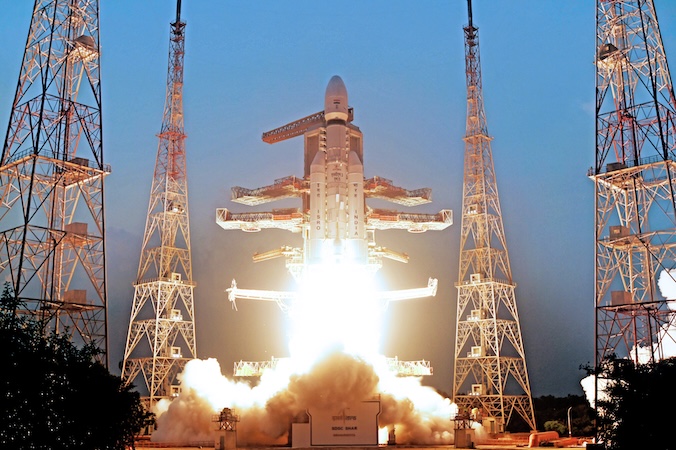
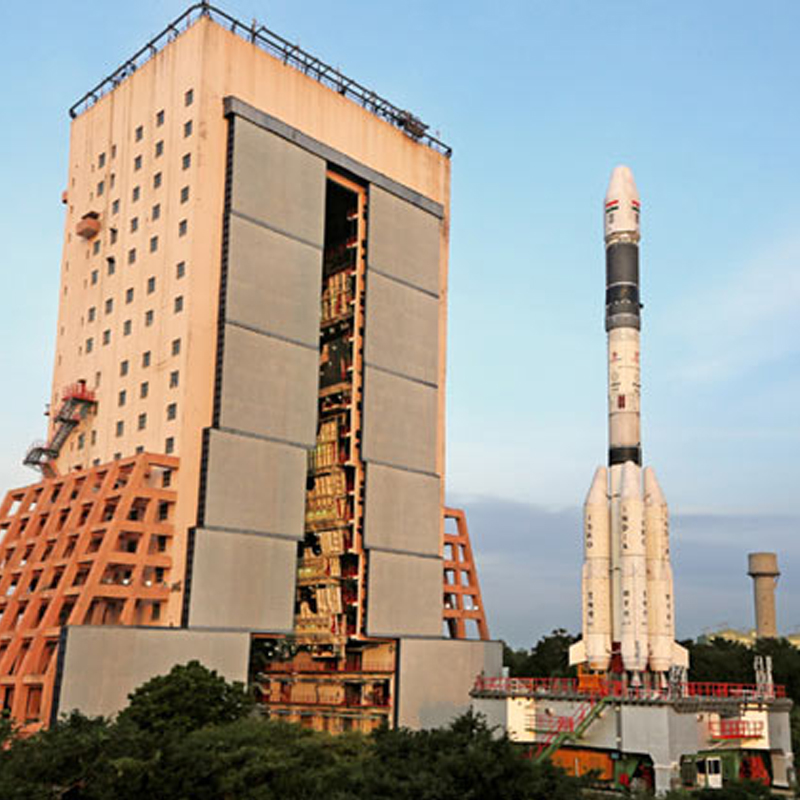
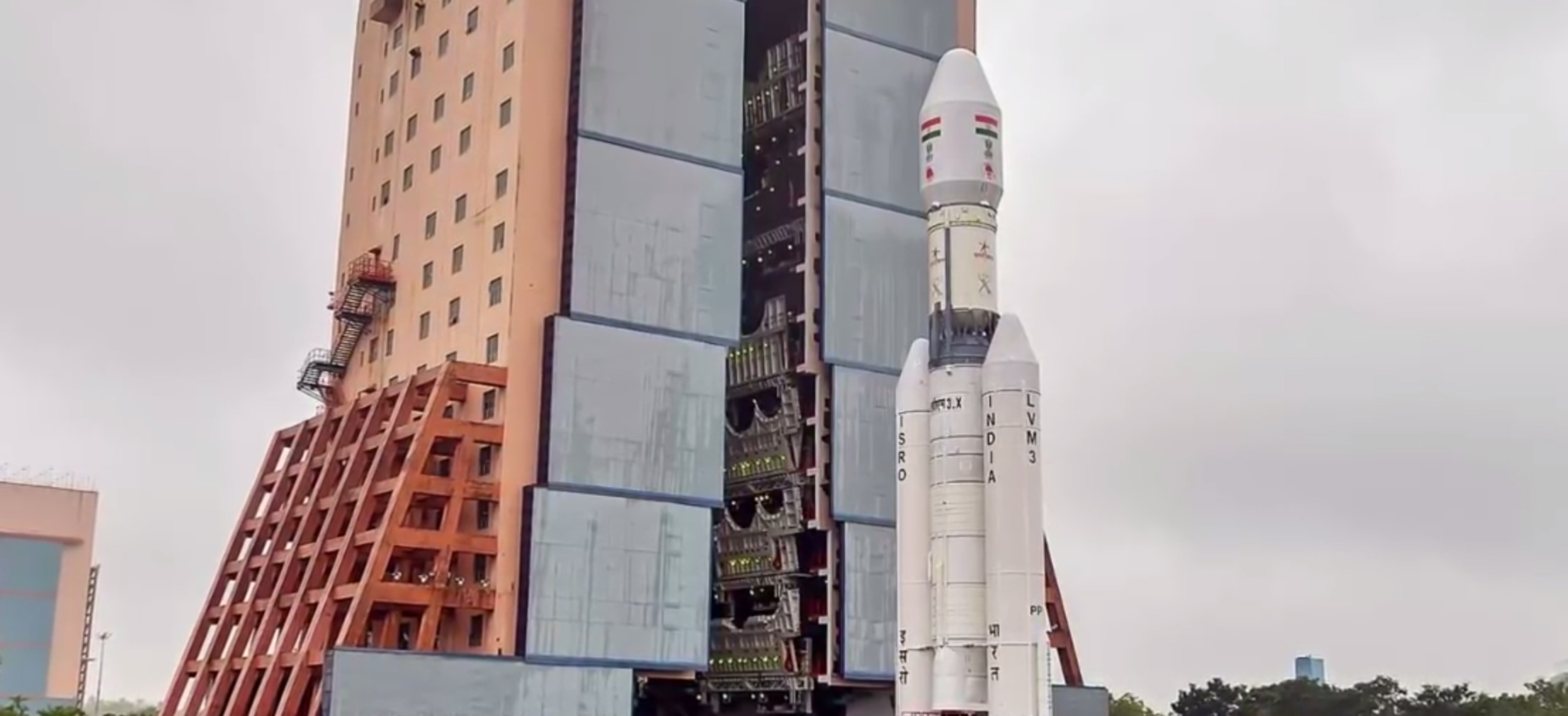
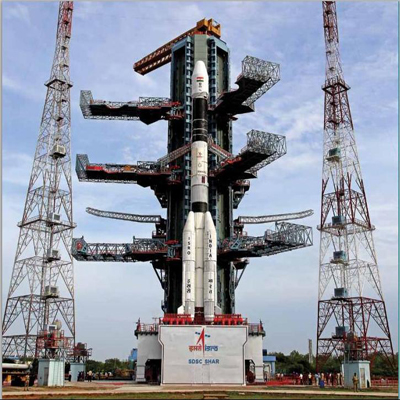
    SRIHARIKOTA: India just flexed its space muscles. On 2 November, the Indian Space Research Organisation (Isro) hurled its heaviest communications satellite ever into orbit from home soil—a 4,400 kg behemoth called CMS-03 that will keep the navy’s ships, submarines and aircraft chattering across the Indian Ocean. The launch from Sriharikota at 5:26 pm marked the end of an embarrassing era: no longer must India send its bulkiest satellites abroad for a lift.

    The rocket doing the heavy lifting was LVM3, ISRO’s most powerful launcher and now nicknamed “Bahubali” for its Herculean payload capacity. This souped-up version sports a beefier cryogenic upper stage—the C32, carrying 32,000kg of fuel and belching 22 tonnes of thrust, a 10 per cent upgrade on the previous model. It can now haul 4,000kg to geosynchronous orbit and 8,000kg to low Earth orbit without breaking a sweat.

    Until now, India’s chunkier satellites hitched rides with foreigners. France’s Arianespace launched the 5,854kg GSAT-11 and 4,181kg GSAT-24. Elon Musk’s SpaceX ferried the 4,700kg GSAT-20. No more. Isro chairman V Narayanan crowed about the mission being “a shining example of Atmanirbhar Bharat”—self-reliant India, in case the point wasn’t clear enough.

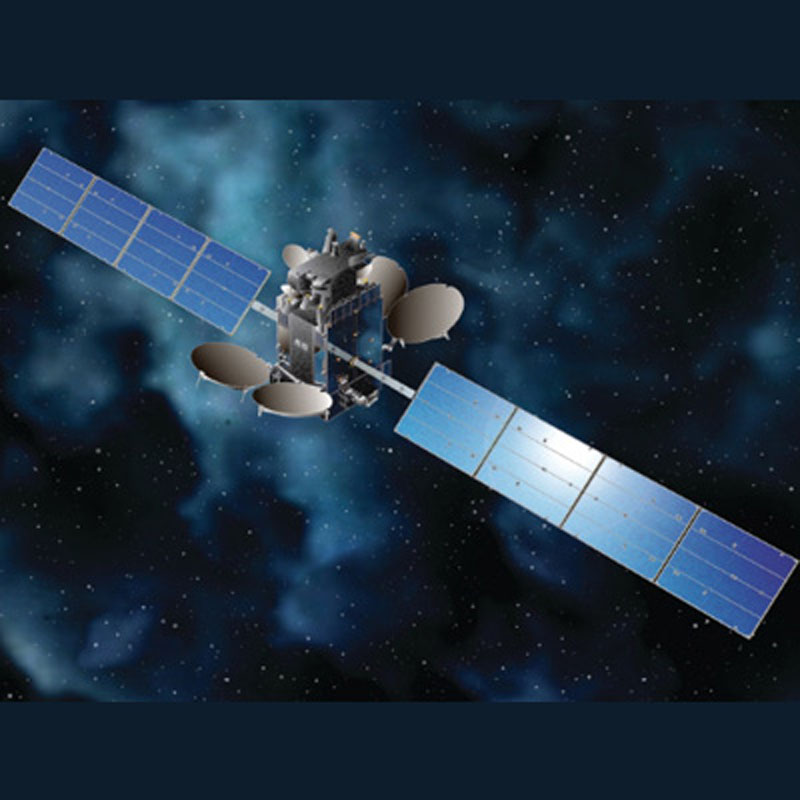
    The CMS-03, also known as GSAT-7R, isn’t just heavy; it’s clever. Bristling with indigenous components, the multiband satellite will provide encrypted voice, data and video links for 15 years, giving the Indian Navy real-time situational awareness across a vast oceanic region. The navy called it a testament to national self-sufficiency in maritime defence.

    This was LVM3’s eighth consecutive successful launch, following triumphs like Chandrayaan-2, Chandrayaan-3 (which made India the first nation to land near the lunar south pole), and OneWeb satellite deployments. The upgraded rocket also feeds directly into Isro’s Gaganyaan programme, which aims to send astronauts into space. Three uncrewed missions are planned first, including one carrying Vyommitra, a robotic astronaut, later this year.

    Narayanan said the space organisation is eyeing seven more launches by March 2026, with another LVM3 mission slated for December. India’s space sector, he declared, is “soaring high.

    With launches this meaty, it’s hard to argue.

  • India’s southern spaceport progressing; to take aim at polar satellites

    India’s southern spaceport progressing; to take aim at polar satellites

    MUMBAI: India is racing to complete its second spaceport on the Tamil Nadu coast, promising to revolutionise the country’s small satellite launch capabilities. The Kulasekarapattinam facility, targetted for commissioning in 2026-27, will unlock dramatic payload improvements that existing infrastructure simply cannot match.

    Minister of state in the prime minister’s office Jitendra Singh told parliament that the Rs 985.96 crore project has consumed Rs 389.58 crore so far, with land acquisition nearly complete and technical facilities under construction. What makes the coastal location special is geography: launching southward over open ocean eliminates the orbital gymnastics required at the existing Satish Dhawan Space Centre.

    The numbers tell the story. India’s Small Satellite Launch Vehicle can carry just 300kg to sun-synchronous polar orbits from Kulasekarapattinam—but “inadequate” payloads from the established Sriharikota facility. The problem lies in trajectory: rockets launching from Sriharikota must perform complex manoeuvres to avoid dropping spent stages on populated areas, gutting their carrying capacity.

    Sun-synchronous polar orbits are the sweet spot for earth observation satellites, keeping spacecraft in constant sunlight as they circle the planet. But reaching these orbits from India’s existing spaceport requires fuel-guzzling course corrections that leave little room for actual cargo.

    Kulasekarapattinam changes the equation entirely. The southern facility’s coastal position allows rockets to fly straight into polar trajectories without dodging landmasses or cities. Once operational, the spaceport will handle launches for both ISRO’s Small Satellite Launch Vehicle and equivalent rockets from private companies.

    The project represents India’s push to capture more of the booming small satellite market, where payload efficiency often determines commercial viability. With fabrication of equipment underway at various work centres and construction proceeding on technical facilities, the race is on to bring India’s orbital ambitions down to earth—or rather, up to space—by 2027.

  • ISRO gears up for GSAT-19, GSLV Mk III launch today

    MUMBAI: Another rocket will be turbo-charged into space today with its 3,136 kg payload (the GSAT-19 satellite) from India’s space launch site in Sriharikota in Andhra Pradesh. The only difference, when the GSLV Mk III takes off at 17:28 pm, it will place the Indian Space Research Organisation amongst a select few agencies which can launch satellites of up to 4,000 kg into geostationary orbit.

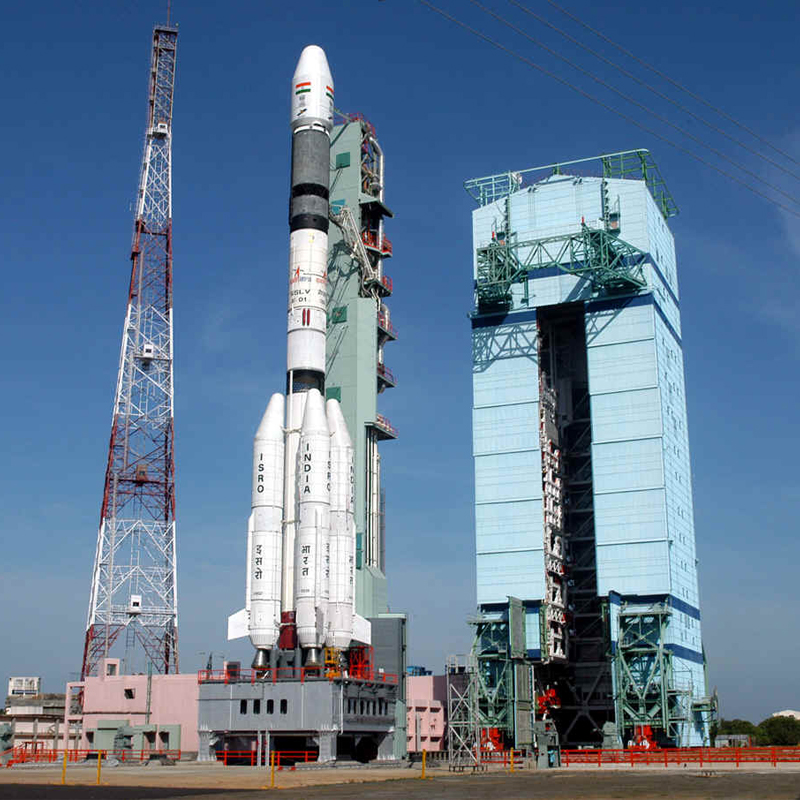
    The GSLV Mk III is a three-stage heavy lift launch vehicle developed by ISRO. The vehicle has two solid strap-ons, a core liquid booster and a cryogenic upper stage. At 640 tonnes, it is India’s heaviest but shortest rocket at 43 metres

    GSLV Mk III is designed to carry four ton class of satellites into geosynchronous transfer orbit (GTO) or about 10 tons to low earth orbit (LEO), which is about twice the capability of GSLV Mk II.

    The two strap-on motors of GSLV Mk III are located on either side of its core liquid booster. Designated as ‘S200’, each carries 205 tons of composite solid propellant and their ignition results in vehicle lift-off. S200s function for 140 seconds. During strap-ons functioning phase, the two clustered Vikas liquid engines of L110 liquid core booster will ignite 114 sec after lift -off to further augment the thrust of the vehicle. These two engines continue to function after the separation of the strap-ons at about 140 seconds after lift -off.

    Its payload, the GSAT 19, is configured around the ISRO’s standard I-3K bus. GSAT-19 carries Ka/Ku-band high throughput communication transponders. Besides, it carries a geostationary radiation spectrometer (GRASP) payload to monitor and study the nature of charged particles and the influence of space radiation on satellites and their electronic components. GSAT-19 also features certain advanced spacecraft technologies including miniaturised heat pipe, fibre optic gyro, micro electro-mechanical systems (MEMS) accelerometer, Ku-band TTC transponder, as well an indigenous Lithium-ion Battery.

  • ISRO world record in 104-satellite launches on a single flight

    MUMBAI: The Indian Space Research Organisation (ISRO) has set a world record by launching 104 satellites on a single rocket, including India’s earth observation satellite Cartosat-2 series.

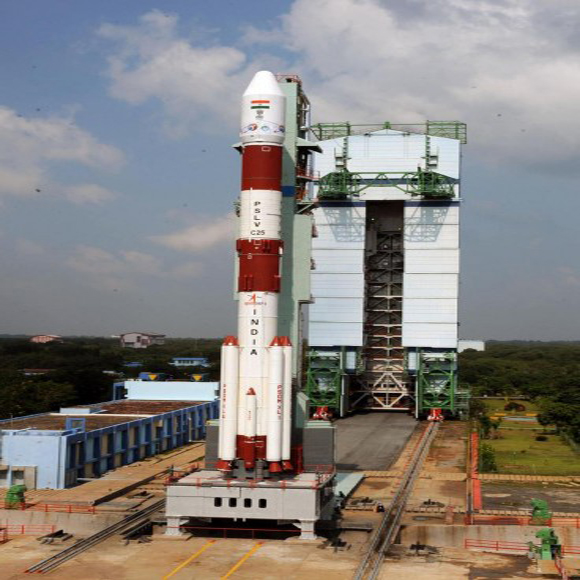
    The Indian rocket Polar Satellite Launch Vehicle (PSLV-C37) was lifted off successfully from the Satish Dhawan Space Centre SHAR, Sriharikota. This is the highest number of satellites ever launched in a single mission. This is the thirty eighth consecutively successful mission of PSLV. The total weight of all the 104 satellites carried on-board PSLV-C37 was 1378 kg.

    Earlier, the Russian Space Agency had launched 37 satellites in one go. ISRO had earlier launched 23 satellites in a single mission in June 2015.

    ISRO Chairman A.S. Kiran Kumar announced, “All 104 satellites successfully placed in orbit. My hearty congratulations to the entire ISRO team for the wonderful job they have done.”

    Prime Minister Narendra Modi has congratulated ISRO on successful launch of PSLV-C37 and CARTOSAT satellite together with 103 nano satellites.

    Modi said, “Congratulations to ISRO for the successful launch. This remarkable feat by ISRO is yet another proud moment for our space scientific community and the nation. India salutes our scientists.” India’s President Pranab Mukherjee also congratulated ISRO on carrying a record 104 satellites.

    In a message to ISRO chairman and department of space secretary A.S. Kiran Kumar, the President has said, “I extend my sincere congratulations and best wishes to you and your team at the Indian Space Research Organisation (ISRO) on the successful launch into space of PSLV – C37, carrying a record 104 satellites.”

    Of the 103 co-passenger satellites carried by PSLV-C37, two – ISRO Nano Satellite-1 (INS-1) weighing 8.4 kg and INS-2 weighing 9.7 kg – are technology demonstration satellites from India.

    The remaining 101 co-passenger satellites carried were international customer satellites from USA (96), The Netherlands (1), Switzerland (1), Israel (1), Kazakhstan (1) and UAE (1).

    With today’s successful launch, the total number of customer satellites from abroad launched by India’s workhorse launch vehicle PSLV has reached 180.

  • ISRO launches RESOURCESAT-2A Remote Sensing Satellite

    ISRO launches RESOURCESAT-2A Remote Sensing Satellite

    NEW DELHI: The 1,235-kg RESOURCESAT-2A Satellite was launched successfully yesterday morning by the PSLV-C36, ISRO’s Polar Satellite Launch Vehicle, in its thirty eighth flight from the Satish Dhawan Space Centre SHAR, Sriharikota.

    This is the thirty seventh consecutively successful mission of PSLV.

    With this, the total number of satellites launched by India’s workhorse launch vehicle PSLV including today’s RESOURCESAT-2A has now reached 122, of which 43 are Indian and the remaining 79 are from abroad.

    After PSLV-C36 lift-off at 10:25 am IST from the First Launch Pad with the ignition of the first stage, the subsequent important flight events, namely, strap-on ignitions and separations, first stage separation, second stage ignition, payload fairing separation, second stage separation, third stage ignition and separation, fourth stage ignition and cut-off, took place as planned. After a flight of 17 minutes 05 seconds, the vehicle achieved a polar Sun Synchronous Orbit of 824 km height inclined at an angle of 98.725 degree to the equator (very close to the intended orbit) and 47 seconds later, RESOURCESAT-2A was separated from the PSLV fourth stage.

    After separation, the two solar arrays of RESOURCESAT-2A deployed automatically and ISRO’s Telemetry, Tracking and Command Network (ISTRAC) at Bangalore took over the control of the satellite. In the coming days, the satellite will be brought to its final operational configuration following which it will begin to provide imagery from its three cameras. The data sent by RESOURCESAT-2A will be useful for agricultural applications like crop area and crop production estimation, drought monitoring, soil mapping, cropping system analysis and farm advisories generation.

    Like its predecessors RESOURCESAT-1 and 2, RESOURCESAT-2A has a unique 3-Tier imaging system with Advanced Wide Field Sensor (AWiFS), Linear Imaging Self Scanner-3 (LISS-3) and Linear Imaging Self Scanner-4 (LISS-4) cameras. The AWiFS provides images with a sampling of 56 metres, a swath of 740 km and a revisit of five days whereas the LISS-3 provides 23.5 metre sampled images with 141 km swath and a ‘repitivity’ of 24 days. LISS-4 provides 5.8 metre sampled images with 70 km swath and a revisit of five days.

    Meanwhile, the Parliament was told yesterday that ISRO successfully carried out the first experimental mission of Reusable Launch Vehicle – Technology Demonstrator (RLV-TD) on 23 May 2016 from Sriharikota. In this mission, critical technologies such as autonomous navigation, guidance & control and reusable thermal protection system have been successfully demonstrated.
    The space minister Jitendra Singh said the Development of Reusable Launch Vehicle is a technical challenge and it involves the development of many cutting edge technologies. Presently, it is in the preliminary stage of total developmental process. A series of technology demonstration missions would be required before it is made operational.

  • ISRO launches RESOURCESAT-2A Remote Sensing Satellite

    ISRO launches RESOURCESAT-2A Remote Sensing Satellite

    NEW DELHI: The 1,235-kg RESOURCESAT-2A Satellite was launched successfully yesterday morning by the PSLV-C36, ISRO’s Polar Satellite Launch Vehicle, in its thirty eighth flight from the Satish Dhawan Space Centre SHAR, Sriharikota.

    This is the thirty seventh consecutively successful mission of PSLV.

    With this, the total number of satellites launched by India’s workhorse launch vehicle PSLV including today’s RESOURCESAT-2A has now reached 122, of which 43 are Indian and the remaining 79 are from abroad.

    After PSLV-C36 lift-off at 10:25 am IST from the First Launch Pad with the ignition of the first stage, the subsequent important flight events, namely, strap-on ignitions and separations, first stage separation, second stage ignition, payload fairing separation, second stage separation, third stage ignition and separation, fourth stage ignition and cut-off, took place as planned. After a flight of 17 minutes 05 seconds, the vehicle achieved a polar Sun Synchronous Orbit of 824 km height inclined at an angle of 98.725 degree to the equator (very close to the intended orbit) and 47 seconds later, RESOURCESAT-2A was separated from the PSLV fourth stage.

    After separation, the two solar arrays of RESOURCESAT-2A deployed automatically and ISRO’s Telemetry, Tracking and Command Network (ISTRAC) at Bangalore took over the control of the satellite. In the coming days, the satellite will be brought to its final operational configuration following which it will begin to provide imagery from its three cameras. The data sent by RESOURCESAT-2A will be useful for agricultural applications like crop area and crop production estimation, drought monitoring, soil mapping, cropping system analysis and farm advisories generation.

    Like its predecessors RESOURCESAT-1 and 2, RESOURCESAT-2A has a unique 3-Tier imaging system with Advanced Wide Field Sensor (AWiFS), Linear Imaging Self Scanner-3 (LISS-3) and Linear Imaging Self Scanner-4 (LISS-4) cameras. The AWiFS provides images with a sampling of 56 metres, a swath of 740 km and a revisit of five days whereas the LISS-3 provides 23.5 metre sampled images with 141 km swath and a ‘repitivity’ of 24 days. LISS-4 provides 5.8 metre sampled images with 70 km swath and a revisit of five days.

    Meanwhile, the Parliament was told yesterday that ISRO successfully carried out the first experimental mission of Reusable Launch Vehicle – Technology Demonstrator (RLV-TD) on 23 May 2016 from Sriharikota. In this mission, critical technologies such as autonomous navigation, guidance & control and reusable thermal protection system have been successfully demonstrated.
    The space minister Jitendra Singh said the Development of Reusable Launch Vehicle is a technical challenge and it involves the development of many cutting edge technologies. Presently, it is in the preliminary stage of total developmental process. A series of technology demonstration missions would be required before it is made operational.

  • ISRO to launch eight satellites using PSLV on 26 September

    ISRO to launch eight satellites using PSLV on 26 September

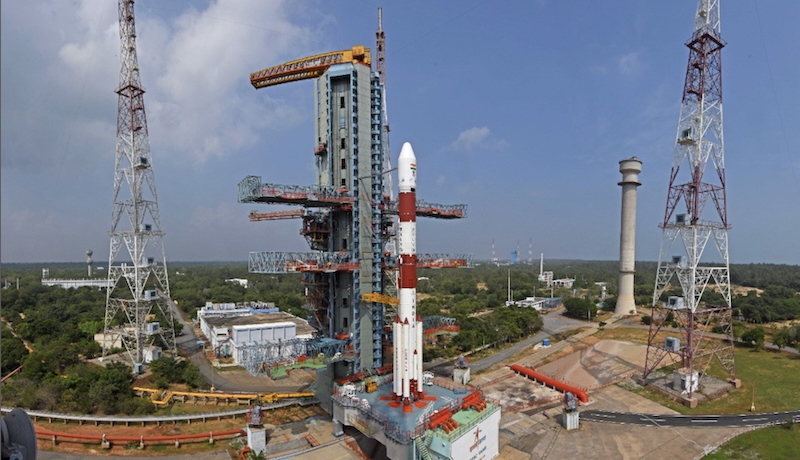
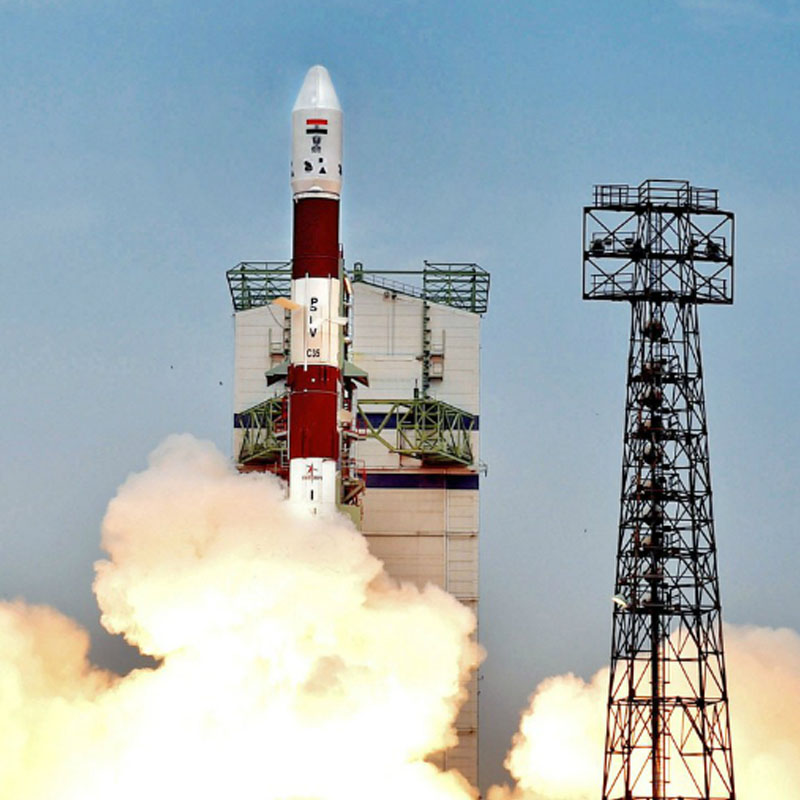
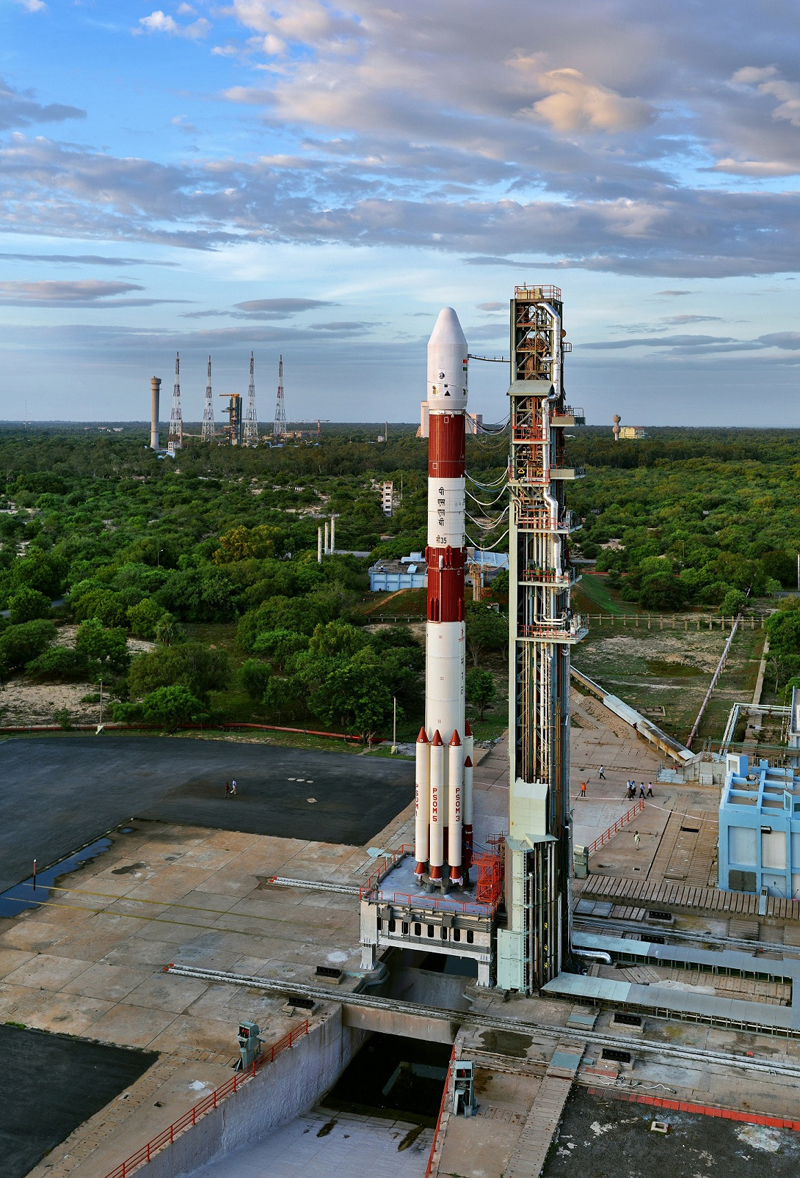
    MUMBAI: It will be the second satellite launch this month for the Indian Space Research Organisation (ISRO). On 26 September 2016 at exactly 9:12 am the PSLV C35 will blast off from the first launch pad of the Satish Dhawan Space Centre in Sriharikota, Andhra Pradesh. It will mark the 37th mission and 15 th flight of the PSLV in ‘XL’ configuration (with the use of solid strap-on motors) which will put eight satellites into orbit.

    ISRO will, with the PSLV C35, be undertaking its longest launch and probably most complicated mission ever attempted as it is using the same rocket to launch satellites into two different orbits. The Scatsat-1 satellite, weighing 371 kg for ocean and weather related studies, will be hurled into polar sun synchronous orbit at an altitude of 730 km 17 minutes after liftoff.

    Two Indian universities/ academic institute satellites (Pratham-10kg, IIT – Bombay and Pisat-5.25 kg, PES University, Bengaluru and its consortium) and five foreign satellites will be placed into a 670 km polar orbit. The five co-passenger satellites are from Algeria (three of them – Alsat-1B 103kg, Alsat-2B 117kg, Alsat-1N 7kg), Canada (NLS-19, 8kg) and the US (Pathfinder-44kg).

    What makes the mission complicated is that once Scatscat-1 is launched, the fourth stage engine of the PSLV-C35 will come to a halt. India’s space agency will then keep a tab on the engine health from the ground and will restart it after about 60 minutes for another 20 seconds which will give it the required thrust to take the rocket into the next orbit and release the payload of seven satellites. ISRO has planned to attempt ‘multiple burn technology’ as it is an effective method in cutting costs during satellite launches.

    Earlier this month on 8 September, IISRO had successfully launched its weather satellite INSAT-3DR, a two tonner, using the GSLV-F05, the tenth flight of India’s Geosynchronous Satellite Launch Vehicle (GSLV), The launch took place from the second launch pad at Satish Dhawan Space Centre. It was significant because it was the first operational flight of GSLV carrying Cryogenic Upper Stage (CUS). The indigenously developed CUS was carried on-board for the fourth time during a GSLV flight in the GSLV-F05 flight.

  • ISRO to launch eight satellites using PSLV on 26 September

    ISRO to launch eight satellites using PSLV on 26 September

    MUMBAI: It will be the second satellite launch this month for the Indian Space Research Organisation (ISRO). On 26 September 2016 at exactly 9:12 am the PSLV C35 will blast off from the first launch pad of the Satish Dhawan Space Centre in Sriharikota, Andhra Pradesh. It will mark the 37th mission and 15 th flight of the PSLV in ‘XL’ configuration (with the use of solid strap-on motors) which will put eight satellites into orbit.

    ISRO will, with the PSLV C35, be undertaking its longest launch and probably most complicated mission ever attempted as it is using the same rocket to launch satellites into two different orbits. The Scatsat-1 satellite, weighing 371 kg for ocean and weather related studies, will be hurled into polar sun synchronous orbit at an altitude of 730 km 17 minutes after liftoff.

    Two Indian universities/ academic institute satellites (Pratham-10kg, IIT – Bombay and Pisat-5.25 kg, PES University, Bengaluru and its consortium) and five foreign satellites will be placed into a 670 km polar orbit. The five co-passenger satellites are from Algeria (three of them – Alsat-1B 103kg, Alsat-2B 117kg, Alsat-1N 7kg), Canada (NLS-19, 8kg) and the US (Pathfinder-44kg).

    What makes the mission complicated is that once Scatscat-1 is launched, the fourth stage engine of the PSLV-C35 will come to a halt. India’s space agency will then keep a tab on the engine health from the ground and will restart it after about 60 minutes for another 20 seconds which will give it the required thrust to take the rocket into the next orbit and release the payload of seven satellites. ISRO has planned to attempt ‘multiple burn technology’ as it is an effective method in cutting costs during satellite launches.

    Earlier this month on 8 September, IISRO had successfully launched its weather satellite INSAT-3DR, a two tonner, using the GSLV-F05, the tenth flight of India’s Geosynchronous Satellite Launch Vehicle (GSLV), The launch took place from the second launch pad at Satish Dhawan Space Centre. It was significant because it was the first operational flight of GSLV carrying Cryogenic Upper Stage (CUS). The indigenously developed CUS was carried on-board for the fourth time during a GSLV flight in the GSLV-F05 flight.

  • India’s weather satellite INSAT-3DR launched successfully

    India’s weather satellite INSAT-3DR launched successfully

    MUMBAI: India’s Geosynchronous Satellite Launch Vehicle, equipped with the indigenous Cryogenic Upper Stage (CUS), on Thursday, successfully launched the country’s weather satellite INSAT-3DR, into a Geosynchronous Transfer Orbit (GTO) in its tenth flight (GSLV-F05). The achieved orbit is very close to the intended one.

    This flight of GSLV highlights the success of ISRO in mastering the highly complex cryogenic rocket propulsion technology

    The launch took place from the Second Launch Pad at the Satish Dhawan Space Centre SHAR (SDSC SHAR), Sriharikota, the spaceport of India. This was the first operational flight of GSLV equipped with CUS and the fourth to carry the indigenous CUS.

    This GSLV flight was the third consecutive success achieved by GSLV carrying indigenous CUS. The 2211-kg INSAT-3DR is the heaviest satellite to be launched from India.

    In its oval shaped GTO, the INSAT-3DR satellite is now orbiting the earth with a perigee (nearest point to the earth) of 169.76 km and an apogee (farthest point) of 36,080.5 km with an orbital inclination of 20.62 deg with respect to the equator.

    After a 29 hour 40 minutes countdown, the 415 tonne, 49 metre tall GSLV-F05 carrying INSAT-3DR, lifted off at the rescheduled time of 16:50 hrs IST. The 40-minute delay in the launch was due to an anomaly observed in the functioning of a pressure release valve in the liquid Oxygen filling ground segment which was resolved later.

    At 4.8 seconds before the countdown reached zero, the four liquid propellant strap-on stages of GSLV-F05, each carrying 42 tonne of liquid propellants, were ignited. At count zero, and after confirming the normal performance of all the four strap-on motors, the 139-tonne solid propellant first-stage core motor was ignited and GSLV lifted off. The major phases of the flight included the core motor burn-out, strap on burn-out, ignition of the second stage, separation of the core motor together with strap-ons, payload fairing separation, second stage separation, CUS ignition and its timely shut down after satisfactory performance.

    About 17 minutes after lift-off, INSAT-3DR was successfully placed in GTO.

    Soon after, the solar array of INSAT-3DR was automatically deployed and the Master Control Facility (MCF) at Hassan in Karnataka took control of the satellite.

    Like its predecessor INSAT-3D which is providing service from orbit since 2013, INSAT-3DR is an advanced meteorological (weather observation) satellite built by India to provide a variety inputs essential for accurate weather forecasting. For this, it is equipped with three payloads (instruments), namely, a Multispectral Imager, Sounder and weather Data Relay Transponder.

    INSAT-3DR also carries a satellite aided Search and Rescue Transponder that picks up and relays alert signals originating from distress beacons of maritime, aviation and land based users.

    In the coming days, INSAT-3DR’s orbit will be raised from its present GTO to the final circular Geostationary Orbit (GSO) by firing the satellite’s Liquid Apogee Motor (LAM) in stages. The satellite will be commissioned into service after the completion of orbit raising operations and the satellite’s positioning in its designated orbital slot of 74 degree East longitude in the GSO and in-orbit testing of its payloads.

  • India’s weather satellite INSAT-3DR launched successfully

    India’s weather satellite INSAT-3DR launched successfully

    MUMBAI: India’s Geosynchronous Satellite Launch Vehicle, equipped with the indigenous Cryogenic Upper Stage (CUS), on Thursday, successfully launched the country’s weather satellite INSAT-3DR, into a Geosynchronous Transfer Orbit (GTO) in its tenth flight (GSLV-F05). The achieved orbit is very close to the intended one.

    This flight of GSLV highlights the success of ISRO in mastering the highly complex cryogenic rocket propulsion technology

    The launch took place from the Second Launch Pad at the Satish Dhawan Space Centre SHAR (SDSC SHAR), Sriharikota, the spaceport of India. This was the first operational flight of GSLV equipped with CUS and the fourth to carry the indigenous CUS.

    This GSLV flight was the third consecutive success achieved by GSLV carrying indigenous CUS. The 2211-kg INSAT-3DR is the heaviest satellite to be launched from India.

    In its oval shaped GTO, the INSAT-3DR satellite is now orbiting the earth with a perigee (nearest point to the earth) of 169.76 km and an apogee (farthest point) of 36,080.5 km with an orbital inclination of 20.62 deg with respect to the equator.

    After a 29 hour 40 minutes countdown, the 415 tonne, 49 metre tall GSLV-F05 carrying INSAT-3DR, lifted off at the rescheduled time of 16:50 hrs IST. The 40-minute delay in the launch was due to an anomaly observed in the functioning of a pressure release valve in the liquid Oxygen filling ground segment which was resolved later.

    At 4.8 seconds before the countdown reached zero, the four liquid propellant strap-on stages of GSLV-F05, each carrying 42 tonne of liquid propellants, were ignited. At count zero, and after confirming the normal performance of all the four strap-on motors, the 139-tonne solid propellant first-stage core motor was ignited and GSLV lifted off. The major phases of the flight included the core motor burn-out, strap on burn-out, ignition of the second stage, separation of the core motor together with strap-ons, payload fairing separation, second stage separation, CUS ignition and its timely shut down after satisfactory performance.

    About 17 minutes after lift-off, INSAT-3DR was successfully placed in GTO.

    Soon after, the solar array of INSAT-3DR was automatically deployed and the Master Control Facility (MCF) at Hassan in Karnataka took control of the satellite.

    Like its predecessor INSAT-3D which is providing service from orbit since 2013, INSAT-3DR is an advanced meteorological (weather observation) satellite built by India to provide a variety inputs essential for accurate weather forecasting. For this, it is equipped with three payloads (instruments), namely, a Multispectral Imager, Sounder and weather Data Relay Transponder.

    INSAT-3DR also carries a satellite aided Search and Rescue Transponder that picks up and relays alert signals originating from distress beacons of maritime, aviation and land based users.

    In the coming days, INSAT-3DR’s orbit will be raised from its present GTO to the final circular Geostationary Orbit (GSO) by firing the satellite’s Liquid Apogee Motor (LAM) in stages. The satellite will be commissioned into service after the completion of orbit raising operations and the satellite’s positioning in its designated orbital slot of 74 degree East longitude in the GSO and in-orbit testing of its payloads.