Tag: Squid Game

  • Netflix bets big on Bharat: Ted Sarandos touts $2bn impact, calls India the next Korea

    Netflix bets big on Bharat: Ted Sarandos touts $2bn impact, calls India the next Korea

    MUMBAI:  “Don’t globalise it. Localise it, then watch it fly.” That was Netflix co-CEO Ted Sarandos’ mantra to Indian creators at the government of India’s Waves  Global Summit 2025, where he shared the stage with actor Saif Ali Khan in a high-wattage fireside chat titled Streaming the New India: Culture, Connectivity & Creative Capital.

    Sarandos came bearing stats—and swagger. Netflix’s investments in India from 2021 to 2024, he revealed, have generated over $2 billion in economic impact, filming across 23 states and 100+ cities, and collaborating with over 25,000 local cast and crew. “That’s not just entertainment—it’s employment, infrastructure, and skill-building,” he said.

    And the viewership numbers? Eye-watering. In 2024 alone, three billion+ hours of Indian content were streamed globally on Netflix—nearly 60 million hours a week. An Indian title made it to the global Top 10 non-English list every single week of the year.

    Saif Ali Khan, now a veteran of both big screens and binge-worthy epics, waxed lyrical about the creative freedoms offered by streaming. “It’s a gift,” he said. “Long-form storytelling lets you explore characters with nuance and intimacy. Streaming is a creative playground—with no school bell ringing at the end.”

    When asked how Indian creators can crack global markets, Sarandos dropped the algorithmic truth: “If you try to engineer something for the world, you end up making it for no one,” he warned. “The most successful global stories—Korea’s Squid Game, Spain’s Money Heist—were deeply local. India must do the same. If it’s not loved here, it won’t work out there.”

    He didn’t mince words. “Don’t water it down for the west. Audiences don’t want diluted. They want real.”

    According to Sarandos, India is teetering on the edge of a Squid Game-scale global breakout. “Korea had years of storytelling before its global moment,” he said. “India is now at that inflection point. The creative base is solid. The reach is already here.”

    Netflix is doubling down on that bet, with buzzy upcoming titles like The Royals and The B*****s of Bollywood joining global juggernauts like Squid Game S2, Stranger Things, and Wednesday.

    When asked if streaming would cannibalise cinemas, Sarandos played diplomat. “India is fan-first,” he said. “Theatres and streaming aren’t rivals—they’re tag-team partners.” Streaming, he added, simply meets audiences where they are. “In India, films move from theatre to streaming at record speed. That’s not disruption—that’s democratisation. India, in many ways, was ahead of the curve.”

  • Netflix extends multilingual  content viewing to TVs

    Netflix extends multilingual content viewing to TVs

    MUMBAI: Netflix has at long last unleashed its full linguistic arsenal on television screens worldwide, allowing subscribers to frolic through its catalogue in whichever of its 30-plus languages tickles their fancy. The streaming behemoth, which had previously restricted this multilingual delight to mobile devices and web browsers, has finally capitulated from 2 April to the thousands of monthly pleas from linguistically frustrated viewers.

    The timing could hardly be more apt. Nearly a third of all viewing on the platform now involves non-English content—a figure that explains why Korean survival drama Squid Game had British grandmothers attempting to pronounce Ojingeo Geim and why Spanish heist caper Berlin has viewers worldwide practicing their ¡Vamos! with varying degrees of success.

    “This much-anticipated feature carries over the experience members already enjoy on mobile devices and web browsers,” Netflix announced. 

    The streaming giant has also cottoned on to another delicious trend: subscribers have been using the service as a language-learning tool. With customisable subtitle options and a “Browse by Language” feature, Netflix has become an accidental competitor to Duolingo—albeit one with considerably more drama, bloodshed and royal intrigue.

    For the truly adventurous linguistic daredevils—those peculiar souls who might fancy watching Mexican telenovelas with Korean dubbing and English subtitles—Netflix has now made such exotic combinations possible on the biggest screen in the house.

    Global sensations like France’s Lupin, Mexico’s Who Killed Sara?, Norway’s Troll and Germany’s Oscar-winning All Quiet on the Western Front have demonstrated that language barriers in entertainment are crumbling fast. What’s driving this babel of content consumption? Perhaps viewers are finally discovering what continental Europeans have known for decades: that Hollywood doesn’t have a monopoly on compelling storytelling.

    As streaming wars intensify and competitors scramble for global market share, Netflix’s linguistic flexibility may prove its secret weapon. After all, in the battle for worldwide domination, speaking the local lingo is more than half the battle—it’s the whole war.

  • Netflix boasts eye-watering viewing figures

    Netflix boasts eye-watering viewing figures

    MUMBAI:  Netflix, the streaming behemoth that enjoys reminding us all that it was first to the party, has revealed its subscribers collectively frittered away a staggering 94 billion hours watching content between July and December 2024. One can only imagine how many unwritten novels, unlearned languages, and unvisited gymnasiums those hours represent.most watched films

    The company, displaying its customary selective transparency, proudly announced that the comedy caper Carry On topped its film charts with 137 million views. Curiously, Netflix neglected to convert this figure into actual viewing hours—perhaps calculating the true extent of global procrastination proved too depressing even for its data analysts.

    Union (131 million views) and Rebel Ridge (129 million) followed closely behind, with Beverly Hills Cop (97 million) and Our Little Secret (81 million) rounding out the top five films that kept humanity from more productive pursuits.

    On the series front, to absolutely nobody’s surprise, Squid Game continued its cultural stranglehold with its second season amassing 87 million views. The Perfect Couple (which, ironically, describes Netflix’s relationship with its audience’s leisure time) secured 75 million views, while Monsters: The Lyle and Erik Menendez Story drew in 70 million viewers with its cheery subject matter.

    most watched shows

    Meanwhile, Emily in Paris continues to defy both critics and cultural cringe in its fourth season, with 58 million views suggesting that viewers simply cannot get enough of watching an implausibly employed American navigate the treacherous waters of croissants and couture. Nobody Wants This completed the top five with 57 million views—a title that clearly doesn’t apply to the show itself.

    The streaming giant’s announcement serves as both a flex of its market dominance and a gentle reminder that we’re all spending far too much time staring at screens. Nonetheless, with numbers like these, Netflix executives are likely too busy counting their subscribers to worry about counting sheep at night.

    (While like millions of others globally, we too are fans of Netflix and probably contributed a few thousand hours to Netflix’s 94 billion hours, we decided to write this piece in a fun,  almost irreverent manner, just like the content Netflix offers. Cheers!)

  • Netflix looks to spread  Squid Game 2  fandom, partners with Duolingo for Korean language course

    Netflix looks to spread Squid Game 2 fandom, partners with Duolingo for Korean language course

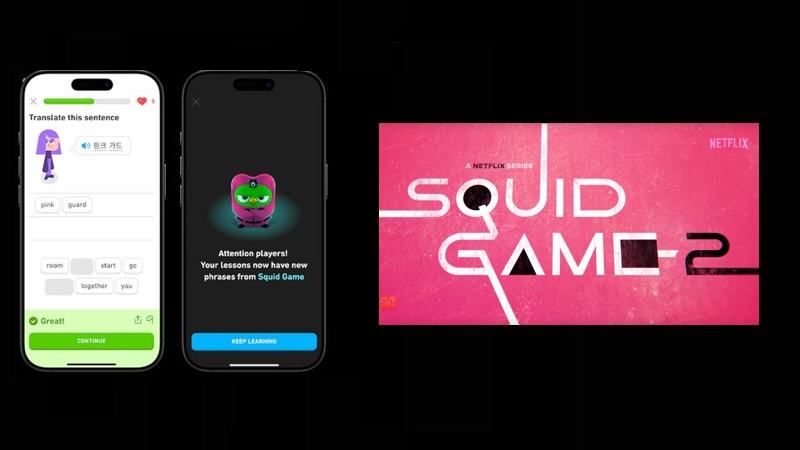
    MUMBAI: K-Dramas, K-Pop are all the rage amongst India’s Gen Z and Gen Alpha. And there’s a fascination with all things Korean whether makeup or food. or Korean wear And to tap into that demand, mobile learning platform  Duolingo  has partnered with Netflix’s global sensation Squid Game to promote Korean language learning through a unique and immersive campaign.

    Titled Learn Korean or Else, the initiative blends Duolingo’s signature humour with the high-stakes intensity of the hit series, inspiring fans to commit to their Korean lessons just in time for the highly anticipated premiere of Squid Game Season 2 on 26 December 2024. 

    As part of the campaign, Duolingo has updated its Korean course to include phrases and keywords inspired by the show, deepening fans’ connection to its cultural and linguistic nuances.

    As per the press release Duolingo is adding over 40 keywords and phrases from Squid Game to its Korean course, enabling learners to connect even more closely with the series. 

    By learning Korean, Squid Game fans can appreciate the renowned series on an entirely new level, experiencing dialogue, expressions, and cultural context in ways only possible through understanding the language.

    “We saw a 40 per cent increase in Korean learners just after Squid Game Season 1, underscoring the powerful connection between entertainment, culture, and language learning,” said  Duolingo CMO Manu Orssaud. “This campaign allows us to continue that momentum in a way only Duolingo can—with humour, intensity, and a bit of chaos! We hope fans will accept Duo’s challenge to learn Korean and immerse themselves in the experience.”

    “Great stories can come from anywhere, and last year, about 13 per cent of hours viewed on Netflix in the US were non-English titles — with Korean, Spanish, and Japanese stories attracting the biggest audiences. Embracing the authenticity of these local stories is important to us. Duolingo was the perfect partner for Squid Game Season 2 because not only did we see fans gravitate toward the app to learn Korean after Season 1, but also as a brand, they were willing to go bold with us,” said Magno Herran, Vice President of Partner & Brand Marketing at Netflix. “We discovered a lot of shared traits between Duo the Owl and the Pink Guards — very determined and menacing. So we made it official and gave Duo a Pink Guard uniform and ultimately created something we know fans will love and talk about, cheering A-ssa! in celebration.”

    The partnership leverages Duolingo’s beloved mascot, Duo the Owl, who has taken on the role of a Squid Game Pink Guard. Like the series’ challenging environment, Duo isn’t afraid to raise the stakes. Whether chasing down users in videos or appearing at fan events and on billboards, Duo reminds fans to learn Korean or “face the consequences”.

    Campaign Highlights

    ●    Creative Series: A suspenseful teaser video introduces Duo as a Pink Guard, setting the stage for the Learn Korean or Else message, which will also run on Netflix’s ad-supported plan. Following the teaser, an extended music video, directed by Warren Fu (Dua Lipa’s Levitating and Megan thee Stallion feat. RM’s Neva Play) and choreographed by award-winning dancer and choreographer Sean Bankhead, features Duo leading a high-energy dance routine with guards in a K-pop remix of Squid Game’s Pink Guards as they humorously chase a learner who forgot to complete their Korean lesson. The cinematic videos will air across YouTube, TikTok, and Instagram.

    ●    “Korean or Get Eaten”: Netflix’s music lab team created a K-pop remix of the ominous song, Pink Guards, now available on Spotify. The track Korean or Get Eaten, uses a naming convention Duolingo employs for its music tracks to playfully threaten learners to do their lessons (e.g. Japanese or Broken Knees, Spanish or Vanish). The lyrics, performed in both English and Korean, spotlight the recognisable Red Light, and Green Light game played in Squid Game and feature hidden threats in Korean, only understandable if you did your Korean lesson (e.g. 살아 남아야지 Don’t you wanna survive? 빨리 외워 “Hurry up and memorize it). The track supports the campaign’s dance challenge on social media, encouraging fans to engage with Korean culture through a fun, viral music experience.

    ●    TikTok Interactive Game Filter: An exclusive TikTok filter, inspired by the show’s Red Light, Green Light game, lets users test their Korean skills with voice-activated challenges featuring Duo as Squid Game’s menacing doll in the iconic pink suit.

    ●    Out-of-Home Stunts: In true Squid Game style, Duolingo and Netflix are taking over Koreatown billboards in LA, and NYC, with cryptic Korean messages challenging viewers to “learn Korean to stay safe”. In an unforgettable live stunt, Duo and his Pink Guards will hack Netflix’s iconic Sunset Boulevard marquee billboard, replacing the English words with Korean, in their menacing attempt to influence fans to learn the language.

    As fans eagerly await Squid Game Season 2, Duolingo is set to bring them closer to the action than ever before—through language. With viral social content, immersive fan interactions, and innovative language learning challenges, Duolingo’s Learn Korean or Else campaign will be impossible to ignore.

  • Korean becomes fastest growing language in India: Duolingo report

    Korean becomes fastest growing language in India: Duolingo report

    Mumbai: Language learning app Duolingo has released the 2021 Duolingo Language Report in the country according to which Korean leads the language learning growth curve in India. This rise can be attributed in part to the release of the popular streaming show “Squid Game” (2021).

    Influenced by pop culture, Indian millennials and Gen-Z – especially between the age groups of 17 to 25 – are responsible for the rise of Korean learning in India. Over 56 per cent of respondents said that they were influenced to learn a new language by pop culture trendsetters including films, OTT shows and web series, said the report.

    Korean has climbed up the ladder of most popular languages becoming the fastest growing language in India and has comfortably established itself as the fifth most popular language in the country. English, Hindi, French and Spanish are the other top languages that Indians are currently learning on the Duolingo app. It is interesting to note that English, Spanish, French, German and Japanese are the most popular languages on Duolingo globally.

    As India tunes into more Korean entertainment and listens to more K-pop, language study has been reframed as something that complements and supports interests and other activities.

    Taking a deeper dive into the impact of culture on language learning, Duolingo also conducted additional research in India in association with an international data and analytics group.

    The report found that improving career opportunities and personal growth are main reasons in India for learning a new language. Close to 40 per cent of respondents stated that they were currently studying a new language. There is equal focus on learning English and regional languages. Digital learning is the most preferred medium of learning especially via mobile applications and video platforms.

    “With a young India wanting to stay connected to local and global culture we have witnessed most traction on Duolingo from the 17 to 25 age bracket, across languages,” stated Duolingo’s country marketing manager for India Karandeep Singh Kapany. “As Indians increasingly move to virtual learning platforms that are fun and effective, we look forward to further tailoring courses for the Indian learner and meeting their language learning needs.”

    Duolingo revealed that in 2021 over 700 million hours were spent learning on the app with nearly 10 billion lessons completed and 15 billion words learned. 25 million people worldwide were learning more than one language.

  • Viewing of Korean dramas in India up by 3.7x in 2020 over 2019: Netflix

    Viewing of Korean dramas in India up by 3.7x in 2020 over 2019: Netflix

    Mumbai: The recent success of the Korean hit show ‘The Squid Game’ on Netflix has once again put the spotlight on the K-wave –or ‘Hallyu’ which has swept over the online audiences globally, including India. Not only was the Netflix original viewed by 142-million-member households globally in the first four weeks, according to CNBC, 89 per cent of people who started watching ‘Squid Game’ saw at least one entire episode. That is about 126 million hours of consumption.

    In India, the show not only holds the top position among Netflix top ten shows in India, but it is also accompanied by other K-dramas including ‘The King: Eternal Monarch’, ‘Kingdom’, ‘It’s Okay to Not Be Okay’, ‘Sweet Home’, ‘Crash Landing on You’, and ‘Space Sweepers’ in the category.

    According to the streaming platform, the viewing for Korean dramas on Netflix in India has gone up by 3.7X in 2020 over 2019, while it went up by four times in Asia overall in the pandemic year. Dubbing and subtitling have gone a long way in making these shows accessible to a wider audience. Currently, Netflix subs and dubs are in over 30 languages.

    “A story that is well told has the ability to make us laugh, or get excited or feel angry the same way, whether it is told in Korean or in Hindi, Tamil, and Telugu,” said a Netflix India spokesperson. “The emotions that these stories evoke transcend the boundaries of geography and language. Dubbing and subtitles play a major role in making these stories accessible to a much wider audience, in the language they are truly able to enjoy them.”

    In South Korea, the streaming platform’s local content push brought over 3.8 million subscribers.

    Netflix began working with South Korean filmmakers and talent in 2016 and has since launched over 80 Korean shows and films. It’s planning to invest another $500 million in Korean content in 2021 alone.

    In India and other countries like Argentina, Australia, Brazil, France, Mexico, Thailand, and the Philippines, audiences are discovering K-content perhaps for the first time on Netflix. A typical K-drama may have 10-16 episodes where each episode maybe 50-60 minutes in duration. Outside of their local market (South Korea), these shows should account for long-tail consumption on the OTT platform but are actually emerging as driver content in some countries.

    For instance, in India, Netflix is one of the few OTT platforms where audiences can access high-quality K-dramas from leading producers in Korea including CJ ENM/Studio Dragon and JTBC.

    Netflix’s co-CEO and chief content officer Ted Sarandos admitted that it was their Korea team that saw the potential in the show. “(Squid Game) was picked up a couple of years ago from the Korea team who did recognise it to be one of what they thought would be their biggest title this year. But I can’t tell you that we had the same eyeball on it to tell you that it was going to be the biggest title in our history around the world,” he said in the Q3 earnings call. “The growth – the viewing outside of Korea has been phenomenal everywhere we operate. If you look at the numbers – the internal viewing looks like a local language show in any country.”

    He further pointed out that Netflix shows like ‘La Casa de Papel’ from Spain, ‘Lupin’ from France, the film ‘Blood Red Sky’ from Germany, and ‘Sex Education’ from the UK show that great stories can come from anywhere in the world. “Non-English content viewing has gone up by three times since we started in 2008 making content,” he observed.

    Netflix also partnered with Deloitte to study the impact it had on the Korean creative ecosystem since its launch in 2016. According to the report, the platform’s investment in content production in Korea has contributed almost KRW 5.6 trillion won (~$4.7 billion) to the country’s GDP and helped create more than 16,000 jobs. The report studied the impact the company had on production and distribution as well as related fields including publishing, webtoons, music, consumer goods, and tourism. It highlighted that since the investment of OTT services, the average revenue of Korean VFX studios has increased almost fourfold from KRW four billion in 2010 to KRW 16 billion in 2020. It also observed that K-content has found success with audiences in over 80 countries.

    South Korean culture has left an indelible mark on people across the world and India is no exception. The successful globalisation of South Korean content by Netflix has incentivised other OTT platforms to bring Korean content to wider audiences. While Netflix has benefitted by riding the K-wave popularly known as ‘Hallyu’, it is now a key driver of the cultural zeitgeist that has gripped audiences globally.

  • ‘Squid Game’ reaches 111 million fans on Netflix

    ‘Squid Game’ reaches 111 million fans on Netflix

    Mumbai: Netflix has announced that the Korean drama “Squid Game” has reached 111 million fans, making the series the OTT platform’s biggest launch ever. It is also the first series to be watched across 100 million accounts.

    The show began streaming on 17 September and is on Netflix’s top ten lists in countries around the world. At the time of filing this report, it is trending at the top spot in India.

    The series creator and director Hwang Dong-hyuk first began writing the script in 2008 and finished it in 2009. The show was initially planned to be a feature film. However, it was only 10 years after penning the idea that Netflix picked up the show and actually began working on it.

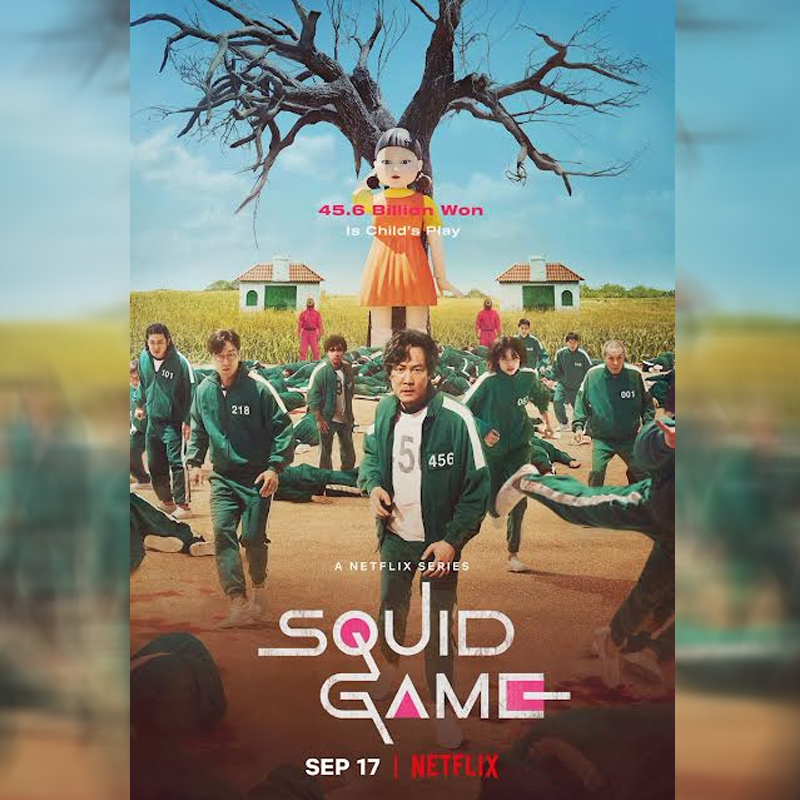
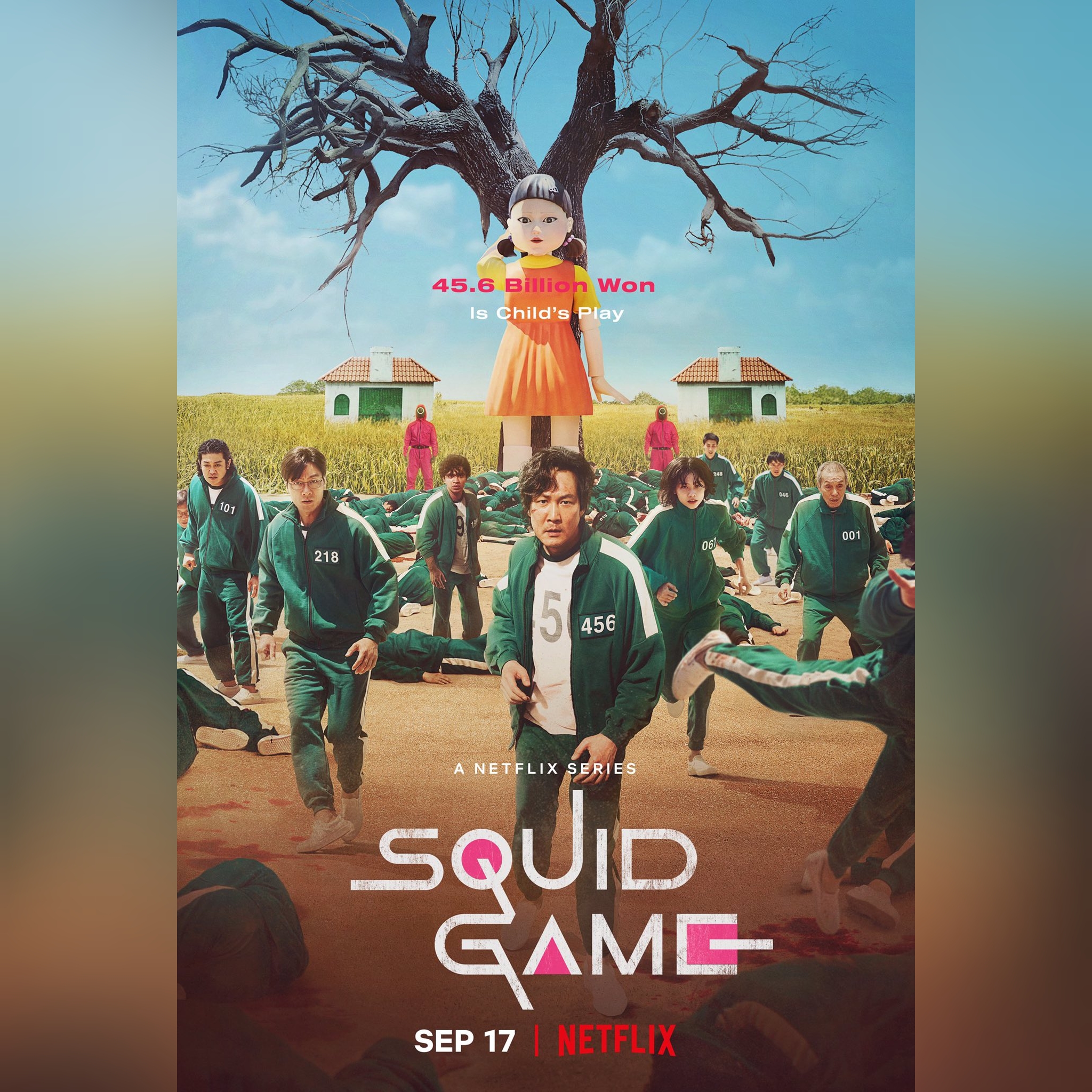
    “Squid Game” features actors Lee Jung-Jae, Park Hae Soo, HoYeon Jung, Wi Ha-joon, and Lee Byung-hun among others. The plot revolves around 456 contestants who are deeply in debt who are enticed into a dangerous game and made to play Korean children’s games where the winner will take away 45.6 billion South Korean won.

    In the past, Netflix has seen a lot of success with the Spanish series “Money Heist” and the German series “Dark” which grabbed the attention of viewers across the world.

    Netflix reported having 209 million paid subscribers globally in their Q2 2021 earnings release. In September, Netflix released a chart of its most-watched shows that feature “Bridgerton” at the top with 82 million subscribers tuning in for at least two minutes in the first 28 days.