Tag: sports business

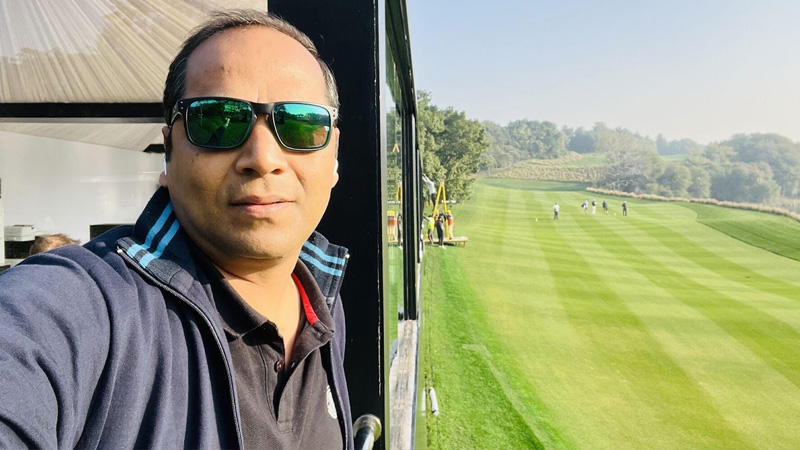
  • Neeraj Jha named honorary secretary general of ASIP

    Neeraj Jha named honorary secretary general of ASIP

    MUMBAI: The Association for Sports Industry Professionals (ASIP) has a new power player in its ranks. Neeraj Jha, a veteran with over 20 years of experience in the sports industry, has been appointed honorary secretary general, a role that positions him at the forefront of shaping the future of sports business in India.

    Jha’s appointment is no ordinary shuffle in leadership—it’s a strategic move to unify industry stakeholders, foster innovation, and accelerate professional growth in the sector. ASIP expressed full confidence in Jha’s ability to steer the ship toward greater collaboration and impact.

    ASIP founder Shaji Prabhakaran welcomed Jha, reinforcing the organisation’s vision to build a robust platform for sports professionals in India.

    “Neeraj brings a wealth of experience and passion for the industry. His leadership will be crucial in strengthening ASIP’s role as a catalyst for sports business development,” said Prabhakaran.

    Taking on the new role with enthusiasm, Jha shared his excitement about joining ASIP’s mission, “I’m excited to collaborate with ASIP’s dedicated professionals to drive impactful change and build a vibrant community. Thanks to Shaji Prabhakaran for creating this platform—together, we’ll take it to new heights.”

    Jha’s appointment is a big win for ASIP as the organisation intensifies its efforts to professionalise the sports industry, bridge knowledge gaps, and enhance opportunities for industry professionals.

  • Viacom18 aims for long-term growth with Rs 15,000 crore investment

    Viacom18 aims for long-term growth with Rs 15,000 crore investment

    Mumbai: Network18 Media and Investments Ltd announced on Tuesday the results for the financial year (FY) 2021-2022 and for the fourth quarter ending on 31 March.

    The company reported consolidated operating revenue of Rs 5,880 crore a 25 per cent increase year-on-year (YoY). Its profit after tax (PAT) stood at Rs 838 crore up by 53 per cent YoY despite the impact of Rs ~140 crore higher tax provision. It reported its highest ever operating earnings before interest, tax, depreciation and amortization (EBITDA) at Rs 1,080 crore up by 36 per cent YoY driven by robust financial performance in all three verticals – TV news, entertainment, and digital news.

    For the fourth quarter, the company reported earnings of Rs 1,621 crore up by 15 per cent YoY. However, consolidated operating EBITDA stood at Rs 266 crore, a five percent decline YoY.

    Partnership with Bodhi Tree

    On 27 April, Viacom18 announced a strategic partnership with Reliance and Bodhi Tree Systems, a platform of James Murdoch’s Lupa Systems and Uday Shankar. As part of the deal, Rs 15,145 crore will be infused by Bodhi Tree Systems and Reliance combined. Bodhi Tree will invest Rs 13,500 crore whereas Reliance Projects and Property Management Services Limited (RPPMSL), a wholly owned subsidiary of Reliance, will infuse Rs 1,645 crore. In addition, the JioCinema OTT app, currently owned by RPPMSL, will be transferred to Viacom18.

    The media conglomerate also announced that Paramount Global will continue to supply its premium global content and launch Paramount+ in India in partnership with its subsidiary Viacom18. “Paramount Global, formerly ViacomCBS, reaffirmed its commitment to the partnership as a strategic partner in Viacom18,” said the company statement. “This partnership between Reliance, Paramount Global and Bodhi Tree Systems, will enable Viacom18 to transform into one of the largest TV and digital streaming companies in India,” the company said.

    The infusion of Rs ~15,000 crore in Viacom18 will enable the company to make an investment in high growth businesses namely digital, sports and regional entertainment and set it on a long-term growth path, said the statement.

    “The media and entertainment industry in India has a long runway for growth and has attracted the interests of global players as well as spurred mergers and acquisition activity from Indian peers,” said the statement. “Digital business models are still evolving for all players as the Indian digital ecosystem continues to mature every year, however, still some time away from being a positive contributor to the bottom line. To be a meaningful player in this landscape, where consumers are spoilt for choice, one has to invest in content, distribution and technology.”

    Viacom18 will use the cash infusion to scale up its content offering for both digital and TV and strengthen its competitive position across markets. The strategic arrangement to access Jio’s 400 million strong mobility and fiber consumer base will enable Viacom18’s digital platform to access the consumers of Jio and catapult its reach. It will enable the utilisation of a large smartphone and JioPhone user base for advertising and driving subscription revenue for premium content. JioCinema will also bring its critical partnerships with marquee content producers for content and OEMs (original equipment manufacturers) for distribution.

    The transaction is expected to close within six months and is subject to customary closing conditions and approvals.

    Sports business

    Viacom18 forayed into the sports genre and launched three sports channels including one free-to-air channel last month. During the year, the company acquired the television and digital rights to sports properties like NBA and FIFA World Cup, two of the most watched sports properties in the world, as well as major footballing leagues La Liga (Spain), Serie A (Italy) and Ligue 1 (France), Cinch Premiership (Scotland), and other sporting events like ATP Masters Tennis, WTA, top BWF World Tour events like All England Open Badminton Championship, World Boxing Championship, Abu Dhabi T10 Cricket, and Road Safety World Cricket Series, among others.

    “Viacom18 believes that sports, especially live sports, will help strengthen the value proposition of the network to consumers and will complement the current entertainment offering,” said the statement. “The network will continue to add more events and properties to its catalogue and will strive to be India’s most-coveted sports network by providing fans easy access to a comprehensive bouquet of international and premium sports content.”

    The company’s TV network maintained an all India viewership share of 10.7 per cent. The share of entertainment networks in the non-news genre was 11.2 per cent with Colors being the top second primetime channel in the Hindi general entertainment genre. The channel launched ten fiction and five impact shows to strengthen its viewership share in the genre. Colors Kannada and Colors Marathi were amongst the top three channels in their respective markets with kids and English portfolios were leaders in their genres.

    As per Broadcast Audience Research Council (Barc) ratings which resumed on 17 March, TV18 news portfolio was #22 in terms of reach and #32 in terms of viewership share. The network maintained leadership in English business news (CNBC TV18) and had strong positions in English and several regional markets.

    “FY22 was a remarkable year, not only from the perspective of numbers, but in terms of building a strong foundation on which the business can continue to grow for the foreseeable future,” said Network18 chairman Adil Zainulbhai. “The financial performance has vindicated our decision to invest in new businesses a few years ago which have started showing encouraging positive results. In a similar vein, we have set ourselves an ambitious target to become a leading player in the digital space while strengthening our core TV offering. We will continue to solidify our ‘Digital First, TV Always’ proposition, leveraging our existing strengths to grow in segments where we are present and breaking ground in new markets with new and innovative offerings. The strategic partnership we have struck for Viacom18 is a big step in this direction which will help set the Company on a long-term growth trajectory and create one of India’s leading content company.”

  • Perform Group’s Omnisport to start services in Indian languages

    NEW DELHI: Omnisport, Perform Group’s market-leading global sports news and content agency, is all set to enhance its offering in India by adding three Indian languages — Hindi, Bengali and Malyalam — highlighting its rising commitment to India and the market’s importance to the company’s global strategy.

    To begin with, Omnisport, which is the video and editorial wire service from UK-headquartered Perform Group’s vast sports content library, will start off by offering short form sports videos relating to football, cricket and, possibly, an indigenous game in the three Indian languages.

    Going forward, Omnisport is also exploring setting up a production facility in Mumbai by year end or early 2018 to widen its coverage and presence in the Indian market, which is fairly limited at present.

    Once the Mumbai production facility is up and running, the Omnisport services offered to clients in India will build greater relevance for Indian publishers and have increased coverage of Indian domestic sports, including the likes of kabaddi.

    Over the next 12-18 months, Perform Group is looking at investing approximately Rs 50 million in India, which may look — and definitely is — small, but is a sure sign of the Sussex company looking at expanding its presence in India where football is getting a growing audience (while Indian national team’s global ranking is nothing to crow about, football enjoyed upwards of 50 million conversations involving fans from India last year). Nearly 60 per cent of the content handled by Perform Group globally comprises football.

    Some of the clients of Perform Group in India include The Hindu group, The Hindustan Times, Veqta and a leading sports portal in India.

    Omnisport works with most of the leading global sports broadcasters and digital publishers, including beIN Sports, ESPN, DirecTV, Yahoo, Eurosport, Fox Sports Asia, BBC Sport, Sky Sports, BT Sport, Malaysia’s Astro, L’Equipe and Diario AS.

    Focusing on the world’s biggest sports stories, Omnisport offers clients high-quality digital sports video in 15 languages at present. The service includes breaking news, match action and content enriched with category-leading Opta sports data, together with up-to-the minute editorial content, including reports, news, exclusive interviews, features, data-enhanced editorial and live blogs. Omnisport’s newsgathering network extends to more than 250 specialist journalists on 12 international news desks, and a larger network of stringers.

    According to Wikipedia, Perform Group was created in September 2007 through the merger of two businesses — Premium TV Limited, a provider of web and mobile solutions to the sports sector, and the Inform Group, a digital sports rights agency. The businesses were rebranded PERFORM in January 2008 under the leadership of current Chief Executive Officer Simon Denyer, and former joint CEO Oliver Slipper.

  • Star India reimagines sports business

    MUMBAI: Star India has restructured its Star Sports bouquet. As of the midnight of 29 May, Star Sports 3, Star Sports 3 HD, Star Sports 4 and Star 4 HD signals went off air waves.

    In their place, the signals of Star Sports Tamil, Sports Hindi 1, Star Sports Select 1 SD and Star Sports Select 2 SD were switched on. So altogether Star India today boasts of 11 channels in its sports bouquet. This includes Star Sports 1 and 2 their HD versions, Star Sports Hindi 1, Star Sports Hindi1 HD, Star Sports Tamil 1, Star Sports Select 1 SD and HD , Star Sports Select 2 SD and HD.

    At the time of writing Star Sports 1, 2, and Star Sports Hindi 1 and Star Sports Tamil 1 were available on Star India’s hotstar VOD platform.

    Watch this space for further updates…

    http://www.indiantelevision.com/television/tv-channels/sports/star-launches-tamil-sports-channel-localisation-features-ashwin-dhoni-tnpl-chennaiyin-stars-170529

  • Star India’s Rs 20,000 crore sports gamble

    Star India’s Rs 20,000 crore sports gamble

    MUMBAI: That Star India is betting big on sports is well-known. How big the bet it is placing is now becoming clear.

    The News Corp-owned media and entertainment leader in India today announced that it is committed to invest Rs 20,000 crore in building the sports business in India. The investment will be used to fuel the expansion of sports coverage in the country as well as in building exciting new leagues including the Indian Super League in football, the Hockey India League and the Indian Badminton League over the next few years, it stated.

    Simultaneous with this announcement, the network today unveiled a new brand for Star Sports across six TV channels – Star Sports 1,2,3,4, HD1 and HD2 and its online portal starsports.com.

    The new logo is a metallic silver star with an incandescent swoosh of colours symbolising the authority and passion of sports with the powerful slugline – “Believe.”

    “Cricket is too big to be confined to just one channel. Today, we are redoubling our efforts to showcase the best of Indian and international cricket to the sports fan. We will cover more of it, have wider coverage, go deeper, use multiple languages and take it beyond television,” says Star India CEO Uday Shankar in a press release. “The new brand is also about showcasing our commitment to other sports. While cricket will be central to our approach, we will also be faithful to our role as a sports broadcaster and bring in the best of local and world sports to India, whether in soccer, hockey, badminton, tennis, F1 or the many other sports that fans in India are deeply passionate about.”

    Uday Shankar is investing big in building a sports ecosystem in India

     He adds: “For us, this is not just about being the country’s leading sports broadcaster. We want to build a platform that will help nurture heroes out of the millions of passionate, young sports fans across India. We want sports to be the trigger for creating and nurturing outstanding new opportunities for India’s youth. And today, we are signalling that we are deeply committed to making this transformation happen, through our investments, our ideas and our efforts.”

    As of midnight 6 November, the six channels under the erstwile ESPN-Star Sports umbrella will give way to new brands. Star Sports will be called Star Sports 1, Star Sports 2 remains Star Spots 2, Star Cricket will become Star Sports 3, ESPN will be rebranded as Star Sports 4, Star Cricket HD will become Star Sports HD1 and ESPN HD will be renamed as Star Sports HD2.

    The big change really is with Star Sports 3, India’s first 24×7 Hindi sports channel with content, graphics and shows in Hindi.  It hopes that this push into Hindi will dramatically increase the reach of sports in India where it says less than 10 per cent of the populace understands English and a much smaller number are native speakers. Star Sports has seen success in Hindi commentary with Hindi now accounting for 70 per cent share of all viewership in the recently concluded CLT20 series.

    A high decibel promotional campaign has been drawn up featuring MS Dhoni as its first brand ambassador

    In addition to this, the Star Sports network said that it will be showcasing new non-live programming and new shows and formats which will run into more than 5,000 hours of content, including around 200 days of live cricket annually.  Amongst these is a half hour show called Star Power which will give comprehensive updates, insight and analysis and will be telecast twice a day at 8:00 pm and 10:30 pm on Star Sports 3 all seven days of the week.

    On the digital front, Star India is aggressively reaching out to young, ardent sports fans who want to access sports across screens. The digital service offers a variety of sports including cricket, soccer and F1, in HD quality streaming. The service has received exceptionally positive consumer feedback for its revolutionary timeline (a first for cricket anywhere in the world) that gives the fan complete control of how he wants to view his favourite games, whether for live or catch-up.

    A high decibel promotional campaign has been drawn up featuring MS Dhoni as its first brand ambassador. The campaign, says the network, urges India to “Believe” and it outlines the beliefs that have made M S Dhoni one of the most iconic heroes of our time. It will run on the Star network’s 33 channels and rolls out on 6 November when India tunes into watch Sachin Tendulkar play the last series of his career.

    Star has the right pedigree to pull off healthy returns for the huge investments it is putting into sports says Ashish Bhasin

    Star’s sports gamble is getting praise from senior media professionals.

    “It is a very professional and calculated move to get deeper into sports and into developing niche sports.  The channels are already established with viewers as they have been around for a long time and the rebranding and promotion will only deepen the connect with them,” says Aegis Group chairman India & CEO south east Asia Ashish Bhasin.  “Star is putting its money where its mouth is and it has the right pedigree to pull off healthy returns for the huge investments it is putting into sports.”

  • ‘The mad race to get cricket rights has created a bubble’ : Venu Nair – WSG South Asia CEO

    ‘The mad race to get cricket rights has created a bubble’ : Venu Nair – WSG South Asia CEO

    With the Indian Premier League (IPL) in its catch, the World Sport Group (WSG) is sitting pretty. Even as it plans to cash in on the new T20 format that is set to change the cricket economy, the sports marketing company has also set its sights on the growing popularity of soccer and golf.

    In an interview with Indiantelevision.com’s Ashwin Pinto, WSG South Asia CEO Venu Nair unveils the dynamics of the sports business.

    Excerpts:

    How far has World Sport Group progressed in India?
    When we set up our office in India two years back, we had a plan to establish a credible business over a three-year period. We looked at cricket, soccer and golf. We decided to develop each of them independently. Cricket and golf has grown phenomenally. However, with soccer it is still an uphill task.

    We changed our football outlook to a five-year plan. We own all the rights and work closely with the Asian Football Confederation (AFC), with whom we have been working since 1992. Our current contract runs till 2011. The fact that we have worked with them for so long to promote soccer across Asia speaks of the fact that we are long term players.

    How have you grown the cricket business?
    We have brought in professionalism into the management of the title and central sponsorship rights. We tell clients what they can avail of over a year. From a brand perspective it works, as they are able to plan forward. This gave us an entry into cricket at the highest level.

    During 2006, the BCCI’s sponsorship rights were available. We paid Rs 1.8 billion for it. Prior to us, these rights were vested with corporates and not with a proper sports marketing company.

    How is this deal with the BCCI working out?
    We work on a margin of 15-20 per cent. When we acquired the rights, we bought it at a premium. Two years down the line we have managed to stay at par with our revenue targets.

    Where are the opportunities for WSG in cricket other than the BCCI and IPL?
    There are opportunities to represent other boards. People are looking inward into India and they see the job we have done for the BCCI. As far as IPL is concerned, we have aggregated the media rights and sold it outward.

    But aren’t sports bodies working directly with broadcasters?
    Broadcasters are limited by the region that they want to serve. They often tend to sell the rights outside their interests to other parties. This puts the broadcaster into an agency position, which is not often a comfortable area to be in as it is not their core expertise. So, to say that sports bodies increasingly work with broadcasters is an anomaly.

    Fifa, for instance, works very closely with sports marketing agency Infront.

    You will have to put higher monies on the T20 format and put the squeeze on Tests and ODIs

    WSG managed a coup with the IPL rights. What targets have you set?
    We expect to start making money by the end of the third year. We have sold rights it to many territories including the US and Canada. We have let some territories sample the product like Sky in Italy. We sold IPL to the Southeast Asian countries including Singapore, Malaysia and Thailand.

    Are these deals long term?
    We have sold everything with the ability to re-look at periodic intervals at the contract. We will see how it is working. It had to be a partnership model. The format was something new.

    How does the IPL build in club loyalty and sustain viewership interest?
    Teams will have to build more local heroes. Catchment areas have to expand. If the IPL franchise owners treat it just as a balance sheet-led proposition, then it may not survive in the long run.

    The IPL will face competition from other boards. England wants to start a league in 2010. Australia, South Africa and New Zealand want to start a joint league in 2011. How does this affect the IPL?
    In soccer different leagues like the EPL, Spanish league, and German Bundesliga are played at the same time. But the EPL is most watched. The IPL is a home grown product and has the first mover advantage. More home grown talent will take centre stage. Foreign players might want to play the IPL to shore up their revenues. They will then reach a stage where they might want to play in another league to enhance their skill. The player migration seen in soccer will happen here as well.

    But when other leagues come up, won’t some monies shift from IPL to them?
    No! 100 per cent of the IPL revenues come from home grown clients. They want the local audience and so they will not invest in an Australian or an English league.

    In India sponsorship revenue is higher than ticketing revenue. In England it’s the reverse. However, a time will come in India where ticketing revenue will grow. Hospitality is another area which, if developed properly, can be a solid, successful revenue stream. Soccer clubs in Spain and England make a huge line of revenue from this area.

    If the revenue potential is so strong, then why are owners already selling stakes so soon?
    They are looking to sell a stake at a premium. They are not looking at funding their working capital needs.

    Will Test cricket and ODIs lose some of their lustre as T20 comes up?
    That is the market reality. Next year there are around 120 games, which include IPL, T20 World Cup, Champions T20 League. And one would not have known about it two years back.

    You will have to put allocated monies on this new format and squeeze monies on the other two formats. Even from a viewer’s experience how many takers are there for a Test Match! The purists are in a minority. Cricket is now more about entertainment. T20 has taken that window; you can watch a game in three hours.


    The PCB got $140 million for its rights. So isn’t there still value in the traditional formats?
    In bilateral events, the icon series will get money. If it is India versus Pakistan, then advertisers and viewers will chip in. The whole value of the deal with the PCB comes from these two series that are present in the contract. At the same time, there is no guarantee that they will get the same value. They will probably get the same monies as in 2004 when India toured Pakistan after a long time.

    However, the acquisition costs have shot up. In advertising you may not see a corresponding incremental value as it could get diverted to T20. The escalation may not happen.


    Is there a danger of some broadcasters going bust due to a huge escalation in rights fees?
    Yes! Ideally, ad rates should double which probably is not going to be the case. The rights fee has gone up disproportionately due to the need for content in a calendar year. The challenge for broadcasters is to figure out where the business is going. You also need to take care of distribution. In India sports channels have to have a certain number of events in a year. Otherwise the cable operator may stop beaming you. Cricket is reaching a saturation level and there will be a tapering down of values.

    The mad race to get cricket rights has created a bubble that will eventually burst. For example, tennis went through this huge bubble a few years back. It also happened with soccer.

    Broadcasters who have bought rights at high rates will have to sit down with their books at the end of next year and strike out the red. Market forces will pull prices down as the high price cannot be sustained. As a sports marketing company, I can bid a certain amount but if it is not in touch with the reality, then I stand to lose.

    Sports bodies, however, have to realise that the value that sponsors attach to the older formats of the game will increasingly be less. A sports body, though, will not lose money as it will get transferred from one format of the game to the other.


    Even the 2010 soccer World Cup rights went for a five-fold rise. Why?
    You cannot underestimate the fact that soccer is catching up. This is especially the case in urban India which has been fed a diet of quality football from world leagues.

    The awareness of global soccer icons due to the media coverage is also high. This is why premier tournaments are time bound. It has the carnival atmosphere. People follow certain teams. Once people watch it, advertisers also want to be in on the action.


    You wanted to do a league around soccer with AIFF and use the franchise model. What happened to that?
    We worked on a plan around a year ago. We did not go anywhere because of a combination of reasons. Firstly there already exists a certain kind of league. The soccer development process in India is not as robust as it should be.

    If the AIFF actually chalks out a 20-year plan to grow soccer at the grassroots level and has a realistic target, it can work. It is not about sending the team to the next World Cup.

    Cricket has been managed well at the administrative level. Cricket has also had periodic highs like winning the 1983 World Cup. This ensures that interest stays. After the 1950s, there has not been a high in soccer. Even followers of the sport do not have role models to look up to. If the AIFF comes up with a proper plan, then I am sure that there are enough corporates out there who are willing to invest.

    Bharti Airtel has committed Rs 100 crore. If it is spent in the right manner, it will give you results in 10-15 years. But thinking about reaching the 2010 World Cup final is a folly when you cannot reach a South Asian tournament.

     
    How has your work with the AFC been progressing?
    It has done well. The Asia Cup is held every four years. The AFC Champions League happens every two years. Everybody plays it. Australia has come through. We work with the Australian Football Association also on their leagues. Australia reaching the soccer World Cup was a culmination of many years of work. The sport has been revived as the body had a long term plan.


    What activities does WSG do in Golf?
    We acquired the rights for the Indian Open which is the most prestigious event. The deal is for six years and slowly we have been able to increase the prize money. The Indian Open is now a million dollar product. Next year we will add $250,000 more to the event.

    Our aim is to take the prize money to $5 million given the fact that Golf is slowly growing in appeal in India. Our goal is to develop another multi-million dollar golf property in the first half of the year. We want to have two Indian Golf events that occupy a prominent position on the Asian Tour calendar.

    What is working in our favour is the fact that marketing managers today want to invest to reach different levels of the strata.


    What are the plans in the player representation business?
    In India cricket is intricately linked to player management. You cannot stay away from this. We figured that small entrepreneurs were running this business. There was no professional marketing company running athletes in India. To a large extent this is still the case.

    We manage Sachin Tendulkar. We have a five-year deal with him so that we can monetise his brand. Since Sachin has aged, we have moved away from brands that he was endorsing in the past. He is a family man; his core values are honesty, integrity and long-term commitment. That is why you have brands like Aviva, Royal Bank of Scotland and Canon. We are looking at brands that can go past his playing days.

     
    Are you looking at more stars?
    Yes, but a decision will only be taken after the second season of the IPL gets over. Player management is a tricky business. We have to be convinced that the player wants a long-term partnership rather than a short term money-making venture.


    What impact will the economic downturn have on the business of sports marketing?
    There will certainly be an impact. What the extent will be is early to say. Numbers will get reduced by 15-20 per cent. It will depend on the extent that the global economic crisis has on India.

    We may have to look at our cost basis. We have to re-look at future acquisitions; we will have to work with experts to get a fix on what the economy might look like three or five years down the line before making another acquisition. Our buys will be made on the basis of market realities.