Tag: Sports Broadcasting

  • Neo Sports Broadcast set for mega revamp; sees Rs 400 crore equity infusion

    Neo Sports Broadcast set for mega revamp; sees Rs 400 crore equity infusion

    MUMBAI: “They say in golf if you are shooting 100 then your golf needs attention but if you are scoring 80 then your business may need attention. The sweet spot is somewhere in between, the ideal work life balance.” That’s how Harish Thawani, a man synonymous with the Indian sports industry and currently NEO Sports Broadcast chairman, begins the conversation after weeks of chasing to understand the company’s play in the current ecosystem.


    And be rest assured that this avid golfer has surely found that sweet spot in between, for his company Neo Sports Broadcast will soon see a complete makeover and fresh investments to the tune of Rs 400 crore in content, branding, marketing and technology in 2015-16.


    Neo Sports Broadcast, which operates two channels – Neo Prime and Neo Sports, will also see a slew of new initiatives being launched soon.


    “Our existing shareholders have decided to make an equity infusion of approximately Rs 400 crore into the company this year, subject to the necessary regulatory approvals,” Thawani tells Indiantelevision.com.


    Equity Infusion and Consumer Insights:


    The existing shareholders of Neo includes Oman Investment Fund, Nimbus and Thawani himself. Nimbus in turn is majority owned by Cisco, 3i and OIF; with Thawani and associates holding a significant stake. In 2012, after having lost the BCCI cricketing rights, Neo decided to re-engineer itself on its future growth story. Through consumer insights, TAM numbers and research undertaken by the company, it picked up two trends in the market.


    “One, sports other than cricket like football, tennis, badminton, golf and basketball were gaining significant traction and it helped us to find ourselves a relevant space in the ecosystem. Secondly, digitisation was providing an opportunity to broadcasters to cater to over 150 million viewers that now watch sports other than cricket,” Thawani explains.


    Based on these insights the company has decided to acquire quite a few properties for this year for its two channels.


    New Rights Acquisitions:


    As Neo Prime and Neo Sports look to boost their fan base based on its recent research on viewers’ preferences, the company has begun a fresh set of rights acquisitions. As many as five new rights deals have been recently concluded and at least five more are in the pipeline, providing over 40 new live events and over 800 hours of live programming a year. All rights acquisitions have been done on a multi-year basis.


    Neo has also boosted its football portfolio with a top five European league the Dutch Eredivisie and will shortly add another major European football property to its portfolio. Its Eredivisie acquisition followed the research insights that top tier clubs like Ajax, PSV Eindhoven and Feyenoord have a significant fan base in India.


    Another consumer insight showed that table tennis is an under-served sport in India, despite being a huge participation sport, commonly understood by viewers. This prompted Neo to acquire not just the World Cups and World Championships but also the ITTF World Tour. “The rise of Indians on the table tennis circuit augurs well for the growth of its viewership in India,” states Thawani.


    The telecast rights to the 2015 European Games (similar to the Asian Games) have been acquired by Neo and will be aired this summer. This second largest multi-nation, multi-sport event is expected to be a spectacular display of sport at the highest level.


    To boost its motor sport coverage and enthused by the fact that technology now enables live coverage, Neo has acquired the World Rally Championships (all 12 events a year).


    It has also boosted its coverage of live horse racing to engage the super affluent horse racing fans in India, with its deal to air English horse racing (including the major Derbies and Classics).


    Also in the pipeline is a programming band devoted to fight sport, which is expected to launch in the second half of 2015 apart from a major European football asset, a series of top tier badminton events and a tennis rights package.


    This complements Neo’s offering in tennis, consisting of the French Open, Davis Cup and Fed Cup; its top tier golf coverage with the PGA Tour of about 40 events a year, Bundesliga football, World Basketball Championships and others.


    When queried about plans for cricket, Thawani says, “It has been widely reported that Neo was recently a bidder for the ICC rights, which should convey that our interest in cricket will continue. There are several cricket rights that will come to market in the coming 18 months, and we will evaluate each opportunity.”


    Channel Upgrade to HD: 


    “We will convert both our channels; Neo Prime and Neo Sports from SD to HD. We aim to make this transition in October-December 2015 quarter,” says the man, who besides being an avid golfer, played as many as four other sports competitively at university and club level.


    Consumer Engagement:


    The company will also launch a multimedia campaign, including digital media to communicate its enhanced programming to fans in order to boost brand recall and increased engagement. The mega multimedia campaign will begin from as early as May 2015.


    It has been learnt that the company had seen an interest from companies such as Euro Sport, BeIn Sports and Super Sports among others to either buy a majority stake or outright purchase of Neo Sports Broadcast. However, Thawani refused to comment on any specific discussions citing confidentiality provisions, but states, “Neo is, to my knowledge, the only profitable sports broadcaster in India, having made profits in 2013-14 and we expect to sustain that trend. This has enthused our shareholders to back the company in its quest for further growth. Consequently, we have taken a decision to not evaluate any stake sale. When required, we may induct one more financial investor.”


    It is clear that Neo shareholders believe that smart management and digitisation would help it go a long way and therefore it would be a wrong time to disinvest. It may be recalled that just eight years back, Neo had one of the most successful pay TV launches in the world of sport, quickly becoming the number one sports channel in 2009 and number one sports network by 2010.


    In the world of today’s broadcast television, where content, technology and innovation rapidly changes the share of audience, Neo looks poised to take competition head-on with fresh capital infusion and many a new properties firmly tucked under its belt.

  • We are just focused on creating an identity for ourselves in the space: Prasana Krishnan

    We are just focused on creating an identity for ourselves in the space: Prasana Krishnan

    He is the man with a plan for Multi Screen Media’s (MSM) sports channel Sony Six, and he is ensuring the channel continues to remain at the top of the game in all aspects. 


    Ever since he moved to the MSM stable from Neo Sports in early September 2013, Sony Six business head, Prasana Krishnan, has not only endeavored to bring in a wide array of sports which have their own loyal fan base, he has left no stone unturned in acquiring some of the biggest international sports properties such as the European Qualifiers for 2018 FIFA World Cup Russia, The FIFA World Cups of 2014 and 2018, the Australian Open and Total Non-Stop Action (TNA) to name a few.  


    Krishnan further opens up on Sony Six’s journey thus far and its strategy to navigate the road ahead in a tete-a-tete with indiantelevision.com’s Sidharth Iyer. Excerpt: 


    Q. It’s been six months since you took charge of Sony Six. How has the journey been thus far?  


    It’s been a very exciting first six months. The channel is still in its nascent stage and we are trying to create an identity for ourselves to stand out from the competition. The idea is to identify niche areas we want to operate in and figure out how we are going to attain long term growth in this business. 


    Q. This is your second stint with a sports broadcaster after being with Neo Sports for over seven years. Is there any change in your role and responsibilities? 


    Well, it’s a given that different organisations face different types of challenges, depending on the situation. Like in 2006 when I was with Neo, the market was not this competitive and it was a very different landscape. The market has evolved with time and the competition is now extremely aggressive. With Sony being one of the largest broadcasters in the country, it’s a whole new ball game for me personally. 


    Q. Has sports broadcasting changed over the years? 


    There have been significant changes in the space over the last few years. Back in the day when I entered this industry, there was no Indian Premiere League (IPL) and no leagues existed; test and ODI cricket were still dominant forms in the sport. A format such as Twenty-20 was unheard of globally. Cable digitisation was many years away and direct-to-home (DTH) was still in an experimental stage.  


    So if we really turn back the clock, the last eight years have witnessed a dramatic transformation in the media landscape in terms of distribution, DTH, cable digitisation and regulatory changes. The entire sports landscape too has changed with T-20 becoming a predominant format and leagues emerging not only in cricket but in other forms of sport as well. 


    Q. What is Sony Six’s strategy to grow as a sports broadcaster, given the fact that it is a highly competitive business? Is Sony considering launching more sports channels to offer a wider choice to viewers?


    We are still in the first year of operations; we’re just 18 months old and trying to get a foothold in the market. So, as far as the idea of new channels is concerned, it’s a bit too early to comment on the same. But Sony Six the brand is clearly focused on a select number of sports, which we believe have latent potential but are underserviced. 


    If you look at basketball, it is one of those sports with the largest infrastructure facilities; schools encourage it, participation on ground level is very high and yet its potential hasn’t been tapped.


    So, along with NBA in India, we are much focused to try and grow that sport in the country and we already have encouraging numbers to support our drive. We’ve found the number of people who sampled basketball this season have grown seven to eight fold that of the previous season.  


    Fight sports is one more focus area which other broadcasters have shied away from. India is traditionally known for its fight sports such as boxing and wrestling and the country has continually shone in the same at the Asian Games as well as the Olympics. So, what we have done is focused on fight sports as a category and included a daily programming block called ‘Action Ka Blockbuster’. TNA has grown by over 170 per cent in the past month and half. TNA ratings have peaked at 384 TVTs which is its highest ever rating in the past one year; Kurt Angle’s episodes have always rated the best amongst all so far. We have a mixed bag of fight sports including wrestling, boxing and mixed martial arts so the idea is if these sports interest you as a viewer, then Sony Six is the destination for you. 


    Additionally, we have some of the largest properties including the IPL, FIFA World Cups of 2014 and 2018, and the Australian Open beginning next year. So what we have done is assembled very high profile marquee properties and other sports where we see a lot of development potential. Our positioning is such that apart from IPL, we are the home of football in India, so anytime you see famous footballers, they are all on Sony Six. Plus we focus on national sides and not club football so every time there is a major event in this sport, you can view it exclusively on Sony Six. 


    Q. How would you describe competition from rival sports broadcasters? 


    It is an intensively competitive market but everyone has their own brand and identity, and the Indian market is big enough to accommodate multiple players, so it’s not necessary to take the competition head on in case of each and every property. Speaking of identity, Ten Sports has its own identity where it is focused more on international cricket while Star Sports is dominant in a variety of sports. We are just focused on creating an identity for ourselves in the space. 


    Q. Ten Sports acquires the rights for matches hosted by boards of other countries. Do you intend getting into that space? If so, what will be your strategy for entry?


    We will look at it on a case-by-case basis instead of running in all directions to pin down whatever cricket telecast rights we can acquire. We have our core focus areas in place and we are positioning ourselves as the home of international football, along with basketball and fight sports. We have a good mix of quality content on offer. So, we just don’t want to go hammer and tongs in acquiring cricket properties just for the heck of it. However, when an opportunity presents itself, we will certainly take it up.


    Q. What kind of numbers are you generating in terms of viewership and who are your viewers really? 


    Sports viewership sees a lot of fluctuating numbers primarily based on the event that is being telecast at that point in time. But what we have noticed is that our profile is younger than the competition and that’s our view, and we do believe that numbers are supporting that because of the nature of sports we have identified and picked. 


    The India vs New Zealand series has averaged 2.6 million TVTs with a peak TVT of 3.0 million TVTs for the third ODI.  49 million viewers have seen the ODI series on Six, this figure is far better than any other series in the recent past. With cricket, Six’s average TVTs have grown exponentially to a career high 459 average TVTs in Week 4 2013. It’s the first time Six became the no.1 sports channel in a non-IPL week. The channel’s share grew to 60 per cent from average seven per cent in the past four weeks.


    Our reach and distribution has never been a cause for concern as we are part of a large network like Sony and are also ably distributed by The OneAlliance Group. The channel is pretty much available across the country to whoever needs it. But absolute numbers will always vary, because if you look at IPL, the numbers could well be in excess of 200 million viewers. So there really can’t be a fix on the viewers. 


    Q. How big is the advertising market for sports broadcasting? What is your share within the same? Which categories of advertisers spend the most on advertising on your channel? Are there any new emerging spenders?


    The share of the advertising pie varies a lot depending upon the number of big events in a particular year, so if you get a year where you have the FIFA World Cup or Cricket World Cup, the amount of money pumped in at that point in time is significant. 


    We are definitely a major player in the sports market on account of IPL, but in absolute and not IPL-related areas, we are still in an early stage and yet to get to our first big event which will be the FIFA World Cup 2014. 


    So while we have made a string of acquisitions in the past few months, we are yet to prove our mettle with the first big event to be hosted and telecast exclusively on Sony Six. Advertising on sports channels is generally very male-skewed; apart from FMCGs, banking and financial services, telecom has always been prevalent, so also automobile and insurance.


    Though there are subtle differences between advertiser profiles on GECs and sports channels, the big brands are always present across categories and it’s just a question of where they apportion a higher portion of their expenses. 


    Q. Sony spends thousands of crores on the broadcast of IPL on Max as well as Six, so what do you think of Star Sports jumping into the fray and bagging the online streaming rights for IPL by spending just a few hundred crores?


    See the rights for IPL that Starsports.com has acquired are not for live streaming; they were with Indiatimes for the past three years, and YouTube was doing the telecast along with Indiatimes so the product itself is not new. Instead of YouTube, Starsports.com has now partnered Indiatimes. There is no fundamental shift at ground level, but because it is Starsports.com that has come into the fray, it is being looked at as a big development.


    YouTube as a platform would have been even more formidable with its reach and availability, and an even bigger threat. Our focus is the television broadcast of IPL, and I believe we have been doing a good job of that year after year. From the viewers’ perspective, they will still be coming onto Set Max and Sony Six to catch all the live action and we really don’t see a problem in that sense.


    What is the way forward for Sony Six? 


    The future is certainly quite bright. As I mentioned, we have our focus areas in place and we are going in a particular direction with a set plan. We are trying to carve out a niche identity, and we have a fairly robust and youthful audience in terms of viewership because of the kind of content we have on offer. The focus will now be on the execution and monetisation of plans already in place.

  • ESPN to sell ad spots on DD for Indo-Pak series with Rs 220 mn minimum guarantee bid

    NEW DELHI: ESPN Star Sports will sell advertisement spots on Doordarshan for the upcoming India-Pakistan cricket series, having bid an amount of Rs 220 million as minimum guaranteed revenue.

    DD Director General Tripurari Sharan told indiantelevision.com that the public broadcaster had bid an amount of Rs 180 million.

    ESPN, which holds the telecast rights for the one-day international and twenty20 series, also agreed to provide Doordarshan match feed without any embedded advertisement for terrestrial transmission.

    Under the Sports Broadcasting Signals (Mandatory Sharing with Prasar Bharati) Act, 2007, ESPN will share 25 per cent of the revenues with Doordarshan.

    The deal covers both the Pakistan series and the one-day international and twenty20 series with England next month. The series with Pakistan starts next week.

    Sharan, in reply to a question, said no decision has been taken yet by the government on a plea by Prasar Bharati that its share should be more than 25 per cent.

    The bidding process was conducted after the Information and Broadcasting (I&B) Ministry officials intervened to settle Doordarshan‘s differences with ESPN and the BCCI over providing feed without embedded advertisements.

    Sharan said “ESPN had said there will be ‘digital commercial enhancement‘ of the feed coming from the BCCI.” This meant logos and other promotional material of the sponsors were to be part of the feed. Consequently, DD asked the Ministry to intervene, and the latter wrote to ESPN and BCCI saying that there would be no advertisements.

    According to the Act, it is mandatory for the rights holder of any sporting event of national importance to share the feed with the public broadcaster. Doordarshan, in turn, is required to share 75 per cent of the advertisement revenue with the rights holder.

    The party responsible for selling advertisements, called revenue management company, is decided through a bidding process. Doordarshan lost money on the India-Sri Lanka T20 series earlier this year when it bid Rs 200 million against ESPN‘s bid of Rs 20 million. Although it managed to earn the bid amount, it had to pay 75 per cent to ESPN and so lost revenue from the normal telecasts.

  • ‘BCCI rights great opportunity to build Star’s sports biz’ : Star India CEO Uday Shankar

    ‘BCCI rights great opportunity to build Star’s sports biz’ : Star India CEO Uday Shankar

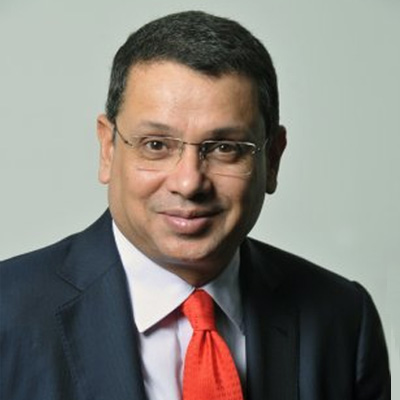
    Star India CEO Uday Shankar, conqueror of TV news and entertainment business, is ready to wage a new battle in sports broadcasting.

    When the BCCI rights came up for grabs after the abrupt termination of contract with Nimbus, Shankar quickly pounced upon it. He tiptoed in, surprising hot contender Sony to pocket the prized rights to telecast international cricket in India from 2012 through 2018. His winning bid: a whopping Rs 38.5 billion.

    “We believe in the power and value of cricket as content in India. By acquiring the BCCI rights for telecast, we think it is a great opportunity to create a new business,” he says.

    Shankar‘s timing couldn‘t have been better. A couple of months later, joint venture partner Disney agreed to sell its 50 per cent stake in ESPN Star Sports, allowing Star to aggressively build and expand the sports broadcasting business in India.

    “Drama and cricket are the two big pools of content that the masses love to watch in India. We are already a key player in entertainment. Now we can have independent charge over the sports broadcasting business,” he says.

    Shankar has placed huge bets on digitisation that would plug leakages in subscription revenue and dramatically increase the paying subscribers to broadcasters. “In the current construct, those rights are not profitable. The market is primarily so unattractive because of the theft and leakage in subscription revenues. Digitisation would enable content owners to get a better share of the subscription revenue,” he avers.

    In the first part of the interview with Indiantelevision.com‘s Sibabrata Das, Shankar talks about Star‘s game plan in sports broadcasting, the rise in acquisition costs, the huge opportunity that digitisation would throw open and the need to build a robust subscription income.

    Excerpts:

    Q. Why did News Corp. and Disney end their 16-year-old joint venture partnership in ESPN Star Sports (ESS) when it allowed them to lead the sports broadcasting business in Asia?
    When the discussions started two years back, it was not on a buyout proposal but on how to take ESS forward in a changed market environment. The sports business was under financial pressure and both partners were worried. The Champions League T20 rights (for $975 million) did not bring much value. Acquisition prices were rising and competition was not helping stem it. This later turned into the need to go separate ways but the possession of the rights over sporting events made a split in the properties complex and impossible.

    The obvious course was to acquire the entire 50 per cent stake of the joint venture partner and be the sole owner. The deal took time because Disney had to take the final call on whether it wanted ESPN to exit from Asia.

    Q. When Star bid for the BCCI rights on its own, had Disney agreed to sell or it was an act of defiance to build a sports broadcasting business outside the JV?
    We were still discussing the future of ESS when the BCCI rights came up for renewal. And because there was no clarity on the future of ESS, we could not come to an understanding on what its position would be on BCCI. We at Star knew the strategic value this property would add to our thriving entertainment business. We expressed an interest that in case ESS was not clear and since the bid had a final deadline which was approaching fast, Star would go ahead and bid for the rights as a one-off.

    Even in the JV agreement, this kind of provision was there that either party (ESPN or Star) could go and bid for the rights. However, they could not use the rights on their own without the approval of the other party. So we agreed that instead of letting BCCI go away to a competitor, Star would bid for it as a one-off and then assign the rights to ESS in case they wanted it. If ESS didn‘t want, Star could go ahead and broadcast it. So that‘s how it happened.

    Q. Did the BCCI rights tilt the deal in your favour as we understand that even Disney had expressed an intent to acquire News Corp‘s stake in ESS (though they had made heavy investments in UTV and were looking at consolidating that business)?
    The two are not linked. We were very clear that it would be a one-off bid (for rights). Now let‘s assume that Disney had bought out ESS. Then they would have definitely insisted on a non-compete agreement and we would have had to find a way of handing over BCCI. I don‘t know what would have happened; that‘s a conversation one can only speculate on. But if Disney had chosen to play in the sports market here, then they would have definitely tried to also get a piece of the BCCI.

    Q. When you realised the strategic value of the BCCI rights, did the fear of Sony haunt you as it had the lucrative IPL (Indian Premier League) rights and its entertainment business was on the upswing?
    Of course, it was an important consideration. It would have made Sony a very formidable player in the sports space. And we were then not present in that space; we were only an entertainment company.

    We also knew that there were a few others like Ten Sports and BCCL (Benett Coleman and Company Ltd) who had bought the tender documents. All of them were key competitors. And anybody who had the cricket rights would have a serious strategic weapon.

    But that wasn‘t why we decided to go for the BCCI rights. We definitely believe in the power and value of cricket as content. It gets the largest number of viewers across all target groups. We also genuinely believe that there is an opportunity to improve the quality of cricket on TV. And we thought the best place to start that would be the BCCI rights.

    ‘In the current construct, those rights are not profitable. Our big punt is in digitisation‘ 

    Q. Was the bid of Rs 38.51 billion on the higher side?
    You would bid only what is the rational value of the tournament and not beyond reasonable limits. In fact, Sony and our bids were pretty close; it clearly tells you that there was a consistent logic that both of us were applying.

    You must appreciate that nobody had the time to plan for it because it happened suddenly. BCCI (rights) wasn‘t on Sony‘s or anybody‘s horizon. It was comfortably settled with Nimbus; they were holding the rights for almost six years and they were going to have it for several years more. If anybody says it was part of their serious strategic consideration, that wouldn‘t be correct. How can you plan for something that is not available in the market? But when it came up for grabs, everybody thought it was a great opportunity. And we definitely thought of it is as a great opportunity to create a new business.

    Q. But since it was unplanned, you could have overestimated the value of the property? Or how did you arrive at a right value?
    There was a reserve price that BCCI had indicated and based on that we did the mathematical calculations. The ad rates for India cricket matches per 10 seconds and the kind of distribution revenues that can be earned are available in the market. So based on that we did our calculations.

    Q. Media analysts say those numbers wouldn‘t make up for the bid amount unless digitisation happens. Did you bet too heavily on digitisation when you did the calculations?
    In the current construct, those rights are not profitable. The market is primarily so unattractive because of the theft and leakage in subscription revenues. More than Rs 150 billion gets collected from the ground in form of subscription income. But the net off carriage fees that comes to the broadcasters and content owners is a small fraction of that.

    Our big punt is that in the next couple of years when digitisation moves significantly forward, a lot of that would change. The leakages would have been plugged, there would be more fair and transparent business processes. And that would enable content owners to get a better share of the subscription revenue.

    Sports nowhere in the world has sustained on advertising revenue; that is a small part of it. Wherever it makes money, it makes it on the back of subscription income. And that is what we are hoping would happen in India as well.

    Q. Since Star has a very strong entertainment broadcasting business, will the network power not enable you to push up advertising rates for your sports properties?
    You can‘t move that synergy to up the ad rates much just because you have more properties under your belt. The target audiences and the set of advertisers are different. The big advertisers on sports, for instance, are telecom and auto companies. General entertainment channels primarily address a female TG.

    So you can‘t play much on network strength. We have not factored in any dramatic upside in advertising revenues. Let‘s face it; ad rates can‘t go beyond a certain level of elasticity.

    Q. Are you expecting ARPUs (average revenue per subscriber) to climb with digitisation of cable networks?
    No, I am not factoring in a tremendous increase in ARPUs. India is always a value conscious market and cricket is a mass market product. There would, of course, be some people who have the ability to pay higher value. But most people won‘t pay that kind of money.

    There is also enough competition in the market which would ensure that the ARPUs don‘t go beyond a certain limit. What we are looking at is the big shift in cable that should happen. In case of transparency, we clearly see a visible link between the subscriber base and the payouts. 

    Q. What sort of paying subscribers would sports broadcasters attract?
    If the whole country goes digital, you are talking about 120-130 million C&S homes in the next few years. Even if you say 60 per cent of the entire universe goes cable, you are talking about 70-75 million C&S homes.

    The 8-9 million paying subscribers for sports currently under analogue cable would go up significantly. Sports is driven by events. But at any time, the genre would be attracting 60-70 per cent of the total subscriber base. I think that is the ratio that DTH (direct-to-home) gets.

    ‘Sports had been relatively less competitive in India because the two big players were together. Now since ESPN and Star have parted ways, the next 5-10 years, will see a new round of competitiveness and aggression in the sports market‘

    Q. After having acquired the BCCI rights for such an aggressive price, will Star match that aggression for the upcoming cricket boards that will be up for grabs within a year?
    We neither choose to nor can afford to be over aggressive. If we are also aggressive, then rights prices would shoot up. Now it is Sony‘s and Ten Sports‘ turn to be aggressive.

    Q. Do you see acquisition prices climbing further?
    If the competitive norm stays, then there will definitely be a tendency for the acquisition prices to go up. A lot, however, depends on how the distribution market pans out. If the distribution market continues to be so leaky and porous and cable stays largely analogue, then even the current prices will be unsustainable. However, if the digital transformation happens and if there is a matured digital distribution market that comes up, then definitely the prices will go up.

    Q. Even if Disney decides to come back after the two-year non-compete period is over and India continues to have analogue cable?
    I am not too sure if it continues to be analogue, how many players would be interest. That is the biggest stumbling block. But on the other hand, I also think analogue cable will not survive even if the current digital initiatives fail to go through; analogue will dies on its own. This is a funny market. The analogue experience is poor and the number of channels that the consumers can watch is very few. The cable operator doesn‘t pay taxes; nor does he pay fair value to the content owner. How long will the society tolerate this kind of a distorted model?

    Q. Consumers are probably tolerating analogue cable because the ARPUs are low?
    The ARPUs are not that low. How much does DTH charge? You can‘t charge beyond a certain reasonable price. What you can charge consumers also depends on affordability and the kind of value that they attach to it. Price doesn‘t escalate in isolation; there has to be a realistic basis.

    In certain areas of Mumbai, cable subscription is Rs 300-350 per month. In low income areas, people are paying less. ARPUs are not uniformly low. That will happen in a digital environment also.

    Q. Can‘t acquisition prices for cricket rights go up because of strategic value that the property brings?
    No mature media company will pay irrationally high for strategic reasons unless this can translate into business value. If they do that, they will go bankrupt. There are a couple of media companies who are prime examples of that. There is a company that launched an entertainment channel and decided to go completely crazy for what they thought was the strategic value. The strategic value worked so well for them that they had to sell out. The news companies have gone ahead and spent so much money on all kinds of distribution, etc. We know the financial mess they are all in.

    You think anybody would pay obscenely high just because it has strategic value. Star would not do that; nor would Sony and Zee. If BCCI prices were double this and tomorrow if IPL is available for three times more, would I go and buy those rights? No way. I don‘t want to go and acquire rights and be sacked or drive my company bankrupt.

    Q. With the current distribution of cricket properties across sports broadcasters, what sort of dominance will Star have?
    It is very difficult for anyone to have any kind of very big position in market share, let alone dominance. In this market, every sector of broadcasting and media is so competitive. Whether it is entertainment, news or regional, one thing that we have seen is that there is new competition coming in every day.

    If anything, sports all these years has seen less and less of competition in India primarily because there was a JV between ESPN and Star. Until IPL came, it was just ESPN-Star. Sony had a game only because it got the IPL; without it, it would have been a marginal player. Ten Sports continues to be a marginal player except for a few rights they have like the South Africa and the Sri Lanka boards.

    Sports broadcasting requires heavy investments. And not everybody may have the appetite to take big risks unless you are a Zee or Sony, specially because the distribution deals are so uncertain.

    Since ESPN and Star have parted ways, it is only a matter of time that Disney and ESPN will come back to India. So I think over the next 5-10 years, you will see a new round of competitiveness and aggression in the sports market. Sony has launched a sports channel; they will have to really work hard to build that and will need more rights. I am sure they will surely bid aggressive for whatever rights come up. Ten Sports will also be forced to bid for a few more rights if they want to stay competitive in the game. You saw how expensive their bid was for the South Africa rights. The price they paid was pretty high and they got it.

    Sports had been relatively less competitive in this country because the two big players were together. That phenomena is set to change.

    Q. But in UK you have News Corp as a big player and ESPN as a much smaller player. Wouldn‘t India replicate that market?
    Those are very settled markets and even there that is not quite the case. In India tell me one sector of media where one single player sits with 50 per cent share. When it started, that may have been the case. About 20 years ago, Zee had a large share. Then Star came and build a large share in Hindi entertainment. See how competitive the market is today.

    Take regional. The only market where one player continues to build a very big share is Sun network in Tamil Nadu. And we all know the reasons behind that. But if it‘s a freee market, then it is difficult for anybody to take a 50 per cent or a 40 per cent share. Very, very difficult.

    India is an emerging market. So global attention is on this market. Media, despite all the softening, is still delivering the second largest growth rate in the world year-on-year. And that will continue to be the case for a long time. The most attractive growth rate market is not available so easily for media. China does not allow media that easily. So where can you dominate ? India has a huge consumer base; you are talking of 120-130 million C&S homes. Incomes are going up. I think there will be more and more people coming in.

    Western media companies are looking at India primarily because they are not getting growth in their own markets. More and more large Indian companies are stepping in. You have seen what has happened in the last 2-3 years. Big Indian corporates have made their foray into media. Reliance Industries Ltd (RIL) and Aditya Birla have come into media. I think media is going to get more and more competitive. And no matter how much money you might have, no matter how aggressive you might be, I don‘t see a situation where anybody will be able to build a 50 per cent share in any vertical.

    Q. Since Rupert Murdoch had said that IPL was a big miss, would Star‘s next big stretch be on acquiring its rights when it becomes available in future?
    Of course, it was a big miss. I don‘t even know what the contractual agreement between Sony and BCCI is. They may have a preferred access to renew it. But if it comes up and continues to be a strong property, then we will surely be interested. We have seen a little bit of softening in IPL and hopefully that‘s temporary. But the renewal is long away and it would depend on what BCCI‘s price expectation is at that stage.

    Q. Do you see cricket viewership plateauing?
    Cricket viewership depends on a variety of things. First and foremost is the nature of the tournament. Following immediately afterwards is the performance of India. I think there is a value to be obtained from that.

    The quality of TV broadcast can make a big difference to how much the viewership can grow. Sports broadcasters generally have done a very good job of providing a professional cricket experience to the viewers. But it seems to have plateaued.

    The only rule of content – and that applies to drama, sports, news, anything – is that the sameness brings in fatigue. And there is a certain amount of sameness that seems to have settled in sports. That is the reason why cricket viewership might be peaking. If we can disrupt that sameness, bring in innovation and fresh approach to connectivity, to visual and to graphics, I think given the passion that cricket generates in this country only sky is the limit for viewership. When cricket is played in every nook and corner literally, how can you say that the viewership has peaked. I think the viewership can grow a great deal more provided we continue to grow and build on the experience that we can provide. And there the broadcasters and the boards can do a lot more together.

    Q. Are you talking of introducing doses of entertainment?
    No, I am not suggesting that. You can‘t turn cricket into soaps; you have to stay true to the sport. But within that, you have to innovate. And there is so much of technology to be used – you see what has happened in the last 10-15 years! New graphic technology has come in and the kind of replays that we get to see only can enhance the viewing experience. You can further enhance that experience a great deal more.

  • HC refuses stay on sports telecast ordinance

    HC refuses stay on sports telecast ordinance

    NEW DELHI: The Delhi High Court today refused to stay the operation of the ordinance asking private sports channels to share live feed of cricket and other sports events with public broadcaster Prasar Bharti.

    A division bench headed by Justice Vikramajit Sen adjourned the matter till 15 February for further hearing.

    Senior Counsel Dushyant Dave, appearing for Prasar Bharati, pleaded that the ordinance could only be stayed under extraordinary grounds.

    In any case, he argued, the conditions to share the live feed with the Prasar Bharati was part of the tender documents, and very much known to Nimbus Communications.

    The reply filed by the Government to the petition by Nimbus challenging the Sports Broadcasting (Mandatory Sharing with Prasar Bharti) Ordinance 2007 said it had been made clear to the Board for Control of Cricket in India (BCCI) that any party getting the rights to telecast the matches would have to share the live feed with Doordarshan and All India Radio, the application filed by the government in reply to the private channel contended.

    Additional solicitor general PP Malhotra, appearing for the government, said the petition should be dismissed as it was not the fundamental right of Nimbus, who own Neo Sports channel to monopolise the telecast of cricket matches. In any case, Nimbus should abide by the contract it had signed in February 2006 to share the live feed.

    Terming it as “bad in law”, the petition had said, “The ordinance transgresses the constitutional limits and apart from violating the petitioner’s fundamental rights, it also interferes with the power of the court to review the circular enforcing the private channels to share the feed.”

    On 23 January, in an interim order, the court had allowed Prasar Bharati to download the feed of Nimbus Communications and telecast the India-West Indies ODI series in a delayed transmission of seven minutes on DD and broadcast commentary live on AIR.

    The High Court has decided to merge the hearing of the appeal by Prasar Bharati against this order, and the petition by Nimbus challenging the Ordinance.


  • ‘I forecast that in three years time there will only be two sports broadcasters who will have any kind of market share’ : Harish Thawani – Nimbus Communications chairman

    ‘I forecast that in three years time there will only be two sports broadcasters who will have any kind of market share’ : Harish Thawani – Nimbus Communications chairman

    Early this year in February, Nimbus shook up the sports broadcasting sector by bidding $ 612.8 million for the rights to India cricket. Driven by the vision of its chairman Harish Thawani, the company has just launched its cricket centric channel Neo Sports. A second channel Neo Sports Plus, which will look to converge somewhere between sports and entertainment, is soon to follow in the next few months.

    It then signed a distribution deal with Star, which besides cable is also looking at Neo Sports to push DTH. Nimbus has also put a team in place to run Neo Sports. Indiantelevision.com’s Ashwin Pinto caught up with Harish Thawani over lunch for a lowdown on the company’s plans, the importance of improving stickiness, the advertising game plan, and a possible shakeout in the sports broadcasting sector.

    Excerpts:

    These are exciting times for Nimbus. First, the acquisition of India cricket, which allows you to enter the big league. Now you will be launching two sports channels. What is the vision you have for Nimbus Sports Broadcast?
    These are exciting times for the Indian broadcasting sector as a whole. We are seeing growth rates that are unprecedented and not slowing down. The growth forecast is robust for the next three to five years. The broadcasting sector is growing faster than the economy. We are seeing 7.5 – 8.5 per cent growth rates in the economy while for broadcasting, it is growing at 17-19 per cent.

    The interesting thing is that the sports sector seems to be growing the fastest. The spends on sports, whether it is on air or sponsorship or even on leisure activities, is big. You will notice that the sales of sports products like Nike, Adidas are all up.

    It is interesting that we are entering the sports broadcasting industry at a time when new alignments, new partnerships are taking place. The industry is maturing in such a way that you can compete with one party in one segment and collaborate with them in another segment of business.

    Our distribution alliance with Star is an indication of the growing maturity of the marketplace.

    So yes, I would say that we very much look forward to the impact that Neo Sports will make, not just on the broadcasting sector but also on consumers.

    More than Neo Sports, which is obviously cricket centric, we are even more excited about seeing the impact that Neo Sports Plus will make. It will be relatively slower as cricket being a bigger driver allows Neo Sports to be the bigger channel of the two. In the medium term, which is one to two years, we will be able to see what Neo Sports Plus has been able to achieve. Preliminary research shows that there is a huge appetite for a channel that converges its programming somewhere between sports and entertainment.

    When they launch, what will the programming of Neo Sports and Neo Sports Plus look like?
    We are launching only Neo Sports first. The launch date of the other channel is yet to be firmed up. We had earlier scheduled to launch it in the second quarter of 2007 which is April – June. But I can confirm that we are likely to bring that forward. We have been able to get ready faster. It is running ahead of schedule. For Neo Sports, the momentum will start building up towards the end of December just ahead of the first major international series.

    The industry is maturing in such a way that you can compete with one party in one segment and collaborate with them in another segment of business

    ESPN Star Sports had tried a soap concept Dream Team. That did not work out. Will you be doing this kind of programming on Neo Sports Plus?
    I am not off hand familiar with what ESPN Star Sports tried. I do recall them running some internationally syndicated football show.

    If that is what they chose to do then our vision is different. We have hit upon insights that may be unique. More importantly, as a company that has produced both sports and entertainment at disparate ends with more than reasonable success, the skill sets that we bring to the table are perhaps somewhat unique. It is not just based on understanding the consumer but also being able to deliver what the consumer wants.

    To pick up the case study of ESPN Star Sports, I think that running an English language soap opera on a minority interest sport like football is perhaps not the formula for succeeding and establishing an audience that is loyal to the concept of sports entertainment. English language soap per se does not do well.

    Football, while being a global sport, still lags significantly behind cricket in India. A Hindi language football soap opera might have done better. A Hindi language cricket soap opera will do even better.

    We are not planning to do that. We will move away from the obvious and move towards the slightly more complex solutions. I hasten to add that the perception of sports entertainment is presenting sports in an entertaining manner. That is now what we are attempting to do. We are looking to converge the two.

    Could you talk about the team that is being put in place to run the channels as well as the organisational restructuring?
    Shashi Kalathil has joined as chief executive of Neo Sports. We wooed and persuaded him because of the outstanding track record he has as a senior management professional. He is said to be a great motivator and is a young CEO. His many years at Pepsi have given him unique insights into how large advertisers buy cricket. He has been on the customer end to what was then the largest buyer of sport in cricket in India.

    It was also possibly one of the top five buyers of sport worldwide.

    Traditionally the tendency of a broadcaster is to look for a domain specialist out of broadcasting. We found that we needed domain specialists from the consumer products side of things. The second advantage he brought to the table is that he has worked in a startup Aircel. A startup has its own unique set of issues to confront.

    Scott Ferguson is the Asia-wide COO. He came out of the Sky Sports system. He worked with Orbit in the Middle East. We then tried to ensure that everybody under Shashi was from the broadcasting sector. Ranjith Rajasekharan is our marketing head. He come to us from MTV. Sanjay Goyal is our VP research and planning. He came back to us from CNBC. Sunil Manocha is the ad sales head and returns to us from Mindshare.

    Sonali Rege is our head of production. She comes to us from Channel [V]. Hitesh Sabbarwal is our VP affiliate sales. He comes to us from Zoom, and before that Sony. Each one of them is a domain, sector specialist.

    Shashi is spared the headache of having a role of having to tweak the broadcasting side of things. Customer acquisition, brand focus, revenue growth are the areas that Shashi will be able to focus on without having to worry about the back office so to speak.

    Where does Digvijay Singh fit in all this?
    He runs Nimbus Sport, which is the international sports rights management agency and production company. He does not fit into Neo Sports. Interestingly enough, Nimbus Sport and Neo Sport will compete in certain segments like rights acquisition.

    They are two different, separate arms. There will be conflict between the two and why not? Star Sports is a partner with ESPN and Star India is our distribution platform.

    This is an example where a business of one company may compete with another business of the company. The theory for us is that if 10 per cent of Nimbus Sports’ profits are eaten into by Neo Sports then it is fine.

    Cumulatively, they will profit much more than one entity might have done on its own. There is also a physical separation between the two entities. One is headquartered in Singapore. One is headquartered from India. Except for rights there is nothing in common with the two. One is a service provider for the industry. The other is a product delivered to the consumer.

    Nimbus Sport may provide services to Neo Sports. Nimbus Sport is a global player in rights management while Neo Sport will only focus on acquiring India rights.