Tag: Sponsorship

  • Nielsen on changing landscape of global sports

    Nielsen on changing landscape of global sports

    MUMBAI: The global sports industry is undergoing more disruption than ever as a result of ongoing shifts in media consumption, the emergence of new technologies and a rapidly evolving sponsorship market.

    Nielsen Holding, a global measurement and data analytics company released a report on the top five global sports industry trends. It found that the big tectonic movements like the rise of digital media, esports and diversity are setting off many smaller ripples of activity such as the rise of short-form video, content-led esports sponsorship and new women’s sports formats.

    The top five trends noted by Nielsen are distribution disruption, esports evolution, content rules, sponsorship and partnership and sports in our changing society.

    In the distribution disruption, the single biggest question for the sports business today is whether media rights revenues will hold up as the traditional TV business is disrupted. Star India is a very good example for the disruption in traditional TV business. The broadcaster invested around Rs 22,000 crore in a span of eight months to acquire IPL, the biggest domestic cricketing league and the BCCI media rights.

    Other significant effects of disruption include consolidation among traditional media companies. Several large media companies are seeking greater scale in revenue, geographical and programming terms, partly in order to compete with the tech giants.

    Esports globally has grown suddenly in the past couple of years. The percentage of fans that started following esports in countries like Japan, France, the UK, Germany and the US are 39, 34, 34, 30 and 29 respectively within the last year.

    The combined e-sports and gaming market is estimated to be Rs 3900 crore with more than 2000 teams consistently participating in tournaments across India and abroad with over 50 crore players worldwide. U Sports, one of the newly formed sports business companies in India, launched U Cypher, the country’s first multi-platform, multi-game esport championship.

    E-sports has been announced as a medal event in the 2022 Asian games seeing its rapid growth. It is moving from being a hobby to an actual career option.

    ‘Content is king’ is the third trend in the list. Attention spans are shortening and competing for consumer attention is rising. This trend, perhaps reflects the ongoing rise of over-the-top (OTT) streaming solutions across a variety of private platforms, in particular social media, and media consumption trending towards mobile, bite-sized and on-demand content.

    The likes of Facebook and Amazon and the life-or-death value of live sports to pay-TV should maintain rights fee growth for premium properties.

    The rise of the smartphone, coupled with the expansion of high-speed internet connections in many countries, has seen consumption habits shift ‘inevitably and irreversibly’ away from linear programming and towards on-demand mobile content.

    Sponsorships are continuing to evolve into richer, two-way relationships. The market had already been trending in this direction, but today the most successful sponsorships truly are proper partnerships. In the new sponsorship paradigm, audience data, compelling content and connection to business objectives are the winning traits, according to the report.

    In India, ground advertising saw growth from Rs 6400 crore in 2016 to Rs 7300 crore in 2017.

    In last year’s trends, Nielsen reports said “Social responsibility is becoming more prevalent and impactful.” This year, the relationship between sport and society is changing faster than ever, and staying on top of that change has become even more important.

    Overall, 66 per cent of the consumers are willing to pay more for brands committed to positive social and environmental impact. If we bifurcate it age-wise then 72 per cent of consumers are below 20, 75 per cent are under 34 and 51 per cent are between 50-64.

    Women’s sports continues to grow in focus for rights holders, brands and media. The sector is booming as the growth opportunity represented by under-engaged females is recognised, as brands demand a focus on women’s sports and gender equality takes greater prominence.

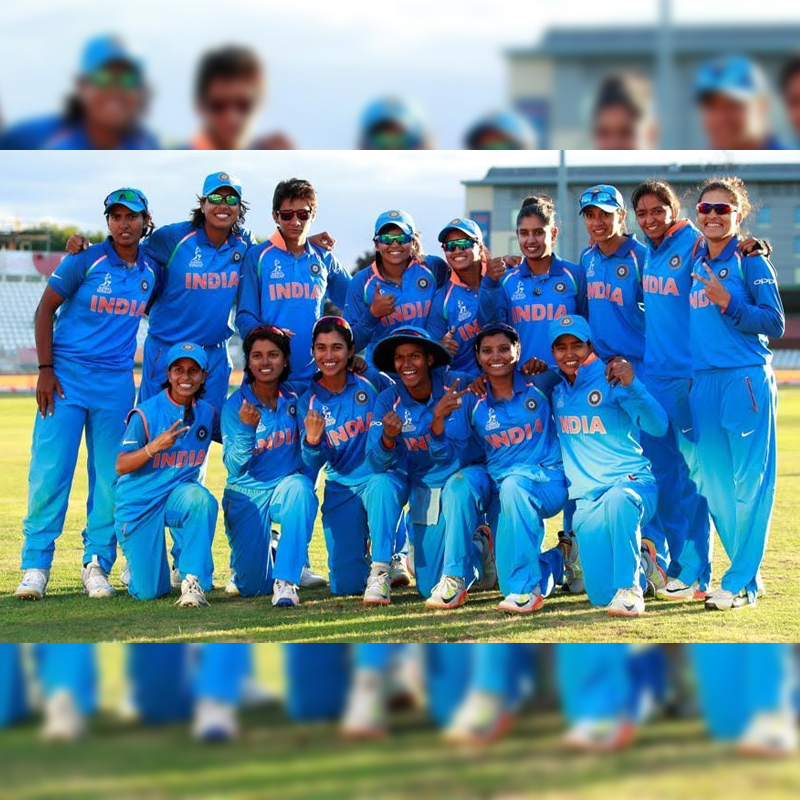
    It isn’t just in developed markets that women’s sports is gaining traction. Last year saw the remarkable opening of sports stadia to women in Saudi Arabia, the inaugural CAF Women’s Football Symposium, and Harmanpreet Kaur becoming India’s first female cricketer to secure a bat sponsorship, among other milestones.

    The year also saw exciting launches of new women’s properties, such as the UK’s Tyrrells Premier 15s rugby union competition and Australia’s AFLW. And the 2018 Winter Olympics offered great opportunities for storytelling around female athletes. Stakeholders like the US broadcaster NBC obliged, putting the likes of Lindsey Vonn and Mikaela Shiffrin center stage in their promotional coverage.

    The next big thing can be that the tech giants will increasingly challenge traditional sports media and increased competition will force higher fees for some premium content.

    The esports market can possibly take a cue from traditional sports by adopting similar revenue-generating models and creative content will be key for successful esports sponsorships.

    The content rule for the right holders will play an important role in the future and they will explore ways of monetising the new types of content, through sponsorship and subscription products. As the quality, volume and variety of content increase, it will be harder and harder to cut through.

    Sponsorships will become more flexible and tailored, and will include more value-in-kind. Rights holders will invest more in digital content and activation capabilities, in order to engage fans, collect data and service sponsors.

    Women’s sports will continue to grow, but properties will have to work harder as the marketplace becomes more crowded. Spending will increase on sponsorship campaigns that exhibit brands’ credentials on diversity, sustainability and other social issues.

    Also Read :

    Sports sponsorship in 2017 up by 14%: SportzPower-GroupM report

    IPL 2018: Team sponsorship deals may see an uptick


  • Sports sponsorship in 2017 up by 14%: SportzPower-GroupM report

    Sports sponsorship in 2017 up by 14%: SportzPower-GroupM report

    MUMBAI: SportzPower, in association with GroupM’s sports arm ESP Properties, has released its 2018 report on sports sponsorship in India.

    Ground advertising was up from Rs 6400 crore in 2016 to Rs 7300 crore in 2017. Another GroupM report said that Indian advertising expenditure in 2017 was Rs 61,263 crore out of which 12 per cent was contributed by sports. The year also saw sports other than cricket gain traction. India’s second biggest sport by participation and attendance, football, grew by a considerable 64 per cent. India hosted its first ever FIFA U-17 world cup that became the most attended in the history of the event. Attendance for this football world cup was a record 1,347,133, surpassing China’s 1985 audience of 1,230,976.

    ESP Properties business head Vinit Karnik said, “2017 was truly the ‘big’ year for the business of sports. With PKL emerging as the second-most popular league in India after the Indian Premier League (IPL), and the Indian edition of U-17 football world cup creating history in terms of audience attendance, has given sports sponsorship enjoyed a bull run. As popularity of sports grows in India, sports stars also expand their brand endorsement portfolios. Virat Kohli led brand endorsements with 19 brands and 150+ crore in value, while PV Sindhu leads the non-cricket endorsement space with 11 brands and 30+ crore in value.”

    Despite demonetisation and GST hiccoughs, the sports sector has been able to ride the storm with a steady and positive trajectory. All major sporting leagues managed to bring on board sponsors at a 100 per cent or more incremental value for the title sponsorship.  Specifically, the IPL has emerged as one of the top five most valuable global sports properties in the world.

    Since last year, Indian Super League (ISL) is a 10 team, 18+ week showcase, up from eight teams and 10 weeks in the last season. ISL sponsorship has grown by 22 per cent from the previous year. The report states that the gap between Pro Kabaddi League and IPL TV ratings is narrowing – PKL delivered 1.5 TVR with 312 million reach and IPL delivered 2.7 TVR with 411 million. 

    2017 also saw the birth of five new franchise based leagues – UTT, SBL, SFL, Cue Slam & P1 Power Boating. Brands are interested in emerging sports and 25 per cent increase in franchise fees came from them. Thirty-six new franchises were added across all new and existing leagues.

    SportzPower co-founder Thomas Abraham said, “With the 2017 momentum and the economy also looking up and set to grow at 7.3 per cent in 2018-19, sports is looking at an even bigger year. As the industry anticipates clarity on the structure of club football in India, among the new leagues on the horizon, volleyball seems the most promising. In the media firmament, while new revenue benchmarks are expected from television, it will be traction in the digital arena that provides real pointers to where the industry is going over the next few years.”

    Also Read:

    IPL 2018 gets a makeover with Star India

    Dsport not in the running for BCCI’s media rights

  • ISL sponsorship: Hero triples investment at Rs 1.6 bn

    MUMBAI: Hero MotoCorp has, for another three years, reportedly renewed its sponsorship arrangement with IMG Reliance and Star India-promoted Indian Super League (ISL) for Rs 1.6 billion. As Hero’s last deal with ISL in 2014 was valued at approximately Rs 500 million, it has now tripled its investment in ISL.

    Meanwhile, it’s a dream come true of magnanimous proportions for three college boys who have emerged from the ambitious inaugural Reliance Foundation Youth Sports (RFYS) campus football championship. If luck is on their side – the trio could step into the league of extraordinary footballers through the upcoming Hero Indian Super League 2017-18 Indian Players Draft.

    Mumbai lad Umesh Perambra, and Ajith Sivan and Akshay Joshy from Kerala have been drafted in the Hero ISL Players Draft scheduled on Sunday, 23rd July in Mumbai. The talented trio first caught the eye of AIFF scouts during RFYS championship finals in January 2017 and soon were invited for the India U-23 AFC Championship Qualifiers selection camp under Stephen Constantine in Mumbai.

    Umesh Perambra, a central defender who played for Thakur College (Mumbai) was impressive at the back for his team as they made it to the RFYS College Finals this January. He is an attack minded defender and will be keen to get an opportunity to hone his skills in the ISL.

    Young Akshay Joshy was spotted at RFYS representing his college Sacred Heart, Kochi while Ajith Sivan is the third college boy to sign for the draft. The midfielder stood out in the RFYS finals despite his Nirmala College – Kochi ending up on losing side against Charuchandra College (Kolkata).

    As the ISL Indian Player Draft unfolds on Sunday, it will be a day of anxiety for the friends and family members of the trio, as they wait with bated breaths.Mrs. Sheela Joshy, Akshay’s mother, is ecstatic to see her son on the brink of breaking into professional football.

    “As Keralities, we are really excited on Akshay getting this opportunity in the ISL draft. It’s a huge moment for us. Akshay has always dreamed of playing football – this is a proud moment for him and our family, for him to feature in the Draft.

    “We would love if Akshay gets picked by Kerala Blasters, but we will support any team that Akshay would get a chance to play.”

    Hero ISL 2017-18 Player Draft will witness a total of 15 rounds. The sequence for selection of Player Draft rounds for each club will be determined by a draw of lots on Saturday evening.

    Also Read :

    Star Sports launches UTT campaign with promo featuring top paddlers

    Tata & JSW teams enter Indian Super League

    Hotstar & Star Sports select2 SD, HD to telecast Ultimate Table Tennis live

  • Corporate funding vital for sports development: KPMG-CII

    Corporate funding vital for sports development: KPMG-CII

    MUMBAI: The global sports market comprising infrastructure, events, sponsorship, training and manufacturing and retail of sports goods is estimated at Rs 37.8–44.2 lakh crore (USD 600–700 billion), accounting for approximately one per cent of the global GDP.

    According to the report titled, “The Business of Sports” launched today by KPMG in India in association with CII during the summit on “Business of Sports and Entertainment”, over the years sports has evolved as a noticeable sector for all economies, presenting myriad careers as well as business opportunities. Further, sports contributes significantly towards improving the overall health and well-being of a country. Interesting trends driving the global sports sector highlighted in this report are:

    • Technology has gradually made its presence felt through applications across the entire value chain of sports business

    • Like in other industries, social media is acting as a game changer in the sports sector too. A large number of sportspersons also use the medium to connect with their fans and endorse their brand affiliations

    • Amongst the devoted sports enthusiasts globally, 45 per cent prefer viewing sports content online

    • There has been an upsurge in global women viewership for sports events. In India too, women are increasingly comprising a significant portion of the viewership pie

    Shrinivas Dempo, chairman, CII summit, and CMD, Dempo Shipbuilding & Engineering said, “The last 5-7 years have been the most dynamic for the sports industry in India with some fundamental changes. Sports not only provides an active branding and marketing opportunity to investors, but has also created value for fans all across. Addition of various sporting leagues in India have invited tremendous support and presence of corporate sector.”

    While presenting an overview of the global and Indian sports market, the report explores and assesses the sports ecosystem in India, identifies the various stakeholders concerned and addresses their specific issues and challenges while attempting to highlight the common grounds between all stakeholders to enhance the development of sports in India.

    According to Jaideep Ghosh, partner and head, transport, leisure and sports, KPMG, in India, “In February 2016, the government accorded an industry status to sports infrastructure, which is expected to attract investments from the private sector, thereby not limiting its role to just corporate social responsibility (CSR) activities and non-profit organisations.”

    Increasing viewership, sponsorship and participation in sports other than cricket, a rising number of sports start-ups and the growth in rural viewership numbers are key trends driving the growth of this sector in India. The report further highlights encouraging aspects of sports landscape in India, as below:

    • Indian sports viewership (TV) numbers grew 30 per cent over the two year period between 2014 and 2015

    • In 2015, the Indian sports sponsorship market grew 6.7 per cent y-o-y to INR 5,190 crore

    • Sports consumption in India is on the rise with leagues as well international sports garnering strong support across multiple platforms. While India is a latecomer, the concept is rapidly covering ground. Of the 11 operational leagues, nine were launched during 2013–16 and two more are planned in 2016

    • Regional games packaged in interesting league formats have been successful in garnering rural viewership as well

    The report identifies key issues facing the sports ecosystem in India across segments of governance, sports events, and infrastructure development among others, while offering recommendations to tackle these problems. It also presents a comprehensive view of the governance structure of sports in India, outlining the roles and responsibilities of major governing entities.

    “India is facing a moment of truth after its performance at the 2016 Rio Olympics. To initiate a strong foundation for the development of sports in India, the country needs to focus on three major aspects — improving governance and infrastructure, building a sporting culture and deploying a focused approach to winning medals,” added Jaideep Ghosh.

    The early success achieved by league-based events across multiple sports indicates a strong potential for Indians to consume sports other than cricket. This growing popularity of the league format in India resonates across the report. The league culture is still in its nascent stages in India, in comparison to the U.S. and Europe. IPL established a successful model for packaging and marketing. 2014 saw the emergence of some potentially successful leagues, including PKL, ISL, IPTL and CTL. However, the business of leagues requires high investments and has long gestation periods. In order to drive team success in leagues, the report suggests significant focus on fan engagement and marketing, celebrity influence, geographic location and better overall management apart from on field performance.

    India has a long journey ahead on its path to developing a strong sports culture. It needs to begin at the base, and that is what will build the future.

    KPMG in India, the Indian member firm of KPMG International, strives to provide rapid, performance-based, industry-focused and technology-enabled services, which reflects a shared knowledge of global and local industries.

  • Corporate funding vital for sports development: KPMG-CII

    Corporate funding vital for sports development: KPMG-CII

    MUMBAI: The global sports market comprising infrastructure, events, sponsorship, training and manufacturing and retail of sports goods is estimated at Rs 37.8–44.2 lakh crore (USD 600–700 billion), accounting for approximately one per cent of the global GDP.

    According to the report titled, “The Business of Sports” launched today by KPMG in India in association with CII during the summit on “Business of Sports and Entertainment”, over the years sports has evolved as a noticeable sector for all economies, presenting myriad careers as well as business opportunities. Further, sports contributes significantly towards improving the overall health and well-being of a country. Interesting trends driving the global sports sector highlighted in this report are:

    • Technology has gradually made its presence felt through applications across the entire value chain of sports business

    • Like in other industries, social media is acting as a game changer in the sports sector too. A large number of sportspersons also use the medium to connect with their fans and endorse their brand affiliations

    • Amongst the devoted sports enthusiasts globally, 45 per cent prefer viewing sports content online

    • There has been an upsurge in global women viewership for sports events. In India too, women are increasingly comprising a significant portion of the viewership pie

    Shrinivas Dempo, chairman, CII summit, and CMD, Dempo Shipbuilding & Engineering said, “The last 5-7 years have been the most dynamic for the sports industry in India with some fundamental changes. Sports not only provides an active branding and marketing opportunity to investors, but has also created value for fans all across. Addition of various sporting leagues in India have invited tremendous support and presence of corporate sector.”

    While presenting an overview of the global and Indian sports market, the report explores and assesses the sports ecosystem in India, identifies the various stakeholders concerned and addresses their specific issues and challenges while attempting to highlight the common grounds between all stakeholders to enhance the development of sports in India.

    According to Jaideep Ghosh, partner and head, transport, leisure and sports, KPMG, in India, “In February 2016, the government accorded an industry status to sports infrastructure, which is expected to attract investments from the private sector, thereby not limiting its role to just corporate social responsibility (CSR) activities and non-profit organisations.”

    Increasing viewership, sponsorship and participation in sports other than cricket, a rising number of sports start-ups and the growth in rural viewership numbers are key trends driving the growth of this sector in India. The report further highlights encouraging aspects of sports landscape in India, as below:

    • Indian sports viewership (TV) numbers grew 30 per cent over the two year period between 2014 and 2015

    • In 2015, the Indian sports sponsorship market grew 6.7 per cent y-o-y to INR 5,190 crore

    • Sports consumption in India is on the rise with leagues as well international sports garnering strong support across multiple platforms. While India is a latecomer, the concept is rapidly covering ground. Of the 11 operational leagues, nine were launched during 2013–16 and two more are planned in 2016

    • Regional games packaged in interesting league formats have been successful in garnering rural viewership as well

    The report identifies key issues facing the sports ecosystem in India across segments of governance, sports events, and infrastructure development among others, while offering recommendations to tackle these problems. It also presents a comprehensive view of the governance structure of sports in India, outlining the roles and responsibilities of major governing entities.

    “India is facing a moment of truth after its performance at the 2016 Rio Olympics. To initiate a strong foundation for the development of sports in India, the country needs to focus on three major aspects — improving governance and infrastructure, building a sporting culture and deploying a focused approach to winning medals,” added Jaideep Ghosh.

    The early success achieved by league-based events across multiple sports indicates a strong potential for Indians to consume sports other than cricket. This growing popularity of the league format in India resonates across the report. The league culture is still in its nascent stages in India, in comparison to the U.S. and Europe. IPL established a successful model for packaging and marketing. 2014 saw the emergence of some potentially successful leagues, including PKL, ISL, IPTL and CTL. However, the business of leagues requires high investments and has long gestation periods. In order to drive team success in leagues, the report suggests significant focus on fan engagement and marketing, celebrity influence, geographic location and better overall management apart from on field performance.

    India has a long journey ahead on its path to developing a strong sports culture. It needs to begin at the base, and that is what will build the future.

    KPMG in India, the Indian member firm of KPMG International, strives to provide rapid, performance-based, industry-focused and technology-enabled services, which reflects a shared knowledge of global and local industries.

  • Twitter and Kingfisher co-created Name Targeted videos for IPL fans

    Twitter and Kingfisher co-created Name Targeted videos for IPL fans

    MUMBAI: Wouldn’t it be great to have the celebrity you swear by mention you in a Tweet, or send you a personalised video message? Social media platform Twitter understands the influence an actor or a sports star has in our lives, and how by bringing these stars close to their fans, an amazing engagement can be created. Riding on this thought, it had devised a campaign for its long term partner Kingfisher for the IPL season. Conceptualised by Twitter India, the campaign allowed the brand to record the star players from six major IPL teams customised messages with fans’ names in them –a first of its kind marketing initiative in APAC, the social media giant claimed.

    To make this possible, Twitter went through its archival data looking out for popular first names. Along with it came each person’s preferences and interests including sports.

    “We looked into the data and drew a pattern on it. For example, if there are significant number of ‘Amit’s as Mumbai Indian fans, we would add  ‘Amit’ to the list of people, and Kingfisher would get the Mumbai Indians team to record a personalised message for all the ‘Amits’,” Twitter India Business Head Taranjeet Singh explained the mechanism behind the campaign.

    Though Kingfisher’s IPL campaign on Twitter had started along with season 9, it wasn’t until the season gained momentum in its third and last quarters that Name Targeting was initiated. Once started, it was a high frequency campaign that generated close to 500 odd videos dedicated to fans. Given that Vivo IPL 9 was a pre scheduled event, it allowed Twitter and the creative team from Kingfisher to plan a month ahead. Though most videos were shot before the tournament began, some were done while IPL season 9 was running based on the feedback on the campaign.

    public://image0.png

    While team Twitter worked closely with the brand, the campaign required quick response and production of content to keep up with Twitter’s data base in a very short time which was made possible with the collaborative effort of the brand’s creative agency JWT, and digital agency 22Feet.

    “We received excellent feedback for this campaign. With the help of the Twitter team, we were able to create something intangible for the IPL fans, and we could feel their appreciation for the campaign in the form of Tweets and messages. Apart from the paid campaign, the videos themselves generated several organic impressions for us riding on the brand power,” shared United Breweries, marketing SVP Samar Singh Sheikhawat.

    While the campaign’s scale otherwise required a significant amount of time and monetary investment,  having an existing partnership with Twitter put Kingfisher at an advantage when planning this campaign. Being sponsors for six of the IPL teams also acted in the brand’s favour, as it allowed Kingfisher access to the cricket stars as part of the sponsorship commitment. The initiative was included in the overall budget the brand set aside for IPL 9, which, according to Sheikhawat, could be close to 30 percent of the brand’s marketing budget for this financial year.

    public://image1.png

    This is the second time in a row that Kingfisher has tied up with Twitter India for its IPL campaign. Sheikhawat asserted that this campaign proved to be a great opportunity to leverage the brand’s partnership with Twitter. The fact that the campaign was tailor made for Kingfisher only added to the advantage.

    “From day one the response was high for the campaign, with 250 per cent increase in the brand’s Daily Positive Sentiment. Not to mention that the brand interacted with over 85,000 IPL fans over the course of the campaign through the videos,” Taranjeet Singh added.

    ‘Daily Positive Sentiment’ is a unit or score coined by Twitter that measures the overall sentiments behind tweets targeted at a celebrity, a brand or a handle, or even a hashtag or a campaign.

    “Daily Positive Sentiment gives out the general emotion behind most of the tweets on a subject. We use a tool called Crimson hexagon that does the analysis on emotions behind tweets after assimilating certain keywords and other data points,” Taranjeet Singh explained.

    In line with Facebook’s reactions the Daily Positive Sentiment score is a powerful tool to gather consumer insight for brands.

    public://image2.png

    When asked if Twitter would be willing to partner with other brands and build a campaign using Name Targeting, Taranjeet Singh responded with, “We don’t work with clients on a transactional basis. We look at their objective and then we come up with solutions on how to shape those business objectives through our platform. If we have a client on board whose communication object requires a campaign and name targeting works to achieve its communication objective, we propose it to the brand. But if its campaign requires other innovations such as conversational videos, tweet camps, and other such initiatives that we have earlier offered our clients, we will suggest those. Or maybe we come up with an entirely new solution.”

    In parting, Taranjeet Singh added that the Indian market has become a seat for innovations on the partnership front for Twitter, with many more exciting projects in the pipeline.

  • Twitter and Kingfisher co-created Name Targeted videos for IPL fans

    Twitter and Kingfisher co-created Name Targeted videos for IPL fans

    MUMBAI: Wouldn’t it be great to have the celebrity you swear by mention you in a Tweet, or send you a personalised video message? Social media platform Twitter understands the influence an actor or a sports star has in our lives, and how by bringing these stars close to their fans, an amazing engagement can be created. Riding on this thought, it had devised a campaign for its long term partner Kingfisher for the IPL season. Conceptualised by Twitter India, the campaign allowed the brand to record the star players from six major IPL teams customised messages with fans’ names in them –a first of its kind marketing initiative in APAC, the social media giant claimed.

    To make this possible, Twitter went through its archival data looking out for popular first names. Along with it came each person’s preferences and interests including sports.

    “We looked into the data and drew a pattern on it. For example, if there are significant number of ‘Amit’s as Mumbai Indian fans, we would add  ‘Amit’ to the list of people, and Kingfisher would get the Mumbai Indians team to record a personalised message for all the ‘Amits’,” Twitter India Business Head Taranjeet Singh explained the mechanism behind the campaign.

    Though Kingfisher’s IPL campaign on Twitter had started along with season 9, it wasn’t until the season gained momentum in its third and last quarters that Name Targeting was initiated. Once started, it was a high frequency campaign that generated close to 500 odd videos dedicated to fans. Given that Vivo IPL 9 was a pre scheduled event, it allowed Twitter and the creative team from Kingfisher to plan a month ahead. Though most videos were shot before the tournament began, some were done while IPL season 9 was running based on the feedback on the campaign.

    public://image0.png

    While team Twitter worked closely with the brand, the campaign required quick response and production of content to keep up with Twitter’s data base in a very short time which was made possible with the collaborative effort of the brand’s creative agency JWT, and digital agency 22Feet.

    “We received excellent feedback for this campaign. With the help of the Twitter team, we were able to create something intangible for the IPL fans, and we could feel their appreciation for the campaign in the form of Tweets and messages. Apart from the paid campaign, the videos themselves generated several organic impressions for us riding on the brand power,” shared United Breweries, marketing SVP Samar Singh Sheikhawat.

    While the campaign’s scale otherwise required a significant amount of time and monetary investment,  having an existing partnership with Twitter put Kingfisher at an advantage when planning this campaign. Being sponsors for six of the IPL teams also acted in the brand’s favour, as it allowed Kingfisher access to the cricket stars as part of the sponsorship commitment. The initiative was included in the overall budget the brand set aside for IPL 9, which, according to Sheikhawat, could be close to 30 percent of the brand’s marketing budget for this financial year.

    public://image1.png

    This is the second time in a row that Kingfisher has tied up with Twitter India for its IPL campaign. Sheikhawat asserted that this campaign proved to be a great opportunity to leverage the brand’s partnership with Twitter. The fact that the campaign was tailor made for Kingfisher only added to the advantage.

    “From day one the response was high for the campaign, with 250 per cent increase in the brand’s Daily Positive Sentiment. Not to mention that the brand interacted with over 85,000 IPL fans over the course of the campaign through the videos,” Taranjeet Singh added.

    ‘Daily Positive Sentiment’ is a unit or score coined by Twitter that measures the overall sentiments behind tweets targeted at a celebrity, a brand or a handle, or even a hashtag or a campaign.

    “Daily Positive Sentiment gives out the general emotion behind most of the tweets on a subject. We use a tool called Crimson hexagon that does the analysis on emotions behind tweets after assimilating certain keywords and other data points,” Taranjeet Singh explained.

    In line with Facebook’s reactions the Daily Positive Sentiment score is a powerful tool to gather consumer insight for brands.

    public://image2.png

    When asked if Twitter would be willing to partner with other brands and build a campaign using Name Targeting, Taranjeet Singh responded with, “We don’t work with clients on a transactional basis. We look at their objective and then we come up with solutions on how to shape those business objectives through our platform. If we have a client on board whose communication object requires a campaign and name targeting works to achieve its communication objective, we propose it to the brand. But if its campaign requires other innovations such as conversational videos, tweet camps, and other such initiatives that we have earlier offered our clients, we will suggest those. Or maybe we come up with an entirely new solution.”

    In parting, Taranjeet Singh added that the Indian market has become a seat for innovations on the partnership front for Twitter, with many more exciting projects in the pipeline.

  • Vivo furthers Indian localisation strategy with IPL; plans major marketing push

    Vivo furthers Indian localisation strategy with IPL; plans major marketing push

    MUMBAI: With an aim to expand its Indian localisation strategy as well as furthering its interest and association in sporting events, Chinese multinational manufacturer of smartphones Vivo has set sight on the Indian market field in a big way.


    As was reported earlier by Indiantelevision.com, Vivo hit a six by grabbing the title sponsorship for the multi-million dollar cricket tourney – The Indian Premiere League (IPL) for a period of two years. The move came in the wake of Pepsi withdrawing its title sponsorship deal.


    This is Vivo’s first and so far the largest brand association since its launch in the Indian market. With 2015 being Vivo’s 20th anniversary and the first anniversary in India, the company sees Vivo-IPL making the throttle of its development even stronger.


    In the coming two seasons (2016 and 2017), Vivo and IPL will have extensive cooperation in terms of sports events, on-ground activations, media exposure and marketing campaigns.


    As a brand, Vivo has shown great interest in sports and had sponsored NBA’s live broadcasting in China last year. With an aim to enhance its brand awareness and reputation as well as get closer to its potential customers in the vast Indian market, Vivo will be utilising the IPL medium to the hilt over the next two years with a major marketing push. The Chinese company plans to launch 360 degree marketing campaigns, which will include athlete endorsements, television commercials (TVCs), venue advertisements, on-ground activation, digital and social media campaigns and fan meetings amongst others.


    Vivo Mobile India CEO Alex Feng said, “We always believe in supporting new talents and associated ourselves only with premium events globally. This investment reiterates how important Indian market is for us, and we are confident that Vivo will get returns from our investment in IPL, and this association will further advance our Love India, Love Vivo initiative.” 


    “Vivo is the pioneer of Hi-Fi music smartphone, and we strive to create smartphones combined with artistic design and technological innovation. Vivo’s spirit is to pursue excellence and create surprises. IPL, as the world’s premium cricket event, is also creating the ultimate sports experience to the world. It is this shared commitment to excellence that brought IPL and Vivo together,” he added.


    BCCI secretary Anurag Thakur said, “IPL is all about opportunities and exhibition of talent and with Vivo coming in as the title sponsor, it is yet another initiative to showcase a brand, which is young, full of life and looking for a platform to showcase its talent. Just like the IPL, Vivo in a very short span have created a niche and legacy in the smartphone market and I am sure this will be a long and enriching affiliation for both the stakeholders.”


    Speculations were rife that in the light of the match fixing controversy, which led to Pepsi pulling out of the IPL title sponsorship, the sponsorship rates might drop. However, Thakur informed that the IPL was still a coveted property in the eyes of many a brands. Thakur says that Vivo was not the only brand, which had bid for the IPL title sponsorship and that there were four brands, which were interested in coming on board as the title sponsor for the IPL and another three (apart from Vivo) were still interested in coming on board via different associations.. 


    Starting from 2014, Vivo initiated its global expansion including India. The company’s association with IPL is a strong sign of its ambition of the long term development in India. Moreover, Prime Minister Narendra Modi’s ‘Make in India’ initiative also resonates with Vivo’s plan. Its assembly unit in Greater Noida is the first step toward this commitment. With Rs 125 crore first-phase investment, this unit will be operational in November, 2015.


    The company employs 8,000 people in India and has associated with over 10,000 retailers, in over 300 cities in 22 states, with a strong focus on Hi-Fi Music. The company embedded Hi-Fi & Smart into its brand and product genes. It created the world’s first Hi-Fi smartphone, established smartphone Hi-Fi standard and upgraded it to Hi-Fi 2.0.

  • US sports market to grow at 4% to touch $73.5 billion in 2019: PwC

    US sports market to grow at 4% to touch $73.5 billion in 2019: PwC

    MUMBAI: Even as India’s sports industry is on a growth path with broadcasters like Star India, Multi Screen Media and others promoting games like kabbadi, football, wrestling et al, the sports industry in North America has been one of the biggest revenue generators as a business. With North America’s sports market revenue crossing $60 billion in 2015, everyone from broadcasters, sports agencies and sponsors want a slice of the pie.

    So, what does the future hold for the sports industry in North America? How much more value will sports create? And will demand meet a sufficient supply? Let’s have a look. 

    According to a PricewaterhouseCooper (PwC) report titled ‘At the Gate and Beyond: An Outlook for sports Market in North America through 2019,’ the sports market in North America will grow at a compound annual rate of four per cent across four segments analysed, from $60.5 billion in 2014 to touch $73.5 billion in 2019. 

    This year’s edition of report revitalises five-year revenue forecasts through 2019 with four key segment of the North American sports market namely gate revenues, media rights, sponsorship, and merchandising.   

    Gate revenues are primary market ticket sales for live sports events. The adoption of dynamic pricing for single game tickets has changed. With an increase on media rights revenue over gate revenue, it will make selling broadcast rights more important than selling tickets for the live events and making media rights the biggest contributor to gross sports revenue. 

    Local TV rights in Major League Baseball (MLB), National Basketball Federation (NBA) and National Hockey League (NHL) will likely contribute to the overall sector growth with more than 35 per cent of current deals set to expire over the next five years, albeit on a smaller scale than the national rights deals entered by the major pro leagues, athletic conferences and other sanctioning bodies that are predominately driving industry-wide growth. 

    As far as gate revenues are concerned, leagues will have to find ways to bring in the crowds to stadiums. To maintain gate revenues, leagues are coming up with different innovations like rewards, fan (loyalty) rewards program and point systems. And in areas where past generations of rewards programs failed, new innovations will allow clubs to more efficiently track fan activities, understand fan preferences, and disseminate benefits to fans. 

    There will be many hurdles for sports leagues in terms of media ratings, as the popularity of live sports is in demand. There would be an increase in budgets of various sports cable networks for live programming for the viewers, battle over subscriber fees and bidding wars over desirable content. The rise in the compound rate is derived from subscriber base and as long as it stays strong, there might be an increase in the compound annual rate and vice versa. While media rights are projected to become the industry’s largest segment by 2018, its pace of growth is expected to slow towards the end of the five-year period. 

    As per the report, even with strong segment fundamentals, such as long term deals, higher renewal rates, and enhanced inventory yields, sponsorship is expected to be surpassed in size by media rights in 2015. The net effect of new inventory will depend on future economic conditions and the industry’s ability to expand sponsor rosters, while maintaining value proposition to existing partners. Approximately 40 per cent of major pro league teams are currently either without a deal or with existing deals set to expire in the next five years. 

    The report also suggests notable measures, which pro leagues should consider such as to expand retail shops and improve sale results of their representative merchandise, which are in-house operations of the retail business. Another measure would include positioning of official team store locations outside the stadium, arena or ballpark. 

    PwC also advised, “As consumer and advertisers continue to migrate toward internet-connected devices and second-screen activity, it is more likely the traditional pay-TV model will have transformed (e.g. smaller channel packages, reduced rates) by the next deal cycle of major sports property rights. As a result, the next deal cycle, currently outside the outlook period, is unlikely to realize the same rights-fee premiums as were applied during the current cycle as cable providers sought to secure ports content in support of the overall pay-TV package model.” 

    The cyclic nature of sports is a reflection of more stadiums being built, more television contracts being signed and advertising taking a major role in globalization of sports. It shows significance growth prospects for the future.

    With Indian broadcasters, sports enthusiasts and aspiring entrepreneurs now waking up to the potential of the sports telecast and marketing business, a few lessons could be learnt from the west in order to extract the maximum from the various sports that are played in India.

  • Pro Kabaddi League’s Telugu Titans rope in TVS Tyres as associate sponsor

    Pro Kabaddi League’s Telugu Titans rope in TVS Tyres as associate sponsor

    MUMBAI: In a bid to build the brand in the after-market segment, TVS Tyres has come on board as the official associate sponsor for Star Sports Pro Kabaddi League’s Telugu Titans.


    The move also comes in the wake of introducing a new brand identity at the beginning of this year.


    With Pro Kabaddi League being the second most watched sport show last year, TVS Tyres’ aim is not only to popularize the sport through this partnership, but to also utilise this platform to enhance the brand’s visibility across Andhra Pradesh and Telangana.


    The brand will be supporting the team throughout all the matches, which will go on till 23 August. The matches in Hyderabad are being played from 4 – 7 August. 


    TVS Srichakra director P Vijayaraghavan said, “With the new mantra of our brand ‘Nayi Soch Nayi Pechaan,’ this initiative is taken to support a traditional sport, which is now being presented with a lot of freshness and indeed has tremendous prospect and possibility to become one of the most popular games.”


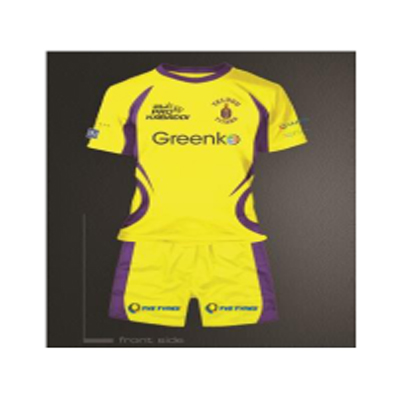
    As a part of this partnership, the company has adopted various marketing strategies to promote the brand. To gain prominence, TVS Tyres’ logo is used in the Telugu Titans official website, in-stadia digital display and perimeter boards and BTL activations. The jerseys and shorts of players will also sport the TVS Tyres logo. Special autographed merchandise and mementos by players as well as VIP match tickets are being given to after-market dealers to endorse the brand as well as the sport.


    To further strengthen and re-enforce the new brand identity amongst  customers and dealers, the brand carried out on-ground activations that included a meet and greet session with the players as part of the consumer campaigns and promotional events. The products of the brand are displayed at the team’s home stadium in Hyderabad along with distribution of co-branded cheering merchandise and freebies.