Tag: SPN

  • India’s sports broadcasting ecosystem threatened by ‘motivated’ PILs

    India’s sports broadcasting ecosystem threatened by ‘motivated’ PILs

    MUMBAI: On 10 May 2019, the Delhi High Court issued a notice in a petition challenging Section 3 (1) of the Sports Broadcasting Signal (Mandatory Sharing with Prasar Bharati) Act 2007, which restricts the retransmission of live broadcasting signals of sporting events of national importance by Prasar Bharati only on its terrestrial and DTH (DD Free Dish) networks.

    The petitioner Vaibhav Jain had sought that the DD signals should also be carried on digital platforms so that viewers can access the ongoing cricket World Cup matches shown on Doordarshan channels on a free-to-air basis. Despite the petitioner’s lawyer insisting that some order be passed for the upcoming World Cup, the Court denied relief and listed the matter for 22 July, a week after the World Cup concludes.

    A similar petition has also been filed by one Ramesh Kumar in the Punjab & Haryana High Court. According to the PIL, the petitioner is a driver by profession and neither has access to cable and DTH networks nor owns a TV, and hence is unable to exercise his right to access sporting events of national importance on a free-to-air basis.

    Those following the matter closely believe some vested interest groups are misusing the PILs to circumvent the orders of the Supreme Court to amend the Sports Act, which is not only against the interest of India's sports broadcasters but also detrimental to building a self-sustainable sports ecosystem in the country.

    The Delhi HC PIL is the first challenge made to Section 3 (1) after the judgment passed in August 2017 by the SC which affirmed the Delhi High Court judgment and held that the live feed received by the public broadcaster from content right owners or holder is only for the purpose of retransmission on its own terrestrial and DTH networks and not to private cable operators.

    The top court had clarified that sharing of signal with Doordarshan was to provide sporting content access to consumers who did not have it and not those who have already subscribed to private cable networks.

    A similar interpretation of Section 3 (1) was offered by an earlier judgment of the SC in 2016, holding that Prasar Bharati was supposed to telecast sporting events for the benefit of general masses, who otherwise do not receive signals of private channel due to geographical remoteness or are lacking the financial capacity to pay for these channels.

    However, Section 8 of the Cable Television Networks Act makes it mandatory for all cable operators to carry two Doordarshan channels. This meant cable operators got access to the broadcast of sporting events through two avenues: through the channels of Star or Sony, or other sports broadcasters, for which they have to pay subscription fees, and via the channels of Doordarshan, which are free.

    In the recent consultation by MIB for extending mandatory sharing to private platforms, many sports federations including the AIFF (football), AITA (lawn tennis) among others argued that public interest is better served in ensuring that funds for sports development are generated by sale of media rights and extending mandatory sharing across all platforms will sound a death knell to sports funding.

    For instance, the Indian Olympic Association’s feedback on the proposed amendment read, “It dents the commercial model of sports broadcast as buying of exclusive rights of sporting event, especially the Olympics Games and delivering it in world-class quality incurs very high investment for the private broadcasters in India. Competitive bidding of broadcast rights is imperative to up-keep the Olympic movement’s efforts to support sports and athletes. Besides, the niche sports that do not yield space in television broadcast unlike the popular sports of football, cricket, kabaddi, etc use new technologies and internet. Olympic Channel is also promoting the popularity of various sports through its network, which could be affected by the new amendment.”

    Legal experts are of the view that in light of the Supreme Court judgment, as long as Section 3 (1) of the Sports Act stands in its present form, no court is likely to grant any interim relief permitting retransmission on private networks and digital platform. 

    An industry insider, who wished to remain anonymous, indicated that sports content gives immense bargaining power to sports broadcasters and therefore, challenge to Section 3 (1) becomes important so as to restore the balance in favour of cable operators.

    The outcome of challenge raised before the Delhi and Punjab High Courts will determine whether sports rights continue to remain viable considering that a successful challenge before the Courts would result in retransmission of sporting events by private cable and DTH operators along with the same being available for online streaming on a free-to-air basis.


  • SPNI tells TRAI OTT platforms can’t be compared to broadcasting services

    SPNI tells TRAI OTT platforms can’t be compared to broadcasting services

    MUMBAI: Sony Pictures Networks India (SPNI) has again batted for the policy of forbearance for the fullest potential growth of the OTT industry. The broadcaster has also strongly advocated that OTTs providing content/media cannot be brought within the ambit of substitutability with broadcasting service.

    SPNI is of the view that since OTT distribution platforms are not granted permission/licence by the Ministry of Information and Broadcasting (MIB), they are not comparable with broadcasters. According to the broadcaster, the licensing/regulatory provision applicable to broadcasters cannot be applied to OTT distribution platforms. It explained that OTT services also do not use spectrum for providing their services but ride on the top of data services provided by licensed telcos unlike broadcasters who require uplink/downlink spectrum for transmission of signals.

    The broadcaster made these suggestions as part of its counter comments to a TRAI consultation paper. It has also disagreed with earlier comments of some of the stakeholders that emergency services should be made mandatorily accessible via OTT content service providers. SPNI has explained that OTT content, except for live content, are consumed at consumer’s discretion not on real time basis. Hence, it has noted that display of such communications over OTT content platforms may not reach the consumers on a real-time basis which would defeat the purpose of making emergency communications available on OTT content platforms.

    Earlier, public broadcaster Prasar Bharati has suggested to the TRAI that certain norms be made mandatory for OTT providers, in order to bring them on a level playing field with TV broadcasters and not just limit their comparison to telecom service providers (TSPs). It also stated that OTT providers should abide by certain rules including one that OTT platforms streaming live TV should mandatorily carry all Doordarshan channels like DTH, MSOs or cable operators do. OTT service providers offering news content should be registered with MIB.

    SPNI has clearly disagreed with this view without taking the name of the stakeholder. It also added that the mode of operation, revenue generation and the nature of offerings of OTT service providers are not comparable with that of broadcasters/TSPs. Hence, the same yardsticks cannot be made applicable to two inherently distinct platforms. However, it noted that on the carriage of Doordarshan channels, those that are unencrypted and FTA may be made available at the option of the OTT service providers.

    “On the recommendation for audience measurement system to be devised for OTTs carrying live television channels by certain stakeholders, the OTT players already have their internal mechanisms in place for audience measurement systems. This apart there are several private players providing audience measurement services. Hence attempting to mandate one only for those OTT players carrying television content will be a fruitless exercise. The way forward would be to unify the broadcast TV measurement system so that it captures,” it added.

    SPNI has also spoken against a claim from one of the stakeholders alleging certain broadcasts on OTT platforms being against national security. It has highlighted that in light of the entire set of regulations governing the OTT platforms coupled with judicial interventions from time to time, there are sufficient checks and balances in place to ensure that content provided on such platforms are not in violation of the law of land.

  • SPN India adds Happy India HD pack to its bouquet

    SPN India adds Happy India HD pack to its bouquet

    MUMBAI: Three months into the new TRAI tariff order regime and Sony Pictures Network has a plan to woo consumers. The broadcaster in its RIO mentioned a new ’Happy India HD’ pack.

    The pack costs Rs 70, which includes channels such as SET HD, Sab HD, Pal, Max HD, Max 2, Sony Wah, Mix, Sony Yay, Sony Aath, Sony Marathi, Sony BBC Earth HD and Ten 3 HD.

    Apart from that, the broadcaster also has Happy India South, Platinum HD, Bangla Platinum HD bouquet and among others and these packs are rated for Rs 25, Rs 93, Rs 90, Rs 90 and Rs 90 respectively.

    SPN had also launched the campaign, #RishtaPakkaSamjho that featured the Bollywood icon Amitabh Bachchan. The intent of this campaign, which was rolled out in phases, was to empower consumers with knowledge about various pricing options to choose from so that they can make an informed choice about which Sony channels they want to watch.

    SPN chief revenue officer distribution and head — sports Rajesh Kaul said, "The 45-seconder TV spot talks to the Sony Network viewers, urging them to choose from SPN's 'Happy India' pack, wherein the channel bouquets are simply packaged to allow the consumer to choose the best channel combinations (across genres) at the lowest possible price points. Our content has always brought joy to people and so will our 'Happy India' pack."

  • TDSAT directs BECIL to conduct re-audit of Skynet’s systems in Uttar Pradesh

    TDSAT directs BECIL to conduct re-audit of Skynet’s systems in Uttar Pradesh

    MUMBAI: The Telecom Disputes Settlement and Appellate Tribunal (TDSAT) has asked BECIL to re-conduct the audit of the head end of Skynet Digital Service Pvt Ltd in the state of Uttar Pradesh. The decision has been taken on the request of Sony Pictures Networks (SPN) India Pvt Ltd, who on several grounds has been denying the MSO to cover the whole of the north Indian state. The interim order in this regard, in favour of Skynet, will stand functional till the next hearing that has been scheduled for 11 April 2019.

    Skynet had moved TDSAT with the matter last year stating that there was stiff opposition from broadcasters, including Zee Entertainment and Star India Pvt Ltd along with SPN, when it went ahead to extend its area of operation to the whole of Uttar Pradesh.

    Responding to the case, BECIL had conducted an audit of the head end of the MSO in January 2018 and then again in August 2018.  It was found that Skynet’s system was compliant with the necessary regulations. While the other two broadcasters stood satisfied with the output, SPN was granted the permission to conduct its own audit of the MSO’s systems.

    The audit was conducted in February last year and the report was submitted to the MSO in the month of April. Skynet filed its response to the report in July 2018.

    However, in the latest hearing SPN highlighted a series of issues in Skynet’s system based on its audit, which the latter stated were not incorporated in the earlier audit report submitted to it. The MSO also alleged that SPN is acting in collusion with Den Networks Ltd, which is its competitor in the state.

    SPN stated that though it had entered into an agreement with it as per the interim direction of this tribunal, it is bent upon raising one or the other grievance in the name of audit only to please Den Networks Ltd.

    The three major complaints raised by SPN against Skynet are: “Package Alternation Logs not provided from all the three CAS. Historical package channel composition not provided from two of the CAS; On analysing the package-wise channel composition as per the three CAS and SMS, differences were observed in the channel composition of CAS and SMS; On analysing the package-wise channel composition as per the three CAS and SMS, differences were observed in the channel composition of CAS and SMS.”

    As per details, three SPN channels namely, Animax, Sony Aath, and Tez were to be found only in SMS but not in CAS. The broadcaster thus had requested the tribunal that either it should be permitted to conduct the further audit or the three major areas of concern highlighted earlier may be referred to BECIL for its scrutiny, analysis, and opinion.

    Skynet though refuted all the claims made against it by SPN. It has stated that it has no qualms in BECIL conducting an audit of its systems again.

    The tribunal thus noted, “BECIL shall be at liberty to do whatever is required for giving a firm opinion in respect of the three issues noted above and to record its opinion whether the Skynet Digital Service Pvt Ltd’s head-end and system is regulation compliant, particularly, in view of the three allegations noted above. It will be for BECIL to decide what materials are relevant and whether fresh materials are required or not.  The cost of this exercise to be done by BECIL shall be met by the respondent (Sony Pictures Networks India Pvt Ltd), broadcaster for the present. It is expected that BECIL shall submit a report within six weeks.”

  • Sony Pictures Networks India (SPN)to set up Community Water Centres Across Maharashtra

    Sony Pictures Networks India (SPN)to set up Community Water Centres Across Maharashtra

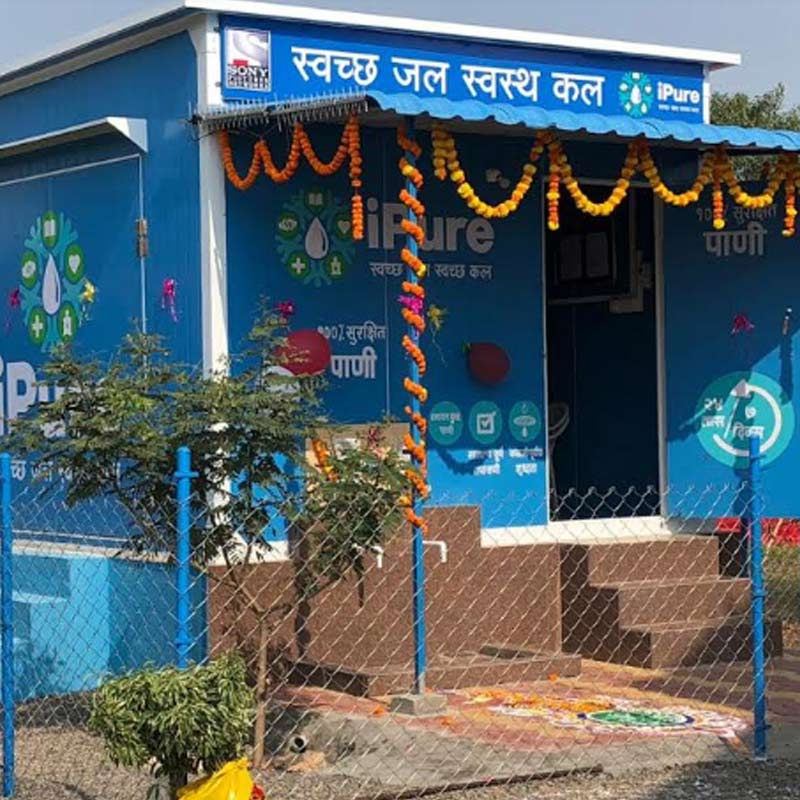
    MUMBAI:  Staying true to its commitment of ‘Ek India Happywala’, Sony Pictures Networks India (SPN) has partnered with Naandi Foundation to address the issue of unavailability of safe drinking water. SPN’s CSR programme focuses on creating a positive impact in the ecosystem it operates in and is built around three pillars; empowerment, education and environment. Falling under the ‘environment’ pillar of SPN’s CSR programme, the first community water center was inaugurated in Tardalvillage of Hatkanangale Block in Kolhapur, Maharashtra.

    As a part of this project, SPN will set up 30 community water centers across the state of Maharashtra. Through this partnership, the network will provide access to safe drinking water to over 1,50,000 people. The aim is to deliver efficient water purification and delivery services to the villagers. Naandi Foundation in partnership with Sony Pictures Networks will strive to ensure each community water center is built using established and proven technologies, which are best suited to local water issues in each of its geography of operations.

    Through its endeavors, Sony Pictures Networks India (SPN), has always aimed at empowering communities and working towards building a better society. This initiative is one of the many steps taken by the network to support the creation of a sustainable environment.  SPN is committed to co-creating India’s social development agenda through its focus on various areas of social impact.  
     

  • SPN appoints Indranil Chakravorty to head StudioNEXT

    SPN appoints Indranil Chakravorty to head StudioNEXT

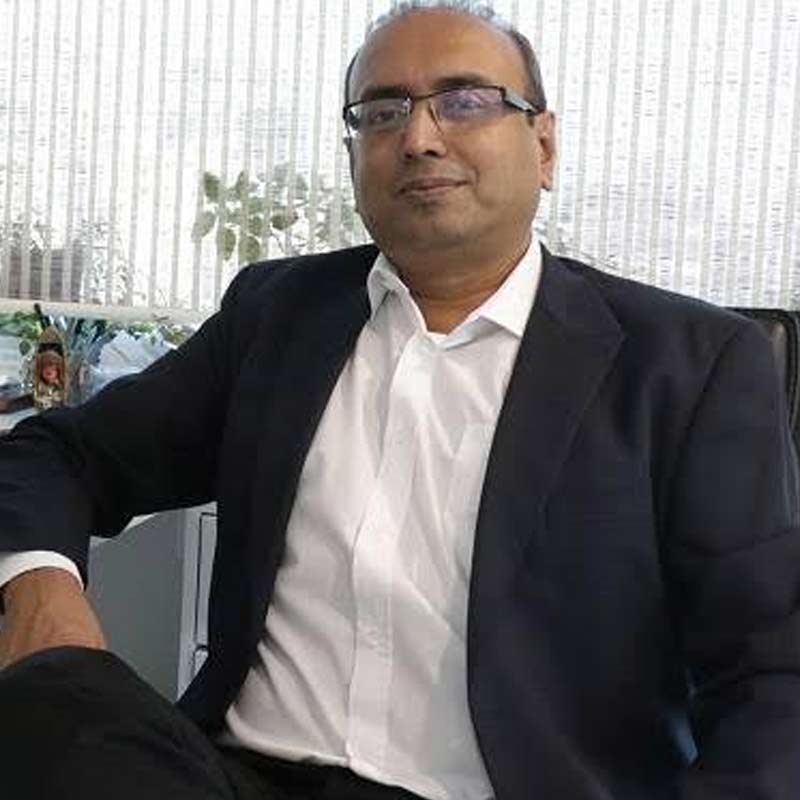
    MUMBAI: Sony Pictures Networks India (SPN) has roped in Indranil Chakravorty as the head of StudioNEXT, its independent production venture, who will be reporting to Danish Khan.

    Chakravorty is an engineer from IIT Kharagpur and has completed his Post Graduate Diploma in Management from IIM, Lucknow. He has rich and wide experience of around 30 years, working with organisations across sectors, handling varied job functions across business verticals such as marketing and sales. His most recent stint was as the CEO of Big Synergy where over a period of eight years he spearheaded its expansion in different geographies while creating high impact properties.

    StudioNEXT has been mandated to create original content and IPs for TV and digital media. An independent business unit of SPN, StudioNEXT will function as a content creator for SPN media business as well as for other channels, networks and OTT players within India and globally. This newly formed venture began its journey with co-producing Season 10 of KBC in partnership with Big Synergy. Going forward, StudioNEXT will produce new IPs whilst leveraging the existing ones under SPN media.

    Sony Entertainment Television (SET) business head Danish Khan said, “I am excited to have Indranil spearhead StudioNEXT. I am confident that Indranil, with his excellent understanding of the entertainment ecosystem, along with his abilities to nurture creative talent and build a creative culture, will make StudioNEXT a cutting-edge content creator.”

  • TDSAT asks SPN, Tata Sky to reach an agreement in 4 weeks

    TDSAT asks SPN, Tata Sky to reach an agreement in 4 weeks

    MUMBAI: The Telecom Disputes Settlement Appellate Tribunal (TDSAT) has heard the case on the recent commercial dispute between Sony Pictures Networks India (SPN) and Tata Sky on a failed negotiation. TDSAT heard the case on 11 October and advised the parties to take four weeks to try and reach a mutually acceptable negotiated agreement. Moreover, it also rejected the relief sought by Sony Pictures Networks seeking Tata Sky to carry all its channels.

    “The other interim prayer is to direct the parties to enter into negotiations for a period of at least four weeks. The prayer is with a view to enable the parties to enter into fresh negotiations so as to arrive at a mutually acceptable agreement based on negotiations,” the tribunal said. Even if required, the parties may seek extension of this period as per the order.

    SPN issued a disconnection notice to leading DTH platform Tata Sky on 7 September which was followed by a public notice on 10 September. Following the development, the latter proposed a RIO based agreement effective 30 September midnight for 10 channels only out of which just two channels was accepted by the former.

    Dushyant  Dave,  learned  senior  counsel  appearing  on  behalf  of  the SPN   raised   the  grievance   that  Tata Sky  has  not  been  fair   to  those customers   and   subscribers  who  were   earlier   viewing  the  channels   of  the petitioner  because  it  required  the  viewers   to  give  a  missed  call  on  a  given number  in case  they  wanted  to  view  the  relevant  channel  even  out  of  the  10 channels  selected  by the respondent.

    Kapil Sibal, on behalf of Tata Sky, submitted that if SPN was guided by consumer interest it would not have given a notice of disconnection while the parties had been negotiating renewal of the previous contract of Rs 800 crore. The court also noted that SPN asked for Rs 1700 crore even after losing the IPL rights to Star.

    “On a careful perusal of the relevant materials noted above,  we are of the view that now when the parties are being governed by terms of petitioner's RIO for which respondent has sent its acceptance and such agreement is effective from 01.10.2018 after notice to the viewers and subscribers,  it would not be in the interest of justice or equity to grant any interim relief so as to reintroduce the old agreement even for a period of four weeks as per the interim prayer,” the tribunal said after hearing both the parties.

  • Sony Pictures Networks India (SPN) acquires exclusive television and digital rights for UEFA EURO 2020 and inaugural UEFA Nations League

    Sony Pictures Networks India (SPN) acquires exclusive television and digital rights for UEFA EURO 2020 and inaugural UEFA Nations League

    MUMBAI: Football is rapidly becoming one of the most followed sports for Indian audiences. It has seen a massive growth in the past few years in the country, with over 500 million viewers sampling the sport in FY 2017-18. As the audience focus shifts from a cricket loving to a multi-sport viewing nation, the fan following for international football leagues, clubs and players is steadily on the rise in the country. This growth was further confirmed by the highly successful 2018 FIFA World Cup Russia which saw a total cumulative reach of 254 million viewers* on SPN.

    The sports channels of SPN continue to be the one-stop destination for football fans to catch the best players and the best teams in the sport. With the acquisition of UEFA Nations League and UEFA EURO 2020, SPN is the official broadcaster of eight premier international football properties in the Indian subcontinent including UEFA Champions League, UEFA Europa League, LaLiga, Serie A, UEFA Super Cup and the FA Cup. All the action will also be available for exclusive live-streaming on SPN’s OTT platform, SonyLIV.

    The UEFA Nations League has been created for the 55-member nations of UEFA, the European governing body of football. This will largely replace international friendlies in Europe. The inaugural edition of the UEFA Nations League is set to kick off this week and includes 2018 FIFA World Cup Champions France along with Croatia, Belgium, Germany, England, Spain, Portugal and more. While the World Cup and the EURO championship will take place in every alternate even-year, the UEFA Nations League will take place every odd-year. The group fixtures for the League of Nations will be played over six match days between September and November of 2018, with the finals set for June 2019. European teams dominated the 2018 FIFA World Cup in Russia and these teams will be now battle again in the UEFA Nations League as we head towards the UEFA EURO 2020. The first week features France v Germany, England v Spain and Portugal v Italy.

    The 16th edition of UEFA EURO 2020 is going to be unique as it is not going to be hosted by one country, but rather spread out across the whole continent. 12 cities in 12 different countries will host matches, to commemorate the 60th anniversary of the tournament. The EURO 2020 will run from 12th June – 12th July in 2020 and will feature 24 teams. Qualifiers for the tournament will run from 21st March 2019 – 31st March 2020. Led by Cristiano Ronaldo, Portugal won the historic championship in 2016 and will return as the defending champions.

    There is no better time to be a football fan in India. The new football season, which began last month, has sparked great interest. With current Ballon d‘Or winner Cristiano Ronaldo moving to Juventus this season, the Serie A has already received increased viewership from fans in India. The biggest club competition in the world, the UEFA Champions League draw has also pitted the Portuguese star against his former club, Manchester United. One of the most popular clubs in the country, Barcelona is in the group of death with Tottenham Hotspur, Inter Milan and PSV. In addition to this, one of the biggest rivalries in the sporting world will resume as Real Madrid and Barcelona battle for supremacy in LaLiga.

  • In second coming, Ajay Bhalwankar attempts renaissance of Marathi TV

    In second coming, Ajay Bhalwankar attempts renaissance of Marathi TV

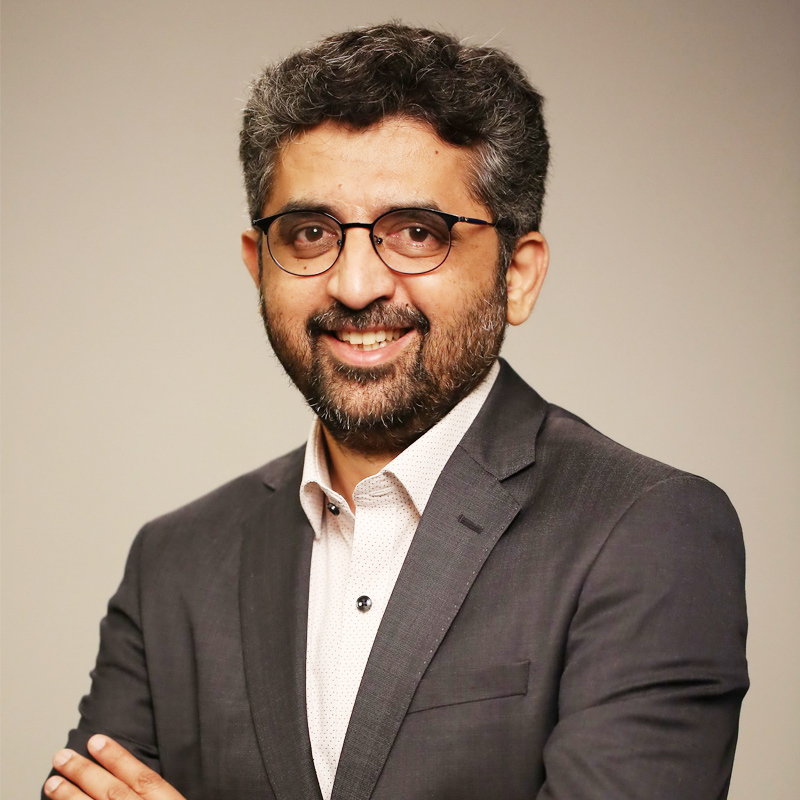
    You either get it right, or you don’t. And if you’re Ajay Bhalwankar, you tend to get it right more often than not. Or at least that’s what his past record suggests. “Let’s not talk about my past,” he quips. But his past is not just important but also relevant in the context of his current job – business head Sony Marathi. Bhalwankar’s past was perhaps a determining factor in his boss and Sony Pictures Networks (SPN) India topper NP Singh handing him the daunting task of spearheading Sony Marathi as the latest entrant in the regional general entertainment television sweepstakes.

    In a sense, it is impossible to delink Bhalwankar’s past from his present for two reasons. He built the Zeel juggernaut in this sphere; a consistent domination of the likes is virtually unmatched across regions. Bhalwankar and his band of merry programmers helped craft a brand that commands over 60 per cent of the viewership today. Much of what he accomplished with Zee Marathi has shaped popular culture for the genre and set a benchmark.

    Yet, it is this standard Bhalwankar no longer strives to match or raise. In his second coming, the bearded executive intends to break stereotypes through clever and disruptive programming. His 10-year self-imposed exile from Marathi television was a catalyst in Bhalwankar propagating the idea of launching a GEC to his bosses. “Marathi television was at the same place I had left it at,” he says. The opportunity and potential to push the envelope in the Rs 1000 crore market in terms of the content play excited SPN, ultimately leading to the birth of its newest entity.

    Marathi television is solely driven and dependent on content. Hence, taking a bet on a new channel involved identifying consumption patterns and preferences purely from a storytelling perspective. Bhalwankar seems convinced that there exists a definite mismatch between the content on offer and consumer expectations. He believes there is a gap between what society is and what television is currently portraying society as. Addressing that gap is Sony Marathi’s raison d’etre.

    The resurgence of Marathi cinema as a force to be reckoned with appears to have played its part too. Bhalwankar, who leads a team of around 26 people at Sony Marathi, is now bidding to deliver unique yet mass content (that works commercially too) for the audience.

    The former journalist, however, has his task cut out as he attempts to shake up the business with sensibilities that he believes are in sync with the present. Fresh on the back of the channel launch on 19 August, we caught up with Bhalwankar at SPN’s Malad headquarters to decode his process and philosophy as he mounts an audacious challenge to the existing Marathi GEC order.

    What was the rationale behind launching the channel and why were you picked for the job? Can you give us a sense of what the conversation behind closed doors was like?

    We at SPN were looking at launching a Marathi channel for some time and I part of my responsibilities (SET chief creative director) I was looking at what we should be doing as a network. And this came naturally to me. This space has great potential with maximum number of television households in the entire country. 23.7 million households have a television in the state. So, cable and satellite have grown vastly in the state. Secondly, the number of channels are very few. There are just three GECs here. So there is a huge amount of scope – three-player market, which is dominated by one player. So it’s almost like a single player market. Thirdly, we have always stood for progressive, sophisticated and contemporary content. That’s something that wasn’t happening on Marathi television. So it was the right time for us to make this move.

    Why was I picked for it? My boss should be answering this. I have been involved with the Marathi genre right since its inception. Also, this was an idea propagated by me as part of my network portfolio responsibility.

    How has the landscape changed since your last tryst with Marathi television?

    I was away from Marathi television for 10 years. Despite that, it feels like I’m starting from the same point again. While films have witnessed a renaissance, television somewhere has been time warped. The faces have changed, artists have changed, but the content hasn’t. And that’s where I saw an opportunity. Hence there is a certain degree of freshness to the content on Sony Marathi.  We are creating content that is contemporary.

    Content on Marathi television isn’t escapist. It’s rooted and relatable. Is it possible to redefine the nature of storytelling in such a scenario?

    Our competitors are doing a good job. However, the content is stereotypical. Look at the themes that are being treated in Marathi cinema, that hasn’t happened on television. Breaking stereotypes is our objective. That’s what we stand for. Our shows will deal with newer themes. Our female protagonists will be strong. We will go beyond the spectrum of Marathi content that is being dished out to audiences currently. We are exploring spaces that haven’t been explored so far.

    Why should we watch Sony Marathi? What makes you different?

    Weaving unbreakable bonds is what we stand for. Breaking stereotypes will be our differentiation. And I’m happy consumers have welcomed our content thought. We are focussed on creating a clear-cut brand proposition instead of indulging in a TRP slugfest. A brand proposition that reflects positivity, togetherness and inspiration. We want to highlight today’s time instead of an age-old world. We are about today and tomorrow.

    What can you tell us from the early feedback? Is any particular show working?

    Early feedback is more on the channel than a particular show. They are talking about the colours, freshness, themes – this is what is being picked up by our consumers. As a channel proposition, people are excited about it. That’s the large picture.

    Ultimately, running a channel is about business goals and milestones. You know the challenges on offer. What would you say is a realistic target?

    If we manage to create a distinct identity and brand for ourselves in one year, I think that would define success for us. The brand imagery will matter more than anything else to us. Numbers and money follow with a clear-cut audience set. 

    When you started out on your Marathi television journey, you didn’t have reference points. Today you seem to influenced by the content on Marathi cinema. Are you limiting yourself in any way?

    The creative aspects of television and films are absolutely different. If you see any of my shows, they have no influence of films. But it is a good reference point for us to understand how audiences are receiving that content and the kind of hunger they are showing. Film content on TV has never worked, even internationally. What is comforting for us is that this new-age content has been commercially successful for the film industry. Films and TV are two different worlds and I have realised that in my long career. I have dabbled in film production as well, successfully. Both worlds are different.

    You’ve found yourself in this place before. What’s at stake for you?

    This is the first step that we are taking in the Marathi GEC world. Creating a remarkable brand and an impact on minds of people is what’s at stake for me. That is the critical part. Culturally enriching the audience is something that has always been my endeavour. If that happens, I’ll be very glad.

    As someone who has a deep understanding of content creation in this domain, what is your vision for this genre?

    I have largely been independent in terms of thought process. If people start following our ideas and I start seeing copies of our shows, I will be happy.

    You have nine fiction and two non-fiction shows on air. Why didn’t you introduce them in phases?

    Nine to two isn’t the real ratio. It is 20 hours to four hours. That’s a very healthy ratio. People come together bit by bit. I don’t expect them to watch Sony Marathi from the first day. I have to invite them on each and every second of the day. Beyond this, there will also be films and events. I want to bring in people in every way possible. We don’t want to take the audience for granted. Audiences will come by their own choice. I’m just widening their options.

    How are you acquiring movie content? How big is your movie library?

    Nearly 100-125 Marathi films get made every year. Not many people are buying them. There was enough inventory available in the industry. We have around 100 films in our library. Currently, we have a film every day on the channel and on Sunday we’ll have the bigger ones of course. Library content will go up in the afternoons, late afternoons.

    What do films and events bring to the table?

    Films and events bring in people other than those who regularly consume GEC content. These are the additional people that come and if they find your shows interesting, they end up converting into your loyal audience.

    What about dubbed content?

    We won’t have a lot of dubbed content except the few experiments we have been doing with Hollywood films. It is predominantly going to be original content.

  • Sony Marathi aims to fill need gap in the market

    Sony Marathi aims to fill need gap in the market

    MUMBAI: Sony is taking the plunge into the Marathi general entertainment market to compete with Zee Marathi, Zee Yuva, Colors Marathi and Star Pravah.

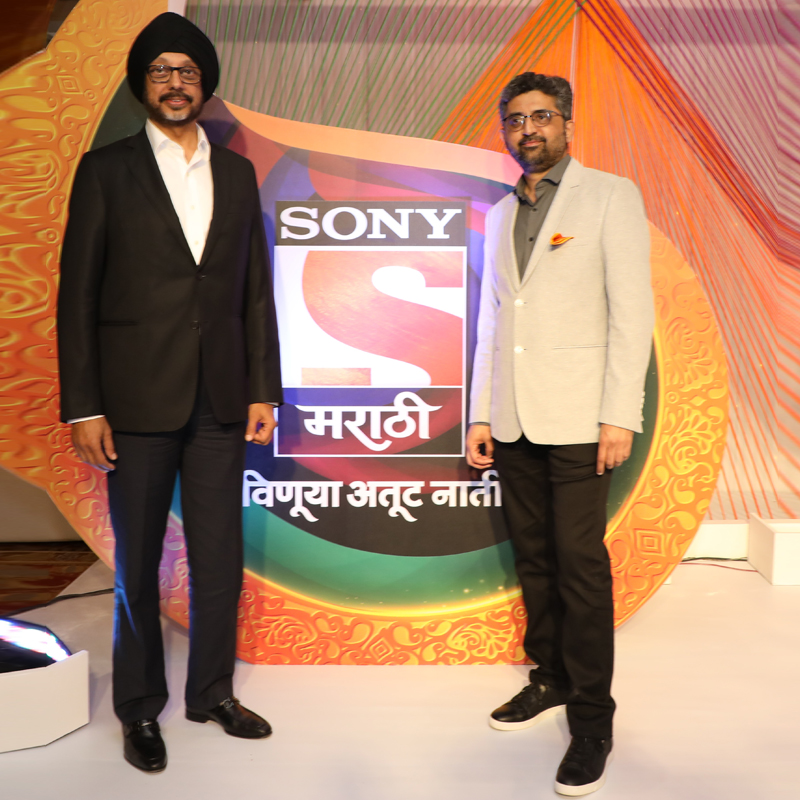
    The channel will be launched on 19 August 2018. Although the genre is pretty cluttered and Sony’s entry is pretty late compared to incumbents, Sony Pictures Network India MD and CEO NP Singh feels that it is the right time to enter.

    “The regional language in Maharashtra is growing rapidly and we had traditionally a very strong presence in Maharashtra with our all the network channels. We have a 23 per cent plus market share and now we thought that it is the time to talk to our loyal consumers and give them content that is aspirational and differentiated and our research tells us that there is a need gap and that’s how we thought of coming up with Sony Marathi and there are expectations with Sony Marathi,” says Singh adding that he is confident that with its entry in the market, the market will grow further.

    A BARC report points out that Marathi programming viewing grew by 74 per cent in 2017 over 2016.

    Sony Marathi business head Ajay Bhalwankar wants to get the Marathi TV viewer to rise. “Since the last 10 years, Marathi films are doing well with content driven stories on the commercial market and that’s something that has not happened in the TV space,” he says.

    The channel will target 15+ urban markets and will offer four hours of programming from Monday to Saturday in the 7-11 pm prime time slot. On Sunday the channel will showcase movies in a bid to garner more traction from the viewers.

    Bhalwankar adds that currently there are no plans to air dubbed content or sports for now. “Sports is something that we offer in multiple languages and if we see a demand for any particular sport then we will consider that but right now we haven’t planned anything yet,” he says.

    Sometime in the future, the channel may even look at replicating some of Sony’s non-fiction properties. But the focus now is to create unique shows for Sony Marathi.

    Reports suggest that Sun TV also plans to foray into the Marathi space in a year showing the interest of broadcasters in this space. Adding relevance, Singh says, “We are getting to grow and fragment the market ourselves as more strong players come into the market and it will grow. It actually gives me the confidence that we are entering into the right market and earlier.”

    In week 31 of BARC ratings, Zee Marathi led the genre with 320505 impressions (000s) followed by Zee Talkies at second position with 133441 impressions (000s) and Zee Yuva at fifth place with72303 impressions (000s). Colors Marathi and Star Pravah swapped their third and fourth positions with 117616 impressions (000s) and 124150 impressions (000s) respectively.

    The new GEC will go live unveiling its robust content with a host of 11 new shows such as Julta Julta Jultay, H.M. Bane T.M. Bane, Saare Tuzhyach Sathi, Ti Phulrani, Duniyadaari Filmy Istyle, Year Down, Bheti Laagi Jeeva, Hrudhayat Vaje Something, Garja Maharashtra among others. The non-fiction lineup includes Maharashtracha Favorite Dancer and Maharashtrachi Hasya Jatra.