Tag: Sphereorigins

  • Producer Sunjoy Waddhwa speaks on the success of Ranneeti

    Producer Sunjoy Waddhwa speaks on the success of Ranneeti

    Mumbai: With rave reviews and viewer adulation, the Sphereorigins produced series ‘Ranneeti: Balakot and Beyond’ has managed to raise the benchmark of Indian OTT programming.

    The show starring Jimmy Shergill, Ashutosh Rana, Lara Dutta, and Ashish Vidyarthi, among others and directed by Santosh Singh has managed to grab eyeballs with its gripping portrayal of hybrid warfare post the deadly Pulwama attacks, also being lauded for its authentic representation and storytelling.

    “Ranneeti is indeed a great story with top-class acting providing a near-realistic portrayal of IAF as a professionally battle-hardened service. The episodes are riveting to watch, with direction and scenes of air battles in particular being of high quality, I would say, amongst the finest so far on Indian screens,” said Air Marshal Ajit Bhavnani (Retd), former vice chief IAF conveying his wishes to the team behind the series.

    However, it is learnt that bringing this complex narrative to life was no easy feat, with the creators facing numerous challenges in crafting a show that balanced technical accuracy with engaging drama. With over two years spent in research and development, the teams worked on multiple drafts before zeroing in on the final version.

    “The original concept and research was ideated by Sanjay Chopra who is a pilot himself and I was very keen to make a Series on defence forces. One of the greatest challenges was ensuring that we honoured the real-life experiences of those involved in hybrid warfare. We had to approach the storytelling with empathy and sensitivity, particularly for viewers who may have personal connections to the themes explored.” said Sphereorigins Multivision Pvt Ltd producer and MD Sunjoy Waddhwa who is also known for producing path-breaking television shows like Balika Vadhu, Saraswatichandra, Peshwa Bajirao, Pandya Store and Saat Phere among the huge repertoire of the company.

    The scale of “Ranneeti” was another significant challenge. The show being one of the most grand series made in India, required the teams to scout real-like locations to keep the authentic element of the show intact. Eventually, Ranneeti was shot at multiple locations like Kashmir, Punjab, Delhi, Mumbai, Belgrade and Novi Sad, across India and Serbia.

    “We wanted to be authentic in all manners as best as we could while still creating a drama that would keep the audience hooked. Anything different could have ruined the experience for the viewer. There were logistical challenges, from scouting locations to coordinating shoots across various regions. Our team managed to navigate these hurdles and bring together a cohesive production ” Waddhwa added.

    It is learned that to ensure the authenticity of the material, defence experts and aerial action experts were also brought in to work on the show, in addition to working with military artillery and fighter jets to ensure credibility and authenticity.

    “…I had goosebumps during the depiction of the Balakot attack, especially the farewell party scene and the Wolf pack prep. I am so glad that it’s covering Abhinandan in detail, his role is illustrious. As was the lady AWACS controller …. I would like to extend my best wishes to the entire team of Ranneeti.” Said  Air Marshal Gautam Nayyar congratulating the team.

    A mammoth task to produce and execute, Ranneeti with the scale and storytelling of this calibre is what has enthralled fans across the country. Here’s hoping we get to see many more such shows and looking forward to yet another season of the show!

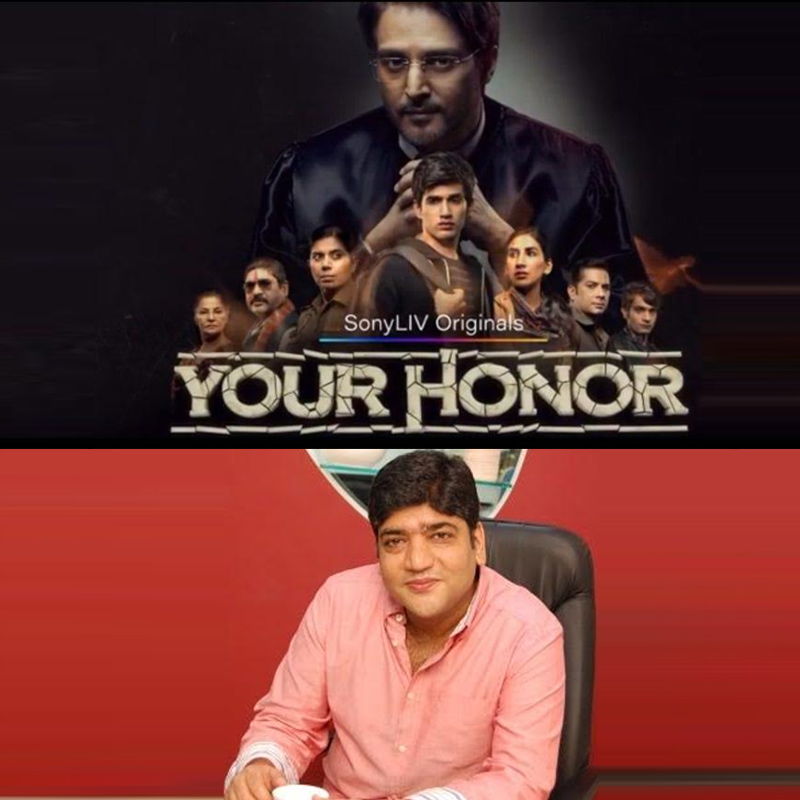
  • Sunjoy Waddhwa on the making of ‘Your Honor’

    Sunjoy Waddhwa on the making of ‘Your Honor’

    MUMBAI: Sony LIV’s latest drama-thriller, Your Honor produced for Applause Entertainment by Sphereorigins, is all set to release. In a special interaction with indiantelevision.com, Sphereorigins founder Sunjoy Waddhwa shed light on the making of the series.

    The original Israeli series was created by Ron Ninio and Shlomo Mashiach and distributed by Yes Studios. The Indian adaptation is helmed by Shool fame, E Niwas.

    The series is headlined in India by popular Bollywood actor Jimmy Sheirgill. The makers decided to cast Sheirgill because they wanted a face who can look more relatable to the audiences, who looks like a family man and not just a judge.

    The series was shot in 2019. It took 65 days to shoot the entire series, but seven months went into research, followed by four to five recce of the location. While in reality most of the mafias were based out of North India and Mumbai, Bihar and Uttar Pradesh are usually shown as the crime capital. Hence, Waddhwa decided to take a different route and chose the backdrop of Ludhiana, Amritsar, Chandigarh and Mumbai believing it will give a different tone, texture and colour to the series. Around 60 to 70 per cent of the series was shot in Punjab. More than 125 people were involved in creating this drama thriller.

    Waddhwa says, “A lot of effort went into the pre-production and designing the look and character of actors, giving authentic touch in terms of language and costume. The director, writer, production designer, they all worked collectively to give the show a more rustic feel.”

    In the series, Bishan Khosla (Jimmy Sheirgill), is a reputed judge whose teenage son Abeer (Pulkit Makol) is involved in a hit and run case. The victim of the accident is the son of a gangster. So, a lot of time went into the legalities. Waddhwa sought help from advocates and legal advisers to understand the details.

    He mentions, “My takeaway from this has been that the importance of having the script in hand and working properly as per the script and doing good research makes life easier.”

    As the shooting took place in the months of December and January, it was extremely cold. Apart from that, technicians and technical crew and fight master contributed to make it a scaled up version of television. As it is not a VFX-heavy series, the makers relied more on shoot material.

    “The entire shot taking and story thought process is very different as compared to a normal series. It is more like an extended film rather than a series. Most importantly, there was no set of rules, that it has to be made like an OTT show,” he further adds.

    When asked about dealing with comparison to the US adaption, Waddhwa quips, “For a Hindi-speaking audience it is a completely different show. Because this is in the dynamics of our situation. What value you add to the adaptation makes all the difference.”

    The original rights of the series belong to Applause Entertainment. Waddhwa also hints at making the sequel of the series after gauging audiences’ response.

  • Budget ’17: Media segments seek succour, digital direction from govt

    Budget ’17: Media segments seek succour, digital direction from govt

    NEW DELHI/MUMBAI: Despite government attempting to allay many fears of the various sectors of the Indian industry, the uncertainty prevailing after demonetisation continues and everybody is looking for the Union Budget 2017 to provide some indications, if not clear-cut answers, on various issues, including a high tax regime, incentivising digital uptake and, of course, the Goods and Services Tax (GST).

    Reliance Broadcast Networks Ltd (RBNL) feels as most radio broadcast players had been advocating for reduction in tax and custom duty on capital equipment, especially given the proposed launch of new frequencies, their expectation this year too remains the same as also the demand for granting infrastructure status to the broadcast industry.

    “Reduction in service tax would be a boon for the media and entertainment industry as a whole,” said Reliance Broadcast Network Limited COO Ashwin Padmanabhan.

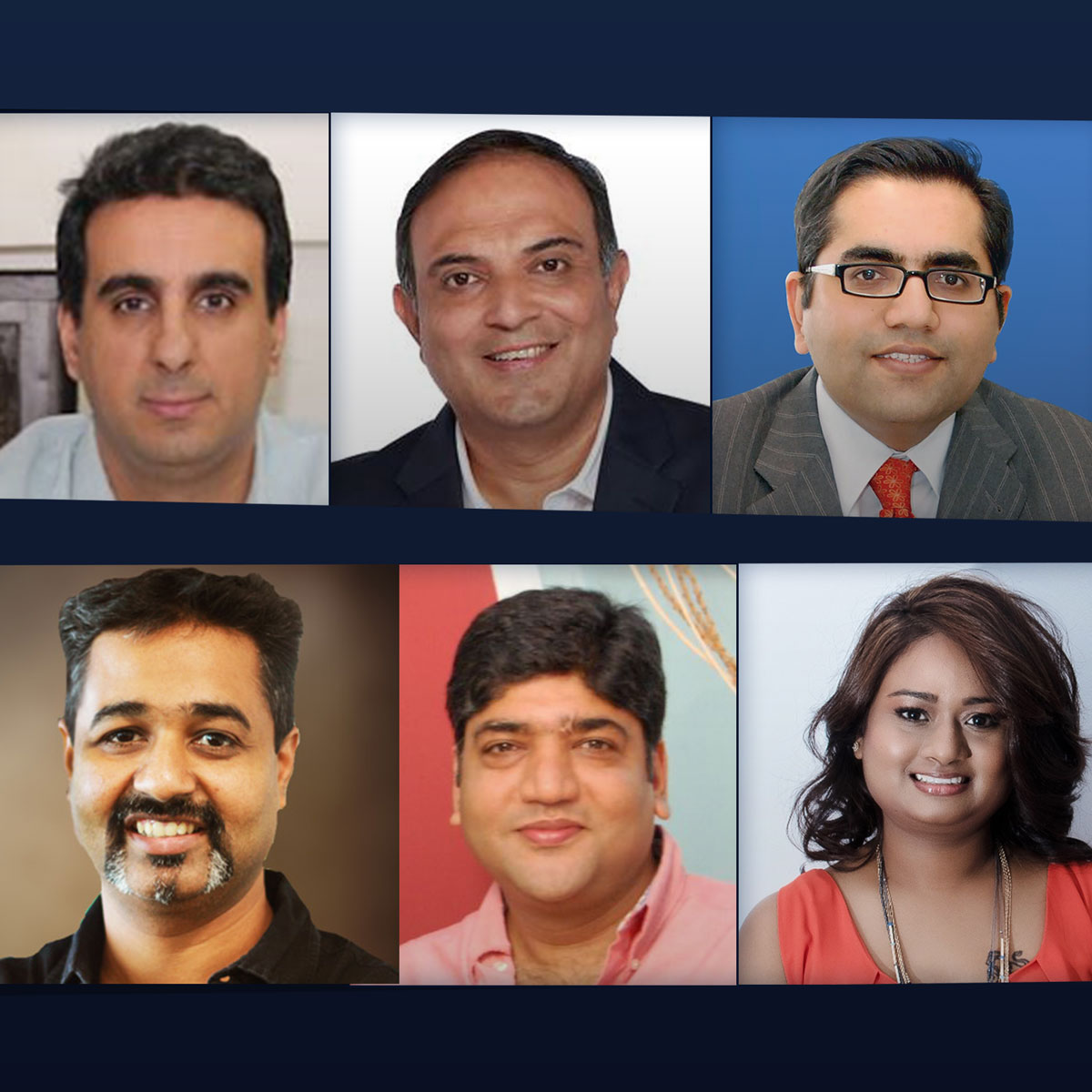
    “The media and advertising industry in India is one of the fastest growing in the world. With the Union Budget 2017 expectation will rise for ‘Push for Digital India’ as India ranks second globally with 30 per cent Internet penetration, still to catch up with China (50 per cent) and USA (87 per cent). The implementation of GST is expected to benefit the industry bringing rationalisation of taxation policy by making the taxation process simple, transparent and easy to pay,”  Interspace Solutions CEO Praveen Vadhera.

    Shop CJ COO Dhruva Chandrie, while taking the bigger picture in account, opined if measures are taken to positively impact the overall consumer sentiment and propel their spending trends, it would definitely be good for the Indian economy. “While the government has set a goal of creating around 400 million jobs by 2020, one million people are entering the job market each year. In the given scenario, the government’s quick implementation of programs to create new jobs will give our economy the much needed boost,” he said.

    According to Mukta Arts MD Rahul Puri, the exhibition industry’s biggest hope for the Budget revolved around a formal announcement on the implementation of GST, which is not going to happen till July, but more details could emerge during the Budget speech. “Beside this, we hope that the government would continue to rationalise the corporate tax regime, which would be beneficial for the industry as a whole,” he added.

    Sphereorigins CMD Sunjoy Waddhwa felt that as times were changing for the media and entertainment industry, costs too are going up all round — from remunerations of artistes to costs of production of good programming. “However, I think GST would not have a lot of impact on our industry per se as long as the percentage is not too high,” he added.

    Echoing similar sentiments on rising cost of doing business, Pixel Pictures CEO Prashanti Malisetti said the entertainment industry players were under “heavy burden of multiple taxation and levies” such as license fee, service tax, VAT, etc. Buying props, for instance, currently attract high rates of VAT, depending on the State in question, she explained, adding, “In an ideal world, new technology adaptation should be viewed under a different category and new tax benefits should be applicable despite the age of the production house…(as) current import duties are high and can be a hindrance to smaller companies to make the jump.”

    While highlighting new format of shows in the non-fiction and game show category and arrival of VoD services have led to a host of new opportunities for production companies in the television industry, Malisetti also felt that the entertainment industry was particularly keen to get some clarification on GST.

    Demonetisation and, at times, the present BJP-led government’s unorthodox stand on various policies have been a common theme and, therefore, expectations from various quarters of the media and entertainment industry too have revolved around hoping to get clarifications from the government. Fractal Ink Design Studio CEO, co-founder and CCO Tanay Kumar highlighted that with demonetization “adding friction to our daily routines”, it would be interesting to witness steps taken towards “improving parallel transaction mechanisms”.

    Shop CJ Dhruva Chandrie, while taking the bigger picture in account, opined if measures are taken to positively impact the overall consumer sentiment and propel their spending trends, it would definitely be good for the Indian economy. “While the government has set a goal of creating around 400 million jobs by 2020, one million people are entering the job market each year. In the given scenario, the government’s quick implementation of programs to create new jobs will give our economy the much needed boost,” he said.

    According to Mukta Arts MD Rahul Puri, the exhibition industry’s biggest hope for the Budget revolved around a formal announcement on the implementation of GST, which is not going to happen till July, but more details could emerge during the Budget speech. “Beside this, we hope that the government would continue to rationalise the corporate tax regime, which would be beneficial for the industry as a whole,” he added.

    Sphereorigins CMD Sunjoy Waddhwa felt that as times were changing for the media and entertainment industry, costs too are going up all round — from remunerations of artistes to costs of production of good programming. “However, I think GST would not have a lot of impact on our industry per se as long as the percentage is not too high,” he added.

    Echoing similar sentiments on rising cost of doing business, Pixel Pictures CEO Prashanti Malisetti said the entertainment industry players were under “heavy burden of multiple taxation and levies” such as license fee, service tax, VAT, etc. Buying props, for instance, currently attract high rates of VAT, depending on the State in question, she explained, adding, “In an ideal world, new technology adaptation should be viewed under a different category and new tax benefits should be applicable despite the age of the production house…(as) current import duties are high and can be a hindrance to smaller companies to make the jump.”

    While highlighting new format of shows in the non-fiction and game show category and arrival of VoD services have led to a host of new opportunities for production companies in the television industry, Malisetti also felt that the entertainment industry was particularly keen to get some clarification on GST.

    Demonetisation and, at times, the present BJP-led government’s unorthodox stand on various policies have been a common theme and, therefore, expectations from various quarters of the media and entertainment industry too have revolved around hoping to get clarifications from the government. Fractal Ink Design Studio CEO, co-founder and CCO Tanay Kumar highlighted that with demonetization “adding friction to our daily routines”, it would be interesting to witness steps taken towards “improving parallel transaction mechanisms”.

    “As we see a lot of movement in the start-up world to take on the big pie of the digital world, we hope the Budget 2017 has some easing-down policies on regulatory aspects that will help them concentrate better on problem solving than running after compliance and taxation issues. With unique and easy payment methods like UPI and formation of payment banks, spending patterns and consumer behaviour is going to see a huge shift from being conservative to being more liberal and trusting. We, as a digital experience design agency, expect the Budget to be hugely in favour of creating digitally smart and enabled India in the coming times,” Kumar explained.
    TalentNext.com CEO Shekhar Purohit also felt that this year’s Budget could prove to be critical for the media and entertainment industry as major challenges remain with dual taxation (service tax and VAT), which unduly increases the cost of doing business.

    Pointing out that the media and entertainment industry continues to be a sunrise sector for India, Purohit said, “The implementation, application, and impact of GST on our industry must be addressed immediately and this year’s Budget should also support digitization to the fullest to foster digital empowerment.”

    Also Read:

    Budget 2017 Wish-list: MSOs demand industry status, rationalisation of entertainment & services taxes

    Broadcasters bat for parity with print medium under GST
  • Budget ’17: Media segments seek succour, digital direction from govt

    Budget ’17: Media segments seek succour, digital direction from govt

    NEW DELHI/MUMBAI: Despite government attempting to allay many fears of the various sectors of the Indian industry, the uncertainty prevailing after demonetisation continues and everybody is looking for the Union Budget 2017 to provide some indications, if not clear-cut answers, on various issues, including a high tax regime, incentivising digital uptake and, of course, the Goods and Services Tax (GST).

    Reliance Broadcast Networks Ltd (RBNL) feels as most radio broadcast players had been advocating for reduction in tax and custom duty on capital equipment, especially given the proposed launch of new frequencies, their expectation this year too remains the same as also the demand for granting infrastructure status to the broadcast industry.

    “Reduction in service tax would be a boon for the media and entertainment industry as a whole,” said Reliance Broadcast Network Limited COO Ashwin Padmanabhan.

    “The media and advertising industry in India is one of the fastest growing in the world. With the Union Budget 2017 expectation will rise for ‘Push for Digital India’ as India ranks second globally with 30 per cent Internet penetration, still to catch up with China (50 per cent) and USA (87 per cent). The implementation of GST is expected to benefit the industry bringing rationalisation of taxation policy by making the taxation process simple, transparent and easy to pay,”  Interspace Solutions CEO Praveen Vadhera.

    Shop CJ COO Dhruva Chandrie, while taking the bigger picture in account, opined if measures are taken to positively impact the overall consumer sentiment and propel their spending trends, it would definitely be good for the Indian economy. “While the government has set a goal of creating around 400 million jobs by 2020, one million people are entering the job market each year. In the given scenario, the government’s quick implementation of programs to create new jobs will give our economy the much needed boost,” he said.

    According to Mukta Arts MD Rahul Puri, the exhibition industry’s biggest hope for the Budget revolved around a formal announcement on the implementation of GST, which is not going to happen till July, but more details could emerge during the Budget speech. “Beside this, we hope that the government would continue to rationalise the corporate tax regime, which would be beneficial for the industry as a whole,” he added.

    Sphereorigins CMD Sunjoy Waddhwa felt that as times were changing for the media and entertainment industry, costs too are going up all round — from remunerations of artistes to costs of production of good programming. “However, I think GST would not have a lot of impact on our industry per se as long as the percentage is not too high,” he added.

    Echoing similar sentiments on rising cost of doing business, Pixel Pictures CEO Prashanti Malisetti said the entertainment industry players were under “heavy burden of multiple taxation and levies” such as license fee, service tax, VAT, etc. Buying props, for instance, currently attract high rates of VAT, depending on the State in question, she explained, adding, “In an ideal world, new technology adaptation should be viewed under a different category and new tax benefits should be applicable despite the age of the production house…(as) current import duties are high and can be a hindrance to smaller companies to make the jump.”

    While highlighting new format of shows in the non-fiction and game show category and arrival of VoD services have led to a host of new opportunities for production companies in the television industry, Malisetti also felt that the entertainment industry was particularly keen to get some clarification on GST.

    Demonetisation and, at times, the present BJP-led government’s unorthodox stand on various policies have been a common theme and, therefore, expectations from various quarters of the media and entertainment industry too have revolved around hoping to get clarifications from the government. Fractal Ink Design Studio CEO, co-founder and CCO Tanay Kumar highlighted that with demonetization “adding friction to our daily routines”, it would be interesting to witness steps taken towards “improving parallel transaction mechanisms”.

    Shop CJ Dhruva Chandrie, while taking the bigger picture in account, opined if measures are taken to positively impact the overall consumer sentiment and propel their spending trends, it would definitely be good for the Indian economy. “While the government has set a goal of creating around 400 million jobs by 2020, one million people are entering the job market each year. In the given scenario, the government’s quick implementation of programs to create new jobs will give our economy the much needed boost,” he said.

    According to Mukta Arts MD Rahul Puri, the exhibition industry’s biggest hope for the Budget revolved around a formal announcement on the implementation of GST, which is not going to happen till July, but more details could emerge during the Budget speech. “Beside this, we hope that the government would continue to rationalise the corporate tax regime, which would be beneficial for the industry as a whole,” he added.

    Sphereorigins CMD Sunjoy Waddhwa felt that as times were changing for the media and entertainment industry, costs too are going up all round — from remunerations of artistes to costs of production of good programming. “However, I think GST would not have a lot of impact on our industry per se as long as the percentage is not too high,” he added.

    Echoing similar sentiments on rising cost of doing business, Pixel Pictures CEO Prashanti Malisetti said the entertainment industry players were under “heavy burden of multiple taxation and levies” such as license fee, service tax, VAT, etc. Buying props, for instance, currently attract high rates of VAT, depending on the State in question, she explained, adding, “In an ideal world, new technology adaptation should be viewed under a different category and new tax benefits should be applicable despite the age of the production house…(as) current import duties are high and can be a hindrance to smaller companies to make the jump.”

    While highlighting new format of shows in the non-fiction and game show category and arrival of VoD services have led to a host of new opportunities for production companies in the television industry, Malisetti also felt that the entertainment industry was particularly keen to get some clarification on GST.

    Demonetisation and, at times, the present BJP-led government’s unorthodox stand on various policies have been a common theme and, therefore, expectations from various quarters of the media and entertainment industry too have revolved around hoping to get clarifications from the government. Fractal Ink Design Studio CEO, co-founder and CCO Tanay Kumar highlighted that with demonetization “adding friction to our daily routines”, it would be interesting to witness steps taken towards “improving parallel transaction mechanisms”.

    “As we see a lot of movement in the start-up world to take on the big pie of the digital world, we hope the Budget 2017 has some easing-down policies on regulatory aspects that will help them concentrate better on problem solving than running after compliance and taxation issues. With unique and easy payment methods like UPI and formation of payment banks, spending patterns and consumer behaviour is going to see a huge shift from being conservative to being more liberal and trusting. We, as a digital experience design agency, expect the Budget to be hugely in favour of creating digitally smart and enabled India in the coming times,” Kumar explained.
    TalentNext.com CEO Shekhar Purohit also felt that this year’s Budget could prove to be critical for the media and entertainment industry as major challenges remain with dual taxation (service tax and VAT), which unduly increases the cost of doing business.

    Pointing out that the media and entertainment industry continues to be a sunrise sector for India, Purohit said, “The implementation, application, and impact of GST on our industry must be addressed immediately and this year’s Budget should also support digitization to the fullest to foster digital empowerment.”

    Also Read:

    Budget 2017 Wish-list: MSOs demand industry status, rationalisation of entertainment & services taxes

    Broadcasters bat for parity with print medium under GST