Tag: Spectrum

  • Bharti Airtel prepays Rs 3,626 crores to clear 2016 spectrum liabilities

    Bharti Airtel prepays Rs 3,626 crores to clear 2016 spectrum liabilities

    MUMBAI: Imagine the weight of debt lifting off your shoulders-the sheer relief, the freedom, and the excitement of a stronger financial footing.

    Now, picture that feeling at a corporate scale.

    Bharti Airtel, India’s telecom giant, has just experienced that moment of exhilaration.

    Today, by prepaying Rs 3,626 crore to the Department of Telecom, settling its spectrum dues from 2016, Airtel has hit a major financial milestone. The move isn’t just about clearing debts—it’s a bold stride in optimising its fiscal health and saying goodbye to high-cost liabilities, all while strengthening its financial backbone.

    The company has prepaid a total of Rs 28,320 crores in spectrum liabilities during this calendar year, clearing dues that carried interest rates exceeding 8.65 per cent. The prepayment demonstrates Airtel’s commitment to improving its balance sheet and strengthening its financial flexibility.

    In June, the Sunil Mittal-promoted telecom operator prepaid all its deferred liabilities for spectrum acquired in the 2012 and 2015 auctions, where interest rates were higher at 9.75 per cent and 10 per cent. The prepayment for these auctions amounted to Rs 7,904 crore. Earlier in the year, Airtel had also prepaid Rs 8,325 crore to the government, clearing part of its deferred liabilities for the spectrum acquired in the 2015 auctions. In 2015, Airtel secured 111.6 MHz of spectrum for Rs 29,130.20 crore, with an upfront payment of Rs 7,832.58 crore, as per the auction rules at that time.

  • GUEST ARTICLE: What are the advantages of the advertising industry with the new 5G technology

    GUEST ARTICLE: What are the advantages of the advertising industry with the new 5G technology

    Mumbai: In the recently ended spectrum sale, India auctioned 51,236 MHz of spectrum to incumbent operators for Rs 1,50,173 crore across several 5G networks. This implies a speedier experience for customers, with mobile devices interacting with wireless networks significantly faster and users seeing enhanced download and upload speeds. According to a Deloitte analysis, India’s digital economy is expected to reach one trillion dollars by 2025 as a result of growing smartphone use, fast internet penetration, and the acceleration of mobile broadband and data connectivity. However, 5G is expected to be the primary driver of this expansion.

    5G, like the radio, the internet, and other disruptive technologies before it, will allow advertisers to better engage customers by sending enormous amounts of data at speeds significantly quicker than current 4G technologies allow. Although 78 per cent believe 5G technology will be superior to 4G, 95 per cent are unaware of which 4G features are currently available on their devices. More than 70 per cent are prepared to pay for new technologies (with payment used as a proxy for perceived value). Faster downloads are significant for 71 per cent of 5G users. Respondents do not grasp the phrases “connectivity,” “capacity,” and “latency” and place a low value on these benefits. Here are the advantages for the advertising industry with the new 5G technology:

        Making your creatives suitable for 5G users.

    5G users interact with gadgets in a unique way, which can assist in personalising advertisements to what they’re most interested in. 5G has several concrete benefits, such as downloading a two-hour HD movie in roughly 18 minutes, live streaming a concert or live event to friends or family in HD, and low-latency gaming with 30-50 millisecond ping. However, tailoring your ads to fit consumers’ preferences is extremely critical for 5G over 4G. Users that have a strong interest in gaming, entertainment, and live streaming are more likely (92 per cent) to pay for 5G technology and purchase a 5G enabled phone early on, compared to the overall average (81 per cent). With all of the new 5G updates, there is also a huge opportunity to get creative with brand advertisements and innovate with new benefits.

        5G technology unlocks AR/VR advertising

    Because of 5G’s low latency and rapid download rates, advertisers and publishers will have more options to build new streaming media formats with better capabilities. As customers spend more time on 5G phones, they want new experiences to justify the higher cost. Therefore, advertising must capitalise on this. AR and VR have several applications. Over the next year, it is predicted that 100 million consumers will utilise augmented reality for purchasing. Creating increasingly meaningful, immersive experiences is the future of online engagement, and 5G will usher in those capabilities more naturally.

        Analytics will go real-time

    Already, a fraction of the data we can handle and analyse is considered real-time data. 5G will enable the integration of a broader variety of activities and impressions in real time. If a consumer makes a purchase in the future, they may no longer get any advertising connected to that product or product category. Fundamentally, this will improve targeting, segmentation, customer experience, and customer journey, as well as brand and consumer efficiencies.

        Serve advertisements that leverage 5G advantages

    Users may interact with adverts in novel ways thanks to the ability of 5G for advertisers to create more creative and original immersive content. Real, realistic on-device advertising experiences may be made possible in various ways with minimal latency. Advertisers may display full-screen commercials that let viewers see how a character or product appears in various settings that they can design and modify right from the creative. Additionally, brands may employ VR to present a 360-degree image of the gaming or social environment. Greater capacity also allows for the production of advertisements in a wide variety of audio and video formats. 5G technology has a tonne of unrealized potential, so businesses should be committed to coming up with fresh approaches to interacting with consumers through advertising.

    As with previous technological breakthroughs, advertisers will need to have their fingers on the pulse in order to fully capitalise on the new opportunities presented by 5G and avoid falling behind. Fundamentally, it’s fantastic for innovation that our most imaginative ideas may now confront fewer technological constraints. However, adapting our strategy to the new digital context will be a problem.

    The author of this article is Hotstuff Medialabs founder and CEO Arun Fernandes.

  • SES completes C-Band transition ahead of schedule with Harmonic’s XOS Edge Software

    SES completes C-Band transition ahead of schedule with Harmonic’s XOS Edge Software

    Mumbai: Harmonic (NASDAQ: HLIT) has completed technology upgrades associated with SES’s Phase one transition plan for C-band spectrum in just nine months, it announced on Monday.

    This was accomplished utilising Harmonic’s XOS Edge software-based solution for satellite media processing and edge delivery.

    “Tight-knit collaboration between partnering companies led to a successful world-first deployment of software solutions for the transformation of C-band spectrum,” said Harmonic senior vice president – business development Jeremy Rosenberg. “Deploying software on off-the-shelf appliances for both the uplink and at hundreds of affiliate locations enabled rapid completion of this project, exceeding the FCC’s stringent deadline. It is a testament to the flexibility that Harmonic’s edge media processing provides and has opened the door to additional and ongoing opportunities with video programmers for new edge distribution strategies.”

    Harmonic’s XOS Edge media processing solution, integrated with encryption from NAGRA, enables satellite delivery networks to distribute video services with optimised bandwidth and improved quality utilising the inherent flexibility of software.

    “We are excited to lead this transformation for the communications industry and accelerate the path to 5G,” said SES vice president of technology Steve Corda. “Freeing up the 5G spectrum while maintaining the quality and resilience of critical video services was a significant challenge. We can ensure that millions of people across the United States will continue to receive high-quality programming.”

    The project aims at seamless transition for Comcast Technology Services (CTS) and its Managed Satellite Distribution affiliates.

    “The task of freeing up C-band spectrum was massive and complex,” said Comcast Technology Solutions vice president and general manager of the Communications and Technology Provider Suite Allison Olien. “We are in the midst of a significant technology change, and SES and Harmonic provided a clear and streamlined transition path that assures service continuity for our partners and customers.”

  • Telcos may skip 5G spectrum auction due to high prices: Fitch Ratings

    Telcos may skip 5G spectrum auction due to high prices: Fitch Ratings

    MUMBAI: Credit rating agency, Fitch Ratings, stated that India’s new National Digital Communication Policy (NDCP) could manage to benefit the telecom sector by making it easier to meet continuous rising data demand and focusing on tax and fee duty on the manufactory.
    5G spectrum auctions could be skipped by the Indian telcos if prices are too high. The Indian telecommunication companies are likely to raise investment in 5G spectrum which directly depends on the 5G spectrum principal price. This can overextend the liabilities on balance sheets of these companies.
    Furthermore, Fitch also explained how private telcos are going to benefit and enlarge their broadband coverage funded by the universal service obligation fund.
    By initiating and creating two million Wi-Fi hotspots in rural areas and another one million in urban areas, the NDCP plans on connecting almost more than 600,000 villages to the digital network. Although, according to Fitch, there are going to be a few execution challenges but it will only lead to broadband adoption rate increasing and going higher.
    The research report also stated that telco costs and red tape could be cut by the NDCP’s plans to review and rationalise the sector’s tax structure and optimise future spectrum asset pricing.
    A Fitch statement read, “Indian telcos face heavy and multiple taxes – including licence fees, spectrum usage charges, and universal service fees on top of expensive spectrum assets. Meanwhile, intense competition has limited telcos’ pricing power. Overall, these pressures have stretched balance sheets”.

  • Airtel, Jio have bid for assets of Aircel

    Airtel, Jio have bid for assets of Aircel

    MUMBAI: Leading telecom players Bharti Airtel and Reliance Jio both have bid to separately purchase assets of bankrupt telecom operator Aircel. According to a Mint report, lenders to Aircel are keener on a lump sum sale to a single party which could get better value of the assets.
    The telecom operator Aircel Cellular Ltd and Dishnet Wireless Ltd, together known as Aircel, owe about Rs 50,000 crore to creditors which includes Rs15,545 crore debt to financial creditors and about Rs 35,000 crore to operational creditors.
    Several factors worked as the catalyst to the telecom operator’s downfall. At a time when it was already trying to take a breath in the highly competitive sector after entry of Reliance Jio, the latter called off its plan to merge its wireless business with Aircel, citing legal and regulatory uncertainties. The move made the situation worse.
    According to the report, Airtel is the sole bidder for Aircel’s spectrum assets and Jio is the sole bidder for the telecom towers. Jio is also in the race for Aircel’s fibre assets, along with Sterlite Industries, private equity firm I Squared Capital, and distressed asset fund Aion Capital.
    Deloitte is reportedly happy with the outcome. Four weeks will be taken to know the final result while bids for the asset closed on Monday.

  • TRAI releases recommendation on auction of spectrum

    TRAI releases recommendation on auction of spectrum

    MUMBAI: The Telecom Regulatory Authority of India (TRAI) on 1 August released the recommendations for  “Auction of Spectrum in 700 MHz, 800 MHz, 900 MHz, 1800 MHz, 2100 MHz,  2300 MHz, 2500 MHz, 3300-3400 MHz and 3400-3600 MHz Bands”.

    The Department of Telecommunications (DoT) through its letter dated 19 April 2017 requested TRAI to provide applicable reserve price, quantum of spectrum to be auctioned and associated conditions for auction of spectrum in all the bands mentioned above, for all the LSAs under the terms of clause 11 (1) (a) of TRAI Act, 1997 (as amended).

    TRAI sought additional information/ clarifications on some of the issues from DoT. However, to speed up the process, based on the available information, TRAI issued the consultation paper (CP) on 28 August 2017 after which an open house discussion (OHD) was conducted. 

    The salient features of the recommendations are given below:

    • Entire available spectrum should be put to auction in the forthcoming auction.

    • Barring the specific locations or districts where ISRO is using the 25 MHz (3400 MHz-3425 MHz) of spectrum, the entire spectrum from 3300 MHz to 3600 MHz should be made available for access services and should be included in the forthcoming auction.

    • 3300-3600 MHz should be auctioned as a single band and TDD based frequency arrangement should be adopted for this band.

    • Spectrum in 3300-3600 MHz band should be put to auction in the block size of 20 MHz. To avoid monopolisation of this band, there should be limit of 100 MHz per bidder. Since the TSPs are allowed to trade their partial or complete spectrum holding to another TSP, the limit of 100

    MHz spectrum in 3300-3600 MHz band, shall also apply for spectrum trading.  In case a TSP acquires more than one block, the entire spectrum should be assigned to it in contiguous form.

    • No roll out obligations should be mandated for spectrum in 3300-3600 MHz band. However, to avoid any misuse of not mandating any roll-out obligations, the lock-in period for spectrum in this band for becoming eligible for spectrum trading should be five years instead of two years.

    • The revised provisions of spectrum cap (i.e.  35 per cent overall cap and a cap of 50 per cent on the combined spectrum holding in the sub-1 GHz bands) should be extended to 3300-3600 MHz band also. Additionally, in 3300-3600 MHz band, there should be a spectrum holding cap of 100 MHz per licensee

    • There is an urgent need of audit for all allocated spectrum both commercial as well as spectrum allocated to various PSUs/ Government organisations. This should be done by an independent agency on a regular basis.

    • Recommended reserve price for various spectrum bands is as per table given below:

    public://list_19.jpg

  • Spectrum auction: TRAI consulting international agencies

    Spectrum auction: TRAI consulting international agencies

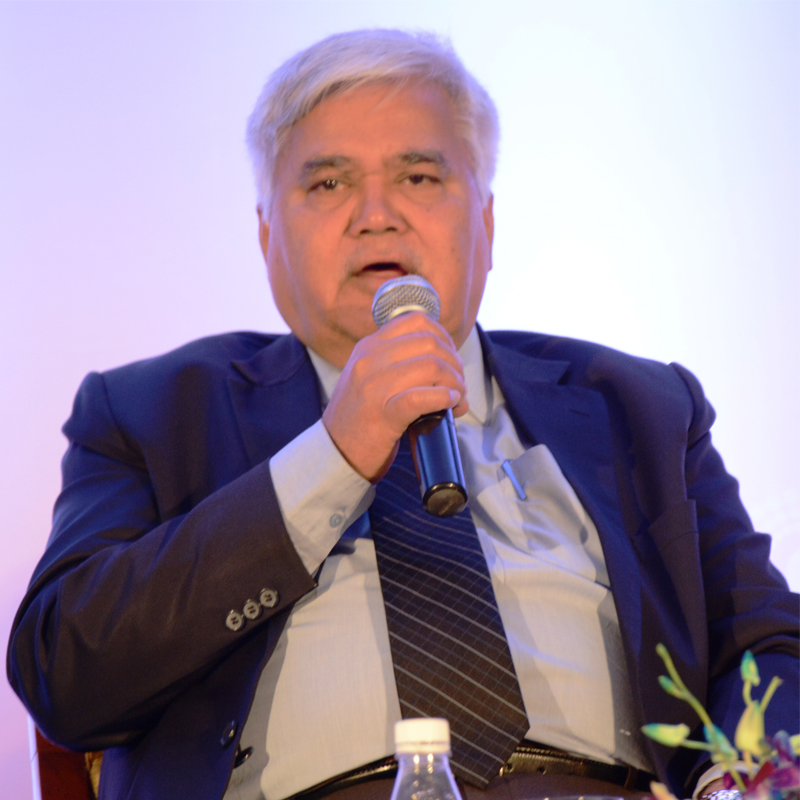
    MUMBAI: The Telecom Regulatory Authority of India (TRAI) is in the midst of consulting various international agencies and experts and hopes to finalise its recommendation on spectrum auction “soon”, chairman R S Sharma has said.

    Sharma said that a review meeting on the telecom auction was held in the TRAI last week. “There is a lot of work being done. We are consulting international agencies, consultants as well as experts and we will come out with our recommendations soon,” Sharma told PTI.

    But he declined to give a specific timeframe for the finalisation of recommendations on the issue. The government is planning to hold the largest-ever spectrum auction of 3,000 MHz radiowaves in the upcoming sale. It has sought recommendations from Trai on the applicable reserve price and related issues for auction of spectrum in the frequency bands 700 MHz, 800 MHz, 900 MHz, 1,800 MHz and 2,100 MHz, 2,300 MHz, 2,500 MHz, 3,300-3,400 MHz and 3,400-3,600 MHz.

    Trai is also expected to give its opinion on timing of the proposed spectrum auction.

    In the previous auction held in 2016, the government had put a total of 2,354.55 MHz of mobile airwaves for sale in the bands of 700 MHz, 800 MHz, 900 MHz, 1,800 MHz, 2,100 MHz and 2,300 MHz, cumulatively valued at Rs 5.63 trillion at base price.

    However, nearly 60 per cent of the radiowaves, including premium 4G bands, remained unsold in that auction. In the five-day auction in 2016, seven telecom companies made commitment of Rs 65,789 crore for buying 964.80 MHz of spectrum across multiple frequency bands.

    The apex industry association COAI is of the view that operators are not ready for the next round of spectrum auction at this point given the deep financial stress and ongoing consolidation in the sector.


  • TRAI wants spectrum cap revised to 35 per cent

    TRAI wants spectrum cap revised to 35 per cent

    NEW DELHI: The Telecom Regulatory Authority of India (TRAI) has suggested the revision of overall spectrum cap from the current limit of 25 per cent to touch 35 per cent.

    In its responses to the paper ‘Issues relating to spectrum cap’, TRAI said that there should be a cap of 50 per cent on the combined spectrum holding in the sub-1 GHz bands (700 MHz, 800 MHz and 900 MHz bands) instead of the intra-cap band which it suggests removing.

    The government recently constituted an inter-ministerial group (IMG) on ‘Stress in balance sheet in select sectors’. The IMG, among others, reviewed the spectrumcap applicable for telecom service providers (TSPs). IMG, in its report, stated that the issue of spectrum cap merits detailed examination and variety inputs from sectoral regulators. In light of IMG report, DoT, on 29 September 2017 requested TRAI to provide its views on spectrum cap.

    Presently, there is a cap of 25 per cent of the total spectrum assigned in 700/800/900/1800/2100/2300/2500 MHz bands and 50 per cent within a given band in each of the service area.

    The authority sought comments of the telecom service providers and took note of the following:

    • Overall spectrum cap of 25 per cent was imposed at a time when there were 6-10 TSPs in a local service area (LSA). After the ongoing consolidation in the sector, the number of TSPs in a LSA may be much less.

    • The spectrum being assigned through auction is a liberalised spectrum. At present, more than 80 per cent of the spectrum held by various service providers is liberalised spectrum wherein they can use any technology of their choice in any band or using multiple bands.

    • As LTE device ecosystem is evolving in each of the spectrum band, there is no real need to put spectrum cap in each spectrum band. In fact, asking a TSP to acquire spectrum in different band to deploy the same technology increase the cost of network with no real gains.

    • Sub-1 GHz bands are perceived as the most optimal bands to ensure availability of wireless broadband services over large areas with low population density. Therefore, spectrum in sub-1 GHz range – 700 MHz, 800 MHz and 900 MHz should be treated separately and special provisions have to be made to safeguard against creation of monopoly

  • Spectrum payment limit eased, NTP to facilitate data and security

    Spectrum payment limit eased, NTP to facilitate data and security

    MUMBAI: The Telecom Commission has approved the extension of time period for the payment of spectrum bought in auctions by telcos to 16 years from the existing 10 years. This may ease out stress from the industry laden with around Rs 4500 billion debt.

    The Telecom Commission also cleared path for formulating a draft of new National Telecom Policy (NTP) by according its approval. The NTP will focus on affordable and good quality of service, consumer protection, data and cyber security etc, a government source told PTI.

    The draft of the policy may be sent to the union cabinet by January, and its approval could come by March, the source added. NTP’s guiding principal will be a vision as per the ‘Digital India’ programme, and telecom will act as the enabler.

    The commission also approved recommendation of the inter-ministerial group (IMG) — responsible for finding a solution to the financial difficulties of the telecom sector — to lower interest rate charged over penalties imposed on service providers with slight modification, the source said.

    The IMG has given approval to grant Rs 12.3 billion to the Telangana government for rolling out the second phase of Bharat Net (along with its Mission Bhagiratha).

    The IMG also okayed TRAI’s recommendation to mandate that every building plan should have duct for telecom cable and the completion certificate be given only if it has been incorporated.

  • Don’t levy spectrum usage charges as percentage of AGR: TRAI

    NEW DELHI/MUMBAI: The minimum presumptive Adjusted Gross Revenue should not be made applicable to ISP licensees, and the spectrum usage charges should not be levied as percentage of AGR and existing formula-based mechanism of charging SUC should continue as also the existing system of payment of SUC charges on an annual basis by ISP licensees.

    Following a request from the DoT, the Telecom Regulatory Authority of India (TRAI) had issued a consultation paper on “Spectrum Usage Charges (SUC) and Presumptive-Adjusted Gross Revenue for Internet Service Providers and Commercial Very Small Aperture Terminal Service Providers” on 19 August 2016.

    Apart from written comments and counter comments, an Open House Discussion was held on 19 January 2017 with the stakeholders. TRAI’s recommendations were based on the analysis of the comments received from the stakeholders and its own analysis.

    The interest for delayed payment of SUC by ISP licensees, TRAI recommends, should be two per cent above the SBI PLR rate existing on the beginning of the relevant financial year, and there should be no requirement of FBG for ISP licensee in respect of formula-based SUC payable.

    The minimum presumptive AGR should not be made applicable to commercial VSAT license and the SUC should not be more than one per cent of AGR irrespective of the data rate.

    The Department of Telecom should put in place a comprehensive, integrated on-line system that acts as a single window clearance for the allocation/ clearances/issuance for approval/ clearance / issue of No Objection Certificates and other permissions to the licensees of spectrum,

    In its Recommendations on “Spectrum Usage Charges and Presumptive Adjusted Gross Revenue for Internet Service Providers and Commercial Very Small Aperture Terminal Service Providers”, TRAI has said DoT should make arrangement to accept online payment of financial levies / dues such as Licence Fee, Spectrum Usage Charges and other fees that are paid by the licensees for obtaining licence/ approval/ clearance / issue of No Objection Certificates from DoT.

    The regulator has said that the existing system of spectrum assignment on location/link-by-link basis on administrative basis to ISP licensees in the specified bands (viz 2.7 GHz, 3.3 GHz, 5.7 GHz and 10.5 GHz) should continue.

    DoT may take up with the Department of Space to evolve a system where the VSAT licensees are not made to run from pillar to post to get their services activated.

    The clock should start from the day the bandwidth is allotted by DoS and DoT should allot frequency within three months of allotment of spectrum by DoS. The two departments may also explore the possibility of implementing an on-line application for automating the whole process to bring in transparency.

    DoT had sought TRAI’s recommendations in terms of clause 11(1) of TRAI Act 1997 (as amended), on :

    (A) ISP  license

    (i)    Rates for  SUC;
    (ii)   Percentage of AGR including minimum AGR;
    (iii)  Allied issues like schedule of payment, charging of interest, penalty and Financial Bank Guarantee (FBG)

    (B) Commercial VSAT license

    (i)  Floor level (minimum) AGR, based       on the amount of spectrum held by commercial VSAT operators.