Tag: Spatial Access

  • Sugosh Iyer plugs into Mindshare to power Unilever’s digital future

    Sugosh Iyer plugs into Mindshare to power Unilever’s digital future

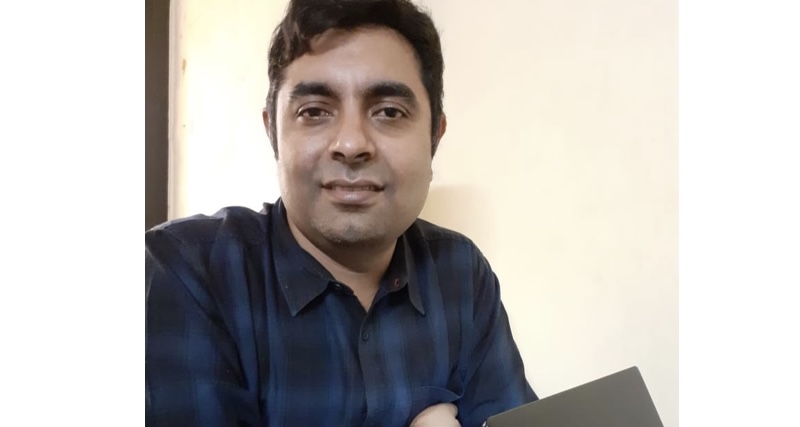
    MUMBAI:  Sugosh Iyer has hit the refresh button, stepping into the hotseat as head of digital trading at Mindshare earlier this year, leading the charge on all things digital for FMCG titan Unilever.

    In his new role, Iyer will pilot negotiations, data and tech partnerships, first-party data strategies, and turbocharge commerce conversations — stitching together the future of media buying across connected ecosystems.

    It’s been quite the pivot-packed journey. Iyer’s career, spanning over 17 years, has crisscrossed industries and continents: from banking at Kotak to media stints at NDTV Media, Starcom, Spatial Access, Flipkart, and senior leadership gigs across Madison, GroupM, and Kansai Nerolac Paints. Most recently, he helmed digital marketing for Grasim Industries (Pulp & Fibre), blending traditional business sense with e-commerce agility.

    Known for his customer acquisition chops, B2B savvy, and an eye for e-commerce acceleration, Iyer has consistently stayed ahead of the curve, whether in the bustling media hubs of Mumbai or navigating client leadership roles in Kuala Lumpur.

    With digital trading now the frontline of advertising wars, Mindshare seems to have found the perfect battering ram — a blend of finance brains, media muscle, and tech-first thinking — to storm the gates of tomorrow’s marketing battlefield.

  • Wavemaker’s  Anil Kumar joins Spatial Access

    Wavemaker’s Anil Kumar joins Spatial Access

    MUMBAI: Anil Kumar from Wavemaker has joined Spatial Access, India’s first and largest media audit and advisory company, as its head of strategy. Kumar comes with over two decades of experience having worked in multiple markets and agencies, recently with Wavemaker, Mumbai.

    “Anil’s one point agenda will be to bring more transparency and better ROI for our client’s media spends,” said Spatial Access CEO Vineet Sodhani. “His deep and wide experience in media agencies and media houses will help us drive our transparency agenda. He will also enhance client deliveries by giving strategic inputs on their media spends with the objective of improving their ROI.”

    Prior to joining Spatial Access, Kumar was working with Wavemaker where he worked on multiple clients like Tata Sky, Kotak, Zydus and DPA among others. And earlier to that, he was with MediaCom, Starcom, Mudra Max, BCCL and Lodestar.

    On his appointment, he said, “I am excited to join Spatial Access to be able to offer more transparency and better value for our clients’ investments.”

    Spatial Access is India’s largest marketing and media audit and advisory company that helps advertisers increase their ROI on marcom expenditure. It uses proprietary tools and processes to analyse a marketer’s spends in traditional as well as digital media, print production, BTL, Ad Films, agency partnerships etc. and give them specific recommendations on how to improve both efficiency and impact. Spatial Access works with clients whose spends range from a few million to few billion – Indian start-ups and conglomerates as well as global MNCs.

  • Times’ Vineet Sodhani joins Spatial Access as CEO

    Times’ Vineet Sodhani joins Spatial Access as CEO

    MUMBAI: Spatial Access, a media audit company, has a new leader at the helm; Vineet Sodhani has taken over as the CEO.

    Spatial Access co-founder and chairperson Meenakshi Menon is excited about the transformation that is under way. She says: “As media moves into a new era of complexity, Spatial Access, under the new leadership, will simplify it for its clients with custom solutions, many of which will be first time in the industry. With Vineet (Sodhani)’s strong background in research and strategy, we will provide valuable insights, a lot of it in the public domain, so that the industry gets more value.”

    Sodhani has two decades’ experience in media strategy, sales and marketing in India and the US. In the past, he has worked for Times Television Network, Starcom Mediavest Group, Hansa Research Group, AC Nielsen and ORG-MARG. In 2012, he co-authored Guide to Indian Markets and is presently working on his second book.

    Sodhani says: “Spatial Access has that rare combination of a great customer and knowledge base. This strength will be used to drive value for every rupee spent on advertising, be it ATL, BTL or digital. We will raise some critical questions, for example, transparency, ROI and wastage.”

  • Nikhil Rangnekar is Lodestar UM’s new media consultant

    Nikhil Rangnekar is Lodestar UM’s new media consultant

    MUMBAI: IPG Mediabrands’s Lodestar UM has appointed Nikhil Rangnekar as its media consultant. Based out of Lodestar UM Mumbai, Rangnekar will be reporting to the CEO Nandini Dias.

    Rangnekar has moved from Spatial Access where he was the CEO of the Media Audit and Advisory business.

    “Nikhil is an industry veteran and we are delighted to have him on board. He has a varied background having worked in various capacities driving strategy, business and audits. He brings in a lot of experience and strategic thinking which we intend to leverage,” said Dias.

    Armed with over 19 years of experience in the advertising and the media industry, Rangnekar started his career with Starcom in 1997 where in 14 years he climbed the ranks from a management trainee to executive director. In 2011, he quit Starcom to join Spatial Access. He is also the chairman of the marketing committee of IRS at MRUC.

    Talking about his new role, Rangnekar said, “I am extremely happy to join Lodestar UM in the role of a strategy consultant. For me, it’s a prestigious assignment working with one of the largest groups in the world and in India.”

    He further added, “I will be working with the individual brand teams in helping them take our strategy product to the next level. I will also be working closely with the Labcentre team on the various proprietary researches and tools that IPG Mediabrands has and aim to evolve them in line with the changes happening in the media environment in India. If my last role was more about driving efficiency, the new role is more about driving effectiveness. Lastly, I am proud to have got this opportunity to work with industry stalwarts like Shashi and Nandini.”

  • Nikhil Rangnekar is Lodestar UM’s new media consultant

    Nikhil Rangnekar is Lodestar UM’s new media consultant

    MUMBAI: IPG Mediabrands’s Lodestar UM has appointed Nikhil Rangnekar as its media consultant. Based out of Lodestar UM Mumbai, Rangnekar will be reporting to the CEO Nandini Dias.

    Rangnekar has moved from Spatial Access where he was the CEO of the Media Audit and Advisory business.

    “Nikhil is an industry veteran and we are delighted to have him on board. He has a varied background having worked in various capacities driving strategy, business and audits. He brings in a lot of experience and strategic thinking which we intend to leverage,” said Dias.

    Armed with over 19 years of experience in the advertising and the media industry, Rangnekar started his career with Starcom in 1997 where in 14 years he climbed the ranks from a management trainee to executive director. In 2011, he quit Starcom to join Spatial Access. He is also the chairman of the marketing committee of IRS at MRUC.

    Talking about his new role, Rangnekar said, “I am extremely happy to join Lodestar UM in the role of a strategy consultant. For me, it’s a prestigious assignment working with one of the largest groups in the world and in India.”

    He further added, “I will be working with the individual brand teams in helping them take our strategy product to the next level. I will also be working closely with the Labcentre team on the various proprietary researches and tools that IPG Mediabrands has and aim to evolve them in line with the changes happening in the media environment in India. If my last role was more about driving efficiency, the new role is more about driving effectiveness. Lastly, I am proud to have got this opportunity to work with industry stalwarts like Shashi and Nandini.”

  • Both TV & digital mediums are here to stay: PromaxBDA

    Both TV & digital mediums are here to stay: PromaxBDA

    MUMBAI: With the advent of social media and new usage platforms, the way people consume media has changed and how.


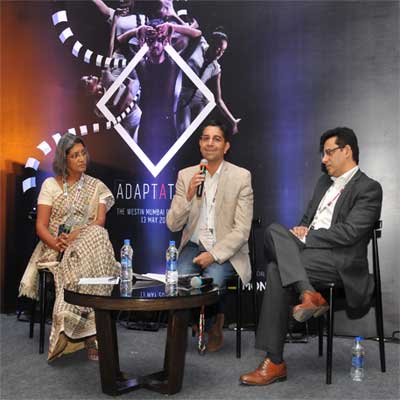
    At the PromaxBDA conference, an interesting session with Google partnership director South Asia Ajay Vidyasagar and Discovery Networks VP marketing Rajiv Bakshi threw light on how media is consumed and is leading the way for television of tomorrow.


    Spatial Access founder Meenakshi Menon moderated the session.


    Vidyasagar said, “The space has moved from creating content to creating a fan base. The consumer uses content to express himself.” Citing an example of when he joined Google in 2010, he said, “In 2010, the Indian audience gave a total of 500 million views, while today it gives about 350 billion views for the content that is available on YouTube.”


    YouTube is a platform for creators to engage and communicate with audiences, which television lacks. Sharing his views on how television will continue to exist, Bakshi said, “We’re no longer a traditional medium. We’re a contemporary medium. In spite of having entered the phase of digitisation, we are growing. So even if digital exists, television will continue to be there for the audiences. It caters to different sets of audiences. Moreover, people like to consume content on all platforms.”


    “We started Discovery in India with two channels. Today we have 11 channels, including one GEC – ‘Investigation Discovery,’ which we launched recently. So there is an audience for all types of content. India is evolving and TV is robust and growing,” Bakshi added.


    Raising a question, Menon asked how TV reconciles with the fact that content cost on TV is very high, whereas on YouTube it is bare minimum and in spite of this, YouTube gets a million views and a billion fans to their content.


    Answering Menon’s question, Bakshi said, “From a short term business point of view, the YouTube model is fine. But from a long-term business point of view, one needs to have a 24-hour content model. Eventually, in India people want maximum entertainment and minimum effort and TV is giving exactly that.”


    Speaking about the evolution of media, Vidyasagar said, “When print came, the word of mouth publicity did not lose its business. Similarly, when radio and television came, print did not die. None of them have impacted the value of existing media. The need for one to consume news is increasing and hence every medium is here to stay. The only important point to keep in mind is that content is an asset and in today’s world it needs to be made relevant to different devices.”


    While we know that a lot of producers are creating content for digital and showing it on digital, Vidyasagar stated an example where Jimmy Fallon actually engages with audiences on digital to bring relevant content back on TV. In the end, it’s a loop of usage. Digital is not taking away from anybody, and neither is television. Both the mediums engage consumers.


    Vidyasagar added, “For instance, in India the highest searched channels on YouTube are that of television networks because their content is available on YouTube. Eventually, the consumer gets the core benefits of the content available on digital and on television.”

  • Mumbai Marathon: Media professionals run for a cause

    Mumbai Marathon: Media professionals run for a cause

    MUMBAI: On the day that Mumbai runs, it’s another city altogether. No honking, no mad rush to reach somewhere, but an army of runners, who want to test their limits, painting a healthier sight of the maximum city.

    Keeping aside the usual business suits, a whole bunch of executives right from broadcast companies, media agencies to marketers and advertisers will once again don their running shoes as they join others for the 2015 edition of the Mumbai Marathon.

    The largest marathon in south east Asia, which will take place on 18 January, will see media veteran Bharat Kapadia running half marathon; his 12th marathon, overall. “Last year, I ranked 47th in my category. I started running at the age of 54. I have been training with a group called ‘Be Fit’ and we have been practicing on alternate days from 6 am to 8 am at Juhu Beach,” he says proudly.

    Kapadia believes that for people, who are hesitant to run, it’s all a mind game. “Anybody can run. 75 per cent of it is a mind game. No one is a born athlete. Also, the benefits of running versus that of visiting a gym can’t be compared,” he adds.

    Agrees his follow runner, HDFC Life marketing, product, digital and e-commerce senior executive vice president Sanjay Tripathy. “It is a great way to test your limits and prepare your mind for bigger challenges in the life. One can also see it as an opportunity to meet like-minded people,” he says, while adding that he will be running his seventh marathon for which he has been preparing for three months now.

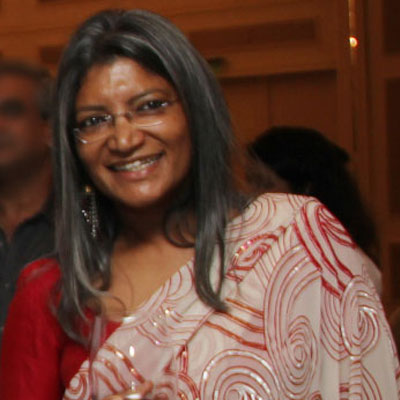
    For Spatial Access founder Meenakshi Menon running the dream marathon is like child’s play. A regular runner, Menon will be running for her NGO Vanashakti along the likes of film director Namita Roy Ghose. “Lately, running has become sexy so a lot more people are up for the challenge. I believe everyone should run for a cause because the country lacks social compassion and to be great country it is a must,” she opines.

    India chairman and managing director Sunil Lulla will be running the half marathon with two partners of which one is physically handicapped. “I will be running for Children’s Movement for Civic Awareness,” says Lulla who is running his sixth marathon.

    Media agency Vizeum India managing director Yesu Yesudas is running the marathon. And he has taken to social media to raise funds for two of his causes: an old age home and orphanage Swagat Ashram in Mumbai, and a tribal school Vidya Vanam in Tamil Nadu.  “I have a desire to raise Rs 500,000 for these two causes. I am making a personal contribution of Rs 100,000,” he announced on Facebook.  And he went on to urge his friends to contribute Rs 2,000 each to help him reach his goal.

    GroupM ESP entertainment, sports and live events national director Vinit Karnik says that the property has been evolving over a period of time and it is highly commendable. “The organisers i.e. Procam have done a fantastic job and it is one of the most well respected and well organised sports property in India. Right from the registration of the participants to the doubts of the participants on the actual day about their well being is taken care of completely by the organizers,” he highlights.

    This year five new brands, namely Cigna TTK, Jabong.com, Volini, TUI, and India Cares Foundation have associated with the event as health insurance, online retail, recovery, travel and philanthropy partners, respectively.


  • Clients should want to hear the truth: Meenakshi Menon

    Clients should want to hear the truth: Meenakshi Menon

    “Turbulent but exciting” is how Spatial Access’ founder and chairperson Meenakshi Menon describes the media audit company’s 10 year journey.

    It’s a happy occasion – completion of a decade in business by Spatial Access.

    Turbulent but exciting is how Meenakshi Menon describes the past 10 years
    Menon recalls how a leading media company had sent notice to the company in its very first year and recently too, it got another “love letter” from a media agency. “This just goes on to show that some things never change,” she quips.

    She goes on to observe that though the world around has changed, some media agencies are still stuck in a time warp. “Fortunately, many have broken out of the old mould. We started out in the face of resistance from many agencies but today, it is down. The highpoint for us is the way advertisers’ have stuck to their guns and brought us on board believing in the need for greater accountability and transparency.”

    With over 30 years’ experience which started with Lintas, Menon started India’s first audit and advisory in marketing services in 2003, and ever since, there has been no looking back.

    “Finance and procurement people love what we do. We have also earned the grudging respect of most media agencies – particularly those who believe in transparency. There are still a few who have problems with being audited by Spatial Access but this is more because of the extra income they make and not anything else,” she exults. 

    A media veteran himself, IPG’s Shashi Sinha lauds Menon’s courage to take the path less trodden. “It is credible of her and her team to hang in there. It was the first home-grown auditing agency and that speaks volumes for it,” he says. 

    It is credible of Meenakshi to start something like this and hang in there for so long, says Shashi Sinha

    Over the years, Spatial Access has widened its reach to include all aspects of marketing investment, right from media to production and BTL to digital. The company launched its digital audit service two years ago.

    “Advertisers are increasing their spends on digital but this is one area where most of the investment goes into improving agency profitability rather than delivering impact. The kind of margins made on digital are humongous. As a result, out of every rupee that the client spends on digital on an average, only 50 paise goes out to digital media. We need to separate the media costs from the costs of strategy and ideation. If we don’t, then our concern is that this too will go the way traditional media has – unless media cost transparency is mandated by publishers and media owners,” she says.

    Menon agrees digital is the way forward but is quick to give mass media its due. “Mass media will continue to be the engine of growth but digital media will become more effective, more so for certain categories. Our business will reflect ground realities and continue to be path breaking and innovative with great dependence on technology,” she says.

    Today, the company boasts of 150 clients across six countries, a staff of 40 full-timers with one of the lowest attrition rates in the industry, and a network that spans the entire Asia Pacific region.

    About her clients, Menon says: “I don’t want to disclose client names in the public domain but would like to take this opportunity to thank Kansai Nerolac managing director HM Bharuka, who was the first client to sign us on in November 2003. Nerolac is still one of our clients and we owe a permanent debt to Mr Bharuka for supporting an idea and a concept even before it became a service.”

    Apparently, the feeling is mutual. “Spatial Access’ expertise in the areas of planning and buying has helped us make informative and risk-free decisions that have optimised our budgets and brand campaigns. The team’s responsive nature has helped us stay cued into an ever-changing media environment, on issues affecting ad spends, media buying decisions and performance,” says Kansai Nerolac marketing and sales (decorative) vice president Sukhpreet Singh.

    Are there any regrets? Menon doesn’t have any and feels each drawback has been an opportunity in disguise. She says everyone who is part of the company knows they have a mission and not just another job.


    Sam Blasara wishes Spatial Access 10 more years of success


    What’s the future roadmap? The company is in the process of reinventing the entire service, to add the next level of complexity and sophistication. “We are working with technology partners to develop products and services that can be made available to 500 clients!” replies Menon adding: “Every marketer who wants to ‘understand and manage’ marketing investments is a potential client. We need to be able to offer something to every client, provided they want to hear the truth. Many clients would rather believe in fairy tales and this is something that needs to change. This is our mission for the next 10 years.”

    Like Madison chairman and managing director Sam Balsara who wishes Menon and her team a glorious coming ten years, we too hope the next ten will be better and bigger for Spatial Access.

  • Spatial Access Solutions founder Meenakshi Madhvani

    Spatial Access Solutions founder Meenakshi Madhvani

    She’s one woman who’s been there, done that! However, hers has been a long journey spanning 25 years wherein she has faced a lot of brickbats for anything that she touched in the industry. Be it shifting gears from the account planning and managing division of Lintas to its media division; joining Zee Telefilms; setting up India’s first media independent – Carat – or for that matter even launching India’s first media audit firm – Spatial Access Solutions… it’s been a tough fight all the way.

    And Meenakshi Madhvani has come out of it all and successfully so. She literally felt her skin getting tougher and tougher with each passing day.

    Her tryst with the advertising and media industry began with a small agency called Ad Plan, where she spent one and a half years. This initial learning in a small agency was instrumental in shaping her as a person. “The small agency introduction to advertising was fantastic because in a small agency you do everything from accounts, copy, visualization, invoices, client interactions etc. It was terrific because at the superficial level, I understood all aspects of the business and that helped me in understanding what I really liked doing and what I didn’t,” says Meenakshi.

    LONG YEARS AT LINTAS

    Then came a rock solid 12 years at Lintas, where Meenakshi joined in the account planning and management division under the able guidance of Alyque Padamsee. Meenakshi joined the agency in 1980 and was with them all the way till 1992. However, she quit the agency for a year to try her hand at ad films with a company called Art Commerical; only to come back.

    It was in this one year that she was involved in the production of yesteryears’ cult comedy serial – Yeh Jo Hai Jindagi, which was being produced by Art Commercial. Her interest in film and television production is what made her break away from Lintas. “I was interested in looking at the production side of things and wanted to see if I like film or television production so I joined Art Commercial for one year. I learnt film and art commercial production and then decided to come back to Lintas,” says she.

    Alyque Padamsee described this as the rubber band effect, wherein people would leave only to come back. “Lintas had told me that I could come back to them anytime and so I went back,” Meenakshi explains.

    At Lintas she worked on a variety of clients including Johnson & Johnson and a variety of brands from the Hindustan Lever Limited (HLL) portfolio. “I had some phenomenal bosses and I think it was in those years that I discovered that a good boss can make or break your career. If you have a good boss who tests, challenges and pushes you; you actually find the strengths and reserves in yourself that you did not know existed. I had two really fantastic bosses – Atul Shrikhande (who is now in the Gulf) and Atul Sharma (who is now the China marketing head for Yum Restaurants),” says she.

    What’s more, apart from the length and breadth of exposure in the advertising industry in those early days, Meenakshi also made some great friends for life. “Deepak Roy, Khursheeda Modi and Amit Bose are all friendships that have built up because of the intensity of that experience. Those were the test years of advertising as we were developing new techniques and experimenting. Also television had just come into the market. The media scene and consumers were changing rapidly. From a protected economy, we were moving to a market economy. The 80s were very exciting times and for me the primary motivation through my working career has been enjoying what I am doing as long as I can feel that I can add value to the business and myself. So for 12 years I did not think of a change as I just enjoyed work thoroughly,” explains Meenakshi.

    At Lintas, she was the head of HLL soaps and detergents for five years and the head of HLL personal products for four years. But then fatigue set in as she had been doing the same thing for more than a decade. That’s when Meenakshi decided to try her hand at media. “After 12 years I was bored of servicing and that’s when I decided to move into Lintas’ media department. The whole media buying experience was really fantastic; because that’s when I realized that the 90s were actually going to be the era of media, and media was going to start becoming the differentiator,” she says.

    Her move into media planning and buying got her a lot of criticisms because in those early days, media was looked at as a backend function. But Meenakshi’s vision of media was totally different. “I saw media as an opportunity to make deals, strike relationships and build on data that was available,” she says

    Her aim was to change the mindset of the agency so that media buying started being looked upon as a function and not just operations. Her claim to fame here was bagging the Coca Cola and ITC accounts. “We pitched for the Coca Cola business because Coke was coming back to India in 92-93. McCann was handling the planning as the business came in with their international alignments. But in India, McCann’s buying was very weak so we pitched and won the business. Then we pitched for ITC, which was looking at aggregating business with one agency. We won that account too,” she recalls.

    However, all was not well in paradise. Differences with the top management of Lintas cast doubts in Meenakshi’s mind and she finally quit in 1994. “I had a boss who I didn’t really like working with. To be honest, I did not want to leave Lintas but my boss was making it less and less fun and I always wanted to enjoy my work. I had the option to stay back and get into strife with my boss or to take it as an opportunity to leave and do something else,” she says.

    At this point in time, she had decided that if she had dedicated the first 10 years of her career to servicing, the next 10 would be in media. “It was a conscious decision because I felt that’s where the future would be in terms of the complexity of the environment. The function needs to actually have people who had analytical skills and yet were able to look at media from the ‘outside in’ rather than ‘inside out.’ So in 1994 I joined Zee Telefilms as vice president of sales and marketing,” she says.

    ZEE HEY DAYS

    Zee TV had just launched and Subhash Chandra asked Meenakshi to come on board. “I decided to take the plunge and it was a great learning experience,” recollects Meenakshi. Zee was a joyride for her and Chandra joined the likes of Shunu Sen and Alyque Padamsee to become one of her mentors.

    What’s more, the rate card system that she introduced back in 1994 is still being followed by the industry today. She joined Zee in September 1994 and in October she decided to bring about a rate hike and sent a circular to agencies and advertisers. “There is much consternation around the rate hike but the beauty of that structure is that it allows you to take a rate hike 365 days a year because all you do is re-classify programmes depending on the kind of ratings. So the rates don’t change but your programme list within that, changes. That rate card structuring has become a standard in the industry. While the absolute costs may not go up but because programmes keep moving up as deliveries improve, your ability to charge more for the programmes is enhanced,” she explains.

    Dwelling on the feeling of having introduced a structure that is still being followed by the industry, Meenakshi says, “It is a great feeling. Sometimes these concepts are lucky accidents and sometimes they are actual brain waves. How the mind works you really never know but at the end of the day if you are able to create an approach or concept that outlasts you, then I think that it’s a true source of satisfaction. So whether it was the rate card structuring at Zee or the whole sales network that was set up; it was truly a good feeling.”

    At Zee, Meenakshi was also instrumental in tapping revenue sources from outside the country. She set up sales offices in Dubai, Singapore, Australia, Tokyo, Bangladesh and Pakistan. “We had revenue coming in from all across the region and the good thing was that we were getting rid of our inventory, creating a lot of interesting marketing opportunities around the channel whether it was sponsored film, corporate films or infomercials,” says Meenakshi.

    Working with Chandra was a great experience for Meenakshi. While her earlier boss – Alyque was an emotional and involved person; Chandra, on the other hand was cold, unemotional and impersonal. “But he is a very driven person because his only measure of people is their output and delivery. The great thing about him is that if you earn his respect, he completely backs off and gives you a free hand in whatever you do,” she says.

    Interestingly, when she joined Zee, she had told Chandra that she would not be able to work well under close supervision. “If you want me to do my best then you need to give me space. If I make a mistake pull me up; if I make serious mistakes then sack me but give me space till then,” is what she told him.

    Confidently she told him that he just needed to tell her what he wanted delivered for the network and she would do it her way. “Don’t tell me how to do it, when to do it, where to get it from. Just give me a number and it will be yours,” were her words.

    Reminisces Meenakshi, “Obviously for the first three months he must have been be very concerned but don’t forget that at that time the stakes were not that high. It’s always easier to trust somebody when the stakes are not that high. When the stakes get really high, the tension and involvement gets more and more.”

    What she learnt from Chandra was how to manage a business and how to look at its legal and financial aspects. “I also learnt to use the power of information and how some bit of information needs to be distributed, while some other needs to be protected,” she says.

    It was fortunate for her that when she joined Zee there was nothing and she was a part of the core team that had to build the company. “Another thing was that we did not know the rules. We were inventing them as we went along. My perspective when it came to creating rules is to always think of the long term. Sometimes short term approaches tend to be detrimental to the long term business interests and I was able to convince Subhashji about the need to look at the long term interests,” she says.

    One challenge she faced at Zee was that now she was on the other side of the fence – from being a buyer of media to being a seller. The first challenge for her was to understand the whole new business of television. “I had to understand the business of the television market at the macro level. At the micro level, one very big issue was the mindset change that one had to go through from being a buyer of advertising to being a seller of advertising services,” says Meenakshi.

    Also the fact was that now she was dealing with the same people who, only six months ago, were her competitors. “In the Indian context the buyer is always in a stronger position than the seller so I had to start going to agencies, meet people, seek appointments, talk to them about the channel, educate them on what the channel could do for them and why they needed to invest in us, etc. I may have been a buyer six months ago but now I was a seller and therefore I needed to start thinking like a seller and look for opportunities,” she says.

    One thing that could have been in her favour was that she knew the people on the other side and hence it might not have been that difficult to get them on board. But Meenakshi disagrees, saying, “A lot of people I was going to see as a representative of Zee were actually my competitors earlier. For them, it was a nice and happy situation to be in because somebody who was a competitor and was fighting for the same business; now was asking you for an appointment in order to make a sales pitch to you. It’s a perfect opportunity to humiliate somebody if you want to and I had more than my fair share of people who wanted to put me in my place.”

    At that time, Zee had a separate subsidiary company that looked after sales and marketing with Meenakshi at the helm. Credit goes to her for increasing the company’s revenues from Rs 500 – 600 million to Rs 3.5 billion. “One year down the line, things became easier for me because by then I had been able to convince people that Zee had to be an integral part of their media plan. But for that first year it was very difficult,” she recalls.

    After three years with the company, trouble was brewing yet again in Meenakshi’s professional life. Chandra had roped in Vijay Jindal as the CEO and managing director of Zee Telefilms and Meenakshi couldn’t see eye to eye with him.

    When Jindal was roped in, Meenakshi was managing director of Zee’s marketing company. “Jindal’s focus was completely driven by finance. His primary objective was to enhance shareholders’ value. But while looking at enhancing shareholders’ value, he was not as committed to enhancing customer value. Apart from this, I also went and told Subhashji that I wouldn’t be able to work with Jindal because there was a big difference between his and my philosophy and approach to the broadcasting business,” Meenakshi says.

    CARAT CHALLENGE

    Around the same time that this was happening, she got an offer to set up and head Carat, which was looking at entering the Indian market. Chandra tried to convince her not to leave. In fact, Chandra, who had just bought over the East India Trading Company, also offered Meenakshi the chance to take on that project and see what she could do with it. But Meenakshi was adamant. The challenge she saw in Carat was that she wanted to experience what it was to be a “small fish in a big pond”.

    “The thing with Zee was that I was heading a large business but working in a fairly limited market. Yes, I had sales offices across the globe but I wasn’t pitting myself against the best in the business. It’s great being a big fish in a small pond but I wanted to know what it would be like being a small fish in a big pond,” she says.

    Setting up Carat in 1997 was no cakewalk. Once again the advertising industry was all out against her because industry veterans thought that the Indian market was not yet ready for a media independent. Meenakshi remembers Madison Communications chairman and managing director Sam Balsara and present Starcom Mediavest Group Asia CEO D Sriram (who at that time was with Madison) going on record to say that they would give Carat six months.

    “Every conceivable criticism that can be thought of against a media independent was said. Obviously I was very concerned because if the stalwarts of the industry were saying that it won’t work then was I making a mistake? But ultimately you have to give it your best shot and that’s what I decided to do,” says Meenakshi.

    What came in handy while setting up Carat was Meenakshi’s experience at Zee. “I was able to use the financial and legal exposure that I got at Zee to set up Carat. What I had going for me was the fact that I was setting it up for an entity that was known globally and there was some amount of equity about the parent company. There was the financial strength and support of the parent company and they were willing to invest in the market,” she says.

    While her goodwill in the industry and team she built at Carat were things that worked in favour of the agency, there were a lot of things going against it.

    “One of the problems in setting up Carat was the stern resistance from the advertising agencies. The Advertising Agencies Association of India (AAAI) got together and tried to get the Indian Society of Advertisers (ISA) to actually stay away from media independents,” recalls Meenakshi.

    Another thing that can be counted as a personal achievement for her but worked against her was that at 38, she was the youngest country head of Carat globally anywhere across the network. Hence, within the group too, there was scepticism if she would be able to deliver.

    And if that was not all, another problem was that Carat did not have accreditation and hence the agency could not get commissions or credit. “I had to find a creative way to work around that issue and I did manage to get accreditation. The amazing thing is that even today, Carat is the only media independent that has got accreditation,” says Meenakshi with pride.

    Barring these initial hitches, Carat’s first big break came in December 1997 when the agency signed on Bacardi as its first major client. After that Cadbury and many other clients followed.

    “One of my biggest achievements at Carat was that I was able to conclusively prove to the industry that there was an opportunity for media independents. Two years after I launched Carat, every agency in the country launched their media divisions starting off with Sam. Then came Mindshare, Starcom and Lodestar,” says she.

    So what brought about the change in people’s mindset? Meenakshi explains, “It’s very simple. If it’s working, let’s jump in. If it’s not, then we can stay on the sidelines and pontificate. Nobody wanted to make the first move. Let’s wait and watch was their mantra. They wanted someone else to be the guinea pig and if it worked then they would marshal their resources and line up. I am sorry for being so brutal but that’s the reality and the kind of impediments that the creative advertising agencies put in were phenomenal.”

    Another boost that Carat got was with Bharti signing on as a client. “Bharti asked us to set up offices across the length and breadth of the country. Bharti marketing head Hemant Sachdev gave me the business on one condition that I set up offices in seven cities within 90 days. At the end of 80 days, I went back to him and said it was done. So suddenly from being a two office (Mumbai and Delhi) network, we became a very large network across the country,” she says.

    After that Meenakshi launched Carat Pakistan and also took over supervising the Thailand and Malaysia offices of the agency.

    FINAL CALLING – SPATIAL ACCESS

    Her stint with Carat lasted six years. In 2003, after some introspection, Meenakshi realized that till now she had built business for others, whether it was setting up the marketing and sales division at Zee or setting up Carat from scratch. Now it was time for her to do something of her own.

    Again it was disagreements with her boss that made Meenakshi quit. “I had reached a state in my life where I had decided that I am not going to compromise on issues that are very important to me. I have been fortunate that I can take a stance. I had disagreements with my boss again… the wonderful history with Peter Paska… and decided to take a stance and quit,” she says.

    In retrospect, she thinks it might have been an emotional decision and maybe she should have stayed back, fought and resolved her disagreements with him. But at the same time, she doesn’t have any regrets because she feels it was the right thing to do.

    With that, India’s first media audit firm – Spatial Access Solutions – emerged. Yet again the industry turned foe. “I had seen what was going on in the media planning and buying industry and incidentally this is something that the industry holds against me. A lot of people felt that I used to be an insider and was exposed to everything that was going on. ‘How could I turn around and become an auditor?’ was what was thrown at me,” says Meenakshi.

    “The industry felt that it was much better to have a financial auditor because they don’t know their ass from their elbow. You can hide a lot of things under the carpet when there is incompetence because of lack of knowledge, not because of lack of ability,” she adds.

    For Meenakshi, it was a logical progression to set up Spatial Access Solutions. “All industries go through phases and I knew that the industry in India was following a path. I, too, was a part of that change… whether it was from servicing into media to broadcasting to media independents. Media audits was the next logical progression for me,” she says.

    Meenakshi feels that the media scenario has now changed as more and more clients are now consolidating their media with one agency rather than dividing it between different agencies. In the earlier scenario, a series of natural checks and balances came into place because there was more than one agency involved.

    As a media auditor, there are 3 things I tell agencies:

    Do the right thing for your client – Ensure that you are actually providing him with an outstanding media service and buying.

    Charge the right fees – Don’t be pushovers where it comes to your fees. Every single agency says that others are willing to undercut commissions but the fact of the matter is if you believe in what you are doing and you know what you are doing is good why should you compromise on your fees?

    Don’t make money at the cost of the client – The fact is that today very often recommendations are made on media plans, not on the strength on whether or not the media is good for the client but on the strength of how much extra commissions the agency is getting from the media.

    “Now with all the media being aggregated and consolidated with one media agency those natural checks and balances no longer exist. The size of the business has increased and also the number of people required to service a business. Therefore the trauma of a review or moving to another agency was becoming more and more large and clients were getting stuck in that rut. The beautiful thing with a media auditor is that it acts like a marriage counsellor, who explains what the problem is with the marriage and tells the client to get their agency to give them better service, work and cement the marriage and not to walk away from it,” she explains.

    When queried as to how it felt to work with the same people who at one point in time criticised her for setting up Spatial Access? She says, “These are all creatures of convenience not conviction. Two and half years ago when I set up Spatial Access, there were allegations made about my integrity and credibility. The fact is that those same people today are happy to queue up when I am helping a client put his business up for a pitch. Today they are willing to treat me with respect, maybe behind my back they still say nasty things about me but I don’t care.”

    Many people in the industry feel that she is biased towards some agencies but Meenakshi is undeterred. She clarifies, “People in the industry think I have an agenda. I am saying this categorically and for the record that I do not have an agenda. I do not have any friends or enemies among the media agencies. I am completely transparent and fair regardless of who the agency is.”

    So after two-and-a-half years, are there still some who are not open to media audits? “Well, most of them have seen the benefits of it. Sam Balsara has gone on record to say that he’s not willing to be audited and of course prior to that he went on record to say that he was supportive of audits and the industry needed audits. Group M has been silent as far as the record is concerned, but has actively gone around telling their clients that they cannot share rates and can’t have an auditor. They are very supportive of financial auditors like Ernst & Young because they do a process and a financial audit. Out of these two, one has taken a stance and I respect him for that. He at least had the courage to speak out. But the other has not taken a stance in public but is doing everything to make sure that they roadblock their clients from going ahead with audits,” quips Meenakshi.

    Three issues on my agenda right now:

    Grow the business in terms of the size of clients and the reach of services. One of the new services we have just added on is media performance monitor. So every month we can monitor our clients’ media performance and give him a comparative analysis, which goes to him in the form of a report.

    The second thing is expansion. We are happy with what we have been able to do in the Indian market. Now we are looking at expansion outside the country. We’re in the process of signing on clients in Greece and Singapore.

    The third thing is that I have bought a small plot of land in Kamshet, which is 11 kilometers away from Khandala and Lonavala. My objective is to build my house there, plant some trees and have my own little farm.

    However, the rest of the industry has been pragmatic about media audits and have realized that they are much better having an auditor who does not have an agenda, understands this space and can add value to it.

    Today, Spatial Access has 44 clients across six cities. The firm also has three tie-ups with European companies. If these firms have clients who need an audit in India, Spatial Access provides them with the expertise.

    “We have expanded our service basket because we started out only with media expenditure, thanks to the myopic perspective of the media agencies. But because clients were migrating a lot of their marketing budgets into non media areas, we decided to look at the entire marketing investments. Now we have media as well as non media marketing investments. We look at production audits, print production, whether it’s creative fees, printing, processing etc. We also look at film production and the amount that an advertiser should be paying for a film because film production costs are going through the roof and advertisers need to understand the nuances of that costing exercise. We do PR audits, direct mailer audits, ground event evaluation as well as a reality check on the marketing expenditure,” she elaborates.

    At the end of the day, Meenakshi has no regrets. “I have made some fantastic friends and I have made some enemies also, but those are enemies worthy of respect,” she says.