Tag: Spain

  • Pay-TV revenue surpasses FTA TV turnover in Spain

    Pay-TV revenue surpasses FTA TV turnover in Spain

    MUMBAI: Spanish pay-TV revenues outrun free-to-air (FTA) TV services in terms of revenues in 2012. Pay-TV turnover amounted to €1.7 billion in 2012, surpassing for the first time in its history, FTA TV revenues which amounted to €1.6 billion, advanced television reports, citing data released by Spanish telecoms regulator CMT. Pay-TV revenues grew by 2.5 per cent year-on-year, while FTA TV services dropped 17.9 per cent in 2012.

    Satellite pay-TV revenues climbed 8.4 per cent year-on-year to €1.06 billion in 2012. Mobile TV and IPTV revenues increased by 14.6 per cent and 11.6 per cent respectively; whereas cable and pay-DTT sales fell 11.6 and 19.3 per cent respectively.

    Spain‘s pay-TV user base dropped by 351,636 subscribers or 7.5 per cent in the period. Spain ended 2012 with 4.3 million pay-TV users, with satellite technology accounting for 41.3 per cent, followed by cable with 32.7 per cent, IPTV with 18.8 per cent and pay DTT with seven percent. The IPTV user base saw the most dramatic decline, shedding 126,566 subscribers in the period, followed by cable with 97,665 and pay-DTT with 93,157.

  • India, Spain ink pact for movie co-production

    India, Spain ink pact for movie co-production

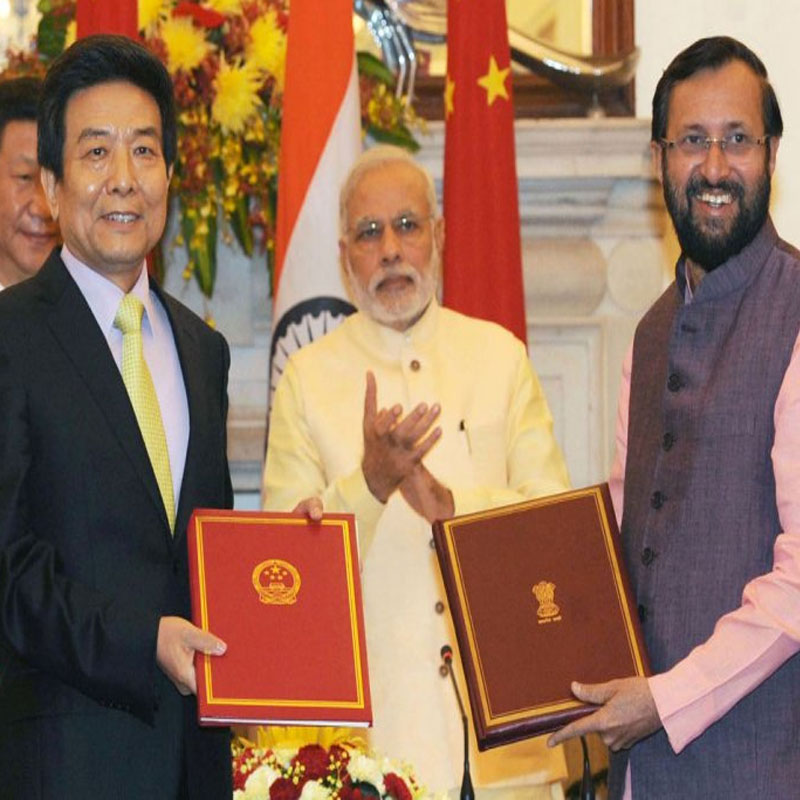
    NEW DELHI: India and Spain have signed an agreement which among other things provides opportunities for both the countries to pool their creative, artistic, technical, financial and marketing resources to co-produce films.

    The Audio visual Co-production Agreement has been signed to improve cooperation between the two countries in this sector. The agreement was signed between Information and Broadcasting Minister Ambika Soni and Jose Garcia Margallo Y. Marfil, Minister for Foreign Affairs and Cooperation, Kingdom of Spain.

    The agreement establishes a legal framework for relations regarding cooperation between the two countries in the audio visual field thereby facilitating the development of the audio visual industry. The framework for co production includes feature films, documentary and animation films.

    The co-production would provide an opportunity to create and showcase ‘soft power’ of our country. It would also lead to generation of employment among artistic, technical as well as non-technical personnel engaged in the arena of film production including post-production and its marketing, thus adding to the country’s GDP. The utilisation of Indian locales for shooting raises the visibility/ prospects of India as a preferred film shooting destination across the globe. It will also lead to inflow of foreign exchange into the country and transparent funding of film production.

    Currently, as part of the initiative, the Government has signed co-production agreements with Italy (2005), the United Kingdom (2005), Germany (2007), Brazil (2007), France (2010), and New Zealand (2011).

  • Black and White film Blancanieves is Spain’s entry at the Oscars

    Black and White film Blancanieves is Spain’s entry at the Oscars

    Mumbai: Blancanieves, a silent film shot in black and white, will be Spain‘s entry at the 85th edition of the Oscars and at Mexico‘s Ariel awards in the non-English best film category.
    Starring Maribel Verdu, Macarena Garcia and Daniel Gimenez Cacho, the film begins showing in Spanish theaters Friday after being screened at the San Sebastian Film Festival where it enjoyed great critical success.
    Blancanieves, directed by Pablo Berger, beat out El artista y la modelo, by Fernando Trueba and Grupo 7, by Alberto Rodriguez, in the voting conducted online by the Spanish academy members.
    Earlier, four films from Spain namely Mar adentro, Volver a empezar, Belle Epoque and Todo sobre mi madre, have won the Oscar in the best non-English-language film category.

  • Next Jaipur fest to focus on Spanish cinema

    Next Jaipur fest to focus on Spanish cinema

    MUMBAI: The 4th Jaipur International Film Festival, scheduled to roll from 27 January next year, will focus on Spanish cinema and showcase the works of Spain-born filmmaker Luis Bunuel.


    On the occasion, four of Bunuel‘s films like The Brute (1953), Susana (1951), Ilusion Travels by Streetcar (1954) and Woman without Love (1952) will be screened.


    All the films have been provided for screening purposes to Jaipur International Film Festival by Imagine India International Film Festival from Spain.


    Alferdo De Braganza, a filmmaker from Spain will be present at all the screenings and will interact with the audience.


    Bunuel is considered the father of cinematic surrealism and one of the most original directors in the history of the film medium.


    Curtains to the festival will be wrung down on 31 January.

  • Zucker to retire as Sony Pictures Releasing International prez

    Zucker to retire as Sony Pictures Releasing International prez

    MUMBAI: Sony Pictures Releasing International president Mark Zucker is retiring and the company has promoted Steven O‘Dell to fill that role.

    The announcement was made by Sony Pictures Entertainment president, Worldwide Distribution Rory Bruer.

    Zucker was with Sony Pictures since last 27 years. He has worked closely with Bruer and Sony Pictures Worldwide Marketing and Distribution chairman Jeff Blake, to build an international distribution team.

    O‘Dell, who joined Sony Pictures in 2005 as a VP, was promoted to senior vice president in 2009. In his most recent role, he oversaw Latin America, the Caribbean, Spain, Portugal, and Scandinavia.

    Bruer said, “Mark is one of the most highly regarded, well-respected, and well-liked executives in our company and industry. We are sorry to see him go, but we are happy for him – he‘s worked hard for this moment. We all dream of retiring when we‘re on top, but Mark has been on top for many years – we are thrilled to see him enjoy this next chapter. We also are thrilled to have Steven as our new International President. Steven is innovative, collaborative, and a strong leader. His promotion is well-earned and he is ready to step into this important role.”

    Among the many hits in his career, Zucker orchestrated the international releases of the Spider-Man franchise, The Da Vinci Code and Angels & Demons, as well as the two most recent James Bond films, which were the highest-grossing films in franchise history.

    In recent years, Zucker has also overseen the distribution of international hits like The Smurfs, 2012, Hancock, and upcoming releases like The Adventures of TinTin.

    Under Zucker‘s leadership, Sony Pictures has surpassed $1 billion at the international box office in 11 of the past 12 years, including 2011. Since Zucker took over the reins of international distribution in 2001, SPRI has delivered 36 $100 million-plus releases and over $14 billion in box office.

  • ABC News Now expands to Europe

    MUMBAI: As part of its international expansion plans, ABC News has launched its international service ABC News Now in three European territories on the internet service Zattoo.

    The service will be initially available in Germany, Spain and Belgium but would soon expand its reach into additional markets including UK in the next six months.

    Showing keen interest in the international markets, ABC had earlier announced plans to launch in India, which is still awaiting regulatory approval.

    “We plan on significantly increasing our international presence. It is critically important for our news coverage and our survival to expand overseas and into broadband band other digital platforms,” said ABC News senior VP digital Paul Slavin.

    In October ABC opened seven new international bureaus in places that include Seoul, Rio de Janeiro, Dubai, New Delhi and Mumbai in India, Jakarta, Indonesia, and Nairobi, Kenya. All the international bureaus have a single correspondent known as digital reporter, who primarily creates content for the digital platforms.

    Slavin further added, “There were not a lot of outlets for international stories when we were just serving our television newscasts and there were other ways to cover international stories. It is hard to justify a bureau in a country when maybe four stories a year get on the air. Now, with the internet and with the cost of distributing content getting so much cheaper, we see international as significant opportunity and we are making a significant investment to become an international organization.”

    He said that they are looking for all types of distribution for the ABC News Now channel and content.

    “Broadband is probably the easiest, but we will utilise every platform from cable, satellite, IPTV, broadband and mobile,” he said.

    He stated that ABC is looking for content partnerships to help expand their international presence and customise their international services.

  • Reliability issues turn off mobile TV users in Europe

    Reliability issues turn off mobile TV users in Europe

    MUMBAI: A survey of 22,000 European mobile users commissioned by Tellabs has revealed that a high percentage of early adopters of mobile TV and video services are snubbing a second helping. The research, conducted by M:Metrics in the United Kingdom, Germany, Italy, France and Spain, brought up an interesting issue: on average, former users of mobile TV and video outnumber current users by more than 19%. Users cited price, quality and reliability issues as the main reasons why they do not come back for more.

    “At 3GSM we will be treated to a feast of new mobile TV launches with millions of dollars being spent on developing, marketing and distributing mobile TV services. But if services fall short of user expectations on quality and reliability, it could be money wasted,” said Pat Dolan, Tellabs vice president for Europe, Middle East and Africa. “So while we share our industry’s enthusiasm for mobile TV, the detailed results of this survey provide important food for thought for the global operator community, who want to address network backhaul issues to improve mobile TV and video services.”

    Forty-five percent of European mobile video and TV users cited pricing issues as a factor causing them to switch off the services. And nearly a quarter (24%) of users who tried mobile video and TV stopped using the services due to concerns about service quality and reliability.

    The split between perception and reality was most pronounced in the United Kingdom. Only 6% of those who had never used mobile video and TV cited quality and reliability as reasons not to try such services, but 29% of users had stopped using services because of quality and reliability.

    “Pricing has already been highlighted as a stumbling block for recurrent use of mobile video and TV services, but we were surprised by just how much value users place on quality and reliability,” said Paul Goode, senior analyst, M:Metrics. “Once the basic requirements of quality and reliability are good enough, the focus will rightly shift to issues of programming, brands and marketing in addition to price. This research highlights the need to address quality and reliability so the industry can retain viewers, which is a key part of growing audience numbers.”

  • Global television revenues reached £164bn in 2005: Ofcom

    Global television revenues reached £164bn in 2005: Ofcom

    MUMBAI: UK media regulatory body Ofcom has published its International Communications Market Report.

    The report analyses trends in the global television, radio, telecommunications and wireless communications industries. It also compares UK data, consumer attitudes and industry performance against that of China, France, Italy, Germany, Japan, Ireland, the Netherlands, Poland, Spain, Sweden and the US

    Global television revenues reached £164 billion in 2005 (equating to £25 per person), having grown at 7.2 per cent per annum in nominal terms for four years, making it the fastest-growing sector within the communications industry.

    In 2005, the US had by far the largest television industry in revenue terms, attracting £75 billion. Japan, came second in the same year with £19.5 billion followed by the UK with £10 billion. However the UK is second to the US on a per capita basis, at £164 against £253 for the US.

    The UK leads the world for penetration of digital television at over 70 per cent of households, against 54 per cent in the US. Chinese viewers benefit from the largest number of analogue terrestrial free-to-view channels (16), while the UK has the fewest with five.

    The UK is one of the most successful countries for exporting programmes and formats – in 2004 64 formats and nearly 3800 hours of programmes were sold internationally. Public service broadcasters are coming under increasing funding pressure around the world; however support for PSBs is still high, especially in the UK.

    Young people are having an increasingly disruptive effect on TV viewing across the globe. In the countries surveyed, around one third of those with broadband access claimed they were watching less TV. Declining TV reach among younger people is an international phenomenon.

    All countries in the survey have made commitments to digital switchover. Sweden and Germany have already begun a geographically phased process which they aim to complete by 2007 and 2009 respectively. The remaining countries have set completion dates between 2009 and 2012.

    Operators diversifying channel business models : Channels launched by channel operators have in some cases relied on a new business model – in other words, free-to-air operators have diversified into pay television and in some cases pay television channel operators have done the opposite (e.g. Discovery launching a FTA channel, DMax, in Germany).

    More channels relying on the same business model:Terrestrial broadcasters have also taken advantage of additional broadcasting capacity to launch channels that rely on their traditional source of revenue, such as free-to-air broadcasters expanding their advertiser-funded channel portfolios (e.g. France Télévision
    launching France 4 and Gulli on the French DTT platform).

    New revenue streams enabled by new technologies : There is a third category of response based around the development of new services enabled by technological innovation.Pay-per-view (PPV) was a widely-deployed service in the earlier days of digital television platforms, but more recently content on demand, delivered though broadband, offers channels and rights holders access to yet another new revenue stream.

    Discovery recently launched a broadband site in Germany that offers consumers subscription-based access to full-length programmes from its archive; and Channel 4 and Five in the UK both have broadband-based download services offering access to US and UK shows. DTT launched in many markets and well established in some

    Roll-outs were advanced worldwide – helped by supplier and consumer incentives. The timing and pace of DTT launches have varied by country – launches began in the late 1990s with Sweden and the UK, but some countries have only recently begun to roll out a DTT network (e.g. France).

    Global radio revenues (including public funding) totalled £25 billion in 2005 (or around £4 per person), of which £18 billion came from advertising. Growth has been generally lower than for telecoms or television – at around 3.8 per cen tper year in nominal terms since 2001.

    The US is by far the largest market for radio, with annual revenues of £11 billion in 2005; Japan is second with revenues of £1.9 million. Together the US and Japan account for over 50 per cent of the radio revenues of the twelve countries studied in this report. The UK is the fourth largest market with revenues of £1.2 billion in 2005.

    The proportion of total ad spent on radio varies substantially by country. In the US, 11.5 per cent of all display advertising expenditure goes on radio; in the UK it is less than four per cent. Radio listening is more popular in the UK than in any other country in this study – with weekly listening per capita averaging nearly 23 hours. The share of listening to PSB stations is also higher in the UK than anywhere else – at around 55% of total listening.

    Digital radio is increasing in popularity. The UK leads in the roll-out of DAB, with 85 per cent coverage and over 200 stations available. The internet Ofcom notes is having a positive impact on radio listening with around one third of adult broadband users among the countries we surveyed listening to online radio every week. Less than one in five adults claims to be listening to less radio offline as a result of being connected to broadband.

  • Turner inks deal with Nokia for Cartoon Network mobile content

    Turner inks deal with Nokia for Cartoon Network mobile content

    MUMBAI: Turner Broadcasting and Nokia have announced that high-quality content from Turner’s Cartoon Network will be made available for consumer downloads through the Nokia Content Discoverer client, embedded in Nokia devices available in markets globally. The territories covered under this agreement include United Kingdom, France, Italy, Germany, Spain, Belgium, The Netherlands, Finland, Sweden and Norway.

    Under this multi-country deal between the companies, mobile subscribers will be able to browse, download and purchase over-the-air Cartoon Network games, video clips, and other content from a dedicated Cartoon Network mobile content “storefront” available to consumers through the device-resident Nokia Content Discoverer client, part of Nokia’s complete mobile content ecosystem, informs an official release.

    A selection of Cartoon Network favourites – ranging from Johnny Bravo to Dexter’s Laboratory will be offered on the service. The new agreement provides a method for people to quickly access and enjoy Cartoon Network entertainment on buses, at school or in the office, according to Turner Broadcasting vice president Commercial Distribution and Digital Media Sales Phil Lawrie. 

    “Turner is delighted to offer a Cartoon Network catalog as part of the exciting Nokia Content Discoverer initiative,” said Lawrie. “Accessing and buying mobile content can often be challenging for the end-user. Having an embedded showcase for our Cartoon Network content as part of Nokia Content Discoverer will eliminate these barriers and provide a shop window for games, video clips, wallpapers and much more in the future. In a nutshell, it’s content purchase made easy – with a positive commercial outcome for all stakeholders: Turner, Nokia and the network operator. And our consumers will now be just a few key-strokes away from Cartoon Network favorites like The Powerpuff Girls and Dexter’s Laboratory.” 

    “Offering popular entertainment from Cartoon Network will greatly enhance the value of the Nokia Content Discoverer program to network operators and to the end consumers,” commented Forum Nokia (Nokia’s global developer program) director business development and channels Brad Brockhaug.

    “We’re excited by the addition of this outstanding new content catalog and look forward to working closely with Turner Broadcasting to address the enormous opportunities for content consumption in the global mobile marketplace.” 

    Nokia Content Discoverer facilitates easy access to downloadable content by mobile subscribers through a collection of shopping mall “stores” run by branded content providers, leading content aggregators and mobile service providers. Operators are able to build their own branded mobile shopping mall, with better positioning of content and the presence of the operator’s brand on the device, generating higher adoption. Consumers’ experience of content shopping is greatly enhanced through Nokia Content Discoverer’s advanced on-device caching of content catalog metadata which allows free browsing of the content stores in the mobile mall, as well as automatic content updates, integrated preview/prelisten and proficient content installation capabilities, adds the release.

    Nokia Content Discoverer is currently embedded in select S60 and Series 40 devices, including the Nseries multimedia devices (Nokia N70, N71, N72, N73, N80 and N93), Eseries devices for enterprise users (Nokia E50, E60, E61 and E70), Nokia 5500, and Nokia 3250 handsets currently available in mainland China and on Nokia 6131 devices in China and other Asia-Pacific markets. Nokia Content Discoverer is expected to be in the hands of over 20 million consumers worldwide by the end of 2006.

  • 422 million broadband homes by 2010: eMarketer

    422 million broadband homes by 2010: eMarketer

    MUMBAI: It all depends on where you look at it. In countries such as France, Spain and Italy, IPTV has the potential to be a genuine revenue-generating service as it fills a gap in the Pay-TV market.

    For countries like the US and the UK, however, the revenue potential for stand-alone IPTV services will be much more limited.

    Market research firm eMarketer estimates that the total number of broadband households worldwide will grow to approximately 422 million by 2010. Of that number, 139 million will have sufficient bandwidth to be able to receive IPTV. This number does not include cable Internet subscribers.

    So if one subtracts cable Internet subscribers and other broadband subscribers receiving less than 2Mbps of bandwidth, by 2010 approximately one-third of all broadband subscribers worldwide will theoretically be able to receive IPTV.