Tag: SpaceX

  • Launch of SES-12 to assist Digital India vision

    Launch of SES-12 to assist Digital India vision

    MUMBAI: The successful launch of SES-12, which provides coverage over Asia will assist the acceleration of the country’s push towards a digital India and financial inclusion initiatives, according to a leading satellite industry expert as per a report by the Press Trust of India from London.

    SES Video EVP global sales Deepak Mathur said, “The successful launch of SES-12 recently would help support India’s growing direct-to-home (DTH) TV market, as more and more consumers in rural India embrace the medium.”

    The government’s vision to digitally empower India and transform connectivity in the country will see a push through the launch of the satellite, Mathur informed.

    The senior executive at SES, one of the world’s leading satellite operators, also pointed out that the satellite’s concentrated beams could also provide highly cost-effective capacity to enable in-flight connectivity services in line with the recent directive to allow mobile and internet services in Indian airspace by Telecom Regulatory Authority of India.

    SES-12, which is uniquely designed with state-of-the-art wide beams and high throughput beams, was successfully launched onboard a flight-proven SpaceX Falcon 9 rocket from Cape Canaveral in Florida, US, on 4 June 2018. Together with SES-8, it is expected to reach 18 million homes.

    This satellite will provide coverage from the Middle East to Australia. The combination of two satellites will offer powerful Ku-band wide beams for broadcast and media applications, and high throughput spot beams for providing internet connectivity, reliable cellular services and content targeted at specific language groups.

    The ever-increasing demand of audience will be addressed by the pay-TV operators as the satellite will provide reliability and scalability to elevate the viewing experience by adding more content and delivering good picture quality for high definition (HD) and ultra HD content.

    Mathur explained, “With its dual capabilities of both wide beams and high throughput spot beams, SES-12 will serve to enhance connectivity for people and businesses in remote and unconnected parts across Asia, where providing rural connectivity and eliminating the digital divide is a key priority for many governments. SES-12 also brings augmented capacity to enable satellite broadcasting and DTH services across Asia-Pacific.”

    Specifically over India, SES has five satellites – NSS-12, SES-8, NSS-6, SES-7 and SES-9 – currently operational. SES-12 will be replacing NSS-6 as the largest satellite to offer services and capacity over India.

    The company’s primary customer in the Indian market is Antrix, the commercial arm of the Indian Space Research Organisation (ISRO), with whom it has worked to help augment the enormous demand for satellite connectivity over India.

    Mathur also mentioned that ISRO has a pivotal role to play in the development of new space technologies and in making space more accessible, and affordable. SES is also exploring potential areas of collaboration with Indian partners to see how they both can work together to advance the development of space technologies.


  • Paytm ranked among Top 50 global companies

    Paytm ranked among Top 50 global companies

    MUMBAI: India’s largest mobile payments platform Paytm’s instrumental role towards pioneering the cashless economy has been honored in American business magazine Fast Company’s annual ranking of the world’s ‘50 Most Innovative Companies’ for 2018. The company is among the only two Indian companies that has joined the list of other leading global companies such as Netflix, Tencent and SpaceX.  

    Most Innovative Companies is one of Fast Company’s most significant and highly anticipated editorial efforts of the year. To produce the 2018 list, more than three dozen Fast Company editors, reporters, and contributors surveyed thousands of enterprises across the globe to identify the most notable innovations of the year and trace the impact of those initiatives on business and industry. 

    Paytm has played a key role in making payments easy for Indians. It has pioneered QR based mobile payments in the country and supports all payment methods including Credit/Debit Cards, Net Banking, Paytm BHIM UPI and the Paytm Wallet. It offers customers the widest range of offline and in-store payment use-cases among others. Today the company’s widely accepted QR is enabling merchant partners across India to accept unlimited payments directly into their bank accounts at 0% fee. It is also fast emerging as the largest platform for UPI payments in India.

  • Govt satellite launches, including from India, to dominate future space market: Euroconsult

    Govt satellite launches, including from India, to dominate future space market: Euroconsult

    NEW DELHI: A major portion of satellites slated to be launched from 2016-2015 with launch mass over 50kg will be dominated by government satellites from countries like the US, Russia, India, China and Japan, according to Euroconsult.

    The 1,450 satellites over 50kg to be launched over 2016-2025 should represent a market of $250 billion for the space industry to build and launch.

    If satellites smaller than 50kg and the two mega constellations of OneWeb and SpaceX are also included in the number of launches, the total for the decade would grow precipitously to 9,000 units (vs. 1,480 launched in the past ten years), states extracts from the Euroconsult’s 19th edition of the report, `*Satellites to be Built & Launched over the next 10 Years’*, due to be published later in September.

    A price decrease is visible in this core market of the industry, driven by 11 commercial constellations using 370 small satellites to be deployed into low or medium Earth orbits for communication or Earth observation, the report says.

    “Huge growth in satellite count does not automatically translate to a large market,” Rachel Villain, Principal Advisor at Euroconsult and editor of the report, was quoted in a statement put on Euroconsult’s website.

    According to Villain, “As the price of the 7,550 future additional satellites is intrinsically low, the very reason for their existence, their market significance is small; they should represent no more than 8 per cent of the $270 billion to be spent building and launching the total of 9,000 satellites.”

    Euroconsult is a leading global consulting firm specializing in space markets. As a privately-owned, fully independent firm, it provides strategic consulting, develops comprehensive research and organizes executive-level annual summits and training programs for the satellite industry.

    Interestingly, over three quarters of the market remains with government satellites. The 880 satellites to be launched for civilian and military agencies in 60 countries represent a market of $193 billion.

    Governments dominate the space industry as established space countries replace and expand their in-orbit satellite systems and more countries acquire their first operational satellite systems, usually for communications or for Earth observation and imagery intelligence, Euroconsult statement says.

    “About 85 per cent of the government market will remain concentrated in the ten countries with an established space industry (U.S., Russia, China, Japan, India and five European countries). Other 50 countries engaged in space activities will launch twice the number of satellites that they did in the past ten years, that is almost 200 satellites. About half of these satellites will be procured from foreign manufacturers as domestic industry capabilities develop in these countries,” the Euroconsult statement asserts.

    In India, satellite launches are done by the state-controlled Indian Space & Research Organisation (ISRO) with some smaller satellites being built by rare private companies, but with dollops of help from ISRO, which has also launched foreign satellites in recent times, including American.

    In the commercial space sector, Euroconsult anticipates a total of 560 satellites to be launched over the decade by 40 companies. Most of these satellites will be for the replacement of the communications capacity currently in orbit. Over two-thirds of the commercial space market remains concentrated in geostationary orbit, the destination of almost 300 satellites operated by 30 companies for communications and broadcasting services.

    The 11 commercial constellations to be launched into non-geostationary orbits for communications services and Earth observation imagery should represent a market of $1.6 billion per year on average over the decade.

  • Govt satellite launches, including from India, to dominate future space market: Euroconsult

    Govt satellite launches, including from India, to dominate future space market: Euroconsult

    NEW DELHI: A major portion of satellites slated to be launched from 2016-2015 with launch mass over 50kg will be dominated by government satellites from countries like the US, Russia, India, China and Japan, according to Euroconsult.

    The 1,450 satellites over 50kg to be launched over 2016-2025 should represent a market of $250 billion for the space industry to build and launch.

    If satellites smaller than 50kg and the two mega constellations of OneWeb and SpaceX are also included in the number of launches, the total for the decade would grow precipitously to 9,000 units (vs. 1,480 launched in the past ten years), states extracts from the Euroconsult’s 19th edition of the report, `*Satellites to be Built & Launched over the next 10 Years’*, due to be published later in September.

    A price decrease is visible in this core market of the industry, driven by 11 commercial constellations using 370 small satellites to be deployed into low or medium Earth orbits for communication or Earth observation, the report says.

    “Huge growth in satellite count does not automatically translate to a large market,” Rachel Villain, Principal Advisor at Euroconsult and editor of the report, was quoted in a statement put on Euroconsult’s website.

    According to Villain, “As the price of the 7,550 future additional satellites is intrinsically low, the very reason for their existence, their market significance is small; they should represent no more than 8 per cent of the $270 billion to be spent building and launching the total of 9,000 satellites.”

    Euroconsult is a leading global consulting firm specializing in space markets. As a privately-owned, fully independent firm, it provides strategic consulting, develops comprehensive research and organizes executive-level annual summits and training programs for the satellite industry.

    Interestingly, over three quarters of the market remains with government satellites. The 880 satellites to be launched for civilian and military agencies in 60 countries represent a market of $193 billion.

    Governments dominate the space industry as established space countries replace and expand their in-orbit satellite systems and more countries acquire their first operational satellite systems, usually for communications or for Earth observation and imagery intelligence, Euroconsult statement says.

    “About 85 per cent of the government market will remain concentrated in the ten countries with an established space industry (U.S., Russia, China, Japan, India and five European countries). Other 50 countries engaged in space activities will launch twice the number of satellites that they did in the past ten years, that is almost 200 satellites. About half of these satellites will be procured from foreign manufacturers as domestic industry capabilities develop in these countries,” the Euroconsult statement asserts.

    In India, satellite launches are done by the state-controlled Indian Space & Research Organisation (ISRO) with some smaller satellites being built by rare private companies, but with dollops of help from ISRO, which has also launched foreign satellites in recent times, including American.

    In the commercial space sector, Euroconsult anticipates a total of 560 satellites to be launched over the decade by 40 companies. Most of these satellites will be for the replacement of the communications capacity currently in orbit. Over two-thirds of the commercial space market remains concentrated in geostationary orbit, the destination of almost 300 satellites operated by 30 companies for communications and broadcasting services.

    The 11 commercial constellations to be launched into non-geostationary orbits for communications services and Earth observation imagery should represent a market of $1.6 billion per year on average over the decade.

  • AsiaSat 8 to launch on 5 August for APAC region

    AsiaSat 8 to launch on 5 August for APAC region

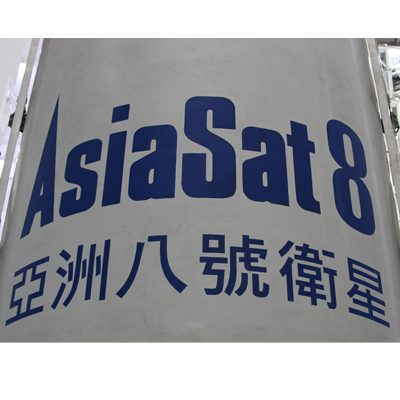
    MUMBAI: A new satellite is all set to be launched on 5 August that will cater to the Asia Pacific countries of India, China, Middle East and south east Asia. Asia Satellite Telecommunications Company (ASTC) will launch AsiaSat 8 from Cape Canaveral in the US.


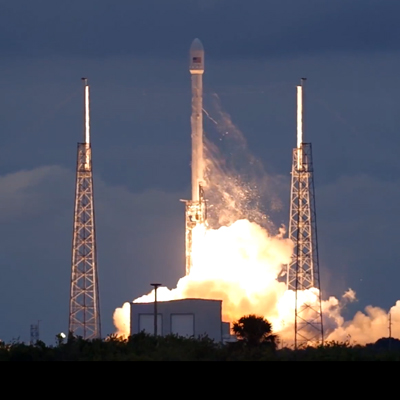
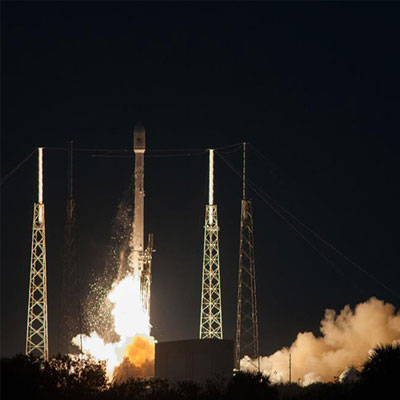
    The satellite will be propelled into the sky at Hong Kong time 1:35 pm or 1:25 am Cape Canaveral time, by SpaceX’s Falcon 9 launch vehicle from its station in Florida. AsiaSat 8 is a space systems/loral 1300 series satellite with a life span of 15 years.


    Its 24 Ku-band transponders and a Ka-band payload will help to meet the growing market demand for quality satellite services in the APAC region. Co-located with it will be AsiaSat 7 at orbital location 105.5 degrees east. AsiaSat 7 covers the areas of Asia, Middle East, Central Asia and Australasia. The satellite’s inter-beam switching capability will provide flexibility for market requirements and for services including DTH television, private networks and broadband services.


    With a payload power of about 8,500 watts, this will be the most powerful offering from ASTC with a transponder bandwidth of 54 MHz. It has four beams with each addressing the regions of India, China, Middle East and Southeast Asia.


    Soon after, another satellite will be launched from the Hong Kong based provider- AsiaSat 6 that will also be launched by the Falcon.


    SpaceX’s Falcon 9 v1.1 will launch AsiaSat 8 into a geostationary transfer orbit. According to SpaceNews, AsiaSat has paid $52.2 million each for the Falcon 9 launch of AsiaSat8 and AsiaSat 6.

  • SpaceX successfully launches Thaicom 6 satellite to GTO

    SpaceX successfully launches Thaicom 6 satellite to GTO

    FLORIDA: Today, Space Exploration Technologies (SpaceX) successfully launched the THAICOM 6 satellite for leading Asian satellite operator THAICOM.  Falcon 9 delivered THAICOM 6 to its targeted 295 x 90,000 km geosynchronous transfer orbit at 22.5 degrees inclination.  The Falcon 9 launch vehicle performed as expected, meeting 100% of mission objectives.


    Falcon 9 lifted off from Space Launch Complex 40 (SLC-40) at 5:06 PM Eastern Time.  Approximately 184 seconds into flight, Falcon 9’s second stage’s single Merlin vacuum engine ignited to begin a five minute, 35 second burn that delivered the THAICOM 6 satellite into its parking orbit. Eighteen minutes after injection into the parking orbit, the second stage engine relit for just over one minute to carry the THAICOM 6 satellite to its final geostationary transfer orbit.  The restart of the Falcon 9 second stage is a requirement for all geostationary transfer missions.


    “Today’s successful launch of the THAICOM 6 satellite marks the eighth successful flight in a row for Falcon 9,” said Gwynne Shotwell, President of SpaceX. “SpaceX greatly appreciates THAICOM’s support throughout this campaign and we look forward to a busy launch schedule in 2014.”   


    The THAICOM 6 mission marks Falcon 9’s second flight to a geosynchronous transfer orbit and begins a regular cadence of launches planned for SpaceX in 2014. SpaceX has nearly 50 launches on manifest, of which over 60% are for commercial customers. 


    This launch also marks the third of three qualification flights needed to certify the Falcon 9 to fly missions under the Evolved Expendable Launch Vehicle (EELV) program. Once Falcon 9 is certified, SpaceX will be eligible to compete to launch national security satellites for the U.S. Air Force.


  • SES-8 launched successfully; DTH players to benefit

    SES-8 launched successfully; DTH players to benefit

    MUMBAI: When it lifted off with almost perfection from the Cape Canaveral station in Florida in the US, communications satellite SES-8 was a personal victory for the creator of the Tesla vehicle Elon Musk. It was Musk’s company SpaceX’s first successful commercial launch using a Falcon 9 launch vehicle and it helped him break into the duopolistic satellite launch market which is dominated by European firm Arianespace and Russia’s International Launch Services  (which mainly uses Proton rockets). SpaceX has priced its launches in the $55-60 million range.

    While it was a personal landmark for Musk, it was also a victory for the Luxembourg-based SES Satellite management that gleefully watched the $100 million plus 3.1 tonne satellite being hurtled 50,000 miles above the earth into geostationary orbit. Built on a GEO-Star bus by Orbital Sciences, SES-8 is to be co-located with the NSS-6 satellite at 95 degrees east.

    The satellite has 33 Ku-band transponders and is targeting both south Asian and south East Asian clients. “The new satellites will enable improved coverage in fast-growing economies in south Asia and Indo-China,” says a press release from the company.

    In south Asia, it is aimed at providing much needed transmission capacity to India’s DTH and VSat service providers and government. Sources indicated that considering its location at 95 degrees east, one of the potential customers could be India’s first DTH services provider, the Essel group’s Dish TV that is currently beaming off NSS-6 and is also owned by SES. But all the deals will be done through Indian Space Research Organisation’s (ISRO) Antrix arm.

    SES also plans to launch SES-9 in 2015 at 108.2 degree East with extensive Ku-band capacity to give company to the existing SES-7 satellite in order to provide better DTH broadcasting services in South Asia along with north East Asia and Indonesia.

    Although, it was set for launch in early 2013, technical issues pushed the SES-8 to the end of the year.

  • Asiasat to launch 2 satellites, expand fleet to 6 in 2014

    Asiasat to launch 2 satellites, expand fleet to 6 in 2014

    MUMBAI: Space launch company Space Exploration Technologies (SpaceX) and AsiaSat has inked an agreement to launch in 2014 two communications satellites using SpaceX’s Falcon 9 rocket.


    The regional satellite operator in Asia will, thus, expand its fleet from four to six satellites in 2014.

    Asiasat president, CEO William Wade said, “We are pleased to have SpaceX as our launch partner for the two upcoming missions. We look forward to the timely and successful launches of AsiaSat 6 and AsiaSat 8, thereby expanding our fleet from four to six satellites in 2014 to provide more high quality and comprehensive satellite services in the Asia-Pacific region”.


    AsiaSat 6 and AsiaSat 8 are scheduled to launch in the first half of 2014 from SpaceX’s launch complex at Cape Canaveral Air Force Station in Florida, USA.

    Asiasat 6 will have 28 high-powered C-band transponders while Asiasat 8 will have 24 Ku-band transponders and a Ka-band beam. The high-powered transponders on the satellite will enable the use of small antennas on the ground. The two SS/L 1300 satellites will serve Asia, the Middle East and Australasia.

    SpaceX CEO, CTO Elon Musk said, “SpaceX is proud to be the choice of AsiaSat, a pioneer in advancing satellite communications in Asia. We are producing the most advanced launch vehicles in the world, and the international launch market has responded–commercial launches now represent over 60 per cent of our upcoming missions.”