Tag: Space TV

  • Space TV’s Nalavadi to join Disney as director business development

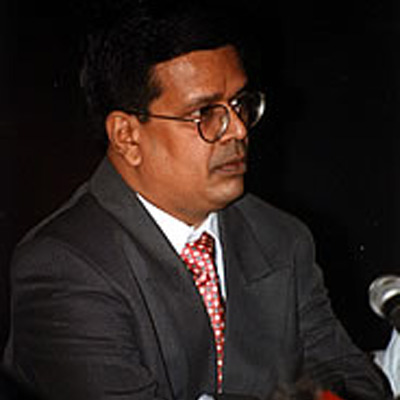
    MUMBAI: Tata-Star joint venture Space TV senior vice-president content Shantanu Nalavadi has decided to call it a day. Nalavadi is slated to join Disney as director business development for all the potential lines of businesses across studios, animation, entertainment, parks and merchandise.

    Nalavadi, who is yet to put in his resignation letter at Space TV, would be reporting to Walt Disney India MD Rajat Jain. The portfolio that Nalavadi would be handling has been newly created. When contacted by Indiantelevision.com, Jain refused to comment on the appointment.
    Prior to hopping over to Space TV, a 80:20 joint venture, Nalavadi was handling business development in terms of all the mergers and acquisitions for Star India and was with the company for five years.

  • Space TV’s Nalavadi to join Disney as director business development

    MUMBAI: Tata-Star joint venture Space TV senior vice-president content Shantanu Nalavadi has decided to call it a day. Nalavadi is slated to join Disney as director business development for all the potential lines of businesses across studios, animation, entertainment, parks and merchandise.

    Nalavadi, who is yet to put in his resignation letter at Space TV, would be reporting to Walt Disney India MD Rajat Jain. The portfolio that Nalavadi would be handling has been newly created. When contacted by Indiantelevision.com, Jain refused to comment on the appointment.
    Prior to hopping over to Space TV, a 80:20 joint venture, Nalavadi was handling business development in terms of all the mergers and acquisitions for Star India and was with the company for five years.

  • Oscar launches two DTH-enabled TVs

    Oscar launches two DTH-enabled TVs

    MUMBAI: Even as the government gives a green signal to the Tata-Star DTH venture — Space TV and Sun Network’s DTH platform, consumer electronics company Oscar has launched two DTH-enabled televisions.

    On the other hand, leading colour TV (CTV) manufacturers like Samsung and LG are rethinking their entry into this space. While, Samsung has stalled its plans to enter the DTH arena, LG’s DTH enabled TV sets, which were supposed to launch in February-March this year, have not yet hit the market.

    Oscar is daring to tread the path where leading players are cautiously approaching. Oscar DTH TV will be available in two models – DTH 20 and DTH 20V and will be priced at Rs 7,990 and Rs 8,290 respectively. Currently available in 20 inch, Oscar will be ready with the full range of DTH sets (including 14 inch and 21 inch) in the next three months.

    “We see a huge demand for DTH TV in the next few years. It is wholesome, high quality and affordable home entertainment for large populations in rural and semi-urban areas,” Oscar chairman Satish Verma was quoted in a media report as saying.

    Oscar touts itself as the first company to offer a DTH TV at an affordable price. By keeping a relatively small differential of Rs 2,000- Rs 2,500 between a normal TV and their DTH set, the company is upbeat about the sales target. “We expect DTH sets to contribute 10-15 per cent of our entire TV sales this year itself,” Oscar director Karan Verma said.

    Over 70 per cent of India has no real access to cable network. Oscar’s introduction of a fully integrated DTH TV set at an affordable price will make home entertainment accessible to a large section of the Indian population. It is established that nearly one-third of the VCD market would switch to DTH this year. Oscar is also chalking out plans to export its DTH TV sets to West Asia.
     

  • ‘MSOs need to have an integrated revenue model’: Hathway Cable & Datacom CEO K Jayaraman

    ‘MSOs need to have an integrated revenue model’: Hathway Cable & Datacom CEO K Jayaraman

    Now more than ever, cable companies realise the need to upgrade service and content as they face the threat from direct-to-home (DTH) and telecom operators who are planning to offer triple play service in future. Hathway Cable & Datacom is focusing on extending its digital cable television services which are currently available in four cities. There is also an aggressive push to drive revenues from broadband business while growth from cable TV subscription is expected to remain under pressure until addressability (as in CAS) takes off.

    Speaking to Indiantelevision.com’s Sibabrata Das, Hathway Cable & Datacom chief executive officer K Jayaraman elaborates on the need for multi system operators (MSOs) to have an integrated revenue model from digital and analogue cable TV, broadband and cable channels.

    Excerpts:

    Will Siticable’s recent acquisition of Kolkata-based MSO Indian Cable Net Company (formerly RPG Netcom) set the ball rolling for more such deals and consolidation in the cable TV industry?
    For a pure cable company, there is no business case at this stage to play the acquisition game. Growing in size on the MSO model doesn’t make sense. By acquiring another loss-making MSO, the new management can’t change the business model overnight.

    RPG Netcom has been looking for a buyer for the last few years. So why this new interest shown by two companies to buy out the ailing MSO?
    They must be having their own strategies. But for cable companies with a pure subscription model, acquisition deals are not feasible. Expansion doesn’t make strategic sense at all at this stage.

    Were you evaluating a takeover of RPG which would have given you a footprint in the eastern region?
    There is no point in taking over another MSO in the current business environment. As a model, MSOs can’t make money. For our size, we are happy with the market share that we have.

    Does this mean that Siticable and Sun Network had broadcasting interests to protect?
    I can’t comment on the business strategy of other companies.

    Are broadcasters seriously eyeing cable companies even as distribution is getting tougher?
    There is a bandwidth problem on cable networks. We can’t carry all the channels on the analogue system because of space constraints. Positioning of channels is also becoming important with more channels getting launched. Broadcasters need a spread because of this bandwidth clogging; there is a case for establishing synergy with cable networks.

    For a pure cable company, there is no business case at this stage to play the acquisition game’

    Will this ignite higher valuation for cable companies?
    Valuation for securing that synergy is not high. Most MSOs are saddled with losses.

    Including Hathway?
    We are losing money.

    Isn’t carriage or positioning fees becoming a healthy source of revenue?
    It is not something you can base your revenue plans on. The main source of revenue for cable companies will continue to be subscription earnings. Placement fees are like an artificial respirator put on the MSOs; pull it out and we will all die.

    Does it make business sense to acquire and create size in a particular territory like Siticable has done in Kolkata? Could you then structure a revival plan around carriage fees based on the strength of your market share in that territory?
    I can’t comment on what Siticable plans to do. But more the size, more is the programming cost. The revenues are not commensurate, at least not in the current MSO model. Moreover, positioning fee is a temporary phenomena.

    Can’t you take cable networks on lease model?
    Even in this model, there is an operating cash loss with expenses exceeding income. Old liabilities and current losses can’t be washed away.

    Was 2004 a less tough year for cable companies?
    Alternative delivery platforms, a hot topic in the early part of the year, couldn’t launch in 2004. We were expecting telecom operators like Reliance Infocomm to launch their triple play service. That didn’t happen. Nor did other DTH operators come into existence. And the Telecom Regulatory Authority of India (Trai) came to our rescue, by regulating tariff and prescribing the Interconnect agreement. This means broadcasters can’t ride roughshod over us. There are systems and procedures to follow; we can’t be switched off arbitrarily.

    Isn’t the scenario different today with Space TV and Sun Direct TV obtaining clearance from the government?
    Serious competition from DTH is definitely on the horizon. We will have two new players joining the race soon. There will be a market for it as it is a new technology and is being offered by reputed players. DTH has tremendous potential, if cable companies don’t get their act together.

    What do cable companies need to do?
    Cable TV has to compete on the digital space. We will have to roll out digital cable faster, and race ahead. We need to match DTH in quality of service and content. We will have to get unique, extra and relevant content.
    How are you planning to source unique content?
    Frankly, we haven’t explored on that front. The content owners are willing to tie up depending on how many boxes we are able to put. But unless you have content, you can’t push the boxes. It is a chicken-and-egg problem.
    How do you plan to match the offerings?
    We have got time to do that. We will have to see what are the market forces then. If competition subsidies boxes, we will have to seriously examine what we can do. Perhaps, we can start rental schemes to push the digital boxes. As for now, we are able to offer digital cable without increasing the current subscription fee of our analogue service.
    What advantage does DTH have over cable operators?
    DTH will have the advantage of penetrating into non cable markets. Besides entering into new markets, DTH will also try to migrate cable TV subscribers to their service.
    Shouldn’t MSOs then be expanding subscribers by acquiring cable networks? If they don’t do that, would they not be losing a business opportunity?
    We do not plan to acquire new subscribers at this moment. Rather, we are trying to build a business model. We will have to focus on rolling out our digital and addressable services.
    We will have to roll out digital services fast to stay in competition with DTH’
    Is that how cable companies can survive in future?
    Cable companies need to have an integrated revenue model. There has to be a proper investment plan on setting up a strong digital cable TV network along with the analogue system, having a sizeable last mile base, creating good content cable channels, and an infrastructure for possessing broadband subscribers. Only when we have a wholesale, rounded up model will there be some steam in cable companies. Those companies can ignite valuation.
    Have you seen a surge in subscription revenues even as the cable and satellite (C&S) households have grown?
    Subscription revenues are flat as the rates are regulated. Though there has been a growth in C&S homes, we as MSOs have not enjoyed growth from this.
    How big are the cable channels as a revenue source?
    The channels are growing by 10-15 per cent and we earn a small profit after amortisation. We do not have ambitious expansion plans as there is a bandwidth constraint and distribution is expensive. Spreading it on new networks is an issue.
    Hinduja-owned In Mumbai cable channel has closed down its news operations. Do you also feel the pressure as there is an overdose of satellite news channels?
    Cable news has no unique proposition now as we have not only satellite news channels but also have to compete against metro-specific channels like Sahara Samay. But we have an outsourcing arrangement with a company to supply us news; we don’t run the operations ourselves.
    Do cable movie channels face a similar threat?
    It is a very competitive arena but we have our own space. The revenues may be stagnating but the channels are under no death threat. If we are able to control costs, we can still be profitable. As we are not adding exotic content, we can survive.
    Is there scope to aggressively push your Internet business?
    This revenue stream is seeing an upside. We want to double our broadband Internet subscriber base to 100,000 by March 2006. We have just launched our services in Mysore. Jalandhar will be our next destination, making Hathway cable Internet available in 10 cities. We will, thus, be offering the service in all the cities where we run our cable operations except Vijaywada. We have a market-related pricing and already have a download-based scheme. Though we have corporate clients, our focus now is on retail. Telecom operators in future will have an advantage to service corporates because of the infrastructure they have created. But currently we are riding on the same last mile infrastructure.
    Is the Voice over Internet Protocol (VoIP) business not growing at all for cable companies in India?
    We are in it, but don’t see this as a growth area for us because we are not able to match the prices. VoIP has become a commodity. There is strong competition and the price warfare is too severe.
  • Government ready to issue DTH LoI to Sun

    Government ready to issue DTH LoI to Sun

    NEW DELHI: Sun TVs direct-to-home (DTH) service licence is on its way with the path being cleared for the issuance of a letter of intent (LoI).

    According to the government, a communication has been sent to the Sun TV group asking them to complete some formalities that would lead to the issuance of a LoI soon.

    Suns DTH LoI, a precursor to a licence to run a DTH televisions service in India, had not been issued along with that of Space TV on last month as a public interest litigation was being heard in a Chennai court against such a move.

    We have asked the Sun group to pay up the bank guarantee of Rs. 100 million and give certain other undertakings before an LoI is issued to it for a DTH service soon, a senior information and broadcasting ministry official said here today.

    According to the official, under normal circumstances, Suns LoI, kept ready since last month, would have been issued along with that of Space TV on 17 May, but the court case stopped them from taking further action on it. Space TV, 80:20 joint venture between the Tatas and Star group, was handed the LoI on 17 May.

    Now that the court case has been dismissed, we would process the matter fast, the official added.

    The PIL against issuance of a DTH licence to Sun group had argued that such a move would amount to monopoly of a single company, Sun, in distribution of TV content. The Madras high court, however, dismissed the case some days back saying there was hardly any merit in the petition.

    The court said the petition did not satisfy any of the tests laid down by the Supreme Court to entertain PILs.

    “When the licensing authority is still seized of the matter relating to the grant of licence to the Sun group, this court cannot outreach its jurisdiction and decide the manner in which the application for the grant of licence should be considered by the licensing authority. The prayer, as framed in the writ petition, cannot be granted,” a vacation bench, comprising Justices Prabha Sridevan and C. Nagappan had observed.

    Dismissing the plea of P.G. Narayanan, the petitioner, the judges had said, “He is not speaking on behalf of the downtrodden people or people who cannot speak for themselves. No case of public injury has been made out and we do not see how the petitioner has the locus standi to raise this issue. Therefore, on the ground of maintainability alone, this writ petition deserves to be dismissed.”

    The Sun group had applied for a DTH licence some six months back through Sun Direct TV Pvt Ltd.

    In the DTH company, Kalanithi Maran — IT and communication minister Dayanidhi Maran’s brother — holds 96.67 per cent with a Rs 1,450-million investment in the paid-up equity, while his wife, Kaveri Maran, held 3.33 per cent with an investment of RS 50 million. Kalanithi Maran is also CMD of Sun TV Pvt Ltd, in which he holds 60 per cent, which manages the Sun bouquet of channels and cable networks in certain parts of the country.

  • “Space TV is bullish on the Indian pay TV market and expects it to grow rapidly” : Vikram Kaushik – Space TV CEO

    “Space TV is bullish on the Indian pay TV market and expects it to grow rapidly” : Vikram Kaushik – Space TV CEO

    Space TV CEO Vikram Kaushik is a cautious person and knowing the controversial nature of the the company’s proposed DTH venture, he’s been extra cautious. A true hallmark of the house of the Tatas, the 80 per cent partner in the venture. The remanining is held by the Rupert Murdoch-controlled Star Group.


    In what, probably, is his first formal interaction with the media on the DTH venture after Space got a letter of intent from the I&B ministry earlier this month, Kaushik answers some posers put forward by Indiantelevision.com’s Manisha Bhattacharjee.


    Excerpts:

    The current penetration of DTH in the country is just under 1 million subs. What is your take on this industry?

    Space TV is very bullish on the Indian pay television market and expects it to grow rapidly. The size of the DTH market in 2006 is entirely dependent on subscriber acceptance of the new platforms.

    Hong Kong-based Media Partners Asia has projected 7.2. million subscribers by 2010. Does that fit into your own estimates?

    Industry estimates vary widely. The MPA estimates seem to be conservative.

    Content is important to drive a DTH service. In the Indian context, what do you see as a key driver?

    The product is being designed keeping in mind Indian subscribers, while meeting the regulations laid down by the government of India. Subscribers of our service will be able to enjoy the best of cable channels in digital quality picture and sound. In addition, we will offer some new channels and exciting interactive services. These will be seen as a substantial improvement over the existing cable service


    Another differentiator of our platform will be superior customer-service. This will be delivered through nationwide sales and service network and 24/7 call centres.

    Is Space TV looking at offering a tiered service?

    Since, this is an evolving industry, details of our service will be decided and announced closer to the time of launch. The service packaging will be done keeping in mind subscriber interest.

    What sort of channels is Space TV looking at bringing on to the DTH platform apart from the existing Star channels? How many channels in the first phase?

    Subscribers of our service will be able to enjoy the best of cable channels in digital quality picture and sound. In addition, we will offer some new channels and exciting interactive services. Specific details will be shared later.

    Are the distribution, installation and marketing and sales teams in place?

    Key functional heads, including international talent, have been in place for a while.

    Brand name will be revealed closer to the launch

    Where would be the main distribution center be based and which are the target areas in the first phase of launch?

    We will be able to share these details closer to launch.

    Space TV has booked 10 transponders on an Insat – 4 series satellite that launches in September? Would a delay in the new satellite’s launch also delay the DTH service or are there alternatives?

    Our satellite plan has been finalized in accordance with the regulations laid down by government of India. Our satellite partner has been selected. We will be making an announcement on this shortly.


    (According to DTH guidelines, all service providers should uplink from India within a stipulated period of time if doing so from outside. Also, using an Indian satellites is advisable.)

    Do you think as a result of competition in the broadcast industry, the prices of a DTH service will drop?

    We will offer the hardware at the most competitive price to the subscribers. Price reductions, as they come will be passed on to the subscribers.

    One reason that Zee’s Dish TV has not been able to really take off has been the refusal of the Star Network, Sony and some other channels to come on board. One would expect that Zee would adopt a similar stance with Space TV. What’s your take on this?

    Space TV’s endeavor is to get all existing popular channels on its platform. We are at various stages of discussions with all major broadcasters in this regard.

    Do you think sector regulator’s mandate on must provide robs a DTH platform of the exclusivity factor?

    It is our endeavour to abide by all the rules laid down by the government both in letter and spirit.

    Will the DTH service be marketed and promoted under the Space TV brand name or some other name has been shortlisted?

    The brand name will be revealed closer to the launch.

  • Finally, some direct to home action

    Finally, some direct to home action

    On 17 May, a Tuesday, even as the new information and broadcasting ministry secretary SK Arora, after taking over from his predecessor Navin Chawla, was telling journalists around 3:30 p.m. that two direct-to-home (DTH) television service applications — that of Space TV and Sun group —- had been cleared by the government for necessary issuance of formal letters of intent (LoI) in “a couple of days time”, his office staff were quietly calling representatives of the two companies almost at the same time, asking them to collect the (LoIs) from the ministry.

    As reporters from wire agencies and online media portals scrambled to flash the news, a PR agency in Mumbai issued a release around 6:30 p.m. on behalf of Tata-Star joint venture Space TV that a LoI from the government has been obtained, paving the way for formal work to start on the launch of its estimated Rs 16 billion DTH service in India.

    It comes as a surprise, though, that Space TV had a release ready in a few hours time, which must have been done in consultation with the Hong Kong based Star Group. The speed at which the official statement was issued to the media, including a posting on Star TV’s official website, does raise one very interesting question, amongst several others: did by any chance, Star and Sun know about the evening developments beforehand?

    I&b minister Jaipal Reddy

    Indiantelevision.com learns from I&B ministry sources that minister Jaipal Reddy had signed the relevant files a few days before, after which he left for the Cannes Film Festival to take part in various events that had been lined up by the Indian contingent (where India did not have much to offer in form of creativity it needs noting).

    A senior ministry official later admitted that the government was “playing it safe” and did not want to commit anything till the LoIs had been delivered to the parties concerned and that’s why Arora did not make a mention of it in his briefing to journalists.

    Given India’s penchant for filmi antics in cases most serious — like placing international contracts for airplanes for the national carrier — it’s no wonder that the DTH story, involving Space TV and South India-based Sun group, has all the ingredients that make for good Bollywood potboilers — intrigue, suspense, politics and, above all, flexing of financial muscle.

    The LoI, to be followed by a formal license, will enable Space TV, an 80:20 joint venture between Tata Sons and Star, to commercially launch its DTH service. Target: end of 2005 or at least by early 2006. Ditto for Sun, though the project cost is not estimated be as high, as per Sun TV head honcho Kalanithi Maran’s own admission earlier to Indiantelevision.com.

    There must have been some relieved souls in the Tata and Star groups as a delay in the application’s clearance was threatening to take a toll on the career prospects of quite a few. When told that the government had issued the LoI, a senior Star India executive exclaimed with relief, “Finally, at last!”

    While Space TV CEO Vikram Kaushik maintains the company is “fully committed to invest in building a high quality digital infrastructure in the country to offer a world class television viewing experience” to Indian households, enhancing viewers’ choice, Maran, son of the late DMK party heavyweight Murasoli Maran, remains “cautiously optimistic.”

    Zee Telefilms C&MD Subhash Chandra

    Before both Space and Sun can achieve their goal however, they have some catching up to do first. The country’s first private sector DTH service Dish TV, 20 per cent owned by the Subhash Chandra-controlled Zee Telefilms, has had a clear head start (claimed subscriber base over 225,000) since its launch in October 2003, while public service broadcaster Prasar Bharati, having launched its subscription less DTH platform, DD Direct+, in December 2004, is rubbing its hands in glee as it says subscriber base has swollen to over 1.5 million and counting.

    THE STORY TILL NOW…

    But why this noise about DTH, in general, and the two companies that recently got the green signal from the government?

    Forget anything else. In the long run, DTH could emerge as a viable business proposition as KPMG associate director Anindya Roy Choudhury points out, “The next phase of home entertainment setting will be the new distribution players, DTH (service providers).”

    Considering the chaotic situation of cable TV distribution in the country and, unlike in the UK, the lack of options in terrestrial broadcasting where pubcaster Doordarshan has a monopoly, DTH is seen by broadcasters and businesspersons as an avenue to build a profitable venture.

    Despite regulatory impediments in the DTH segment, Hong Kong-based research and analysis firm Media Partners Asia (MPA) feels at stake are a potential 7.2 million DTH subscribers by 2010 (6 per cent of total TV households and 10 per cent of total cable homes), and a revenue pie worth Rs 17.4 billion. “On a base of 11.8 million subscribers, the market could grow to over Rs 45 billion by 2015,” MPA has stated in a recent report.

    And, it’s this financial angle that has probably seen DTH get mired in controversy since Star first mooted a service in 1997. Felt slighted by Star’s mega promotional blitz of its DTH service under the ISkyB brand name even as some regulatory framework was being proposed by policy-makers in the late 1990s, the then government slapped a ban on the reception of KU-band signals (or DTH services) in the country. Incidentally, Reddy was the I&B minister then also, but representing a different political party.

    In 2004, when Tata-Star re-applied for a license, domestic media houses allegedly led Zee Telefilms, raised questions over the structure of the company that would manage the service. And, the much-used arguments of “national security could be compromised and pornography could permeate into Indian households” were again raised.

    Agreed, Star had tried to pull a fast one by putting ‘dummy‘ candidates in Space TV in an earlier avatar of the company in 2003. Still, the unity shown by domestic media companies and Indian policy makers was something strange.

    In 2004, Star tied up with the Tatas hoping to get an early clearance by applying afresh. But it was not to be. First the general elections marred their chances and a change of government in Delhi added to the woes as the present government went about scrutinizing the Space TV application with rare zeal.

    Zee Telefilms additional vice-chairman Jawahar Goel

    Still, Zee Telefilms gamefully denies allegations of trying to block or delay Star’s entry into the DTH arena. “Similar questions have been raised in Parliament over the last one year and the I&B minister(s) has adequately replied to such queries,” Zee Telefilms additional vice-chairman and younger brother of Subhash Chandra, Jawahar Goel, says, adding, “Why should we be bothered about other people’s business? We are concentrating on ours and the result would be there for everybody to see.” Short-term target: 500,000 subscribers by September.

    AND, NOW THE FUTURE

    Why this rush for DTH applications? Especially when global trends indicate for a service like DTH, monopoly is an ideal situation, while duopoly would work. Even in a developed market like the US, the two big DTH players are EchoStar and Rupert Murdoch-controlled DirecTV.

    But in India, with the clearance of Space and Sun’s applications, it would amount to four DTH players. Not to mention, two more applications — those of the Dr JK Jain-promoted Software Technology Park and Essel Shyam — still pending with the government. And, four players would mean hectic activity and more action.

    CEO of New Era Entertainment Network Limited Sunil Khanna

    With Space TV and Sun being given the initial green signal, the country’s first private sector DTH service, Dish TV, is gearing up for intense competition, though Sunil Khanna, CEO of New Era Entertainment Network Limited (NEENL), which manages Dish TV, asserts that the focus is on their own business rather than thinking of the competition and their would-be services.

    “At the moment, we are focusing on increasing our subscriber base. Once competition comes in, the market will further open up. But by that time, we would have had a solid foundation,” Khanna explains.

    In its effort to further penetrate into untapped areas, Dish TV is pulling out all the stops. Sample some of the initiatives: the hardware cost (inclusive of a year’s subscription) has been slashed by about 50 per cent to Rs 3,990; company’s DTH equipment are being also sold through electronics goods shops that display hi-end gadgets like plasma TV; subscriber management system is being spruced up for a more efficient after sales service and value-added service like video-on-demand are being readied for subscribers.

    Dish TV’s mobile DTH


    In Delhi alone, there are 120 outlets where Dish TV equipment is displayed for sale along with modern premium electronics goods. India-wide, such outlets would number over 2,000. Not to mention the aggressive promotional activity where Dish TV’s mobile DTH service , mounted on moving vehicles, is crisscrossing the country highlighting the benefit of such a service even for long distance plying vehicles like tourist’s buses.

    “Our new scheme (of reduced hardware cost) is already resulting in 2,000-3,000 subscribers being added daily on an average and during the festival season (October-December) we expect DTH sales to increase like any other FMCG by between 50 to 100 per cent,” Khanna points out, adding that the target is to achieve a million plus subscribers by FY ’06 end (31 March, 2006).

    In a smart move, Dish TV has not only brought down the entry level to affordable levels in a rice-sensitive market like India, it is also using the time that would be taken by competition to start their services (Space is targeting a year-end launch) to hand out sops in the form of various schemes. For example, though Dish TV has tiered services, any new subscriber for a year can buy Dish services for either Rs. 3,990 for 75-odd channels (depending on regional variants) or can pay another thousand rupees extra to get the entire bouquet of TV and radio channels on offer, which number around 120.

    The marketing aspect is important, KPMG’s Choudhury points out, as “competition between the DTH players will trigger a price war.” Concurred another market analyst, who follows media companies like Zee Telefilms closely, DTH service providers would “have to have compelling reasons for the cable consumers to switch.”

    With Dish TV ready to up the ante, it does make it a difficult wicket to bat on for the competition. For example, during a conference call with investors to discuss Q4 FY 2005 earnings, Zee stated that the subsidy amount in its new (DTH) package is between Rs 700 – Rs 800 per subscriber.

    If Space TV, for instance, matches Dish TV’s subsidization spree, it could be a worthy competition. However, MPA feels Space TV may not be as aggressive with subsidies if its 80 per cent controlling shareholder Tatas (a conservative group) is “opposed to heavy subsidies and is uncomfortable with absorbing cash flow losses.”

    What does Space TV have to say about competition and its services? Not much at the moment. In an interview with Indiantelevision.com, Space TV CEO Vikram Kaushik points out that this was an “evolving industry, (and) details of our service will be decided and announced closer to the time of launch.” (Kaushik Q&A)

    But Space TV is not sitting idle, the Tata Group’s conservative approach to business, notwithstanding. Putting in place key personnel for the proposed DTH venture has been going on quietly.

    For example, Virender Ahluwalia is the present operations head of Space TV, while Yigs Riza, a person from Hong Kong, has been on deputation from Star for the last 18 months as the technology head. Without divulging much details, Kaushik admits, “Key functional heads, including international talent, have been in place for a while.”

    Information available indicates the company currently is busy putting in place the distribution and sales team. As of now, the teams that have been designed include those pertaining to installation, sales and quality control. Each team from the three segments will be headed by supervisors who will report to branch managers or state heads. In the initial phase, all the states of India are not being simultaneously targeted. These state managers will report to regional heads who, in turn, will report to the national heads.

    The company is also not averse to getting back some of the talents in the distribution and marketing team who were with Star India earlier when the Rupert Murdoch company had its own DTH division in the mid-1990s.

    Keeping in line with the Tata conservatism — and, of course, the controversies surrounding DTH — Space is mum on even the formation of the board. However, Indiantelevision.com does learn that

    Newscorp chairman Rupert Murdoch

    on the 10-member board of Space TV, eight representatives would be from the Tata side, while two would be from Star Group. One of the obvious persons to be on the board is Kaushik, but it is not clear whether both Star Group CEO Michelle Guthrie and Star India CEO Peter Mukerjea would be board members too.

    It is also being said that the chairman of the Tata group, Ratan Tata, may be the chairman of Space TV to lend it weight — the same way as Indian media baron Aveek Sarkar of ABP Ltd is chairman of MCCS (Media Content and Communications Services India Pvt Ltd), the parent company of Star News.

    That the service cannot be launched before year-end is quite evident. Not just because other logistics need to be put in place, but because the Space TV service — a new brand name for the service has not been finalized yet — is scheduled to be beamed from an Insat 4 series satellite, which is slated to be launched by September, where about 10 transponders have been booked for lease.

    Indian Space Research Organisation director (contracts-marketing) SB Iyer confirmed that most DTH players, including Space TV and Sun, have booked KU-band transponders on Insat satellites 4A, 4B and 4C, all to be launched soon.

    The uplinking of the Space TV’s service would be done from Delhi’s Chattarpur area (near Qutub Minar) where the Tata-controlled Videsh Sanchar Nigam Ltd (VSNL) has a hub and the DTH encryption technology would be of NDS, which is a Murdoch-owned company.

    Sun Network chairman & MD Kalanithi Maran

    Very little information is available on Sun’s proposed DTH service, though it is estimated that Kalanithi Maran might come up with a DTH platform that is looking at bunching all the South Indian language channels together.

    Commenting on the revenue viability of a regional DTH platform, Lodestar‘s media director Arpita Menon says, “The regional DTH platforms would result in more of a market expansion as they would be targeting different geographical regions.”

    In the meantime, DD Direct Plus too has come up with an incentive scheme with reduced cost for its hardware.

    THE REGULATORY HICCUP

    What could make things difficult for Space, Sun or any other prospective player is the ‘must provide‘ legislation. MPA points out that such a mandate is not only unprecedented, but “could commoditize the business of programming with significant implications for the price or sanctity of content.”

    Yes, this part of the sector regulator’s emphasis on non-exclusivity and making available all content to all platforms on a nondiscriminatory basis would pose a big challenge for a DTH service provider.

    Pointing out that DTH players would have to “bundle both good content and price” to gain pace in the space, KPMG’s Choudhury opines that premium content offerings like Bollywood movies and cricket would be a significant consumer-pull in comparison to the traditional cable offerings. Zee Telefilms had earlier pinned much hope on cricket to drive pay subscriptions and also its DTH offering.

    Essel Group’s corporate affairs CEO Rajiv Garg

    Agrees Essel Group’s corporate affairs CEO Rajiv Garg, who is now associated very closely with Dish TV, “Premium content and value added services like video-on-demand, gaming and interactivity would definitely create a pull. We are finalising these services too.”

    But with Star and Sony having refused to give their channels to Dish TV, would Zee and the Zee Turner bouquet give its channels to Space TV so easily? This issue has not been lucidly addressed by the sector regulator or the government as yet.

    The Telecom Regulatory Authority of India mandated that all channels should be made available to all platforms without any discrimination, but has failed to have the rule enforced in the case of Dish TV, which had to move a disputes tribunal against MTV’s resistance to be part of its platform. Also irritating would be the Trai diktat that no DTH service provider could have exclusive content.

    Murmurs have already started surfacing in the industry. While Space TV has started negotiations with “most major broadcasters” for their content to be available on the proposed DTH platform, broadcasters like NDTV now want their pound of flesh.

    Until now, NDTV channels have been on the present DTH platforms on an “informal and non-commercial basis”, but as a company executive says, having turned pay, it would like more subscription revenues to flow in, which may include revisiting the NDTV-Dish TV agreement.

    Media mogul Rupert Murdoch

    Though an interesting episode in the Indian DTH chapter has come to an end with the granting of recent LoIs (a media journalist exclaimed, “Sadly, one less issue to write on now!”), further politicking flaring up the issue cannot be ruled out.

    When proposed services start to get rolled out in a price sensitive market like India, questions on inter-operability of set-top boxes, as mandated by the government, may be raised adding another dimension to the already vexed and complex DTH issue.

    What is it they say about the gap between the cup and the lip?

    (With additional inputs from Taro W in Bangalore)

    (On 25 May 1 USD= Rs. 43.50)

  • Space TV gets DTH LoI

    MUMBAI: Not “in a day or two” but in a few hours is how it finally panned out. The information and broadcasting (I&B) ministry this evening handed over the long awaited letter of intent (LoI) to a representative from Tata’s Delhi office.
     

    The LoI, to be followed by a formal license, will enable Space TV, the 80:20 joint venture between Tata and Star, to commercially launch its Rs 16 billion ku band direct-to-home (DTH) service by the end of 2005, an official release stated.

    The release quoted Vikram Kaushik, CEO, Space TV as saying, “We are very excited that the clearance has been awarded. Both partners, Tata and Star, are fully committed to invest in building a high quality digital infrastructure in the country to offer a world class television viewing experience to Indian households. We believe the service will immensely enhance the choices of viewers looking for the best of pay television services in the country.”


    One clear mandate that Space TV has before it is to make its DTH service “India’s largest digital television platform, offering consumers a wide array of programming choices with interactive features and superior picture and sound quality.”

    Before it can achieve that goal, it has some catching up to do first. The Subhash Chandra-promoted Dish TV has had a clear head start as the first player to enter the segment in October 2003 while pubcaster Prasar Bharati, launched its free-to-air platform ‘DD Direct+’ in December 2004.

    Contacted by Indiantelevision.com, a senior executive of Dish TV, which is 20 per cent owned by Zee Telefilms, welcomed the LoI issued to Space TV, saying, “Competition will benefit the consumer at the end of the day.”

    With the entry of Space TV and Sun DirectTV (Sun Group’s proposed DTH platform), there will be a total of four players in the Indian DTH arena. Currently Dish TV claims to have about 200,000 subscribers while Prasar Bharati boasts of over two million subscribers.

    Speaking of Sun DirectTV, while it can be assumed that it too got the LoI, indiantelevision.com was unable to get an official confirmation on this from Kalanidhi Maran’s network at the time of filing this report.

    The handing over of the LoIs follows the confirmation by newly appointed information and Broadcasting secretary S K Arora earlier in the day that his ministry would be issuing “in a day or two” letters of intent relating to the DTH licence of Space TV and Sun DirectTV. The scrutiny “process is complete” as all queries have been satisfactorily answered by the applicants, Arora had said during a media briefing in the afternoon.

    AIADMK MP MOVES COURT AGAINST DTH LoI TO SUN TV

    The Press Trust of India has reported that an AIADMK member of Parliament today moved the Madras High Court to restrain the Centre from processing Sun TV’s DTH application citing the “Competitive Act 2002.

    When the PIL by PG Narayanan, AIADMK leader in the Rajya Sabha, came up for hearing, a division bench comprising Justice Prabha Sridevan and Justice C Nagappan directed the Union ministries of company affairs, home, communications and information technology and Sun TV to file counter affidavits in response to the petition by 24 May, PTI has reported.


  • Space TV issue inches towards climax?

    Space TV issue inches towards climax?

    MUMBAI: The ministry of company affairs has not come out openly in support of the information and broadcasting ministry’s contentions on Space TV.

    Preferring to lob the ball back in the I&B’s court without giving speicific directions, the former has, however, maintened that a clause on affirmative rights (to say ‘yes’ or ‘no’ to a board decision) of the minority shareholder in the joint venture could be contentious.

    In its comment sent to the I&B ministry (reference: Serial No.R pages 1275/C; File 3/20/2005/CL-IInd), company affairs ministry has maintained except Section 2, dealing with affirmative rights of the minority shareholder, other issues raised by the I&B ministry don’t cut much ice.

    Space TV is a 80:20 joint venture between the Tatas and the Rupert Murdoch-controlled Star group.

    With this, government sources pointed out, ministry of company affairs has submitted its comments on one of the two DTH applications, while it grapples with that of Sun TV’s, which too has come under the government scanner.

    Interestingly, various issues raised by the I&B ministry relating to Space TV and Sun’s DTH applications were not brought up when pubcaster Doordarshan started its DTH service.

    Technically speaking, some aspects of the DTH guidelines should have brought DD Direct Plus too under a cloud, including the fact that the service is wholly run and managed by a broadcaster, Doordarshan.

    Meanwhile, ministry of company affairs does agree that the clause relating to the affirmative rights of Star Group – amounting to almost veto power regarding board decisions of Space TV – can be questioned.

    According to Indian laws, a shareholder needs to have at least 26 per cent holding in a joint venture to have veto rights on board decisions. The affirmative rights clause in the Space TV shareholders’ agreement is similar to this clause wherein the minority shareholder has the right to accept or refuse board decision with only 20 per cent stake.

    The application of Space TV, envisaging setting up a Rs 16 billion DTH project in India, has been wandering around in the corridors of power in search of a clearance and letter of intent for over eight months now.

    It is also learnt that Space TV has given an undertaking to the I&B ministry — through voluminious clarifications sent earlier — it would inform the government if changes in the shareholders’ agreement take place.

    I&B ministry could not be contacted for comments on the Space TV issue today despite repeated attempts.

  • Prima facie, no problem in Space TV: I&B ministry

    Prima facie, no problem in Space TV: I&B ministry

    NEW DELHI: The Department of Company Affairs (DCA) willing, Space TV may finally see some light at the end of the long bureaucratic tunnel.
    The information and broadcasting ministry now is of the opinion that if DCA clears the legal and technical aspects of the Space TV application, seeking a nod for a DTH licence for over a year now, it would not have any problems in issuing a letter of intent.

    A senior I&B ministry official today indicated that DCA is examining the Space TV application sent to it and it’s “only a matter of time” when it will revert with its comments that would decide the fate of the Tata-Star joint venture.

    “Since we are not equipped to examine the technical and legal aspects of a corporate entity in entirety, DCA’s help has been sought,” the official added.

    Asked whether the I&B ministry feels that Space TV’s application complies more or less with the DTH guidelines after changes had been incorporated by the company, as suggested by the government, the ministry official shot back, On the face of it, everything looks satisfying.

    However, the official, while admitting that a note had been readied on the issue for minister’s comments, refused to give a time frame to final issuance of an LoI to Space TV. Government procedure takes it own time, was about all he would say.

    Space TV’s quest of a DTH licence began in 2002. In between, the application had to be made afresh in 2003 as the government felt that in the earlier version of Space TV, the Indian partnership was more of a dummy.

    The project cost is estimated to be Rs 16 billion ($350 million).

    The government had announced a set of DTH guidelines towards the end of 2001 by which time quite a few interested players had already got frustrated and abandoned their plans to make forays into the DTH segment.