Tag: Space

  • Richard Branson Flies to Space with Sirisha Bandla

    Richard Branson Flies to Space with Sirisha Bandla

    There was a time when the idea of someone other than an astronaut flying to space seemed absurd.

    Now that dream has become a reality, with Virgin Galactic CEO and famous businessman Richard Branson flying to the edge of space on a rocket plane.

    Branson was joined on his flight by a select group of passengers, which includes an Indian-born woman by the name of Sirisha Bandla.

    Below is a detailed explanation of their trip, background on both Branson and Bandla, along with more information about the upcoming race for space tourism.

    Branson Flies to Space

    Richard Branson, who has long been a proponent of space travel and space tourism, took an exclusive flight to the edge of space. His rocket flew from New Mexico in the United States, spent roughly 30 minutes reaching the edge of the Earth’s atmosphere, spent some time up in space, and then flew back down.

    The entire journey was over in a little over an hour, which may have seemed anticlimactic to some. However, Branson and his group made history, as they were the first non-astronauts to fly into space. That is a feat no one can take away from them.

    When he spoke after the trip, Branson talked about how he had the time of his life. He said it was an experience he will never forget, and he hoped that his trip would show others that space travel can eventually become attainable to the masses.

    Jeff Bezos Joins Branson in Space Travel

    Amazon’s Jeff Bezos has also flown into space in recent weeks, as he took his own crew a little further beyond the earth’s atmosphere shortly after Branson made his famous journey. Bezos also spoke positively about his experience when he flew off from Texas in the United States.

    The two giants of business showed that space travel is now something that can be achieved by people who are not astronauts. While neither of their rockets were in space for more than a few minutes, the trips do show that going up to and beyond the Earth’s atmosphere is no longer a fantasy for the vast majority of people.

    When Bezos came down from his trip, he said he had just experienced the “best day ever.” The excitement in his voice was hard to miss, which shows that even the most successful people in the world can be impressed by experiences they previously thought were insurmountable.

    India Celebrates Sirisha Bandla

    A new era of space tourism has emerged with the trip taken by Branson and his crew to space. With them was an Indian-born woman, Sirisha Bandla, who is gaining a lot of recognition in her home country.

    Bandla became the second woman born in India to go to space, after Kalpana Chawla. The latter sadly passed away when the Columbia Space Shuttle crashed on its re-entry to earth back in 2003.

    Bandla has a high position within Virgin Galactic, which Branson owns. She works as the vice president of government affairs for the company. Bandla has been with the company since 2015, earning her way through the ranks with her business acumen and knowledge of space travel.

    When news of the trip broke, her grandfather gave an interview to Reuters, in which he spoke about her long standing love for space and traveling beyond our planet.

    Bandla was part of a five-man crew that took the journey into space with Branson on his rocket. The 33-year-old is an aeronautical engineer who was born in Andhra Pradesh, India. Her family eventually moved to Houston, Texas in the United States, where she went on to attend Purdue University and George Washington University.

    Richard Branson and Space

    Richard Branson is an English businessman who has spent his entire life hoping to travel to space. He always wanted to be an entrepreneur, with his business sense quickly taking him to the very top of his profession.

    Branson began his empire with Virgin Records, a music record label that went on to sign many great artists over the years. He then transitioned into packaged holidays and founded his Virgin Atlantic airline.
     
    The subsequent decades saw Branson try his hand at nearly every industry that caught his interest. Everything from telecom ventures to railways to space-related projects were on the agenda for the English billionaire.

    His Virgin Galactic space tourism company was founded in 2004, during a time when most people felt the idea of regular folks traveling to space was laughable. Branson always believed that his journey would end with him going into space, and now he hopes to bring down the costs of such trips for the masses.

    The Age of Space Tourism

    With Richard Branson, Jeff Bezos and others going into space, traveling beyond Earth is officially open for non-astronauts. Such trips are likely to cost a lot of money in the near future, but prices will go down eventually.

    Experts believe that within five or six years, space travel may be a feasible option for middle class and higher class people in affluent countries. Very rich people in Third World countries may be able to make such trips with regularity as well.

    If you have been dreaming of the day you would fly to space and see the Earth as a blue and green dot among a larger solar system, your dream could soon become a reality. The privilege of going to space may cost you a lot of money, but so do most great experiences in life.

  • ISRO successfully launches communication satellite CMS-01

    ISRO successfully launches communication satellite CMS-01

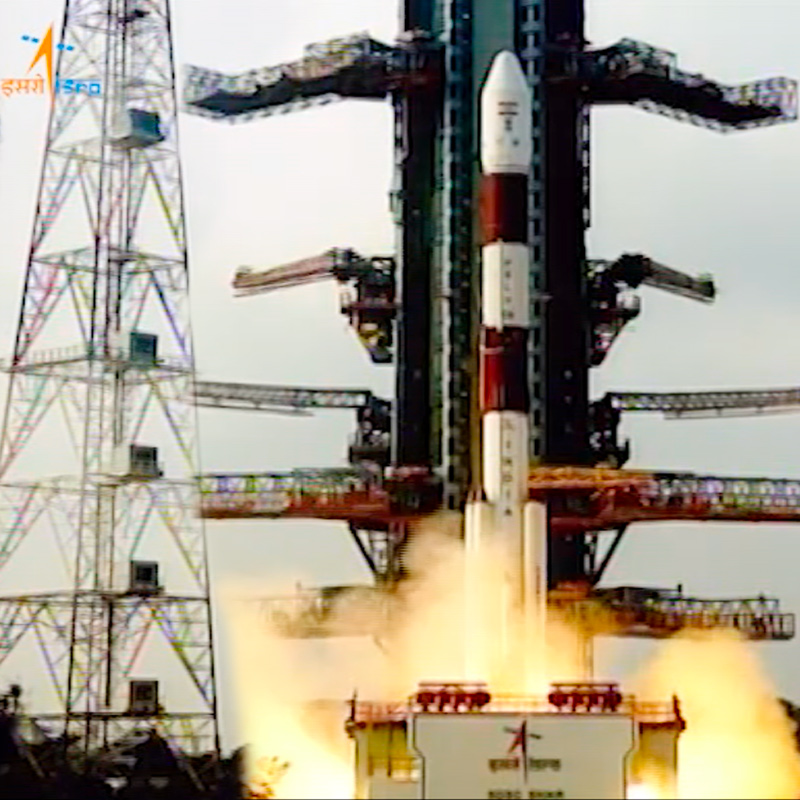
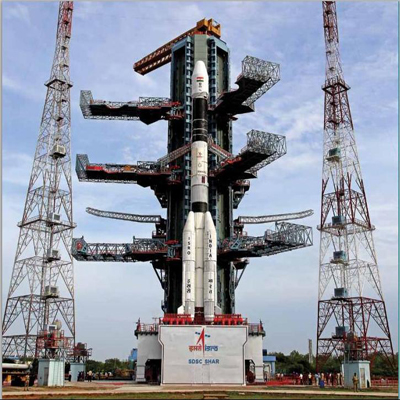
    NEW DELHI: The countdown before liftoff is always a heart-stopping moment during a satellite launch. And it was no different today at the Indian Space Research Organization's (ISRO's) second launch pad at Satish Dhawan Space Centre, Sriharikota. The space agency's scientists looked on nervously at their old workhorse, Polar Satellite Launch Vehicle, which had its forty second communications satellite CMS-01 as its payload.  However, at 3:41 pm, the  spacecraft took off as planned — in an almost picture perfect, blemish-free blastoff. And even more good news was to follow: 20 minutes after launch, the satellite separated successfully from the fourth stage of the rocket and was injected into   geosynchronous transfer orbit.

    "The satellite is functioning well and it will be placed in a specified slot in the next four days. Teams worked very well and safely under Covid2019  pandemic situation," said ISRO chairman Dr K Sivan.

    CMS-01 carries 12 Extended C band transponders which will strengthen the country's telecommunication services. The extended C band uses 3.4 to 3.7 GHz for downlink and 6.425 to 6.725 GHz for uplinks of the signals and is relatively less susceptible to rain fade and weather interference.

    With a mission life of seven years, the bird will provide coverage to the Indian mainland, Andaman &  Nicobar and Lakshadweep Islands. It will replace the ageing GSAT-12 which was launched in 2011.

    The space agency had chosen the ‘XL’ variant of the 44m high PSLV with six strapons for its fifty second  flight. In the normal configuration, PSLV is a four stage/engine expendable rocket powered by solid and liquid fuels alternatively with six booster motors strapped on to the first stage to give higher thrust during the initial flight moments.

    The premier space agency is now preparing for the launch of new small rocket Small Satellite Launch Vehicle (SSLV) which will carry EOS-02 (Earth Observation Satellite). It will be followed by the launch of Geosynchronous Satellite Launch Vehicle-F10 (GSLV) which will carry EOS-3 in space.

    The other Indian satellites that are ready for launch are GISAT and Microsat-2A. The launch of GISAT-1  was earlier slated for 5 March, but was postponed due to technical reasons 24 hours before D-Day. 

  • ISRO readies GSAT-6A satellite for launch

    ISRO readies GSAT-6A satellite for launch

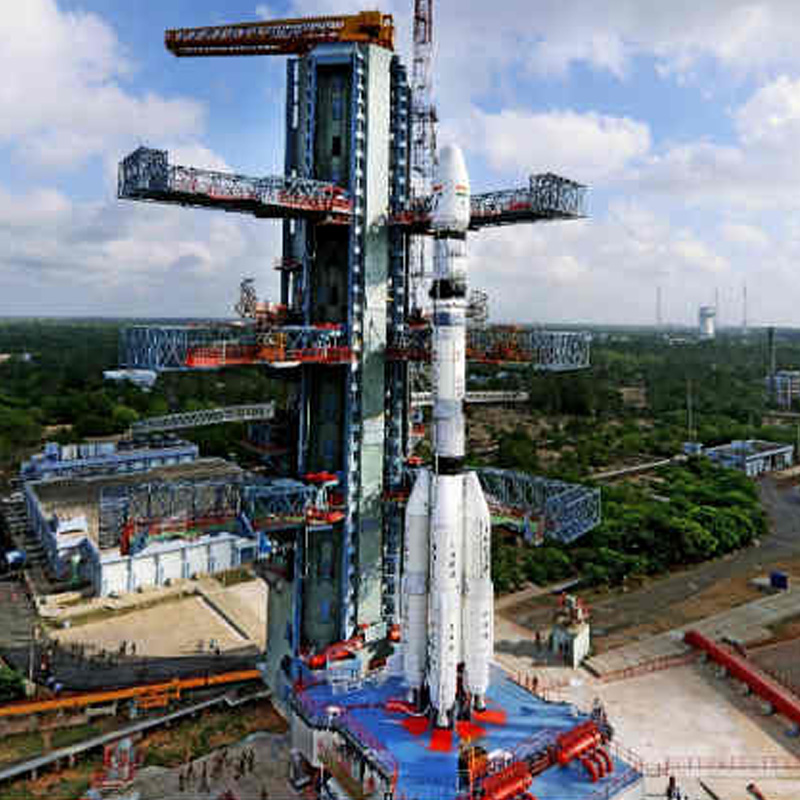
    MUMBAI: Indian Space Research Organisation (ISRO) is set to launch its high-power GSAT-6A communications satellite onboard GSLV Mk-II (GSLV F08) on 29 March 2018. The government-funded organisation will use one of its rockets for the launch, from the Sriharikota island site in Andhra Pradesh province on the edge of the Indian Ocean.

    The satellite is equipped with C-band and S-band transponders, which ISRO says will provide a platform for developing technologies such as demonstration of its massive 6m S-Band deployable antenna (the largest launched by India), which can then be used for mobile phones, vehicular communications and network management techniques as well as multimedia applications.

    It will be placed at 83 degrees East and have a life of nine to 10 years.

    This will be the Geosynchronous Satellite Launch Vehicle’s 12th flight and sixth flight with indigenous cryogenic stage. The rocket will take off from the second launch pad at the Satish Dhawan Space Centre.

    According to ISRO, GSAT-6A, weighing 2140kg, is a high-power S-band communication satellite, just like its predecessor GSAT-6.

    Also Read :

    ISRO, DoT turf wars delaying connectivity reach: govt official

    ISRO eyes 100th satellite on 12 Jan; GSAT-11 launch in April

    ISRO to double annual satellite launch

  • Star Movies Select HD presents ‘Films To See Before You Die’

    Star Movies Select HD presents ‘Films To See Before You Die’

    Star Movies Select HD has been staying true to its promise of impeccable curation by showcasing the best. Star Movies sets standards of storytelling high inspiring a lot of others to try and re-invent the art of movie showcasing business.

    Its commitment to curation has already resulted in bringing premieres that were never released in India, festivals that celebrated movies that brought pages to life with book adaptations. This time, its offering needs no introduction – ‘Films to See before You Die’.

    Starting November 7, Monday to Friday at 9 PM; Star Movies Select HD will showcase stories that have redefined the way we understand cinema. The impact and craft of these movies are so iconic that some of them have gone on to change the very fabric of our world and how we look at it.

    Can you imagine ‘Love’ in any other way than the aching feeling felt in ‘Casablanca’ or ‘Space’ as showcased by Stanley Kubrick’s 2001: A Space Odyssey?

    The charismatic line-up of the festival includes some of the biggest Academy Award winning titles like – Goodfellas, 2001:A Space Odyssey, Chariots of Fire, Full Metal Jacket, Shawshank Redemption, Casablanca, As Good As it Gets, Star Wars IV: A New Hope to name a few.

    Sometimes, you need to surrender yourself to the sheer brilliance of these magnificent stories told by some of the best storytellers.

  • Star Movies Select HD presents ‘Films To See Before You Die’

    Star Movies Select HD presents ‘Films To See Before You Die’

    Star Movies Select HD has been staying true to its promise of impeccable curation by showcasing the best. Star Movies sets standards of storytelling high inspiring a lot of others to try and re-invent the art of movie showcasing business.

    Its commitment to curation has already resulted in bringing premieres that were never released in India, festivals that celebrated movies that brought pages to life with book adaptations. This time, its offering needs no introduction – ‘Films to See before You Die’.

    Starting November 7, Monday to Friday at 9 PM; Star Movies Select HD will showcase stories that have redefined the way we understand cinema. The impact and craft of these movies are so iconic that some of them have gone on to change the very fabric of our world and how we look at it.

    Can you imagine ‘Love’ in any other way than the aching feeling felt in ‘Casablanca’ or ‘Space’ as showcased by Stanley Kubrick’s 2001: A Space Odyssey?

    The charismatic line-up of the festival includes some of the biggest Academy Award winning titles like – Goodfellas, 2001:A Space Odyssey, Chariots of Fire, Full Metal Jacket, Shawshank Redemption, Casablanca, As Good As it Gets, Star Wars IV: A New Hope to name a few.

    Sometimes, you need to surrender yourself to the sheer brilliance of these magnificent stories told by some of the best storytellers.

  • ISRO to launch eight satellites using PSLV on 26 September

    ISRO to launch eight satellites using PSLV on 26 September

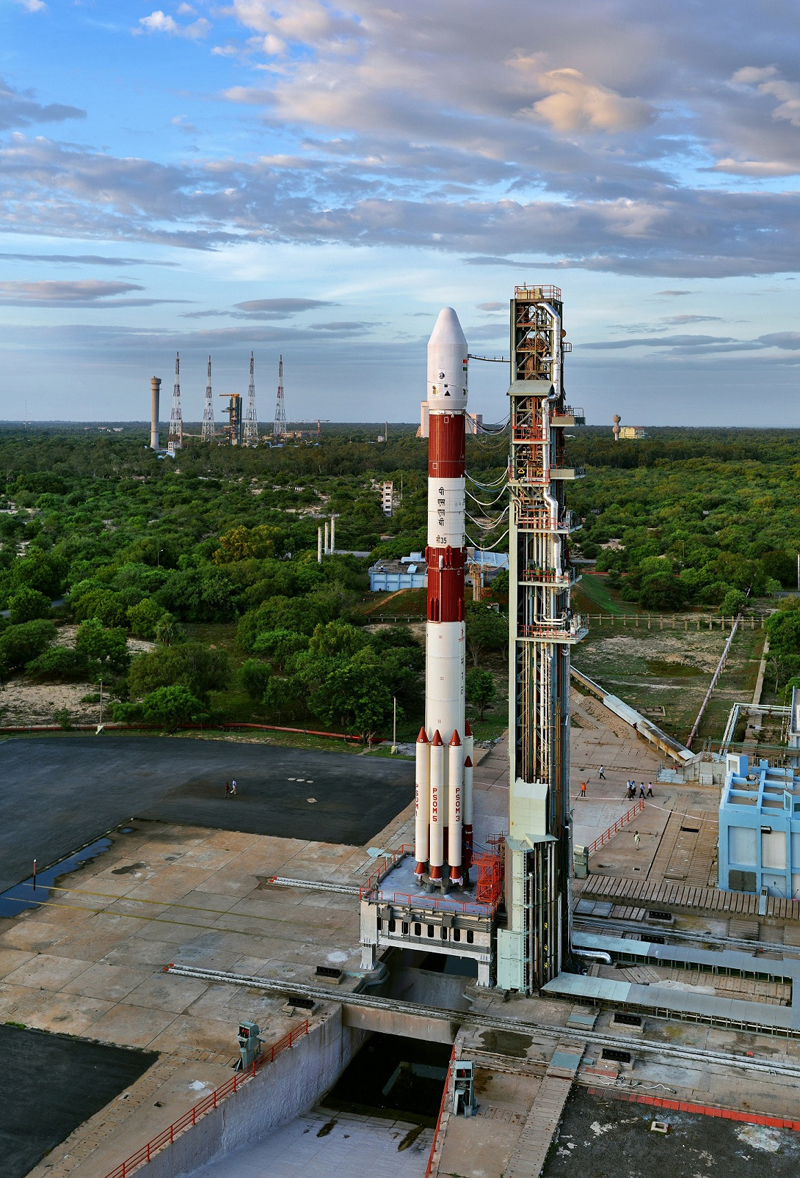
    MUMBAI: It will be the second satellite launch this month for the Indian Space Research Organisation (ISRO). On 26 September 2016 at exactly 9:12 am the PSLV C35 will blast off from the first launch pad of the Satish Dhawan Space Centre in Sriharikota, Andhra Pradesh. It will mark the 37th mission and 15 th flight of the PSLV in ‘XL’ configuration (with the use of solid strap-on motors) which will put eight satellites into orbit.

    ISRO will, with the PSLV C35, be undertaking its longest launch and probably most complicated mission ever attempted as it is using the same rocket to launch satellites into two different orbits. The Scatsat-1 satellite, weighing 371 kg for ocean and weather related studies, will be hurled into polar sun synchronous orbit at an altitude of 730 km 17 minutes after liftoff.

    Two Indian universities/ academic institute satellites (Pratham-10kg, IIT – Bombay and Pisat-5.25 kg, PES University, Bengaluru and its consortium) and five foreign satellites will be placed into a 670 km polar orbit. The five co-passenger satellites are from Algeria (three of them – Alsat-1B 103kg, Alsat-2B 117kg, Alsat-1N 7kg), Canada (NLS-19, 8kg) and the US (Pathfinder-44kg).

    What makes the mission complicated is that once Scatscat-1 is launched, the fourth stage engine of the PSLV-C35 will come to a halt. India’s space agency will then keep a tab on the engine health from the ground and will restart it after about 60 minutes for another 20 seconds which will give it the required thrust to take the rocket into the next orbit and release the payload of seven satellites. ISRO has planned to attempt ‘multiple burn technology’ as it is an effective method in cutting costs during satellite launches.

    Earlier this month on 8 September, IISRO had successfully launched its weather satellite INSAT-3DR, a two tonner, using the GSLV-F05, the tenth flight of India’s Geosynchronous Satellite Launch Vehicle (GSLV), The launch took place from the second launch pad at Satish Dhawan Space Centre. It was significant because it was the first operational flight of GSLV carrying Cryogenic Upper Stage (CUS). The indigenously developed CUS was carried on-board for the fourth time during a GSLV flight in the GSLV-F05 flight.

  • ISRO to launch eight satellites using PSLV on 26 September

    ISRO to launch eight satellites using PSLV on 26 September

    MUMBAI: It will be the second satellite launch this month for the Indian Space Research Organisation (ISRO). On 26 September 2016 at exactly 9:12 am the PSLV C35 will blast off from the first launch pad of the Satish Dhawan Space Centre in Sriharikota, Andhra Pradesh. It will mark the 37th mission and 15 th flight of the PSLV in ‘XL’ configuration (with the use of solid strap-on motors) which will put eight satellites into orbit.

    ISRO will, with the PSLV C35, be undertaking its longest launch and probably most complicated mission ever attempted as it is using the same rocket to launch satellites into two different orbits. The Scatsat-1 satellite, weighing 371 kg for ocean and weather related studies, will be hurled into polar sun synchronous orbit at an altitude of 730 km 17 minutes after liftoff.

    Two Indian universities/ academic institute satellites (Pratham-10kg, IIT – Bombay and Pisat-5.25 kg, PES University, Bengaluru and its consortium) and five foreign satellites will be placed into a 670 km polar orbit. The five co-passenger satellites are from Algeria (three of them – Alsat-1B 103kg, Alsat-2B 117kg, Alsat-1N 7kg), Canada (NLS-19, 8kg) and the US (Pathfinder-44kg).

    What makes the mission complicated is that once Scatscat-1 is launched, the fourth stage engine of the PSLV-C35 will come to a halt. India’s space agency will then keep a tab on the engine health from the ground and will restart it after about 60 minutes for another 20 seconds which will give it the required thrust to take the rocket into the next orbit and release the payload of seven satellites. ISRO has planned to attempt ‘multiple burn technology’ as it is an effective method in cutting costs during satellite launches.

    Earlier this month on 8 September, IISRO had successfully launched its weather satellite INSAT-3DR, a two tonner, using the GSLV-F05, the tenth flight of India’s Geosynchronous Satellite Launch Vehicle (GSLV), The launch took place from the second launch pad at Satish Dhawan Space Centre. It was significant because it was the first operational flight of GSLV carrying Cryogenic Upper Stage (CUS). The indigenously developed CUS was carried on-board for the fourth time during a GSLV flight in the GSLV-F05 flight.

  • India, Canada MOU to explore outer space

    India, Canada MOU to explore outer space

    NEW DELHI: The Department of Space / Indian Space Research Organization (DOS/ISRO) and the Canadian Space Agency (CSA) have entered into a Memorandum of Understanding on cooperation in the field of outer space.

    The Union Cabinet chaired by Prime Minister Narendra Modi was apprised yesterday that the MoU was signed in Ottawa, Canada on 15 April 2015. 

    The MoU would lead to establishment of a joint team, drawing members from ISRO and CSA, which will further work out the plan of action including examination and defining cooperative projects and the time-frame. This will also provide opportunities for diverse research in the field of peaceful uses of space technologies. 

    The successful space cooperation is being pursued through two Implementing Arrangements in the field of Satellite Tracking Network Operations, and in the field of the ultra Violet Imaging Telescope (UVIT) Detector Subsystem, in support of the ASTROSAT astronomy mission in December 2003 and June 2004 respectively.

    It is aimed at future cooperation in and use of outer space for peaceful purposes to reinforce scientific and technological development and the ties between two countries at government, industrial and academic levels. 

  • India, Canada MOU to explore outer space

    India, Canada MOU to explore outer space

    NEW DELHI: The Department of Space / Indian Space Research Organization (DOS/ISRO) and the Canadian Space Agency (CSA) have entered into a Memorandum of Understanding on cooperation in the field of outer space.

    The Union Cabinet chaired by Prime Minister Narendra Modi was apprised yesterday that the MoU was signed in Ottawa, Canada on 15 April 2015. 

    The MoU would lead to establishment of a joint team, drawing members from ISRO and CSA, which will further work out the plan of action including examination and defining cooperative projects and the time-frame. This will also provide opportunities for diverse research in the field of peaceful uses of space technologies. 

    The successful space cooperation is being pursued through two Implementing Arrangements in the field of Satellite Tracking Network Operations, and in the field of the ultra Violet Imaging Telescope (UVIT) Detector Subsystem, in support of the ASTROSAT astronomy mission in December 2003 and June 2004 respectively.

    It is aimed at future cooperation in and use of outer space for peaceful purposes to reinforce scientific and technological development and the ties between two countries at government, industrial and academic levels. 

  • ISRO successfully flight tested India’s Reusable Launch Vehicle-Technology Demonstrator (RLV-TD)

    ISRO successfully flight tested India’s Reusable Launch Vehicle-Technology Demonstrator (RLV-TD)

    MUMBAI: On May 23, 2016 ISRO successfully flight tested India’s first winged body aerospace vehicle operating in hypersonic flight regime.   

    In this experimental mission, the HS9 solid rocket booster carrying RLV-TD lifted off from the First Launch Pad at Satish Dhawan Space Centre, Sriharikota at 07:00hr IST.  After a successful flight of 91.1second, HS9 burn out occurred, following which both HS9 and RLV-TD mounted on its top coasted to a height of about 56 km. At that height, RLV-TD separated from HS9 booster and further ascended to a height of about 65km.  

    From that peak altitude of 65 km, RLV-TD began its descent followed by atmospheric re-entry at around Mach 5 (five times the speed of sound). The vehicle’s Navigation, Guidance and Control system accurately steered the vehicle during this phase for safe descent. After successfully surviving a high temperatures of re-entry with the help of its Thermal Protection System (TPS), RLV-TD successfully glided down to the defined landing spot over Bay of Bengal, at a distance of about 450km from Sriharikota, thereby fulfilling its mission objectives. The vehicle was successfully tracked during its flight from ground stations at Sriharikota and a shipborne terminal. Total flight duration from launch to landing of this mission of the delta winged RLV-TD, lasted for about 770seconds.

    In this flight, critical technologies such as autonomous navigation, guidance & control, reusable thermal protection system and re-entry mission management have been successfully validated.