Tag: South Korean

  • Samsung working on tech breakthrough for 27-inch QD-Oled monitors for esports

    Samsung working on tech breakthrough for 27-inch QD-Oled monitors for esports

    MUMBAI: For gaming enthusiasts, this could be a godsend. Samsung Electronics’ offshoot Samsung Display is currently working on a new Oled display monitor which would have a record refresh rate, according to reports appearing in south Korean media. The size of the panel: 27 inches. The resolution: QHD/1440p or 2560X1440 pixels. 

    Samsung Display combined quantum dot and Oled technologies, and achieved a 500Hz refresh rate for the first time ever in an Oled display. The display is in the final stage of development as Samsung seeks potential partners in the gaming monitor business. Hope is that commercial manufacture should begin soon and the new panel should arrive in the market during H1 2025.  Some say the launch could happen at CES in Las Vegas. The product is targeted at the esports market. 

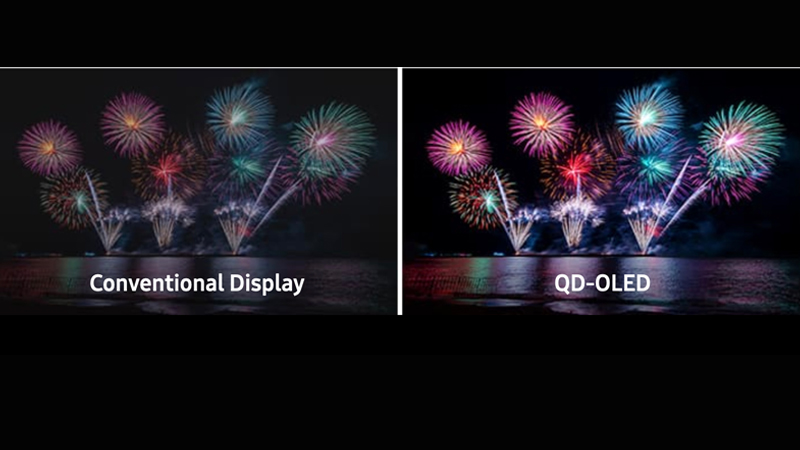
    QD-Oled panels reportedly offer superior color vibrancy, deeper contrast, and improved performance compared to traditional LCDs. This aligns with a broader trend among display manufacturers like LG Display and Samsung Display, which  compete to push the boundaries of high-refresh-rate Oled  monitors in various sizes and resolutions. Samsung’s  achievement has outpaced the displays of both Asus and LG which have a maximum refresh rate of 480Hz.

    Research firms have pointed out that while  annual global monitor growth is expected to take place at one per cent between now and 2028, Oled displays are expected to grow at 34 per cent per annum on an average in the same period.

    According to online panel analyst, FlatPanelsHD , 2025 could come up with a new trend for 27-inch QD-Oled and WOled monitors.Chinese firm  Light Soul is burning the midnight oil and is planning to release a 27-inch QD-Oled monitor with a 4k resolution, a 240 Hz refresh rate and 1000 nits of peak brightness. 

    On the larger screen front, LG is likely to come out with a 45 inch WOled panel with a resolution greater than the existing 3440×1440 pixel resolution. Expectations are that it could touch  5120×2160 pixels. This could spark off another trend for monitor manufacturers and developers.

  • China bans K-Pop and K-Dramas?

    China bans K-Pop and K-Dramas?

    MUMBAI: It is one of the biggest markets for south Korean dramas and pop music known to all as K-Pop. China, according to some experts, accounts for more than a few dollar billion in revenues for the K-Pop and K-Drama industry.

    But now the market appears to be shutting down as the Chinese seem to be prone to restricting Korean entertainment’s access to the mainland following Seoul’s plan to deploy the US Terminal High-Altitude Areas Defense (THAAD) anti-missile system.

    Reports from Chinese media state that the media industry’s watchdog State Administration of Press, Publications, Radio, Film, and Television (SAPPRFT) has issued orders to at least two stations in the province of Gaungdong they should not come with new approvals for TV programs featuring South Korean pop stars as they would not be given the approval.

    According to China Film Insider, reports have appeared locally which state that Korean talent will not be allowed to appear in films, television dramas, musical concerts, variety shows, or advertisements in the immediate future. The restrictions will supposedly begin on 1 September.

    Shares of many listed South Korean entertainment companies, such as SM Entertainment (Girls Generation) and YG Entertainment (Psy) have been seen an erosion in their values following the ban murmurings which have been emanating from media outlets such as People’s Daily.

    An official announcement was yet to be made by the Chinese government but apparently verbal instructions had come from the regulator. How the ban will impact several China-South Korean co-productions was yet to be clarified at the time of writing, though observers expect the restrictions to apply to them too.

    “Could this be an opportunity for Indians to swoop in and push Indian content in China?” asks a media observer. “Let the Indian production and broadcasting community give it a closer look see.”

  • China bans K-Pop and K-Dramas?

    China bans K-Pop and K-Dramas?

    MUMBAI: It is one of the biggest markets for south Korean dramas and pop music known to all as K-Pop. China, according to some experts, accounts for more than a few dollar billion in revenues for the K-Pop and K-Drama industry.

    But now the market appears to be shutting down as the Chinese seem to be prone to restricting Korean entertainment’s access to the mainland following Seoul’s plan to deploy the US Terminal High-Altitude Areas Defense (THAAD) anti-missile system.

    Reports from Chinese media state that the media industry’s watchdog State Administration of Press, Publications, Radio, Film, and Television (SAPPRFT) has issued orders to at least two stations in the province of Gaungdong they should not come with new approvals for TV programs featuring South Korean pop stars as they would not be given the approval.

    According to China Film Insider, reports have appeared locally which state that Korean talent will not be allowed to appear in films, television dramas, musical concerts, variety shows, or advertisements in the immediate future. The restrictions will supposedly begin on 1 September.

    Shares of many listed South Korean entertainment companies, such as SM Entertainment (Girls Generation) and YG Entertainment (Psy) have been seen an erosion in their values following the ban murmurings which have been emanating from media outlets such as People’s Daily.

    An official announcement was yet to be made by the Chinese government but apparently verbal instructions had come from the regulator. How the ban will impact several China-South Korean co-productions was yet to be clarified at the time of writing, though observers expect the restrictions to apply to them too.

    “Could this be an opportunity for Indians to swoop in and push Indian content in China?” asks a media observer. “Let the Indian production and broadcasting community give it a closer look see.”

  • Star CJ Alive is a big hit in Kolkata

    Star CJ Alive is a big hit in Kolkata

    KOLKATA: The people in Kolkata seem to be addicted to the new ways of shopping. Star CJ Alive, a home shopping channel from the house of STAR CJ Network India (a joint venture between STAR Asia and the South Korean home shopping major, CJ O Shopping) recently conducted a survey in the target markets. The result of the survey was interesting as it revealed that the consumers of Kolkata in the fiscal 2012-2013 have bought 26.63 lakh sarees, 23.83 lakh tablets, 21.87 pieces of jewellery and 18.82 lakh handsets.


    One of the supposed reasons for the growth of the channel is the ‘Global O’ Shopping Day’ that was celebrated by the channel at the beginning of the year 2013, in India along with eight other countries – South Korea, Japan, China, Indonesia, Thailand, Turkey, Philippines and Vietnam. It featured global products and resulted in 110 per cent hike in orders as compared to the average daily order figure.


    “Kolkata is one of our biggest markets and we are delighted to give our customers the best deals. Our goal is to serve our customers better,” said Star CJ Network CEO Kenny Shin while in the city Kolkata. He also said that the channel that was launched around four years ago is one of the fastest growing shopping channels in the country.


    The channel offers an array of products including fashion, lifestyle, home appliances, kitchenware, digital devices, jewellery, beauty products among others. The channel’s target markets includes Delhi, Pune, Ahmedabad, Lucknow, Ghaziabad, Bangalore, Ludhiana, Surat, Gurgaon, Hyderabad, Chandigarh, Vadodara, Amritsar, Faridabad, Gautam Buddha Nagar, Jaipur, Chennai, Nagpur and Nashik among others.

  • Samsung Mobiles is India’s Most Attractive Brand, Sony takes 2nd place

    Samsung Mobiles is India’s Most Attractive Brand, Sony takes 2nd place

    MUMBAI: The latest report from TRA (Trust Research Advisory) – India’s leading brand insights company – titled India’s Most Attractive Brands 2013 (MAB 2013) was released.


    Samsung Mobiles emerged as India’s Most Attractive Brand in 2013. India’s second Most Attractive brand is the consumer durables leader Sony, followed by Nokia as the third most attractive across all categories.


    India’s top three Most Attractive brands are very close together with just two per cent separating them. Following at fourth place is LG, the South Korean consumer electronics leader with eight per cent attractiveness score lag from the previous. Placed at India’s fifth Most Attractive brand is India’s home-grown conglomerate – Tata – trailing its predecessor by 11 per cent. The results are based on a primary survey conducted with 2,505 consumer-influencers across 16 cities based on TRA’s proprietary matrix of 36 Brand Attractiveness Traits.


    Launching the report, TRA (a Comniscient Group company) CEO N. Chandramouli observed, “The force of attractiveness is a primal force that affects all of us with the same intensity – whether it be attraction with other humans, objects, places or brands. As a brand insights company, TRA spent years understanding the basics of attractiveness by delving into several subjects ranging from philosophy to physiology, religion and communication, and have developed a robust proprietary matrix for deciphering the complex subject of Brand Attractiveness.”


    At the All India level, Lux, the bath/beauty brand from the HUL stable is India’s sixth Most Attractive brand nearly 48 per cent behind Tata in Attractiveness Quotient. The next four brands are within single-digit gaps of each other with Maruti Suzuki ranked seventh, Godrej ranked eighth, Bajaj ranked ninth, and Dell the Technology leader, ranked India’s tenth Most Attractive brand. India’s top 10 attractive brands include two mobile phone brands, two consumer electronics brands, and three from the diversified category, one each from FMCG, Automobile and Technology categories.


    Elaborating on the usefulness of TRA’s matrix, Chandramouli added, “Brands spend billions in advertisements trying to be attractive to consumers, but at best such approaches range between ad-hoc and haphazard. TRA’s Brand Attractiveness matrix will give brands a scientific tool and methodologies to improve their Attractiveness Quotient with their consumers, helping brands deploy their resources more efficiently and target their messages more accurately.”
    In Western India, the Attractiveness Quotients are quite different from national scores with Sony being ranked as West Zone’s Most Attractive brand. This is followed by LG at second place, Tata at third, and Samsung Mobiles as Western India’s fourth Most Attractive brand.  Mumbai’s choices for the top three attractive brands were Sony, LG and Tata respectively.

  • Paris Hilton stars in South Korean pop superstar’s new video

    Paris Hilton stars in South Korean pop superstar’s new video

    Mumbai: Following a popularity contest poll, socialite Paris Hilton has secured a leading role in a South Korean pop superstar‘s new video.
    It is said that singer Kim Jang-Hoon wanted a Hollywood star to play his leading lady in his latest promo and hence he asked fans to pick their favourite actress, it is reported.
    It is said that Jang-Hoon‘s representatives considered several Hollywood stars like Jessica Alba, Scarlett Johansson and Paris Hilton for the role, but a survey conducted in (South) Korea showed that Paris Hilton was the most well-known. “So we chose her,” he said.
    The 31-year old actress was reportedly paid around 625,000 pounds for the two-day beach shoot. The video, which was shot in 3D, also features model Travis Hanson.

  • Buddha Mountain is best film at Toronto fest

    Buddha Mountain is best film at Toronto fest

    MUMBAI: The recently concluded 15th Toronto Reel Asian International Film Festival saw the Fasken Martineau Best Feature Film Award lapped up by Chinese director Li Yu‘s Buddha Mountain.


    The other highlights of the awards ceremony include the opening night gala presentation of the Hong Kong film Lover‘s Discourse, the Canadian shorts program Trailblazers, the world premiere of Vietnamese-Canadian feature film Pearls of the Far East and the new media exhibition Lost Secrets of the Royal.


    Other winners include: National Ban Best First Feature Film Award to South Korean film The Journals of Musan, Jury Honourable mention to Chinese film Piercing 1,
    Animasian Award to Japan‘s In a Pig‘s Eye, Jury honourable mention to Canadian film Sketchi, Movieola Best Short Film or Video Award to Canadian film Une Chanson d‘Hiver,
    NFB Best Canadian Film or Video Award to Les Cordes de Muybridge, WIFT – T Award to The Canadian film The Sugard Bowl by Shasha Nakhai and Rich Williamson.


    The curtains of the festival which spotlighted 60 films from 12 countries was wrung down earlier this week, wrapping its event,.

  • Global mobile games market to reach $17 bn by 2011

    Global mobile games market to reach $17 bn by 2011

    MUMBAI: The evolution in mobile games – involving subscription and downloads – is set to continue in the next five years, with a growth in global revenues from $3.1 bn in 2006 to approaching $17.6 bn by 2011, according to Juniper Research. A rise producing a cumulative revenue stream of nearly $57 bn over the next six years has been predicted.

    According to Juniper, the Asia Pacific region has dominated the market since its inception, with Japanese and South Korean markets in the vanguard. Asia Pacific is forecast to contribute 38 per cent of cumulative revenues from 2006 to 2011, with Europe contributing 31 per cent, North America 22 per cent and the rest of the world 9 per cent.

    The Juniper report reveals that Mobile Games have come of age – no longer the poor relation of console and PC games. Mobile Games provide a different family with their own characteristics – satisfying an increasing need courtesy of evolving technology.

    The growth trend is set to continue, with the broader electronic games and entertainment industry acknowledging the rise in popularity of the mobile games industry according to its new status.

    Whilst the leading edge games technology will focus on 3D and multiplayer games, the greatest growth will come from the casual game sector. Female games players will also grow as a proportion of the market with a more even balance of genders using mobile games in the future.

    Juniper Research research director Bruce Gibson says, “I think the mobile games industry has at last found its identity, and it is a strong one. There is a real demand for mobile entertainment and games are at the very heart of it.

    The casual games sector is going to be the market driver, even though it may not be at the leading edge of mobile games technology. Casual games make most use of the inherent advantages of the mobile platform. People want to fill ‘dead time’ with easy to use, but fun games. This is the same in just about every culture.”