Tag: South Korea

  • IT sector granted Authorising Nation status under the CCRA

    IT sector granted Authorising Nation status under the CCRA

    NEW DELHI: India has been recognised as the ‘Authorising Nation’ under the international Common Criteria Recognition Arrangement (CCRA) to test and certify Electronics and IT products with respect to cyber security. Thus, India has become the 17th nation to earn such recognition. This international arrangement has 26 member countries. USA, UK, Germany, South Korea, France, Japan, Canada, Australia, Turkey, Malaysia etc. are the other countries who have this recognition.


    So far India was having the status of ‘Consuming Nation’ with respect to certification of electronics and IT products. The status of ‘Authorising Nation’ will enable India to test IT and electronics products and issue Certificates which will be acceptable internationally. The recognition would also remove the bottleneck which as of now had prevented international companies from submitting their products for testing and certification in India.


    The recognition would also enable investment in setting up infrastructure and labs in public and private sectors in India for testing electronics and IT products.


    Standardisation Testing and Quality Certification (STQC) Directorate of the Department of Electronics and Information Technology (DeitY) has been operating Common Criteria Certification (CC Certification) scheme in India for the last five-six years. Under it STQC undertakes certification of electronics and IT products after evaluation of the products at its lab in Kolkata. The Certificates issued by STQC Directorate shall now be acceptable internationally by all CCRA member countries.

  • IT sector granted ‘Authorising Nation’ status under the CCRA

    IT sector granted ‘Authorising Nation’ status under the CCRA

    NEW DELHI: India has been recognised as the ‘Authorising Nation’ under the international Common Criteria Recognition Arrangement (CCRA) to test and certify Electronics and IT products with respect to cyber security. Thus, India has become the 17th nation to earn such recognition. This international arrangement has 26 member countries. USA, UK, Germany, South Korea, France, Japan, Canada, Australia, Turkey, Malaysia etc. are the other countries who have this recognition. 

    So far India was having the status of ‘Consuming Nation’ with respect to certification of electronics and IT products. The status of ‘Authorising Nation’ will enable India to test IT and electronics products and issue Certificates which will be acceptable internationally. The recognition would also remove the bottleneck which as of now had prevented international companies from submitting their products for testing and certification in India. 

    The recognition would also enable investment in setting up infrastructure and labs in public and private sectors in India for testing electronics and IT products. 

    Standardisation Testing and Quality Certification (STQC) Directorate of the Department of Electronics and Information Technology (DeitY) has been operating Common Criteria Certification (CC Certification) scheme in India for the last five-six years. Under it STQC undertakes certification of electronics and IT products after evaluation of the products at its lab in Kolkata. The Certificates issued by STQC Directorate shall now be acceptable internationally by all CCRA member countries.

  • Martin Scorsese’s World Cinema Foundation brings eight rare films to Hulu

    Martin Scorsese’s World Cinema Foundation brings eight rare films to Hulu

    MUMBAI: Martin Scorsese’s World Cinema Foundation (WCF) has been restoring rare films from around the globe since 2007. But while the foundation has saved 21 movies in that time, the product of its efforts haven’t been made available to the public until today.


    Recently, Scorsese announced that eight of the foundation’s restorations are coming to the streaming-video service Hulu, by way of a partnership with the Criterion Collection. Like the WCF, Criterion is a group that collects and restores historic and influential films. But Criterion sells its collection on disc and online, and streams exclusively on Hulu. The first WCF movie to make to Hulu is The Housemaid from South Korea and it’s available for streaming now.


    In the coming days, Criterion will add Senegal’s Touki Bouki, Turkey’s Law of the Borderand Dry Summer, Morocco’s Trances, India and Bangladesh’s A River Called Titas, Kazakhstan’s Revenge, and Mexico’s Redes from the WCF’s vaults to Hulu. Through 24 August the eight films – which have never before been available for streaming in the US – can be seen for free with ads. After that, only paying Hulu Plus subscribers will be able to watch the WCF movies, and they’ll do so ad free.

  • Amazon expands Appstore availability to 200 countries

    Amazon expands Appstore availability to 200 countries

    MUMBAI: Amazon.com continued the global expansion of its Appstore by announcing that developers can now submit their apps for distribution in nearly 200 countries, including Australia, Brazil, Canada, Mexico, India, South Africa, South Korea, and even Papua New Guinea and Vatican City.

    These apps will be made available in the coming months when the Amazon Appstore for Android launches internationally for consumers. Registered developers who want international distribution will have their apps automatically made available for download, unless they designate otherwise. This international expansion is the latest in a series of Amazon Appstore for Android launches, which have included the UK, Germany, France, Italy, Spain and Japan.

    “Amazon‘s platform is a complete end-to-end solution for developers wanting to build, market and monetize their apps and games on Kindle Fire and Android devices,” said Amazon Vice President of Apps and Games Mike George.

    “Allowing developers to target distribution of their apps and games in even more international countries is yet another important milestone as we strive to serve consumers and developers globally. Many of our existing developers have localized their apps and games for international consumers, and we look forward to working with new developers that have been waiting to bring their apps to more Amazon customers across the globe.”

    Amazon.com claims that developers throughout the world are experiencing strong monetisation and user engagement through Kindle Fire and the Amazon Appstore.

    The success is being driven by Amazon‘s large customer base and industry-leading e-commerce features like 1-Click purchasing, Amazon‘s APIs for In-App Purchasing (IAP) and A/B Testing, and GameCircle, Amazon‘s gaming experience for Kindle Fire. A recent study of more than 500 games that utilize in-app purchasing on Amazon found that GameCircle-enabled mobile games earned 83 percent more average revenue per user (ARPU) than non-GameCircle games.

  • 4D formatted films in anvil

    4D formatted films in anvil

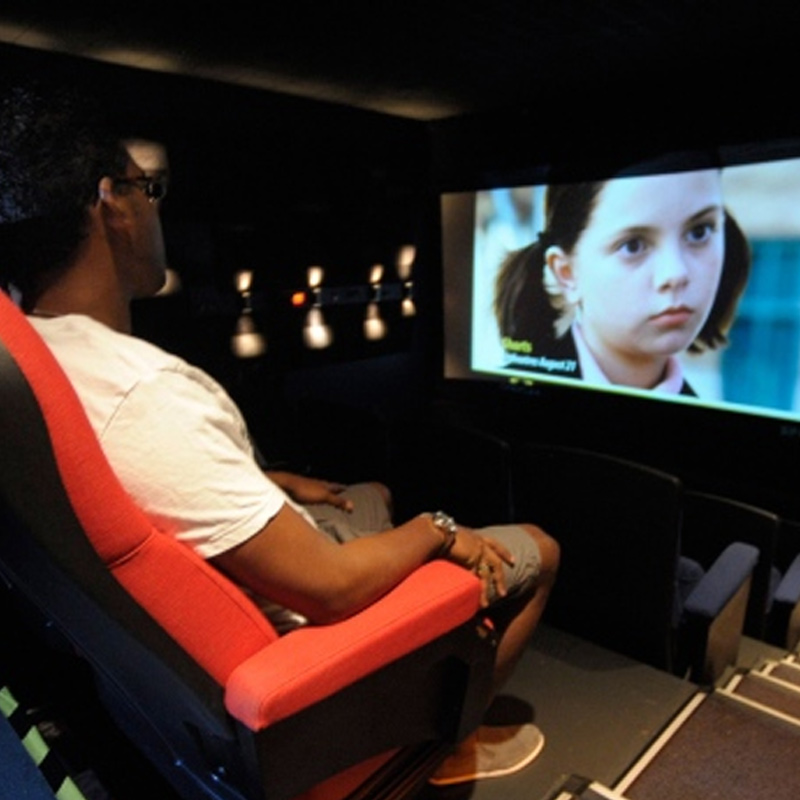
    MUMBAI: Ever since the advent of 3D formatted movies, practically every big-budget film is being released in the format, with higher ticket prices boosting the box-office intake.

    The latest attempt to move beyond 3D technology has resulted in a new cinematic encounter known as 4-D. The film industry is enthusiastic about the unique theatre- experience that 4D promises to deliver.

    CJ Group, a South Korean company that operates Asia‘s largest theater chain, is on the cutting edge of the technology necessary for the display of 4-D movies. The company has 29 specialty theatres that screen blockbuster studio releases such as Avatar, Pirates of the Caribbean: On Stranger Tides and Prometheus.

    The group is on the verge of closing a transaction with a nationwide US cinema chain that would create 200 4D theatres over the next five years.

    The 4D technology has already been in use in theatres in Thailand, South Korea, and Mexico, and also in some theme parks. One of the company‘s biggest clients is the fourth-largest theater chain, Cinepolis, which recently expanded into Southern California. The company owns a dozen 4D theatres in Mexico.

    Company execs project that filmgoers will be willing to pay an additional $8 beyond the cost of mere 3-D just to involve more of their senses while watching their favorite superheroes. CJ set up a lab located close to the famous Grauman‘s Chinese Theater in Hollywood to demonstrate and market its latest system, which it calls 4DX.

    This isn‘t the first time that the film industry has tried to bring senses other than sight to film audiences. In 1960 a film titled Scent of Mystery utilised something called ‘Smell-O-Vision‘ which featured 30 different odours that included the smell of flowers, liquor, and gun smoke wafting toward the nostrils of the audience at appropriate times during the screening.

    Then, for a film that was released in 1974 titled Earthquake, theatres used a technology called Sensurround that utilised large bass resonating speakers that shook the room with such intensity that Grauman‘s Chinese theatre had to install a safety net to catch falling plaster as the film was shown.

    In 1981 John Waters used what is called as Odorama which allowed the audience to smell the cinematic scenes with scratch-and-sniff cards and in 2011 Robert Rodriguez used a similar approach that he referred to as Aromascope.

  • IPTV revenues to touch $512 million in 2007: Frost & Sullivan

    IPTV revenues to touch $512 million in 2007: Frost & Sullivan

    MUMBAI: Dwindling wireline revenues, consumer demand for greater control over viewing preferences, and the explosion of broadband in various high growth markets across Asia-Pacific represent the impetus for the development of IPTV in the region.

    While service providers across Asia-Pacific have invested heavily in the network infrastructure required to offer such services, the key success factor for IPTV lies in the gamut of content that service providers are able to provide consumers.

    New analysis from global growth consulting company, Frost & Sullivan Asia Pacific IPTV Market, reveals that revenues in this market – covering 12 major Asia-Pacific countries ex-Japan – is estimated to increase from $353.4 million in 2006 to $512.4 million next year. Growing at a compound annual growth rate of 37.5 per cent (2006-2013), the region’s IPTV market is forecasted to be worth $3.3 billion by end-2013.

    Frost & Sullivan senior research analyst Aravind Venkatesh says, “IPTV is the next notable wave in the consumer telecom space and service providers are planning to leverage this new technology to offer high quality interactive services to customers. While revenues from fixed-line services continue to decline, IPTV is likely to reduce churn, increase ARPU (average revenue per user) levels, and generate revenue streams in the long term.”

    IPTV is presently available in China, Hong Kong, Malaysia, Singapore, South Korea, Taiwan and Thailand, and is expected to be introduced in India and the Philippines in 2007. Countries like China, India and Australia are expected to be high growth markets by 2009.

    China, in particular, holds immense potential as it has the largest broadband subscriber base in Asia-Pacific. Residential subscribers constitute approximately 70 per cent of China’s 47.8 million broadband subscriber base. China together with Hong Kong, which is said to be one of the most sophisticated IPTV markets in the world, is expected to account for nearly 60 percent of the region’s IPTV revenues by end-2013.

    While initial response from end users has been positive, service providers face the challenge of procuring quality and regional content, most of which is exclusively offered by cable and satellite operators. The lack of quality content is a common problem for service providers across the region. Although partnerships with content providers and broadcasting companies aid in securing access rights, cable TV providers or IPTV market leaders already have exclusive access to the content.

    Venkatesh adds, “The lack of sufficient bandwidth and highly skewed broadband distribution are major inhibitors for the growth of IPTV in Asia-Pacific. While Hong Kong, Korea, Singapore and Japan are mature markets for broadband, developing markets like China, India and Malaysia have dismally low broadband penetration.”

    The lack of bandwidth in developing markets requires the implementation of high compression codecs and watermarking technologies to achieve the expected quality of service (QoS) levels. This may however be only a short-term solution. Service providers should scale their networks rapidly to offer bandwidth-hungry applications to consumers.

  • Digital arena is driving global music sales

    Digital arena is driving global music sales

    MUMBAI: Sales of digital music in the first half of this year rose by 106 per cent to $945 million when compared with the first six months of last year.

    Globally, digital sales now account for 11 per cent of the total recorded music market worldwide, up from 5.5 per cent in December 2005.

    According to a report put out by the Ifpi the US is still leading the digital revolution, with 18 per cent of recorded music sales now being made through digital channels. Digital music sales in the US increased by 84 per cent to US$ 513 million in the first six months of 2006.

    Digital music also accounts for a significant part of the overall market in South Korea (51 per cent), Japan (11 per cent), Italy (9 per cent) and the UK (8 per cent).

    The explosion in digital music services, spurred by consumer demand and a widening array of delivery channels, has seen online and mobile music sales grow from $134 million in the first half of 2004 to $945 million in the first half of 2006.

    In Japan, Italy and Spain mobile dominates the digital market, accounting for 85 per cent, 76 per cent and 78 per cent of the overall sales respectively. Online downloading is more prominent in markets such as the UK, Germany and the US, where online sales account for 70 per cent, 69 per cent and 64 per cent of digital sales respectively.

    Physical music sales declined in the first half period, down by 10 per cent worldwide. This led to total music sales falling by four per cent in the period to $8.4 billion in trade values ($13.7 billion in retail values). Piracy and competition for consumer spending contributed to the first half fall.

    There was growth in some markets, such as Japan (12 per cent), South Korea (5 per cent) and Australia (6 per cent), counter-balanced by declines in Germany (-4 per cent), the US (-7 per cent) and France (-9 per cent).

    Ifpi promotes the interests of the international recording industry worldwide. Its membership comprises over 1400 major and independent companies in more than 70 countries. It also has affiliated industry national groups in 48 countries. Ifpi’s mission is to fight music piracy; promote fair market access and good copyright laws; help develop the legal conditions and the technologies for the recording industry to prosper in the digital era; and to promote the value of music.

  • Asia-Pacific leads IPTV growth: In-Sat research

    Asia-Pacific leads IPTV growth: In-Sat research

    MUMBAI: The Asia/Pacific region is leading the global revolution of IPTV in infrastructure deployments, applications development and subscriber adoption, reports global research firm In-Stat. The study reveals that the region’s broadband penetration and regulatory support help to foster the fastest-growing IPTV market in the world.

    “With IPTV, incumbent telcos have the opportunity to fundamentally change their broadband customers’ video service experience from the traditional video clip streaming and downloading model,” says In-Stat analyst Bryan Wang. “IPTV is expected to be the real killer application in the telcos’ broadband services portfolio that will increase ARPU and preserve user stickiness.”

    A recent report by In-Stat found the following:

    — By 2011, the Asia/Pacific market is expected to reach 39 million IPTV subscribers.

    — Total IPTV revenue in the region will reach US$8.1 billion by 2011.

    — Providers will need to find a unique approach to packaging and bundling in order to attract customers and maintain a competitive edge. As a result, most IPTV service providers have strategically integrated services in their triple-play bundled offerings.

    The research, “Asia/Pacific IPTV Market: Hype and Hope?”, covers the market for IPTV in the Asia/Pacific region. It contains forecasts for IPTV subscribers for the region and by major national markets, along with revenue for the region through 2011. It includes analysis of market drivers, challenges, and the regulatory environment. Also included is a look at specific conditions in major regional markets including China, Japan, Australia, South Korea, Hong Kong and Taiwan, states an official release.

  • BBC Worldwide signs IP VOD deal in Korea

    BBC Worldwide signs IP VOD deal in Korea

    MUMBAI: BBC Worldwide, which is UK pubcaster the BBC’s commercial consumer arm, has signed an agreement with South Korea’s largest telephone landline and broadband service providers, Hanarotelecom to supply Internet Protocol Video on Demand (IP Vod) content for its new TV portal platform, Hanaromedia.

    Launching next month, the new service will allow Hanarotelecom’s pre-existing 3.6 million broadband subscribers to purchase over 120 hours of BBC children’s, drama, natural history and lifestyle programming, including titles such as Fimbles, Pride and Prejudice and Tom Jones.

    For between $1-2 per month, subscribers can view their chosen BBC programme as often as they like within a 72-hour rental period. In order for video on demand and Internet traffic to be carried to a living room TV, all that’s needed is a DSL modem, a Hanarotelecom tariff and an Internet Protocol Set Top Box.

    BBC Worldwide senior TV sales manager, Asia, Linfield Ng said, “New media technology is one of our most exciting and important business areas right now. The strength of the BBC’s brand and the depth of its programme portfolio put BBC Worldwide in a really strong position when it comes to leveraging this new technology and sharing our catalogue innovatively with global audiences. I’m delighted that our agreement with Hanarotelecom serves to underline that further.”

    Hanarotelecom chief strategy officer Chonghoon Park says, “I am very pleased that Hanarotelecom is bringing BBC programmes to Korean audiences, allowing them to view these popular and high-quality titles at a time and in a fashion most convenient for them. We look forward to continuing to work with BBC Worldwide to deliver the best service and the best programming for our customers.”

    The announcement with Hanarotelecom follows a number of other agreements which BBC Worldwide has secured to provide content for video on demand services to such international VoD providers as T-Online in Germany, Versatel in Holland, Hot Vision in Israel, Ebismedia in Italy and Telefonica in Spain.

  • South Korean service wins interactive Emmy

    South Korean service wins interactive Emmy

    MUMBAI: The International Academy of Television Arts and Sciences (Iatas) has announced the winners for the first International Interactive Emmy Awards.

    This was organised in partnership with Reed Midem, at the television event MipTV in Cannes, France. A channel, an interactive service and a programme from the UK, South Korea and France respectively won the first ever International Interactive Emmy Award in their category. The inaugural Pioneer Prize was presented to AOL chairman and CEO Jonathan Miller, for his contributions to the field of interactive television.

    The award for the best interactive television service went to Hello D, a service provided by CJ CableNet in South Korea. Hello D was the world’s first digital cable broadcasting to succeed in the OCAP. Hello D, a simple and convenient form of interactive digital broadcasting, offers over 100 different channels, 30 high quality audio channels, 21 PPV channels, and a VOD service.

    It is CJ CableNet’s digital cable service that offers a variety of information as well as interactive television. Hello D is Korea’s leading digital broadcasting that centers on high quality, easy navigation, and easy access. CJ CableNet is opening the door to a richer lifestyle and is ushering in a new tomorrow in the digital world.

    The best programme went to France 5’s Cult. It is a daily interactive one-hour live TV show dedicated to urban culture. Hosted by Ray Cokes, Cult targets the 15 to 35 year old demographic and offers a fast-paced anti-conformist show with a never-seen-before-in-France interactivity. Every viewer equipped with a webcam and a high-speed Internet connection could contribute, participate and react live from their homes during and after the show through the website.

    Cult also offers blogging, local news and live video messaging from concert halls using 3G phones. Cult provides an uplifting place for urban young adults and teens where their opinions are taken seriously and interactivity supports multiculturalism.

    Scamp in the UK was voted the best channel. It is the first and only dedicated interactive on-demand kids channel in the UK. Kids can view all their favorite shows back-to-back, work their way through all the episodes of a series or add any show to a personal favorites list with a simple button press. For those who haven’t yet learnt their ABCs, Scamp incorporates easy-to-navigate video walls, linking them to programming through all their favorite characters.

    Parents can also manage their kids’ viewing in the ‘Scamp for Grown Ups’ area, and the unique ‘Time for Bed’ feature automatically schedules 10 minutes of viewing interspersed with time-for-bed messages to help children wind down.

    Iatas president and CEO Bruce Paisner says, “We are proud to be at the forefront of the television industry with these three new International Interactive Emmy Awards”.

    The sold-out black-tie ceremony was attended by over 250 international key-players from the television, Internet and mobile industries including sponsors: AETN, AOL, Bold and Beautiful, Colorchips, Ericcson, Homechoice, Intel, KBS, Open TV and Sky.

    The International Interactive Emmy Awards at Mip TV was the first ever Emmy Awards ceremony held outside the US.