Tag: South Korea

  • Vizeum to lead rebranding of BBC Knowledge to BBC Earth across Asia

    Vizeum to lead rebranding of BBC Knowledge to BBC Earth across Asia

    MUMBAI: Vizeum has been appointed to lead the launch of the BBC Earth channel across Asia.


    Consistent with BBC Worldwide’s global strategy BBC Knowledge was rebranded to BBC Earth on 3 October, 2015.


    In Asia, BBC Earth will be available in Cambodia, Hong Kong, Indonesia, Malaysia, Mongolia, Singapore, South Korea, Taiwan, Thailand and Vietnam. There is also a BBC Earth block in Japan on Wowow.


    For India, BBC Worldwide entered into a joint venture partnership with Multi Screen Media (MSM) to launch the channel of BBC Earth. The co-branded channel will be called Sony BBC Earth.


    “It’s fantastic to have been appointed to launch BBC Earth in Asia and to expand Vizeum’s global relationship with the BBC. We look forward to working with the team at the BBC to deliver incredible content to consumers across the region,” said Vizeum Asia Pacific MD Duncan Pointer.


    BBC Earth offers premium content, original commissions and a world beating pipeline of factual programmes that define the human experience, our planet and the wider universe. The channel will deliver awe inspiring programmes in the BBC’s well-known world class style.


    BBC Earth launched with Shark, the history of the ocean’s greatest predators.


    The new channel will also see the Asia premiere of The Hunt, within 24 hours of the UK telecast. The blue chip landmark series, narrated by Sir David Attenborough and executive produced by award-winning producer, Alistair Fothergill, explores the dramatic world of predation as never before, taking an intimate look at the remarkable strategies of hunters and the hunted, exploring the challenges animals face and the tactics they employ.


    Other programmes on the channel will include the series Life Below Zero, which follows the lives of hard-working people living off the grid in Alaska, Infested in which Dr Michael Mosley explores the bizarre and fascinating world of parasites by turning his body into a living laboratory and deliberately infesting himself with them, and Human Universe, in which rockstar turned nuclear physicist Professor Brian Cox explores our place in the universe.

  • India – S. Korea join hands for co-productions in broadcasting, animation

    India – S. Korea join hands for co-productions in broadcasting, animation

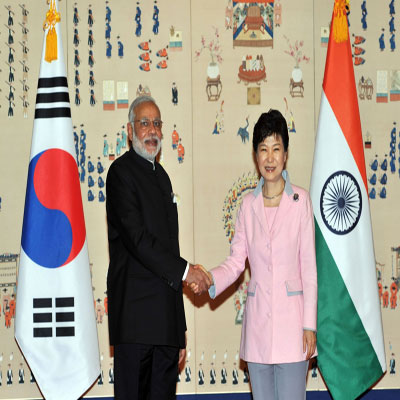
    NEW DELHI: After inking film co-production deals with China, India has now signed an agreement with South Korea to increase audio-visual exchange between the two countries. The deal was signed today during Prime Minister Narendra Modi’s visit to South Korea.


    The co-production agreement includes cooperation between the film industries of the two countries to promote export of Indian films and will act as a catalyst towards creating awareness about India and its culture.


    This will also help in increasing bilateral trade between both countries. The agreement was signed under the provisions of India-South Korea Exchange Programme.


    The agreement also covers animation and broadcasting programmes and would enable opportunities for collaboration between Indian and Korean film industries, and facilitate collaboration and exchange.


    Producers from both countries will get an opportunity to pool their creative, artistic, technical, financial and marketing resources to co-produce films. 


    This will lead to exchange of art and culture among the two countries, and co-productions would provide an opportunity to create and showcase the ‘soft power’ of India. 


    Additionally, it would lead to generation of employment among artistic, technical as well as non-technical personnel engaged in the arena of film production including post-production and its marketing, thus adding to the country’s Gross Domestic Product (GDP). 


    The utilization of Indian locales for shooting raises the visibility and prospects of India as a preferred film shooting destination across the globe would be promoted. This in turn will lead to the inflow of foreign exchange into the country. It will also lead to transparent funding of film production. 


    The audio-visual co-production agreement would open up new frontiers for the film industries of both countries and is expected to open doors for wide ranging collaboration and lead to strengthening of India’s cultural presence in an important part of the world.

  • India, South Korea to ink audio-visual co-production agreement

    India, South Korea to ink audio-visual co-production agreement

    NEW DELHI: India and South Korea will be inking an audio-visual co-production agreement, which was accorded by the Union Cabinet. The agreement will include cooperation between the film industries of the two countries to promote export of Indian films and act as a catalyst towards creating awareness about India and its culture.


    This will help in increasing bilateral trade between both countries. 


    The Union Cabinet chaired by Prime Minister Narendra Modi, approved completion of internal ratification procedure, to enable the agreement to come into force.


    The Agreement will be signed during the forthcoming visit of the Prime Minister to South Korea. 


    The agreement will mean that producers from both countries would get an opportunity to pool their creative, artistic, technical, financial and marketing resources to co-produce films. 


    This will lead to exchange of art and culture between the two countries, and co-productions would provide an opportunity to create and showcase the ‘soft power’ of India. 


    The deal is also likely to generate employment among artistic, technical as well as non-technical personnel engaged in the arena of film production including post-production and marketing, thus adding to the country’s Gross Domestic Product (GDP).


    The utilization of Indian locales for shooting raises the visibility / prospects of India as a preferred film shooting destination across the globe would be promoted and this will lead to inflow of foreign exchange into the country. 


    This will also lead to transparent funding of film production. 


    An audiovisual co-production agreement between India and South Korea is expected to open doors for wide ranging collaboration and lead to strengthening of India’s cultural presence in an important part of the world as well as open up new frontiers for the film industries of both countries.

  • Providence Equity to buy out Star India from Star CJ venture

    Providence Equity to buy out Star India from Star CJ venture

    Mumbai: Star India has been getting out of non-core activities to focus on its  broadcasting (entertainment and sports) and digital businesses. Among the operations it bailed out on figure cable distribution where it exited from Hathway Cable & Datacom and news where it moved out from Media Content & Communication Services (the Star News venture).


    Earlier this week, both Korea Bizwire and  Variety.com reported that Star India has decided to sell its 50 per cent stake in the Indian home shopping joint venture venture Star CJ with South Korea’s CJ O Shopping  to Providence Equity Partners following approval from the previous Indian government.  The approval process took close to a year and got the Foreign Investment Promotion Board go-ahead just as the previous government’s tenure was ending.


    The quantum that the $40 billion corpus Providence Equity would be paying to buy out Star’s holding was not disclosed but it would be done through a Mauritian subsidiary of the private equity fund. The deal between Star and Providence was signed on 29 May, said the Korea Bizwire report.


    The remainder 50 per cent equity will continue to be with CJ O Shopping, which is part of the CJ group.


    Both CJ and Star have invested $55 million in the joint venture, which began in 2009 as a six hour slot on Star Utsav, which was then expanded into a 24 hour Star CJ home shopping channel. It reportedly had estimated revenues of about $98 million and can continue to use the Star CJ brand for the next 12 months.


    CJO Shopping is optimistic of ramping up business through Star CJ following its bringing in Providence as a “financial partner.”  Providence also owns equity in European home shopping venture  HSE24, apart from having holdings in Indian cable TV distribution company Hathway Cable & Datcom and UFO Moviez.


    The move comes at a time when the Network18 (now Reliance Industries) owned HomeShop18 is preparing for a public offering in New York.

  • Get ready for extreme action with Joel Lambert in manhunt only on Discovery Channel

    Get ready for extreme action with Joel Lambert in manhunt only on Discovery Channel

    MUMBAI: Discovery Channel is coming with its brand new series MANHUNT, featuring former Navy SEAL Joel Lambert in an extreme version of hide-and-go-seek. With this series Discovery Channel is all set to thrill its viewers as they can see Joel rescuing himself from the world’s most elite tracking team units in some treacherous terrains.


    The seven part series premieresevery night at 10 PM starting 19th May, only on Discovery Channel.


    Filmed on-location in the United States, Poland, South Africa, Philippines, Panama and South Korea, each episode of MANHUNT follows Joel as he is inserted into unknown territory with nothing but a basic survival kit and a canteen of water; he then has up to 48 hours to reach a pre-determined extraction point, while being pursued by a different tracking unit each week. Joel is given minimal supplies to survive—and anything else he needs, he must to find along the way.


    With cameras capturing the action from both perspectives, viewers will experience the high tension from both – Joel and the special operative teams. An expert in escape and evasion, Joel’s background has well-positioned him to prey on each unit’s hidden flaw—but evading highly specialized tracking units and combatting dehydration, hunger, and the elements proves to be a greater challenge.


    MANHUNT is produced for DNI by Discovery Studios. For DNI, Sarah Davies is executive producer and for Discovery Studios, Eddie Barbini and Brian Knappmiller are executive producers.


  • India ranks sixth among top ten spammers for Feb

    India ranks sixth among top ten spammers for Feb

    NEW DELHI: India stands at sixth position in terms of spam distribution in February 2014, while China has been ranked number one.


     According to Kaspersky Lab study, the countries that feature in the top 10 worldwide spam distribution list are: China (22.9 per cent), United States (19.1 per cent), South Korea (12.8 per cent), Russia (7 per cent), Taiwan (5.1 per cent), India (3.4 per cent), Vietnam (3 per cent), Ukraine (2.3 per cent), Romania (2 per cent) and Japan (1.8 per cent).


     The study said that internet users in India should start taking digital security seriously. With the number of threat vectors increasing alarmingly along with the rise of cybercriminal activities, it is imperative that internet users in India protect themselves with genuine internet security or anti-virus software. “With regards to spam, the government should initiate spam laws that will deter spammers from making India their safe havens,” the study stated.


     In February, social networking sites remained the most popular phishing target. Email services were second in the rating of targeted organisations, while financial and e-pay organisations came third with a slight increase of 1.1 percentage points in their share of phishing attacks.


     Kaspersky Lab – South Asia MD Altaf Halde said, “Spammers are becoming more intelligent in masking their messages under the garb of offering something genuine to the recipients – be it Valentine’s Day discount or news about Ukraine, etc.”


     Once unsuspecting users have clicked or downloaded the email attachment, Trojans are downloaded without the user’s knowledge, which are capable of stealing data or even holding the data at ransom (encrypting the data and demanding money to decrypt the data, like CryptoLocker).


     February’s love-themed malicious spam was dominated by Trojans, as the cybercriminals’ mass mailings targeted credulous users with a Trojan-Dropper. The Trojan installs two malicious programs on the system – one is spyware that steals all document files (Docx,  Xlsx, Pdf) from the computer and sends them to a specific mailbox; another is IRC-bot/worm called ShitStorm which can carry out DDoS attacks on websites and spread copies of itself via MSN and P2P services.


     If recipients respond to these emails, their computer can easily become part of a botnet. In addition to Trojan spyware this month’s malicious spam included ransomware – a type of malware that blocks the user’s computer and then demands money to unblock it. The explicit photos also turned out to be malicious programs and among them was the Andromeda backdoor that allows cybercriminals to secretly control a compromised computer.


    Messages allegedly sent on behalf of Facebook informed recipients that a lot had happened on friends’ news feeds since they last visited the site and they were prompted to open the attached archive to find out more. The archive contained the backdoor from the aforementioned Andromeda family.


     Meanwhile, ‘Nigerian’ scammers could not pass up the opportunity to exploit the situation in Ukraine and the tragic events that followed in order to cheat users out of their money. They cited some familiar stories about unfortunate tourists in Kiev who had all their money stolen, followed by a request for financial assistance.


     The proportion of spam in email traffic in February increased by 4.2 percentage points compared to the previous month and averaged 69.9 per cent – 1.2 percentage points less than in February 2013.


     China (23 per cent) returned to the top of the rating, followed by the USA (19.1 per cent) and South Korea (12.8 per cent). Russia (7 per cent) ended the month in fourth place with an increase of 1.1 percentage points. Taiwan (5.1 per cent) dropped to fifth place after its share decreased by 1.1 percentage points compared to January.


     India (3.4 per cent), Vietnam (3 per cent), Ukraine (2.3 per cent) and Romania (2 per cent) all experienced an average decline of 0.2 percentage points in the proportion of distributed spam.


     In February, Japan’s share (1.8 per cent) fell 0.3 percentage points compared with the previous month, resulting in a drop of one place in our rating to tenth place. South Korea remained the leading source of spam sent to European users (48.6 per cent) in February.


     Next came the USA whose contribution also increased by almost 3 percentage points, pushing it up one position to second place. In January, the USA was third with 5.3 per cent of all spam sent to European users followed by Taiwan (5.5 per cent), Russia (5 per cent), China (3.9 per cent), Ukraine (2.3 per cent) and Vietnam (1.8 per cent).


    India rounded off the Top 10 with 1.6 per cent of spam sent to European users. The UK and Germany’s figures are slightly lower – 1.5 per cent and 1.4 per cent respectively.


    Top three types of organisations targeted most frequently by phishers were: social networking sites (27.3 per cent), email services (19.34 per cent) and e-pay organisations (16.73 per cent).


     Kaspersky Lab specialists also came across fraudulent notifications in February that claimed to be from the Malaysian HongLeong bank.

  • Eros International’s ‘English Vinglish’ to become the biggest B’wood release in South Korea

    Eros International’s ‘English Vinglish’ to become the biggest B’wood release in South Korea

    LONDON: Eros International, a leading global company in the Indian film entertainment industry announced today that it will release the blockbuster film, English Vinglish, in South Korea on February 6, 2014. Following on the heels of the film’s success in Hong Kong and Germany last year, English Vinglish will be released across 150 screens, making it one of the biggest Bollywood releases in South Korea to date.


    Speaking on the film’s success, Kumar Ahuja, President, Business Development, Eros International Media Ltd, said, “English Vinglish is a universal story that truly resonates with global audiences, especially as it relates to acceptance and the challenges of learning a new language. With newer markets for the film consistently opening, we believe audiences worldwide will continue to find a connection with this captivating film.The film, directed by Gauri Shinde, has performed exceptionally well in new markets. In Taiwan, the film was released across 6 screens in December, 2013 and amassed over US$ 300,000, making it the second biggest grossing Bollywood film in Taiwan. English Vinglish also continues to hold a firm position in Taiwan’s top 10 charts.


    “In several new markets, including Asia, audiences have shown that they love Indian ethos and drama. In response to the growing appetite, we plan to release additional films like Dabaang, Dabaang 2, Ra.One and Go Goa Gone into new markets in the coming year.”


    In 2014, Eros will look to further expand its presence in Asia by releasing films such as Cocktail, Student Of The Year and Table no 21 in Taiwan and Chalo Dilli, English Vinglish, Dabaang, Student Of The Year and Agent Vinod in Japan. The Japanese market has already proven to be a strong one for Eros as the Company’s release of Farah Khan’s Om Shanti Om across 14 screens earned over US $ 150,000 at the Japanese box office in 2013.


    Eros is also making inroads in Eurasia and Russia with plans to release some of its hit films including, Yeh Jawaani Hai Deewani, Rockstar, Zindagi Na Milegi Dobara, Student of the Year, Vicky Donor and Desi Boyz in these territories during 2014. This activity comes on the heels of the successful Eros film, Cocktail, which was released in March, 2013 across 19 screens in Kazakhstan and Kyrgyzstan and became the first Indian film in these countries to gross over US$ 100,000 at the box office.


    Finally, Eros has expanded into African markets with the release of its hugely successful Krrish 3 across 14 screens in Egypt this past December.

  • AsiaPac leads global ad growth: Nielsen

    AsiaPac leads global ad growth: Nielsen

    MUMBAI: Global advertising expenditures were up 3.2 per cent in the third quarter of 2013 for year-over-year period, driven largely by Asia Pacific’s expanding powerhouse ad market, as well as a bottoming out of Europe’s contracting ad market.


    According to Nielsen’s latest Global AdView Pulse report, Asia Pacific ad revenues surged seven per cent in the first nine months of 2013. China was up 16.7 per cent, Indonesia 22.1 per cent and Malaysia 15.7 per cent. The gains offset declines in Australia and South Korea.


    Television continues to be the favourite medium through which advertisers attempt to reach their consumers, commanding a 57.6 per cent share of all spending and growing 4.3 per cent. Display Internet, though representing a smaller share of spends at 4.5 per cent grew significantly by 32.4 per cent.


    Macro sectors contributing to the growth include FMCG, which saw a 5.9 per cent increase in ad spending for the year-to-date, and Industry & Services, which grew 11.3 per cent.


    The period also saw a slight improvement in Europe, with the market down just 0.4 per cent in Q3. Nielsen notes that the region’s ad market appears to be bottoming out. Indeed, Italy and Spain, among the hardest hit, may have the worst behind them, the report notes, and Greece saw its ad revenues gain 10.3 per cent.


    In the US the market was up 1.7 per cent by the end of September, even though it fell 1.3 per cent in the third quarter itself. And in Latin America, the year-on-year change was 13 per cent.

  • 79% Indians look for best deals while shopping

    79% Indians look for best deals while shopping

    MUMBAI: A majority (79 per cent) of Indians would rather ‘spend time looking for a good deal,’ while only 21 per cent would rather ‘pay more to make a quick/efficient purchase.’ The findings reflect a new poll of 18,503 online respondents conducted by Ipsos OTX.


    “Indian consumers lately show both impulsive and compulsive buying behaviour. But at the same time they are dealaholics and hardcore value for money seekers. No wonder why sale/ discount offer periods record the highest revenue both for online and offline retailers,” said Ipsos India head of marketing Biswarup Banerjee.


    Those with a lower household income (82 per cent) are most likely to spend time looking for a good deal. Even those with middle (80 per cent) and high (74 per cent) levels of income, however, would take the time to find a better price. Similarly, those with a low level of education (100 per cent) are more likely than those with a medium (80 per cent) or high (79 per cent) level. Women (80 per cent) are more likely than men (78 per cent) to go hunting for a sale.


    The countries with the highest proportions of those indicating they would rather spend time looking for good deals are from: Hungary (94 per cent), Spain (94 per cent), Great Britain (93 per cent), Argentina (92 per cent), Belgium (91 per cent), France (91 per cent) and Germany (91 per cent). This group of deal-chasers is followed by: Australia (90 per cent), Italy (90 per cent), Mexico (90 per cent), Japan (88 per cent), South Africa (87 per cent), Canada (86 per cent), Poland (86 per cent), the United States (85 per cent), China (81 per cent), Russia (81 per cent) and South Korea (81 per cent). The lower group includes: India (79 per cent), Brazil (76 per cent), Saudi Arabia (76 per cent), Norway (75 per cent), Sweden (75 per cent), Turkey (74 per cent) and Indonesia (58 per cent).

  • 69% Indians feel SMS is an easier way to express than in person: Ipsos Study

    69% Indians feel SMS is an easier way to express than in person: Ipsos Study

    MUMBAI: Seven in ten (69 per cent) Indians admit they say things in that they would not say voice-to-voice or person-to-person; compared to 43 per cent globally, finds a new poll conducted by Ipsos OTX – the global innovation center for Ipsos.


    “Text or Email is comparatively an impersonal medium and people feel less hesitant to speak their mind. Perhaps that is the reason why majority of Indian would rather avoid saying things in person or over phone,” said Ipsos – head marketing communication Biswarup Banerjee.


    “For example people prefer to share sensitive comments like – “I love you.” “Our relationship is over.” “You are fired.” “I failed in exam.” in writing rather than saying over the phone or face-to-face to avoid embarrassment when they are physically involved,” added Banerjee.


    Demographically in India, age appears to be the most significant variable as those under the age of 35 (75 per cent) are considerably more likely than those aged 35-49 (67 per cent) and those 50-64 (52 per cent) to text/email things they won’t say out loud. Education is also a significant factor as seven in ten (69 per cent) of those with a high level of education say they do so compared with 100 per cent among those with low education. Both Indian women (70 per cent) and men (68 per cent) feel more comfortable texting or emailing sensitive subject rather than voicing it out.


    Strong majorities in China (90 per cent) and South Korea (80 per cent) say they text or email things they would not say over the phone or in person. Seven in ten of those in Indonesia (76 per cent), India (69 per cent) and Saudi Arabia (67 per cent) say so. Following next are Turkey (58 per cent), Brazil (48 per cent), Japan (46 per cent), South Africa (45 per cent), Argentina (42 per cent), Mexico (42 per cent) and Russia (39 per cent). Only three in ten or less in most of the countries surveyed say they reserve some communication for text or email: Canada (34 per cent), Australia (33 per cent), France (33 per cent), Great Britain (32 per cent), Poland (32 per cent), Belgium (31 per cent), Italy (31 per cent), United States (30 per cent), Germany (25 per cent), Hungary (24 per cent), Spain (24 per cent), Norway (22 per cent) and Sweden (22 per cent).


    Ipsos conducted this study among 18,502 adults in 25 countries in the month of August.