Tag: South Indian Bank

  • Onam 2025: How brand campaigns tapped into Kerala’s festive pulse

    Onam 2025: How brand campaigns tapped into Kerala’s festive pulse

    MUMBAI: It’s that time of the year when Kerala’s air carries the aroma of Onam Sandhyas, floors burst into bloom with colourful pookalams, and Punnamada and other famous lakes in Kerala ripple under the oars of Vallam Kali racers as the cheers of the crowd echo across the water. In 2025, brands are lining up to tap into this very sentiment, weaving campaigns that range from heart-tugging reunion tales to playful takes on how the festival is evolving in an age of technological advancement.

    Diving headfirst into the festive spirit was Amul, with an ad film featuring the iconic Amul girl in a cream kasavu saree, rocking a pair of sunglasses as she balances on the edge of a long racing boat and performs the viral ‘aura farming’ step to traditional Kerala tunes. Staying true to its knack for seizing every cultural moment that resonates with Indian audiences, the dairy giant recreated the viral boat-dance originally started by 11-year-old Indonesian Internet sensation Rayyan Arkan Dikha.


    A post shared by Amul Keralam (@amulkeralam)

    On a similar vein, Parle-G also released a campaign film zeroing in on what the festival actually means to Malayalam households. The story follows a family returning to Kerala from the US after 16 years. While the daughter is eager to embrace the festivities, the father feels disheartened by how traditions have evolved with time.

    For instance, the once-famous Poopara ground, known for its Onam celebrations, has turned into a bus stand; a pookkalam has been replaced by ready-made carpets; and the mango tree which was once used to tie a swing has been cut down because no one has the time to clear away the dry leaves. To him, it is both alarming and disheartening to see the festival lose its soul, with rituals altered in the name of convenience.

    In a heartening twist, the daughter recreates his childhood memories by bringing home a Pulikali troupe, tug-of-war games and other vibrant touches of authenticity, reminding him that the essence of Onam lies in togetherness and shared joy. The film closes with the brand’s message: ‘Jo auron ki khushi mein paye apni khushi, Parle-G, G Maane Genius’.

    Here’s a look at some of the other campaigns that stood out this Onam:

    Association of Mutual Funds in India ( AMFI )

    Mutual Funds in India

    Through its Mutual Funds Sahi Hai campaign, AMFI has rolled out festive-themed billboards, digital displays and social media posts in both English and Malayalam, with taglines like “Staying invested can take you places.”

    At Cochin International Airport, Homecoming travellers are greeted by a life-sized 3D boat installation set against an LED backdrop. Passengers can hop aboard, pick a dream destination, from the Eiffel Tower to the Statue of Unity, and capture moments that symbolise how long-term investing can take you places.

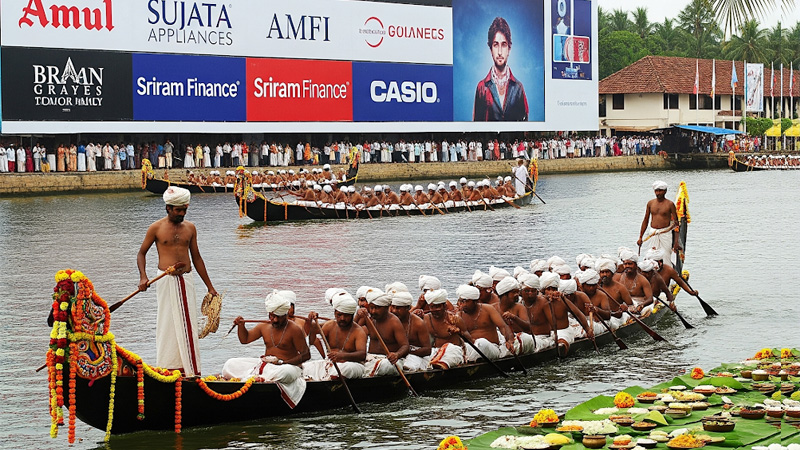
    But the celebrations don’t stop there. The mutual fund self-regulatory body has also anchored itself at the legendary Nehru Trophy Boat Race in Alappuzha, where over 75 snake boats slice through the waters before nearly a lakh spectators. The message? Just like the rowers’ endurance and rhythm, consistent investing builds momentum towards long-term goals.

    Peter England 

    The apparel brand has launched a new Onam campaign aimed at Kerala’s Gen Z consumers, featuring traditional festive elements fused with the contemporary  culture of today’s youth. The brand has roped in homegrown rapper Imbachi to headline the campaign with a specially created anthem.

    The track combines the rhythm of Kerala’s ‘chenda melam’ with the beats of hip hop, offering a fresh sound that reflects the cultural roots of Kerala.

    The campaign also sets the tone for Peter England’s long-term retail strategy, leveraging pop culture, music and Gen-Z influencers to strengthen engagement with India’s new-age consumers.

    Sujata Appliances

    Sujata Appliances’ Onam campaign shines a light on an old-age home, conveying that the festival’s spirit extends beyond biological family ties. The film follows an elderly woman abandoned by her own family who, instead of celebrating alone, brings together residents of the home and children from an orphanage. By preparing a traditional sadya and sharing it with them, she transforms what could have been a solitary occasion into one filled with joy and warmth. The campaign delivers a clear message: Onam is not only about kinship by blood, but about spreading love, embracing others, and forging new bonds of togetherness.

    South Indian Bank 

    The bank has unveiled its Onam campaign film, written and produced by Aiswarya Suresh and directed by Brijith BKV of First Picture Show Co. Captured in a PoV format, the story follows a family reunion for Onam, bringing to the fore the campaign’s central theme: the best returns come from investing in relationships.

    The film opens with a young Malayali woman returning home after years away, surprising her family just in time for the festival. She quickly becomes the heart of the celebration: from decorating a floral rangoli to dressing in traditional Thalappoli attire and joining the grand Onam feast. Subtly interwoven is the role of South Indian Bank’s mobile app, emphasising the brand’s message that while technology enables convenience, true wealth lies in the bonds that bring people together.

    Casio Watches India

    Casio Watches India’s Onam campaign depicts the warmth of new beginnings within families. In the film, a mother-in-law welcomes her daughter-in-law on her first Onam, gifting her a Casio LTP-SN5YSR-5A watch to mark the occasion. What may appear to be a simple gesture carries a deeper meaning, symbolising acceptance into a new family and creating a sense of belonging. In a touching moment, the mother-in-law gently remarks that it is her “daughter’s first Onam,” not her daughter-in-law’s, making her feel truly at home. The campaign also showcases a model designed specifically in India for Indian consumers, underlining Casio’s effort to create products that are culturally relevant to its audience.

    Shriram Finance

    The brand’s Onam campaign draws on Kerala’s association with gold, not merely as a symbol of wealth, but as a treasure chest of memories, traditions, and aspirations. Built around the thought ‘May your Onam be of Gold’, the film extends the metaphor to our loved ones, portraying them as life’s true riches. Familiar faces from Malayalam cinema and television bring a sense of warmth and relatability, while Vineeth Sreenivasan’s soulful composition lifts the narrative with melody and emotion, wrapping the story in festive spirit. 

  • IBS: Building the MarTech stack for digital India

    IBS: Building the MarTech stack for digital India

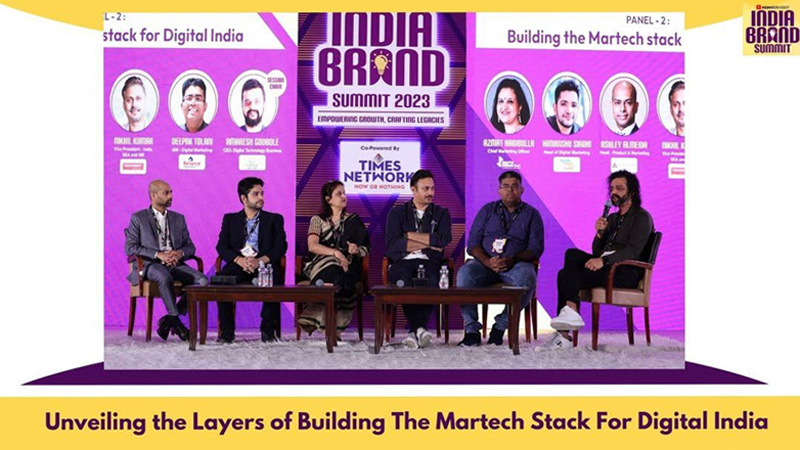
    Mumbai: The India Brand Summit held on 28 November 2023 at The Lalit Mumbai, convenes leaders, marketers, entrepreneurs, and experts to explore current trends, challenges, and opportunities in the dynamic brands and marketing arena.

    The session focuses on the implementation of marketing technology (MarTech) to drive digital transformation in India. The session delves into how organisations are leveraging Martech tools and strategies to navigate the digital landscape and connect with consumers in a rapidly evolving technological environment.

    The key highlights of this session are: To explore Martech stack components, reaching India’s diverse population, personalised experiences, challenges, competing with larger players, and aiding digital transformation in businesses.

    The panel moderated by Publicis Groupe India CEO, digital technology business Amaresh Godbole had panelists including South Indian Bank CMO Azmat Habibulla, Apollo 24|7 head of digital marketing Himanshu Sirohi, Axis Securities head – product & marketing Ashley Almeida, mediasmart VP – India, SEA and ME Nikhil Kumar and Reliance Retail GM digital marketing Deepak Tolani.

    The session began by Godbole asking a question to all the panellists, “Given the evolution that we’ve seen with the MarTech world over the last decade, how have you seen the investment drive? how has it changed your life? What is the single biggest benefit that you’ve seen from you MarTech stats? How has it changed you as a marketeror the program that you take and what are the challenges there is?”

    Tolani said, “The concept of MarTech itself is so new. A lot of people are actually not familiar within the system of what MarTech is. So I think, we need to have more of making this a non-jargonish kind of a thing and let the entire organisation know. Because when you are actually talking about MarTech and its implementation while you can get the best of the best tools onboarded. The most critical part is how it is getting used and how the data is actually getting collected. Then if the data is getting collected cleanly in a manner in which will help you. That’s when the MarTech could actually be utilised. So I think as marketers our role has become to be more of people who are actually spokesperson for how you go and adopt technology and make it easy for adoption within the organisation. Whether it is a supply chain who has their own systems, or it is the operations at the stores, or it is whether it is your end delivery logistics partner who is actually handling over the product to the customers. I think for us, the role as marketers has become how do you ensure that people are not afraid who this entire MarTech. It’s something that will help business become more efficient, help better conversation and also ensure that it will give insights which may not be available five or ten years back. So I think it’s very important for us to educate the entire environment inside our organisations.”

    Thereafter Kumar said, ”Marketing and technology coming together in a short form word which is cool and we’re having a panel today celery talks how we’ve evolved. I think technology is going to play a role not just today but in the future and how its evolving is where we need to put our focus on. I represent an organisation which started as an SMS organisation. Today we’re one of the world’s leading global Ad-tech companies.”

    He then went on to talk about the evolution from single screen, SMS once being the best way to reach consumers to smart screens and all these giving birth to technologies. He then added saying, “As a marketer myself, I think every marketing insight comes from a consumer or from a need generated by the consumer or just the need of the current hour. I think that’s where MarTech is heading.”

    Slightly changing the question for Azmat Habibulla, Godbole asked, “How is MarTech playing a role in marketing for banks?”

    To which Habibulla replied,  “In the earlier days there was no concept of MarTech and now nothing can be done without technology. We’re all living in a technology advanced world. What MarTech does for all brand in generali: you get all your customer data in one place which becomes a central data repository. It was never the case earlier. We had lot of data silos and every channel was a separate channel, not even talking to each other. This is the biggest advantage that I feel of MarTech today is. The level of personalisation and sub segmentation that you can do. You can talk to very specific cohorts and personas and do highly personalised communication. All this is only because of the MarTech technology that exists today. Banking is a very very regulated industry. Fortunately there is lots of security and processes around data which helps BFSI. Being regulated really helps us and the way we collect data from customers as in consent driven, be transparent, what will be the use of the data, etc, all of these goes into building trust. When it comes to the trust that a customer has with a brand: it’s attached to personalisation; it’s attached to data security. Thanks to MarTech.”

    Thereafter, Sirohi said, “Now if you breakdown MarTech into 3 core elements, one of the biggest element would be a customer 360° view. You have data coming into all kinds of engines. It can be a back-end engine which is upper order, which is created 10 years back. It could be a new engine like an app supplier or Adobe Analytics or a Google Analytics where you’re tracking data and it’s a very new age engine. How do you get data across all of these traditional landing sources and create that customer 360° view? That is one very, very important part of MarTech, which again to a lot of degree has been solved by a lot of new age market getting stacks. The second aspect what I would call is hyper-personalisation. So personalisation 10 years back used to be many to one. I would have a customer cohort of maybe thousands of users and I would probably send an e-mail, SMS or a push to that entire cohort. Now that is big-time award. Now it’s very one-to-one. You can have all those variables coming out of that customer’s 360° view and you can personalize everything the way you want to.

    The third aspect is real-time campaign orchestration, real time campaign orchestration across channels. Now you have the customer 360° view. You know what to probably send to the customer. How do you personalize it. Now the third aspect is how do you kind of send it to the user across multiple channels in a profitable manner so that there is no fatigue via your communication and you orchestrate your campaigns in real time. Now 10 years back, I will tell you a use case, there was no way for doing that that now and at Apollo we do that use case almost day in and day out. We run one of the biggest key pharmacies in the country. Now imagine someone ordering in Delhi in winter and my customer 360° view telling me, ‘OK, this person ordered something is based out of Delhi. Should I send him/her an informative mailer or an offer around sub-interventions? Now imagine this person now moving to Bangalore and that e-mail, if this person opens in out of Bangalore, this e-mail is absolutely not relevant while all the data points suggested that this was the right e-mail to be sent to. Via our marketing stack, what we can do is when this individual opens their e-mail boxes, we capture the IP location. We send it back to our dynamic creative optimizer. Understand, OK which location is it coming from changing the creative on the go. So someone sitting out of maybe Delhi in winters would be seeing a different creative to someone sitting out of Bombay or Bangalore or Hyderabad. So these sort of interesting use cases kind of very, very interesting to us. Imagine sending someone an offer, a Diwali offer code and this individual opening that e-mail five days after Diwali. That offer and that e-mail is kind of waste to this individual now. But what you can do via these marketing stacks these days is, you can change the offer on the go. So if there is a date counter, you check it out and then you send a revised offer as per the latest trends or whatever is happening. So that I believe is a big, big play wherein one you can have all of the data in your system, you can create personalised offers or emails or products for this individual and on real time orchestrate, basis the location, time, segment. So that I think is very interesting for us in terms of marketing stacks.”

    After which, Almeida went on to say, ”Three years back we realised that AI is going to be such a huge part in what we do. Therefore I upskilled myself and spent two years in learning AI, etc. The reason is, the name itself MarTech – marketing in tech. I think the tools are all there but I think the most important thing as marketers is how do I make it useful to the company and also useful to the consumer in the end. So this personalisation etcetera, but personalization also can mean, you know, personalisation at different levels for the industry that I’m in stockbroking, I’ve spent most of my time in stockbroking and I think the most important thing that people are looking for is getting something that is really relevant to them. In the stock market, it’s almost to the degree of one. We need to speak to each person individually because each need is so different. So how can you understand that user using his behavior and then give him something that he can use to make, you know, wise investment decisions? That’s where we really want to take MarTech to.”

  • South Indian Bank welcomes P R Seshadri as new MD & CEO

    South Indian Bank welcomes P R Seshadri as new MD & CEO

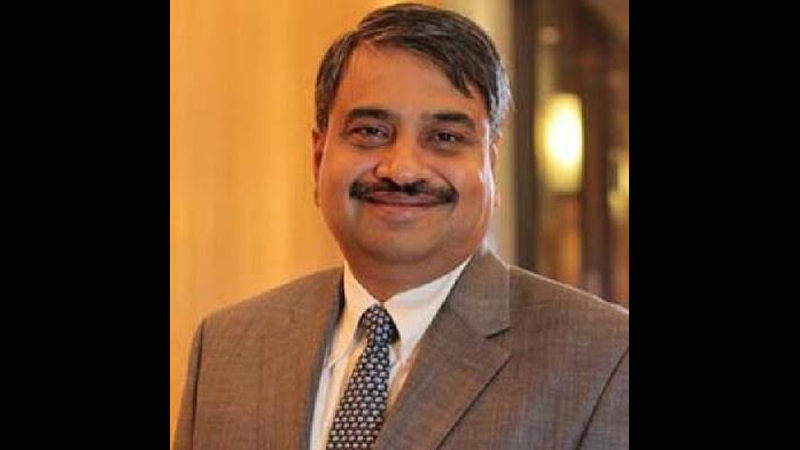
    Mumbai: South Indian Bank (SIB), one of India’s leading private sector banks with over a nine-decade legacy has appointed P R Seshadri as its MD & CEO effective 1 October 2023. He will succeed Murali Ramakrishnan who served a successful tenure from 1 October 2020 till 30 September 2023.

    With nearly 25 years of banking experience spanning domestic and international markets, P R Seshadri has held senior leadership positions at prestigious institutions, including Karur Vysya Bank Ltd and Citigroup. His leadership, marked by scaling, optimizing, growing, and transforming businesses, has earned him respect and acclaim within the industry. His career trajectory underscores his ability to drive sustained growth, emphasizing the adoption of digital operational frameworks and innovative solutions to meet the unique demands of the Indian market. Prior to joining SIB, Seshadri was associated with the Karur Vysya Bank (KVB) in a similar role.  

    Welcoming the incoming MD & CEO, executive vice president and chief business officer Thomas Joseph K, said, “Embracing a new era of leadership, we proudly welcome Mr. Seshadri to lead our institution. With a proven track record and a visionary approach, he embodies the future of banking excellence. His expertise will guide us towards greater heights, paving the way for success and prosperity for our valued clients and stakeholders. Together, we anticipate exploring new frontiers in finance and redefining growth through a customer-centric ethos.”

    Commenting on his appointment,South Indian Bank MD and CEO P R Seshadri said, “Leading South Indian Bank is a privilege as we embark on a growth journey, leveraging technology while upholding our business values and rich heritage. I am enthusiastic about collaborating with the Bank’s talented professionals to build upon the legacy. Together, we will navigate the evolving financial landscape, delivering innovative solutions and unparalleled service to our clients.”

    P R Seshadri is an electrical engineer and holds a Post Graduate Diploma in management from IIM Bangalore. In his new role as MD & CEO, he is poised to lead South Indian Bank into an era of growth and innovation, while upholding its rich legacy and core values, promising an exciting journey ahead for the Bank and its stakeholders.

  • South Indian Bank TVC shows how to safeguard your account

    South Indian Bank TVC shows how to safeguard your account

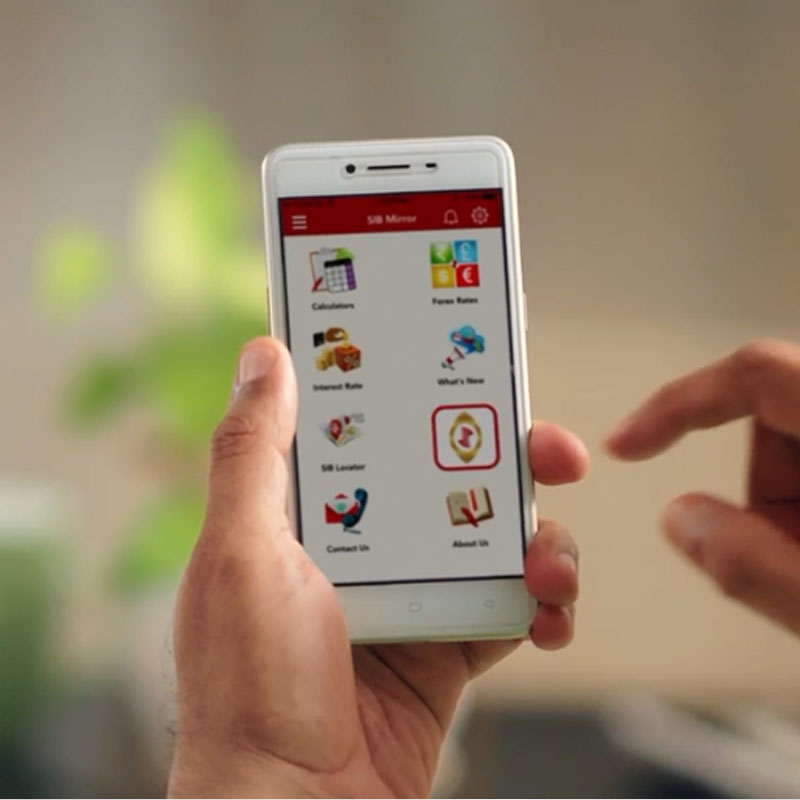
    MUMBAI: South Indian Bank has launched a TV commercial to promote the Digital E-lock facility in the bank’s mobile app called SIB Mirror Plus.

    It has been conceptualised and produced by Blackswan India and directed by co-founder Pradeep Menon.

    Digital E-lock is a feature that lets South Indian Bank’s customers lock and unlock their accounts at the touch of a finger. Once the account is locked, all digital debit transactions will be blocked. ATM, PoS, internet banking and mobile banking transactions can be protected with Digital E-lock.

    The film follows the conversations between a prudent father and his college-going son. The father is a no-nonsense man, serious about the safety of his family. He reminds his wife to turn off the burner of the gas stove and his son not to forget to lock his bike. The son playfully asks his father whether he has locked his bank account. He goes on to explain about the Digital E-lock feature and how accounts with SIB can be safeguarded.

    “We wanted us to come up with a cost-effective TV commercial that drives home the E-lock feature in their app in a way that anyone with a smart phone can relate to,” said Blackswan India CEO Raman P Namboothiri.