Tag: South Asia

  • BBC World News, tourism ministry tie up for travel series

    BBC World News, tourism ministry tie up for travel series

    MUMBAI: BBC World News and Ministry of Tourism (MoT) have entered into a year-long partnership to promote Indian tourism in the global market.

    As part of the partnership, BBC World News will produce a six-part travel series Travel India, one corporate film and five ad films on India’s tourist spots.

    Hosted by cricket commentator Harsha Bhogle, Travel India will include journeys to spiritual spots, places of scenic beauty, and urban centers for business in conjunction with underdeveloped rural centers. For a wider reach of the global audience, the show is available across Europe, Asia-Pacific, South Asia, Middle East, Australia and UK. Besides it will also be available as in-flight ads in BBC World News programs on United Airlines and US Airways.

    The five-minute corporate film will be based on Ayurveda and Wellness.

    The five 30-sec ads called ‘Colours’ is based on the different colurs depicting various facets of Indian soil and culture.

    MOT joint secretary Leena Nandan said, “We are extremely pleased that the multi-hued dimensions of India will be seen on BBC World News, a medium that has the credibility and reach to influence travellers across the world. I am confident that a series like Travel India will successfully showcase not just the glorious past and the dynamic present that all Indians take great pride in, but the varied facets of India than can be can we explored, enjoyed and experienced .”

    BBC Worldwide ad sales regional director South Asia Seema Mahapatra said, “Our relationship with MOT goes long way back. We have produced similar shows for the ministry even in the past like documentary on medical tourism, ayurveda etc.”

    “Internationally BBC World News has similar tie-ups with Suzlon. For them we produce Eco-diary, which gives a list of conference and seminars happening all over the world,” Mahapatra added.

  • bbcnews.com to hold mobile photo contest for South Asia

    bbcnews.com to hold mobile photo contest for South Asia

    MUMBAI: BBC News website has launched its first Mobile Photo Contest for South Asia.

    Themed My Changing World’, the contest will be open till 31 March 2007, with prizes to be won every week. Details of the contest are available on bbcnews.com/contest.

    BBC News Interactive head Steve Herrmann said, “The pictures we receive every day from our audience are changing the way we report the world. This contest is specifically for our South Asian audience. We think this will be a good way to engage with younger audiences across the region, and hope it will be fun to take part in.”

    The contest invites mobile photos from people across South Asia, and offers participants a chance to win BBC merchandise every week. This is in addition to prizes such as an iPod Video, Digital Camera, and Worldspace radio at the end of the contest. Every week, the website will feature some of the best and most interesting picture entries.

    The BBC News website offers a selection of news, entertainment, business, science, technology, and sport news.

    The BBC News website claims to receive over 900 million page impressions every month, and has around 40 million unique users a month.

  • 3PL market revenues estimated to grow to $140 million by 2012: Frost and Sullivan research

    3PL market revenues estimated to grow to $140 million by 2012: Frost and Sullivan research

    MUMBAI: Frost and Sullivan’s Automotive and Transportation Practice South Asia and Middle East will be hosting an analyst briefing webinar on 15 December from 11 am to 12 noon, on rapid growth of organised retailing – driving the Indian retail 3PL market.

    The booming Indian economy is leading to the burgeoning purchasing power of the consumers and the rapid growth of the retail sector, especially the organised retailing segment. Entry of several international retailing companies, along with domestic major industrial groups focusing on the retail sector is driving this growth.

    However, success in this competitive and dynamic sector depends on achieving an efficient logistics and supply chain, which could be provided by professional logistics service providers such as the 3PL companies. The 3PL market revenues in this sector are estimated to grow from $49.5 million in 2005 to $140 million by 2012, at a compound annual growth rate (CAGR) of 16.0 percent, asserts an official release.

    While the market is continually expanding, 3PL service providers in India need to address a few challenges such as shortage of skilled manpower and highly diverse geographic conditions to gain maximum share in this market.

    The number of participants in this market has grown to be more than 400 in 2005. The Indian retail 3PL industry can be divided into three distinct tiers: national 3PL companies with nationwide presence, regional 3PL companies with a strong presence in one or two regions, and local 3PL companies with small or remote presence.

    Frost and Sullivan’s research has identified that the largest market segment for 3PL services as of 2005 is transportation, followed by freight forwarding.

    Frost and Sullivan Automotive and Transportation Practice industry analyst Srinath Manda said, “In this robust environment, it is important for service providers to customise their service offerings coupled with competitive rates in order to truly capitalize this opportunity.”

    Recognising the importance gained by the 3PL market in the Indian retail sector, this briefing is structured to address retail 3PL market definitions and segmentation, market trends and growth drivers, market size and forecasts, end-user analysis, industry profile and major participants, industry challenges, and future opportunities, adds the release.

  • BBC appoints Sanjeev Srivastava as BBC Hindi service India editor

    BBC appoints Sanjeev Srivastava as BBC Hindi service India editor

    MUMBAI:The Hindi Service of the BBC World Service broadcasts — BBC Hindi has appointed Sanjeev Srivastava as India editor, heading the radio and online operations in India.

    Srivastava moves from his current post as the BBC’s India correspondent to take up his new role in August 2006.

    As India editor, Srivastava will be responsible for all BBC Hindi output generated from India across all platforms of delivery, including FM, short wave and online. Based in Delhi, he will be leading a team of experienced broadcast and online journalists on all BBC Hindi editorial initiatives in India.

    BBC Hindi India editor Sanjeev Srivastava

    According to an official release, Srivastava has been reporting from India for the BBC, in a variety of roles, for over 12 years. He started his broadcasting career in 1994 when he joined the BBC Hindi service in London. He launched the BBC’s first Mumbai bureau, reporting across BBC television and radio in English, Hindi and Urdu. Then, following a stint as India business and western India correspondent, he joined the BBC’s South Asia Bureau in Delhi in March 2003 as India correspondent. Prior to the BBC, he worked in print journalism including The Times of India and The Indian Express.

    Srivastava has been exclusively reporting on the life of modern day India over the last two decades. He has covered social, economic and political issues, such as the successive general elections, earthquakes in Gujarat and Kashmir and the bird-flu outbreak in Gujarat. He has also tracked India’s fast changing place in the global order, geo-political and economic, as well as the country’s foreign policy, particularly Delhi’s relations with its South Asian neighbours, China, US and Europe. In addition, he has reported extensively on India-Pakistan relations, the ongoing peace initiative and Kashmir.

    BBC Hindi service head Achala Sharma says: “India is an important market for the BBC – we are the leading international broadcaster. Our Hindi radio audience has grown by nearly five million in recent years and we know from our relationship with listeners that our new programming is popular. But we cannot afford to be complacent. India is changing fast and news is a competitive business. I am confident that in Sanjeev Srivastava we have someone with the skills, experience and vision to provide excellent editorial leadership. He is top grade BBC news journalist with an impressive track record and passion for reporting India.”

    Commenting on his new role, Srivastava adds: “The BBC stands for quality journalism people can trust. Over 15 million listeners trust BBC Hindi to serve their needs with a range of news programmes. I look forward to building on that trust and expanding our Hindi audience with new editorial initiatives, which will engage them, inform them and entertain. These are exciting times in Indian media, and I relish the opportunity to play a role at this important time.”

  • Gemini Communication buys out US-based PointRed Technologies

    Gemini Communication buys out US-based PointRed Technologies

    MUMBAI: In a bid to get a global presence, Gemini Communication Ltd, a provider in networking, systems integration and RFID solutions, is buying out the US-based PointRed Technologies for an undisclosed amount.

    The acquisition of the wireless product company will help the Chennai company foray into a new segment. “We were implementing solutions on other product providers. Now we can provide solutions and offer an innovative product range. The buy out will help make us the largest broadband wireless access company in South Asia,” says Gemini Communication chairman Vijay Kumar.

    PointRed Technologies has a presence in 12 countries with a turnover of $1.5 million. The company has been funded by Acer Technology Venture America to the tune of US $9.7 million.

    “We will be getting into the DSL (digital subscriber line) segment. It will also help us in expanding rural connectivity. We will be aggressively targeting ISPs (internet service providers), telecom operators and corporates with multiple points,” says Kumar.

    Gemini Communication is acquiring the entire share capital of Clear Blue Llc, the holding company of PointRed Technologies. The company owns IP’s and IPR’s products in the wireless broadband space.

    PointRed has been commercially deploying its wireless broadband access solutions worldwide since June 2002. The company offers a pay-as-you-grow infrastructure and a NLOS solution that route around line-of-sight obstacles.

    The acquisition of PointRed is expected to increase Gemini’s turnover from Rs 1.26 billion to Rs 2 billion this fiscal. “Over the years, Gemini Communication has been selling products of other companies. Through this acquisition, we will now be promoting our own brand and this will enable us to access the international markets in a shorter span of time in the wireless technology space”, says Kumar.

  • MediaCom South Asia president Jasmin Sohrabji

    MediaCom South Asia president Jasmin Sohrabji

    The Indian media industry today boasts of some powerful and intelligent women who have, through their incessant hard work and grit, found their place under the sun. In the second of the series – Ms. Media: 25 Women Who Matter – we tried to find out what MediaCom South Asia president Jasmin Sohrabji is all about and what it took her to get to the top!

    Jasmin has been in the industry for the last 16 years and is looked upon as “one of the most brilliant media professionals the industry has had in a long long time.” She is one of the members of Tam India’s Joint Industry Body (JIB) Committee, which advises Tam on corrections and also guide them about the placement of samples in newer areas.

    Sporting an MA in Economics and an MBA, this double postgraduate joined Trikaya Grey (now Grey worldwide) in 1989 after a short stint with Contract. Within Grey, she was sent to Bangalore in 1996 to set up the media department after the agency won the Wrigley account. Under her guidance MediaCom was launched in September 1996. The lady then packed her bags and was off to Indonesia to head the MediaCom operation there, where she worked on clients like Proctor & Gamble (P&G), GlaxoSmithKlien (GSK) and British American Tobacco (BAT).

    After a year, Jas (as she’s popularly called in the industry) zoomed off to New York to work on MediaCom clients – P&G and GSK – in the US. There she was also instrumental in training the US, South American, Eastern Europe and Asian markets on MediaCom’s proprietary optimiser tool – Maxis.

    Jasmin returned to Indian soil in 1999 and now heads MediaCom South Asia as president along with co-president Harish Shriyan. In addition to MediaCom South Asia (Bangladesh and Sri Lanka), Jasmin was also responsible for the P&G planning for the P&G AAI GBU including nine Asian countries.

    Her mantra for always being ahead of the others in this game is research. Today, MediaCom is known for its extensive research and has also won a lot of laurels through awards. In an environment where television ratings drive most decisions that media planners and buyers make, Jasmin has made it a point to go beyond mere ratings and churn out addressable solutions for the agency’s clients through extensive research. It’s no wonder that MediaCom has been consistently winning the Emvies for their research papers.

    Credit goes to her for giving the media industry two landmark research papers. The first one is TeleOsmosis, which is a paper on light TV viewers, which was a first for India. This research is an important input into TV optimisation and has won a Silver at the Emvies. What’s more, light TV viewer planning has become part of the media planning norm. Her second paper demonstrated the impact of multiple TV sets penetration on television viewing and therefore television planning and optimising. This paper – set2view – won three awards at the Emvies last year — the Gold for Best Media Research; the Grand Emvie for the best entry across all categories and the Tam cash award for Best TV Research.

    We asked this MediaCom loyalist, (who only dresses in black), whether she would be game to shift to an entirely new profession for the challenge of it. “I totally love what I do, but if a challenge comes my way I would be open to consider. But it’s not really about the challenge, the work content has to interest me! There are some sectors that are extremely challenging, but don’t interest me in the least. The business has to engage me before I engage the consumer,” she confidently replies.

    Being in the media industry for close to 16 years, Jasmin has a keen eye on what the future holds for the television and media industry. “The future will get more and more consumer focused, where on the one hand non-traditional touch points will be sought to effectively address the consumers, while on the other hand television planning will get further sophisticated in its attempt to not just reach out to numbers, but reach relevant quality consumers. Studies such as multi-set analysis on viewing impact will become more the order of the day, than just ratings. What’s leading these trends are new genres, new programming formats and new transmission formats!” says Jasmin.

    A no-nonsense woman, Jasmin is keen on making the media industry attractive enough to bring in talent from across sectors. “Our industry is shrinking in its talent pool and we need fresh blood and a fresh perspective,” she opines.

    Another thing on her agenda is to elevate the media agency function in the country to its justified remunerative status.

    Her mantra in life is to work hard and shop hard! “If you’re not going to spend it, why earn it! To many it’s ‘work hard, party hard,’ for me it’s ‘work hard, shop hard’,” Jasmin confides.

    What has the industry taught her? “I have been in this agency for 16 years and one thing this place has taught me is that hard work and loyalty are valued and will help me face any challenge,” says she.

    To her, Grey is her family and will always remain close to her heart! And when she needs to get away from work, her favourite pastime is “S&S” aka “Spa & Shopping”! “My work has always given me travel opportunities and I don’t really need to ‘get away’ from work, I just need to mix work with some pleasure,” says Jasmin. She loves to shop in New York and Paris.

    When asked what her strengths and weaknesses are, she says, “Media planning is my strength and shoes are my weakness! On a more serious note, I believe my strength is my ability to nurture and motivate my people. My weakness is my inability to easily accept people who do not fit into my benchmarks of ‘good’ human beings. I try to put people into ‘black’ or ‘white’ compartments where in reality there are only shades of gray. It’s the one fault I have always been pulled up for, and it’s the one mistake I keep making.”
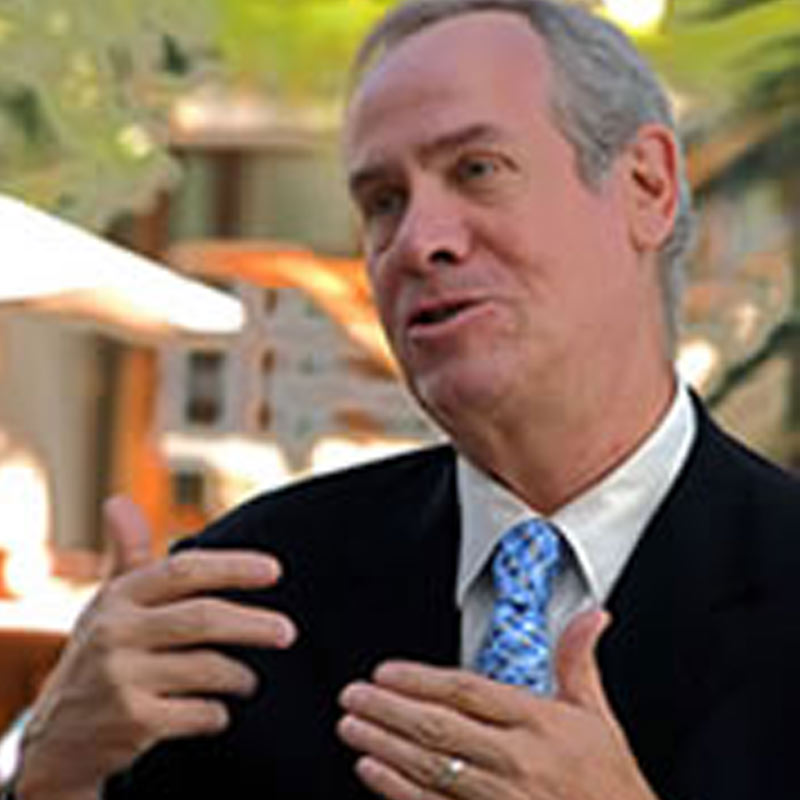
    Jasmin is known among her colleagues as a person who loves to give career advice. “I believe I am very philanthropic with regard to career counseling as well as career planning for both current and past employees who have worked with me in any capacity. So there are many people in whose prayers and blessings I would always be present. Apart from this, I am also involved with CRY (Child Relief and You) but at a very base level.”

    In this day and age when it doesn’t take much to lure talent from one company to the other, Jasmin has stayed on with MediaCom for 16 years, which in itself is commendable for a person her stature. “One should enjoy the work one does. It’s not enough to be successful; it’s important to enjoy doing so. The means to success should be as enjoyable as success itself. Hard work and loyalty pays and the reason why I am where I am today is because after 16 years, I am just as passionate about what I do,” signs off the lady.


  • IBN deal part of CNN’s strategy in English language segment: Cramer

    IBN deal part of CNN’s strategy in English language segment: Cramer

    NEW DELHI: The Indian news market with its diverse products is a bonanza for viewers in terms of choice, according to CNN International MD Chris Cramer.

    “It’s an extraordinary news market , which was starting to explode in 2004 when I last came, and is still doing so. It’s also a very good thing for consumers in terms of choice,” Cramer told Indiantelevision.com.

    On a visit to India, Cramer is touching base with various constituents of the broadcast and cable industry, including CNN’s partner, Global Broadcast Network (GBN), which runs the CNN IBN news channel.

    Pointing out that CNN IBN has shaped up extremely well, Cramer said, “After seeing the news channels here, one can say that they are world class products offering consumers a variety of choice.”

    Along with some new local level and India-wide news channel launching over the last six months to add to the over 25 existing such products, India, probably, is the only country in the world where so many news channel have mushroomed and have managed to survive in a market that is estimated to be wroth slightly over Rs. 5 billion.

    Though a hint of uncertainty did creep in with Jagran TV-promoted Channel7 selling management control to Television Eighteen-led GBN and talks of India TV in early stages of negotiations with another media company in the air, Cramer refused to hazard a prediction on the consolidation phase . “I have no predictions on consolidation as I am not very well acquainted with the ground situation and other details. But this is a very energetic market,” he said.

    Cramer is responsible for the CNN International directorate, which is comprised of the five flagship CNN International services in English, CNN en Espa’Pol and CNNj (Japan), together with joint ventures such as CNN IBN, CNN+ and CNN Turk, in addition to the international newsgathering operation outside of the US.

    Though Cramer has ruled out any immediate introduction of a Hindi language version of CNN, he did admit that as a policy the company is always on the look out for opportunities to extend the CNN brand in as many market segments as possible.

    “The CNN IBN deal is part of CNN’s strategy to look for opportunities in the English language segment and vernacular languages with or without local partners. But if you are asking me whether we have any definite plans for Hindi, there’s nothing in the horizon,” Cramer said.

    According to him, for a CNN IBN type of deal to be replicated in other Indian languages, it is a matter of exploring the market to find the “right deal.”

    CNN International’s English language service, which completed 20 last year, continues to be the No. 1 product in most market places without getting complacent about its leadership position.

    “We continue to reinvent ourselves as we have done recently with a new look and feel in a crowded (global) news market place. We found that increasingly the business of consuming news was becoming difficult. So we have de-cluttered the screen (for the viewer),” Cramer said, giving a glimpse of the thinking that goes on in CNN International, a Time Warner company.

    India is one of the rare instances where CNN lags behind BBC because of “legacy issues” involving the Mark Tully effect. Tully had been the head of BBC radio operations in India for many decades and helped in spread awareness about brand BBC.

    “CNN reaches out to about 10 million (C&S) homes in India, compared to BBC’s 14 million, “Cramer said, adding, “But I am comfortable with the loyalty of the audience here.”

    Even though CNN’s new service CNN Pipeline broadband service has received “overwhelming and enthusiastic response in the US,” Cramer feels such a service will take some time to take off in India.

    Pointing out that the company has been profitable every year since 1989 in the expensive business of news dissemination, Cramer said global advertising revenue has been “pretty good” last year too.

    Globally CNN International has three broad revenue steams: advertising, subscription and content sale.. While advertising and subscription contribute 45 per cent each, the remaining 10 per cent comes from selling content.

    Cramer is based in CNN’s world headquarters in Atlanta and is a member of the CNN executive committee. He also sits on the board of directors for the German news channel n-tv and the Spanish network CNN +.

    Before taking on the role of overseeing international newsgathering and becoming managing director of CNN International, he was previously president of CNN International Networks. He was CNN International’s executive vice president from August 1997 to January 1998, and senior vice president and managing editor from February 1996 to July 1997.

    Since joining CNN International, Cramer has led the introduction of 80 hours of new programming each week and, in September 1997, launched “regionalisation,” an initiative that led to the creation of five separately scheduled English language international CNN channels that serve Europe/Middle East/Africa, Asia Pacific, South Asia, Latin America and North America.