Tag: Sourabh Narang

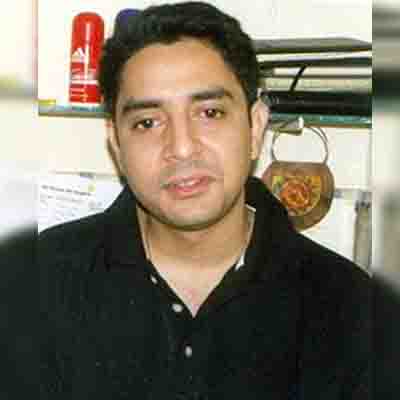
  • “I see great scope for news based programming ” : Aditya Singh

    “I see great scope for news based programming ” : Aditya Singh

    Till recently, Aditya and Abhimanyu Singh were known more as siblings of film actor Chandrachur Singh. No more. Today, they have carved a niche for themselves as successful TV producers, with a successful suspense series Shhh Koi Hai… in their kitty. Their latest offering Krishna Sharma, C.A, also on Star Plus, is a comedy tackling real life issues. The producer duo is also creating two film based shows – Jubilee Plus and Rahe Na Rahe Hum, the latter being anchored by Javed Akhtar.

    In a candid interview with indiantelevision.com correspondent Amar, Aditya Singh speaks of his company’s plans and holds forth on several issues confronting TV producers today. Excerpts:

    How did you start your innings as producer?
    I was always fascinated by the medium. It was in 1994-95 that I made my debut as executive producer on a serial calledAlbeli on DD Metro, which was produced by my aunt. She was the one who actually gave me the idea that I could be a producer as well. Soon thereafter, I teamed up with my brother to produce our first serial called Aakhen on DD Metro.

    Which subjects do like to tackle as a producer?
    I am open to programmes of any genre. In fact, as a producer I enjoy the challenge of understanding the emergence of a new genre and being a trend-setter. We’re really happy with the way Sssshh Koi Hai… has shaped up over the last few months. But rather than churning out something similar we have gone for a comedy- Krishna Sharma, C.A. We plan to follow this up with a love story, which we plan to shoot abroad extensively.

    Your last two ventures have been co-productions with Cinevistaas. Do you have any special association with Cinevistaas?
    One of the partners in Cinevistaas, Uday Singh, is well known to us and that’s how the idea of a co-production came about. We look after the creatives, pre-production, casting and the production design. Cinevistaas helps us in post-production, the special effects in particular. Consequently, both stand to gain immensely from this arrangement. Earlier, we had some wonderful concepts, but because of a lack of proper post-production facilities, our costs were shooting up. Of course, we will be setting up our own post-production unit; but as of now, Cinevistaas helps us in this area.

    How do you choose a channel for your show?
    Essentially, I look at three factors – the channel’s involvement with the product right from the stage the concept is conceived, the target audience reached by the channel and our rapport and experience with the channel.

    ‘As a producer, I enjoy the challenge of understanding the emergence of a new genre and being a trend-setter.’
    ______

    A still from Shhh…koi hai

    Would you consider a completely new channel to air your show?
    We did receive a couple of proposals from MAK TV but I don’t see the need or the inducement to go ahead with it – one, because we have our hands full at the moment and two, because even the other concepts that we are working on are being worked on with the involvement of reputed channels. I don’t want to take on more work than we can do justice to, but having said that there are no apprehensions as far as a new channel is concerned.

    Who would you rate among your favourite directors?
    Suraj Rao, Pawan Kaul and Sourabh Narang are some of my favourite directors on television. All of them have been personally involved with the scripting of the episodes of Shhh Koi Hai… which they have directed for us. I also admire a director from Hyderabad, Manikya, who has recently joined us as the creative director of our company, Contiloe Films.

    Who are your favourite writers?
    Atul Tiwari, Sameer Modi, Brijesh Jairaman and the writer duo, Arshad and Imtiyaz. They have done most of the writing for us.

    Have you ever felt hassled by channel executive producers?
    No, not at all. Most of the work we have done has been with Star and the executive producers, apart from being involved right from the time a concept is born, have been very co-operative and understanding. I can’t think of a situation where they have been unreasonable.

    What are your sources of funding?
    We rotate our profits from on-going projects into new projects and also avail of credit options. We haven’t yet availed of institutional finance but do plan to in the future.

    With your existing infrastructure, how many projects can you take up simultaneously?
    The number of projects is not a problem. We already have four programmes on air. There are eight other concepts we are working on right now, including a couple for small budget movies. Given the unpredictability involved in the medium, you never know which of these projects might suddenly take off. So, we are prepared to have many more projects on air but ideally we would like to a go a wee bit slow because when too many projects take off simultaneously, it becomes difficult to maintain quality.


    A scene from the newly started Krishna Sharma, CA
    ‘Doesn’t a channel have the right to trust people who have delivered as far as quality is concerned?’

    India is probably the only country where producers are not entitled to a share of the channel revenue even after forfeiting their rights over the programme. What do you feel about the issue?
    I feel that’s okay, because here the cable operator does not give the broadcaster the kind of revenues he does in other countries. But gradually, the cable operator’s pie in the channel’s revenues will increase and that would probably improve the situation.

    Why are women producers more successful on Indian TV – Ektaa Kapoor, Aruna Irani, Neena Gupta, to name a few?
    Well, this is a recent trend and has to do with the dominance of women centric soaps in the last few years. But I wouldn’t read much into it. Cinevistaas, UTV and Creative Eye are hugely successful production houses without a woman heading them.

    How do you divide professional responsibilities with your brother Abhimanyu?
    I am more involved with conceiving and developing concepts and marketing them to the channels. Abhimanyu takes over the production and the actual execution of these projects. Of late, however, Abhimanyu is getting more involved with the creatives while I focus on evolving the company’s future plans for growth including recruitments, because getting the right people is a pivotal issue as far as our growth plans are concerned.

    What is your production set-up like?
    We have a CEO heading the company, two creative directors, at least one executive producer on a show (could be two depending on the show) and a full-fledged production unit of our own. We are hiring competent professionals for budgeting and finance because this would be a key area for us. Post- production is one area where we have to depend on others currently but in the next month or so, we will have our own editing studio as well.

    Do you find the current television industry situation positive or disappointing?
    I would say it’s very positive. I know people complain of the formation of lobbies of certain production houses that are getting all the work from the TV channels. But then, doesn’t the channel have the right to trust people who have delivered as far as quality is concerned? Producers who have delivered on quality and not maximised profits by cutting costs are not the ones who have suffered.

    What is your vision for Contiloe Films?
    As of now, our thrust has not been so much on soaps because practically everyone is into them. We’ve concentrated instead on alternative programming like film based shows and these have done quite well. In the future, I foresee a great scope for news-based programming, which we plan to get into in a big way. But at the same time, we would take up soaps in a limited and well-planned way. We are also lining up a couple of small budget films, as these have a good profit potential. Five years down the line, I see Contiloe Films developing into a reliable and esteemed content providing house well diversified into TV, films and music.
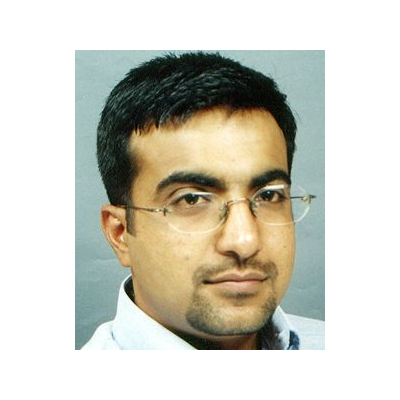
  • “There are no bad actors, only bad directors” : Sourabh Narang

    “There are no bad actors, only bad directors” : Sourabh Narang

    At 29, Sourabh Narang is one of the youngest and most sought after directors on TV today. The critically acclaimed Haqeeqat, Shhh… Koi Hai and Kagaar are some of the serials he has directed. Saurabh is also proud of the fact that he is already reputed for the serials he has refused- Sarhadein and Aap Jo Bolein Haan to Haan…, whose pilot he shot – a telling statement of how discerning he has been. Sourabh is extremely enthusiastic and passionate about his work. He is also coolly candid when he says that all he wanted from life was a nice wife and some movies to direct. Here are his views on life, reel and real, as they unspooled in a conversation with indiantelevision.com correspondent, Amar.

    How did the idea of being a director come into your mind?
    I graduated from St Stephens College in Delhi where I would participate in debates extensively. Debating gave me an opportunity to speak my mind and express myself freely. Barkha Dutt (NDTV correspondent), who was my senior in college, suggested that I take up Mass Communications at the Jamia Millia Islamia University. By the time I completed the course, I was obsessed with the thought of making a movie. That’s how I came to Mumbai. Once here, I assisted K Shashilal Nair on Grahan and after that moved to TV serials.

    What is that special something that makes for an effective director?
    Observation, vision and discipline.

    It is unfortunate that all a TV director does today is look at the monitor and then look at his watch.

    __________

    Which subjects appeal most to you?
    Anything that can be developed into something very dramatic. It could be the story of a 16-year-old girl raped by the police during riots or the story of a boy trying to work up the courage to propose to a girl he meets every day at the bus stop.

    It is often said that TV is a writer’s medium? Your comments?
    I don’t agree with it. Such a statement is made mainly because most of the TV software today is dialogue-driven. But people saying this tend to underestimate the levels to which the director and the cinematographer can raise a written work. I would rather subscribe to another dictum – that there are no bad actors, only bad directors; even though I know how bad an actor can be (laughs).

    How much of a writer does a director have to be? Are you involved with the scripting of what you direct?
    I have scripted a few episodes of Rishtey and Saturday Suspense which I have directed. Even today, when I direct Haqeeqat or an episode of Shhh Koi Hai, I spend a lot of time lining up the pre-production work and going through the entire script in minute detail. Wherever I feel certain changes in the script would help, I have made positive contributions to it.

    What kind of research goes into Haqeeqat from the point of view of direction?
    Actually, BAG Films (the production house) has an excellent news infrastructure spread across the country, so getting factual details for episodes of Haqeeqat is no problem. Besides, we have a research team that works exclusively on the serial. But getting factual details is one thing, creating the actual feel of the places where these incidents occurred is quite another. For that too, we have our ways of doing things. For an episode that featured some 25 inmates in a Chennai asylum getting burnt to death, we actually created a huge set in Mumbai that resembled the asylum. For an episode which dealt with the story of two lovers being hanged to death by their families in rural Haryana, my casting director took pains to search for actors who could actually speak the language of the region. The only actor who could not speak the dialect was the female protagonist but she was made to rehearse her part with the other actors for five days before the actual shoot.

    What are the factors you never compromise on as director?
    Commitment – because, in a way, the word is all-pervasive. I will not compromise on the total commitment I expect from each and every member of my unit – whether its an actor who needs to have done some ground work on his role or my own assistants.

    Who are the directors you regard highly on Indian television?
    Two directors on TV who I have great regard for are Umesh Padalkar and Anuraag Basu.

    The funny part over here is that people don’t plan to fail, they simply fail to plan.
    __________

    Are there any stylistic elements you’ve imbibed from them?
    In the case of Umesh, I’ve liked his rather Hollywoodish technique of shooting, wherein the same scene is cut from various angles. This really minimizes the scope for a re-take. As far as Anuraag Basu is concerned, the best part about his work is that it’s very crisp, very taut with no extra flab in it.

    Do you find channel executive producers overbearing?
    See, that is a matter of personal opinion and experience. Personally, its been a pleasure to work with Sahara TV because no channel would allow the kind of creative freedom that Sahara does.

    What are the factors you consider before taking someone under your wing?
    More than technical knowledge, I would go for the person’s educational and family background because I don’t compromise on commitment and sincerity; and only a person with good character and the right set of values is expected to do justice on these fronts.

    Do you enact scenes out as a method of instructing actors?
    I don’t enact scenes unless it is necessary, that is if I want the scene to be emoted in a certain manner and the actor is not able to comprehend it. As far as possible, I avoid enacting scenes because that tends to affect a natural performance.

    How many projects do you like to work on simultaneously?
    Ideally I would like to work on a weekly soap and do one-off stories at a time.

    I avoid enacting scenes because that tends to affect a natural performance.

    __________

    Given the industry vagaries, do you undertake some long term planning of the projects to do in the future to ward off phases when you don’t have work?
    The funny part over here is that people don’t plan to fail, they simply fail to plan. What is lacking is the sheer enthusiasm to give a project your very best. You will be surprised when I tell you that Mahesh Bhatt had called me recently just to tell me that Ramesh Taurani of Tips Industries was so moved by a story shown in Haqeeqat which portrayed the parents of a person killed in Punjab by terrorists waiting for compensation, that he decided to personally compensate them. Now isn’t my work being watched by people who really matter and do I need to worry so much about the future? In fact, more than the projects I do, I am already known for the projects I’ve refused – I was supposed to do Sarhadein which I didn’t, I had directed the pilot episode of Aap Jo Bolein Haan To Haan…, but didn’t direct any of its episodes after that.

    How much time do you normally take to shoot one episode?
    I take two days or three shifts to shoot one episode because that is the time I require to deliver top quality work. I have refused some very promising serials because the producers wanted me to shoot one episode a day and I don’t operate that way. It is unfortunate that all a TV director does today is look at the monitor and then look at his watch.

    So, are you absolutely closed to doing a daily soap?
    Yeah, I’m offered at least one daily soap a week, which I have been refusing.

    On hindsight, do you feel a specialized course in direction is required or is training under somebody more important?
    A specialized course is important because formal education sets up the right foundation and enables you to get your basics right. One can always train under somebody after that.

    What marks Sourabh Narang in style?
    It’s a little difficult to answer. You will have to see my work to see the passion and involvement that goes behind it. In a nutshell, let me just say, I don’t do different things, I just do things differently.

    Where do you see yourself ten years down the line?
    (laughs) Given the amount I smoke, I should be dead. Jokes apart, I have always wanted two things in life – I wanted a beautiful wife and I wanted to direct a movie. Now that I’ve got the former, I just want to direct movies.