Tag: SonyLiv

  • Streaming Dreams and Story Schemes Mark Netflix’s Decade in India

    Streaming Dreams and Story Schemes Mark Netflix’s Decade in India

    MUMBAI: When Netflix arrived in India ten years ago, the streaming giant wasn’t just entering a new market, it was stepping into a nation obsessed with stories. From cricket to cinema, India has always lived in 16:9 emotion. A decade later, as Netflix celebrates its 10th anniversary here, it has become more than just a platform, it’s a pop-culture mood board, a social mirror, and occasionally, the nation’s favourite debate topic over dinner.

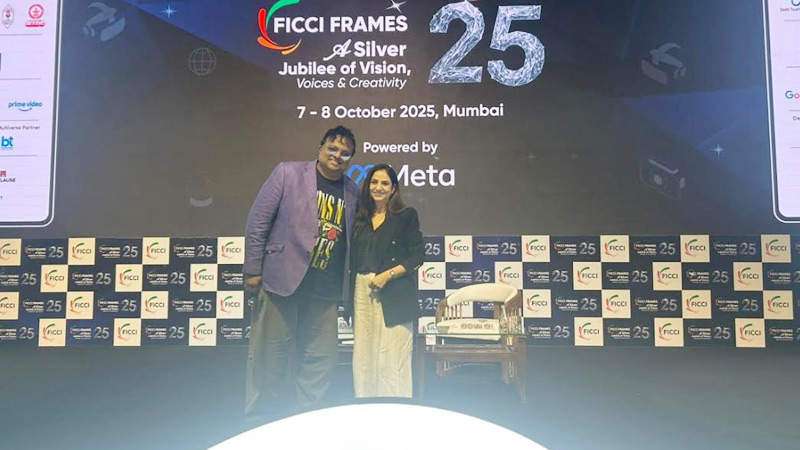
    At FICCI Frames 2025, Netflix India, vice president of content Monika Shergill revisited the platform’s decade-long journey not as a corporate milestone, but as a cultural chronicle. “It’s been ten years of discovering stories that surprise even us,” she said with a smile. “India has taught us that there’s no such thing as one audience.”

    Shergill’s words carried weight. In 2016, when Netflix launched in India, data plans were expensive, the idea of binge-watching was alien, and cable television ruled the roost. Yet, as she pointed out, “audiences were already hungry for something different, they just didn’t know where to find it.” That ‘something different’ soon arrived in the form of gritty, genre-bending originals like Sacred Games and Delhi Crime, titles that not only redefined Indian streaming but also caught the attention of global viewers.

    “Shows like Delhi Crime proved that our stories don’t have to be diluted for global audiences,” Shergill noted. “They resonate precisely because they are authentic, rooted, and unapologetically Indian.”

    Over the years, Netflix’s slate has stretched from the heartlands to the Himalayas, serving up thrillers, romcoms, docuseries, and biopics that mirror the country’s diversity. From Kota Factory’s monochrome melancholy to Khufiya’s cloak-and-dagger intrigue, every title seems to tap into a different emotion, language, and landscape proof that India doesn’t just contain multitudes, it streams them too.

    But as Shergill highlighted, the real game-changer has been regional storytelling. “Tamil, Telugu, Malayalam, and Bengali stories are not just finding local audiences, they’re travelling globally,” she said. “When you keep the essence local, you end up going global.” Indeed, viewership of Indian regional content on Netflix has shot up by more than 60 per cent in the past three years, while global viewing of Indian titles has doubled.

    Beyond the data, there’s a shift in creative dynamics. Netflix’s approach to nurturing over 200 Indian writers, directors, and creators has created what Shergill calls “a sandbox for fearless storytelling.” Unlike theatrical cinema, where success is often measured by box-office numbers, the streaming space has allowed creators to focus on experimentation, representation, and emotional truth.

    “Streaming has democratised creativity,” she said. “You could be a first-time director from Shillong or a veteran from Mumbai, your story gets the same chance to be discovered.”

    That discovery is also increasingly shaped by technology. Shergill spoke of how algorithms, AI tools, and personalisation engines have made every viewer’s journey unique. “We often joke that no two people have the same Netflix,” she said. “But the magic lies in how tech quietly helps stories find the right audience, not the other way around.”

    Of course, Netflix’s decade in India hasn’t been without its plot twists from the rise of fierce competition (DisneyPlus Hotstar, Prime Video, JioCinema, Zee5, SonyLiv, and more) to debates on pricing, censorship, and content localisation. Yet, as Shergill pointed out, these challenges have only sharpened the industry’s creative instincts. “Healthy competition means better stories,” she said. “It’s proof that the audience is winning.”

    As India becomes one of Netflix’s fastest-growing markets, the company is doubling down on localisation not just through language, but through themes that reflect real India. Small-town aspirations, gender fluidity, generational conflict, and cultural nostalgia are no longer niche; they’re mainstream. “The stories that come from the heartland are the ones making it to hearts worldwide,” Shergill quipped.

    The conversation also drifted to how streaming has blurred the lines between entertainment and experience. “Today, entertainment is no longer consumed,” she observed. “It’s lived, shared, and replayed. When people cry over a character or cheer for a show, they’re not just viewers, they’re participants.”

    As FICCI Frames explored the theme of India’s creative economy, Shergill’s reflections summed up a decade where the screen became both a stage and a storyteller. “Streaming is not just about algorithms and recommendations,” she said. “It’s about emotion, connection, and the thrill of seeing your story on a global map.”

    For Netflix, that map is only expanding. With new content partnerships, investments in regional studios, and a growing slate of originals, the next chapter seems poised for even more ambitious storytelling.

    Ten years on, the red N has gone from being an app icon to an emotional bookmark in India’s entertainment story. And as Shergill reminded the audience, “Our best stories are still buffering and that’s the most exciting part.”

  • Cinema Halls to Smartphones: The Shift in Indian Entertainment Consumption

    Cinema Halls to Smartphones: The Shift in Indian Entertainment Consumption

    India has long been among the world’s biggest film markets in terms of ticket sales, number of films produced, and theatre infrastructure. Over the past decade, the rise of digital streaming, cheaper data, and changing consumer behavior has pushed for a rebalancing.

    According to a recent EY research, the Indian media and entertainment (M&E) industry increased by 3.3% in 2024 and was valued at approximately INR 2.5 trillion (US$29.4 billion).

    Within that, digital media is the largest segment, and contributed around 32% of total revenues. In contrast, traditional media, like TV, print, and radio, saw drops in both advertising and subscription income.

    The Legacy of Cinema Halls

    For so long, the cinema has been the centrepiece of Indian entertainment. Big festivals, major star vehicles, and regional cinema in language hubs built the live-theatre experience. It was in the 2000s and 2010s when multiplexes in large cities boomed. Single screens remained relevant in smaller towns, and cinema halls generated major portions of film revenues.

    However, it can’t be denied that experiencing entertainment at the cinema can be a bit pricey. The cost of theatre tickets, travel, and supplementary expenses (food, parking) slows attendance for many films. Some mid-budget or smaller regional films struggle to recoup costs via theatrical alone. The impact of COVID-19 also forced many delayed releases or direct-to-OTT experiments, which in turn raised questions about the sustainability of cinema as the only route.

    Rise of OTT and Mobile-First Viewing

    India’s OTT universe in 2025 stands at 601.2 million people who watched at least one streamed or online video in the past month. That accounts for about 41.1% of the population.  
    Of those, 148.2 million are active paid OTT subscriptions (including through telecom bundles and OTT aggregators).

    Connected TV usage has surged: the number of Connected TV users is now 129.2 million, up 87% year-on-year.  This shift shows streaming is no longer confined to phones only, as viewers want larger screens and living room experiences as well.

    Data costs have fallen, smartphones have become ubiquitous, and broadband penetration has improved in urban and rural areas alike. Streaming platforms like Netflix, Amazon Prime Video, Disney+ Hotstar (now JioHotstar), Zee5, SonyLIV, and many regional players have scaled voice, subtitle, language localisation, and pricing to reach broader audiences.

    Sports-related platforms or communities, both legal streaming and fan engagement spaces, show another angle of audience shift. For instance, users who follow cricket or other live sports not only stream matches on OTT platforms but also use various digital forums and social media platforms.

    10CRIC and other similar websites are some of those online spaces where fans get access to the latest odds, team stats, and more. That reflects the way entertainment and live content spill over into related digital spaces, though the core viewing remains on OTT and smart devices.

    Regional Content and Language Diversity

    Regional language content is a key driver in this transformation. Ormax Media reports show that in 2024, the number of streaming originals in India dropped by about 18% compared to the previous year, after peaking in 2023. Still among originals, fiction series dominate (around 70% of OTT originals), and Hindi remains the dominant language with 65%share.

    Other languages, such as Bengali, Telugu, and Tamil, have growing representation. Platforms focused on regional content (e.g., those devoted to one language) are just really seeing stronger engagement in their markets.

    Viewers increasingly prefer content in local languages, with dubbed or subtitled versions helping content move across state borders. Films originally released in theatres are seeing extended life on OTT in regional markets.

    Economics: Theatrical vs OTT

    Releasing a film in theatres is expensive. Studios spend on distribution, digital or print delivery, big marketing campaigns, and then share a large cut with theatre owners. If a film doesn’t get a strong opening weekend, it often struggles to recover those costs.

    An OTT release works differently. Platforms can cut down distribution expenses, reach audiences across cities and smaller towns at once, and earn through subscriptions or ads. This makes it a safer option for mid-budget or niche films that may not draw big crowds in cinemas.

    Subscription Video On Demand (SVOD) and Advertising Video On Demand (AVOD) are also coexisting. Many platforms give both options. There is also bundling through telecom providers. Some films release theatrically and land on OTT after a window. Some would have direct-to-OTT release strategies, especially for smaller budgets or niche content.

    Technology, Platforms, and Interactivity

    Better mobile networks (4G, growing 5G), cheaper data, improved video compression, and smart TVs all push streaming quality up. Platform features like offline downloads, profiles, parental controls, and multi-device sync help retain users.

    Interactivity now matters. Live trivia, polls during shows, social features built into streaming apps, and second-screen experiences. Streaming of sports or live events gets further amplified by chat, fan forums, commentary, and behind-the-scenes clips.

    Hybrid content consumption (combining cinema and streaming) is becoming standard. Consumers may watch big action or festival films in theatres, but a large part of their weekly content diet comes from OTT. As streaming grows, the role of theatres adjusts.

    What the Future Looks Like

    Growth projections are strong, and the FICCI-EY report estimates the M&E sector will grow 7.2% in 2025. So, that’s about INR 2.7 trillion at a CAGR of about 7% to reach around INR 3.1 trillion by 2027.

    OTT audience and adoption are also expected to increase, though growth rates might moderate. Connected TV adoption will likely continue its sharp rise.

    However, platforms will still need to combine technology investment, pricing innovation, content localisation, and strong marketing to retain audience loyalty. Those who will are the ones likely to remain relevant for a long time. 

    Disclaimer:This article has been published without the journalistic or editorial involvement of Indiantelevision.com. IndianTelevision.com Group, or any of its affiliated websites. IndianTelevision.com Group does not endorse, subscribe to, or take responsibility for the content, opinions, or views expressed herein.

    Readers are further advised that Online Casino, Betting, Cryptocurrency products, Financial Investments/Engagements, NFTs, and products or calls-to-action related to Health, Booking, Wellness, and Food are largely unregulated and carry significant risk. There may be no regulatory protections or avenues for recourse in the event of financial losses or health-related risks arising from engagement with such products or services.

    IndianTelevision.com Group expressly disclaims any responsibility or liability for the information, views, announcements, declarations, or affirmations presented in this article. By choosing to proceed, the reader acknowledges and agrees that they do so at their own discretion and risk, and expressly absolve indiantelevision.com (IndianTelevision.com Group) from any potential legal claims, liabilities, or actions.

    The content provided is solely for informational and awareness purposes.
     

  • Neha Singh Warrier joins Amazon Ads as lead content monetisation

    Neha Singh Warrier joins Amazon Ads as lead content monetisation

    MUMBAI: Neha Singh Warrier, a veteran in media sales with over two decades of experience, has joined Amazon Ads as lead content monetisation for the west and south regions in India. Warrier announced her new role on LinkedIn, expressing her excitement to be at the “intersection of content, commerce and technology.”

    She joins Amazon Ads after a significant tenure at Sony Pictures Networks India, where she served as associate vice president of SonyLiv digital ad sales. Her role involved transforming marketer engagement on over-the-top (OTT) platforms and securing sponsorships for major sporting and entertainment intellectual properties (IPs). Before that, she was the head of digital sales at Zee5, where she consistently exceeded revenue targets and pioneered long-term strategic sales plans.

    Warrier’s career also includes a decade-long stint at Discovery Inc, where she was an associate director of advertising sales, leading ad sales for the Discovery network’s flagship channels. She was recognised as a “stellar performer” for her role in achieving a compound annual growth rate (CAGR) of 24 per cent over ten years. She also held roles at Mirriad, CNBC-TV18, and Sony Entertainment Television, where she worked on monetising marquee IPs like Bigg Boss and Indian Idol in their inaugural years.

    A professional athlete in her early career, Warrier stated that she applies the same dedication and teamwork skills to her professional endeavours. She is known for her ability to take calculated risks and propose innovative strategies to deliver tangible results.

  • Say cheese as Go joins Super Dancer 5 to celebrate mums and kids

    Say cheese as Go joins Super Dancer 5 to celebrate mums and kids

    MUMBAI: Lights, camera, cheddar! India’s beloved dairy darling Go Cheese has found its perfect dance partner in Super Dancer Chapter 5, Sony Entertainment Television’s homegrown reality blockbuster. The association, announced mid-season, promises a mix of cheesy indulgence and heartfelt family entertainment.

    Premiering 19 July, the fifth chapter of the hit franchise has already been trending with its unique theme celebrating the bond between mothers and children, a narrative that fits like mozzarella on pizza with Go Cheese’s family-first ethos. Just as mums are the ultimate cheerleaders for their kids on stage, Go Cheese champions everyday family moments at the dining table.

    The season is packed with high-octane performances, emotional narratives, and pint-sized prodigies who have already gathered fan armies on social media. Now, with Go Cheese in the mix, viewers can expect branded challenges, snackable content, and clever product integrations designed to showcase how cheese can transform both family meals and living-room celebrations.

    “Go Cheese has always been about bringing families together through taste and shared moments. Our association with Super Dancer Chapter 5 is a natural extension of our bond with modern families, especially mothers who nurture talent and celebrate uniqueness,” said Parag Milk Foods Ltd executive director Akshali Shah.

    The partnership also highlights Go Cheese’s ongoing mission to stay relevant in pop culture through engaging storytelling. From Sonyliv streams to living-room screens across India, the collaboration makes sure the brand is as much a part of the evening as the applause, the tears, and the dance-floor thrills.

    For audiences, it’s a season where twirls meet tangy cheese slices, and every performance promises not just a standing ovation but a slice of something deliciously familiar.

  • Azmat Jagmag exits Warner Bros. Discovery

    Azmat Jagmag exits Warner Bros. Discovery

    MUMBAI: After nearly three years shaping pop culture moments at Warner Bros Discovery, Azmat Jagmag has called time on her stint at the media giant.

    Jagmag, who joined in 2021 as head of marketing for south Asia before taking over as partnerships and solutions marketing head for INSEAK, led some of the company’s most ambitious regional pushes. She oversaw the India launch of discovery+, spearheaded the scale-up of Max across South East Asia, Hong Kong and Taiwan with over 15 telecom and MVPD partners, and drove social and marketing campaigns that turned viral from Mumbai to Los Angeles.

    Before WBD, Jagmag founded Masala Chai, a content-marketing outfit that launched indie music label Jjust Music and helped reposition Puja Entertainment as a modern studio. Earlier, at Zee Entertainment, she spent over a decade leading brand and marketing strategy, pushing Zee TV and Zee Anmol to leadership positions and driving campaigns that bagged multiple industry awards.

    Across her 18-year career, she has launched and scaled some of India’s most recognisable media brands, from SonyLiv to Cartoon Network. Recognised by Google as a leading woman in new-age media, she also co-authored a brand case study for IIM Ahmedabad.

    As she signs off from WBD, Jagmag says the journey has been about turning “logic to magic”—a mantra that has defined her career across broadcast, DTC, movies and music. The next chapter, she teases, is already in the works.

  • Applause Entertainment marks eight years with bigger bets

    Applause Entertainment marks eight years with bigger bets

    MUMBAI: Eight years may seem young, but Kumarmangalam Birla-owned, Sameer Nair-led Applause Entertainment has already muscled into the top tier of India’s content business. Since its 2017 launch, the studio has churned out more than 50 original series, films and documentaries across every major streamer — from Netflix and Amazon Prime Video to Disney+ Hotstar, Zee5 and Sony Liv.

    Operating on what it calls a “hub and spoke” model, Applause invests upfront in content, collaborates with producers such as Banijay Asia, BBC Studios, Rose Audiovisuals and Emmay Entertainment, and then syndicates the finished work to platforms worldwide. Its catalogue includes both original dramas and Indian adaptations of acclaimed books and international formats.

    After shaking up the digital series  market, Applause has shifted gears into films with titles like Iftikaar, The Rapist and Aruvi. It has also launched Applause Productions, whose debut project is the Indian remake of Fauda. In animation, it has struck an exclusive deal with Amar Chitra Katha to reimagine 400-plus comics for global audiences and under the Appla Toon brand on YouTube.

    It recently partnered with author Jeffrey Archer to adapt his books into series or movies. 

    Nair has built a seasoned team backing him up, with Deepak Segal as chief creative officer, Prasoon Garg as chief business officer, Sunil Chainani heading films, Maansi Darrbar heading Applause Productions,  Siddharth Khaitan heading special projects like Gandhi and Scam, and Devnidhi Bajoria overseeing marketing.

    With scores of projects in the pipeline, the studio is plotting a push beyond India into documentaries, infotainment and even gaming.

    Eight years in, Applause is just clearing its throat. And loving the viewing audience’s critics’  applause.

  • Loss signal as Dish TV Q1 net loss widens and revenue falls 27.6 percent

    Loss signal as Dish TV Q1 net loss widens and revenue falls 27.6 percent

    MUMBAI: Dish TV is still buffering and this time, the picture is far from rosy. The DTH operator reported a consolidated net loss of Rs 94.53 crore for the quarter ended 30 June 2025, a sharp plunge from the mere Rs 1.56 crore loss logged in the same period last year. Revenue from operations shrank 27.6 per cent year-on-year to Rs 329.36 crore, down from Rs 455.29 crore, while total income stood at Rs 334.11 crore, aided by Rs 4.75 crore in other income.

    Costs, however, went in the opposite direction. Total expenses climbed to Rs 425.92 crore, led by operating costs of Rs 142.10 crore, employee benefits of Rs 42.16 crore, and finance costs of Rs 64.12 crore. Depreciation and amortisation weighed in at Rs 105.28 crore.

    The company’s balance sheet remains under heavy strain, with accumulated losses now exceeding equity share capital, pushing net worth into the negative. Adding to the pressure is a long-running license fee battle with the Ministry of Information and Broadcasting (MIB) Dish TV has set aside Rs 4,680.24 crore for the dispute, even as the MIB slapped a fresh Rs 8,735.67 crore demand (including interest) in April, which the operator is contesting in court.

    For FY25, Dish TV’s annual loss narrowed to Rs 487 crore from a massive Rs 1,966 crore in FY24, but total revenue slid 15.6 per cent to Rs 1,567.6 crore, hit by falling Pay TV subscriber numbers and stagnant ARPU. EBITDA came in at Rs 529.1 crore, with margins easing to 33.75 per cent from last year’s 40.6 per cent.

    While exceptional items of Rs 335.4 crore, a pre-tax loss of Rs 152.3 crore, and mounting competition from DTH rivals, cable, telecom, and OTT players dimmed the outlook, the company is leaning on its digital play. Watcho, its OTT arm, crossed the 10 million paid subscriber mark, thanks to premium content aggregation from Jiocinema, Zee5, Sonyliv and others, the launch of Watcho Fliqs for creator-led IP, and smart set-top boxes like the Dish Smrt Hub.

    The strategy now is clear: retain quality subscribers, push regional content, and keep hybrid offerings in the mix because in today’s entertainment market, staying in the game might just be about playing on every screen available.
     

  • The future of original content

    The future of original content

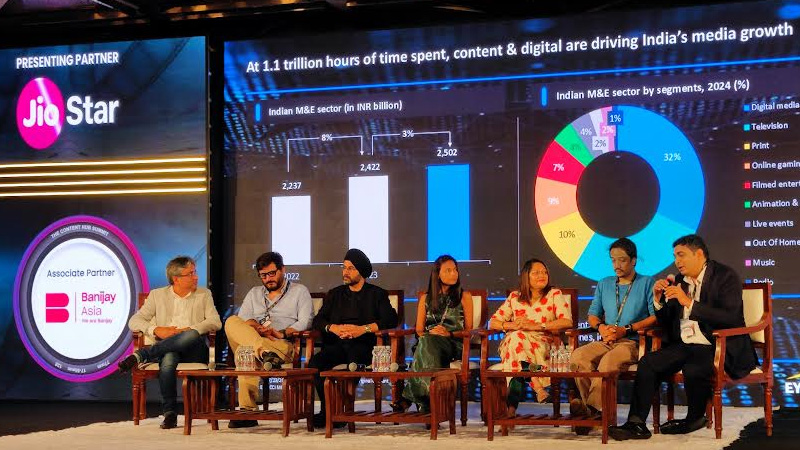
    MUMBAI: The 9th edition of the Content Hub Summit 2025 came roaring into Mumbai this week, promising answers to a question plaguing the media world: how do you stay original when the world’s drowning in content?

    Raghav Anand, partner at Ernst & Young LLP, kicked things off with some eye-watering numbers: the Indian media and entertainment (M&E) sector is now worth Rs 2.5bn, fuelled by 1.1trn hours of content consumption. “That’s a massive amount of attention,” said Anand. But with time spent on platforms now plateauing, he warned the next battleground will be retention, not reach.

    And yet, India’s churning out a gobsmacking 200,000 hours of original content a year—leading globally in volume. TV still dominates, but OTT, film and music are closing in fast. What’s changing is how and why content is made and the growing shadow of generative AI has everyone both curious and cautious.

    Goldie Behl, founder of Rose Audio Visuals, dismissed the obsession with “originality” as misplaced. “There’s nothing truly original. Everything’s borrowed, lived, or inspired. What matters is conviction,” he said, adding that content made with honesty and emotional depth is what ultimately cuts through.

    Aditi Shrivastava, co-founder and CEO of Pocket Aces, echoed the point, emphasising that her studio’s approach is to test stories at micro-scale before scaling up. “We find communities not demographics on social platforms. We create short, relatable pieces and build from there,” she said, adding that this modular testing lets them co-create with audiences in real time.

    Saugata Mukherjee, head of content at SonyLIV, was clear-eyed about what makes content stick: identity and consistency. “We built the platform on shows rooted in Indian culture. Our audience knows what we stand for, and that’s why they return.” Originals, he said, drive both customer acquisition and retention, with long-running franchises offering a steady heartbeat.

    Tejkarran Singh Bajaj, SVP and head of originals at Jio Studios, admitted times are “exciting but very difficult”. His team resists trend-chasing and instead banks on instinct: “We don’t make franchises. We find stories worth telling, ones that feel truly Indian.” That means even adaptations are reworked with a cultural lens, not just scene-by-scene lifts.

    Anuj Gosalia, founder of Terribly Tiny Tales, described today’s attention economy as “weaponised dopamine”, calling short-form ‘TV minus minus’—and still wildly effective. “People used to mock reels and TikToks. Now every A-lister’s on them. Micro-dramas will be the same,” he predicted.

    Swati Patnaik, creative director at Applause Entertainment, argued that the secret sauce of global success is local flavour. “The more rooted the story, the more it travels,” she said. “It’s not about the plot; it’s the point of view. That’s what cuts across borders.”

    As for AI, the mood was one of cautious intrigue rather than full-blown enthusiasm. Behl questioned whether AI can ever replicate emotional depth. “When an actor cries on screen, can AI make us feel that? I’ve yet to see it,” he said.

    Still, Anand noted that GenAI is already driving 20–25 per cent cost savings and slashing production time. The challenge, then, is less whether AI will be used and more how ethically and meaningfully it will be integrated.

    India’s original content scene is at a thrilling and slightly terrifying crossroads. The audience is fragmented, hungry, and overloaded. AI is knocking. Attention spans are plummeting. But as this year’s Content Hub Summit showed, the real winners will be those who tell deeply human stories with cultural authenticity, creative courage, and a sharp eye on what viewers really want.


  • Content bigwigs converge in Mumbai for Indiantelevision.com’s The Content Hub

    Content bigwigs converge in Mumbai for Indiantelevision.com’s The Content Hub

    MUMBAI: The floodgates of content may be open, but India’s audience has evolved—and she’s no longer easily pleased. That’s the sharp message echoing through the plush halls of JW Marriott, Juhu on 23 July as the ninth edition of Indiantelevision.com’s The Content Hub Summit gets underway.

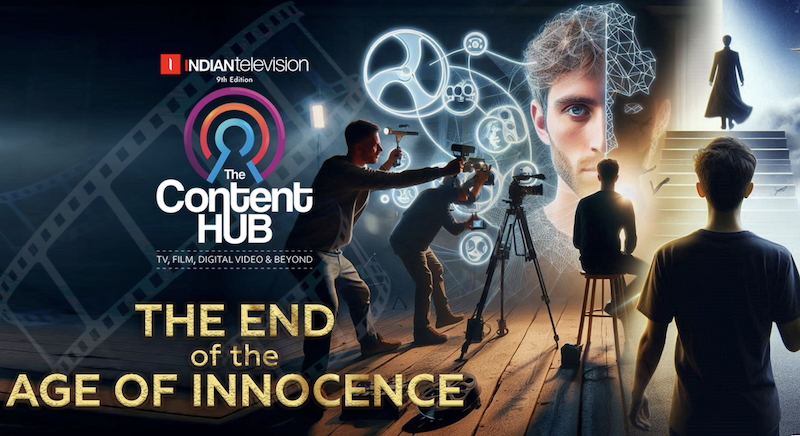
    The theme, The End of the Age of Innocence, captures the new reality: streamers, broadcasters, and filmmakers can no longer afford to shoot in the dark. With 47 of the industry’s sharpest minds in attendance, it’s a day packed with soul-searching, strategy, and storytelling pivots.

    The curtain-raiser is a heavyweight panel on The Future of Original Content, featuring SonyLiv’s Saugata Mukherjee, JioStudios’ Tejkarran Singh Bajaj, Rose Audiovisuals’ Goldie Behl, Pocket Aces’ Aditi Shrivastava, Applause Entertainment’s Swati Patnaik, and Terribly Tiny Tales’ Anuj Gosalia, moderated by E&Y’s Raghav Anand.

    That’s followed by a fireside chat between Prime Video’s Nikhil Madhok and Indiantelevision.com’s founder Anil Wanvari, diving deep into how platforms are rewriting playbooks.

    Next up: Mindset Change: You are not making for a single screen, a spirited panel on diversifying content, with Fremantle’s Aradhna Bhola, Applause’s Sunil Chainani, Juggernaut Productions’ Samar Khan, Sri Adhikari Brothers’ Kailash Adhikari, Marigold Studios’ Hemal Thakkar, and Balaji Telefilms’ Nitin Burman. Chairing the discussion is Bodhitree Multimedia’s Sukesh Motwani.

    JioStar’s Alok Jain is slated to stir things up with a solo presentation, Reclaiming Bold – Why Indian Entertainment Must Dare Again.

    A burning issue up next: the inconsistent fortunes of Hindi cinema at the box office. A high-stakes panel, Getting the Business Model Right, features Panorama Studios’ Abhishek Pathak, Red Chillies’ Aashish Singh, Ormax Media’s Sailesh Kapoor, Friday Filmworks’ Devendra Deshpande, and Zee Studios’ Pragati Deshmukh, with film critic Mayank Shekhar at the helm.

    Regional powerhouses take centre stage in The Rise of Regional Content, chaired by Elara Capital’s Karan Taurani. Speakers include PTC’s Rabindra Narayan, Shemaroo’s Arpit Mankar, Junglee Pictures’ Mamta Kamitkar, ETV Win’s Saikrishna Koinni, OTT Play’s Avinash Mudaliar, and Banijay Asia’s Rishi Negi.
    A rare fireside chat follows, with Banijay Asia CEO Deepak Dhar in conversation with Shekhar, setting the tone for a deeper dive into genre-bending creativity.

    That’s precisely what the next panel explores—Pushing Genre Boundaries. Writer-director Kussh S Sinha, producer-director Ravindra Gautam, Banijay’s Mrinalini Jain, Applause’s Rahul Ved Prakash, and director Vishal Furia spar with trade analyst Saurabh Varma moderating.

    The day wraps up with two back-to-back masterclasses. The first, on Rana Naidu, sees actor Sushant Singh, director Suparn Varma, and screenwriter Vaibhav Vishal join film critic Stutee Ghosh. The second, on Mandala Murders, features actor Vaani Kapoor, Netflix’s Tania Bami, and directors Gopi Puthran and Manan Rawat, with editor Swati Chopra in the chair.

    In a market where content is no longer king unless it resonates, The Content Hub Summit has one message: India’s audiences have grown up—and the industry must too.

    A cross-section of India’s content powerhouses has lined up in support of The Content Hub Summit, signalling the growing importance of storytelling as a strategic business lever.

    JioStar leads the pack as presenting partner, while Applause Entertainment and Banijay Asia have come on board as associate partners. Fremantle is the lanyard partner, ensuring high visibility with every badge flash.

    The industry partners roster reads like a who’s who of television and digital production: Contiloe Films, Sol Productions, and OTT Play have lent their support, amplifying the summit’s reach and relevance.

    The show of strength from across the ecosystem—studios, streamers, and production houses—underscores the summit’s sharp focus on content strategy in a market where the audience is now firmly in the driver’s seat.

  • Sony’s India reboot: fresh faces, big bucks and a bold digital bet

    Sony’s India reboot: fresh faces, big bucks and a bold digital bet

    MUMBAI: Sony Pictures Entertainment (SPE) is doubling down on India, rebooting its strategy under new leadership and betting big on digital, cricket and content to reclaim lost ground in the subcontinent’s fast-evolving media landscape.

    Speaking at SPE’s annual presentation, chief executive Ravi Ahuja described India as a “tremendous opportunity” amid the country’s strong economic and population growth. The rejig came more than a year after the collapse of Sony’s much-hyped merger with Zee Entertainment.

    At the heart of the reshuffle is Gaurav Banerjee, former Star India top content boss, now managing director and chief executive of Sony Pictures Networks India (SPNI)— Culver Max Entertainment.

    Banerjee’s mandate: fix the fiction, fire up streaming, and sharpen Sony’s distribution game.

    SPNI, which runs 27 TV channels and the SonyLiv platform, reported Rs 839 crore in profit on Rs 6,510 crore revenue in FY24. The company is now funnelling fresh investments into digital, particularly SonyLiv, as part of a broader growth revival.

    “We are rebuilding and reorienting our growth strategy, including investment in digital and our Sony LIV streaming platform,” said Ahuja. “We recently secured exclusive media rights for all Asian Cricket Council (ACC) tournaments from 2024 to 2031, which we anticipate will boost viewership and enhance Sony LIV.”

    The sticker price:  $170 million. It also shelled out $200–250 million for the England and Wales Cricket Board rights, sub-licensing the digital India tour rights to JioHotstar but retaining TV control. But there’s a wrinkle: the upcoming Asia Cup in September may be under threat due to rising India–Pakistan tensions post the Pahalgam terror strike.

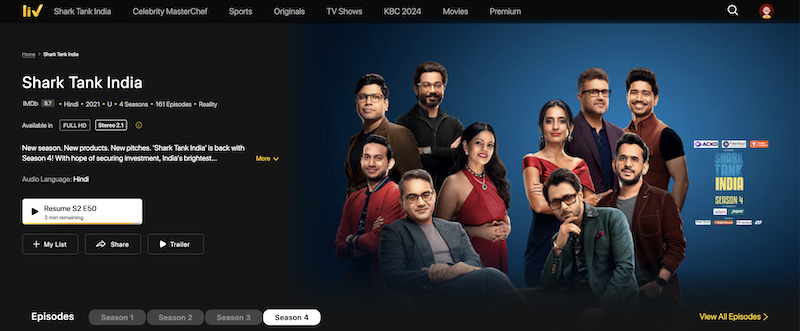
    Meanwhile, Sony Entertainment Television (SET) is in revamp mode. The channel, battling ratings pressure in fiction, is reloading its primetime slate with a rebooted Bade Achhe Lagte Hain, mythologicals like Prithviraj Chauhan and Shirdi Wale Sai Baba, and the upcoming thriller Aami Dakini. Tentpoles like Kaun Banega Crorepati, Shark Tank India and Indian Idol continue to anchor the lineup. SET also remains a YouTube juggernaut, with 184 million subscribers—ranking fourth globally.

    Globally, SPE posted sales of $9.9 billion and operating income of $774 million despite the Hollywood strike denting series output and SPNI dragging on profits.

    Sony may have dropped its  Zee alliance, but with a rejigged team, fresh IP, and digital firepower, its India innings appears to be just getting into super scoring mode. With both Ahuja and Banerjee  fresh at the crease and gradually getting their shots right, SET might well hit it out of the park this time.